
Self-Healing Sterilization Market Report 2026
Global Outlook – By Product Type (Self Healing Antimicrobial Coatings, Self Healing Protective Coatings, Self Healing Sterile Packaging Materials, Self Healing Medical Device Coatings), By Material Type (Smart Polymers, Microcapsule Based Materials, Hydrogel Based Materials, Nanocomposite Materials, Hybrid Self Healing Materials), By Distribution Channel (Direct Sales, Medical Supply Distributors, Online Sales, Third Party Distributors), By Application (Medical Device Protection, Surgical Instrument Protection, Sterile Packaging, Pharmaceutical Packaging, Healthcare Surface Protection), By End User (Hospitals, Medical Device Manufacturers, Pharmaceutical Companies, Diagnostic Laboratories, Research Institutes) – Market Size, Trends, Strategies, and Forecast to 2030
Self-Healing Sterilization Market Report 2026 Market Overview
• Self-Healing Sterilization Market Report 2026 market size has reached to $0.29 billion in 2025 • Expected to grow to $0.81 billion in 2030 at a compound annual growth rate (CAGR) of 22.9% • Growth Driver: Increasing Demand For Infection Prevention In Healthcare Settings Driving The Growth Of The Market Due To Rising Focus On Reducing Healthcare-Associated Infections • North America was the largest region in 2025 and Asia-Pacific is the fastest growing region.What Is Covered Under Self-Healing Sterilization Market?
Self-healing sterilization refers to an emerging technology that utilizes smart polymers, microcapsules, or other self-repairing materials to automatically restore barrier integrity after minor physical damage, helping maintain sterile conditions and reduce the risk of microbial contamination. By autonomously repairing micro-scale defects at the molecular level, this technology supports continuous sterility, enhances contamination control, and improves the reliability and longevity of sterile systems across healthcare and life sciences applications. The main product types of self-healing sterilization include self healing antimicrobial coatings, self healing protective coatings, self healing sterile packaging materials, and self healing medical device coatings. Self healing antimicrobial coatings refer to advanced sterilization solutions designed to repair surface damage while maintaining antimicrobial properties, helping prevent microbial growth and improve the durability of medical surfaces and devices. These products are developed using smart polymers, microcapsule based materials, hydrogel based materials, nanocomposite materials, and hybrid self healing materials and are distributed through direct sales, medical supply distributors, online sales, and third party distributors. They find application in medical device protection, surgical instrument protection, sterile packaging, pharmaceutical packaging, and healthcare surface protection, serving end users including hospitals, medical device manufacturers, pharmaceutical companies, diagnostic laboratories, and research institutes.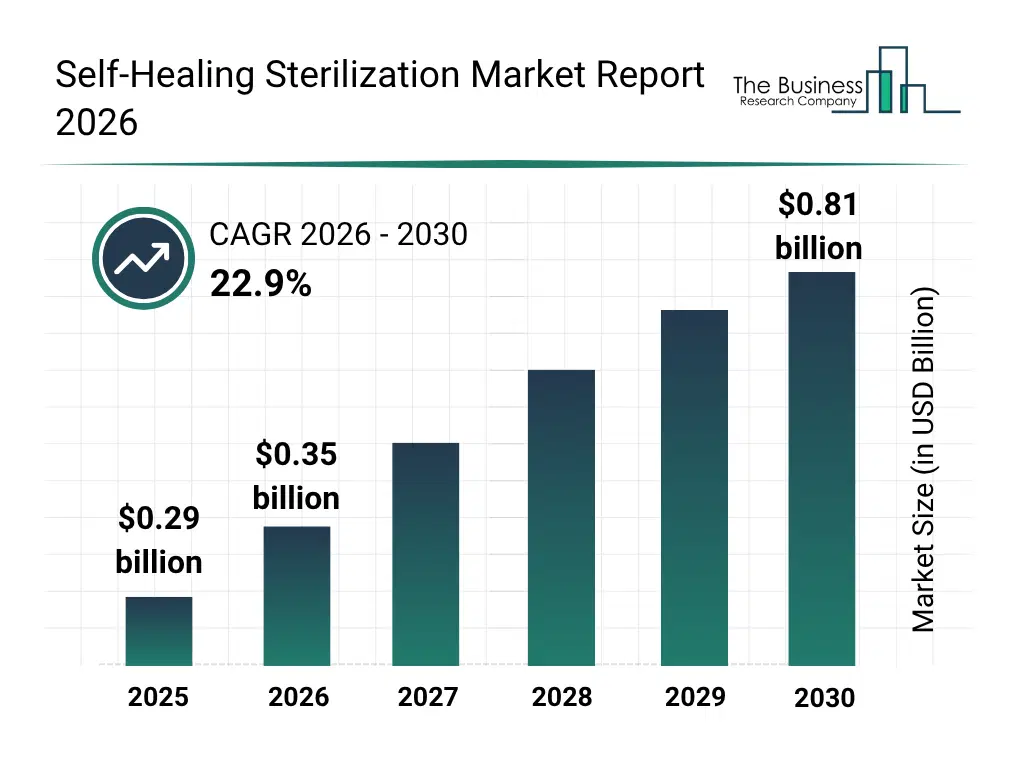
What Is The Self-Healing Sterilization Market Size and Share 2026?
The self-healing sterilization market size has grown exponentially in recent years. It will grow from $0.29 billion in 2025 to $0.35 billion in 2026 at a compound annual growth rate (CAGR) of 22.7%. The growth in the historic period can be attributed to increasing demand for infection prevention, rising adoption of advanced sterile packaging, growing healthcare infrastructure development, stricter sterilization and contamination control regulations, increasing use of protective medical coatings.What Is The Self-Healing Sterilization Market Growth Forecast?
The self-healing sterilization market size is expected to see exponential growth in the next few years. It will grow to $0.81 billion in 2030 at a compound annual growth rate (CAGR) of 22.9%. The growth in the forecast period can be attributed to growing demand for durable sterile materials, rising investment in advanced biomaterials, increasing adoption of high-performance medical coatings, expanding pharmaceutical manufacturing activities, growing focus on extending medical device lifespan. Major trends in the forecast period include increasing adoption of self-repairing sterile barrier materials, growing development of advanced smart polymer formulations, rising demand for long-lasting sterile packaging solutions, expansion of self-healing surface protection technologies, growing focus on enhanced contamination prevention materials.
Global Self-Healing Sterilization Market Segmentation
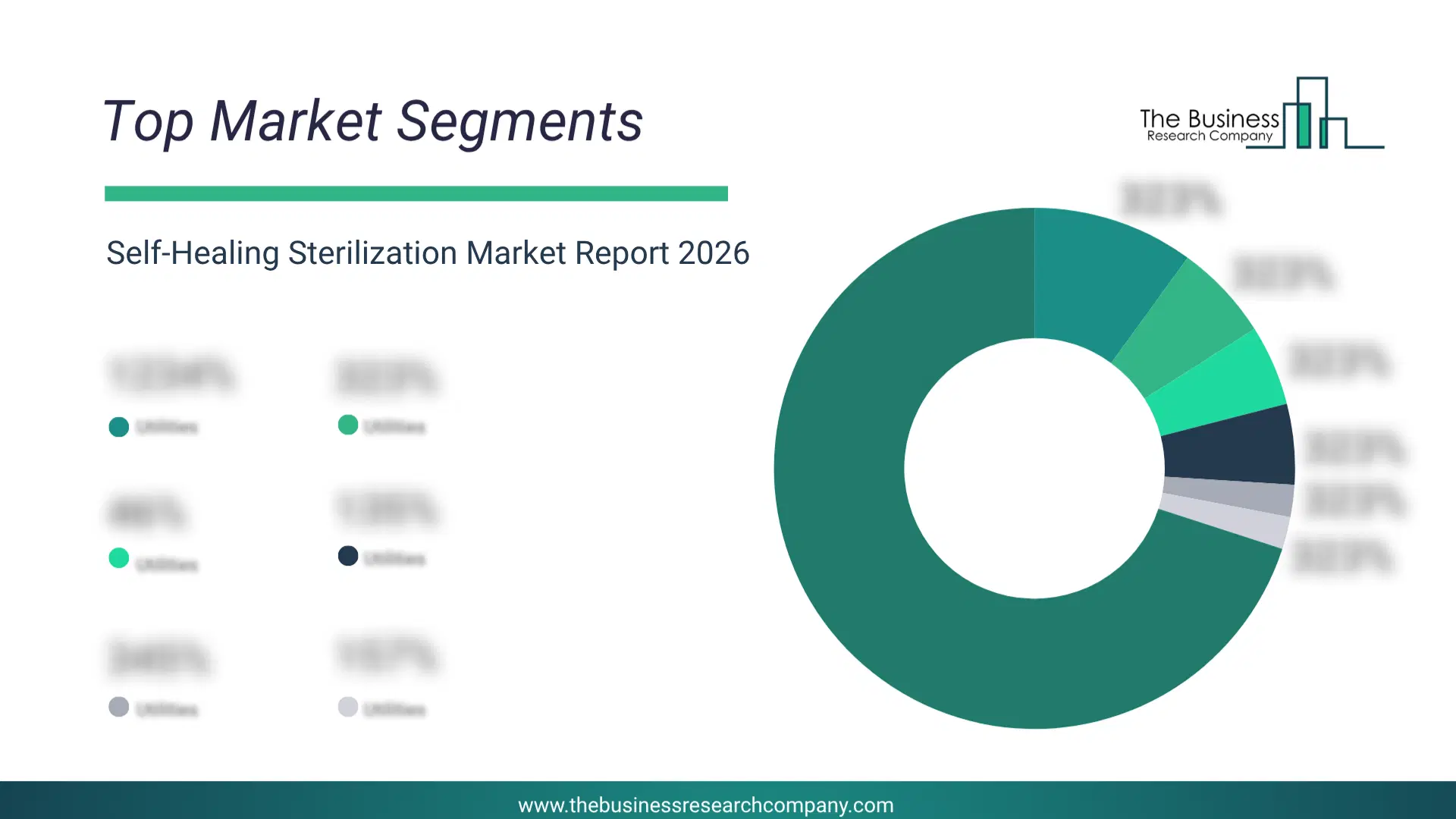
1) By Product Type: Self Healing Antimicrobial Coatings, Self Healing Protective Coatings, Self Healing Sterile Packaging Materials, Self Healing Medical Device Coatings 2) By Material Type: Smart Polymers, Microcapsule Based Materials, Hydrogel Based Materials, Nanocomposite Materials, Hybrid Self Healing Materials 3) By Distribution Channel: Direct Sales, Medical Supply Distributors, Online Sales, Third Party Distributors 4) By Application: Medical Device Protection, Surgical Instrument Protection, Sterile Packaging, Pharmaceutical Packaging, Healthcare Surface Protection 5) By End User: Hospitals, Medical Device Manufacturers, Pharmaceutical Companies, Diagnostic Laboratories, Research Institutes Subsegments: 1) By Self Healing Antimicrobial Coatings: Silver Nanoparticle Based Self Healing Coatings, Copper Based Self Healing Coatings, Polymer Based Self Healing Antimicrobial Coatings, Bioactive Self Healing Antimicrobial Coatings 2) By Self Healing Protective Coatings: Scratch Resistant Self Healing Coatings, Corrosion Resistant Self Healing Coatings, Ultraviolet Resistant Self Healing Coatings, Chemical Resistant Self Healing Coatings 3) By Self Healing Sterile Packaging Materials: Self Healing Polymer Films, Self Healing Flexible Sterile Pouches, Self Healing Rigid Sterile Packaging, Nanocomposite Self Healing Packaging Materials 4) By Self Healing Medical Device Coatings: Implantable Device Self Healing Coatings, Catheter Self Healing Coatings, Surgical Instrument Self Healing Coatings, Diagnostic Device Self Healing CoatingsWhat Are The Drivers Of The Self-Healing Sterilization Market?
The increasing demand for infection prevention in healthcare settings is expected to propel the growth of the self-healing sterilization market going forward. Infection prevention in healthcare settings refers to the implementation of practices, technologies, and solutions that prevent the spread of infectious microorganisms among patients, healthcare professionals, and healthcare environments. The increasing demand for infection prevention is due to the growing focus on reducing healthcare-associated infections and improving patient safety standards across hospitals and medical facilities. Self-healing sterilization support infection prevention by providing advanced antimicrobial coatings, self-healing sterile packaging materials, and protective surfaces that repair minor damages automatically and help maintain a continuous barrier against microbial contamination. For instance, in November 2024, according to the World Health Organization (WHO), a Switzerland-based specialized intergovernmental public health agency, 71% of countries had established active national infection prevention and control (IPC) programs during 2023–2024, while only 6% met all WHO IPC minimum requirements. Therefore, the increasing demand for infection prevention in healthcare settings is driving the growth of the self-healing sterilization industry. The expansion of healthcare infrastructure is expected to propel the growth of the self-healing sterilization market going forward. Healthcare infrastructure refers to the development and availability of hospitals, surgical centers, medical facilities, healthcare equipment, and support systems that enable effective healthcare delivery. Healthcare infrastructure is increasing due to rising government investments, growing healthcare access requirements, and the development of advanced medical facilities worldwide. Self-healing sterilization supports by providing advanced antimicrobial coatings, self-healing protective materials, and sterilization-enabled packaging solutions that help healthcare facilities maintain sterile environments and reduce contamination risks. For instance, in January 2025, according to the British Medical Association (BMA), a UK-based not-for-profit organization, the number of average daily beds increased by 2.9% to 104,418 beds in 2023/24. Therefore, the expansion of healthcare infrastructure is driving the growth of the self-healing sterilization industry. The expansion of minimally invasive and complex surgical procedures requiring sterile medical devices is expected to propel the growth of the self-healing sterilization market going forward. Minimally invasive and complex surgical procedures involve advanced techniques that use specialized instruments, implants, and medical devices to perform precise interventions while reducing patient trauma and improving clinical outcomes. The increasing adoption of advanced surgical procedures is driven by the growing prevalence of chronic diseases, rising geriatric populations, and continuous advancements in surgical technologies that require highly reliable sterile medical equipment. Self-healing sterilization supports these procedures by maintaining the integrity of sterile barriers through antimicrobial coatings, self-healing packaging materials, and protective surfaces that reduce contamination risks during medical device handling and storage. For instance, in August 2024, Springer Nature AG and Co., a Germany-based academic and scientific publishing company, in 2023, robot-assisted surgical procedures using the da Vinci robotic system (Intuitive Surgical, Sunnyvale, CA) have been performed in more than 13 million procedures worldwide over the last two decades. Therefore, the expansion of minimally invasive and complex surgical procedures requiring sterile medical devices is driving the growth of the self-healing sterilization industry.Key Players In The Global Self-Healing Sterilization Market
Major companies operating in the self-healing sterilization market report are BASF SE, Dow Inc., 3M Company, Evonik Industries AG, Mitsubishi Chemical Group Corporation, DuPont de Nemours Inc., Toray Industries Inc., West Pharmaceutical Services Inc., Syensqo SA, Arkema S.A., Nitto Denko Corporation, Teijin Limited, Kuraray Co. Ltd., Eastman Chemical Company, Amcor plc, Avery Dennison Corporation, PPG Industries Inc., OC Oerlikon Corporation AG, The Sherwin-Williams Company, Sciessent LLC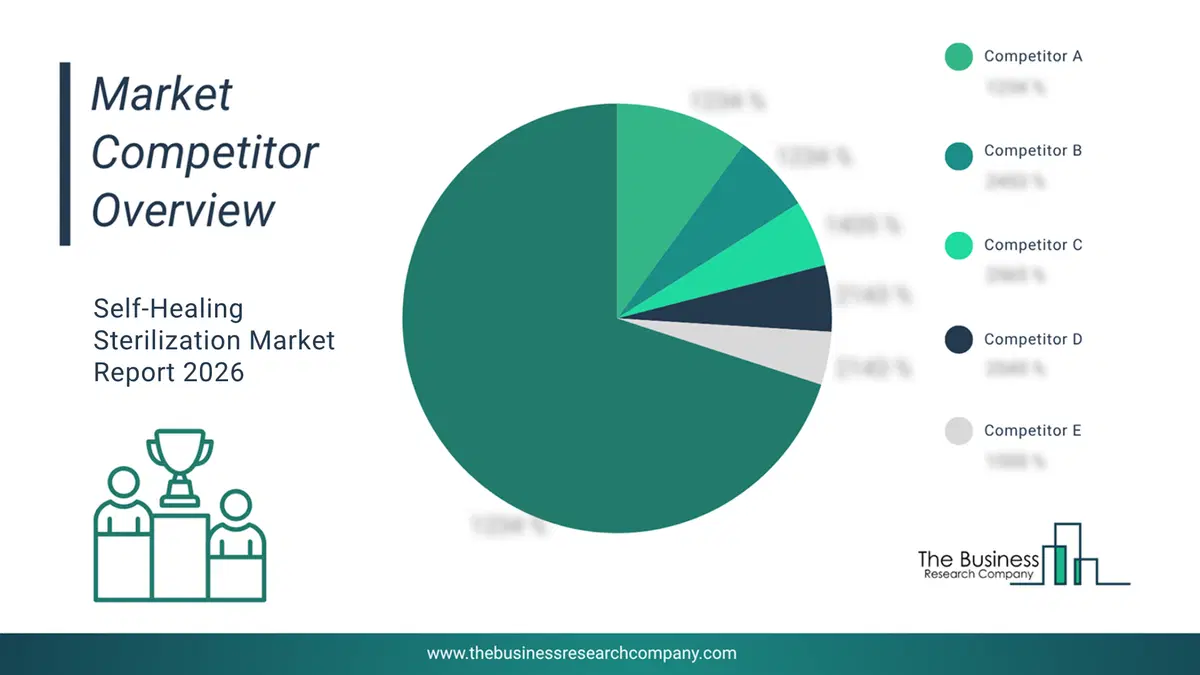
This chart is for illustrative purposes; the full report includes a detailed competitor analysis and comprehensive overview of the top 10 companies in the market.
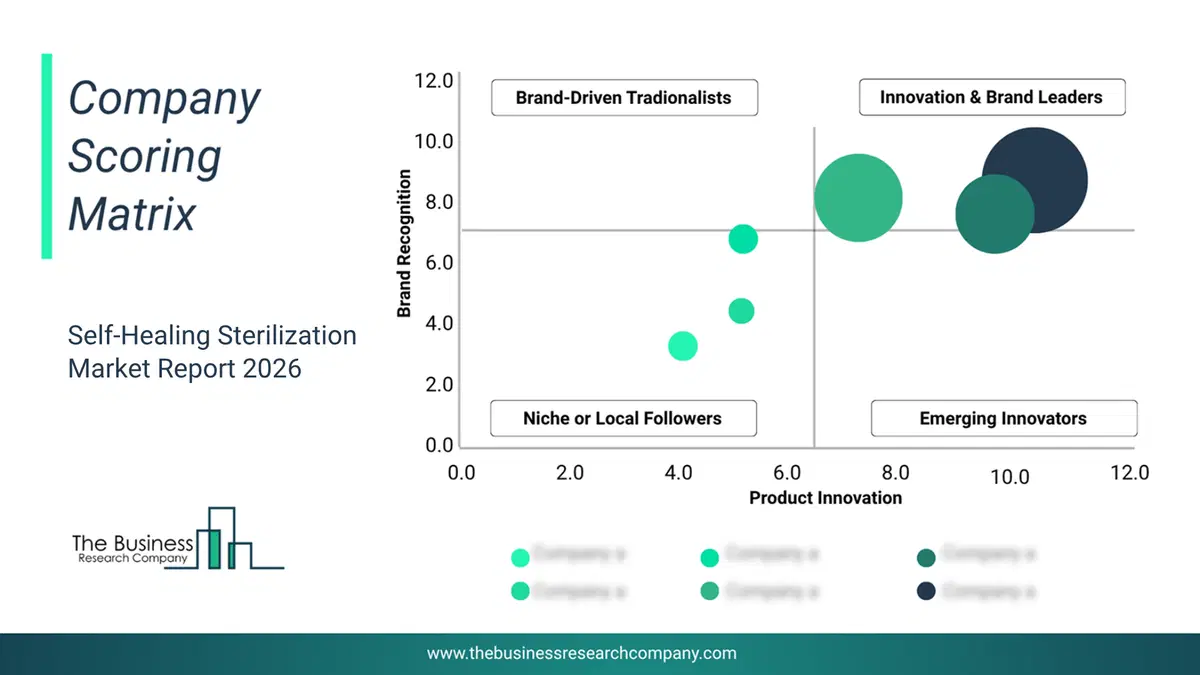
This chart maps companies by product innovation and brand strength, with bubble size indicating relative revenue, helping identify market leaders, challengers, and niche players. This is an illustrative chart; the full report provides a complete and accurate competitive analysis.
Regional Outlook
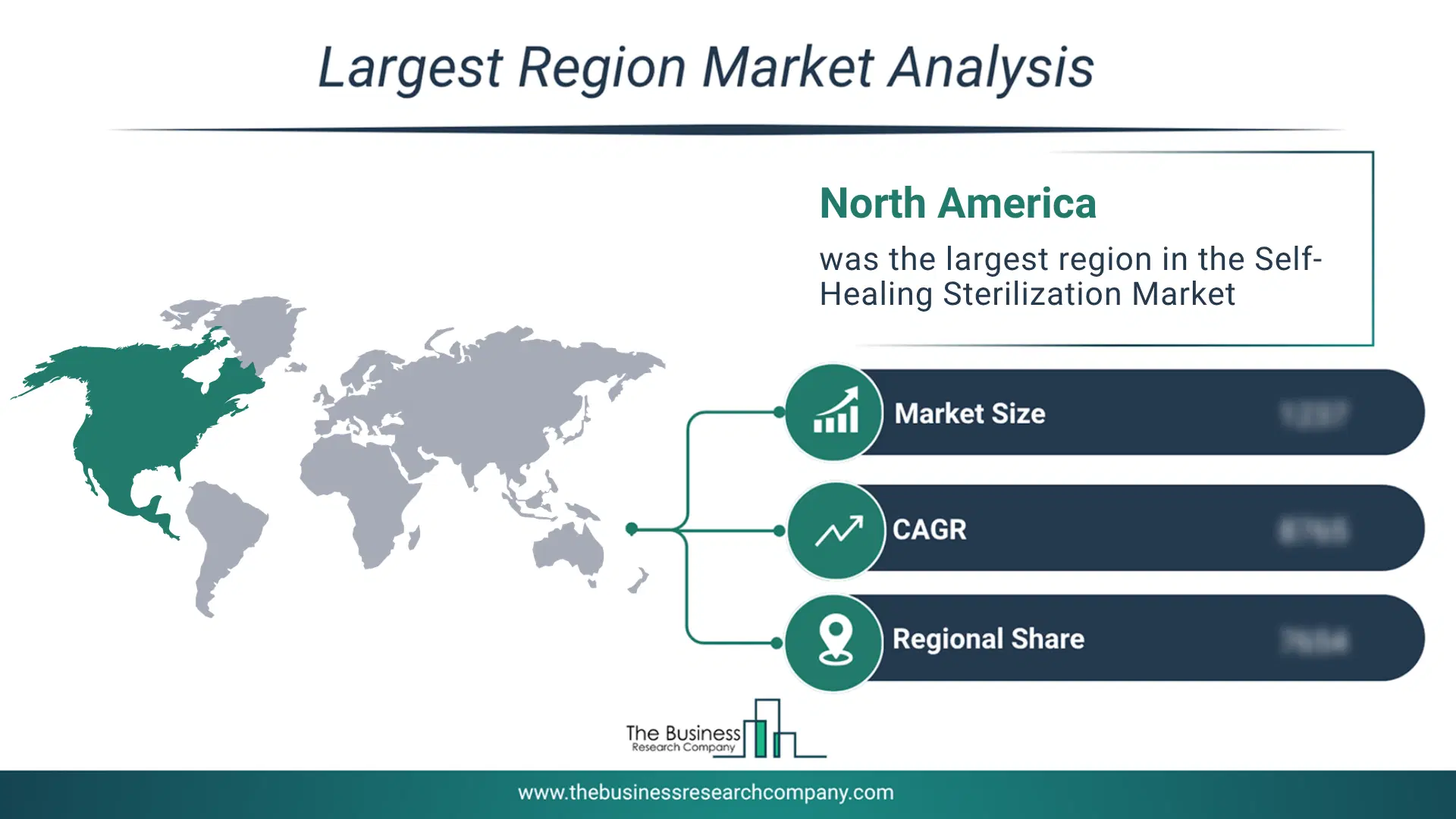
North America was the largest region in the self-healing sterilization market in 2025. Asia-Pacific is expected to be the fastest-growing region in the forecast period. The regions covered in this market report are Asia-Pacific, South East Asia, Western Europe, Eastern Europe, North America, South America, Middle East, Africa. The countries covered in this market report are Australia, Brazil, China, France, Germany, India, Indonesia, Japan, Taiwan, Russia, South Korea, UK, USA, Canada, Italy, Spain.What Defines the Self-Healing Sterilization Market?
The self-healing sterilization market consists of sales of self-healing sterilization products, antimicrobial materials, sterilization materials, sterile barrier systems, sterilization consumables, sterilization accessories, aseptic handling products, contamination control products, and related sterilization solutions. Values in this market are ‘factory gate’ values, that is the value of goods sold by the manufacturers or creators of the goods, whether to other entities (including downstream manufacturers, wholesalers, distributors and retailers) or directly to end customers. The value of goods in this market includes related services sold by the creators of the goods.How is Market Value Defined and Measured?
The market value is defined as the revenues that enterprises gain from the sale of goods and/or services within the specified market and geography through sales, grants, or donations in terms of the currency (in USD unless otherwise specified). The revenues for a specified geography are consumption values that are revenues generated by organizations in the specified geography within the market, irrespective of where they are produced. It does not include revenues from resales along the supply chain, either further along the supply chain or as part of other products.
This chart presents market attractiveness based on a quantitative evaluation of growth, competition, strategic alignment, and risk, offering a clear view of opportunity areas for decision-making. This chart is for illustrative purposes; the full report contains the complete analysis.

This chart highlights the Total Addressable Market (TAM) by estimating the maximum revenue opportunity using an assumption-driven approach, supporting strategic planning and opportunity sizing across markets. The chart is illustrative; the full report provides a more comprehensive analysis.
What Key Data and Analysis Are Included in the Self-Healing Sterilization Market Report 2026?
The self-healing sterilization market research report is one of a series of new reports from The Business Research Company that provides market statistics, including industry global market size, regional shares, competitors with the market share, detailed market segments, market trends and opportunities, and any further data you may need to thrive in the self-healing sterilization industry. The market research report delivers a complete perspective of everything you need, with an in-depth analysis of the current and future state of the industry.Self-Healing Sterilization Market Report Forecast Analysis
| Report Attribute | Details |
|---|---|
| Market Size Value In 2026 | $0.35 billion |
| Revenue Forecast In 2030 | $0.81 billion |
| Growth Rate | CAGR of 22.9% from 2026 to 2030 |
| Base Year For Estimation | 2025 |
| Actual Estimates/Historical Data | 2020-2025 |
| Forecast Period | 2026 - 2030 |
| Market Representation | Revenue in USD Billion and CAGR from 2026 to 2030 |
| Segments Covered | Product Type, Material Type, Distribution Channel, Application, End User |
| Regional Scope | Asia-Pacific, Western Europe, Eastern Europe, North America, South America, Middle East, Africa |
| Country Scope | The countries covered in the report are Australia, Brazil, China, France, Germany, India, Indonesia, Japan, Taiwan, Russia, South Korea, UK, USA, Canada, Italy, Spain. |
| Key Companies Profiled | BASF SE, Dow Inc., 3M Company, Evonik Industries AG, Mitsubishi Chemical Group Corporation, DuPont de Nemours Inc., Toray Industries Inc., West Pharmaceutical Services Inc., Syensqo SA, Arkema S.A., Nitto Denko Corporation, Teijin Limited, Kuraray Co. Ltd., Eastman Chemical Company, Amcor plc, Avery Dennison Corporation, PPG Industries Inc., OC Oerlikon Corporation AG, The Sherwin-Williams Company, Sciessent LLC |
| Customization Scope | Request for Customization |
| Pricing And Purchase Options | Explore Purchase Options |