
Serum-Free Cell Culture Market Report 2026
Global Outlook – By Product (Serum Free Media, Cell Culture Supplements, Reagents And Growth Factors), By Cell Type (Mammalian Cells, Stem Cells, Insect Cells, Microbial Cells, Other Cell Types), By Distribution Channel (Direct Sales, Distributors, Online Sales), By Application (Cell And Gene Therapy Manufacturing, Monoclonal Antibody Production, Vaccine Production, Regenerative Medicine), By End User (Biopharmaceutical Companies, Biotechnology Companies, Academic And Research Institutes, Contract Research Organizations, Contract Development And Manufacturing Organizations, Hospitals And Diagnostic Laboratories) – Market Size, Trends, Strategies, and Forecast to 2030
Serum-Free Cell Culture Market Report 2026 Market Overview
• Serum-Free Cell Culture Market Report 2026 market size has reached to $4.11 billion in 2025 • Expected to grow to $7.76 billion in 2030 at a compound annual growth rate (CAGR) of 13.6% • Growth Driver: Growing Demand For Cell And Gene Therapies Fueling The Growth Of The Market Due To Increasing Adoption Of Advanced Biopharmaceutical Manufacturing • Market Trend: Increasing Development Of Chemically Defined Serum-Free Cell Culture Media • North America was the largest region in 2025 and Asia-Pacific is the fastest growing region.What Is Covered Under Serum-Free Cell Culture Market?
Serum-free cell culture media are specialized culture media formulated without animal-derived serum to support the growth, maintenance, and production of cells in vitro. These media contain defined combinations of amino acids, vitamins, minerals, recombinant growth factors, hormones, and other nutrients that provide a controlled and reproducible culture environment. Serum-free media are widely used in biopharmaceutical manufacturing, vaccine production, monoclonal antibody development, regenerative medicine, and cell and gene therapy applications. The main products of serum-free cell culture include serum free media, cell culture supplements, and reagents and growth factors. Serum free media refers to chemically defined or protein-free culture media formulated to support cell growth and proliferation without the use of animal serum, improving consistency and reducing contamination risks. These products are designed for mammalian cells, stem cells, insect cells, microbial cells, and other cell types and are distributed through direct sales, distributors, and online sales channels. The various applications involved are cell and gene therapy manufacturing, monoclonal antibody production, vaccine production, and regenerative medicine and they are utilized by end users including biopharmaceutical companies, biotechnology companies, academic and research institutes, contract research organizations, contract development and manufacturing organizations, and hospitals and diagnostic laboratories.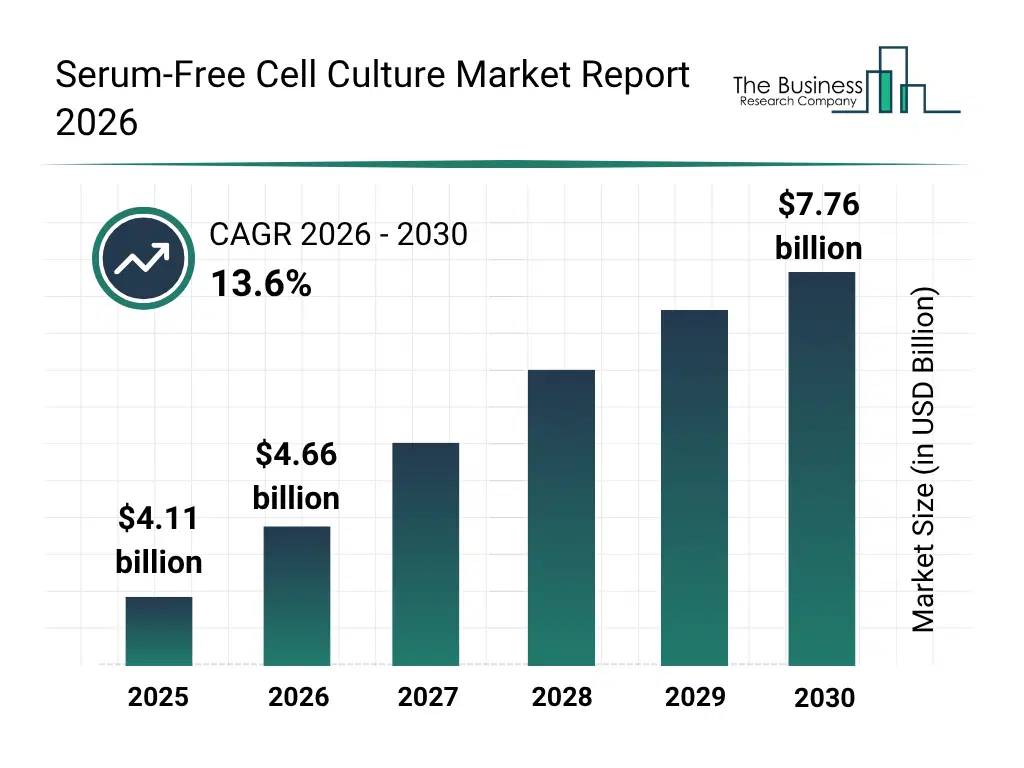
What Is The Serum-Free Cell Culture Market Size and Share 2026?
The serum-free cell culture market size has grown rapidly in recent years. It will grow from $4.11 billion in 2025 to $4.66 billion in 2026 at a compound annual growth rate (CAGR) of 13.4%. The growth in the historic period can be attributed to growing demand for biopharmaceutical production, increasing vaccine development activities, rising adoption of monoclonal antibody manufacturing, expanding regenerative medicine research, increasing investment in life sciences research.What Is The Serum-Free Cell Culture Market Growth Forecast?
The serum-free cell culture market size is expected to see rapid growth in the next few years. It will grow to $7.76 billion in 2030 at a compound annual growth rate (CAGR) of 13.6%. The growth in the forecast period can be attributed to growing commercialization of cell and gene therapies, increasing demand for scalable cell culture manufacturing, expanding biologics production capacity, rising adoption of advanced serum free formulations, increasing investments in bioprocess development. Major trends in the forecast period include growing adoption of chemically defined cell culture media, increasing demand for animal component free cell culture systems, rising use of xeno free media in advanced therapeutics, expansion of high yield cell culture processes, growing focus on reproducible and standardized cell culture workflows.
Global Serum-Free Cell Culture Market Segmentation
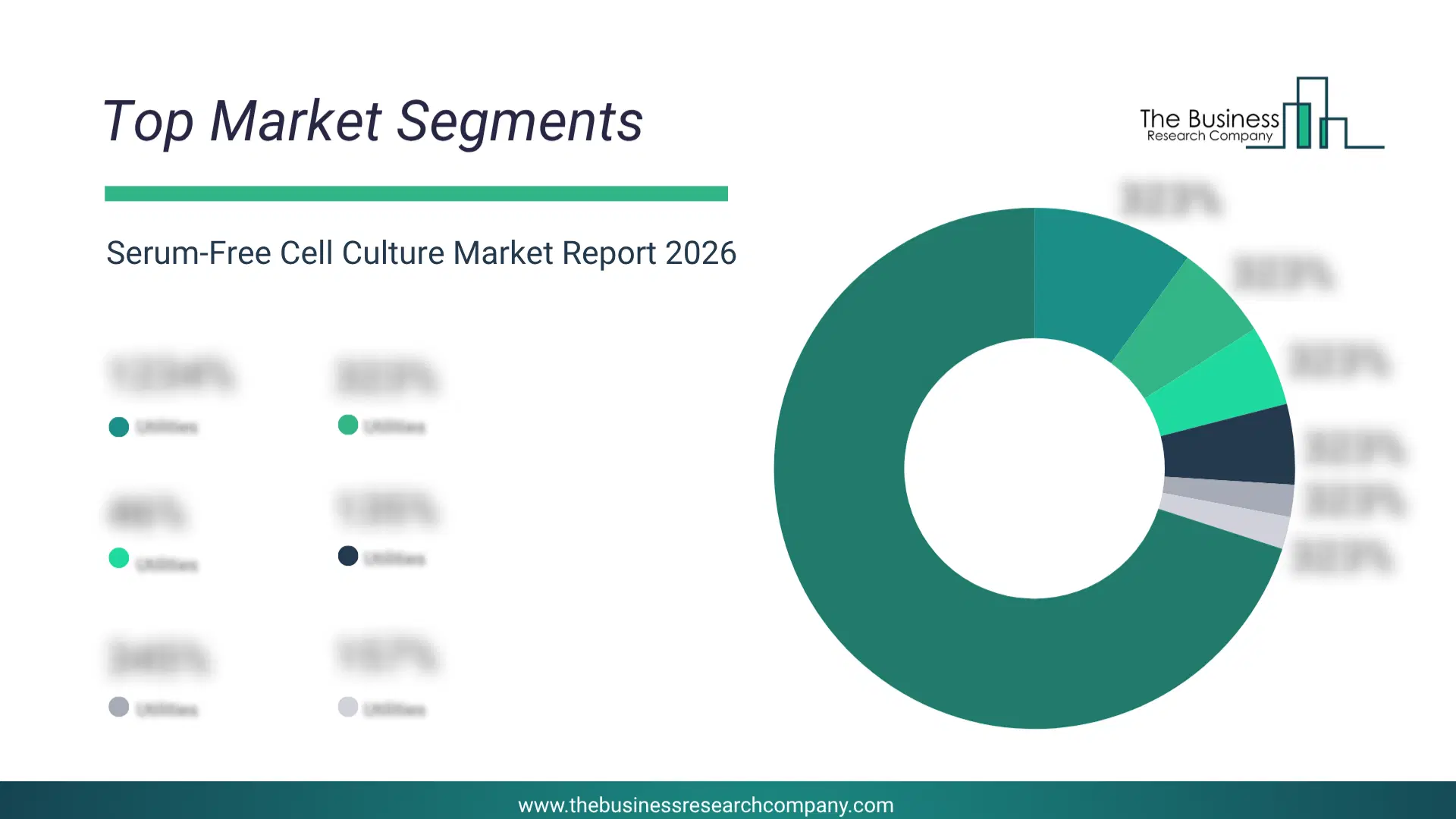
1) By Product: Serum Free Media, Cell Culture Supplements, Reagents And Growth Factors 2) By Cell Type: Mammalian Cells, Stem Cells, Insect Cells, Microbial Cells, Other Cell Types 3) By Distribution Channel: Direct Sales, Distributors, Online Sales 4) By Application: Cell And Gene Therapy Manufacturing, Monoclonal Antibody Production, Vaccine Production, Regenerative Medicine 5) By End User: Biopharmaceutical Companies, Biotechnology Companies, Academic And Research Institutes, Contract Research Organizations, Contract Development And Manufacturing Organizations, Hospitals And Diagnostic Laboratories Subsegments: 1) By Serum Free Media: Chemically Defined Media, Protein Free Media, Animal Component Free Media, Xeno Free Media 2) By Cell Culture Supplements: Hormone Supplements, Lipid Supplements, Trace Element Supplements, Amino Acid Supplements 3) By Reagents And Growth Factors: Cytokines, Recombinant Growth Factors, Attachment Factors, Differentiation FactorsWhat Is The Driver Of The Serum-Free Cell Culture Market?
The growing demand for cell and gene therapies is expected to propel the growth of the serum-free cell culture market going forward. Cell and gene therapies are advanced medical treatments that use living cells or genetic material to prevent, treat, or cure diseases by targeting their underlying causes. The growing demand for cell and gene therapies is driven by increasing prevalence of chronic and rare diseases, expanding regulatory approvals, and rising investments in regenerative medicine. Serum-free cell culture media support the development and manufacturing of cell and gene therapies by providing a defined, animal component-free environment that improves cell growth, enhances reproducibility, and minimizes contamination risks, thereby ensuring consistent product quality and regulatory compliance. For instance, in July 2024, according to the American Society of Gene and Cell Therapy (ASGCT), a professional non-profit medical and scientific organization, 76 new gene therapy clinical trials were initiated worldwide, a notable 25% increase compared to the previous quarter. Therefore, the growing demand for cell and gene therapies is driving the growth of the serum-free cell culture industry.Key Players In The Global Serum-Free Cell Culture Market
Major companies operating in the serum-free cell culture market report are Merck KGaA, Lonza Group AG, Sartorius AG, Avantor, STEMCELL Technologies Inc., Miltenyi Biotec B.V. & Co. KG, Corning Incorporated, Ajinomoto Co. Inc., GenScript Biotech Corporation, ACROBiosystems Co. Ltd., Sino Biological, HiMedia Laboratories Pvt. Ltd., PromoCell GmbH, Jianshun Biosciences Co. Ltd., REPROCELL Inc., Capricorn Scientific, Pan Biotech, ScienCell Research Laboratories, InVitria Inc., Cyagen Biosciences Inc., Nucleus Biologics LLC, OPM Biosciences, Qkine Ltd.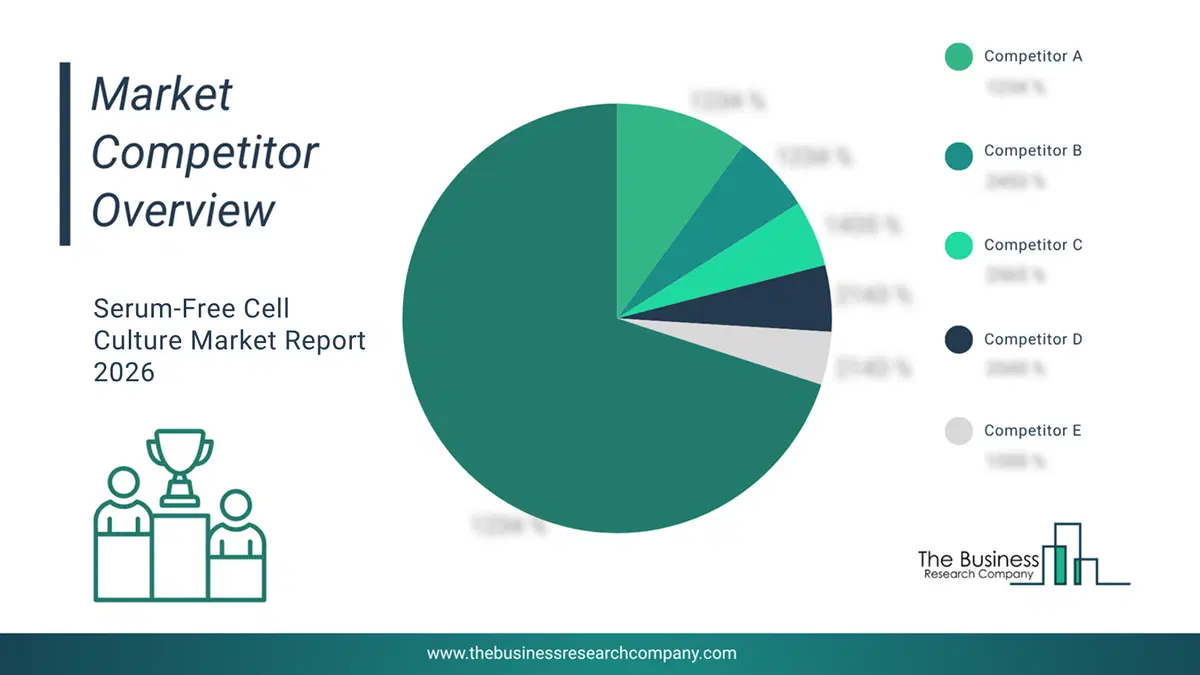
This chart is for illustrative purposes; the full report includes a detailed competitor analysis and comprehensive overview of the top 10 companies in the market.
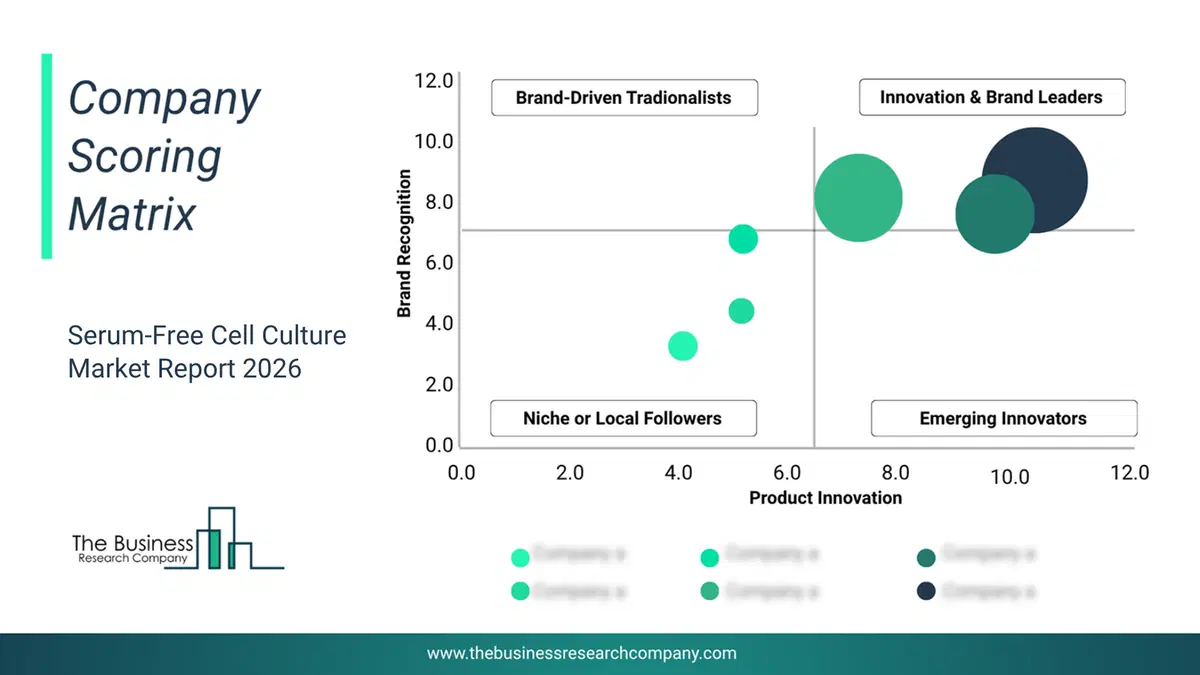
This chart maps companies by product innovation and brand strength, with bubble size indicating relative revenue, helping identify market leaders, challengers, and niche players. This is an illustrative chart; the full report provides a complete and accurate competitive analysis.
Global Serum-Free Cell Culture Market Trends and Insights
Major companies operating in the serum-free cell culture market are focusing on developing chemically defined, serum-free, and animal-origin-free cell culture media to enhance cell therapy manufacturing, improve process consistency, and support regulatory compliance. Cell culture media are nutrient-rich formulations that provide the essential nutrients, growth factors, salts, and vitamins required to support the growth, maintenance, and proliferation of cells under controlled laboratory conditions. For instance, in May 2023, Lonza Group Ltd., a Switzerland-based CDMO and life sciences company, launched the TheraPEAK T-VIVO Cell Culture Medium, a chemically defined, serum-free, and non-animal-origin medium designed to optimize CAR T-cell manufacturing and accelerate cell therapy development. It is formulated to support robust T-cell expansion while maintaining consistent cell growth and performance throughout the manufacturing process. Its chemically defined composition helps reduce variability associated with animal-derived components, improving process consistency and scalability. The launch expands Lonza's portfolio of cell and gene therapy manufacturing solutions, enabling developers to streamline process development and advance the commercialization of next-generation cell therapies.What Are Latest Mergers And Acquisitions In The Serum-Free Cell Culture Market?
In May 2023, Xcell Therapeutics, a South Korea-based developer of serum-free chemically defined cell culture media, partnered with YiPSCELL to develop dedicated serum-free chemically defined media for induced pluripotent stem cells (iPSCs). Through this strategic partnership, the companies aim to develop optimized media for iPSC culture and expand their collaboration into the production of artificial red blood cells using iPSC technology. YiPSCELL is a South Korea-based biotechnology company specializing in induced pluripotent stem cell (iPSC)-based research and therapeutic development.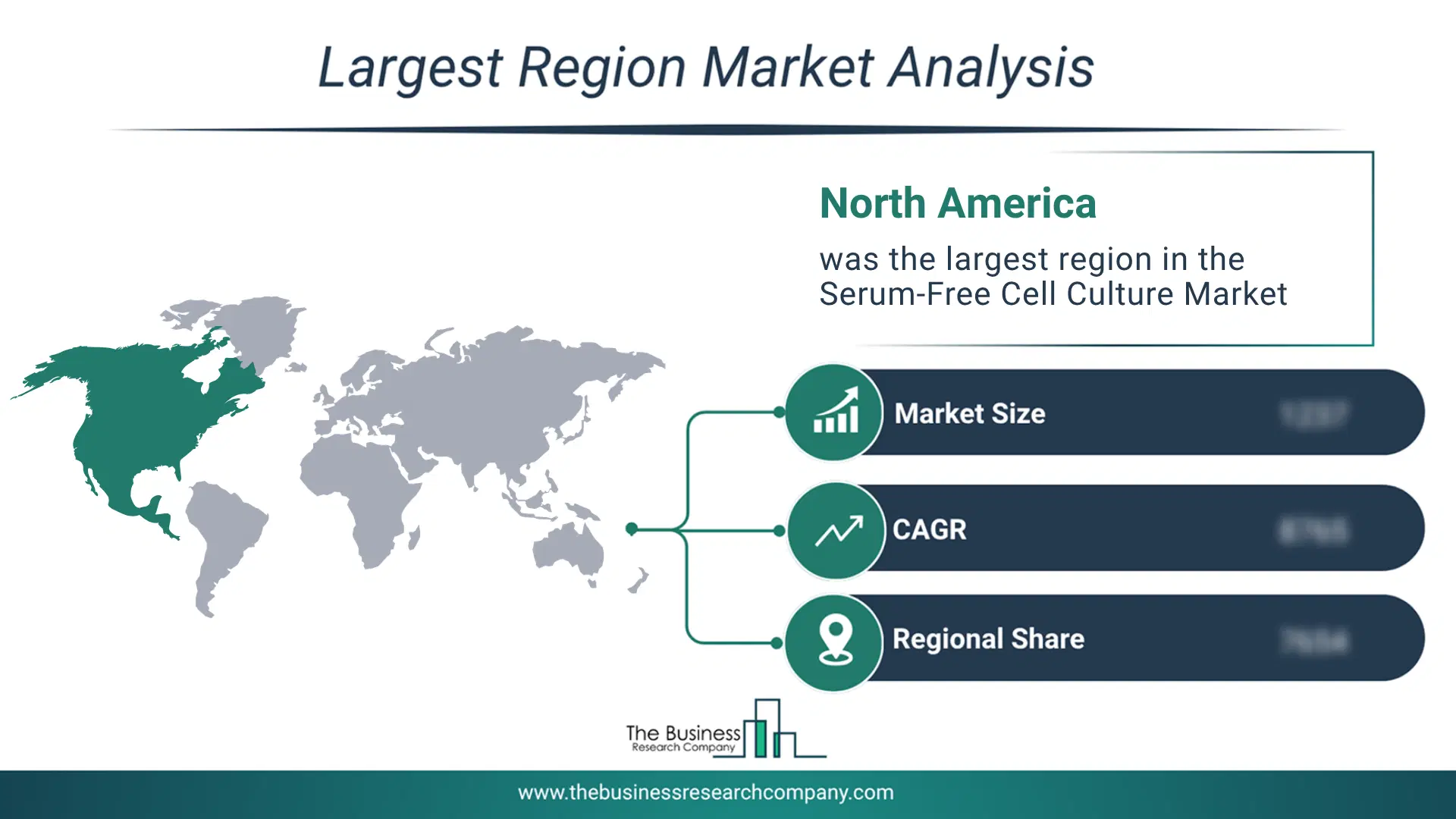
Regional Outlook
North America was the largest region in the serum-free cell culture market in 2025. Asia-Pacific is expected to be the fastest-growing region in the forecast period. The regions covered in this market report are Asia-Pacific, South East Asia, Western Europe, Eastern Europe, North America, South America, Middle East, Africa. The countries covered in this market report are Australia, Brazil, China, France, Germany, India, Indonesia, Japan, Taiwan, Russia, South Korea, UK, USA, Canada, Italy, Spain.What Defines the Serum-Free Cell Culture Market?
The serum-free cell culture market consists of sales of basal media, feed media, media concentrates, adaptation media, serum replacement formulations, cell dissociation solutions, cryopreservation media, media additives, and nutrient formulations. Values in this market are ‘factory gate’ values, that is the value of goods sold by the manufacturers or creators of the goods, whether to other entities (including downstream manufacturers, wholesalers, distributors and retailers) or directly to end customers. The value of goods in this market includes related services sold by the creators of the goods.How is Market Value Defined and Measured?
The market value is defined as the revenues that enterprises gain from the sale of goods and/or services within the specified market and geography through sales, grants, or donations in terms of the currency (in USD unless otherwise specified). The revenues for a specified geography are consumption values that are revenues generated by organizations in the specified geography within the market, irrespective of where they are produced. It does not include revenues from resales along the supply chain, either further along the supply chain or as part of other products.
This chart presents market attractiveness based on a quantitative evaluation of growth, competition, strategic alignment, and risk, offering a clear view of opportunity areas for decision-making. This chart is for illustrative purposes; the full report contains the complete analysis.

This chart highlights the Total Addressable Market (TAM) by estimating the maximum revenue opportunity using an assumption-driven approach, supporting strategic planning and opportunity sizing across markets. The chart is illustrative; the full report provides a more comprehensive analysis.
What Key Data and Analysis Are Included in the Serum-Free Cell Culture Market Report 2026?
The serum-free cell culture market research report is one of a series of new reports from The Business Research Company that provides market statistics, including industry global market size, regional shares, competitors with the market share, detailed market segments, market trends and opportunities, and any further data you may need to thrive in the serum-free cell culture industry. The market research report delivers a complete perspective of everything you need, with an in-depth analysis of the current and future state of the industry.Serum-Free Cell Culture Market Report Forecast Analysis
| Report Attribute | Details |
|---|---|
| Market Size Value In 2026 | $4.66 billion |
| Revenue Forecast In 2030 | $7.76 billion |
| Growth Rate | CAGR of 13.6% from 2026 to 2030 |
| Base Year For Estimation | 2025 |
| Actual Estimates/Historical Data | 2020-2025 |
| Forecast Period | 2026 - 2030 |
| Market Representation | Revenue in USD Billion and CAGR from 2026 to 2030 |
| Segments Covered | Product, Cell Type, Distribution Channel, Application, End User |
| Regional Scope | Asia-Pacific, Western Europe, Eastern Europe, North America, South America, Middle East, Africa |
| Country Scope | The countries covered in the report are Australia, Brazil, China, France, Germany, India, Indonesia, Japan, Taiwan, Russia, South Korea, UK, USA, Canada, Italy, Spain. |
| Key Companies Profiled | Merck KGaA, Lonza Group AG, Sartorius AG, Avantor, STEMCELL Technologies Inc., Miltenyi Biotec B.V. & Co. KG, Corning Incorporated, Ajinomoto Co. Inc., GenScript Biotech Corporation, ACROBiosystems Co. Ltd., Sino Biological, HiMedia Laboratories Pvt. Ltd., PromoCell GmbH, Jianshun Biosciences Co. Ltd., REPROCELL Inc., Capricorn Scientific, Pan Biotech, ScienCell Research Laboratories, InVitria Inc., Cyagen Biosciences Inc., Nucleus Biologics LLC, OPM Biosciences, Qkine Ltd. |
| Customization Scope | Request for Customization |
| Pricing And Purchase Options | Explore Purchase Options |