

Sharing Economy Market Report 2026
Global Outlook – By Product (Shared Transportation, Shared Space, Sharing Financial, Sharing Food, Shared Health Care, Shared Knowledge Education, Shared Task Service, Shared Items, Other Products), By Distribution Channel (Online, Offline), By End User (Generation Z, Millennials, Generation X, Boomers) – Market Size, Trends, Strategies, and Forecast to 2030
Sharing Economy Market Overview
• Sharing Economy market size has reached to $244.8 billion in 2025 • Expected to grow to $752.83 billion in 2030 at a compound annual growth rate (CAGR) of 24.9% • Growth Driver: Rising Adoption Of Electric Vehicles Fuels Growth In The Sharing Economy Market • Market Trend: Group Rides Revolutionizing Transportation In The Sharing Economy Market • North America was the largest region in 2025 and Asia-Pacific is the fastest growing region.Market Gains By 2030 – Top Opportunities By Segment
Market Gain identifies the most promising market opportunities by highlighting the segments or products expected to generate the highest incremental revenue growth over the next five years.
What Is Covered Under Sharing Economy Market?
Sharing economy refers to a socio-economic system built around the sharing of resources. It involves individuals sharing access to goods and services, often facilitated by a digital platform that connects those who have something to share with those who need it. The main products involved in the sharing economy are shared transportation, shared space, sharing financial, sharing food, shared health care, shared knowledge education, shared task service, shared items, and others. Shared transportation refers to the practice of individuals sharing rides or vehicles, often facilitated by platforms like Uber and Lyft, to optimize resource use and reduce transportation costs. It is distributed through online and offline channels for various end users including generation z, millennials, generation x, and boomers.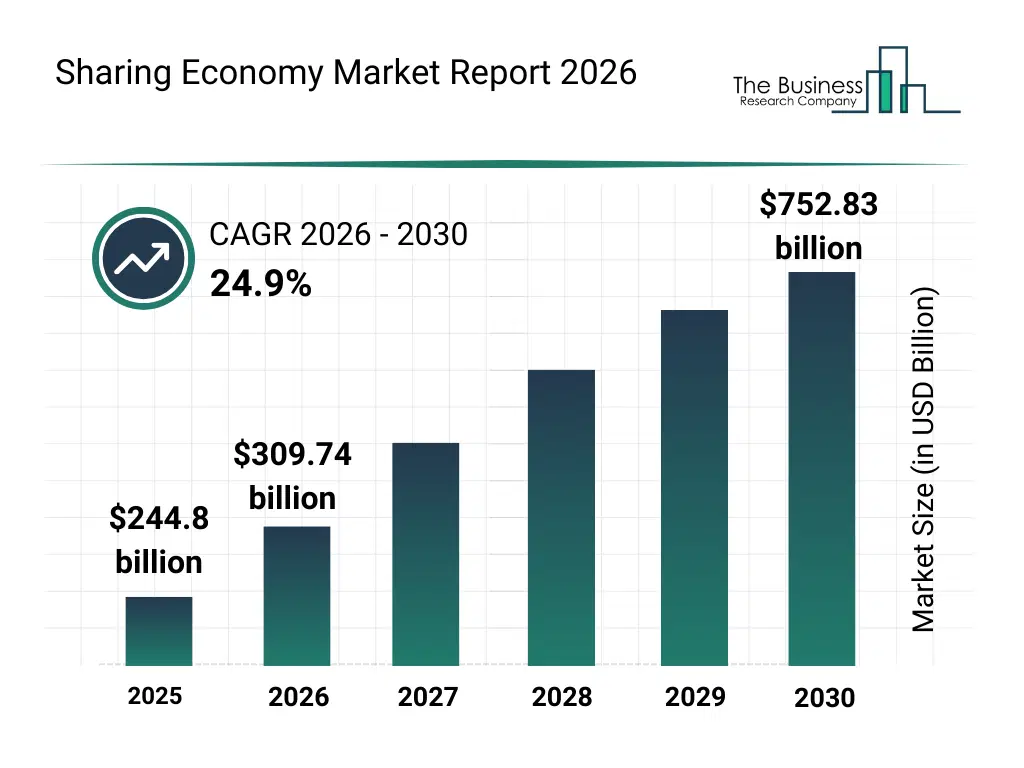
What Is The Sharing Economy Market Size and Share 2026?
The sharing economy market size has grown exponentially in recent years. It will grow from $244.8 billion in 2025 to $309.74 billion in 2026 at a compound annual growth rate (CAGR) of 26.5%. The growth in the historic period can be attributed to increasing digital platform adoption, growing consumer cost awareness, rising internet accessibility, expansion of online service ecosystems, early success of sharing platforms.What Is The Sharing Economy Market Growth Forecast?
The sharing economy market size is expected to see exponential growth in the next few years. It will grow to $752.83 billion in 2030 at a compound annual growth rate (CAGR) of 24.9%. The growth in the forecast period can be attributed to growing acceptance of alternative consumption models, rising demand for flexible services, increasing urban lifestyle changes, strengthening platform based economies, expanding shared resource accessibility. Major trends in the forecast period include rising usage of collaborative consumption platforms, growing preference for access over ownership models, increasing expansion of peer to peer service networks, strengthening adoption of asset sharing solutions, expansion of digitally enabled shared service ecosystems.
Global Sharing Economy Market Segmentation
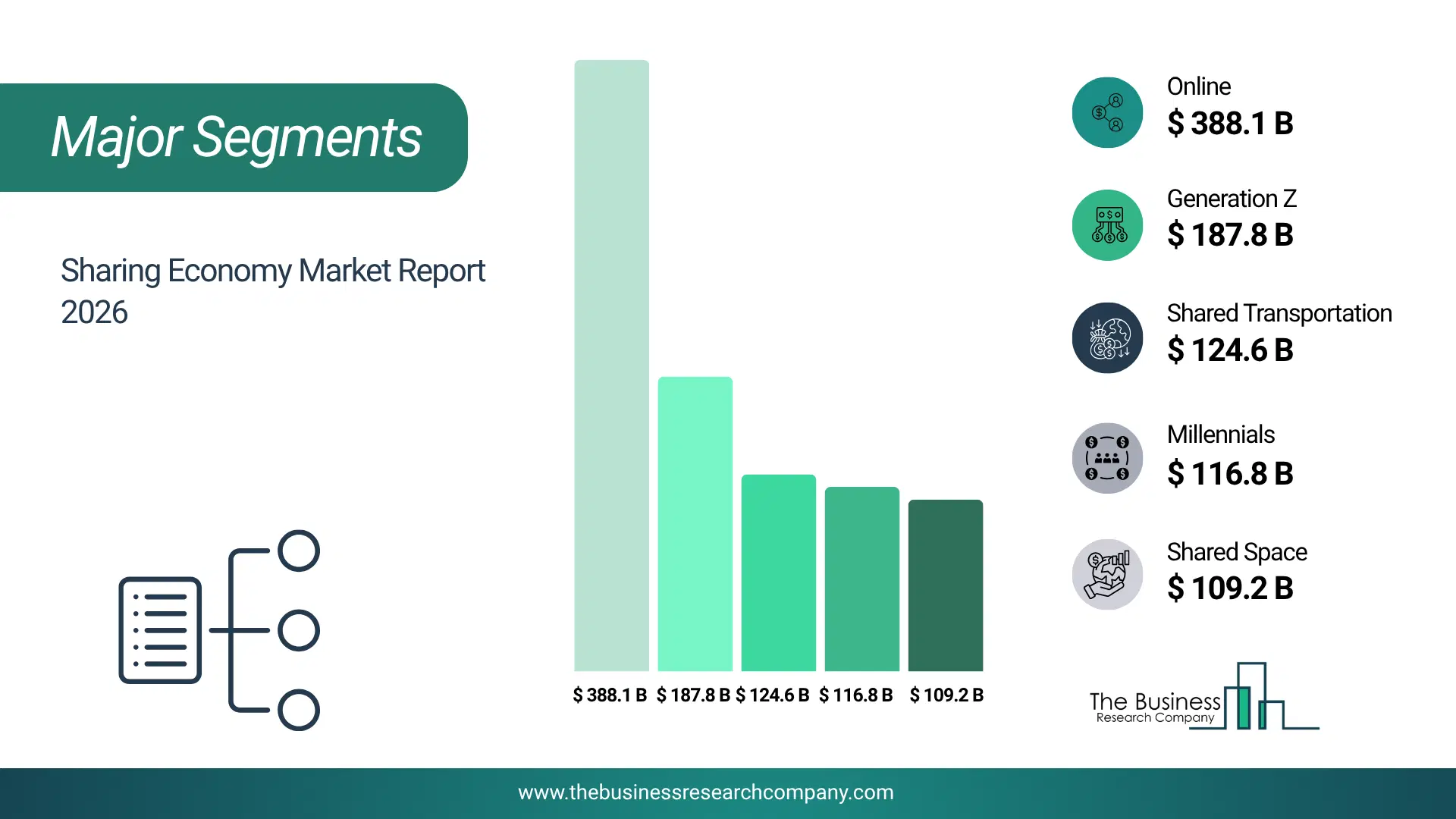
1) By Product: Shared Transportation, Shared Space, Sharing Financial, Sharing Food, Shared Health Care, Shared Knowledge Education, Shared Task Service, Shared Items, Other Products 2) By Distribution Channel: Online, Offline 3) By End User: Generation Z, Millennials, Generation X, Boomers Subsegments: 1) By Shared Transportation: Ride-Hailing Services, Carpooling And Car Sharing, Bike And Scooter Sharing, Electric Vehicle Sharing, Peer-To-Peer Car Rentals 2) By Shared Space: Coworking Spaces, Co-Living Spaces, Vacation Rentals, Shared Meeting And Conference Rooms, Storage Space Sharing 3) By Sharing Financial: Peer-To-Peer Lending, Crowdfunding Platforms, Peer-To-Peer Insurance, Shared Investment Platforms, Micro-Investing Platforms 4) By Sharing Food: Community-Supported Agriculture, Home-Cooked Meal Sharing, Leftover Sharing And Food Waste Reduction Programs 5) By Shared Health Care: Telemedicine Services, Shared Health Resources, Peer-To-Peer Medical Support Networks, Shared Medical Equipment And Facilities 6) By Shared Knowledge Education: Online Learning Platforms, Peer-To-Peer Learning Networks, Open Educational Resources, Knowledge Sharing Communities, Collaborative Research Platforms 7) By Shared Task Service: Gig Economy Platforms, On-Demand Services, Freelance And Remote Work Services, Personal Task Assistance, Digital Services 8) By Shared Items: Product Rental Platforms, Tool And Equipment Sharing, Clothing And Fashion Sharing, Baby Gear And Toy Sharing, Media And Book Sharing 9) By Other Products: Shared Art And Cultural Experiences, Shared Travel Resources, Shared Sports And Fitness Equipment, Shared Entertainment, Shared Resources For Special Events The top segments in the sharing economy market will be: • Online will reach $388135.65 Million by 2025. • Generation Z will reach $187884.71 Million by 2025. • Shared Transportation will reach $124670.16 Million by 2025. • Millennials will reach $116848.51 Million by 2025. • Shared Space will reach $109284.12 Million by 2025.What Is The Driver Of The Sharing Economy Market?
The increasing adoption of electric vehicles is expected to propel the growth of sharing economy market going forward. Electric vehicles (EVs) are vehicles that are powered entirely or partially by electricity. Rising adoption of electric vehicles can be attributed to factors such as increasing environmental awareness, advancements in battery technology, government incentives and subsidies, growing availability of charging infrastructure, lower operating and maintenance costs. Electric vehicles are used in the sharing economy by serving as eco-friendly options for ride-sharing and car-sharing services, providing users with accessible, sustainable, and cost-effective transportation solutions. For instance, in 2024, according to the International Energy Agency (IEA), a France-based intergovernmental organization, electric car sales in 2023 increased by 3.5 million compared to 2022, marking a 35% rise year-on-year. Therefore, the increasing adoption of electric vehicles is driving the growth of sharing economy industry.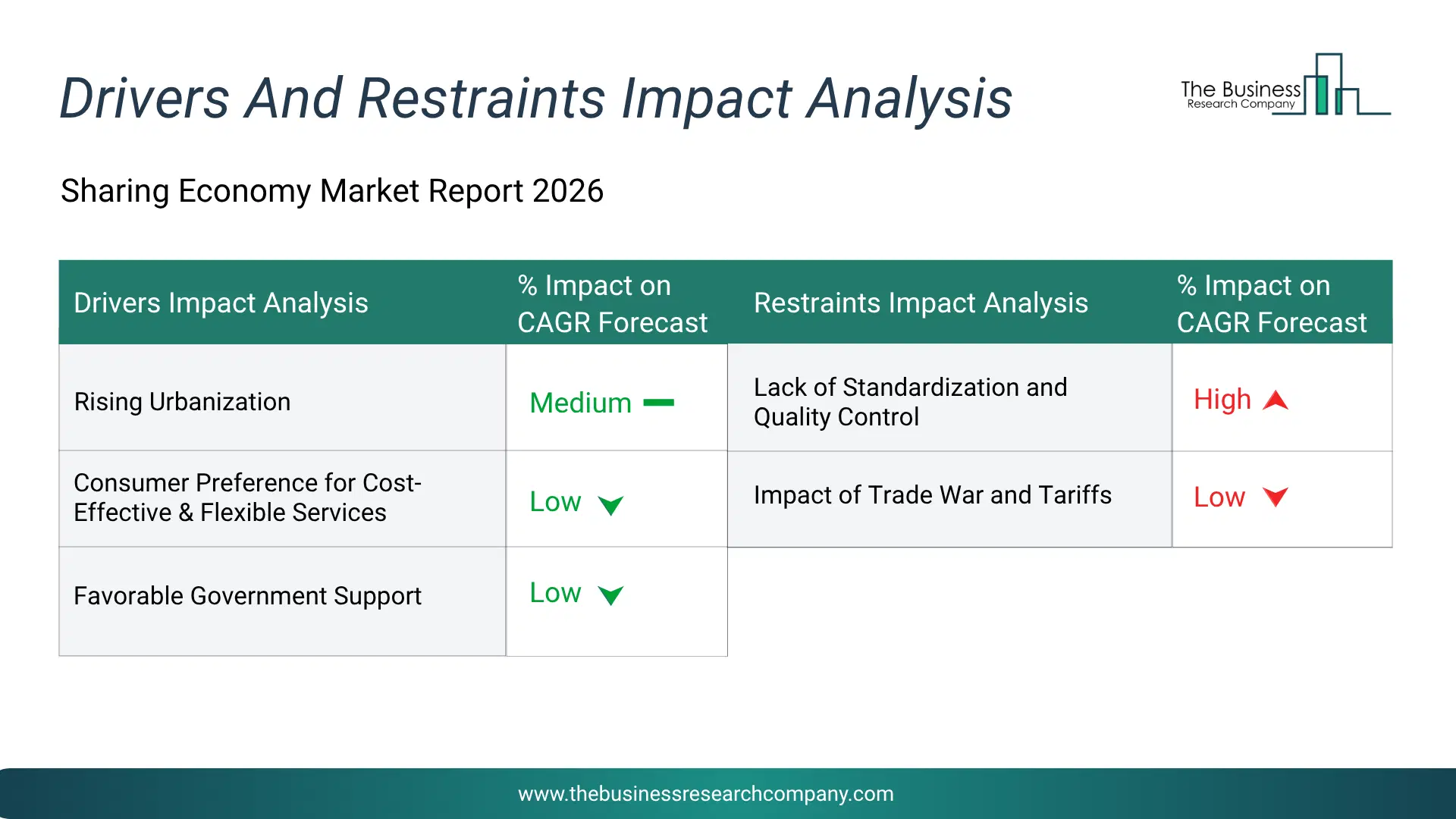
Infographic Chart Showing Key Market Drivers Analysis And Restraints For Sharing Economy Market
The chart presents an impact analysis of key drivers and restraints, quantifying their relative influence on the market's growth rate and helping assess the balance between growth enablers and limiting factors. This chart offers a high-level perspective; the full report contains more detailed insights.
How Will The Drivers Impact Growth In The Global Sharing Economy Market?
• Rising Urbanization (Medium) – The rising urbanization will become a key driver of growth in the sharing economy market by 2030. High population density in urban areas facilitates efficient matching of supply and demand for shared services. Sharing economy platforms such as ride-hailing, bike-sharing and coworking benefit from the geographic concentration of users, enabling faster scalability, higher asset utilization and improved service availability. This urban clustering supports more reliable and cost-effective operations, making cities ideal environments for platform-based business models to grow. As a result, the rising urbanization is anticipated to contributing to a 1.0% annual growth in the market. • Consumer Preference for Cost-Effective & Flexible Services (Low) – The consumer preference for cost-effective and flexible services will emerge as a major factor driving the expansion of the market by 2030. The affordability over ownership is significantly boosting demand in the sharing economy market. Many consumers now prefer access over ownership, for example, renting a car or using a co-working space rather than buying a car or leasing an office. This helps them save money and avoid long-term commitments. Consequently, the consumer preference for cost-effective and flexible services is projected to contributing to a 0.7% annual growth in the market. • Favorable Government Support (Low) – The favorable government support will serve as a key growth catalyst for the market by 2030. Favorable government support can significantly boost the sharing economy by creating a conducive regulatory environment and reducing legal uncertainties. Through subsidies, tax incentives and startup-friendly policies, governments can encourage innovation and investment in platforms like ride-sharing, home-sharing and coworking. Supportive urban planning and infrastructure development, such as smart city initiatives, also enhance the operational efficiency of sharing services. Additionally, public-private partnerships help build trust, improve standards and ensure consumer protection. Therefore, this favorable government support is projected to supporting to a 0.5% annual growth in the market. • Peer-to-Peer (P2P) Platform Growth (Low) – The peer-to-peer (P2P) platform growth will become a significant driver contributing to the growth of the market by 2030. By connecting users who possess underutilized assets or services with those seeking them these platforms optimize resource utilization. Their seamless digital interfaces enhance accessibility and convenience, accelerating user adoption and contributing significantly to market expansion. Consequently, the peer-to-peer (P2P) platform growth is projected to contributing to a 0.2% annual growth in the market.How Will The Restraints Impact Growth In The Global Sharing Economy Market?
• Regulatory Uncertainty (Low) – Regulatory Uncertainty will restrict the growth of the Sharing Economy market during the forecast period. Sharing economy platforms face regulatory uncertainty and varying regulations across different cities and countries. Regulatory challenges affect business models, service availability, and platform growth. Changes in regulations can create operational challenges and limit market expansion. • Lack of Standardization and Quality Control (Low) – Lack of Standardization and Quality Control will restrict the growth of the Sharing Economy market during the forecast period. Sharing economy services often lack consistent quality standards and regulatory oversight. Variability in service quality and safety can affect consumer trust and satisfaction. Quality control challenges can limit the growth of sharing economy platforms and affect user retention. • Impact of Trade War and Tariffs (Low) – Impact of Trade War and Tariffs will restrict the growth of the Sharing Economy market during the forecast period. Trade tensions and economic uncertainty can affect consumer spending on sharing economy services. Reduced disposable income during economic downturns may limit usage of sharing platforms. Trade barriers may also impact international expansion and cross-border operations of sharing economy companies.Key Players In The Global Sharing Economy Market
Major companies operating in the sharing economy market report are Uber Technologies Inc, Didi Global, JLL, Booking Holdings Inc, Avis Budget Group, eBay Inc, Airbnb Inc, Snap, Accor SA, Lyft Inc, Lime, Fiverr International Ltd, Prosper, BlaBlaCar, Zipcar, Fon, JustPark, Spotahome, Couchsurfing, Eatwith, HubbleHQ, E-stronger, VaShare, Stashbee Limited, Steam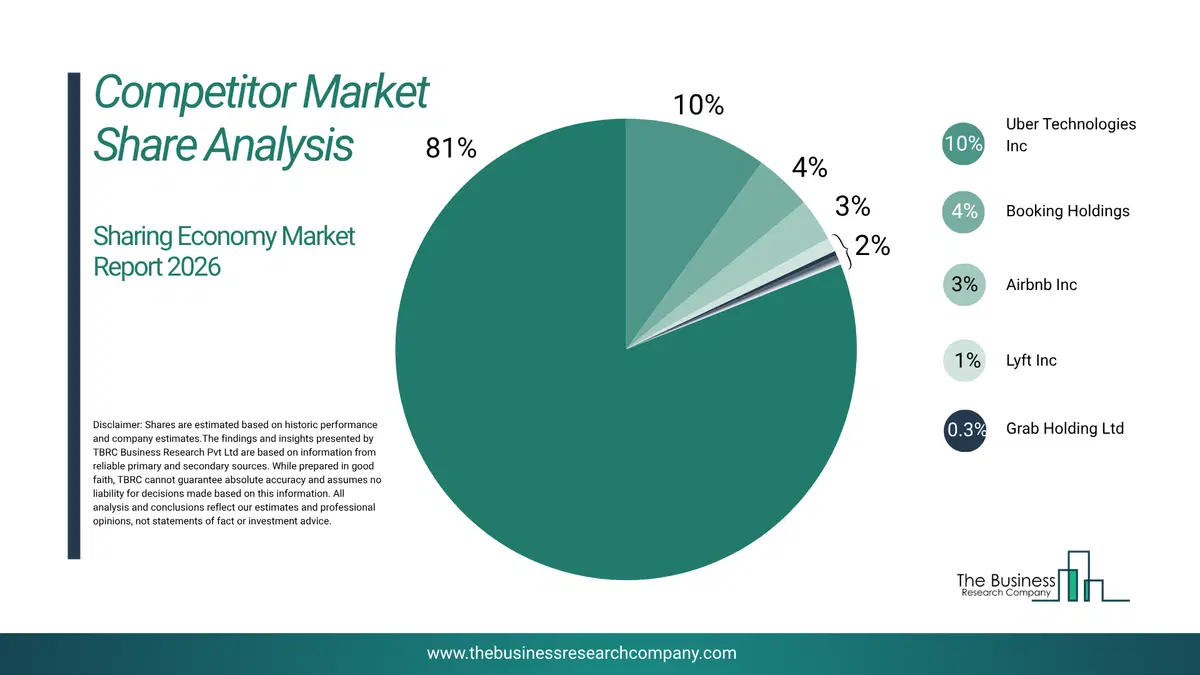
This chart is for illustrative purposes; the full report includes a detailed competitor analysis and comprehensive overview of the top 10 companies in the market.
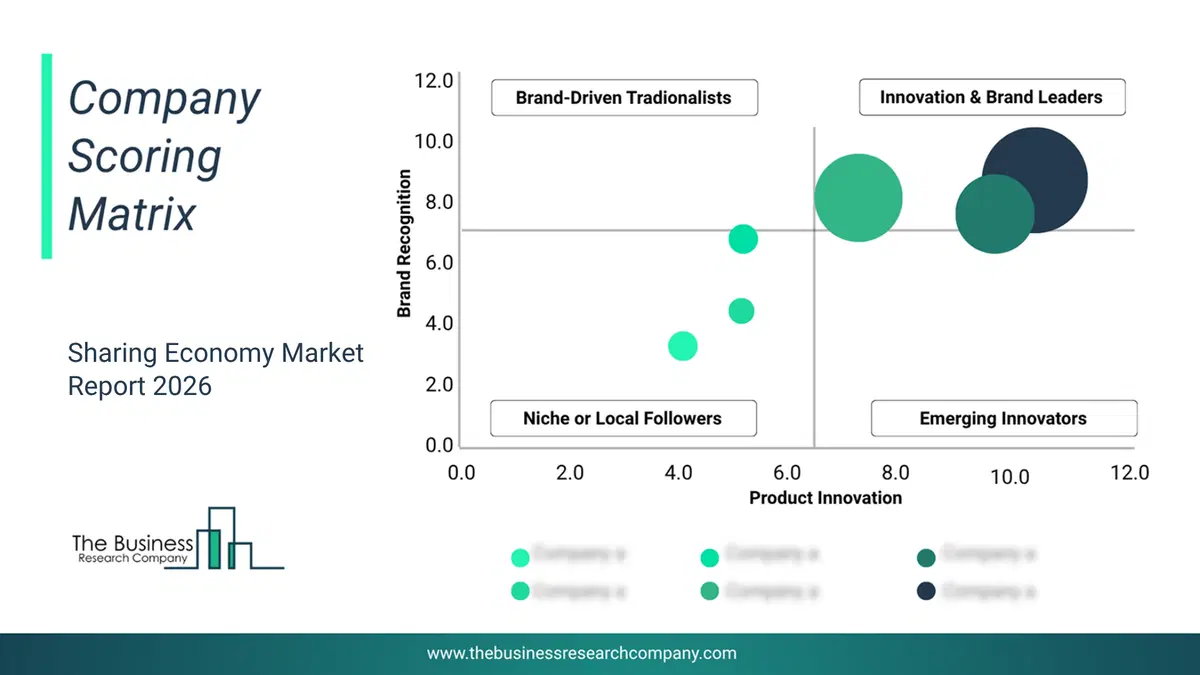
This chart maps companies by product innovation and brand strength, with bubble size indicating relative revenue, helping identify market leaders, challengers, and niche players. This is an illustrative chart; the full report provides a complete and accurate competitive analysis.
Global Sharing Economy Market Trends and Insights
Major companies operating in the sharing economy market are developing innovative features to enhance user experience, increase efficiency, and promote sustainability. Innovative features of Group Rides, such as dynamic pricing based on demand, real-time tracking, and flexible route planning, enhance the efficiency and convenience of shared transportation, encouraging more people to participate in the sharing economy and reducing overall transportation costs and environmental impact. For instance, in August 2023, Uber Technologies Inc., a US-based transport company, launched a new feature called Group Rides in India, allowing riders to share their trips with up to three friends headed to the same destination. This innovative solution aims to reduce cars on the road, offering riders significant fare savings by splitting costs with their companions. With the ability to add friends to the ride through messaging apps and customize pickup locations, Group Rides not only promote affordability and convenience but also contribute to decongesting roads by encouraging shared transportation. This initiative aligns with Uber's mission to create opportunities through efficient and sustainable movement, benefiting both riders and the environment.What Are Latest Mergers And Acquisitions In The Sharing Economy Market?
In November 2023, INRIX Inc., a US-based software company acquired Ride Report for an undisclosed amount. With this acquisition, INRIX has enhanced its offerings to include comprehensive multimodal mobility intelligence, leveraging Ride Report's industry-leading platform to provide public agencies with a broader range of data and insights for managing shared scooters, bikes, cars, and other new mobility vehicles alongside existing car, freight, and curb data products. Ride Report is a US-based shared mobility company that helps cities launch, manage, and evaluate shared scooter, bike, and car programs.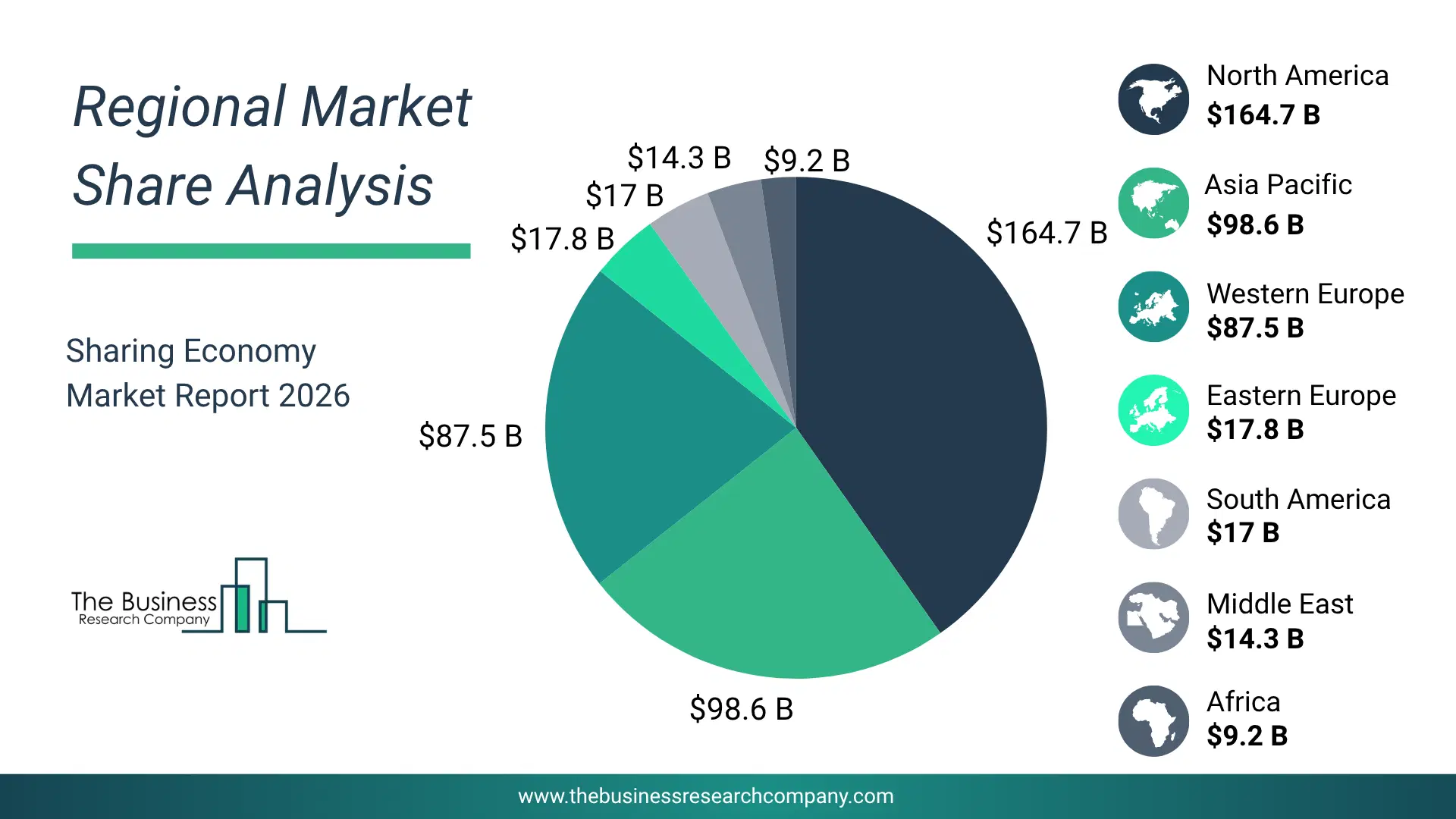
Regional Outlook
North America was the largest region in the sharing economy market in 2025. Asia-Pacific is expected to be the fastest-growing region in the forecast period. The regions covered in this market report are Asia-Pacific, South East Asia, Western Europe, Eastern Europe, North America, South America, Middle East, Africa. The countries covered in this market report are Australia, Brazil, China, France, Germany, India, Indonesia, Japan, Taiwan, Russia, South Korea, UK, USA, Canada, Italy, SpainWhat Defines the Sharing Economy Market?
The sharing economy market consists of revenues earned by entities by providing services such as transportation, accommodation, shopping, freelancing, dining, and pet services. The market value includes the value of related goods sold by the service provider or included within the service offering. The sharing economy market also includes sales of smartphones and tablets, IoT devices, payment terminals and pos systems, electric vehicles and charging stations. Values in this market are ‘factory gate’ values, that is the value of goods sold by the manufacturers or creators of the goods, whether to other entities (including downstream manufacturers, wholesalers, distributors and retailers) or directly to end customers. The value of goods in this market includes related services sold by the creators of the goods.How is Market Value Defined and Measured?
The market value is defined as the revenues that enterprises gain from the sale of goods and/or services within the specified market and geography through sales, grants, or donations in terms of the currency (in USD unless otherwise specified). The revenues for a specified geography are consumption values that are revenues generated by organizations in the specified geography within the market, irrespective of where they are produced. It does not include revenues from resales along the supply chain, either further along the supply chain or as part of other products.
This chart presents market attractiveness based on a quantitative evaluation of growth, competition, strategic alignment, and risk, offering a clear view of opportunity areas for decision-making. This chart is for illustrative purposes; the full report contains the complete analysis.

This chart highlights the Total Addressable Market (TAM) by estimating the maximum revenue opportunity using an assumption-driven approach, supporting strategic planning and opportunity sizing across markets. The chart is illustrative; the full report provides a more comprehensive analysis.
What Key Data and Analysis Are Included in the Sharing Economy Market Report 2026?
The sharing economy market research report is one of a series of new reports from The Business Research Company that provides market statistics, including industry global market size, regional shares, competitors with the market share, detailed market segments, market trends and opportunities, and any further data you may need to thrive in the sharing economy industry. The market research report delivers a complete perspective of everything you need, with an in-depth analysis of the current and future state of the industry.Sharing Economy Market Report Forecast Analysis
| Report Attribute | Details |
|---|---|
| Market Size Value In 2026 | $309.74 billion |
| Revenue Forecast In 2030 | $752.83 billion |
| Growth Rate | CAGR of 26.5% from 2026 to 2030 |
| Base Year For Estimation | 2025 |
| Actual Estimates/Historical Data | 2020-2025 |
| Forecast Period | 2026 - 2030 |
| Market Representation | Revenue in USD Billion and CAGR from 2026 to 2030 |
| Segments Covered | Product, Distribution Channel, End User |
| Regional Scope | Asia-Pacific, Western Europe, Eastern Europe, North America, South America, Middle East, Africa |
| Country Scope | The countries covered in the report are Australia, Brazil, China, France, Germany, India, Indonesia, Japan, Taiwan, Russia, South Korea, UK, USA, Canada, Italy, Spain. |
| Key Companies Profiled | Uber Technologies Inc, Didi Global, JLL, Booking Holdings Inc, Avis Budget Group, eBay Inc, Airbnb Inc, Snap, Accor SA, Lyft Inc, Lime, Fiverr International Ltd, Prosper, BlaBlaCar, Zipcar, Fon, JustPark, Spotahome, Couchsurfing, Eatwith, HubbleHQ, E-stronger, VaShare, Stashbee Limited, Steam |
| Customization Scope | Request for Customization |
| Pricing And Purchase Options | Explore Purchase Options |