
Ship Building And Repairing Market Report 2026
Global Outlook – By Type (Ship Building, Ship Repairing ), By Type Of Vessel (Tankers, Bulkers, Containerships, Offshore, Refrigerated Vessels, Passenger, Other Type Of vehicles ), By End-User (Passenger Transportation, Goods Transportation) – Market Size, Trends, Strategies, and Forecast to 2030
Ship Building And Repairing Market Overview
• Ship Building And Repairing market size has reached to $245.34 billion in 2025 • Expected to grow to $333.86 billion in 2030 at a compound annual growth rate (CAGR) of 6.5% • Growth Driver: Global Trade Surge Fuels Growth In The Ship Building And Repairing Market • Market Trend: Leading Shipbuilding Companies Embrace Green Container Ships For Environmental Impact • Asia-Pacific was the largest region in 2025 and Western Europe is the fastest growing region.Market Gains By 2030 – Top Opportunities By Segment
Market Gain identifies the most promising market opportunities by highlighting the segments or products expected to generate the highest incremental revenue growth over the next five years.
What Is Covered Under Ship Building And Repairing Market?
Ship building refers to building a new ship from the ground up to completion based on the required design. Ship repair is the service provided after the sale of the product because it involves giving the ship regular maintenance. The main types in the shipbuilding and repairing market are shipbuilding and ship repairing. Shipbuilding refers to the construction of floating vessels and ships. The various applications include general services, dockage, hull parts, engine parts, electric works, and auxiliary services. These are used by transport companies, the military, and other end-users.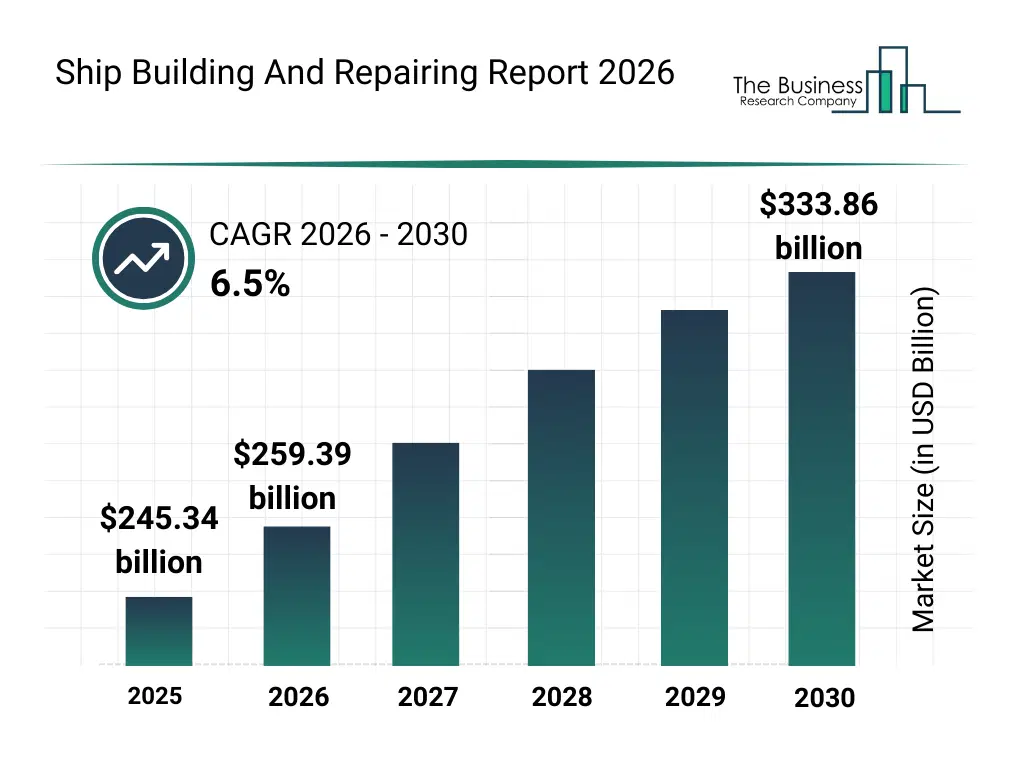
What Is The Ship Building And Repairing Market Size and Share 2026?
The ship building and repairing market size has grown strongly in recent years. It will grow from $245.34 billion in 2025 to $259.39 billion in 2026 at a compound annual growth rate (CAGR) of 5.7%. The growth in the historic period can be attributed to aging global vessel fleet, expansion of international shipping operations, increasing demand for dry-docking services, rising compliance requirements for maritime safety, availability of specialized repair shipyards.What Is The Ship Building And Repairing Market Growth Forecast?
The ship building and repairing market size is expected to see strong growth in the next few years. It will grow to $333.86 billion in 2030 at a compound annual growth rate (CAGR) of 6.5%. The growth in the forecast period can be attributed to increasing adoption of smart maintenance technologies, rising demand for emission retrofitting services, expansion of offshore vessel repairs, growing investments in automated repair tools, increasing focus on downtime reduction. Major trends in the forecast period include increasing focus on predictive maintenance services, rising demand for vessel life extension solutions, growing adoption of digital repair management systems, expansion of conversion and retrofit services, enhanced emphasis on regulatory compliance.
Global Ship Building And Repairing Market Segmentation
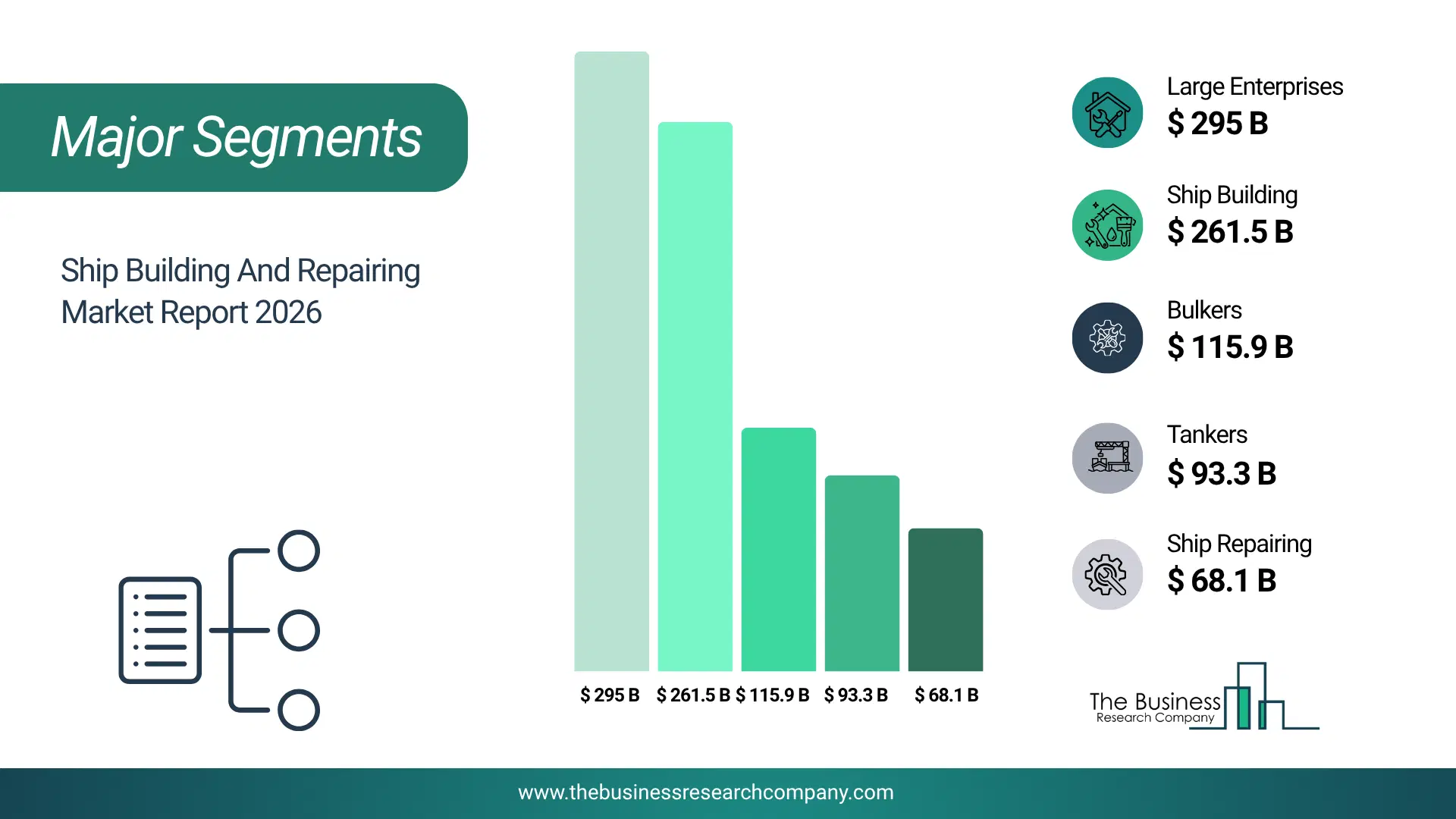
1) By Type: Ship Building, Ship Repairing 2) By Type Of Vessel: Tankers, Bulkers, Containerships, Offshore, Refrigerated Vessels, Passenger, Other Type Of vehicles 3) By End-User: Passenger Transportation, Goods Transportation Subsegments: 1) By Ship Building: New Vessel Construction, Specialized Shipbuilding 2) By Ship Repairing: Routine Maintenance And Inspections, Major Repairs And Refurbishments, Conversion Services The top segments in the ship building and repairing market will be: • Goods Transportation will reach $295001.26 Million by 2030. • Ship Building will reach $261529.92 Million by 2030. • Bulkers will reach $115922.86 Million by 2030. • Tankers will reach $93313.64 Million by 2030. • Ship Repairing will reach $68093.02 Million by 2030.What Is The Driver Of The Ship Building And Repairing Market?
The increase in global trade is expected to boost the growth of the ship building and repairing market going forward. Global trade refers to the exchange of goods, services, and capital across international borders or territories. Shipping capacity is required to deliver commodities across international borders as global trade expands. This growing demand for cargo ships, container ships, and bulk carriers propels the development of new vessels, encouraging the shipbuilding and repair sector. For instance, in September 2023, according to a report published by the United Nations Conference on Trade and Development, a Switzerland-based intergovernmental organization, the maritime trade is anticipated to increase by 2.4% in 2023 and by more than 2% from 2024 to 2028. Therefore, the increase in global trade is driving the growth of the ship building and repairing industry.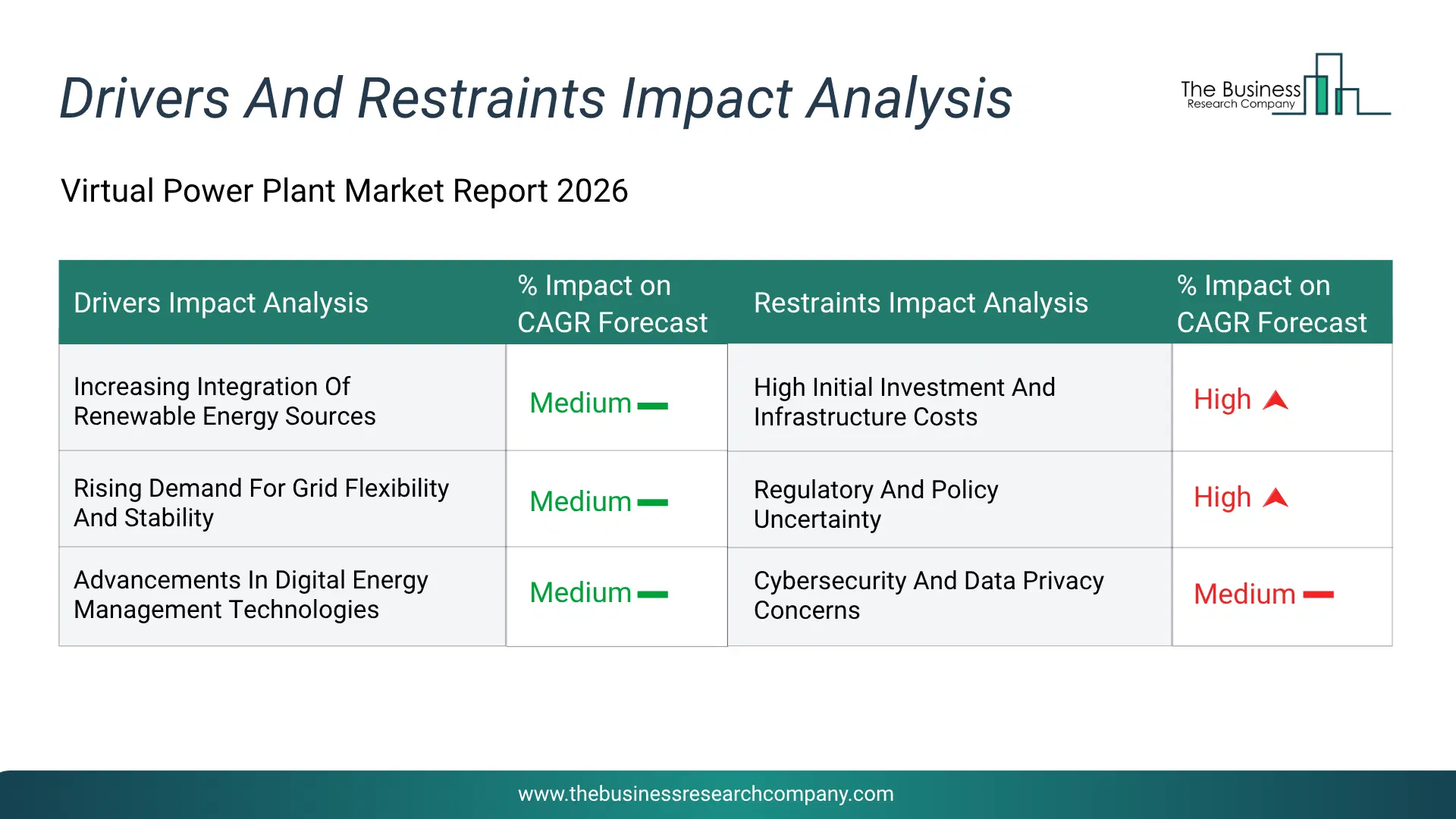
Infographic Chart Showing Key Market Drivers Analysis And Restraints For Ship Building And Repairing Market
The chart presents an impact analysis of key drivers and restraints, quantifying their relative influence on the market's growth rate and helping assess the balance between growth enablers and limiting factors. This chart offers a high-level perspective; the full report contains more detailed insights.
How Will The Drivers Impact Growth In The Global Ship Building And Repairing Market?
• Increasing Maritime Trade and Fleet Expansion (Medium) – During the forecast period, the increasing maritime trade and fleet expansion will become a key driver of growth in the ship building and repairing market by 2030. maritime trade and fleet expansion are increasing due to rising global trade volumes, growth in e commerce logistics, expanding energy transportation and stronger demand for containerized and bulk cargo movement. emerging economies are investing heavily in port connectivity and shipping capacity, leading to higher vessel orders and fleet modernization initiatives. ship building and repairing plays a vital role by constructing new vessels, retrofitting aging fleets and ensuring regular maintenance to enhance operational efficiency and compliance with safety standards. as a result, the increasing maritime trade and fleet expansion is anticipated to contributing to a 1.7% annual growth in the market. • Increase in the Aging Fleet of Vessels (Medium) – During the forecast period, the increase in the aging fleet of vessels will emerge as a major factor driving the expansion of the ship building and repairing market by 2030. the aging fleet of vessels is increasing as a significant share of global ships approach or exceed their designed operational lifespan, particularly in segments such as bulk carriers, tankers and offshore support vessels. many operators continue using older vessels due to high replacement costs and fluctuating freight markets, resulting in a growing proportion of ships requiring maintenance, retrofitting and life extension upgrades. this trend raises the need for structural repairs, engine overhauls, compliance upgrades and efficiency improvements. consequently, the increase in the aging fleet of vessels is projected to contributing to a 1.2% annual growth in the market. • Rise of Port and Offshore Infrastructure Projects (Low) – During the forecast period, the rise of port and offshore infrastructure projects will serve as a key growth catalyst for the ship building and repairing market by 2030, port and offshore infrastructure refers to the physical facilities and assets that support maritime trade and offshore energy activities, including ports, terminals, shipyards, offshore platforms and subsea systems. increasing port and offshore infrastructure reflects rising investments in port expansion, terminal modernization and offshore oil, gas and renewable energy projects to meet growing global trade and energy demand. shipbuilding and repairing contributes by constructing specialized vessels such as dredgers and offshore support vessels, along with maintaining and upgrading existing fleets to ensure operational efficiency and safety. therefore, this rise of port and offshore infrastructure projects is projected to supporting to a 1.0% annual growth in the market. • Growing Coastal and Marine Tourism (Low) – During the forecast period, the growing coastal and marine tourism is expected to be a key driver propelling growth in the shipbuilding and repairing market. Coastal and marine tourism is increasing due to rising disposable incomes, expanding cruise tourism, growth in water sports activities and increasing preference for seaside leisure experiences. Governments are also investing in coastal infrastructure, marina development and waterfront attractions to boost tourism revenue and regional economic development. Shipbuilding and repairing contributes to this expansion by constructing cruise ships, ferries, yachts and recreational boats, while ensuring their regular maintenance, retrofitting and safety compliance. Therefore, the growth of coastal and marine tourism acts as a significant driver for the shipbuilding and repairing market. The growing coastal and marine tourism growth contribution during the forecast period in 2025 is 0.7%.How Will The Restraints Impact Growth In The Global Ship Building And Repairing Market?
• High Cost Associated with Ship Repair and Maintenance Services (Medium) – During the forecast period, high costs associated with ship repair and maintenance services are restricting the growth of the shipbuilding and repairing market. High costs associated with ship repair and maintenance services significantly burden ship owners and operators, particularly due to expensive spare parts, skilled labor charges, dry docking fees and compliance with stringent safety and environmental regulations. Fluctuating raw material prices and rising energy costs further increase overall servicing expenses. Smaller fleet operators often struggle to absorb these costs, leading to deferred maintenance or reduced repair frequency. This can lower demand for advanced repair services and modernization projects. As a result, high repair and maintenance costs hamper the growth of the shipbuilding and repairing market. Growth affected by high costs associated with ship repair and maintenance services during the forecast period in 2025 is -2.0%. • Volatile Raw Material Prices (Medium) – During the forecast period, volatile raw material prices are restricting the growth of the shipbuilding and repairing market. Volatile raw material prices, particularly for steel, aluminum and marine-grade components, significantly increase cost uncertainty in shipbuilding and repairing activities. Frequent price fluctuations make it difficult for shipyards to estimate project budgets accurately and maintain stable profit margins. This can lead to contract renegotiations, delayed project execution and reduced investment in new vessel construction. Inconsistent input costs also affect long-term planning and procurement strategies. Additionally, sudden spikes in material costs can strain working capital requirements and disrupt supply chain stability. Smaller shipyards are especially vulnerable, as they have limited bargaining power and financial flexibility to absorb cost shocks. As a result, volatile raw material prices restrain the growth and profitability of the shipbuilding and repairing market. Growth affected by the volatile raw material prices during the forecast period in 2025 is -1.0%. • Impact of Trade Wars and Tariffs (Low) – During the forecast period, impact of trade wars and tariffs are restricting the growth of the ship building and repairing market. The impact of trade wars and tariffs significantly hampers ship building and repairing by increasing the cost of essential raw materials such as steel, aluminum and marine components. Higher import duties on specialized equipment and propulsion systems further raise overall project expenses and reduce profit margins for shipyards. Trade restrictions also disrupt global supply chains, leading to delays in vessel construction and extended repair timelines. In addition, uncertainty in international trade policies discourages cross-border investments and limits export opportunities for shipbuilders. Fluctuating currency exchange rates triggered by trade tensions further add financial instability and cost unpredictability for long term contracts. Reduced global trade volumes also lower demand for new vessels, directly affecting order books of shipyards. As a result, trade wars and tariffs weaken competitiveness, slow industry growth and create financial pressure within the ship building and repairing sector. Growth affected by impact of trade wars and tariffs during the forecast period in 2025 is -0.3%.Key Players In The Global Ship Building And Repairing Market
Major companies operating in the ship building and repairing market report include Hyundai Heavy Industries, Samsung Heavy Industries Co., Ltd., Daewoo Shipbuilding & Marine Engineering Co Ltd, Fincantieri S.p.A., General Dynamics Corporation, Imabari Shipbuilding Co., Ltd., China Shipbuilding Industry Co., Ltd., CSCC Offshore & Marine Engineering (Group) Company Ltd, MITSUBISHI HEAVY INDUSTRIES, LTD., Sumitomo Heavy Industries, Ltd, China State Shipbuilding Corporation, Yangzijiang Shipbuilding (Holdings) Ltd., New Times Shipbuilding Co. Ltd., Hudong- Zhonghua Shipbuilding, Tsuneishi Holdings, Oshima Shipbuilding Company, Cochin Shipyard Limited, Hindustan Shipyard Limited, Garden Reach Shipbuilders and Engineers, Lloyd Werft Bremerhaven, Neptune Werft GmbH, Schiffswerft Hermann Barthel GmbH, Meyer Werft, STX, PIRIOU, SOCARENAM, CMN: Chantiers naval de Normandie, Naval Group, A&P Group Tyne Shipyard, Cammell Laird, Parkol Marine Engineering, Yarrow Shipbuilders, NAUTA, Remontowa, Seatech Engineering, CRIST S A, Marine Projects Ltd SP, PO SEVMASH, AO, OSK, Admiralteiskie Verfi, Severnaya Verf, Pella, NEVSKI SSZ, Vard Tulcea, Santierul Naval Damen Galati, Shipyard ATG Giurgiu, Huntington Ingalls Industries Inc., BAE Systems, Dammam Shipyard, Zamil Offshore, Damen Shipyards Group, Israel Shipyards Ltd., Gemak Group of Companies, Sefine Shipyard, Kuzey Star Shipyard, Desan Shipyard, Southern African Shipyards, Dormac Marine & Engineering, DCD Enerji Çevre ve Teknoloji A.Ş, Southern Engineering Co. Ltd, West Atlantic Shipyard, Nigerdock FZE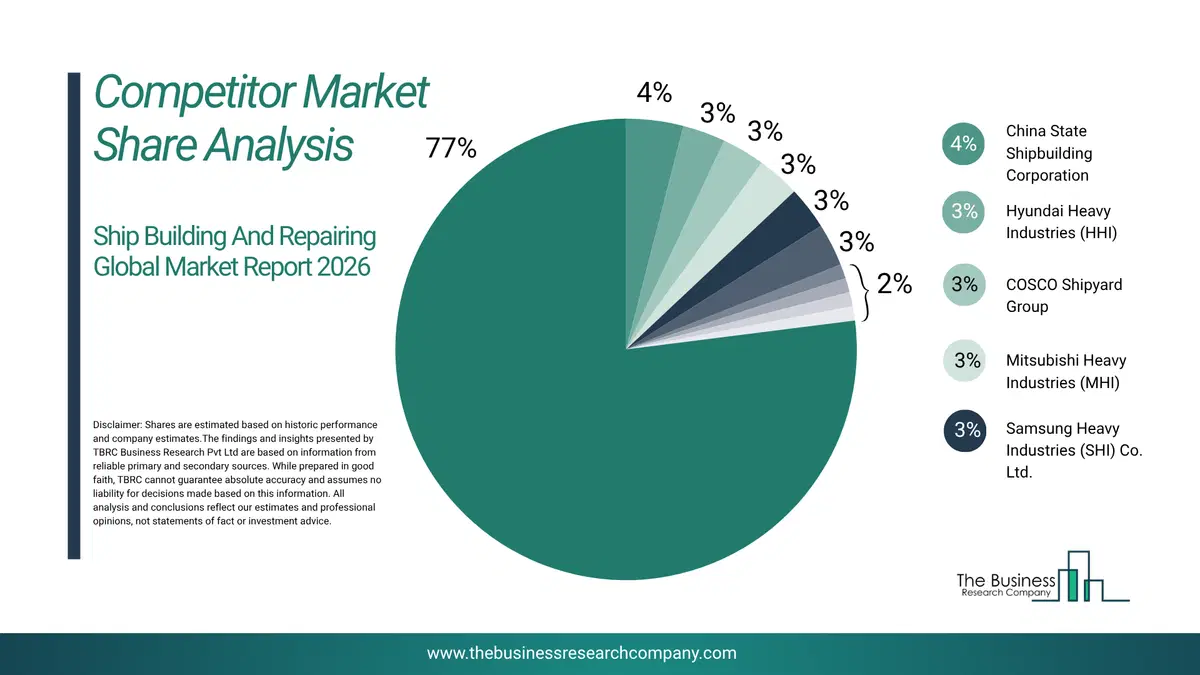
This chart is for illustrative purposes; the full report includes a detailed competitor analysis and comprehensive overview of the top 10 companies in the market.
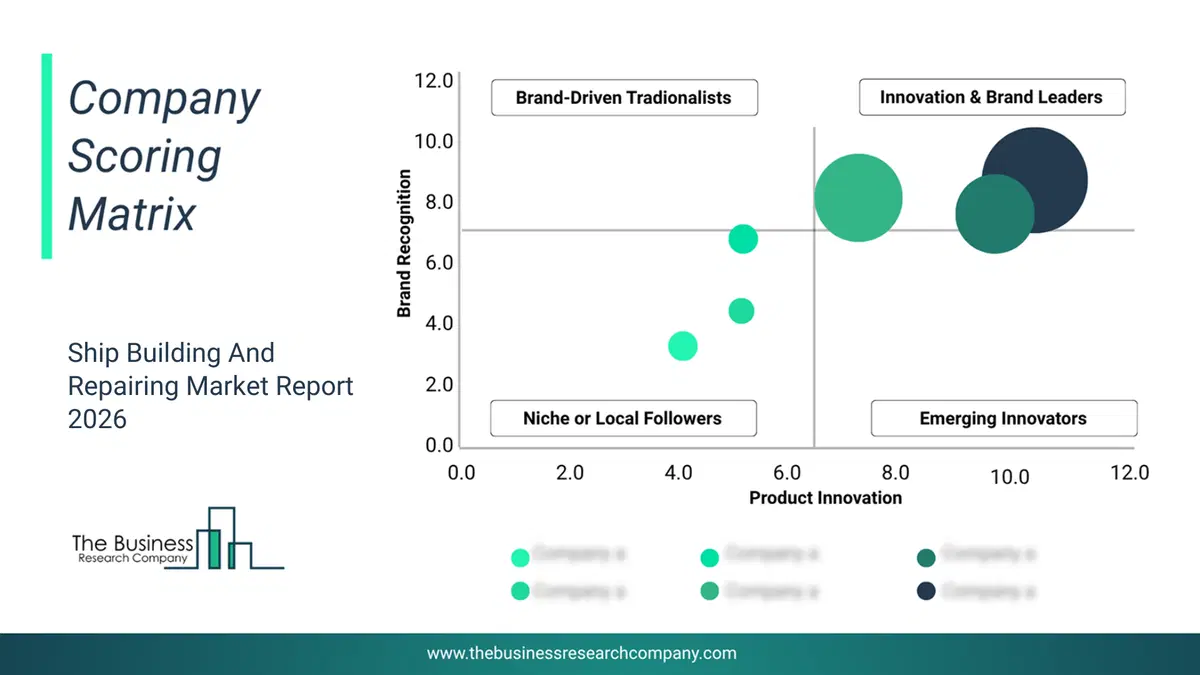
This chart maps companies by product innovation and brand strength, with bubble size indicating relative revenue, helping identify market leaders, challengers, and niche players. This is an illustrative chart; the full report provides a complete and accurate competitive analysis.
Global Ship Building And Repairing Market Trends and Insights
Major companies operating in the shipbuilding and repairing market are developing new products such as the green container ships to meet larger customer bases, more sales, and increased revenue. Green container ships are vessels that are designed to reduce their environmental impact and carbon footprint. For instance, in April 2023, Maersk A/S, a Denmark-based shipping company, launched a green methanol-powered container ship. The product's distinguishing feature is that it is a feeder ship with a 2,100 TEU capacity, the first of nineteen carbon-neutral vessels that will run on green methanol fuel. Maersk has been busy securing suppliers to supply the roughly 1 million metric tons of green methanol fuel per year that the vessels will need to power its methanol-fueled fleet. Compared to ships that use conventional fuel, this will prevent the atmospheric emissions of around 2.3 million metric tons of CO2 per year.What Are Latest Mergers And Acquisitions In The Ship Building And Repairing Market?
In February 2025, Maersk, a Denmark-based shipping and logistics company, partnered with Cochin Shipyard Limited (CSL) to explore ship repair and shipbuilding activities. Through this partnership, Maersk aims to enhance maritime capabilities and promote local shipbuilding and maintenance expertise by leveraging CSL’s advanced infrastructure and experience in constructing and servicing vessels, thereby supporting efficient and high-quality shipbuilding and repair operations. Cochin Shipyard Limited is an India-based shipbuilding and maintenance company specializing in constructing and servicing both commercial and defense ships.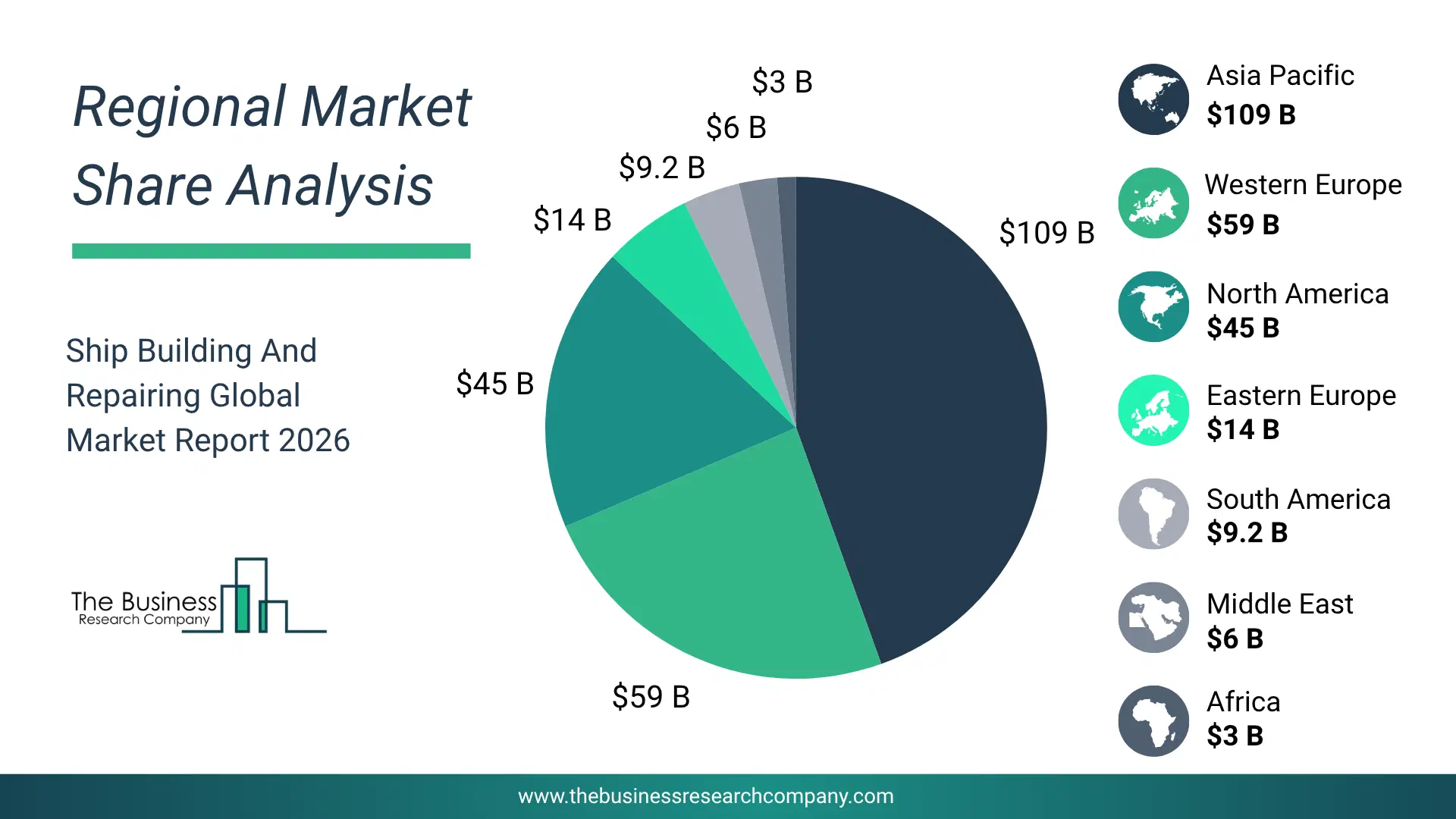
Regional Outlook
Asia-Pacific was the largest region in the shipbuilding and repairing market in 2025. Western Europe was the second largest region in the shipbuilding and repairing market. The regions covered in this market report include Asia-Pacific, South East Asia, Western Europe, Eastern Europe, North America, South America, Middle East, Africa. The countries covered in this market report include China, India, Japan, Australia, Indonesia, South Korea, Bangladesh, Thailand, Vietnam, Malaysia, Singapore, Philippines, Hong Kong, Taiwan, New Zealand, UK, Germany, France, Italy, Spain, Austria, Belgium, Denmark, Finland, Ireland, Netherlands, Norway, Portugal, Sweden, Switzerland, Russia, Czech Republic, Poland, Romania, Ukraine, USA, Canada, Mexico, Brazil, Chile, Argentina, Colombia, Peru, Saudi Arabia, Israel, Iran, Turkey, UAE, Egypt, Nigeria, South Africa.What Defines the Ship Building And Repairing Market?
The shipbuilding and repairing market include revenues earned by entities by construction of ships, their repair, conversion, and alteration. The market value includes the value of related goods sold by the service provider or included within the service offering. Only goods and services traded between entities or sold to end consumers are included.How is Market Value Defined and Measured?
The market value is defined as the revenues that enterprises gain from the sale of goods and/or services within the specified market and geography through sales, grants, or donations in terms of the currency (in USD unless otherwise specified). The revenues for a specified geography are consumption values that are revenues generated by organizations in the specified geography within the market, irrespective of where they are produced. It does not include revenues from resales along the supply chain, either further along the supply chain or as part of other products.
This chart presents market attractiveness based on a quantitative evaluation of growth, competition, strategic alignment, and risk, offering a clear view of opportunity areas for decision-making. This chart is for illustrative purposes; the full report contains the complete analysis.

This chart highlights the Total Addressable Market (TAM) by estimating the maximum revenue opportunity using an assumption-driven approach, supporting strategic planning and opportunity sizing across markets. The chart is illustrative; the full report provides a more comprehensive analysis.
What Key Data and Analysis Are Included in the Ship Building And Repairing Market Report 2026?
The ship building and repairing market research report is one of a series of new reports from The Business Research Company that provides market statistics, including industry global market size, regional shares, competitors with the market share, detailed market segments, market trends and opportunities, and any further data you may need to thrive in the ship building and repairing industry. The market research report delivers a complete perspective of everything you need, with an in-depth analysis of the current and future state of the industry.Ship Building And Repairing Market Report Forecast Analysis
| Report Attribute | Details |
|---|---|
| Market Size Value In 2026 | $259.39 billion |
| Revenue Forecast In 2030 | $333.86 billion |
| Growth Rate | CAGR of 5.7% from 2026 to 2030 |
| Base Year For Estimation | 2025 |
| Actual Estimates/Historical Data | 2020-2025 |
| Forecast Period | 2026 - 2030 - 2035 |
| Market Representation | Revenue in USD Billion and CAGR from 2026 to 2030 |
| Segments Covered | Type, Type Of Vessel, End-User |
| Regional Scope | Asia-Pacific, Western Europe, Eastern Europe, North America, South America, Middle East, Africa |
| Country Scope | The countries covered in the report are Australia, Brazil, China, France, Germany, India, Indonesia, Japan, Taiwan, Russia, South Korea, UK, USA, Canada, Italy, Spain. |
| Key Companies Profiled | Hyundai Heavy Industries, Samsung Heavy Industries Co., Ltd., Daewoo Shipbuilding & Marine Engineering Co Ltd, Fincantieri S.p.A., General Dynamics Corporation, Imabari Shipbuilding Co., Ltd., China Shipbuilding Industry Co., Ltd., CSCC Offshore & Marine Engineering (Group) Company Ltd, MITSUBISHI HEAVY INDUSTRIES, LTD., Sumitomo Heavy Industries, Ltd, China State Shipbuilding Corporation, Yangzijiang Shipbuilding (Holdings) Ltd., New Times Shipbuilding Co. Ltd., Hudong- Zhonghua Shipbuilding, Tsuneishi Holdings, Oshima Shipbuilding Company, Cochin Shipyard Limited, Hindustan Shipyard Limited, Garden Reach Shipbuilders and Engineers, Lloyd Werft Bremerhaven, Neptune Werft GmbH, Schiffswerft Hermann Barthel GmbH, Meyer Werft, STX, PIRIOU, SOCARENAM, CMN: Chantiers naval de Normandie, Naval Group, A&P Group Tyne Shipyard, Cammell Laird, Parkol Marine Engineering, Yarrow Shipbuilders, NAUTA, Remontowa, Seatech Engineering, CRIST S A, Marine Projects Ltd SP, PO SEVMASH, AO, OSK, Admiralteiskie Verfi, Severnaya Verf, Pella, NEVSKI SSZ, Vard Tulcea, Santierul Naval Damen Galati, Shipyard ATG Giurgiu, Huntington Ingalls Industries Inc., BAE Systems, Dammam Shipyard, Zamil Offshore, Damen Shipyards Group, Israel Shipyards Ltd., Gemak Group of Companies, Sefine Shipyard, Kuzey Star Shipyard, Desan Shipyard, Southern African Shipyards, Dormac Marine & Engineering, DCD Enerji Çevre ve Teknoloji A.Ş, Southern Engineering Co. Ltd, West Atlantic Shipyard, Nigerdock FZE |
| Customization Scope | Request for Customization |
| Pricing And Purchase Options | Explore Purchase Options |