
Ship Building And Repairing Global Market Opportunities And Strategies To 2035
By Type (Ship Building, Ship Repairing), By Type Of Vessel (Tankers, Bulkers, Containerships, Offshore, Refrigerated Vessels, Passenger, Other Types Of Vehicles), By End User (Passenger Transportation, Goods Transportation), And By Region, Opportunities And Strategies – Global Forecast To 2035
Ship Building And Repairing Market Definition
Ship building and repairing refers to the design, construction, maintenance, and overhaul of marine vessels including commercial ships, naval vessels, and offshore structures. The market encompasses new vessel construction across all major ship types as well as scheduled and unscheduled repair and maintenance activities carried out at dry docks and shipyard facilities worldwide. The ship building and repairing market consists of revenues earned by entities (organizations, sole traders, or partnerships) through the construction of new ships and the repair, maintenance, and conversion of existing vessels. This includes commercial vessels such as tankers, bulkers, containerships, and passenger vessels, as well as naval and offshore vessels. Operators in this market include integrated shipyards offering both new builds and repair services, as well as specialist repair facilities and dry-dock operators. The growing volume of global maritime trade, aging vessel fleets requiring replacement, and increasingly stringent environmental regulations are all key drivers of sustained demand for shipbuilding and repairing services.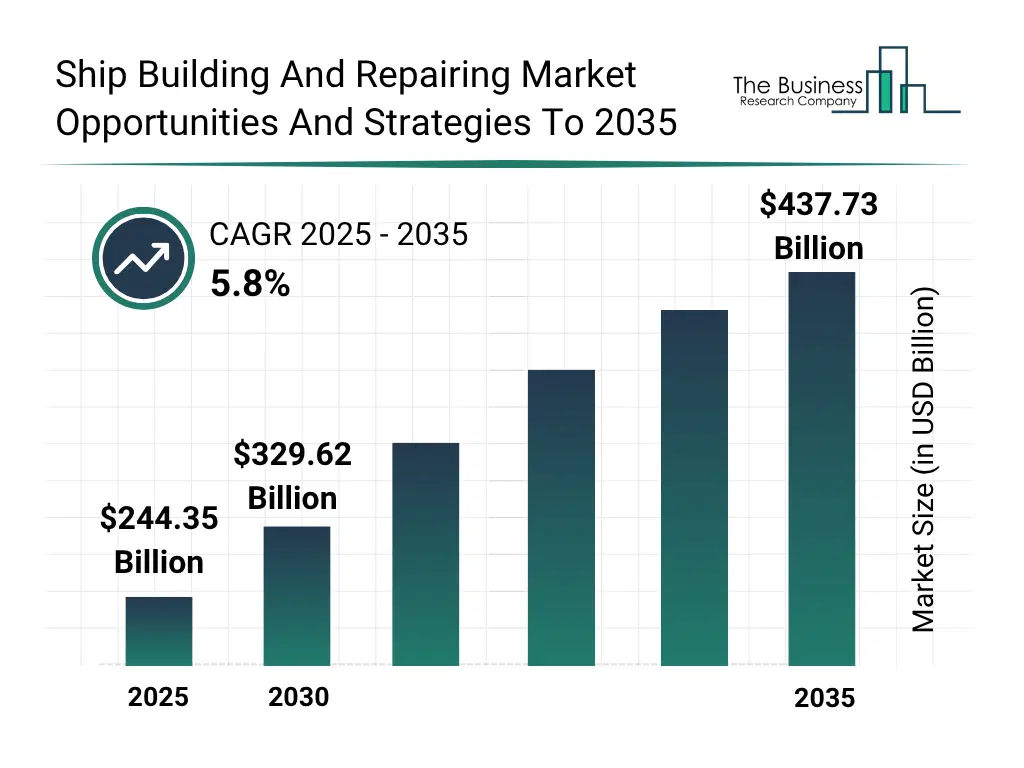
Ship Building And Repairing Market Size
The global ship building and repairing market reached a value of nearly $244,347.1 million in 2025, having grown at a compound annual growth rate (CAGR) of 7.8% since 2020. The market is expected to grow from $244,347.1 million in 2025 to $329,622.9 million in 2030 at a rate of 6.2%. The market is then expected to grow at a CAGR of 5.8% from 2030 and reach $437,725.6 million in 2035. Growth in the historic period resulted from expansion in cross-border trade, favorable government initiatives, growing focus on reducing emissions and environmental impact, and rising maritime accidents and safety concerns. Factors that negatively affected growth in the historic period were political instability or conflicts and imposition of trade barriers. Going forward, rise of port and offshore infrastructure projects, increasing maritime trade and fleet expansion, increase in the aging fleet of vessels, and growing coastal and marine tourism will drive the growth. Factors that could hinder the growth of the ship building and repairing market in the future include high cost associated with ship repair and maintenance services, volatile raw material prices, and impact of trade war and tariff.
Ship Building And Repairing Market Segmentation
The ship building and repairing market is segmented by type, by type of vessel and by end user.By Type –
The ship building and repairing market is segmented by type into:
- a) Ship Building
- b) Ship Repairing
By Type Of Vessel –
The ship building and repairing market is segmented by type of vessel into:
- a) Tankers
- b) Bulkers
- c) Containerships
- d) Offshore
- e) Refrigerated Vessels
- f) Passenger
- g) Other Types Of Vehicles
By End User –
The ship building and repairing market is segmented by end user into:
- a) Passenger Transportation
- b) Goods Transportation
By Geography - The ship building and repairing market is segmented by geography into:
- China
- India
- Japan
- Australia
- South Korea
- Bangladesh
- Thailand
- Vietnam
- Malaysia
- Singapore
- Phillipines
- Hong kong
- New Zealand o South East Asia
- Indonesia
- USA
- Canada
- Mexico
- Brazil
- Argentina
- Chile
- Colombiia
- Peru
- France
- Germany
- UK
- Italy
- Spain
- Austria
- Belgium
- Denmark
- Finland
- Ireland
- Netherland
- Norway
- Portugal
- Sweden
- Switzerland
- Russia
- Czech Republic
- Poland
- Romania
- Ukraine
- Saudi Arabia
- Israel
- Iran
- Turkey
- UAE o Africa
- Egypt
- Nigeria
- South Africa
-
o Asia Pacific