
Ship-To-Shore Cranes Market Report 2026
Global Outlook – By Type (High Profile Ship-to-Shore Cranes, Low Profile Ship-to-Shore Cranes), By Power Supply (Diesel-Powered Ship-to-Shore Cranes, Electric Ship-to-Shore Cranes, Hybrid Ship-to-Shore Cranes), By Outreach (Less Than 40 Meters, 41–50 Meters, 51–60 Meters, More Than 60 Meters), By Mounting And Mobility (Rail-Mounted Ship-to-Shore Cranes, Fixed Ship-to-Shore Cranes), By Operation Mode (Manual And Semi-Automated Ship-to-Shore Cranes, Fully Automated Ship-to-Shore Cranes6) By End User (Container Ports, Container Terminals, Industrial Ports) – Market Size, Trends, Strategies, and Forecast to 2030
Ship-To-Shore Cranes Market Overview
• Ship-To-Shore Cranes market size has reached to $2.86 billion in 2025 • Expected to grow to $3.78 billion in 2030 at a compound annual growth rate (CAGR) of 5.8% • Growth Driver: International Trade Boosts Ship-To-Shore Market • Market Trend: Increasing Focus On Developing Simulator-Based Training To Gain A Competitive Edge • North America was the largest region in 2025 and Asia-Pacific is the fastest growing region.Market Gains By 2030 – Top Opportunities By Segment
Market Gain identifies the most promising market opportunities by highlighting the segments or products expected to generate the highest incremental revenue growth over the next five years.
What Is Covered Under Ship-To-Shore Cranes Market?
Ship-to-shore cranes refer to a crane either in a fixed position, or rail mounted for traversing ashore, as well as any mobile crane deemed to be standard terminal equipment for the purpose of lifting and transferring cargo from quayside to vessel and vice versa. They are uniquely created with a variety of outreaches and specification detail to meet the needs of each customer. The supporting framework of a container crane can move along a rail track the entire length of a quay or yard. The main types of ship to shore cranes are high-profile cranes and low-profile cranes. High-profile cranes are attached to the crane structure by hinges and are oriented toward the water. Ships can be cleared for navigation as a result of the boom being raised. The lifting capacities are Panamax STS cranes, post-Panamax STS cranes, and super-post Panamax STS cranes. The power supplies are diesel, electric, and hybrid. The outreach includes less than 40 meters, 41–50 meters, 51–60 meters, and more than 60 meters. The application includes cargo transportation, power transmission, and other applications.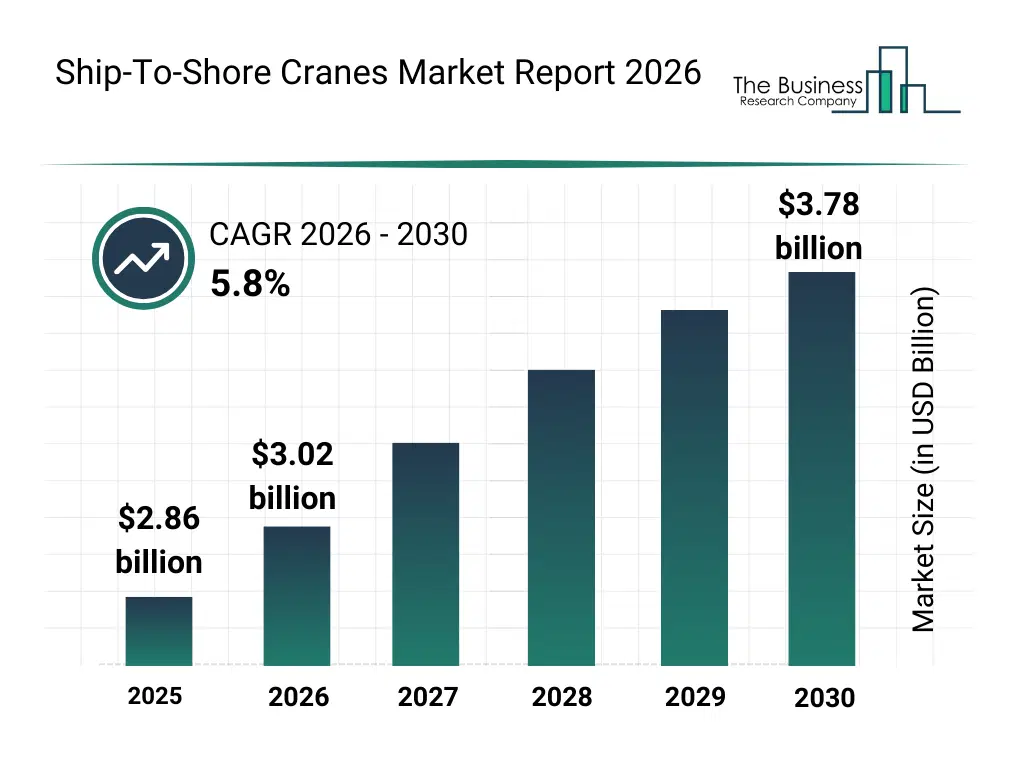
What Is The Ship-To-Shore Cranes Market Size and Share 2026?
The ship-to-shore cranes market size has grown strongly in recent years. It will grow from $2.86 billion in 2025 to $3.02 billion in 2026 at a compound annual growth rate (CAGR) of 5.7%. The growth in the historic period can be attributed to rising maritime trade volumes, early port infrastructure modernization, expansion of containerized shipping, increasing global cargo handling operations, initial investments in port automation.What Is The Ship-To-Shore Cranes Market Growth Forecast?
The ship-to-shore cranes market size is expected to see strong growth in the next few years. It will grow to $3.78 billion in 2030 at a compound annual growth rate (CAGR) of 5.8%. The growth in the forecast period can be attributed to expanding international trade networks, rising development of mega ports, increasing demand for faster cargo turnaround, growing investments in port technology upgrades, strengthening focus on logistic efficiency improvement. Major trends in the forecast period include increasing deployment of advanced port handling equipment, growing demand for high capacity cargo lifting solutions, rising development of specialized container handling cranes, increasing expansion of modern maritime logistics infrastructure, growing focus on efficient port cargo transfer solutions.
Global Ship-To-Shore Cranes Market Segmentation
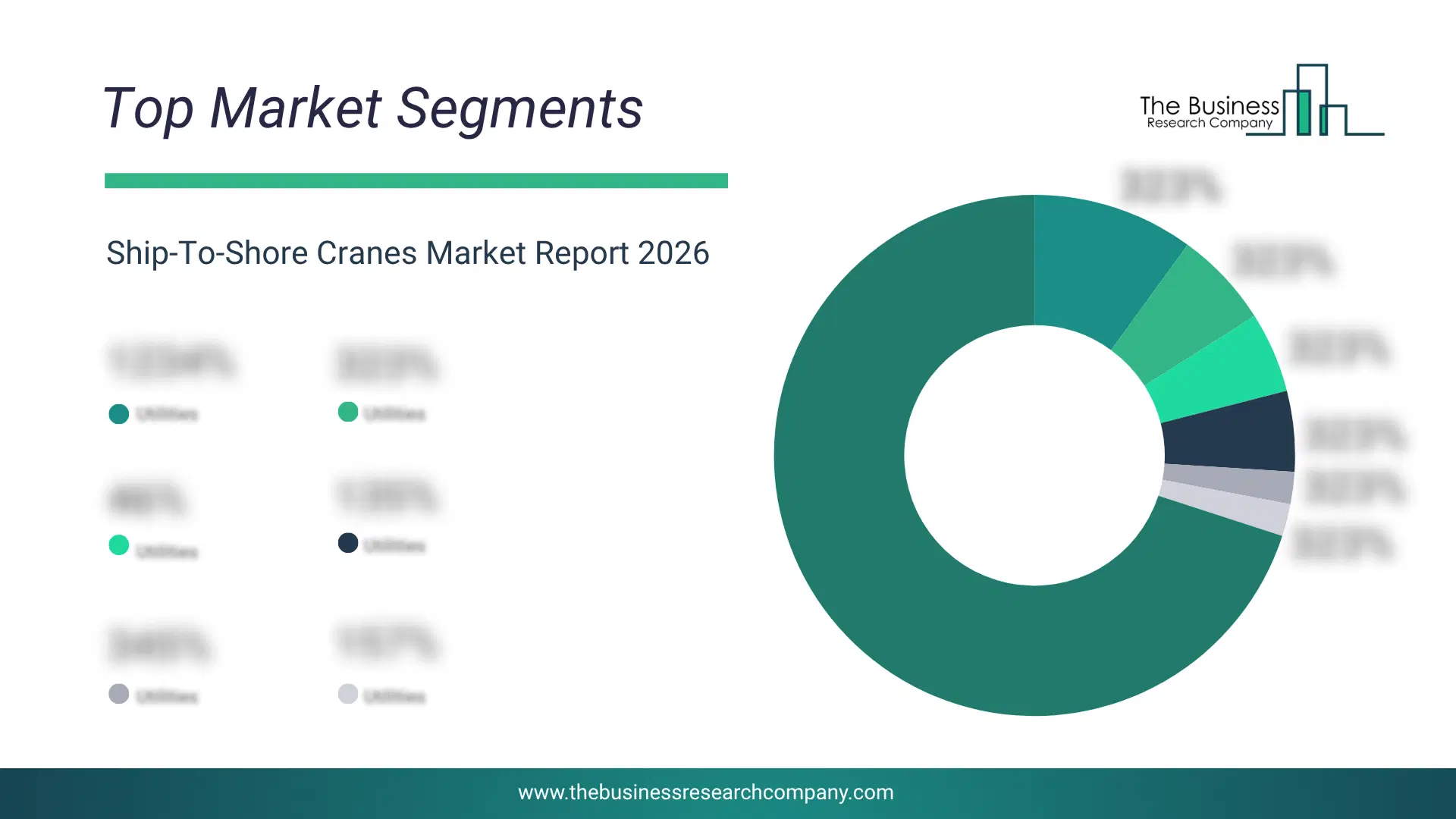
1) By Type: High Profile Ship-to-Shore Cranes, Low Profile Ship-to-Shore Cranes 2) By Power Supply: Diesel-Powered Ship-to-Shore Cranes, Electric Ship-to-Shore Cranes, Hybrid Ship-to-Shore Cranes 3) By Outreach: Less Than 40 Meters, 41–50 Meters, 51–60 Meters, More Than 60 Meters 4) By Mounting And Mobility: Rail-Mounted Ship-to-Shore Cranes, Fixed Ship-to-Shore Cranes 5) By Operation Mode: Manual And Semi-Automated Ship-to-Shore Cranes, Fully Automated Ship-to-Shore Cranes 6) By End User: Container Ports, Container Terminals, Industrial Ports Subsegments: 1) By High Profile Ship-to-Shore Cranes: Rail-Mounted High Profile Ship-to-Shore Cranes, Fixed High Profile Ship-to-Shore Cranes, Super-Post-Panamax High Profile Ship-to-Shore Cranes 2) By Low Profile Ship-to-Shore Cranes: Rail-Mounted Low Profile Ship-to-Shore Cranes, Fixed Low Profile Ship-to-Shore Cranes, Luffing-Boom Low Profile Ship-to-Shore Cranes The top segments in the ship-to-shore cranes market will be: • High Profile Ship-to-Shore Cranes will reach $2.38 Billion by 2030. • Low Profile Ship-to-Shore Cranes will reach $1.35 Billion by 2030.What Is The Driver Of The Ship-To-Shore Cranes Market?
Growing international trade is expected to propel the growth of the ship-to-shore market going forward. International trade refers to the exchange of goods and services between countries, involving the import and export of products across international borders, with the aim of achieving mutual economic benefits and enhancing global economic interdependence. Ship-to-shore communication systems play a vital role in international trade by facilitating real-time data exchange between vessels and ports, ensuring efficient cargo handling and maritime operations. For instance, in September 2024, according to Trade and Investment Core Statistics, a UK-based department for business & trade, the volume of UK exports of goods and services will increase by 0.6% in 2024 and by 1.9% in 2025. Therefore, growing international trade is driving the growth of the ship-to-shore market.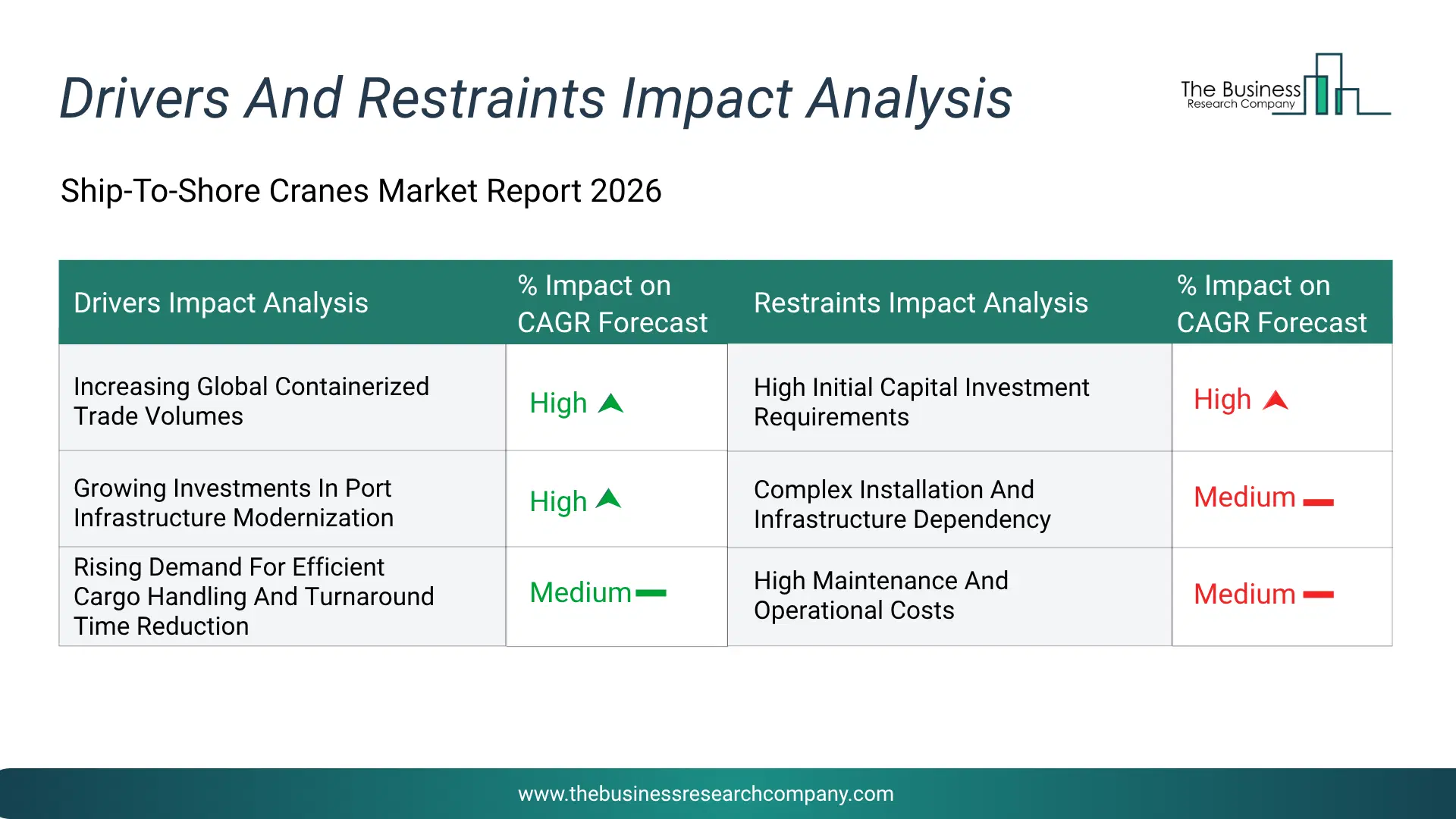
Infographic Chart Showing Key Market Drivers Analysis And Restraints For Ship-To-Shore Cranes Market
The chart presents an impact analysis of key drivers and restraints, quantifying their relative influence on the market's growth rate and helping assess the balance between growth enablers and limiting factors. This chart offers a high-level perspective; the full report contains more detailed insights.
How Will The Drivers Impact Growth In The Global Ship-To-Shore Cranes Market?
• Increasing Global Containerized Trade Volumes (High) – During the forecast period, the increasing global containerized trade volumes are expected to become a key growth driver for the ship-to-shore cranes market by 2030. Rising international trade activity is generating higher container throughput across major ports, creating the need for advanced crane systems capable of handling larger cargo volumes with greater operational reliability. Port authorities and terminal operators are expanding handling capacities to accommodate growing vessel traffic and evolving shipping network requirements. This trend is encouraging procurement of high-capacity ship-to-shore cranes designed to support efficient container movement and long-term port scalability. • Growing Investments In Port Infrastructure Modernization (High) – During the forecast period, the growing investments in port infrastructure modernization are expected to emerge as a major factor driving the expansion of the ship-to-shore cranes market by 2030. Governments and port operators are upgrading aging facilities with next-generation equipment to enhance operational performance and strengthen competitiveness in global logistics networks. Modern terminals require technologically advanced crane systems that support digitalization, remote monitoring, and improved asset utilization. These infrastructure enhancement projects are accelerating equipment replacement cycles and creating sustained demand for modern ship-to-shore crane installations. • Rising Demand For Efficient Cargo Handling And Turnaround Time Reduction (Medium) – During the forecast period, the rising demand for efficient cargo handling and turnaround time reduction is expected to act as a key growth catalyst for the ship-to-shore cranes market by 2030. Port operators are increasingly focused on maximizing berth productivity and minimizing vessel waiting times to improve overall supply chain performance. High-performance crane systems enable faster loading and unloading operations, helping terminals accommodate larger vessel calls and increasing cargo movement efficiency. The emphasis on operational excellence and throughput optimization is encouraging broader adoption of advanced ship-to-shore crane technologies.How Will The Restraints Impact Growth In The Global Ship-To-Shore Cranes Market?
• High Initial Capital Investment Requirements (High) – During the forecast period, the ship-to-shore cranes require substantial upfront investment due to their large size, advanced engineering, and customization based on port specifications. This high capital expenditure can be a major barrier, especially for small and mid-sized ports with limited financial capacity. Additionally, the cost includes not only procurement but also installation, infrastructure alignment, and testing. Such financial burden often delays procurement decisions or limits fleet expansion plans. As a result, high initial investment directly restricts the pace of market adoption and growth. • Complex Installation And Infrastructure Dependency (High) – During the forecast period, the deployment of ship-to-shore cranes is highly dependent on specialized port infrastructure such as reinforced quays, rail tracks, and adequate yard space. Many existing ports, especially in developing regions, lack the required infrastructure to support these large systems. Upgrading port facilities to accommodate such cranes involves additional time, cost, and engineering complexity. This dependency slows down adoption rates and limits scalability across regions. Hence, infrastructure constraints act as a significant restraint on market expansion. • High Maintenance And Operational Costs (Medium) – During the forecast period, the ship-to-shore cranes involve continuous maintenance, skilled labor, and operational monitoring to ensure safe and efficient performance. Regular servicing, spare parts replacement, and technical expertise add to the overall lifecycle cost of ownership. Ports must also invest in trained personnel and safety compliance systems, increasing operational expenditure. These ongoing costs can discourage smaller operators from adopting or upgrading crane systems. Therefore, high maintenance and operational requirements limit widespread adoption and act as a restraint on the market.Key Players In The Global Ship-To-Shore Cranes Market
Major companies operating in the ship-to-shore cranes market report are Liebherr Container Cranes Ltd., Shanghai Zhenhua Heavy Industries Co. Ltd., Wison Group, Konecranes plc, Kalmar Global, SANY Heavy Equipment Co. Ltd., Manitowoc Cranes Group, Terex Corporation, Cargotec Corporation, Hyundai Heavy Industries Co. Ltd., Anupam Industries Limited, Kranunion GmbH, Kocks Ardelt Kranbau GmbH, Kuenz GmbH, Paceco Corp., TTS Group ASA, Doosan Heavy Industries & Construction Co. Ltd., Huisman Equipment B. V., Kress Corporation, MacGregor, Mitsui Engineering & Shipbuilding Co. Ltd., Noell Crane Systems, OUCO Marine Group Co. Ltd., RAM Lifting Technologies, Sarens NV, TEC Containers SA, ZPMC USA, Tadano Ltd., Palfinger AG, Xuzhou Heavy Machinery Co. Ltd., Bridon-Bekaert The Ropes Group, Dana Incorporated, Mac Port-Macchine Operatrici Portuali SRL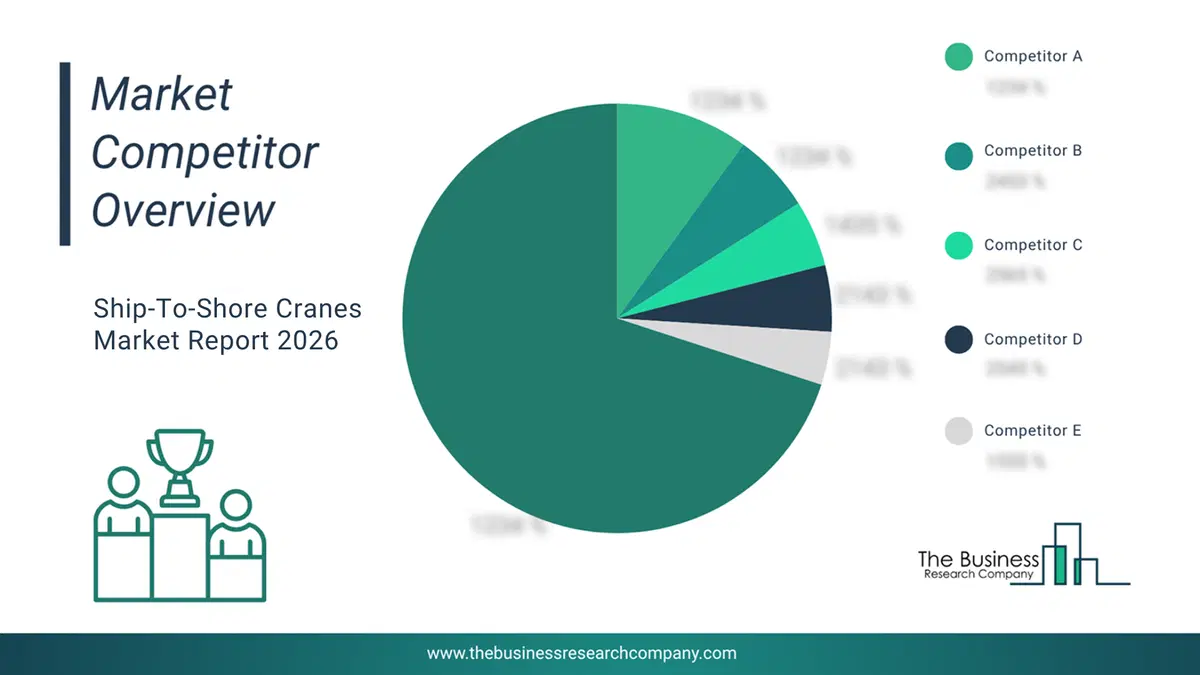
This chart is for illustrative purposes; the full report includes a detailed competitor analysis and comprehensive overview of the top 10 companies in the market.
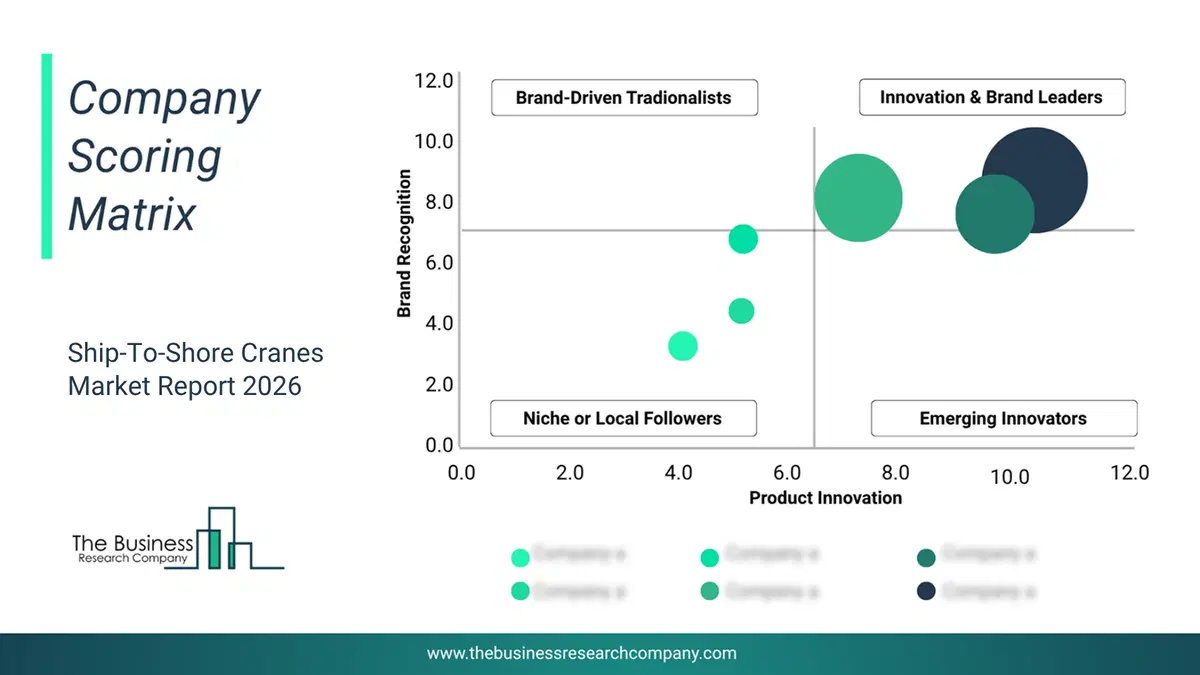
This chart maps companies by product innovation and brand strength, with bubble size indicating relative revenue, helping identify market leaders, challengers, and niche players. This is an illustrative chart; the full report provides a complete and accurate competitive analysis.
Global Ship-To-Shore Cranes Market Trends and Insights
Major companies operating in the ship-to-shore market are focused on developing simulator-based training to gain a competitive edge in the market. Simulators can recreate a variety of ship-to-shore scenarios, including different ship sizes, weather conditions, and equipment configurations. For instance, in June 2023, CM Labs Simulations, a Canada-based developer of simulation-based solutions, launched an enhanced Ship-To-Shore (STS) Crane Simulator Training Pack. The simulator is constructed on a high-fidelity real-time physics engine and incorporates a mechanical engineering layer with multi-body constraints, transmission systems, cables, and other advanced functionalities. It offers a comprehensive training curriculum covering a variety of ship sizes and cargo types, allowing port operators to acquire the necessary expertise for safe and efficient STS crane operation. The simulator replicates the performance characteristics of equipment, taking into account load charts and specifications provided by crane manufacturers. It simulates outreach (water side), backreach (land side), and the height of the spreader above the rail.What Are Latest Mergers And Acquisitions In The Ship-To-Shore Cranes Market?
In April 2024, Konecranes Oyj, a Finland-based material handling and port-crane solutions provider, acquired the business of Kocks Kranbau GmbH for an undisclosed amount. Through this acquisition, Konecranes aims to enhance its port-services capabilities by integrating Kocks Kranbau’s crane manufacturing and maintenance expertise and expanding its ship-to-shore crane supply and service offerings. Kocks Kranbau GmbH is a Germany-based company that manufactures and services port and shipyard cranes, providing solutions for cargo handling and terminal operations.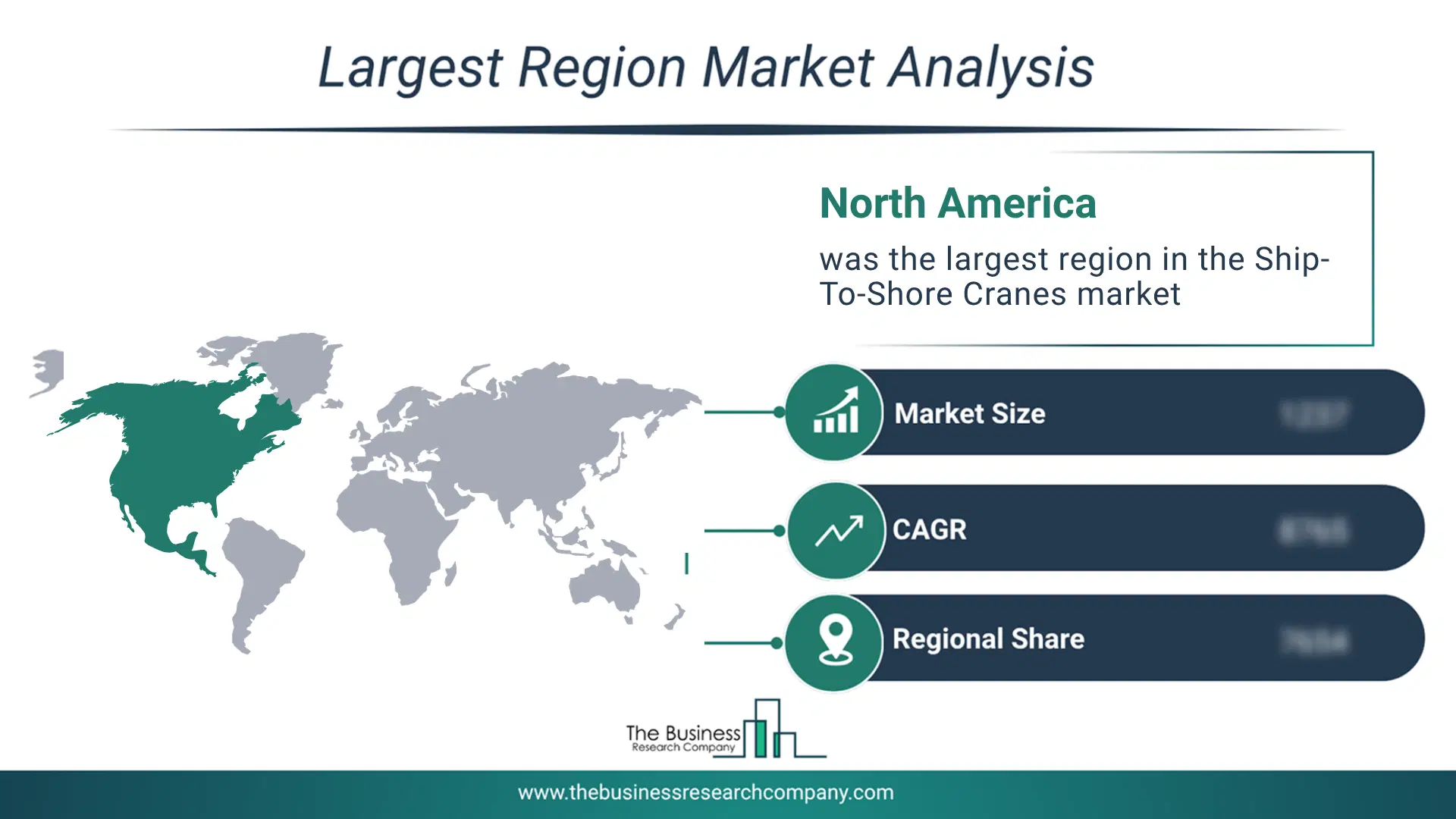
Regional Outlook
North America was the largest region in the ship to shore cranes market in 2025. Asia-Pacific is expected to be the fastest-growing region in the forecast period. The regions covered in this market report are Asia-Pacific, South East Asia, Western Europe, Eastern Europe, North America, South America, Middle East, Africa. The countries covered in this market report are Australia, Brazil, China, France, Germany, India, Indonesia, Japan, Taiwan, Russia, South Korea, UK, USA, Canada, Italy, SpainWhat Defines the Ship-To-Shore Cranes Market?
The ship to shore cranes market consists of sales of carry deck crane, crawler crane, floating crane, rough terrain crane, truck-mounted crane, overhead crane, bulk-handling crane, and hammerhead crane. Values in this market are ‘factory gate’ values, that is the value of goods sold by the manufacturers or creators of the goods, whether to other entities (including downstream manufacturers, wholesalers, distributors and retailers) or directly to end customers. The value of goods in this market includes related services sold by the creators of the goods.How is Market Value Defined and Measured?
The market value is defined as the revenues that enterprises gain from the sale of goods and/or services within the specified market and geography through sales, grants, or donations in terms of the currency (in USD unless otherwise specified). The revenues for a specified geography are consumption values that are revenues generated by organizations in the specified geography within the market, irrespective of where they are produced. It does not include revenues from resales along the supply chain, either further along the supply chain or as part of other products.
This chart presents market attractiveness based on a quantitative evaluation of growth, competition, strategic alignment, and risk, offering a clear view of opportunity areas for decision-making. This chart is for illustrative purposes; the full report contains the complete analysis.

This chart highlights the Total Addressable Market (TAM) by estimating the maximum revenue opportunity using an assumption-driven approach, supporting strategic planning and opportunity sizing across markets. The chart is illustrative; the full report provides a more comprehensive analysis.
What Key Data and Analysis Are Included in the Ship-To-Shore Cranes Market Report 2026?
The ship-to-shore cranes market research report is one of a series of new reports from The Business Research Company that provides market statistics, including industry global market size, regional shares, competitors with the market share, detailed market segments, market trends and opportunities, and any further data you may need to thrive in the ship-to-shore cranes industry. The market research report delivers a complete perspective of everything you need, with an in-depth analysis of the current and future state of the industry.Ship-To-Shore Cranes Market Report Forecast Analysis
| Report Attribute | Details |
|---|---|
| Market Size Value In 2026 | $3.02 billion |
| Revenue Forecast In 2030 | $3.78 billion |
| Growth Rate | CAGR of 5.7% from 2026 to 2030 |
| Base Year For Estimation | 2025 |
| Actual Estimates/Historical Data | 2020-2025 |
| Forecast Period | 2026 - 2030 |
| Market Representation | Revenue in USD Billion and CAGR from 2026 to 2030 |
| Segments Covered | Type, Power Supply, Outreach, Mounting And Mobility, Operation Mode, End User |
| Regional Scope | Asia-Pacific, Western Europe, Eastern Europe, North America, South America, Middle East, Africa |
| Country Scope | The countries covered in the report are Australia, Brazil, China, France, Germany, India, Indonesia, Japan, Taiwan, Russia, South Korea, UK, USA, Canada, Italy, Spain. |
| Key Companies Profiled | Liebherr Container Cranes Ltd., Shanghai Zhenhua Heavy Industries Co. Ltd., Wison Group, Konecranes plc, Kalmar Global, SANY Heavy Equipment Co. Ltd., Manitowoc Cranes Group, Terex Corporation, Cargotec Corporation, Hyundai Heavy Industries Co. Ltd., Anupam Industries Limited, Kranunion GmbH, Kocks Ardelt Kranbau GmbH, Kuenz GmbH, Paceco Corp., TTS Group ASA, Doosan Heavy Industries & Construction Co. Ltd., Huisman Equipment B. V., Kress Corporation, MacGregor, Mitsui Engineering & Shipbuilding Co. Ltd., Noell Crane Systems, OUCO Marine Group Co. Ltd., RAM Lifting Technologies, Sarens NV, TEC Containers SA, ZPMC USA, Tadano Ltd., Palfinger AG, Xuzhou Heavy Machinery Co. Ltd., Bridon-Bekaert The Ropes Group, Dana Incorporated, Mac Port-Macchine Operatrici Portuali SRL |
| Customization Scope | Request for Customization |
| Pricing And Purchase Options | Explore Purchase Options |