
Single-Cell Protein Market Report 2026
Global Outlook – By Species (Algae, Fungi, Bacteria, Yeast), By Feedstock (Organic, Conventional), By Application (Food And Beverages, Dietary Supplements, Animal Feed, Pharmaceuticals, Cosmetics, Other Applications) - Market Size, Trends, Strategies, and Forecast to 2030
Single-Cell Protein Market Overview
• Single-Cell Protein market size has reached to $16.95 billion in 2025 • Expected to grow to $35.83 billion in 2030 at a compound annual growth rate (CAGR) of 16.1% • Growth Driver: Impact of Industrial Livestock Production on Single-Cell Protein Market Growth • Market Trend: Carbon-Neutral Protein Gaining Market Traction • North America was the largest region in 2025.What Is Covered Under Single-Cell Protein Market?
Single-cell protein (SCP) refers to protein extracted from the biomass of microbial cells, such as bacteria, algae, yeast, and fungi. These microorganisms are grown through fermentation processes, often using substrates such as waste materials, carbon dioxide, or organic compounds. SCP offers a sustainable protein source, requiring less land, water, and time than traditional agriculture. The main species in the single-cell protein market are algae, fungi, bacteria, and yeast. Algae-based single-cell proteins are derived from various types of algae, such as chlorella and spirulina. The various feedstock includes organic and conventional, and several applications including food and beverages, dietary supplements, animal feed, pharmaceuticals, cosmetics, and others.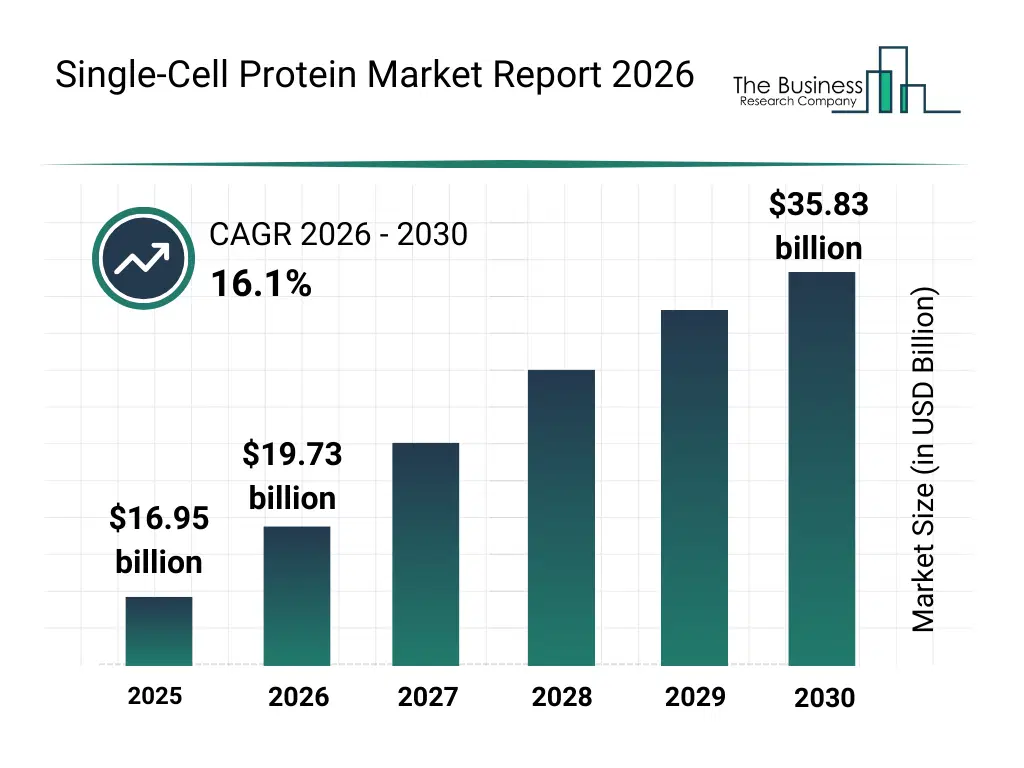
What Is The Single-Cell Protein Market Size and Share 2026?
The single-cell protein market size has grown rapidly in recent years. It will grow from $16.95 billion in 2025 to $19.73 billion in 2026 at a compound annual growth rate (CAGR) of 16.4%. The growth in the historic period can be attributed to rising global protein demand, expansion of fermentation-based food production, increasing use of microbial biomass in feed, growing interest in alternative protein sources, availability of industrial fermentation infrastructure.What Is The Single-Cell Protein Market Growth Forecast?
The single-cell protein market size is expected to see rapid growth in the next few years. It will grow to $35.83 billion in 2030 at a compound annual growth rate (CAGR) of 16.1%. The growth in the forecast period can be attributed to increasing adoption in human food products, rising investments in sustainable food technologies, expansion of circular bioeconomy initiatives, growing regulatory support for novel proteins, increasing demand for low-carbon protein solutions. Major trends in the forecast period include increasing adoption of microbial protein fermentation, rising demand for sustainable protein alternatives, growing use of waste-based feedstocks, expansion of scp applications in animal nutrition, enhanced focus on scalable protein production.
Global Single-Cell Protein Market Segmentation
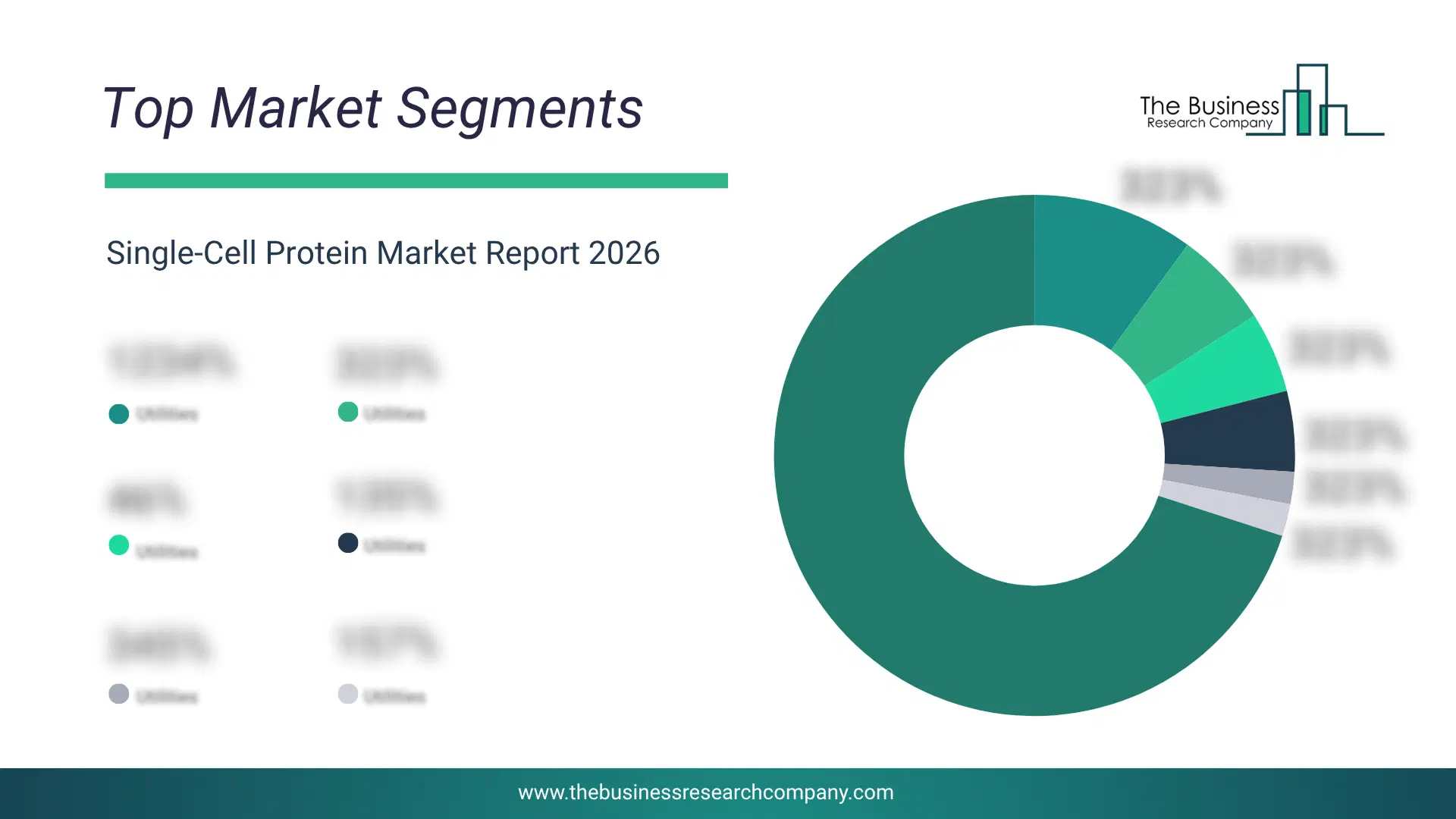
1) By Species: Algae, Fungi, Bacteria, Yeast 2) By Feedstock: Organic, Conventional 3) By Application: Food And Beverages, Dietary Supplements, Animal Feed, Pharmaceuticals, Cosmetics, Other Applications Subsegments: 1) By Algae: Spirulina, Chlorella, Dunaliella 2) By Fungi: Mycoprotein, Edible Mushrooms, Filamentous Fungi Proteins 3) By Bacteria: Methylophilus Methylotrophus, Propionibacterium Spp., Rhizobium Spp. 4) By Yeast: Saccharomyces Cerevisiae, Candida Utilis, Kluyveromyces MarxianusWhat Is The Driver Of The Single-Cell Protein Market?
The increasing industrial livestock production is expected to propel the growth of the single-cell protein market going forward. Livestock production is raising animals like cattle, pigs, and poultry for food, fiber, and other products to meet market demands. Livestock production is attributed to meeting global food demands, supporting rural economies, and providing resources such as meat, milk, and leather. Livestock production helps single-cell protein development by providing organic waste materials such as manure and agricultural residues, which serve as substrates for microbial growth, enabling the cultivation of single-cell organisms used as sustainable protein sources. For instance, in 2023, according to the United States Department of Agriculture’s National Agricultural Statistics Service (USDA NASS), a U.S.-based federal agency, cash receipts for cattle and calves rose to US$ 101.0 billion, up 17% from US$ 86.3 billion in 2022. Therefore, the increasing industrial livestock production is driving the growth of the single-cell protein industry.Key Players In The Global Single-Cell Protein Market
Major companies operating in the single-cell protein market are Cargill Incorporated, Archer Daniels Midland Company, Evonik Industries AG, Koninklijke DSM N.V., Nutreco N.V., Green Plains Inc., GNC Holdings Inc., Novozymes A/S, Angel Yeast Co. Ltd., Lallemand Inc., Chr. Hansen Holding A/S, Marlow Foods Ltd., Cyanotech Corporation, Novus Biologicals LLC, TerraVia Holdings Inc., Calysta Inc., Algatechnologies Ltd, Mara Renewables Corporation, KnipBio Inc., Deep Branch Biotechnology Ltd., Solar Foods, BioProcess Algae LLC, Blue Bio Tech International GmbH, Unibio A/S, Willows Ingredients Ltd.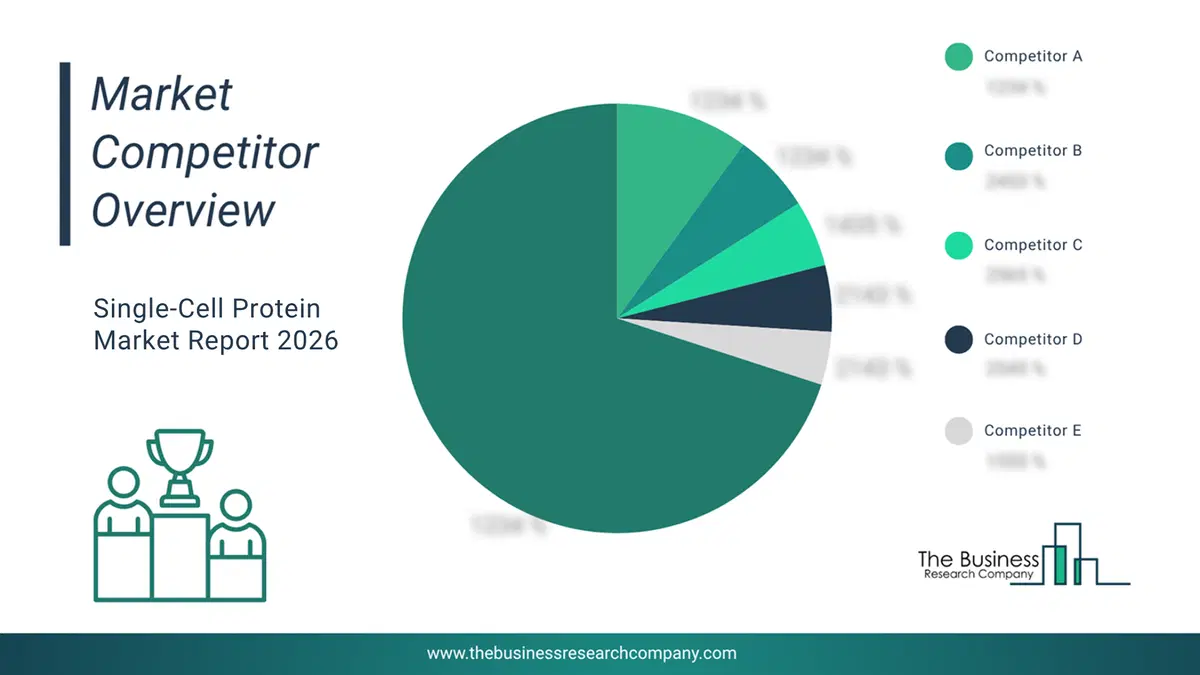
This chart is for illustrative purposes; the full report includes a detailed competitor analysis and comprehensive overview of the top 10 companies in the market.
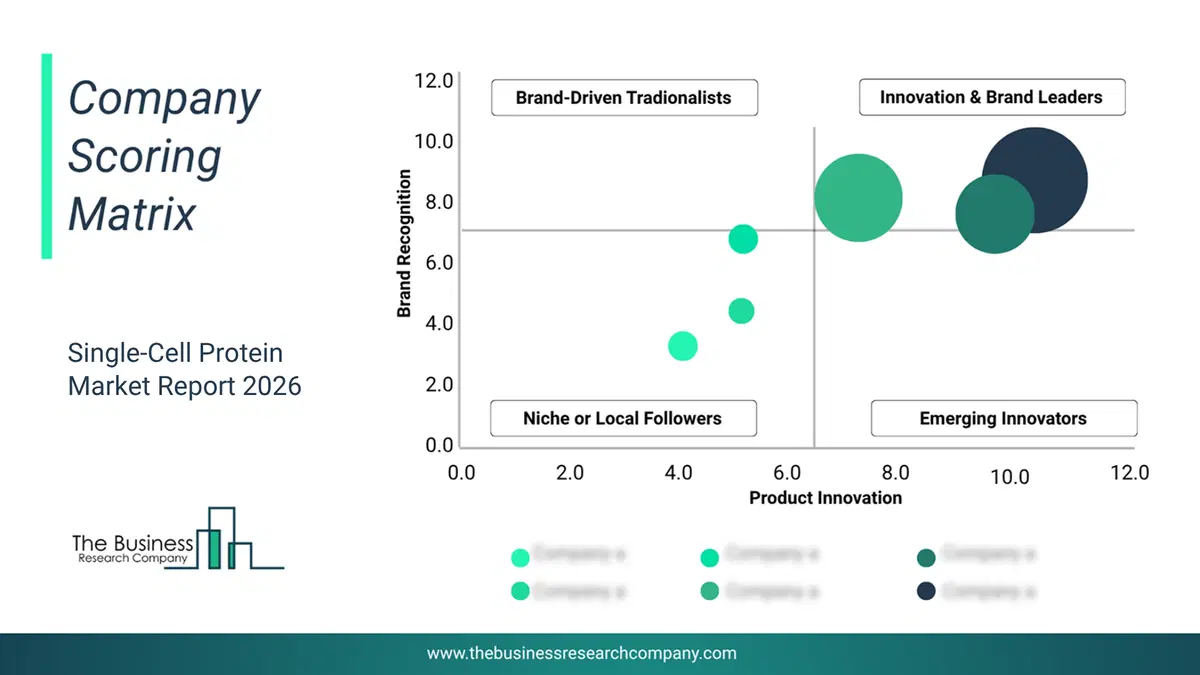
This chart maps companies by product innovation and brand strength, with bubble size indicating relative revenue, helping identify market leaders, challengers, and niche players. This is an illustrative chart; the full report provides a complete and accurate competitive analysis.
Global Single-Cell Protein Market Trends and Insights
Major companies operating in the single cell protein market are focusing on technological advancements, such as precision microbial fermentation, to gain a competitive advantage. Precision microbial fermentation refers to the controlled growth of selected microorganisms (such as yeast, bacteria, or fungi) in bioreactors using defined feedstock, producing protein-rich biomass efficiently. For instance, in November 2023, MicroHarvest, a Portugal-based biotechnology company, launched a pilot plant in Lisbon to produce single cell protein, enabling daily yields of 25 kg with over 60 percent raw protein content, using renewable feedstock. This technology supports scalable and consistent protein production for food, pet food, and feed markets.What Are Latest Mergers And Acquisitions In The Single-Cell Protein Market?
In December 2023, Lallemand Inc., a Canada-based food and beverage manufacturing company, acquired its subsidiary Danstar Ferment AG of Swiss biotechnology business Evolva AG from Evolva Holding AG for $23.5 million. This acquisition aims to enhance Lallemand's research and development capabilities and strengthen its presence in Switzerland. Lallemand plans to utilize Evolva's proprietary precision fermentation technology, R&D capabilities, and innovation pipeline to expand its global reach in sustainable, yeast-based ingredient markets. Evolva is a Switzerland-based biotechnology company that researches, develops, and commercializes single-cell protein, namely natural yeast ingredients.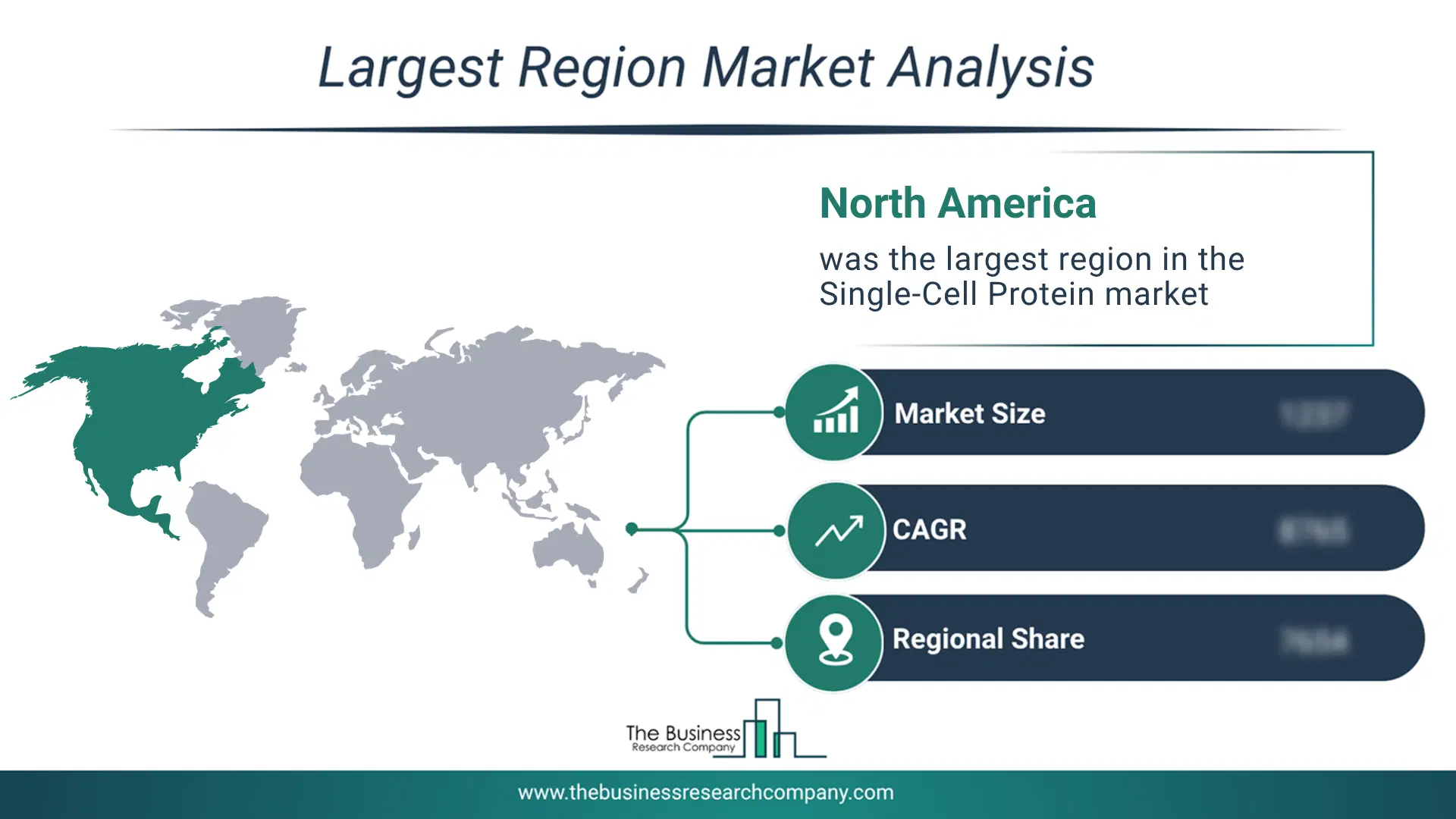
Regional Outlook
North America was the largest region in the single-cell protein market in 2025. The regions covered in this market report are Asia-Pacific, South East Asia, Western Europe, Eastern Europe, North America, South America, Middle East, Africa. The countries covered in this market report are Australia, Brazil, China, France, Germany, India, Indonesia, Japan, Taiwan, Russia, South Korea, UK, USA, Canada, Italy, Spain.What Defines the Single-Cell Protein Market?
The single-cell protein market consists of revenues earned by entities by providing services such as microbial strain development, fermentation process optimization, downstream processing, and quality control. The market value includes the value of related goods sold by the service provider or included within the service offering. The single-cell protein market also includes sales of protein-rich supplements, animal feed, and alternative food ingredients. Values in this market are ‘factory gate’ values, that is the value of goods sold by the manufacturers or creators of the goods, whether to other entities (including downstream manufacturers, wholesalers, distributors, and retailers) or directly to end customers. The value of goods in this market includes related services sold by the creators of the goods.How is Market Value Defined and Measured?
The market value is defined as the revenues that enterprises gain from the sale of goods and/or services within the specified market and geography through sales, grants, or donations in terms of the currency (in USD unless otherwise specified). The revenues for a specified geography are consumption values that are revenues generated by organizations in the specified geography within the market, irrespective of where they are produced. It does not include revenues from resales along the supply chain, either further along the supply chain or as part of other products.
This chart presents market attractiveness based on a quantitative evaluation of growth, competition, strategic alignment, and risk, offering a clear view of opportunity areas for decision-making. This chart is for illustrative purposes; the full report contains the complete analysis.

This chart highlights the Total Addressable Market (TAM) by estimating the maximum revenue opportunity using an assumption-driven approach, supporting strategic planning and opportunity sizing across markets. The chart is illustrative; the full report provides a more comprehensive analysis.
What Key Data and Analysis Are Included in the Single-Cell Protein Market Report 2026?
The single-cell protein market research report is one of a series of new reports from The Business Research Company that provides market statistics, including industry global market size, regional shares, competitors with the market share, detailed market segments, market trends and opportunities, and any further data you may need to thrive in the single-cell protein industry. The market research report delivers a complete perspective of everything you need, with an in-depth analysis of the current and future state of the industry.Single-Cell Protein Market Report Forecast Analysis
| Report Attribute | Details |
|---|---|
| Market Size Value In 2026 | $19.73 billion |
| Revenue Forecast In 2030 | $35.83 billion |
| Growth Rate | CAGR of 16.1% from 2026 to 2030 |
| Base Year For Estimation | 2025 |
| Actual Estimates/Historical Data | 2020-2025 |
| Forecast Period | 2026 - 2030 |
| Market Representation | Revenue in USD Billion and CAGR from 2026 to 2030 |
| Segments Covered | Species, Feedstock, Application |
| Regional Scope | Asia-Pacific, Western Europe, Eastern Europe, North America, South America, Middle East, Africa |
| Country Scope | The countries covered in the report are Australia, Brazil, China, France, Germany, India, Indonesia, Japan, Taiwan, Russia, South Korea, UK, USA, Canada, Italy, Spain |
| Key Companies Profiled | Cargill Incorporated, Archer Daniels Midland Company, Evonik Industries AG, Koninklijke DSM N.V., Nutreco N.V., Green Plains Inc., GNC Holdings Inc., Novozymes A/S, Angel Yeast Co. Ltd., Lallemand Inc., Chr. Hansen Holding A/S, Marlow Foods Ltd., Cyanotech Corporation, Novus Biologicals LLC, TerraVia Holdings Inc., Calysta Inc., Algatechnologies Ltd, Mara Renewables Corporation, KnipBio Inc., Deep Branch Biotechnology Ltd., Solar Foods, BioProcess Algae LLC, Blue Bio Tech International GmbH, Unibio A/S, Willows Ingredients Ltd. |
| Customization Scope | Request for Customization |
| Pricing And Purchase Options | Explore Purchase Options |