

Skeletal Dysplasia Drugs Market Report 2026
Global Outlook – By Treatment (Enzyme Replacement Therapy, Human Monoclonal Antibody, Other Treatments), By Dysplasia Type (Morquio A Syndrome, X-Linked Hypophosphatemia, Hypophosphatasia, Achondroplasia, Fibrodysplasia Ossificans Progressive, Multiple Osteochondromas, Other Dysplasia Types), By Distribution Channel (Hospital Pharmacies, Retail Pharmacies, Online Pharmacies) – Market Size, Trends, Strategies, and Forecast to 2030
Skeletal Dysplasia Drugs Market Overview
• Skeletal Dysplasia Drugs market size has reached to $3.31 billion in 2025 • Expected to grow to $4.31 billion in 2030 at a compound annual growth rate (CAGR) of 5.3% • Growth Driver: Increasing Global Bone Disorders Due To Rising Demand For Combination Of Demographic And Medical Factors • Market Trend: Innovative Therapies Transforming Skeletal Dysplasia Treatment Landscape • North America was the largest region in 2025 and Asia-Pacific is the fastest growing region.What Is Covered Under Skeletal Dysplasia Drugs Market?
Skeletal dysplasia drugs are pharmaceutical treatments designed to manage or modify the underlying genetic and biochemical pathways that cause abnormal bone and cartilage development in skeletal dysplasia disorders. These drugs aim to improve bone growth, reduce complications, and enhance the quality of life for individuals affected by various types of skeletal dysplasia. The main types of treatments in skeletal dysplasia drugs are enzyme replacement therapy, human monoclonal antibody, and other treatments. Enzyme replacement therapy (ERT) refers to a medical treatment in which missing or deficient enzymes in the body are replaced with synthetic or natural enzymes to help restore normal function. These are used for various dysplasia types, including morquio A syndrome, X-linked hypophosphatemia, hypophosphatasia, achondroplasia, fibrodysplasia ossificans progressiva, multiple osteochondromas, and other dysplasia types, and are distributed through various distribution channels such as hospital pharmacies, retail pharmacies, and online pharmacies.
What Is The Skeletal Dysplasia Drugs Market Size and Share 2026?
The skeletal dysplasia drugs market size has grown strongly in recent years. It will grow from $3.31 billion in 2025 to $3.5 billion in 2026 at a compound annual growth rate (CAGR) of 5.6%. The growth in the historic period can be attributed to limited treatment options for skeletal dysplasia, growing prevalence of rare bone disorders, reliance on hospital pharmacy distribution, lack of awareness about dysplasia treatments, traditional symptomatic and supportive therapies.What Is The Skeletal Dysplasia Drugs Market Growth Forecast?
The skeletal dysplasia drugs market size is expected to see strong growth in the next few years. It will grow to $4.31 billion in 2030 at a compound annual growth rate (CAGR) of 5.3%. The growth in the forecast period can be attributed to development of gene and rna-based therapies, rising investment in orphan drug research, increasing collaborations between pharma and biotech companies, expansion of hospital and online pharmacy networks, adoption of precision medicine approaches. Major trends in the forecast period include rising adoption of enzyme replacement therapies, increasing development of monoclonal antibody drugs, growth in rare skeletal dysplasia awareness programs, expansion of online and retail pharmacy distribution, focus on personalized and targeted therapeutics.
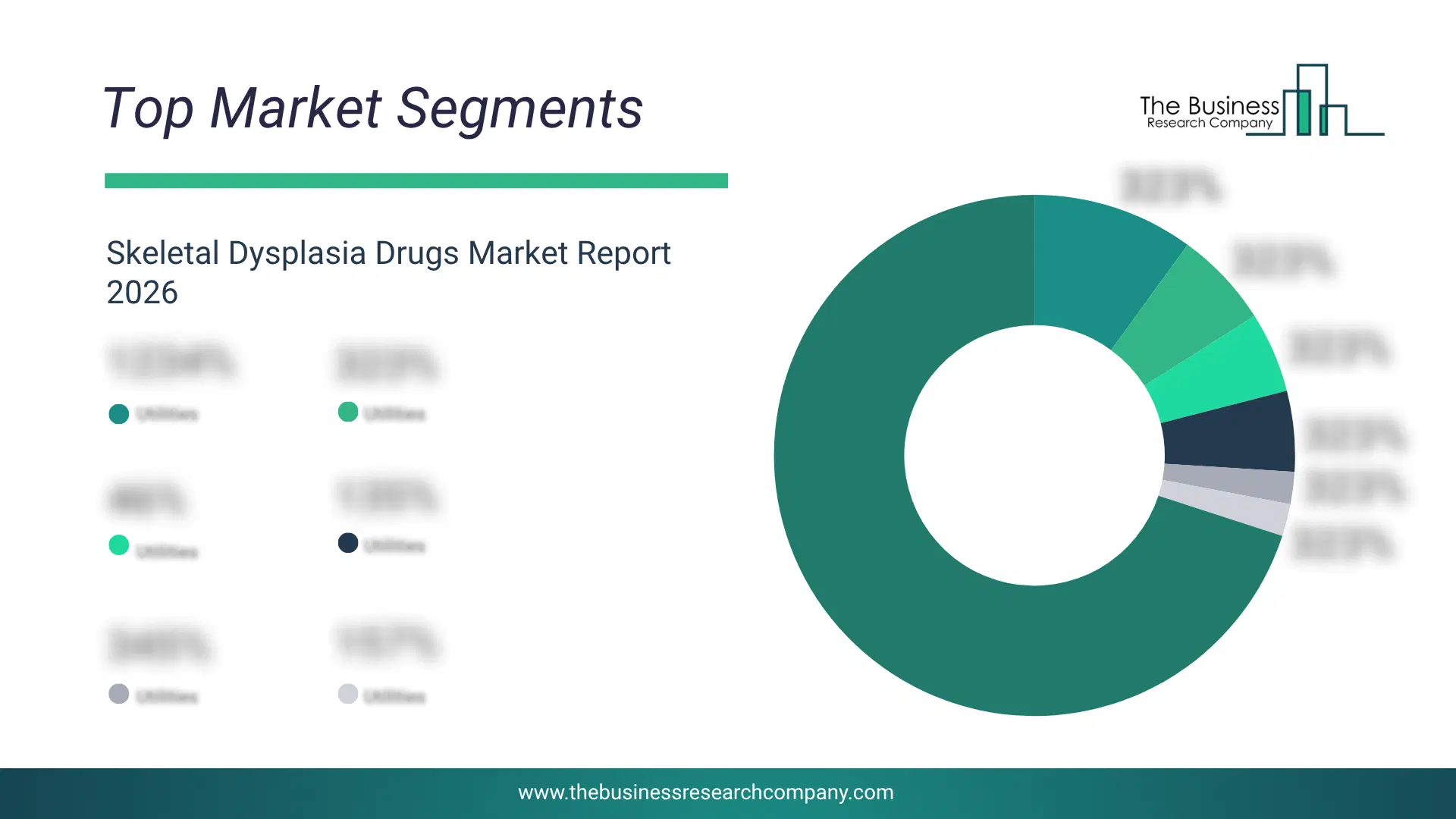
Global Skeletal Dysplasia Drugs Market Segmentation
1) By Treatment: Enzyme Replacement Therapy, Human Monoclonal Antibody, Other Treatments 2) By Dysplasia Type: Morquio A Syndrome, X-Linked Hypophosphatemia, Hypophosphatasia, Achondroplasia, Fibrodysplasia Ossificans Progressive, Multiple Osteochondromas, Other Dysplasia Types 3) By Distribution Channel: Hospital Pharmacies, Retail Pharmacies, Online Pharmacies Subsegments: 1) By Enzyme Replacement Therapy (ERT): Alglucosidase Alfa, Idursulfase, Laronidase, Eliglustat, Other Enzyme Replacement Therapy (ERT) Drug 2) By Human Monoclonal Antibody: Anti-FGF Receptor Antibodies, Anti-TNF-Alpha Antibodies, Anti-IL-6 Receptor Antibodies, Other Human Monoclonal Antibody 3) By Other Treatments: Small Molecule Therapies, Gene Therapy, RNA-Based Therapies, Symptomatic Treatments, Supportive TherapiesWhat Is The Driver Of The Skeletal Dysplasia Drugs Market?
The increasing prevalence of bone disorders are expected to propel the growth of skeletal dysplasia drugs market going forward. Bone disorders refer to medical conditions that affect the strength, structure, or function of bones, resulting to problems such as weakened bones, deformities, pain, fractures, or impaired mobility. The increase in bone disorders is primarily due to a sedentary lifestyle, where lack of physical activity weakens bone strength and density, raising the risk of fractures and degenerative diseases. Skeletal dysplasia drugs help treat bone disorders by targeting the underlying genetic or molecular causes that affect bone growth and development, improving bone formation, strength, and structure, thereby reducing symptoms such as deformities, fractures, and impaired mobility. For instance, in February 2023, according to the National Library of Medicine, a US-based biomedical library, total hip arthroplasty (THA) and total knee arthroplasty (TKA) procedures are expected to increase by 719,364 and 1,222,988, respectively, by the year 2040. Moreover, TKAs are anticipated to total 2,917,959 by 2060, whereas THAs are anticipated to total 1,982,099 by that time. Therefore, the increasing prevalence of bone disorders are driving the skeletal dysplasia drugs industry.Key Players In The Global Skeletal Dysplasia Drugs Market
Major companies operating in the skeletal dysplasia drugs market are BridgeBio Pharma Inc., BioMarin Pharmaceutical Inc., Ascendis Pharma A/S, Clementia Pharmaceuticals Inc., QED Therapeutics Inc., InnoSkel SAS, Therachon Holding AG, Pfizer Rare Disease (formerly Pfizer Rare Genetic Diseases), Ipsen Pharma, Chugai Pharmaceutical Co. Ltd., Ultragenyx Pharmaceutical Inc., Takeda Pharmaceutical Company Ltd., PTC Therapeutics Inc., Abeona Therapeutics Inc., Rocket Pharmaceuticals Inc., Sangamo Therapeutics Inc., REGENXBIO Inc., Orchard Therapeutics plc, 4D Molecular Therapeutics Inc., Audentes Therapeutics Inc., LogicBio Therapeutics Inc., Vertex Pharmaceuticals Inc., Anika Therapeutics Inc., Bluebird Bio Inc., Sarepta Therapeutics Inc., Akouos Inc.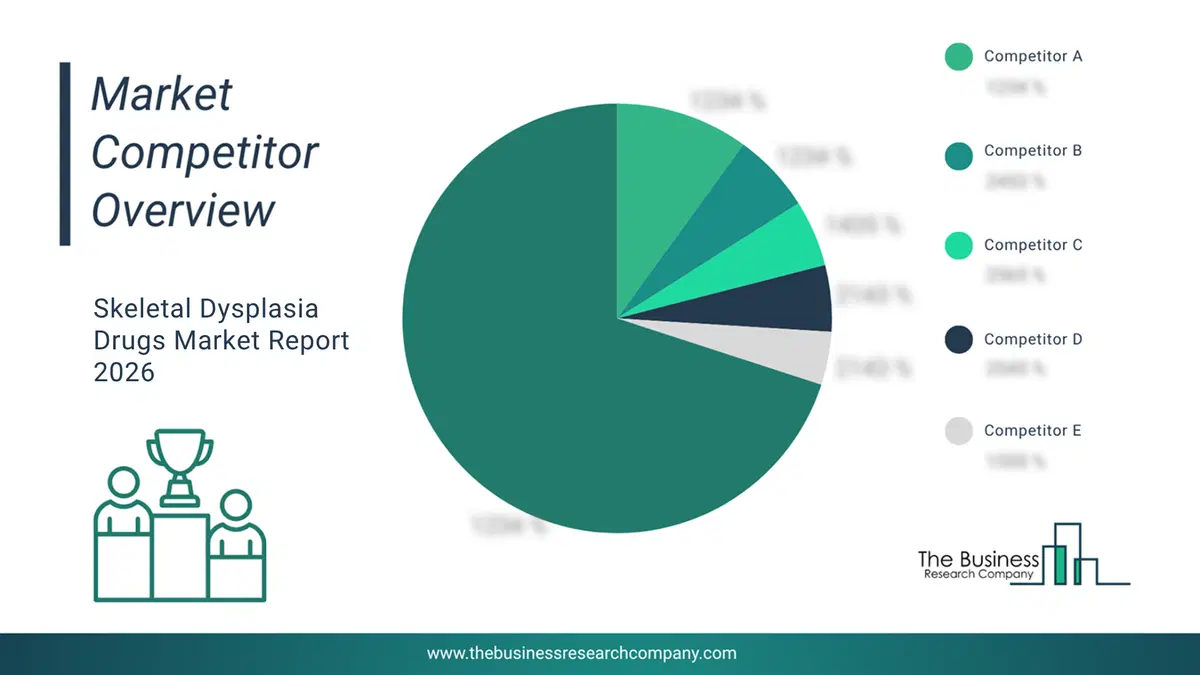
This chart is for illustrative purposes; the full report includes a detailed competitor analysis and comprehensive overview of the top 10 companies in the market.
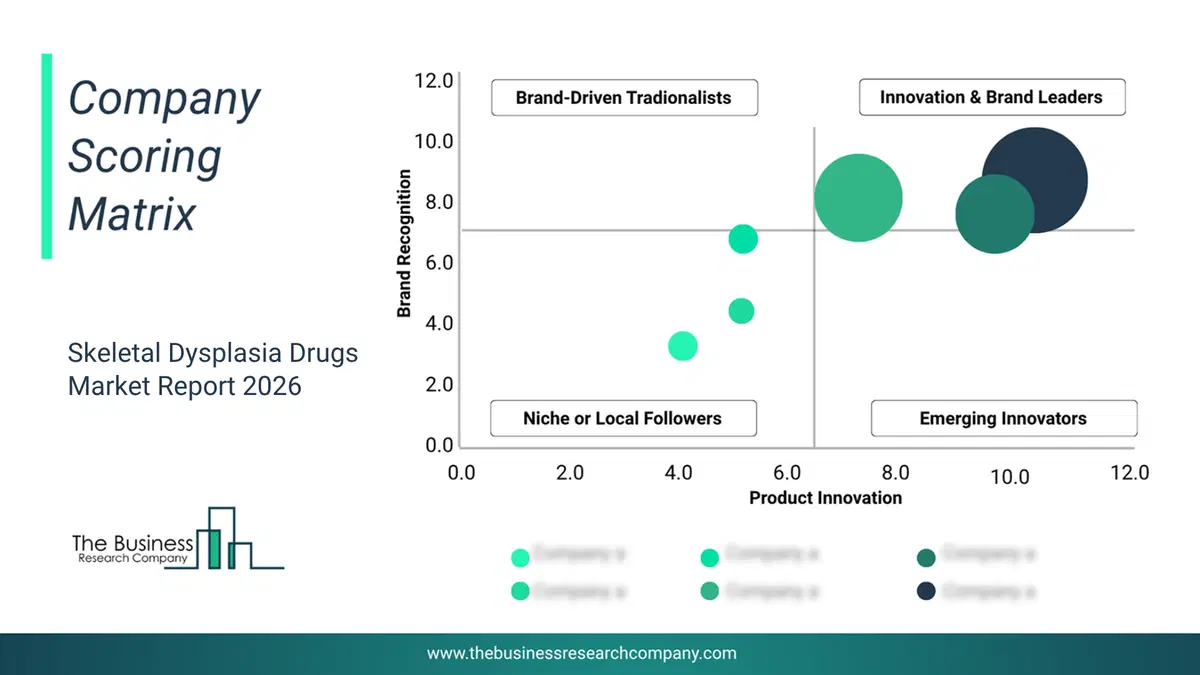
This chart maps companies by product innovation and brand strength, with bubble size indicating relative revenue, helping identify market leaders, challengers, and niche players. This is an illustrative chart; the full report provides a complete and accurate competitive analysis.
Global Skeletal Dysplasia Drugs Market Trends and Insights
Major companies operating in the skeletal dysplasia drugs market are focusing on developing innovative solutions, such as targeted biological therapies by directly modulating the specific molecular pathways that cause abnormal bone growth, enabling more effective and safer treatments tailored to the underlying genetic defects. Targeted biological therapies are treatments that use biologically derived agents such as proteins, antibodies, or peptides to specifically interact with molecular targets involved in the cause or progression of a disease, aiming to correct or block abnormal biological processes with greater precision and fewer side effects than traditional therapies. For instance, in October 2023, BioMarin Pharmaceutical Inc., a US-based biotechnology company launched VOXZOGO (vosoritide) to promote normal bone growth and improve long-term outcomes. It provides children with achondroplasia a targeted therapy that stimulates bone growth, helping to increase height, minimize complications, and improve overall quality of life.What Are Latest Mergers And Acquisitions In The Skeletal Dysplasia Drugs Market?
In February 2024, Bridge Bio Pharma Inc., a US-based biotechnology company partnered with Kyowa Kirin. With this partnership, Bridge Bio Pharma and Kyowa Kirin, aims to accelerate the development and availability of infigratinib to treat skeletal dysplasias in Japan, addressing a significant unmet medical need. Kyowa Kirin Co. Ltd. is a Japan-based pharmaceutical and biotechnology company that involves skeletal dysplasia drugs.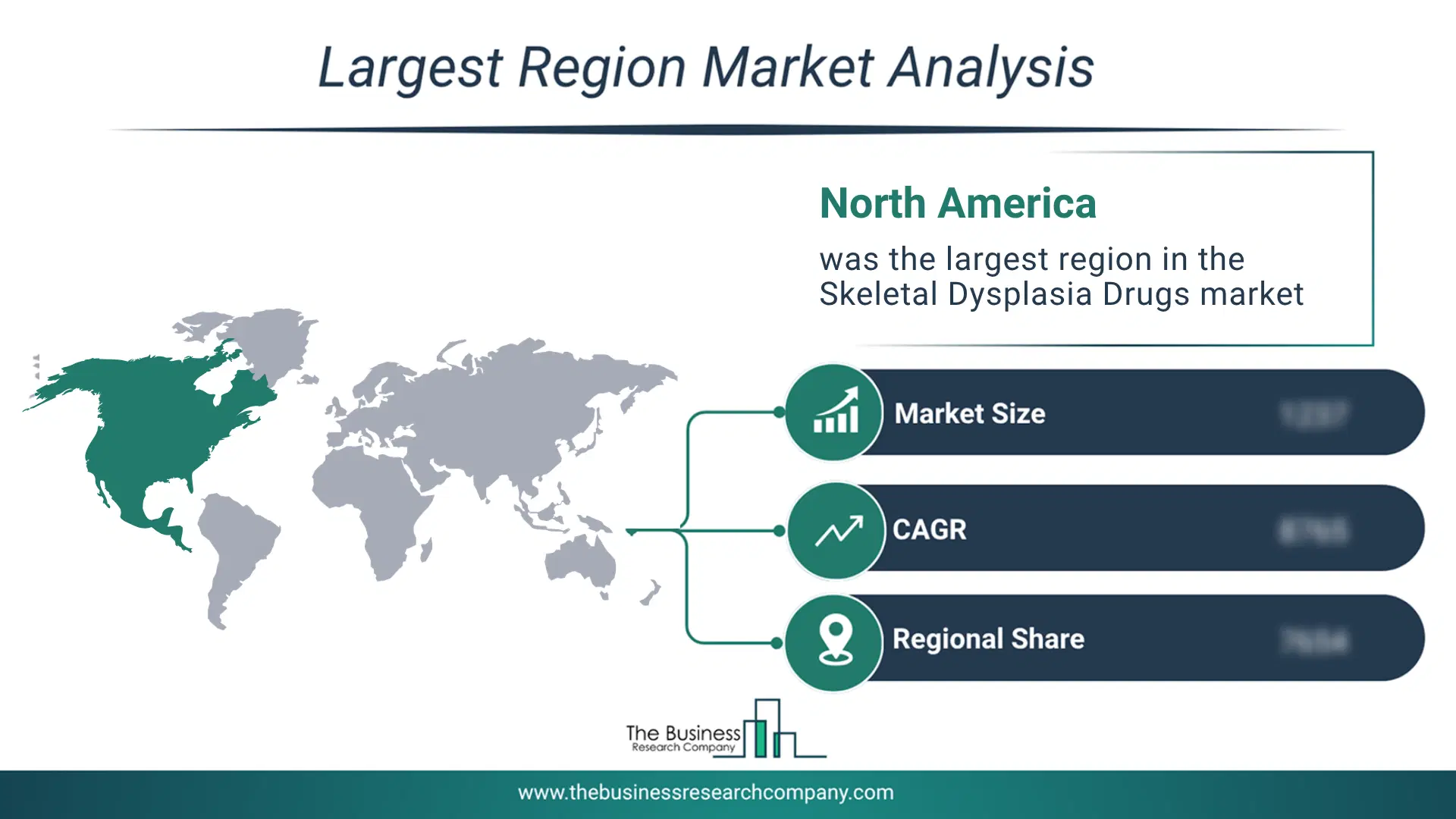
Regional Insights
North America was the largest region in the skeletal dysplasia drugs market in 2025. Asia-Pacific is expected to be the fastest-growing region in the forecast period. The regions covered in this market report are Asia-Pacific, South East Asia, Western Europe, Eastern Europe, North America, South America, Middle East, Africa. The countries covered in this market report are Australia, Brazil, China, France, Germany, India, Indonesia, Japan, Taiwan, Russia, South Korea, UK, USA, Canada, Italy, Spain.What Defines the Skeletal Dysplasia Drugs Market?
The skeletal dysplasia drugs market consists of sales of C-type natriuretic peptide (CNP) analogs, enzyme replacement therapies, anti-inflammatory drugs, fibroblast growth factor receptor (FGFR) inhibitors and gene therapies. Values in this market are ‘factory gate’ values, that is the value of goods sold by the manufacturers or creators of the goods, whether to other entities (including downstream manufacturers, wholesalers, distributors and retailers) or directly to end customers. The value of goods in this market includes related services sold by the creators of the goods.How is Market Value Defined and Measured?
The market value is defined as the revenues that enterprises gain from the sale of goods and/or services within the specified market and geography through sales, grants, or donations in terms of the currency (in USD unless otherwise specified). The revenues for a specified geography are consumption values that are revenues generated by organizations in the specified geography within the market, irrespective of where they are produced. It does not include revenues from resales along the supply chain, either further along the supply chain or as part of other products.
This chart presents market attractiveness based on a quantitative evaluation of growth, competition, strategic alignment, and risk, offering a clear view of opportunity areas for decision-making. This chart is for illustrative purposes; the full report contains the complete analysis.

This chart highlights the Total Addressable Market (TAM) by estimating the maximum revenue opportunity using an assumption-driven approach, supporting strategic planning and opportunity sizing across markets. The chart is illustrative; the full report provides a more comprehensive analysis.
What Key Data and Analysis Are Included in the Skeletal Dysplasia Drugs Market Report 2026?
The skeletal dysplasia drugs market research report is one of a series of new reports from The Business Research Company that provides market statistics, including industry global market size, regional shares, competitors with the market share, detailed market segments, market trends and opportunities, and any further data you may need to thrive in the skeletal dysplasia drugs industry. The market research report delivers a complete perspective of everything you need, with an in-depth analysis of the current and future state of the industry.Skeletal Dysplasia Drugs Market Report Forecast Analysis
| Report Attribute | Details |
|---|---|
| Market Size Value In 2026 | $3.5 billion |
| Revenue Forecast In 2030 | $4.31 billion |
| Growth Rate | CAGR of 5.6% from 2026 to 2030 |
| Base Year For Estimation | 2025 |
| Actual Estimates/Historical Data | 2020-2025 |
| Forecast Period | 2026 - 2030 |
| Market Representation | Revenue in USD Billion and CAGR from 2026 to 2030 |
| Segments Covered | Treatment, Dysplasia Type, Distribution Channel |
| Regional Scope | Asia-Pacific, Western Europe, Eastern Europe, North America, South America, Middle East, Africa |
| Country Scope | The countries covered in the report are Australia, Brazil, China, France, Germany, India, Indonesia, Japan, Taiwan, Russia, South Korea, UK, USA, Canada, Italy, Spain. |
| Key Companies Profiled | BridgeBio Pharma Inc., BioMarin Pharmaceutical Inc., Ascendis Pharma A/S, Clementia Pharmaceuticals Inc., QED Therapeutics Inc., InnoSkel SAS, Therachon Holding AG, Pfizer Rare Disease (formerly Pfizer Rare Genetic Diseases), Ipsen Pharma, Chugai Pharmaceutical Co. Ltd., Ultragenyx Pharmaceutical Inc., Takeda Pharmaceutical Company Ltd., PTC Therapeutics Inc., Abeona Therapeutics Inc., Rocket Pharmaceuticals Inc., Sangamo Therapeutics Inc., REGENXBIO Inc., Orchard Therapeutics plc, 4D Molecular Therapeutics Inc., Audentes Therapeutics Inc., LogicBio Therapeutics Inc., Vertex Pharmaceuticals Inc., Anika Therapeutics Inc., Bluebird Bio Inc., Sarepta Therapeutics Inc., Akouos Inc. |
| Customization Scope | Request for Customization |
| Pricing And Purchase Options | Explore Purchase Options |