

Skin Analysis Systems Market Report 2026
Global Outlook – By Type (Skin Pigmentation, Skin Elasticity, Skin Imaging, Skin Condition), By Application (Hospital, Clinic, Other Applications), By End User (Dermatologists, Aestheticians, Skincare Professionals, Other End Users) – Market Size, Trends, Strategies, and Forecast to 2030
Skin Analysis Systems Market Overview
• Skin Analysis Systems market size has reached to $1.65 billion in 2025 • Expected to grow to $2.59 billion in 2030 at a compound annual growth rate (CAGR) of 9.4% • Growth Driver: Increasing Demand For Customized Skincare Products Drives The Growth In The Skin Analysis Systems Market • Market Trend: Transforming Skincare With Advancements In Technology In The Skin Analysis Systems Market To Enhance Product Offerings • North America was the largest region in 2025.What Is Covered Under Skin Analysis Systems Market?
Skin analysis systems are advanced tools or devices designed to evaluate various aspects of the skin, such as texture, hydration, pigmentation, pore size, and overall health. These systems use technologies such as imaging, sensors, and artificial intelligence algorithms to assess skin conditions and provide detailed reports on skin health, often used in dermatology, cosmetology, and skincare. The primary purpose of skin analysis systems is to provide a comprehensive assessment of the skin to help diagnose conditions, customize skincare treatments, and monitor skin health over time. The main types of skin analysis systems are skin pigmentation, skin elasticity, skin imaging and skin condition. Skin pigmentation refers to the coloring of the skin, which is determined by the amount and type of melanin pigment produced by specialized skin cells. The various applications include hospitals, clinics, and others, and several end users including dermatologists, aestheticians, skincare professionals, others.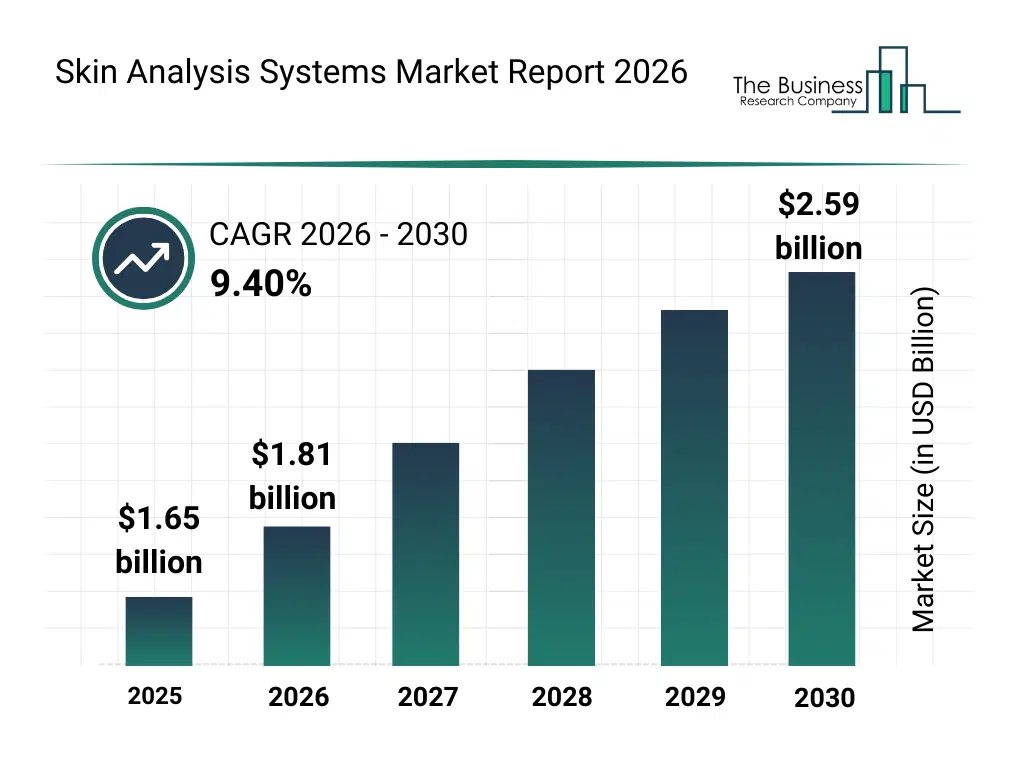
What Is The Skin Analysis Systems Market Size and Share 2026?
The skin analysis systems market size has grown strongly in recent years. It will grow from $1.65 billion in 2025 to $1.81 billion in 2026 at a compound annual growth rate (CAGR) of 9.7%. The growth in the historic period can be attributed to growth of cosmetic industry, rising skin disorder cases, increase in dermatology clinics, demand for aesthetic treatments, technological advances in imaging.What Is The Skin Analysis Systems Market Growth Forecast?
The skin analysis systems market size is expected to see strong growth in the next few years. It will grow to $2.59 billion in 2030 at a compound annual growth rate (CAGR) of 9.4%. The growth in the forecast period can be attributed to personalized beauty trends, expansion of tele-dermatology, growth in anti-aging demand, consumer awareness of skin health, innovation in diagnostic imaging. Major trends in the forecast period include growing demand for personalized skincare, increased use in aesthetic clinics, expansion of non-invasive diagnostic tools, rising adoption in preventive dermatology, growth of portable skin analysis devices.
Global Skin Analysis Systems Market Segmentation
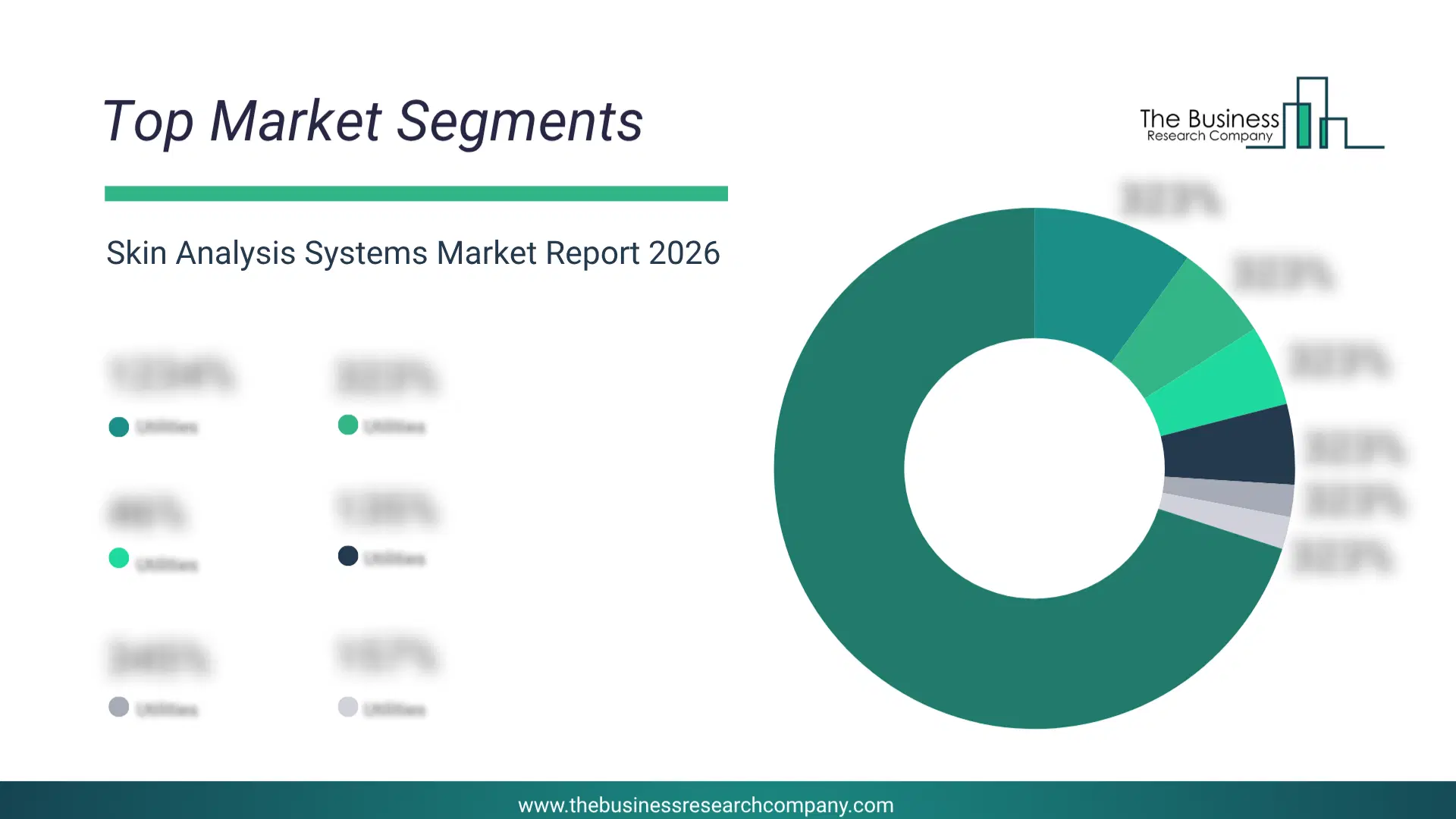
1) By Type: Skin Pigmentation, Skin Elasticity, Skin Imaging, Skin Condition 2) By Application: Hospital, Clinic, Other Applications 3) By End User: Dermatologists, Aestheticians, Skincare Professionals, Other End Users Subsegments: 1) By Skin Pigmentation: Melanin Measurement Systems, Hypopigmentation Analysis Tools, Hyperpigmentation Assessment Devices 2) By Skin Elasticity: Elasticity Measurement Devices, Turgor Testing Instruments, Skin Resilience Assessment Systems 3) By Skin Imaging: 3D Skin Imaging Systems, Dermatoscopes, High-Resolution Imaging Devices 4) By Skin Condition: Acne Analysis Systems, Hydration Level Measurement Tools, Skin Sensitivity Assessment DevicesWhat Is The Driver Of The Skin Analysis Systems Market?
The increasing demand for customized skincare products is expected to drive the growth of the skin analysis systems market. Customized skincare products are personalized beauty solutions tailored to an individual's unique skin needs. Customized skincare products allow for more precise skin evaluations, enabling companies to create personalized formulations based on individual skin assessments. Skin analysis systems utilize artificial intelligence (AI) and imaging technology to generate customized skin care products and boost efficacy and individualized beauty solutions, with accurate skin evaluations. For instance, in May 2023, according to a research report by Bolt, an Estonian-based leading checkout technology company, 75% of shoppers were willing to pay more for beauty and skincare products when offered personalized online shopping experiences. Notably, 72% of Gen Z consumers would pay over 10% extra, with 57% willing to spend 11–20% more for custom, curated shopping journeys. Additionally, 62% of shoppers, including 80% of Gen Z, are more likely to purchase beauty products if they can utilize technology to find their ideal formula. Furthermore, 43% of shoppers prefer AI-based online shade-matching for foundation over in-store testing. Therefore, increasing demand for customized skincare products will drive the growth of the skin analysis systems industry.Key Players In The Global Skin Analysis Systems Market
Major companies operating in the skin analysis systems market are Cynosure, Dermalumics, Michelson Diagnostics, Mela Sciences, Guangzhou Beautylife Electronic Technology, Visiomed Group SA, Canfield Scientific Inc., QuantifiCare, DermoScan GmbH, MHT Optic Research, Courage + Khazaka Electronic, FotoFinder Systems, Pixience, Verisante Technology, Meicet, 3Gen Inc (DermLite), MetaOptima Technology Inc., DermaSensor Inc., SkinVision B V, MedX Health Corp, Caliber Imaging & Diagnostics Inc.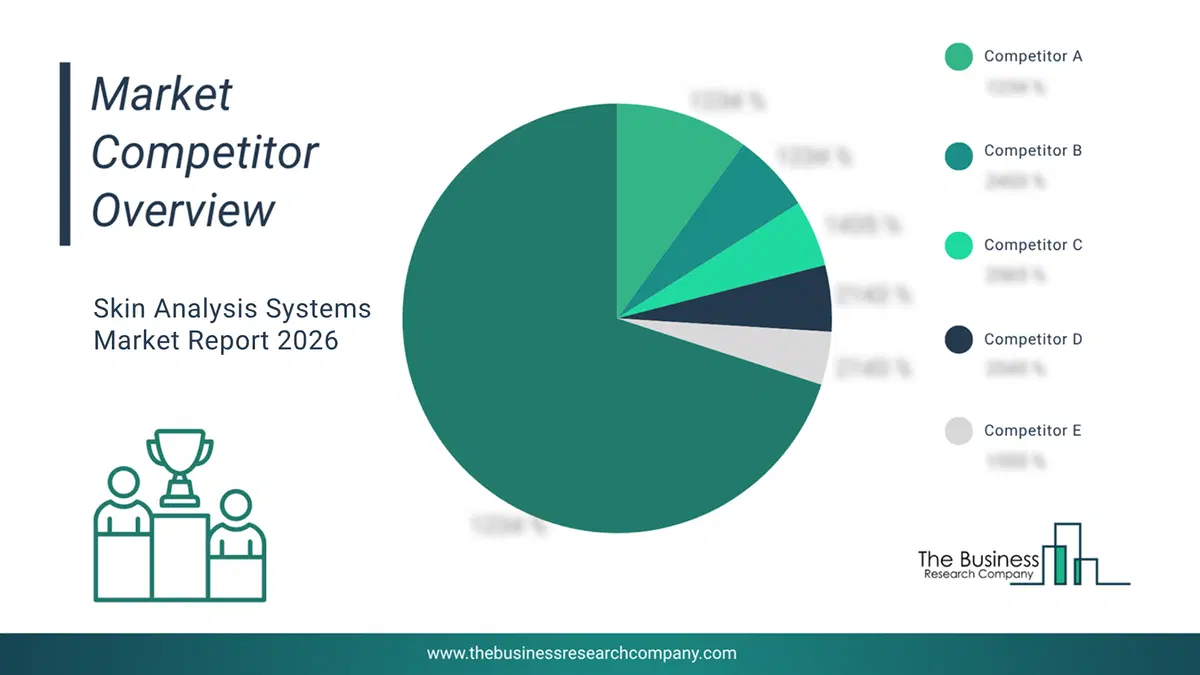
This chart is for illustrative purposes; the full report includes a detailed competitor analysis and comprehensive overview of the top 10 companies in the market.
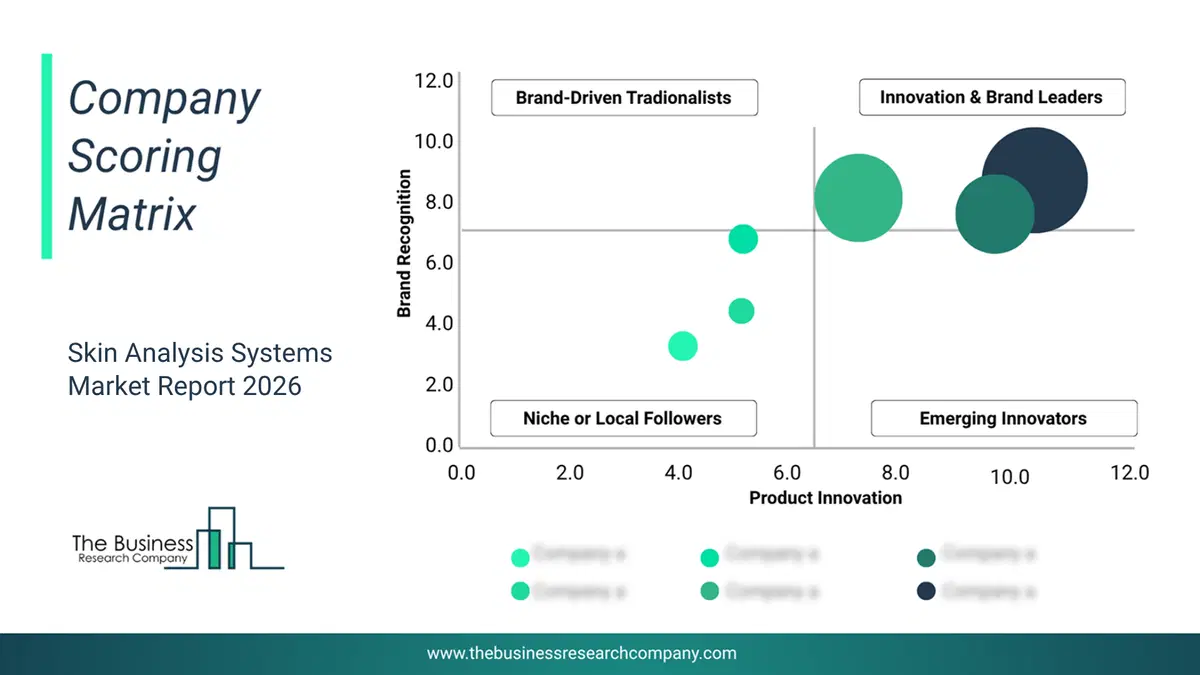
This chart maps companies by product innovation and brand strength, with bubble size indicating relative revenue, helping identify market leaders, challengers, and niche players. This is an illustrative chart; the full report provides a complete and accurate competitive analysis.
Global Skin Analysis Systems Market Trends and Insights
Major companies operating in the skin analysis systems market are developing advanced technologies with imaging and artificial intelligence (AI) skin analysis to improve the precision and reliability of skin assessments. Through high-resolution imaging and multispectral analysis, AI-based technologies enable precise skin condition assessments, including moisture, elasticity, pigmentation, and pore size. For instance, in April 2023, EveLab Insight Pte. Ltd., a Singapore-based company, developed a new glossiness detection feature for its AI skin analysis application to enhance personalized skincare solutions. The insights generated can benefit various departments, including R&D, marketing, and brand ambassadors, by providing data to develop products that meet market demands and enhance customer engagement. The system employs parallel polarized light to accurately detect glossiness issues at the surface and deeper levels of the skin. This innovative system evaluates three critical dimensions of glossiness such as oiliness condition, skin texture, and evenness of skin tone.What Are Latest Mergers And Acquisitions In The Skin Analysis Systems Market?
In March 2024, FotoFinder Systems, a Germany-based company providing medical skin imaging systems, acquired DermLite LLC for an undisclosed amount. The acquisition allows FotoFinder to combine DermLite's expertise in dermatoscopy technology with its imaging systems, offering a complete ecosystem of skin visualization tools for modern dermatological diagnostics and research. DermLite LLC is a US-based company that provides intelligent skin imaging solutions in medical and aesthetic dermatology.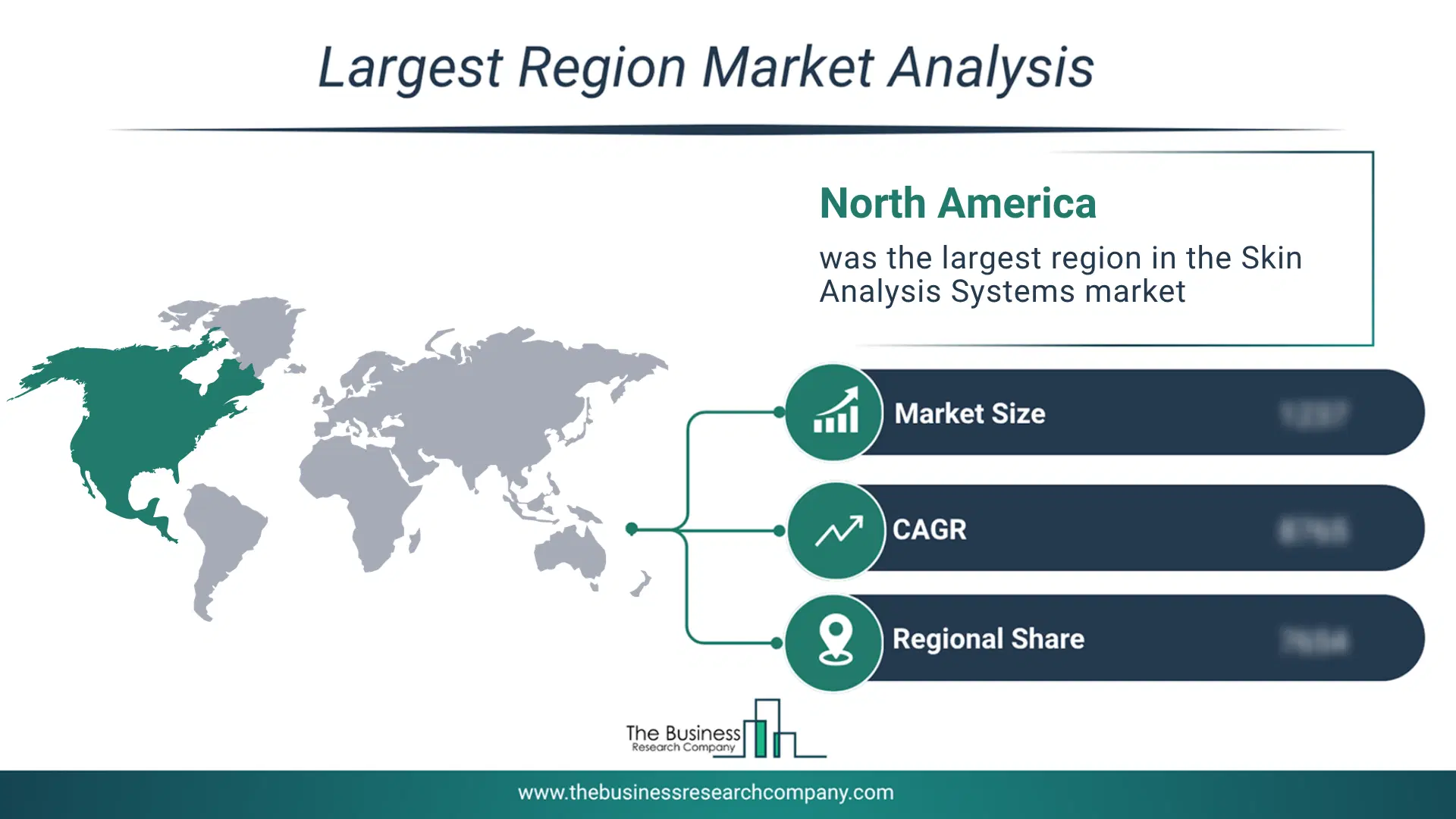
Regional Outlook
North America was the largest region in the skin analysis systems market in 2025. The regions covered in this market report are Asia-Pacific, South East Asia, Western Europe, Eastern Europe, North America, South America, Middle East, Africa. The countries covered in this market report are Australia, Brazil, China, France, Germany, India, Indonesia, Japan, Taiwan, Russia, South Korea, UK, USA, Canada, Italy, SpainWhat Defines the Skin Analysis Systems Market?
The skin analysis systems market consists of revenues earned by entities by providing services such as personalized skincare consultations, diagnostic assessments, treatment planning, and ongoing skin health monitoring. The market value includes the value of related goods sold by the service provider or included within the service offering. The skin analysis systems market also includes sales of imaging devices, diagnostic sensors, skin scanners, and data analysis tools. Values in this market are ‘factory gate’ values, that is the value of goods sold by the manufacturers or creators of the goods, whether to other entities (including downstream manufacturers, wholesalers, distributors and retailers) or directly to end customers. The value of goods in this market includes related services sold by the creators of the goods.How is Market Value Defined and Measured?
The market value is defined as the revenues that enterprises gain from the sale of goods and/or services within the specified market and geography through sales, grants, or donations in terms of the currency (in USD unless otherwise specified). The revenues for a specified geography are consumption values that are revenues generated by organizations in the specified geography within the market, irrespective of where they are produced. It does not include revenues from resales along the supply chain, either further along the supply chain or as part of other products.
This chart presents market attractiveness based on a quantitative evaluation of growth, competition, strategic alignment, and risk, offering a clear view of opportunity areas for decision-making. This chart is for illustrative purposes; the full report contains the complete analysis.

This chart highlights the Total Addressable Market (TAM) by estimating the maximum revenue opportunity using an assumption-driven approach, supporting strategic planning and opportunity sizing across markets. The chart is illustrative; the full report provides a more comprehensive analysis.
What Key Data and Analysis Are Included in the Skin Analysis Systems Market Report 2026?
The skin analysis systems market research report is one of a series of new reports from The Business Research Company that provides market statistics, including industry global market size, regional shares, competitors with the market share, detailed market segments, market trends and opportunities, and any further data you may need to thrive in the skin analysis systems industry. The market research report delivers a complete perspective of everything you need, with an in-depth analysis of the current and future state of the industry.Skin Analysis Systems Market Report Forecast Analysis
| Report Attribute | Details |
|---|---|
| Market Size Value In 2026 | $1.81 billion |
| Revenue Forecast In 2030 | $2.59 billion |
| Growth Rate | CAGR of 9.4% from 2026 to 2030 |
| Base Year For Estimation | 2025 |
| Actual Estimates/Historical Data | 2020-2025 |
| Forecast Period | 2026 - 2030 |
| Market Representation | Revenue in USD Billion and CAGR from 2026 to 2030 |
| Segments Covered | Type, Application, End User |
| Regional Scope | Asia-Pacific, Western Europe, Eastern Europe, North America, South America, Middle East, Africa |
| Country Scope | The countries covered in the report are Australia, Brazil, China, France, Germany, India, Indonesia, Japan, Taiwan, Russia, South Korea, UK, USA, Canada, Italy, Spain. |
| Key Companies Profiled | Cynosure, Dermalumics, Michelson Diagnostics, Mela Sciences, Guangzhou Beautylife Electronic Technology, Visiomed Group SA, Canfield Scientific Inc., QuantifiCare, DermoScan GmbH, MHT Optic Research, Courage + Khazaka Electronic, FotoFinder Systems, Pixience, Verisante Technology, Meicet, 3Gen Inc (DermLite), MetaOptima Technology Inc., DermaSensor Inc., SkinVision B V, MedX Health Corp, Caliber Imaging & Diagnostics Inc. |
| Customization Scope | Request for Customization |
| Pricing And Purchase Options | Explore Purchase Options |