
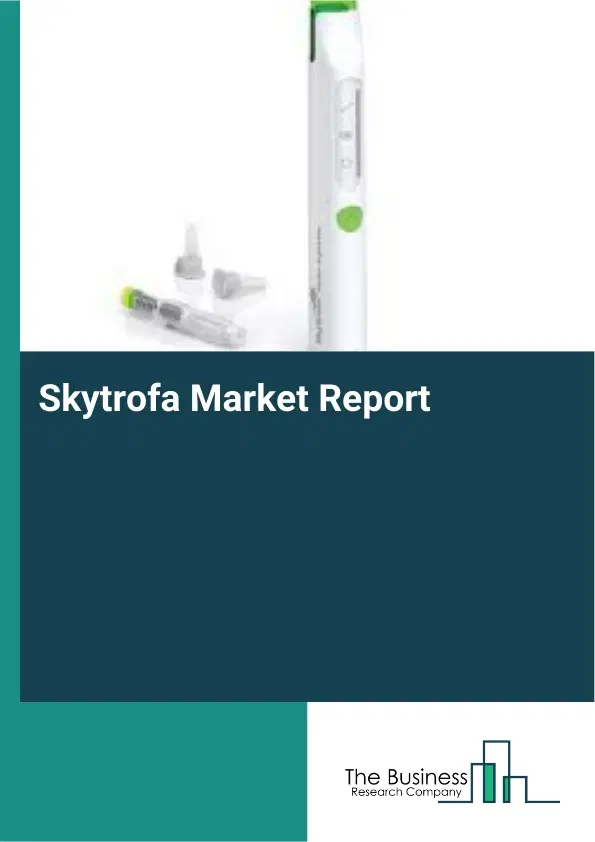
Skytrofa Market Report 2026
Epidemiology, Pipeline Analysis, Market Insights & Forecasts
Skytrofa Market Overview
• The Skytrofa market growth in the historic period has been driven by improved diagnosis of pediatric growth hormone deficiency, expansion of pediatric endocrinology services • Market expansion is supported by increasing demand for patient-friendly growth hormone options, rising investments in long-acting biologics • Growth Driver: Rising Demand For Hormone Replacement Therapy Driving Market Growth Due To Increasing Awareness And Advancements In Drug Delivery • Market Trend: Advancements In Long-Acting Growth Hormones For Improved Patient Convenience And Adherence • North America was the largest region in 2025 and Asia-Pacific is the fastest growing region.What Is Covered Under Skytrofa Market?
Skytrofa is a long-acting recombinant human growth hormone (rhGH) used to treat pediatric growth hormone deficiency (GHD) with weekly subcutaneous injections. It stimulates growth in children with GHD and provides a more convenient alternative to daily growth hormone therapies. The main indications of skytrofa include growth hormone deficiency (GHD), idiopathic short stature (ISS), and Prader-Willi syndrome (PWS). Growth hormone deficiency (GHD) refers to a medical condition in which the pituitary gland does not produce enough growth hormone, a vital substance that stimulates growth, cell reproduction, and regeneration. The formulations used are liquid formulations and subcutaneous injections and are distributed through several channels, such as hospital pharmacies, retail pharmacies, and online pharmacies. The various end users involved are hospitals, clinicals, ambulatory care, and home care.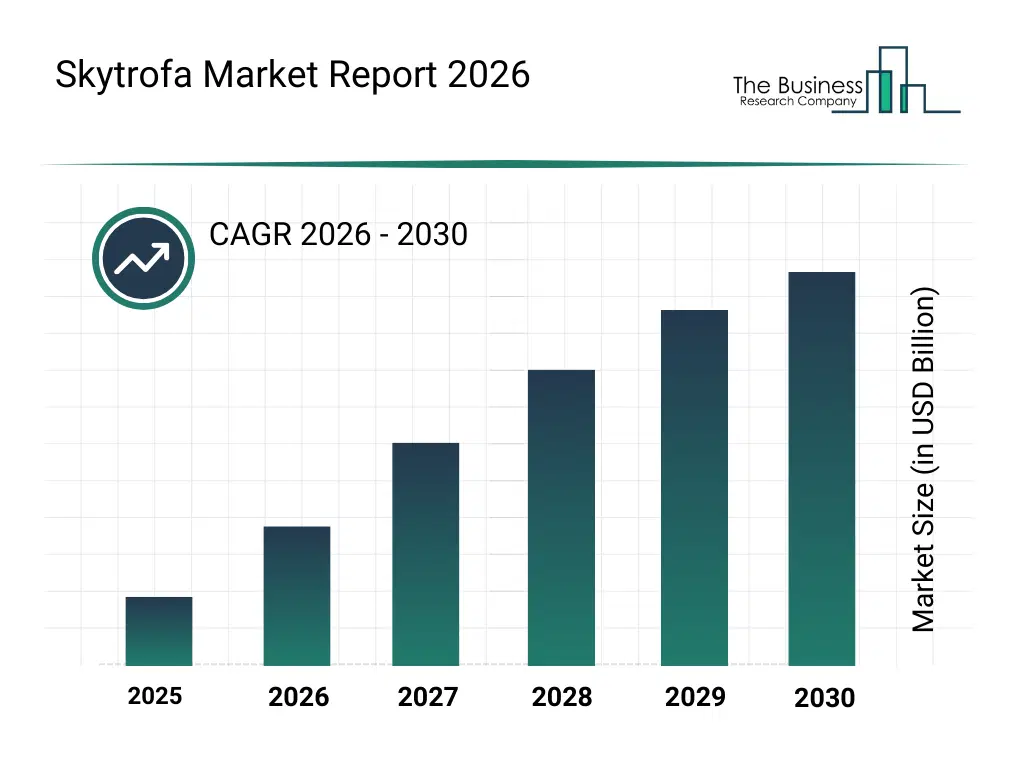
What Is The Skytrofa Market Size and Share 2026?
The growth in the historic period can be attributed to improved diagnosis of pediatric growth hormone deficiency, expansion of pediatric endocrinology services, increased availability of recombinant growth hormone, rising awareness among caregivers, adoption of injection-based hormone therapy.What Is The Skytrofa Market Growth Forecast?
The growth in the forecast period can be attributed to increasing demand for patient-friendly growth hormone options, rising investments in long-acting biologics, expansion of home-administered hormone therapies, growing focus on treatment adherence, increasing approvals for pediatric hormone indications. Major trends in the forecast period include increasing adoption of long-acting growth hormone therapies, rising preference for weekly injection regimens, growing focus on pediatric treatment compliance, expansion of recombinant hormone innovations, enhanced emphasis on reduced injection burden.
Global Skytrofa Market Segmentation
1) By Indication: Growth Hormone Deficiency (GHD), Turner Syndrome, Idiopathic Short Stature (ISS), Prader-Willi Syndrome (PWS) 2) By Formulation: Liquid Formulation, Subcutaneous Injection 3) By Distribution Channel: Hospital Pharmacies, Retail Pharmacies, Online Pharmacies 4) By End User: Hospital, Clinics, Ambulatory Care, Home CareWhat Are The Drivers Of The Skytrofa Market?
Rising demand for hormone replacement therapy is expected to propel the growth of the skytrofa market going forward. Hormone replacement therapy (HRT) is a treatment used to replace hormones, such as estrogen and progesterone, to alleviate symptoms of menopause or hormonal imbalances. The rising demand for hormone replacement therapy (HRT) is driven by an aging population and the growing recognition of its benefits in managing menopause-related symptoms. Skytrofa is used in hormone replacement therapy to treat growth hormone deficiency by stimulating growth and development through subcutaneous injections. For instance, in October 2025, according to the The National Health Service (NHS) a UK-based government body, in the latest period, approximately 14.7 million hormone replacement therapy (HRT) items were prescribed, representing an 11% increase compared with 2023/24. Therefore, rising demand for hormone replacement therapy is driving the growth of the skytrofa industry. Increasing healthcare expenditure is expected to propel the growth of the skytrofa market going forward. Healthcare expenditure refers to the total spending on medical services, treatments, and healthcare-related costs. Healthcare expenditure is increasing due to the aging population and the rising prevalence of chronic diseases, both of which demand more medical treatments and long-term care. Healthcare expenditure supports skytrofa by funding research, improving accessibility to treatment, and ensuring insurance coverage for patients with growth hormone deficiency. For instance, in November 2024, according to The Health Foundation, a UK-based independent charity, planned day-to-day DHSC spending raised from $222.2bn (£177.9bn) in 2023/24 to $234.7bn (£190.1bn) in 2024/25 and $249.4bn (£200.5bn) in 2025/26, reflecting an average annual real-term growth of 3.3%. Therefore, increasing healthcare expenditure is driving the growth of the skytrofa industry.Key Players In The Global Skytrofa Market
Major companies operating in the skytrofa market are Ascendis Pharma A/S
This chart is for illustrative purposes; the full report includes a detailed competitor analysis and comprehensive overview of the top 10 companies in the market.
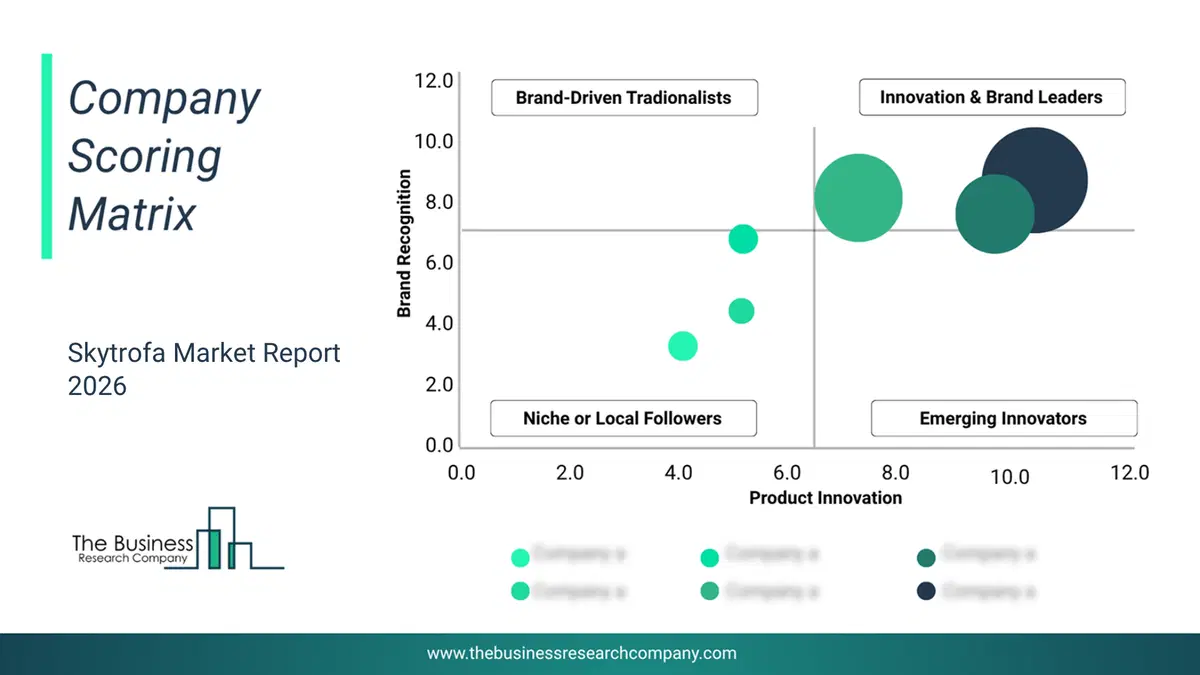
This chart maps companies by product innovation and brand strength, with bubble size indicating relative revenue, helping identify market leaders, challengers, and niche players. This is an illustrative chart; the full report provides a complete and accurate competitive analysis.
Global Skytrofa Market Trends and Insights
Key companies in the skytrofa market are focusing on developing innovative products, such as long-acting growth hormones, to enhance patient convenience and treatment adherence. Long-acting growth hormones refer to formulations of growth hormone designed to be administered less frequently, typically weekly or monthly, while maintaining therapeutic effects, as opposed to daily injections. For instance, in September 2023, Ascendis Pharma A/S, a Denmark-based biotechnology research company, launched SKYTROFA (lonapegsomatropin) in Germany, a once-weekly treatment for children and adolescents aged 3 to 18 years with growth hormone deficiency (GHD). This innovative therapy is designed to simplify the treatment regimen by offering a more convenient dosing schedule compared to daily growth hormone therapies. It utilizes pegylation technology to extend the half-life of the medication, enabling it to provide sustained effects over the course of a week with a single injection. This advancement aims to improve patient adherence and reduce the burden of frequent injections, ultimately enhancing the overall quality of care for young patients.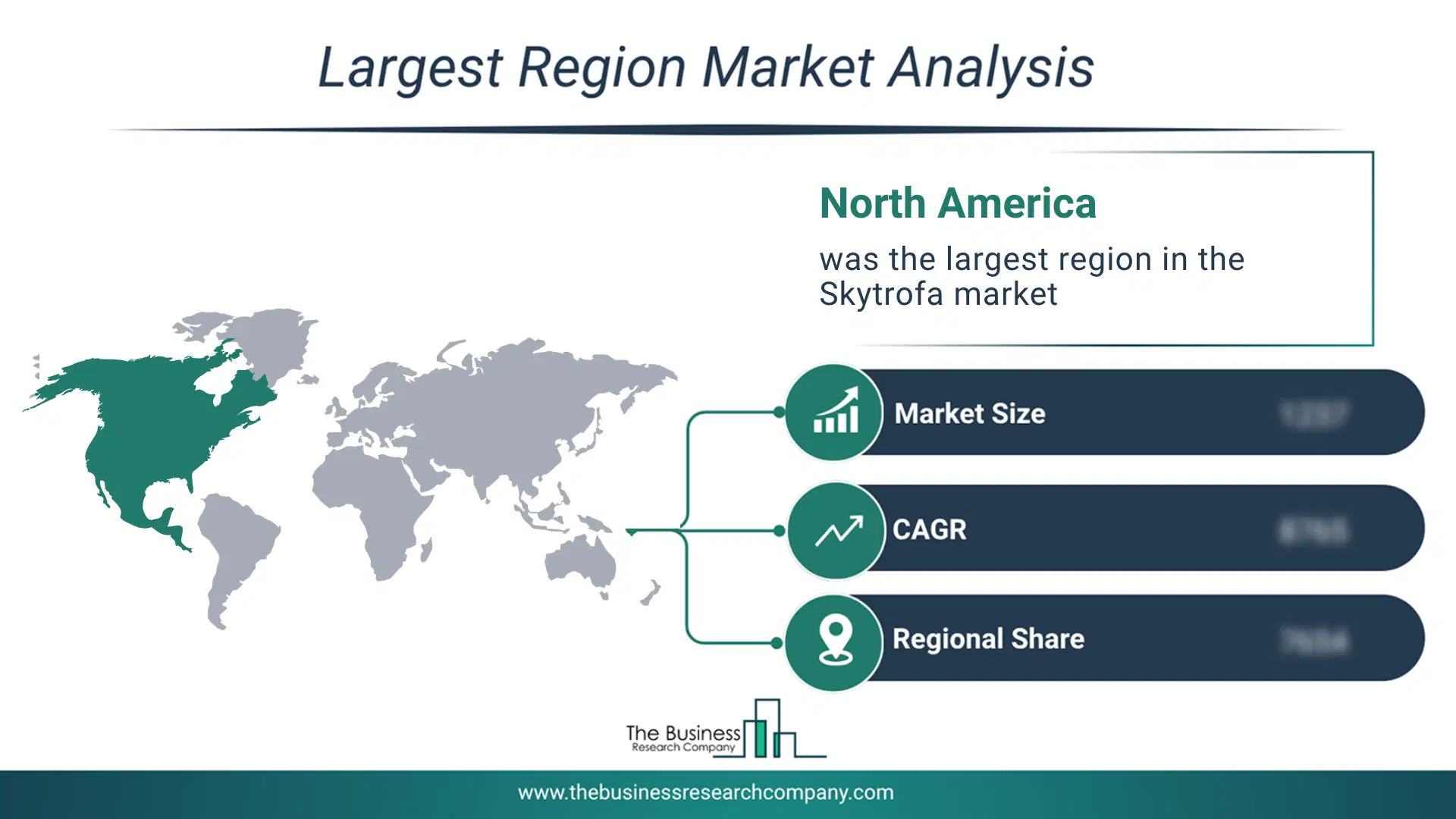
Regional Insights
North America was the largest region in the skytrofa market in 2025. Asia-Pacific is expected to be the fastest-growing region in the forecast period. The regions covered in this market report are Asia-Pacific, Western Europe, Eastern Europe, North America, South America, Middle East, Africa. The countries covered in this market report are Australia, India, China, South Korea, Japan, UK, France, Germany, USA, Canada.What Defines the Skytrofa Market?
The skytrofa market consists of sales of skytrofa injection devices, skytrofa diagnostic kits and pre-filled syringes. Values in this market are ‘factory gate’ values, that is, the value of goods sold by the manufacturers or creators of the goods, whether to other entities (including downstream manufacturers, wholesalers, distributors, and retailers) or directly to end customers. The value of goods in this market includes related services sold by the creators of the goods.How is Market Value Defined and Measured?
The market value is defined as the revenues that enterprises gain from the sale of goods and/or services within the specified market and geography through sales, grants, or donations in terms of the currency (in USD unless otherwise specified). The revenues for a specified geography are consumption values that are revenues generated by organizations in the specified geography within the market, irrespective of where they are produced. It does not include revenues from resales along the supply chain, either further along the supply chain or as part of other products.
This chart presents market attractiveness based on a quantitative evaluation of growth, competition, strategic alignment, and risk, offering a clear view of opportunity areas for decision-making. This chart is for illustrative purposes; the full report contains the complete analysis.

This chart highlights the Total Addressable Market (TAM) by estimating the maximum revenue opportunity using an assumption-driven approach, supporting strategic planning and opportunity sizing across markets. The chart is illustrative; the full report provides a more comprehensive analysis.
What Key Data and Analysis Are Included in the Skytrofa Market Report 2026?
The skytrofa market research report is one of a series of new reports from The Business Research Company that provides market statistics, including industry global market size, regional shares, competitors with the market share, detailed market segments, market trends and opportunities, and any further data you may need to thrive in the skytrofa industry. The market research report delivers a complete perspective of everything you need, with an in-depth analysis of the current and future state of the industry.Skytrofa Market Report Forecast Analysis
| Report Attribute | Details |
|---|---|
| Market Size Value In 2026 | - |
| Revenue Forecast In 2030 | - |
| Growth Rate | - |
| Base Year For Estimation | 2025 |
| Actual Estimates/Historical Data | 2020-2025 |
| Forecast Period | 2026 - 2030 |
| Market Representation | Revenue in USD Billion and CAGR from 2026 to 2030 |
| Segments Covered | Indication, Formulation, Distribution Channel, End User |
| Regional Scope | Asia-Pacific, Western Europe, Eastern Europe, North America, South America, Middle East, Africa |
| Country Scope | The countries covered in the report are Australia, Brazil, China, France, Germany, India, Indonesia, Japan, Taiwan, Russia, South Korea, UK, USA, Canada, Italy, Spain. |
| Key Companies Profiled | Ascendis Pharma A/S |
| Customization Scope | Request for Customization |
| Pricing And Purchase Options | Explore Purchase Options |