
Small Hydropower Market Report 2026
Global Outlook – By Type ( Micro Hydropower, Mini Hydropower), By Capacity ( Up To 1 MW, 1–10 MW), By Application ( Civil Construction, Power Infrastructure, Other Applications), By End-User ( Commercial, Utility-Scale) – Market Size, Trends, Strategies, and Forecast to 2030
Small Hydropower Market Overview
• Small Hydropower market size has reached to $3.13 billion in 2025 • Expected to grow to $3.7 billion in 2030 at a compound annual growth rate (CAGR) of 3.5% • Growth Driver: Clean Energy Demand Driving Growth In The Small Hydropower Market • Market Trend: Innovative Products Drive Competitiveness In The Small Hydropower Market • Asia Pacific was the largest region and fastest growing region.Market Gains By 2030 – Top Opportunities By Segment
Market Gain identifies the most promising market opportunities by highlighting the segments or products expected to generate the highest incremental revenue growth over the next five years.
What Is Covered Under Small Hydropower Market?
Small hydropower refers to the generation of electricity through the use of hydropower systems that typically have a capacity of less than 10 megawatts (MW). These systems harness the energy from flowing or falling water to generate electricity on a smaller scale than larger hydropower plants. The main types of small hydropower are micro hydropower, mini hydropower with the capacity of up to 1 MW, 1–10 MW. Microhydropower refers to a type of hydroelectric power that typically produces from 5 kW to 100 kW of electricity using the natural flow of water. The applications of small hydropower include civil construction, power infrastructure, and other applications used in commercial, and utility-scale.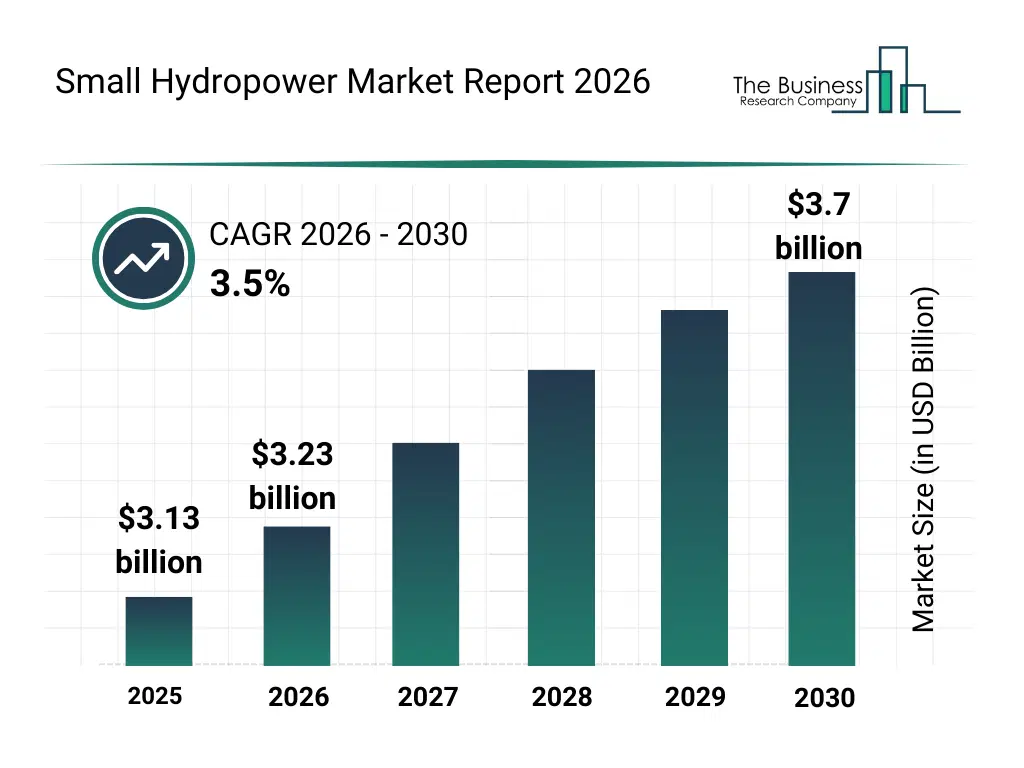
What Is The Small Hydropower Market Size 2026 And Growth Rate?
The small hydropower market size has grown steadily in recent years. It will grow from $3.13 billion in 2025 to $3.23 billion in 2026 at a compound annual growth rate (CAGR) of 3.2%. The growth in the historic period can be attributed to early development of decentralized hydro systems, rising demand for rural electrification, government support for small hydro programs, increasing need for reliable local energy sources, advancements in small turbine manufacturing.What Is The Small Hydropower Market Growth Forecast?
The small hydropower market size is expected to see steady growth in the next few years. It will grow to $3.7 billion in 2030 at a compound annual growth rate (CAGR) of 3.5%. The growth in the forecast period can be attributed to expansion of microgrid installations, rising investments in eco friendly hydropower, increasing demand for energy resilience in remote areas, growth in hybrid renewable small hydro systems, rising interest in community based hydropower projects. Major trends in the forecast period include growing adoption of small scale renewable power solutions, increasing demand for off grid and remote area electrification, rising focus on low impact and environmentally friendly hydropower, expansion of rural electrification projects using micro hydro systems, advancements in turbine efficiency and mini hydro technologies.
Global Small Hydropower Market Segmentation
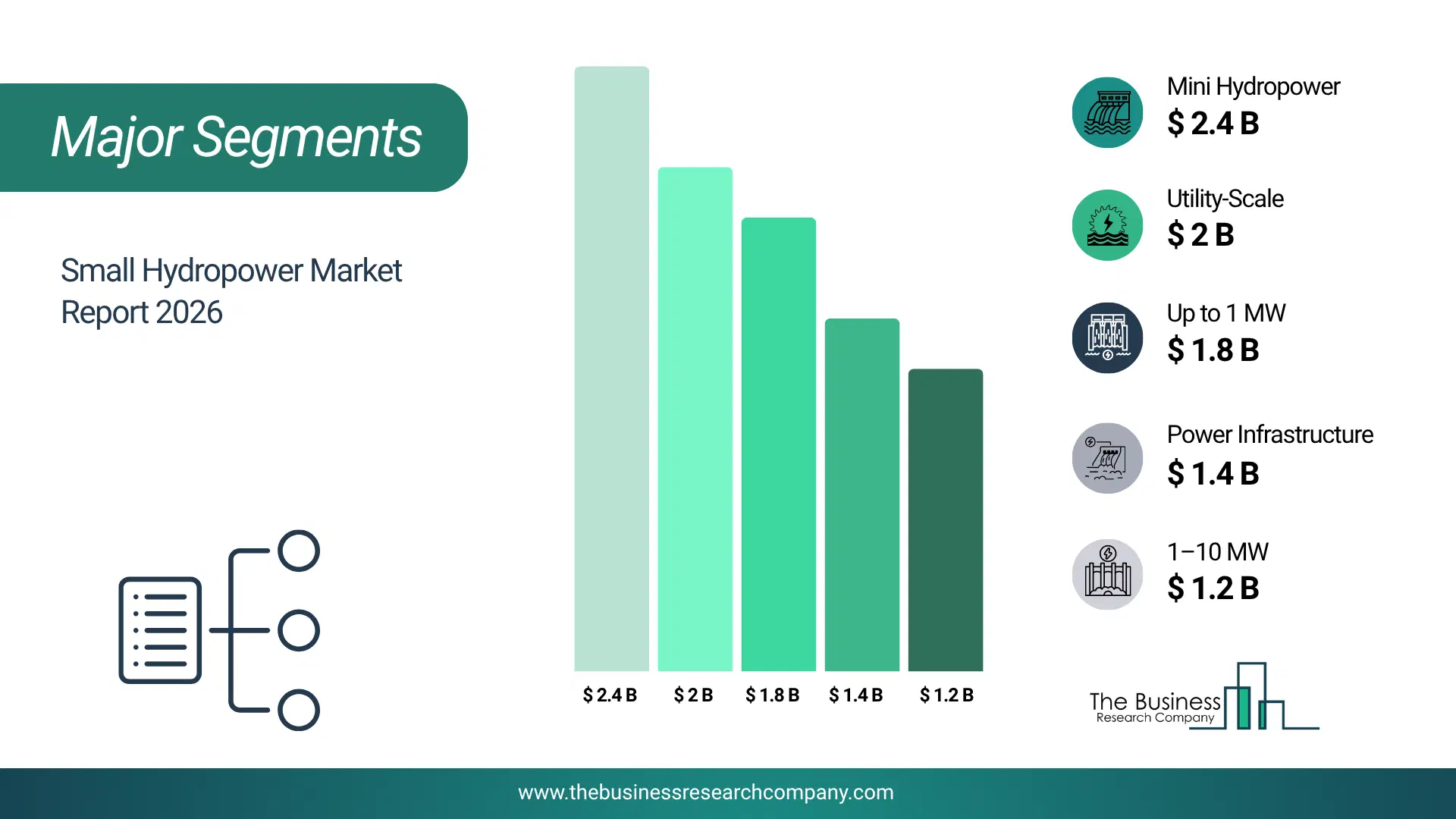
1) By Type: Micro Hydropower, Mini Hydropower 2) By Capacity: Up To 1 MW, 1–10 MW 3) By Application: Civil Construction, Power Infrastructure, Other Applications 4) By End-User: Commercial, Utility-Scale Subsegments: 1) By Micro Hydropower: Up To 100 Kw Capacity, Off-Grid Systems 2) By Mini Hydropower: 101 Kw To 1 MW Capacity, Grid-Connected Systems The top segments in the small hydropower market will be: • Mini Hydropower will reach $2445.15 Million by 2025. • Utility-Scale will reach $2047.19 Million by 2025. • Up to 1 MW will reach $1855.97 Million by 2025. • Power Infrastructure will reach $1490.88 Million by 2025. • 1–10 MW will reach $1275.14 Million by 2025.What Is The Driver Of The Small Hydropower Market?
Increasing demand for clean energy is expected to propel the small hydropower market going forward. "Clean energy" refers to energy sources and technologies with minimal or no negative environmental impact, particularly regarding greenhouse gas emissions and air pollution. Small hydropower systems generate electricity without emitting greenhouse gases or air pollutants during operation, contributing to cleaner air and a lower carbon footprint. For instance, in April 2025, the International Renewable Energy Agency (IRENA), a UAE-based intergovernmental organization, reported that global renewable power capacity increased by 585 GW in a single year, indicating a record rate of 15.1% annual growth, which surpasses 2023's growth rate of 14.3%. Therefore, the increasing demand for clean energy is driving the small hydropower industry.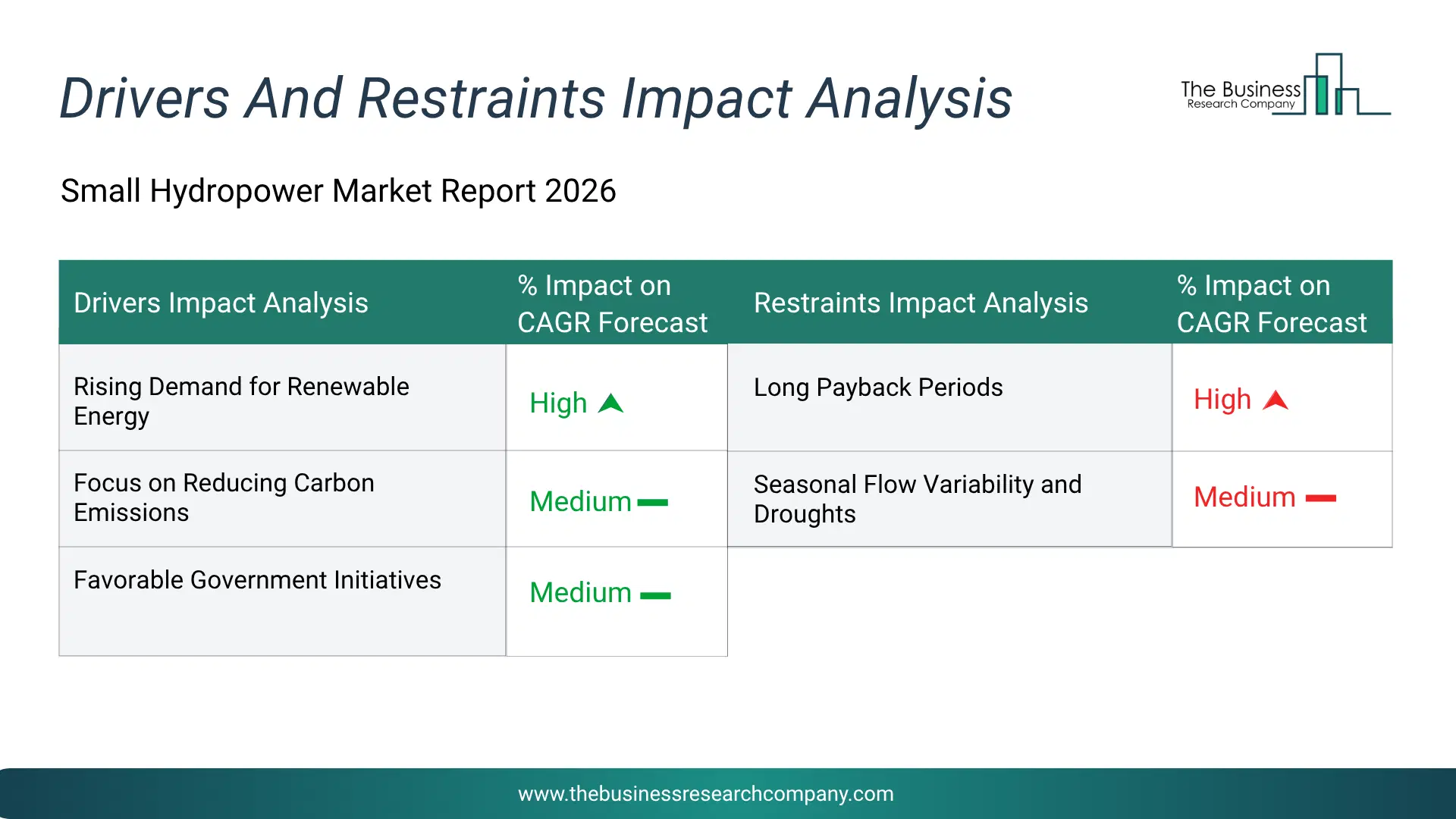
Infographic Chart Showing Key Market Drivers Analysis And Restraints For Small Hydropower Market
The chart presents an impact analysis of key drivers and restraints, quantifying their relative influence on the market's growth rate and helping assess the balance between growth enablers and limiting factors. This chart offers a high-level perspective; the full report contains more detailed insights.
How Will The Drivers Impact Growth In The Global Small Hydropower Market?
• Rising Demand for Renewable Energy (High) – The rising demand for renewable energy will become a key driver of growth in the small hydropower market by 2030. As countries strive to meet increasing electricity needs, driven by industrial expansion, electrification of transport, higher cooling demand and growth in data centres, they are turning more and more toward clean, reliable sources of power. Small hydropower plants, with their ability to supply continuous and low-emission electricity in mountainous and rural regions, offer an ideal match for this shift. Small hydropower stands to benefit from policies and investment flows favoring renewable generation options. The steady increase in renewables’ share in electricity mix encourages investment in small and medium scale projects, modernization of existing plants and integration of small hydropower into regional power systems. As a result, the rising demand for renewable energy is anticipated to contributing to a 2.0% annual growth in the market. • Focus on Reducing Carbon Emissions (Medium) – The focus on reducing carbon emissions will emerge as a major factor driving the expansion of the small hydropower market by 2030. Governments, industries and international organizations are increasingly prioritizing low-carbon energy solutions to combat climate change and align with sustainability targets. Small hydropower projects, with their renewable, clean and reliable generation capacity, are well positioned to support this transition by offering a consistent alternative to fossil fuel–based power. Efforts to reduce carbon footprints across sectors are driving a shift toward renewable energy investments, with hydropower playing a key role in ensuring grid stability and balancing variable sources like wind and solar. As policies and initiatives aimed at lowering emissions intensify, small hydropower is gaining importance as a dependable option that delivers both environmental and economic benefits. Consequently, the focus on reducing carbon emissions is projected to contributing to a 1.5% annual growth in the market. • Favorable Government Initiatives (Medium) – The favorable government initiatives within digital manufacturing processes will serve as a key growth catalyst for the small hydropower market by 2030, policies that provide financial support, incentives and regulatory backing encourage investment in small hydro projects by reducing barriers related to project development and implementation. These initiatives make it easier for developers to undertake projects in remote or hilly regions, where small hydropower plants are most effective. By supporting environmentally sustainable and decentralized energy generation, such initiatives also promote the adoption of clean energy solutions in rural and semi-urban areas. As governments continue to prioritize renewable energy and create conducive frameworks for project development, the small hydropower sector is expected to attract increased investment and expansion. Therefore, this favorable government initiatives is projected to supporting to a 1.0% annual growth in the market. • Growing Cross-Border Green Energy Trade Initiatives (Low) – The growing cross-border green energy trade initiatives will become a significant driver contributing to the growth of the small hydropower market by 2030. Cross-border electricity trade requires clean, reliable and regulation-compliant sources of power and small hydropower projects are well positioned to meet these needs. Small hydropower projects (SHP) plants provide stable renewable generation, support grid balancing and can be easily integrated into regional energy exchanges, making them ideal for international power trade. Moreover, their location in border states and hilly regions enhances their potential for export to neighbouring countries. As emerging countries around the world, such as Nepal, Bhutan and Bangladesh, increasingly participate in cross-border electricity trade to diversify energy sources and meet climate targets, the demand for flexible and dependable renewable energy from small hydro projects is expected to rise. Consequently, the growing cross-border green energy trade initiatives is projected to contributing to a 0.8% annual growth in the market.How Will The Restraints Impact Growth In The Global Small Hydropower Market?
• Long Payback Periods (High) – Long Payback Periods will restrict the growth of the Small Hydropower market during the forecast period. Small hydropower projects require significant initial investment with extended payback periods, often ranging from 10 to 20 years depending on project size and location. The long timeline for return on investment makes these projects less attractive to private investors seeking quicker returns. Securing financing for such long-term projects remains challenging, particularly in developing regions with limited access to capital. • Seasonal Flow Variability and Droughts (Medium) – Seasonal Flow Variability and Droughts will restrict the growth of the Small Hydropower market during the forecast period. Small hydropower generation is highly dependent on water availability, which varies seasonally and is increasingly affected by climate change. Extended dry periods and droughts can significantly reduce power generation capacity, affecting project economics and reliability. This variability in water flow creates operational uncertainty and may make small hydropower projects less attractive for baseload power generation.Key Players In The Global Small Hydropower Market
Major companies operating in the small hydropower market are General Electric, Siemens Energy, Toshiba Corporation, ANDRITZ, SNC Lavalin Group, Voith GmbH & Co. KGaA, Mavel, a.s., Flowserve Corporation, BHEL, Kolektor Turboinstitut, FLOVEL Energy Private Limited, Mannvit Engineering, VAPTECH, Canyon Hydro, Ganz EEM, ATB Riva Calzoni, Natel Energy, Inc., Canadian Hydro Components, Hitachi Mitsubishi Hydro, B Fouress, HydroCoil Power, Hydro Green Energy, Rentec Renewable Energy Technologies, Gilkes Hydro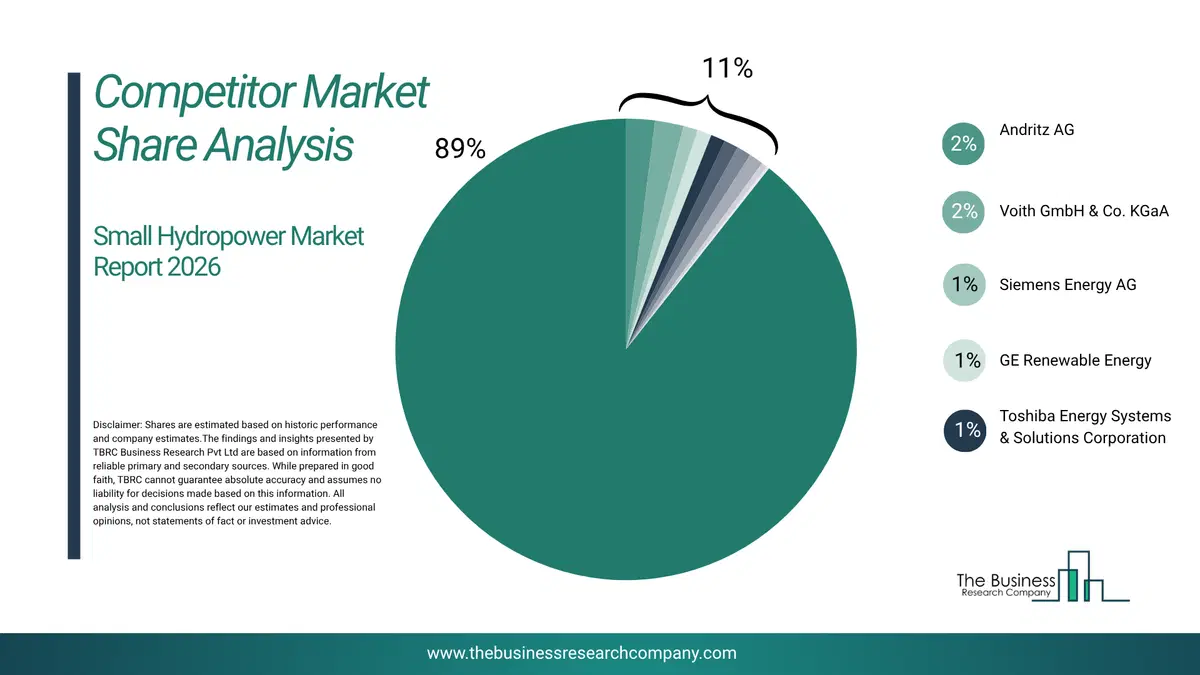
This chart is for illustrative purposes; the full report includes a detailed competitor analysis and comprehensive overview of the top 10 companies in the market.
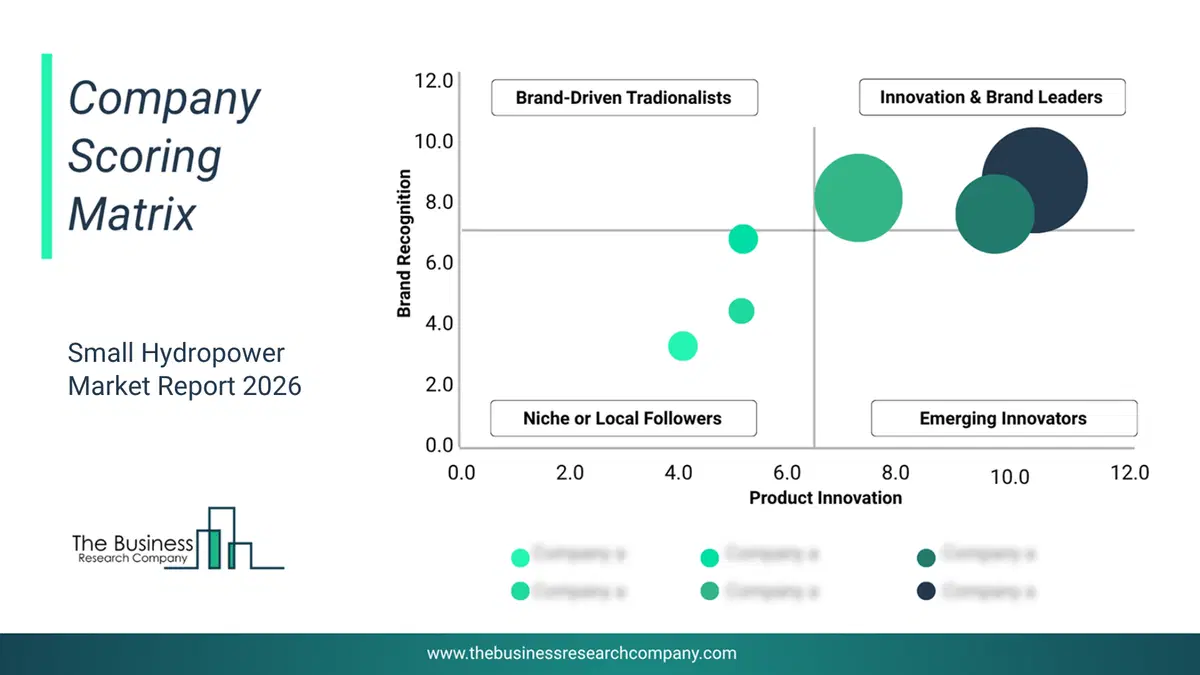
This chart maps companies by product innovation and brand strength, with bubble size indicating relative revenue, helping identify market leaders, challengers, and niche players. This is an illustrative chart; the full report provides a complete and accurate competitive analysis.
Global Small Hydropower Market Trends and Insights
Major companies operating in the small hydropower market are focused on developing innovative products, such as mini hydropower systems, to strengthen their position in the market. A mini hydropower system is a small-scale hydropower system that generates electricity from flowing water, typically with a capacity between 100 kW and 1 MW. For instance, in September 2025, Elis Co., Ltd., a Japan‑based provider of mini‑hydropower systems and renewable energy solutions, launched its advanced WaterWeco mini hydropower generation system. The developed system features an automatic load‑following mechanism that adjusts the turbine inflow angle and weir configuration in response to changing water conditions, and it is optimized for installation in low‑head, low‑flow agricultural waterways and irrigation channels, making it highly suitable for distributed renewable power generation.What Are Latest Mergers And Acquisitions In The Small Hydropower Market?
In April 2023, Kejuruteraan Asastera Berhad (KAB), a Malaysia‑based provider of engineering and renewable energy solutions, acquired PT Inpola Mitra Elektrindo for an undisclosed amount. With this acquisition, KAB aims to strengthen its sustainable energy portfolio and expand its footprint in the renewable energy segment by adding a reliable mini‑hydropower asset generating recurring revenue under a long‑term power purchase agreement. PT Inpola Mitra Elektrindo is an Indonesia‑based provider operating an 11 MW mini‑hydropower plant under a 20‑year Power Purchase Agreement.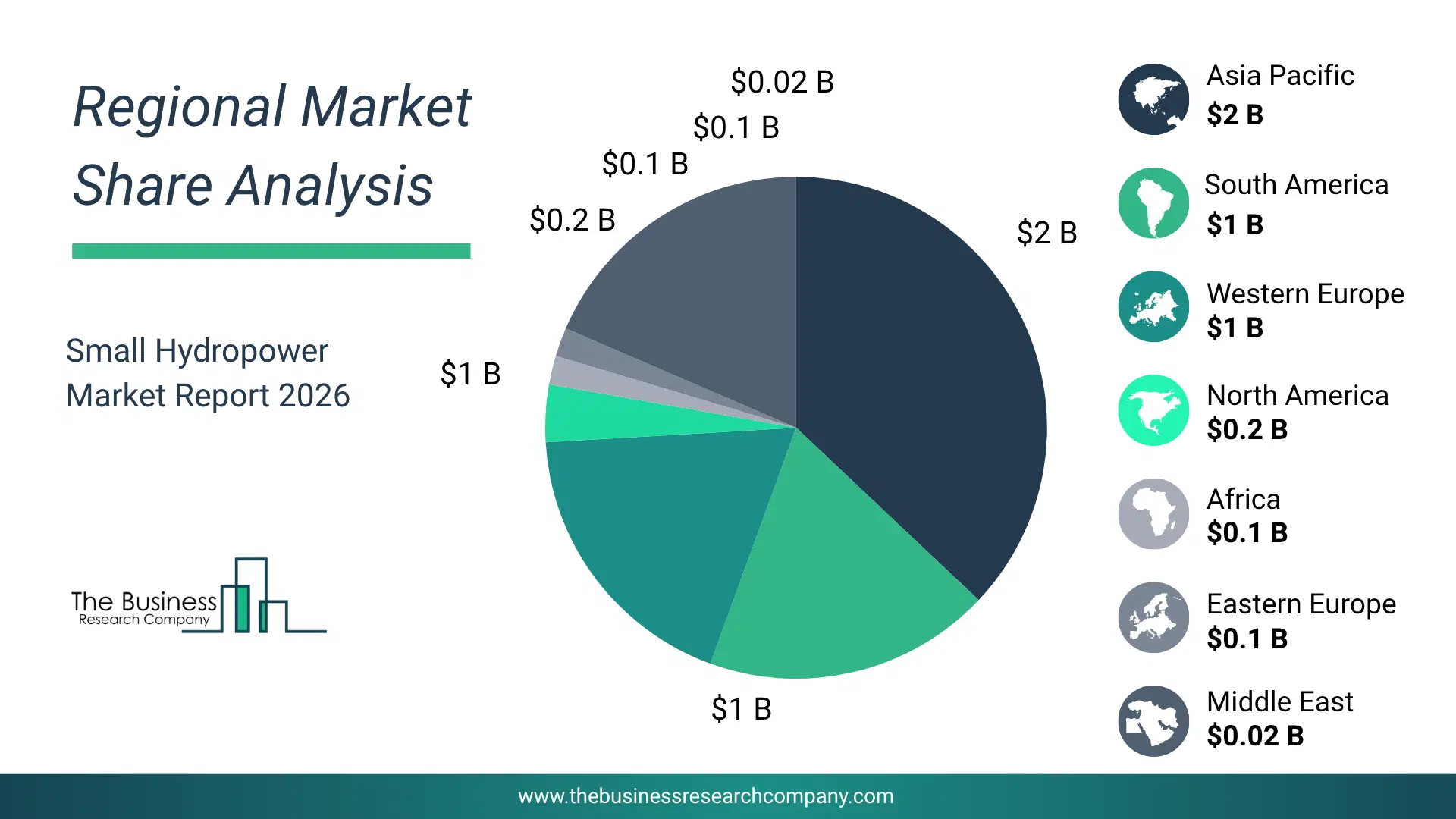
Regional Outlook
Asia Pacificwas the largest region in the small hydropower market in 2025. Asia Pacificis expected to be the fastest-growing region in the forecast period. The regions covered in this market report are Asia-Pacific, South East Asia, Western Europe, Eastern Europe, North America, South America, Middle East, Africa. The countries covered in this market report are Australia, Brazil, China, France, Germany, India, Indonesia, Japan, Taiwan, Russia, South Korea, UK, USA, Canada, Italy, Spain.What Defines the Small Hydropower Market?
The small hydropower market includes revenues earned by entities by providing services such as clean electricity generation, rural electrification, engineering and design, monitoring and optimization and installation and project management. The market value includes the value of related goods sold by the service provider or included within the service offering. Only goods and services traded between entities or sold to end consumers are included. The small hydropower market also includes sales of turbines, generators, penstocks, weirs, and control systems. Values in this market are ‘factory gate’ values, that is the value of goods sold by the manufacturers or creators of the goods, whether to other entities (including downstream manufacturers, wholesalers, distributors and retailers) or directly to end customers. The value of goods in this market includes related services sold by the creators of the goods.How is Market Value Defined and Measured?
The market value is defined as the revenues that enterprises gain from the sale of goods and/or services within the specified market and geography through sales, grants, or donations in terms of the currency (in USD unless otherwise specified). The revenues for a specified geography are consumption values that are revenues generated by organizations in the specified geography within the market, irrespective of where they are produced. It does not include revenues from resales along the supply chain, either further along the supply chain or as part of other products.
This chart presents market attractiveness based on a quantitative evaluation of growth, competition, strategic alignment, and risk, offering a clear view of opportunity areas for decision-making. This chart is for illustrative purposes; the full report contains the complete analysis.

This chart highlights the Total Addressable Market (TAM) by estimating the maximum revenue opportunity using an assumption-driven approach, supporting strategic planning and opportunity sizing across markets. The chart is illustrative; the full report provides a more comprehensive analysis.
What Key Data and Analysis Are Included in the Small Hydropower Market Report 2026?
The small hydropower market research report is one of a series of new reports from The Business Research Company that provides market statistics, including industry global market size, regional shares, competitors with the market share, detailed market segments, market trends and opportunities, and any further data you may need to thrive in the small hydropower industry. The market research report delivers a complete perspective of everything you need, with an in-depth analysis of the current and future state of the industry.Small Hydropower Market Report 2026 Market Report Forecast Analysis
| Report Attribute | Details |
|---|---|
| Market Size Value In 2026 | $3.23 billion |
| Revenue Forecast In 2030 | $3.7 billion |
| Growth Rate | CAGR of 3.2% from 2026 to 2030 |
| Base Year For Estimation | 2025 |
| Actual Estimates/Historical Data | 2020-2025 |
| Forecast Period | 2026 - 2030 |
| Market Representation | Revenue in USD Billion and CAGR from 2026 to 2030 |
| Segments Covered | Type, Capacity, Application, End-User |
| Regional Scope | Asia-Pacific, Western Europe, Eastern Europe, North America, South America, Middle East, Africa |
| Country Scope | The countries covered in the report are Australia, Brazil, China, France, Germany, India, Indonesia, Japan, Taiwan, Russia, South Korea, UK, USA, Canada, Italy, Spain. |
| Key Companies Profiled | General Electric, Siemens Energy, Toshiba Corporation, ANDRITZ, SNC Lavalin Group, Voith GmbH & Co. KGaA, Mavel, a.s., Flowserve Corporation, BHEL, Kolektor Turboinstitut, FLOVEL Energy Private Limited, Mannvit Engineering, VAPTECH, Canyon Hydro, Ganz EEM, ATB Riva Calzoni, Natel Energy, Inc., Canadian Hydro Components, Hitachi Mitsubishi Hydro, B Fouress, HydroCoil Power, Hydro Green Energy, Rentec Renewable Energy Technologies, Gilkes Hydro |
| Customization Scope | Request for Customization |
| Pricing And Purchase Options | Explore Purchase Options |