
Small Lymphocytic Lymphoma Market Report 2026
Global Outlook – By Product (Capsules, Tablets, Injections, Other Products), By Route of Administration (Oral, Parenteral, Other Route of Administrations), By Treatment (Chemotherapy, Targeted Therapy, Stem Cell Transplant, Monoclonal antibody therapy, Other Treatments), By Distribution Channel (Hospital Pharmacy, Retail Pharmacy, Online Pharmacy, Other Distribution Channels), By End-Users (Hospitals, Specialty Clinics, Homecare, Other End Users) - Market Size, Trends, Strategies, and Forecast to 2030
Small Lymphocytic Lymphoma Market Overview
• Small Lymphocytic Lymphoma market size has reached to $3.23 billion in 2025 • Expected to grow to $3.95 billion in 2030 at a compound annual growth rate (CAGR) of 4.1% • Growth Driver: Impact Of Personalized Medicine On The Market Growth • Market Trend: Innovative Therapies Driving Advances In Small Lymphocytic Lymphoma Treatment • North America was the largest region in 2025 and Asia-Pacific is the fastest growing region.What Is Covered Under Small Lymphocytic Lymphoma Market?
Small lymphocytic lymphoma (SLL) is a type of cancer that primarily affects the lymphocytes, a subset of white blood cells, and typically occurs in the lymph nodes. Its purpose of treatment is to control the growth of abnormal lymphocytes, alleviate symptoms, and improve the patient's quality of life by targeting the cancerous cells with therapies such as chemotherapy, immunotherapy, or targeted treatments. The main product types of small lymphocytic lymphoma are capsules, tablets, injections, and others. Capsules are solid dosage forms enclosed in a gelatin shell, commonly used for oral administration of targeted therapies and chemotherapy agents to manage SLL. These are administered through various routes, including oral, parenteral, and others. The treatment options include chemotherapy, targeted therapy, stem cell transplant, monoclonal antibody therapy, and other treatments. It is distributed through channels such as hospital pharmacies, retail pharmacies, online pharmacies, and others. The primary end-users of these are hospitals, specialty clinics, homecare settings, and others.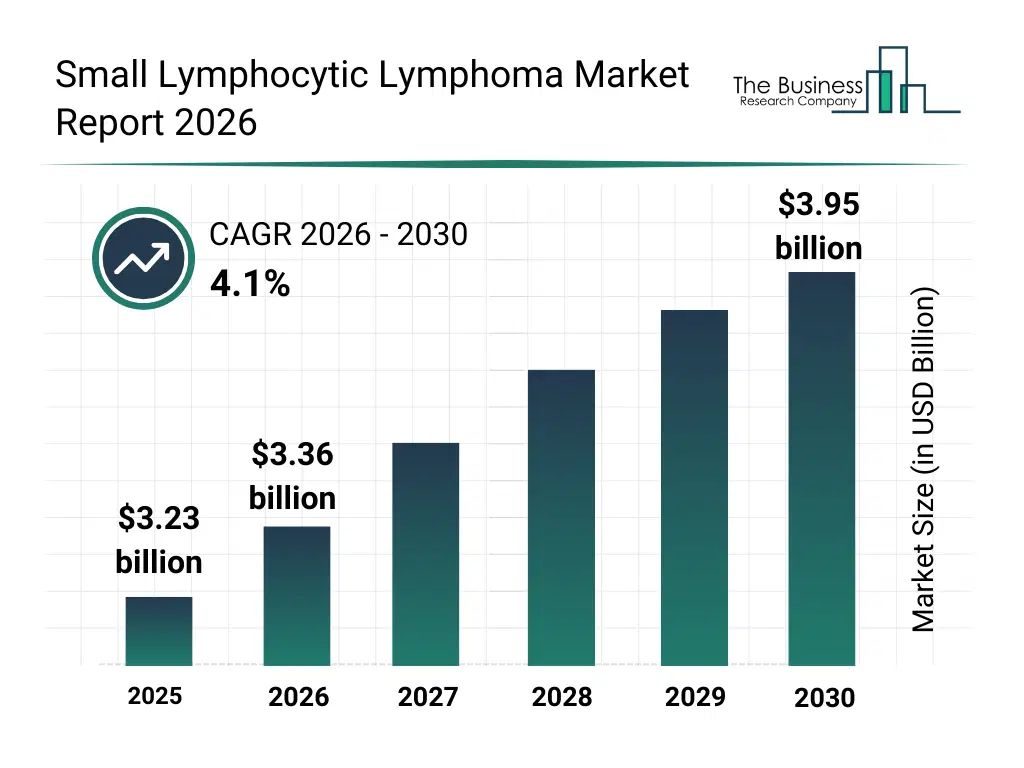
What Is The Small Lymphocytic Lymphoma Market Size and Share 2026?
The small lymphocytic lymphoma market size has grown steadily in recent years. It will grow from $3.23 billion in 2025 to $3.36 billion in 2026 at a compound annual growth rate (CAGR) of 4.1%. The growth in the historic period can be attributed to advances in hematology research, increased cancer awareness, improved diagnostic accuracy, expansion of oncology centers, availability of chemotherapy agents.What Is The Small Lymphocytic Lymphoma Market Growth Forecast?
The small lymphocytic lymphoma market size is expected to see steady growth in the next few years. It will grow to $3.95 billion in 2030 at a compound annual growth rate (CAGR) of 4.1%. The growth in the forecast period can be attributed to growth in targeted drug approvals, expansion of companion diagnostics, rising aging population, improved survival rates, increased oncology healthcare spending. Major trends in the forecast period include increasing use of targeted therapies, shift toward oral oncology drugs, improved molecular diagnostics, expansion of combination therapies, rising clinical trial activity.
Global Small Lymphocytic Lymphoma Market Segmentation
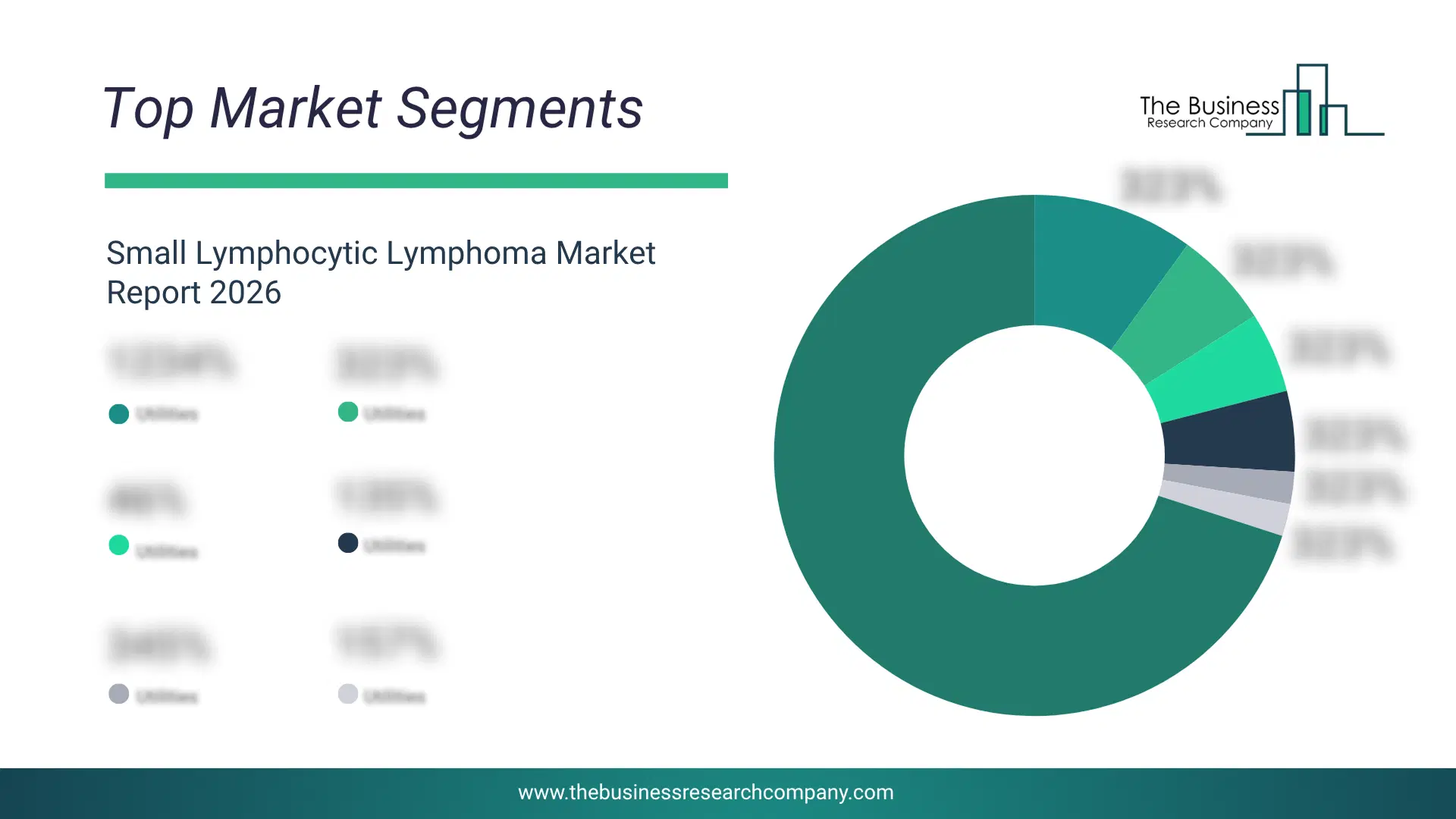
1) By Product: Capsules, Tablets, Injections, Other Products 2) By Route of Administration: Oral, Parenteral, Other Route of Administrations 3) By Treatment: Chemotherapy, Targeted Therapy, Stem Cell Transplant, Monoclonal antibody therapy, Other Treatments 4) By Distribution Channel: Hospital Pharmacy, Retail Pharmacy, Online Pharmacy, Other Distribution Channels 5) By End-Users: Hospitals, Specialty Clinics, Homecare, Other End Users Subsegments: 1) By Capsules: Oral Chemotherapy Capsules, Targeted Therapy Capsules, Immunomodulatory Capsules 2) By Tablets: Oral Chemotherapy Tablets, Targeted Therapy Tablets, Immunotherapy Tablets 3) By Injections: Chemotherapy Injections, Monoclonal Antibody Injections, Immunotherapy Injections, Biologic Injections 4) By Other Products: Oral Targeted Combination Therapies, Infusion Therapies, Biosimilars For SLL, CAR-T Cell TherapiesWhat Is The Driver Of The Small Lymphocytic Lymphoma Market?
The growth of personalized medicine is expected to propel the growth of the small lymphocytic lymphoma market going forward. Personalized medicine is a medical approach that tailors treatments and healthcare decisions based on individual genetic, environmental, and lifestyle factors. The growth of personalized medicine is driven by advancements in genomics, biotechnology, and data analytics, enabling more precise, effective, and individualized treatments. Small lymphocytic lymphoma (SLL) contributes to the growth of personalized medicine by providing insights into specific genetic mutations and biomarkers, allowing for targeted therapies and individualized treatment strategies. For instance, in February 2024, the Personalized Medicine Coalition, a US-based non-profit organization, in 2023, the FDA approved 16 new personalized treatments for patients with rare diseases, a significant increase from the six approved in 2022. Therefore, the growth of personalized medicine will drive the growth of the small lymphocytic lymphoma industry.Key Players In The Global Small Lymphocytic Lymphoma Market
Major companies operating in the small lymphocytic lymphoma market are Pfizer Inc., Johnson & Johnson, AbbVie Inc., Sanofi S.A., Bristol-Myers Squibb Company, AstraZeneca PLC, Eli Lilly and Company, Gilead Sciences Inc., Amgen Inc., Regeneron Pharmaceuticals, Incyte Corporation, Exelixis Inc., Kite Pharma Inc., Spectrum Pharmaceuticals Inc., Aptose Biosciences Inc., Secura Bio Inc., Infinity Pharmaceuticals Inc., TG Therapeutics Inc., Roche Holding AG, Novartis AG, BeiGene Ltd., Merck & Co. Inc., Takeda Pharmaceutical Company Limited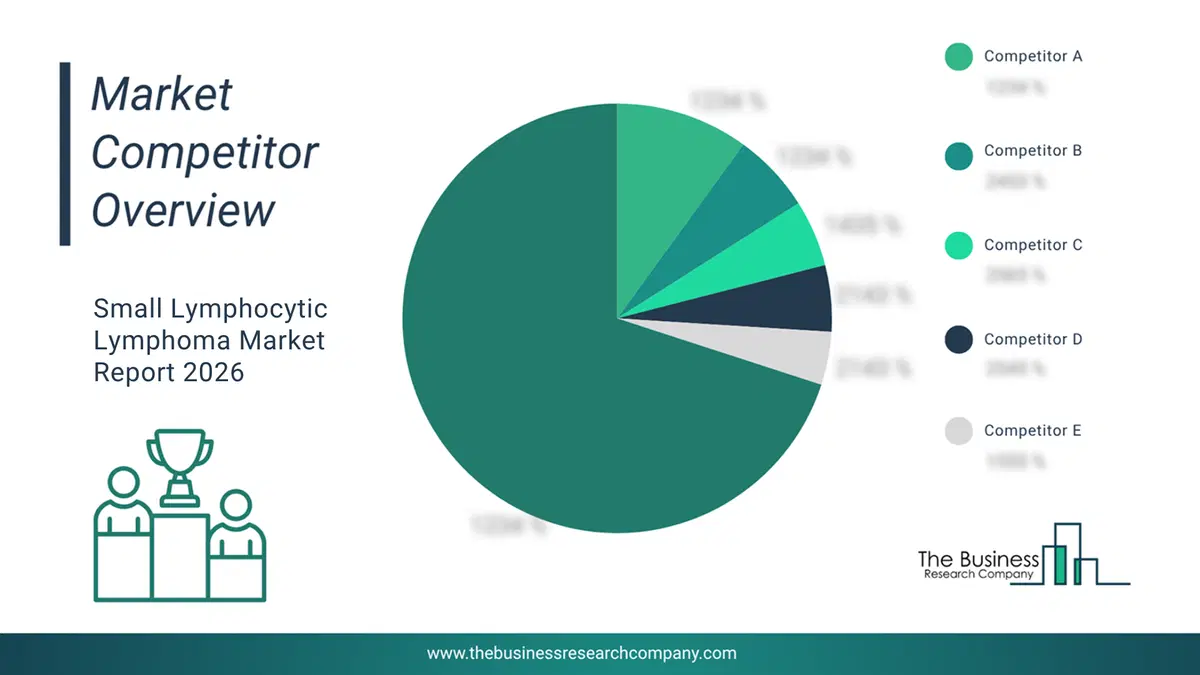
This chart is for illustrative purposes; the full report includes a detailed competitor analysis and comprehensive overview of the top 10 companies in the market.
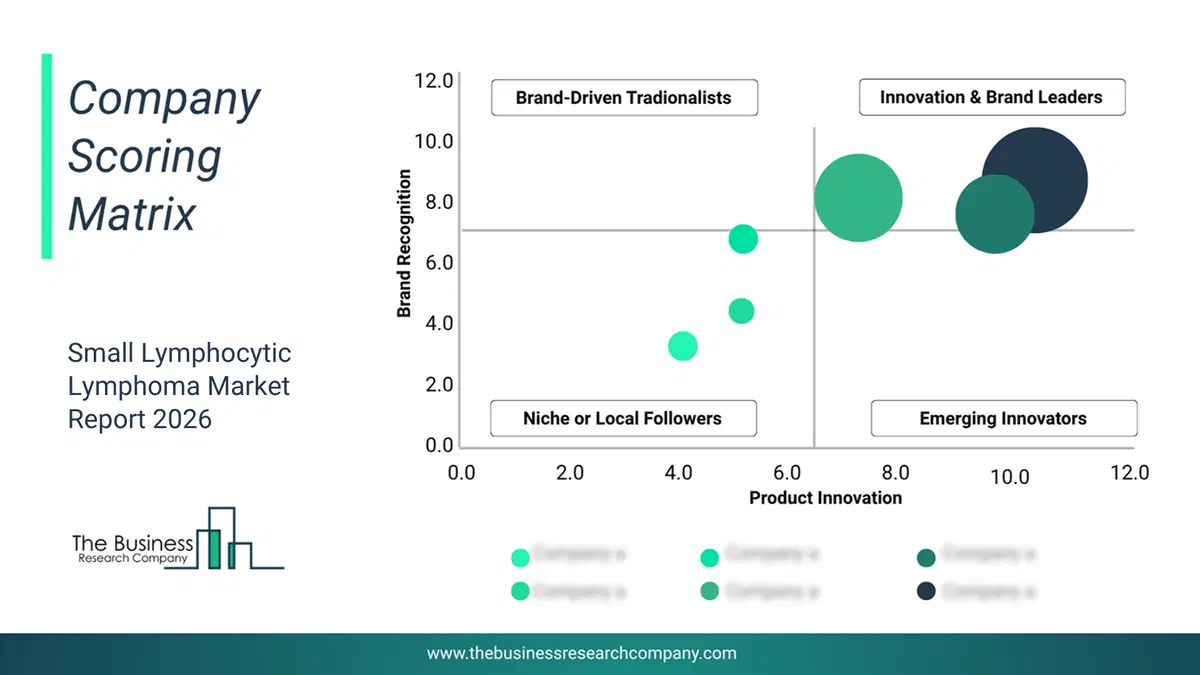
This chart maps companies by product innovation and brand strength, with bubble size indicating relative revenue, helping identify market leaders, challengers, and niche players. This is an illustrative chart; the full report provides a complete and accurate competitive analysis.
Global Small Lymphocytic Lymphoma Market Trends and Insights
Major companies operating in the small lymphocytic lymphoma market are developing innovative products, such as non-covalent BTK inhibitors, to enhance treatment efficacy, overcome resistance to existing therapies, and improve patient outcomes. Non-covalent BTK inhibitors are a class of drugs that reversibly bind to the Bruton's tyrosine kinase (BTK) enzyme, targeting B-cell malignancies while reducing resistance and adverse effects associated with covalent inhibitors. For instance, in December 2023, Eli Lilly and Company, a US-based pharmaceutical company, announced that the U.S. Food and Drug Administration (FDA) has approved Jaypirca (pirtobrutinib) for adults with chronic lymphocytic leukemia or small lymphocytic lymphoma (CLL/SLL). This approval is particularly noteworthy for its focus on patients who have already undergone at least two lines of therapy, including a Bruton’s Tyrosine Kinase (BTK) inhibitor and a BCL-2 inhibitor, addressing a critical unmet need in heavily pre-treated populations. Its oral administration offers patient convenience while maintaining robust, targeted therapeutic action.What Are Latest Mergers And Acquisitions In The Small Lymphocytic Lymphoma Market?
In February 2024, Johnson & Johnson, a US-based pharmaceutical company, partnered with Pharmacyclics LLC. The aim of the partnership in this case is to enhance the delivery of IMBRUVICA, a Bruton's tyrosine kinase (BTK) inhibitor used to treat chronic lymphocytic leukemia (CLL), small lymphocytic lymphoma (SLL), and other cancers. Pharmacyclics LLC is a US-based company that provides services and products relevant to the treatment of Small Lymphocytic Lymphoma (SLL).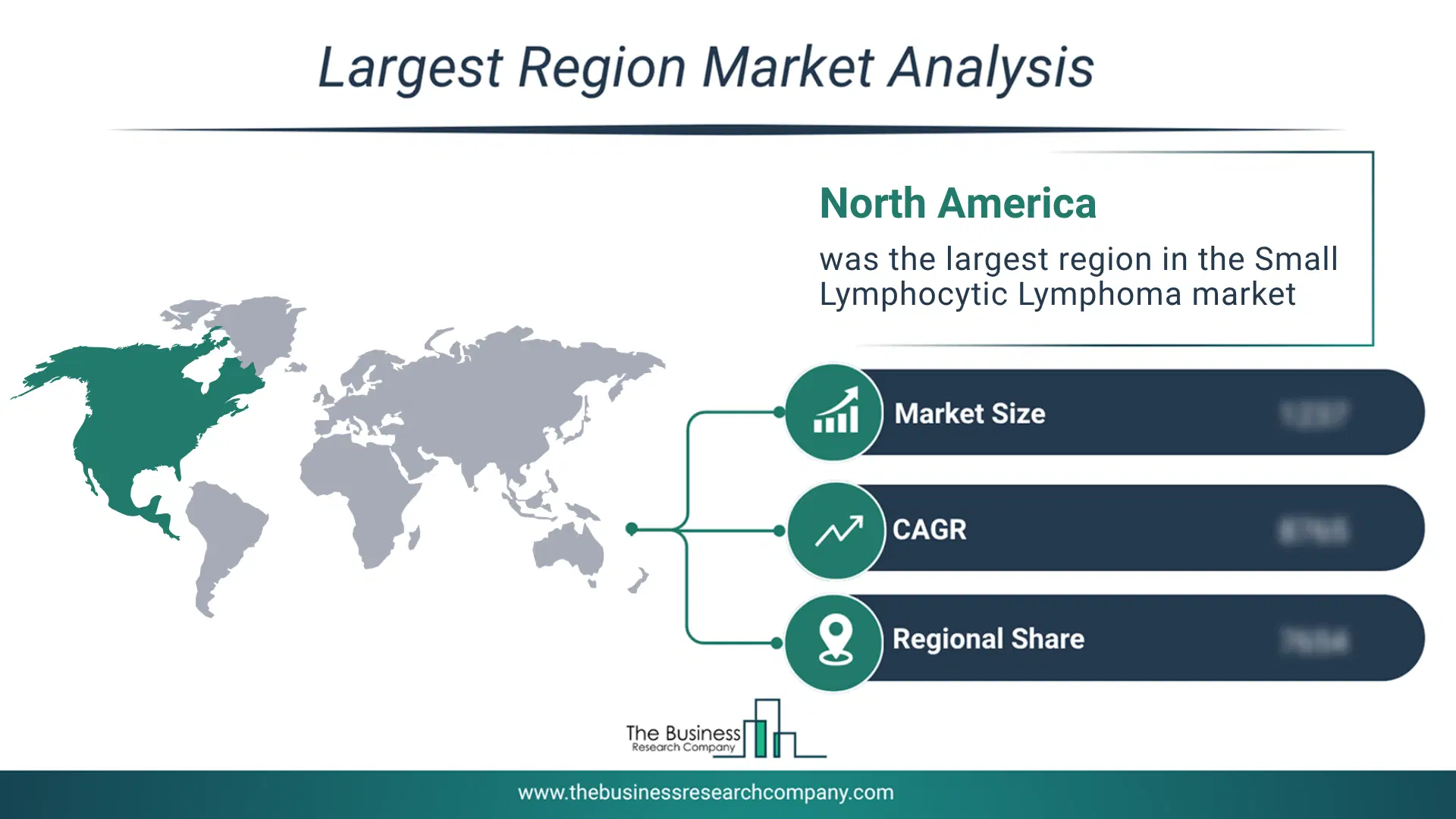
Regional Outlook
North America was the largest region in the small lymphocytic lymphoma market in 2025. Asia-Pacific is expected to be the fastest-growing region in the forecast period. The regions covered in this market report are Asia-Pacific, South East Asia, Western Europe, Eastern Europe, North America, South America, Middle East, Africa. The countries covered in this market report are Australia, Brazil, China, France, Germany, India, Indonesia, Japan, Taiwan, Russia, South Korea, UK, USA, Canada, Italy, Spain.What Defines the Small Lymphocytic Lymphoma Market?
The small lymphocytic lymphoma market consists of revenues earned by entities by providing services such as diagnostic services, medical treatments, patient management services, clinical trials, and research. The market value includes the value of related goods sold by the service provider or included within the service offering. Only goods and services traded between entities or sold to end consumers are included.How is Market Value Defined and Measured?
The market value is defined as the revenues that enterprises gain from the sale of goods and/or services within the specified market and geography through sales, grants, or donations in terms of the currency (in USD unless otherwise specified). The revenues for a specified geography are consumption values that are revenues generated by organizations in the specified geography within the market, irrespective of where they are produced. It does not include revenues from resales along the supply chain, either further along the supply chain or as part of other products.
This chart presents market attractiveness based on a quantitative evaluation of growth, competition, strategic alignment, and risk, offering a clear view of opportunity areas for decision-making. This chart is for illustrative purposes; the full report contains the complete analysis.

This chart highlights the Total Addressable Market (TAM) by estimating the maximum revenue opportunity using an assumption-driven approach, supporting strategic planning and opportunity sizing across markets. The chart is illustrative; the full report provides a more comprehensive analysis.
What Key Data and Analysis Are Included in the Small Lymphocytic Lymphoma Market Report 2026?
The small lymphocytic lymphoma market research report is one of a series of new reports from The Business Research Company that provides market statistics, including industry global market size, regional shares, competitors with the market share, detailed market segments, market trends and opportunities, and any further data you may need to thrive in the small lymphocytic lymphoma industry. The market research report delivers a complete perspective of everything you need, with an in-depth analysis of the current and future state of the industry.Small Lymphocytic Lymphoma Market Report Forecast Analysis
| Report Attribute | Details |
|---|---|
| Market Size Value In 2026 | $3.36 billion |
| Revenue Forecast In 2030 | $3.95 billion |
| Growth Rate | CAGR of 4.1% from 2026 to 2030 |
| Base Year For Estimation | 2025 |
| Actual Estimates/Historical Data | 2020-2025 |
| Forecast Period | 2026 - 2030 |
| Market Representation | Revenue in USD Billion and CAGR from 2026 to 2030 |
| Segments Covered | Product, Route of Administration, Treatment, Distribution Channel, End-Users |
| Regional Scope | Asia-Pacific, Western Europe, Eastern Europe, North America, South America, Middle East, Africa |
| Country Scope | The countries covered in the report are Australia, Brazil, China, France, Germany, India, Indonesia, Japan, Taiwan, Russia, South Korea, UK, USA, Canada, Italy, Spain |
| Key Companies Profiled | Pfizer Inc., Johnson & Johnson, AbbVie Inc., Sanofi S.A., Bristol-Myers Squibb Company, AstraZeneca PLC, Eli Lilly and Company, Gilead Sciences Inc., Amgen Inc., Regeneron Pharmaceuticals, Incyte Corporation, Exelixis Inc., Kite Pharma Inc., Spectrum Pharmaceuticals Inc., Aptose Biosciences Inc., Secura Bio Inc., Infinity Pharmaceuticals Inc., TG Therapeutics Inc., Roche Holding AG, Novartis AG, BeiGene Ltd., Merck & Co. Inc., Takeda Pharmaceutical Company Limited |
| Customization Scope | Request for Customization |
| Pricing And Purchase Options | Explore Purchase Options |