
Small Molecule Targeted Therapy Market Report 2026
Global Outlook – By Type Of Therapy (Chemotherapy, Targeted Therapy, Immunotherapy), By Drug Class (Monoclonal Antibodies, Small Molecule Inhibitors, Combination Therapies), By Mechanism Of Action (Kinase Inhibitors, Proteasome Inhibitors, Aromatic Hydrocarbon Receptor (Ahr) Modulators, Cell Cycle Inhibitors), By Disease Indication (Cancer, Autoimmune Diseases, Infectious Diseases), By Route Of Administration (Oral, Intravenous, Subcutaneous) – Market Size, Trends, Strategies, and Forecast to 2030
Small Molecule Targeted Therapy Market Overview
• Small Molecule Targeted Therapy market size has reached to $77.29 billion in 2025 • Expected to grow to $120.64 billion in 2030 at a compound annual growth rate (CAGR) of 9.3% • Growth Driver: Increasing Demand For Personalized Medicine Driving The Market Due To Advances In Genomics And Tailored Treatment Approaches • Market Trend: Innovations in Oral Targeted Therapies for Chronic and Oncology Diseases • North America was the largest region in 2025 and Asia-Pacific is the fastest growing region.Market Gains By 2030 – Top Opportunities By Segment
Market Gain identifies the most promising market opportunities by highlighting the segments or products expected to generate the highest incremental revenue growth over the next five years.
What Is Covered Under Small Molecule Targeted Therapy Market?
Small molecule targeted therapy consists of low-molecular-weight drugs that specifically interact with disease-related targets such as enzymes, receptors, or signaling proteins. They selectively inhibit or modulate disease pathways, allowing precise treatment with minimal impact on healthy cells. The main therapy types of small molecule targeted therapy are chemotherapy, targeted therapy, and immunotherapy. Chemotherapy refers to the use of chemical drugs to kill rapidly dividing cells in the body. The main drug classes, including monoclonal antibodies, small molecule inhibitors, and combination therapies, act through mechanisms such as kinase inhibitors, proteasome inhibitors, aromatic hydrocarbon receptor (AHR) modulators, and cell cycle inhibitors. This therapy is applied to treat conditions such as cancer, autoimmune diseases, and infectious diseases and can be administered orally, intravenously, and subcutaneously.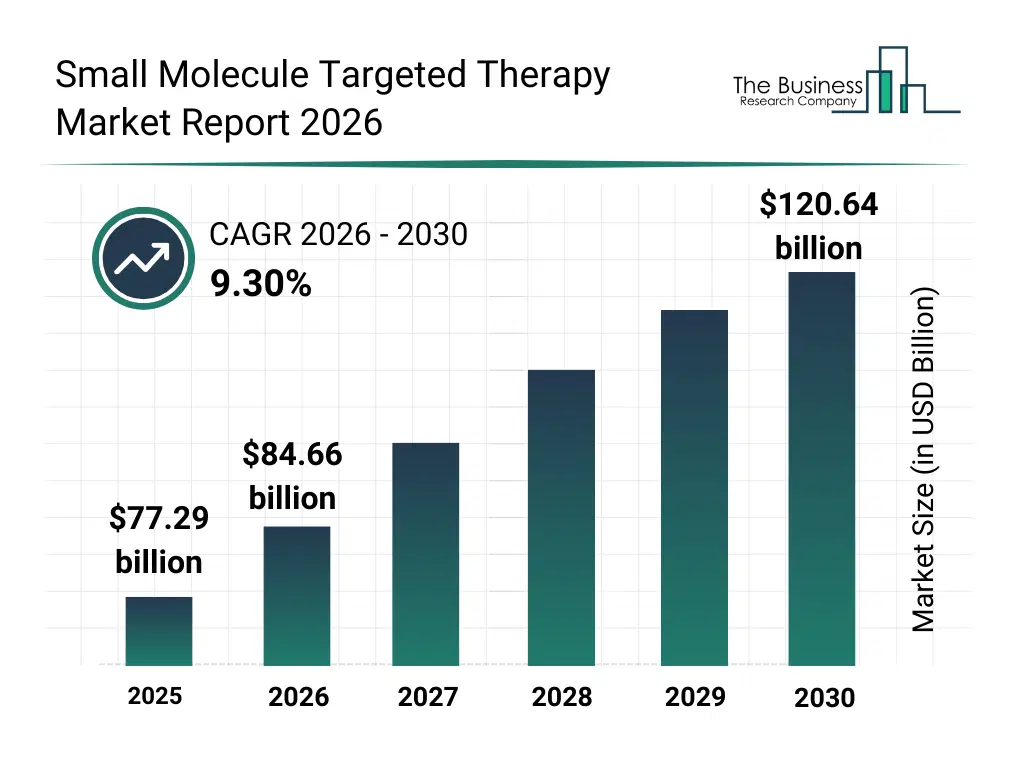
What Is The Small Molecule Targeted Therapy Market Size and Share 2026?
The small molecule targeted therapy market size has grown strongly in recent years. It will grow from $77.29 billion in 2025 to $84.66 billion in 2026 at a compound annual growth rate (CAGR) of 9.5%. The growth in the historic period can be attributed to advances in molecular biology research, increasing prevalence of chronic diseases, expansion of pharmaceutical R&D pipelines, regulatory acceptance of targeted therapies, improved drug screening technologies.What Is The Small Molecule Targeted Therapy Market Growth Forecast?
The small molecule targeted therapy market size is expected to see strong growth in the next few years. It will grow to $120.64 billion in 2030 at a compound annual growth rate (CAGR) of 9.3%. The growth in the forecast period can be attributed to increasing demand for personalized medicine approaches, rising integration of genomics in drug development, expansion of targeted therapies beyond oncology, growing focus on safety-optimized drug design, increasing investment in precision therapeutics. Major trends in the forecast period include increasing expansion of target-specific drug development, rising use of pathway-modulating therapies, growing adoption of oral small molecule treatments, enhanced focus on disease-specific molecular targets, expansion of combination small molecule regimens.
Global Small Molecule Targeted Therapy Market Segmentation
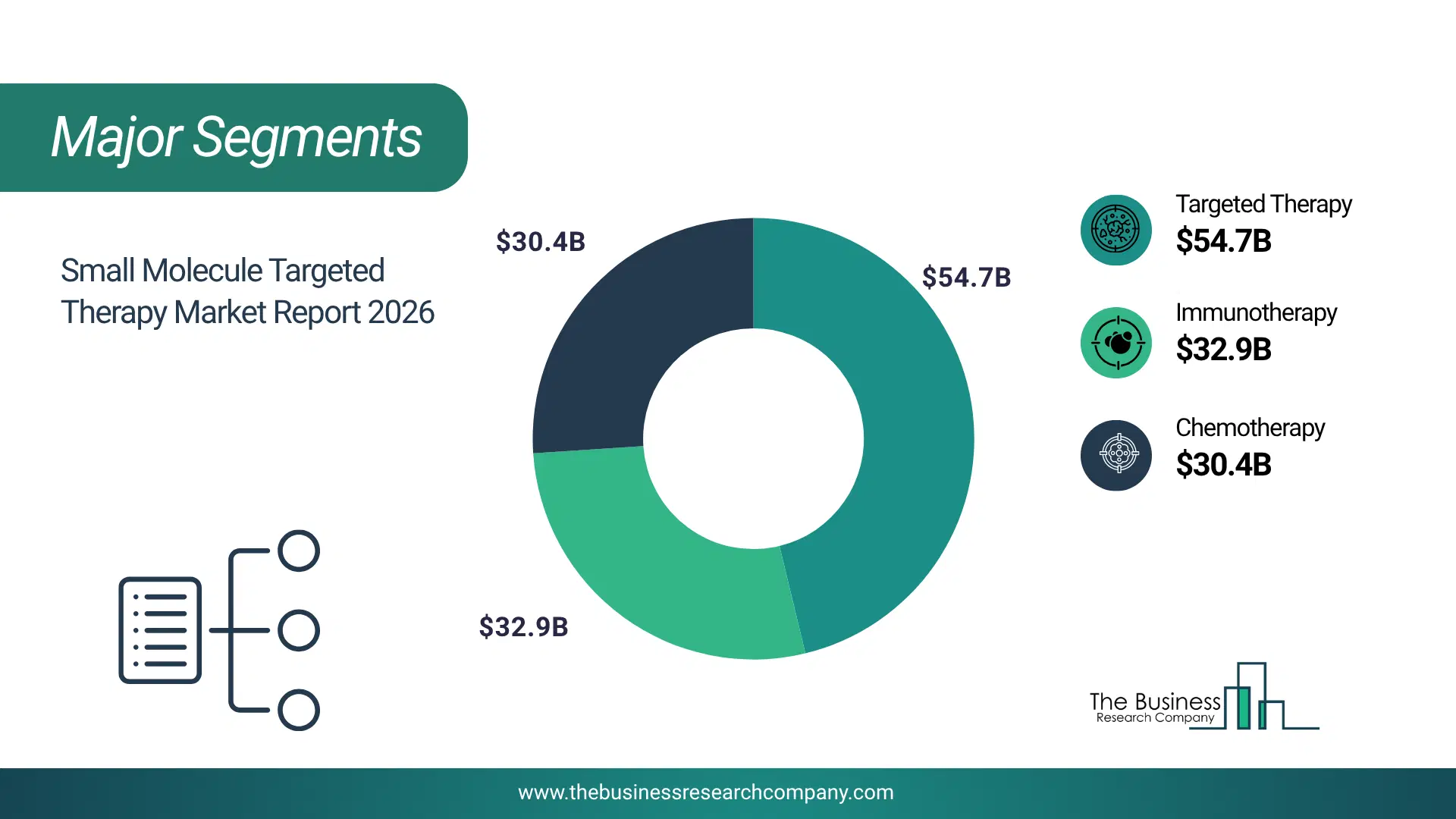
1) By Type Of Therapy: Chemotherapy, Targeted Therapy, Immunotherapy 2) By Drug Class: Monoclonal Antibodies, Small Molecule Inhibitors, Combination Therapies 3) By Mechanism Of Action: Kinase Inhibitors, Proteasome Inhibitors, Aromatic Hydrocarbon Receptor (Ahr) Modulators, Cell Cycle Inhibitors 4) By Disease Indication: Cancer, Autoimmune Diseases, Infectious Diseases 5) By Route Of Administration: Oral, Intravenous, Subcutaneous Subsegments: 1) By Chemotherapy: Alkylating Agents, Antimetabolites, Anti-microtubule Agents 2) By Targeted Therapy: Kinase Inhibitors, Proteasome Inhibitors, Aromatic Hydrocarbon Receptor (AhR) Modulators 3) By Immunotherapy: Immune Checkpoint Inhibitors, Cancer Vaccines, Monoclonal Antibodies The top segments in the small molecule targeted therapy market will be: • Targeted Therapy will reach $54.64 billion by 2030. • Immunotherapy will reach $32.81 billion by 2030. • Chemotherapy will reach $30.39 billion by 2030.What Is The Driver Of The Small Molecule Targeted Therapy Market?
The growing emphasis on personalized medicine is expected to propel the growth of the small molecule targeted therapy market going forward. Personalized medicine refers to a healthcare approach that tailors prevention, diagnosis, and treatment to an individual’s genetic, environmental, and lifestyle factors. Increasing personalized medicine is driven by advances in genomics, allowing deeper understanding of individual genetic variations and enabling more precise, targeted treatments that improve patient outcomes and reduce trial-and-error in therapies. Small molecule targeted therapy enables personalized medicine by selectively targeting a patient’s specific molecular or genetic disease profile, improving treatment efficacy and reducing side effects. For instance, in February 2024, according to the Personalized Medicine Coalition, a US-based non-profit organization, in 2023, the FDA approved 16 new personalized treatments for rare disease patients, up from six in 2022. The newly approved personalized treatments for 2023 also include seven cancer drugs and three for other diseases and conditions. Therefore, the growing emphasis on personalized medicine is driving the growth of the small molecule targeted therapy industry.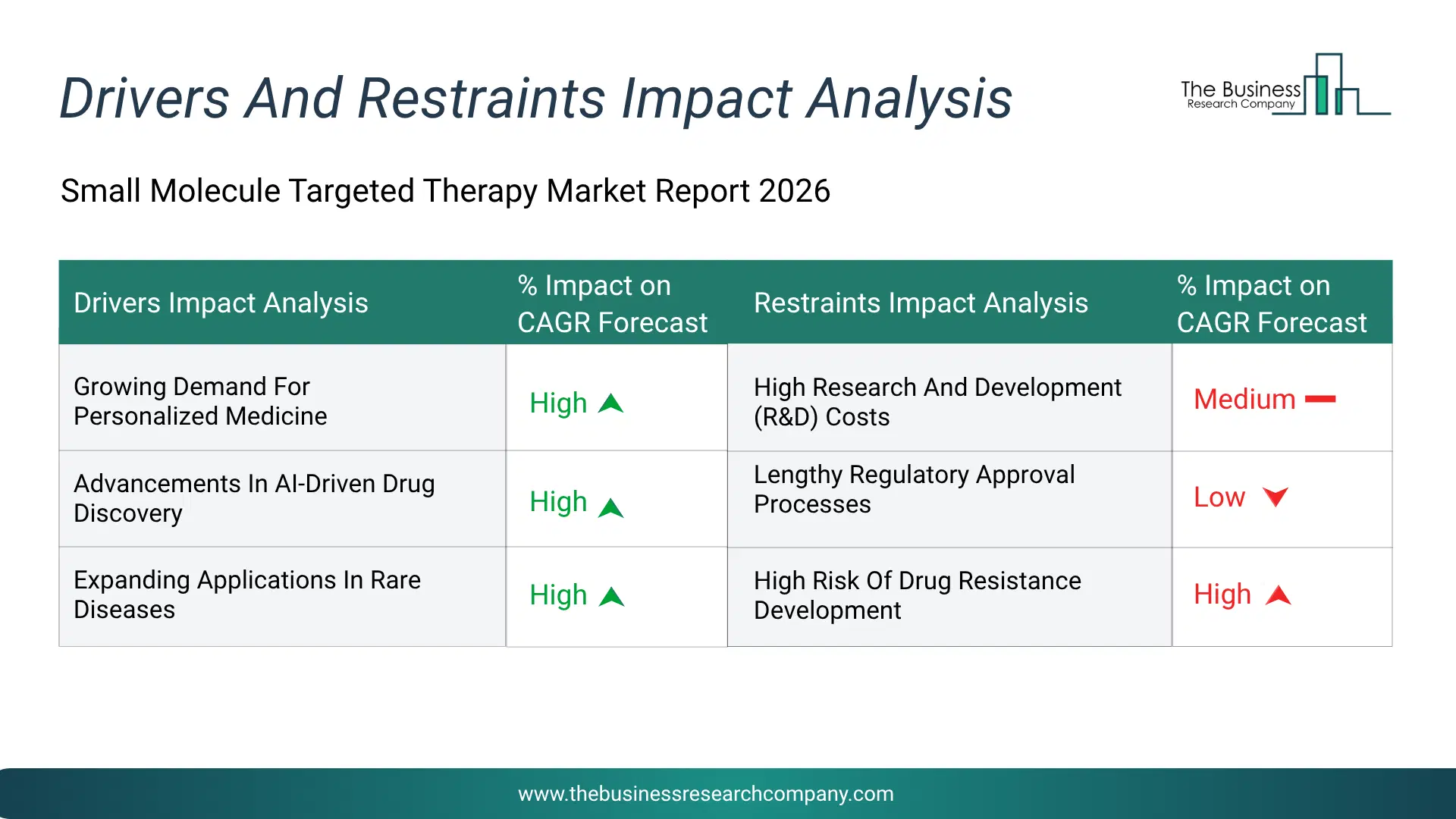
Infographic Chart Showing Key Market Drivers Analysis And Restraints For Small Molecule Targeted Therapy Market
The chart presents an impact analysis of key drivers and restraints, quantifying their relative influence on the market's growth rate and helping assess the balance between growth enablers and limiting factors. This chart offers a high-level perspective; the full report contains more detailed insights.
How Will The Drivers Impact Growth In The Global Small Molecule Targeted Therapy Market?
• Growing Demand For Personalized Medicine (High) – During the forecast period, the growing demand for personalized medicine is expected to become a key growth driver for the small molecule targeted therapy market by 2030. The increasing adoption of personalized medicine is significantly fueling the growth of the small molecule targeted therapy market, as these therapies are specifically developed to address molecular abnormalities unique to an individual’s disease profile. Personalized treatment strategies leverage genetic insights and biomarker data to customize therapeutic interventions, and small molecules can be precisely designed to interact with identified molecular targets in patients. This targeted approach improves therapeutic efficacy, reduces adverse effects, and ultimately enhances overall patient outcomes. • Advancements In AI-Driven Drug Discovery (High) – During the forecast period, the advancements in ai-driven drug discovery is expected to emerge as a major factor driving the expansion of the small molecule targeted therapy market by 2030. Advancements in ai-driven drug discovery are propelling the expansion of the small molecule targeted therapy market by enabling quicker and more accurate identification of therapeutic targets and promising lead compounds. Artificial intelligence tools process large-scale biological and chemical datasets to predict molecular interactions and refine drug design, substantially shortening development timelines and lowering research costs. In addition, machine learning models streamline hit-to-lead optimization and enable early prediction of drug efficacy and safety profiles. These capabilities enhance clinical trial success rates and further strengthen the development of personalized treatment strategies. • Expanding Applications In Rare Diseases (High) – During the forecast period, the expanding applications in rare diseases is expected to act as a key growth catalyst for the small molecule targeted therapy market by 2030. The expanding application of small molecule therapies in rare diseases is significantly contributing to the growth of the small molecule targeted therapy market by creating new opportunities for highly personalized treatment approaches. Many rare disorders arise from distinct genetic mutations or specific molecular abnormalities, which can be precisely targeted or modulated using small molecule drugs. Progress in genomics, molecular diagnostics, and biomarker identification has further facilitated the development of these targeted therapies. Additionally, supportive regulatory frameworks, including orphan drug designations and related incentives, are encouraging greater investment and innovation in this segment.How Will The Restraints Impact Growth In The Global Small Molecule Targeted Therapy Market?
• High Research And Development (R&D) Costs (Medium) – During the forecast period, the developing small molecule targeted therapies requires extensive molecular screening, target validation, and multiple stages of clinical testing, significantly increasing overall development costs. The precision nature of these drugs also demands advanced technologies and expertise, making r&d investment a major restraint on market growth. • Lengthy Regulatory Approval Processes (Low) – During the forecast period, the due to the complex nature of targeted therapies and the need for rigorous safety and efficacy evaluations, obtaining regulatory approval takes considerable time. This delays commercialization, increases costs, and limits the speed at which new therapies reach the market. • High Risk Of Drug Resistance Development (High) – During the forecast period, the high risk of drug resistance development acts as a restraint for the small molecule targeted therapy market by reducing long-term treatment effectiveness in patients. Cancer cells and other disease pathways can adapt over time through genetic mutations or alternative signaling mechanisms, making therapies less effective. This often requires combination treatments or continuous drug modifications, which increases overall treatment complexity and cost. Additionally, resistance development can lead to treatment failure and reduced clinical outcomes. As a result, it limits the sustained adoption and effectiveness of targeted therapies in clinical practice.Key Players In The Global Small Molecule Targeted Therapy Market
Major companies operating in the small molecule targeted therapy market are F. Hoffmann-La Roche AG (Roche), Merck KGaA, Pfizer Inc., Bayer AG, Sanofi S.A., Novartis International AG, AstraZeneca PLC, Bristol-Myers Squibb Company, GlaxoSmithKline plc (GSK), Eli Lilly and Company, Amgen Inc., Regeneron Pharmaceuticals Inc., Astellas Pharma Inc., Lonza Group AG, Blueprint Medicines Corporation, Kura Oncology Inc., G1 Therapeutics Inc., Ascentage Pharma Group International Inc., Rgenta Therapeutics Inc., Verastem Inc.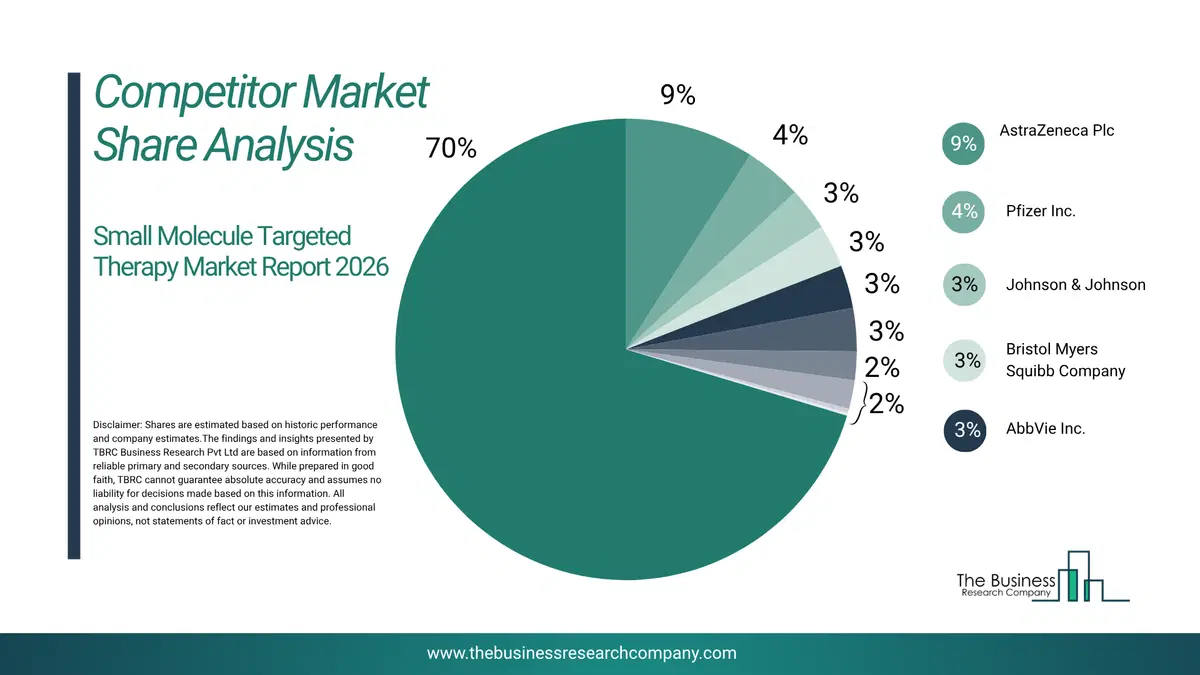
This chart is for illustrative purposes; the full report includes a detailed competitor analysis and comprehensive overview of the top 10 companies in the market.
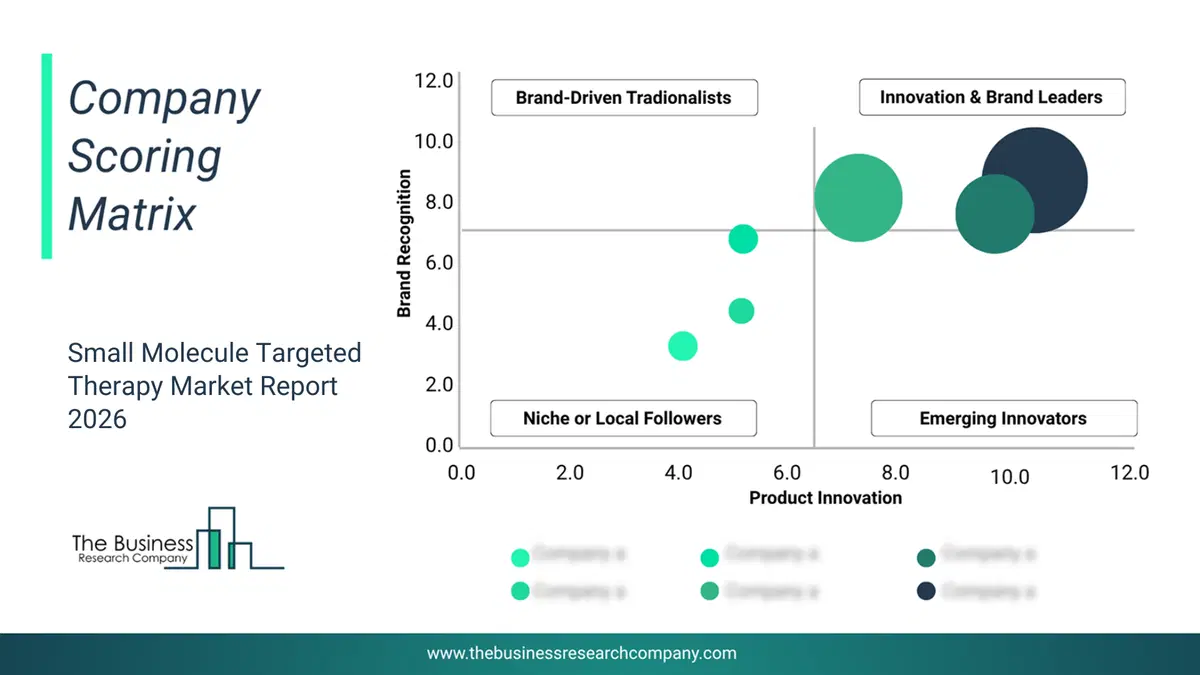
This chart maps companies by product innovation and brand strength, with bubble size indicating relative revenue, helping identify market leaders, challengers, and niche players. This is an illustrative chart; the full report provides a complete and accurate competitive analysis.
Global Small Molecule Targeted Therapy Market Trends and Insights
Major companies operating in the small molecule targeted therapy market are focusing on developing innovative solutions such as oral small molecules to improve targeted delivery, enhance patient compliance, and address specific molecular pathways in oncology and other chronic diseases. Oral small molecule refers to a low-molecular-weight drug that can be taken by mouth and is designed to enter cells easily to specifically target disease-related proteins or pathways. For instance, in June 2025, Kura Oncology Inc., a US-based biotech company, received an FDA approval for a New Drug Application (NDA) for ziftomenib as a treatment for adult patients with relapsed or refractory acute myeloid leukemia (AML) with nucleophosmin 1 (NPM1) mutations. It is an oral targeted therapy designed for adult patients with relapsed or refractory AML carrying NPM1 mutations, addressing a critical unmet medical need. It offers a favorable safety profile and has demonstrated promising efficacy, including significant complete remission rates in clinical trials. By selectively inhibiting the menin-KMT2A interaction, ziftomenib disrupts leukemic cell growth and supports new treatment options for this hard-to-treat AML subtype.What Are Latest Mergers And Acquisitions In The Small Molecule Targeted Therapy Market?
In May 2025, Eli Lilly and Company, a US-based pharmaceutical company, acquired SiteOne Therapeutics Inc. for an undisclosed amount. With this acquisition Eli Lilly and Company aims to strengthen its pain treatment portfolio by developing innovative, non-addictive therapies targeting chronic pain through advanced sodium channel inhibitors. SiteOne Therapeutics Inc. is a US-based pharmaceutical company that offers small molecule targeted therapy.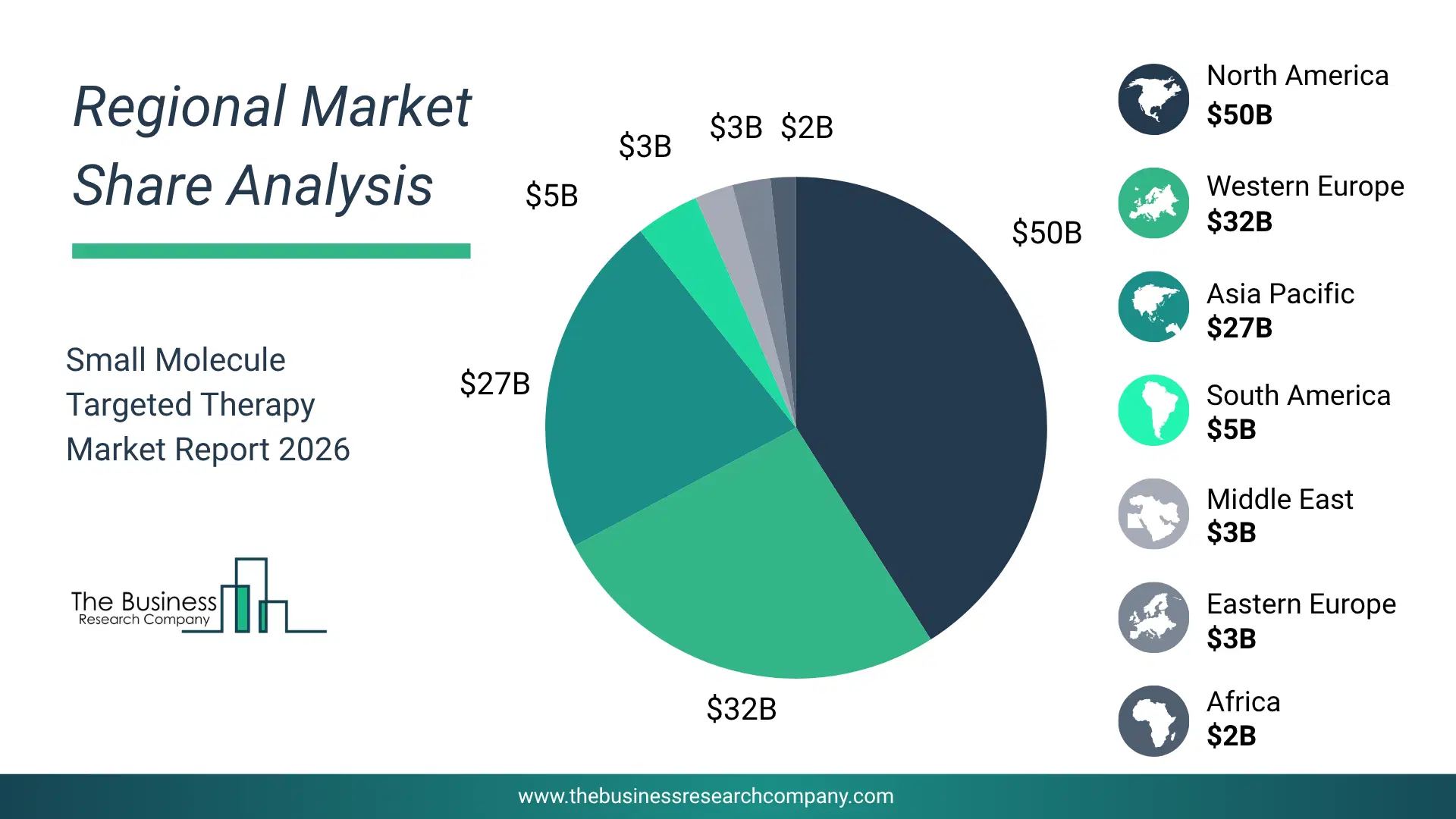
Regional Insights
North America was the largest region in the small molecule targeted therapy market in 2025. Asia Pacific is expected to be the fastest-growing region in the forecast period. The regions covered in this market report are Asia-Pacific, South East Asia, Western Europe, Eastern Europe, North America, South America, Middle East, Africa. The countries covered in this market report are Australia, Brazil, China, France, Germany, India, Indonesia, Japan, Taiwan, Russia, South Korea, UK, USA, Canada, Italy, Spain.What Defines the Small Molecule Targeted Therapy Market?
The small molecule targeted therapy market consists of sales of tyrosine kinase inhibitors, proteasome inhibitors, and BCL-2 inhibitors. Values in this market are ‘factory gate’ values, that is, the value of goods sold by the manufacturers or creators of the goods, whether to other entities (including downstream manufacturers, wholesalers, distributors, and retailers) or directly to end customers. The value of goods in this market includes related services sold by the creators of the goods.How is Market Value Defined and Measured?
The market value is defined as the revenues that enterprises gain from the sale of goods and/or services within the specified market and geography through sales, grants, or donations in terms of the currency (in USD unless otherwise specified). The revenues for a specified geography are consumption values that are revenues generated by organizations in the specified geography within the market, irrespective of where they are produced. It does not include revenues from resales along the supply chain, either further along the supply chain or as part of other products.
This chart presents market attractiveness based on a quantitative evaluation of growth, competition, strategic alignment, and risk, offering a clear view of opportunity areas for decision-making. This chart is for illustrative purposes; the full report contains the complete analysis.

This chart highlights the Total Addressable Market (TAM) by estimating the maximum revenue opportunity using an assumption-driven approach, supporting strategic planning and opportunity sizing across markets. The chart is illustrative; the full report provides a more comprehensive analysis.
What Key Data and Analysis Are Included in the Small Molecule Targeted Therapy Market Report 2026?
The small molecule targeted therapy market research report is one of a series of new reports from The Business Research Company that provides market statistics, including industry global market size, regional shares, competitors with the market share, detailed market segments, market trends and opportunities, and any further data you may need to thrive in the small molecule targeted therapy industry. The market research report delivers a complete perspective of everything you need, with an in-depth analysis of the current and future state of the industry.Small Molecule Targeted Therapy Market Report Forecast Analysis
| Report Attribute | Details |
|---|---|
| Market Size Value In 2026 | $84.66 billion |
| Revenue Forecast In 2030 | $120.64 billion |
| Growth Rate | CAGR of 9.3% from 2026 to 2030 |
| Base Year For Estimation | 2025 |
| Actual Estimates/Historical Data | 2020-2025 |
| Forecast Period | 2026 - 2030 |
| Market Representation | Revenue in USD Billion and CAGR from 2026 to 2030 |
| Segments Covered | Type Of Therapy, Drug Class, Mechanism Of Action, Disease Indication, Route Of Administration |
| Regional Scope | Asia-Pacific, Western Europe, Eastern Europe, North America, South America, Middle East, Africa |
| Country Scope | The countries covered in the report are Australia, Brazil, China, France, Germany, India, ... |
| Key Companies Profiled | F. Hoffmann-La Roche AG (Roche), Merck KGaA, Pfizer Inc., Bayer AG, Sanofi S.A., Novartis International AG, AstraZeneca PLC, Bristol-Myers Squibb Company, GlaxoSmithKline plc (GSK), Eli Lilly and Company, Amgen Inc., Regeneron Pharmaceuticals Inc., Astellas Pharma Inc., Lonza Group AG, Blueprint Medicines Corporation, Kura Oncology Inc., G1 Therapeutics Inc., Ascentage Pharma Group International Inc., Rgenta Therapeutics Inc., Verastem Inc. |
| Customization Scope | Request for Customization |
| Pricing And Purchase Options | Explore Purchase Options |