
Smart Air Conditioners Market Report 2026
Global Outlook – By Type ( Split, Window, Portable, Other Types ), By Connectivity ( Wi-Fi, Bluetooth, Other Connectivities), By Application ( Residential, Buildings, Industrial Buildings, Commercial Buildings) – Market Size, Trends, Strategies, and Forecast to 2030
Smart Air Conditioners Market Overview
• Smart Air Conditioners market size has reached to $20.6 billion in 2025 • Expected to grow to $34.99 billion in 2030 at a compound annual growth rate (CAGR) of 11.2% • Growth Driver: Construction Sector Driving Growth In The Smart Air Conditioner Market • Market Trend: AI And IoT Integration For Enhanced Energy Efficiency And User Experience • Asia-Pacific was the largest region in 2025 and North America is the fastest growing region.Market Gains By 2030 – Top Opportunities By Segment
Market Gain identifies the most promising market opportunities by highlighting the segments or products expected to generate the highest incremental revenue growth over the next five years.
What Is Covered Under Smart Air Conditioners Market?
A smart air conditioner is an air conditioning unit equipped with smart technology, allowing it to be controlled and monitored remotely via a smartphone, tablet, or other smart devices. It enables users to adjust temperature settings, schedule operation times, and monitor energy usage from anywhere. The main products of smart air conditioners are split, window, portable, and other types. A split air conditioner is an air conditioning system that consists of two main parts, such as an outdoor unit housing the compressor and condenser and an indoor unit containing the evaporator coil and air handling unit. The various types of connectivity involved are wi-fi, Bluetooth, and other connectivity that has applications such as residential buildings, industrial buildings, and commercial buildings.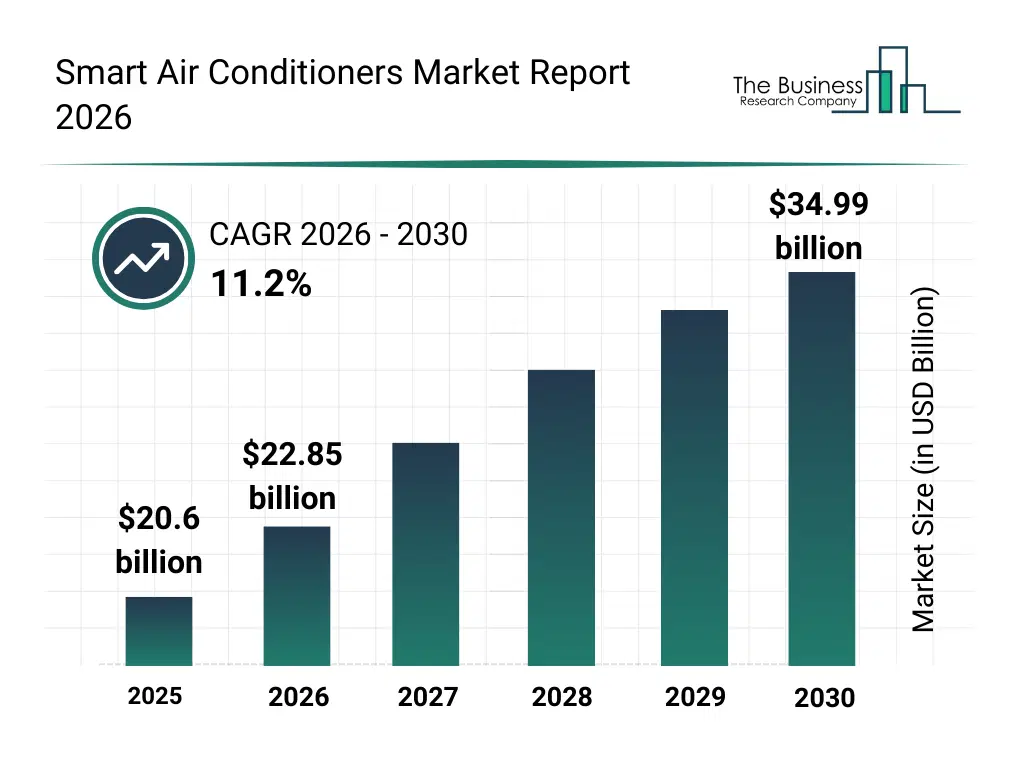
What Is The Smart Air Conditioners Market Size 2026 And Growth Rate?
The smart air conditioners market size has grown rapidly in recent years. It will grow from $20.6 billion in 2025 to $22.85 billion in 2026 at a compound annual growth rate (CAGR) of 10.9%. The growth in the historic period can be attributed to growing demand for residential cooling solutions, early adoption of programmable ac technologies, rising consumer preference for convenience based appliances, expansion of urban housing infrastructure, improvements in inverter and compressor technologies.What Is The Smart Air Conditioners Market Growth Forecast?
The smart air conditioners market size is expected to see rapid growth in the next few years. It will grow to $34.99 billion in 2030 at a compound annual growth rate (CAGR) of 11.2%. The growth in the forecast period can be attributed to increasing focus on energy efficient smart appliances, rising adoption of connected home ecosystems, growth of predictive maintenance enabled hvac systems, expanding installation of smart buildings, rising consumer demand for automated temperature control. Major trends in the forecast period include increasing adoption of app controlled and connected air conditioning systems, rising use of energy monitoring and automation features, growing popularity of smart home integrated cooling solutions, expansion of remote diagnostics and predictive maintenance, shift toward adaptive cooling based on user behavior and occupancy.
Global Smart Air Conditioners Market Segmentation
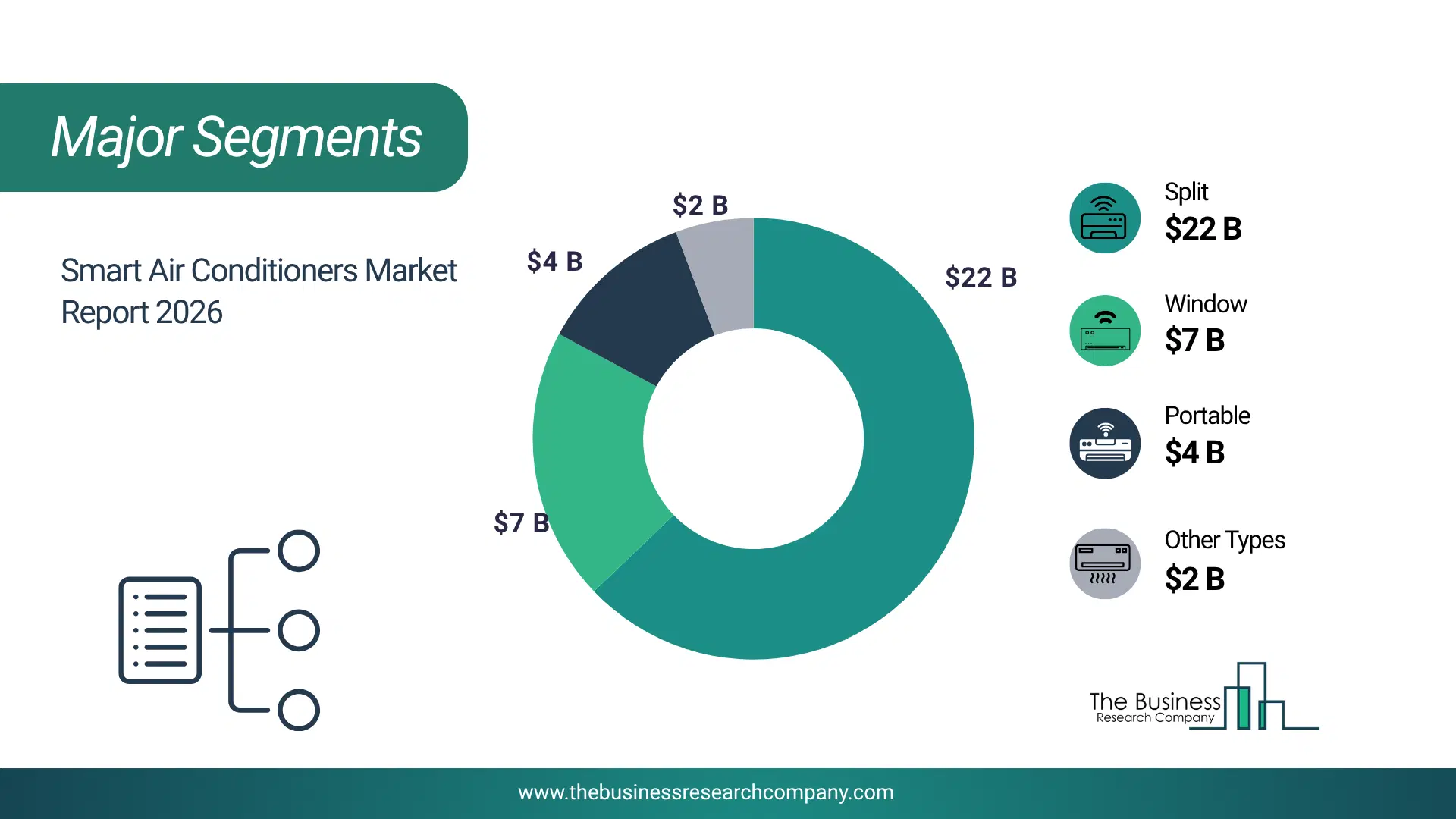
1) By Type: Split, Window, Portable, Other Types 2) By Connectivity: Wi-Fi, Bluetooth, Other Connectivities 3) By Application: Residential, Buildings, Industrial Buildings, Commercial Buildings Subsegments: 1) By Split: Wall-Mounted Split Air Conditioners, Floor-Mounted Split Air Conditioners 2) By Window: Vertical Window Air Conditioners, Horizontal Window Air Conditioners 3) By Portable: Compact Portable Air Conditioners, Dual-Hose Portable Air Conditioners 4) By Other Types: Central Air Conditioning Systems, Smart Mini-Split Systems The top segments in the smart air conditioners market will be: • Split will reach $22.24 Billion by 2030. • Window will reach $6.89 Billion by 2030. • Portable will reach $3.57 Billion by 2030. • Other Types will reach $2.08 Billion by 2030.What Is The Driver Of The Smart Air Conditioners Market?
The growing construction sector is expected to propel the growth of the smart air conditioner market going forward. The construction industry encompasses all activities related to planning, designing, constructing, and maintaining buildings, infrastructure, and other physical structures. The construction sector is experiencing growth due to increased infrastructure investment, urbanization trends, and demand for sustainable building solutions. As the construction sector participates in development, particularly in residential, commercial, and industrial projects, there will be a higher demand for HVAC (Heating, Ventilation, and Air Conditioning) systems, including smart air conditioners, to provide comfortable indoor environments. New construction projects often incorporate modern amenities and technologies, including smart home features, driving the adoption of smart air conditioners. For instance, in August 2023, according to a report published by the Office for National Statistics, a UK-based producer of official statistics, the estimated monthly construction output saw a 1.6% increase in volume in June 2023, attributed to rises in both new construction work (2.0%) and repair and maintenance activities (1.1%). The quarterly data for April to June 2023 compared to January to March 2023 showed a 0.3% increase in construction output. Notably, this increase was driven entirely by the performance in June 2023, where repair and maintenance activities saw a 0.9% uptick. Therefore, the growing construction sector is driving the growth of the smart air conditioner industry.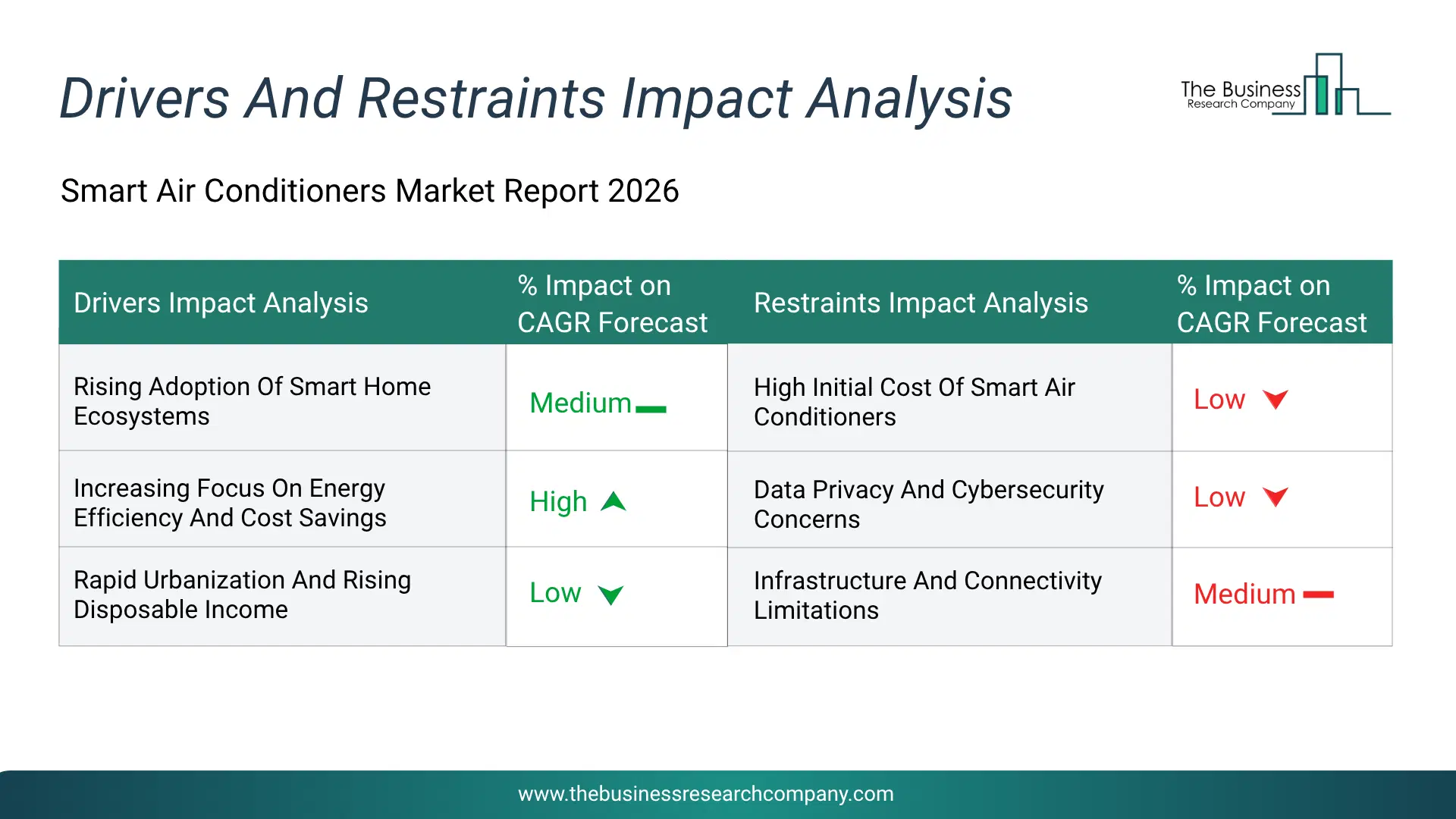
Infographic Chart Showing Key Market Drivers Analysis And Restraints For Smart Air Conditioners Market
The chart presents an impact analysis of key drivers and restraints, quantifying their relative influence on the market's growth rate and helping assess the balance between growth enablers and limiting factors. This chart offers a high-level perspective; the full report contains more detailed insights.
How Will The Drivers Impact Growth In The Global Smart Air Conditioners Market?
• Rising Adoption Of Smart Home Ecosystems (Medium) – During the forecast period, the rising adoption of smart home ecosystems is expected to become a key growth driver for the smart air conditioners market by 2030. Consumers are increasingly integrating connected appliances within centralized home automation platforms, enabling seamless control of temperature, humidity, and air quality through smartphones and voice-enabled devices. Smart air conditioners are becoming a core component of these ecosystems due to their compatibility with digital assistants and real-time monitoring capabilities. Manufacturers are focusing on interoperability, cloud connectivity, and user-friendly interfaces to enhance consumer experience and system efficiency. This widespread integration of smart cooling solutions within connected homes is reinforcing steady market expansion. • Increasing Focus On Energy Efficiency And Cost Savings (High) – During the forecast period, the increasing focus on energy efficiency and cost savings is expected to emerge as a major factor driving the expansion of the smart air conditioners market by 2030. Consumers and businesses are prioritizing intelligent cooling systems that optimize energy consumption through adaptive algorithms, occupancy sensing, and automated scheduling. Smart air conditioners enable users to reduce electricity bills by adjusting cooling patterns based on real-time usage and environmental conditions. Additionally, regulatory pressures and sustainability goals are encouraging the adoption of energy-efficient appliances with advanced monitoring features. Continuous innovation in inverter technology and AI-driven optimization is further strengthening this trend. • Rapid Urbanization And Rising Disposable Income (Low) – During the forecast period, the rapid urbanization and rising disposable income are expected to act as a key growth catalyst for the smart air conditioners market by 2030. Expanding urban populations are driving demand for modern residential and commercial infrastructure equipped with advanced climate control solutions. Higher income levels are enabling consumers to invest in premium, feature-rich air conditioning systems that offer convenience, automation, and enhanced comfort. In addition, the proliferation of smart city initiatives and digitally connected buildings is accelerating the deployment of intelligent HVAC systems.How Will The Restraints Impact Growth In The Global Smart Air Conditioners Market?
• High Initial Cost Of Smart Air Conditioners (Medium) – During the forecast period, high initial cost of smart air conditioners is significantly restricting the growth of the market. The premium pricing of smart-enabled systems compared to conventional units limits affordability, particularly in price-sensitive markets, thereby slowing mass adoption among residential and small commercial users. • Data Privacy And Cybersecurity Concerns (High) – During the forecast period, data privacy and cybersecurity concerns are restricting the growth of the smart air conditioners market. Increasing connectivity and IoT integration expose systems to potential data breaches and unauthorized access, creating consumer hesitation and compliance challenges for manufacturers. • Infrastructure And Connectivity Limitations (Low) – During the forecast period, infrastructure and connectivity limitations are significantly restricting the growth of the smart air conditioners market. Inadequate internet penetration, unstable network connectivity, and limited smart home infrastructure in developing regions are hindering the effective deployment and usage of connected air conditioning systems.Key Players In The Global Smart Air Conditioners Market
Major companies operating in the smart air conditioners market are Samsung Electronics Co. Ltd., Robert Bosch GmbH, Hitachi Ltd., LG Electronics Inc., Panasonic Corporation, Haier Group Corporation, Midea Group Co. Ltd., Mitsubishi Electric Corporation, Toshiba Corporation, Gree Electric Appliances Inc., Daikin Industries Ltd., Johnson Controls International plc, Fujitsu General Ltd., Carrier Global Corporation, Whirlpool Corporation, Trane Technologies Plc, Electrolux AB, AUX Group Co. Ltd., Godrej Industries Limited, Lennox International Inc., Hisense Kelon Electrical Holdings Company Limited, Havells India Limited, Rheem Manufacturing Company, Blue Star Limited, Voltas Limited, Chigo Holding Ltd., Friedrich Air Conditioning Co. Ltd., Chunlan Group, Videocon Industries Limited, Bryant Ltd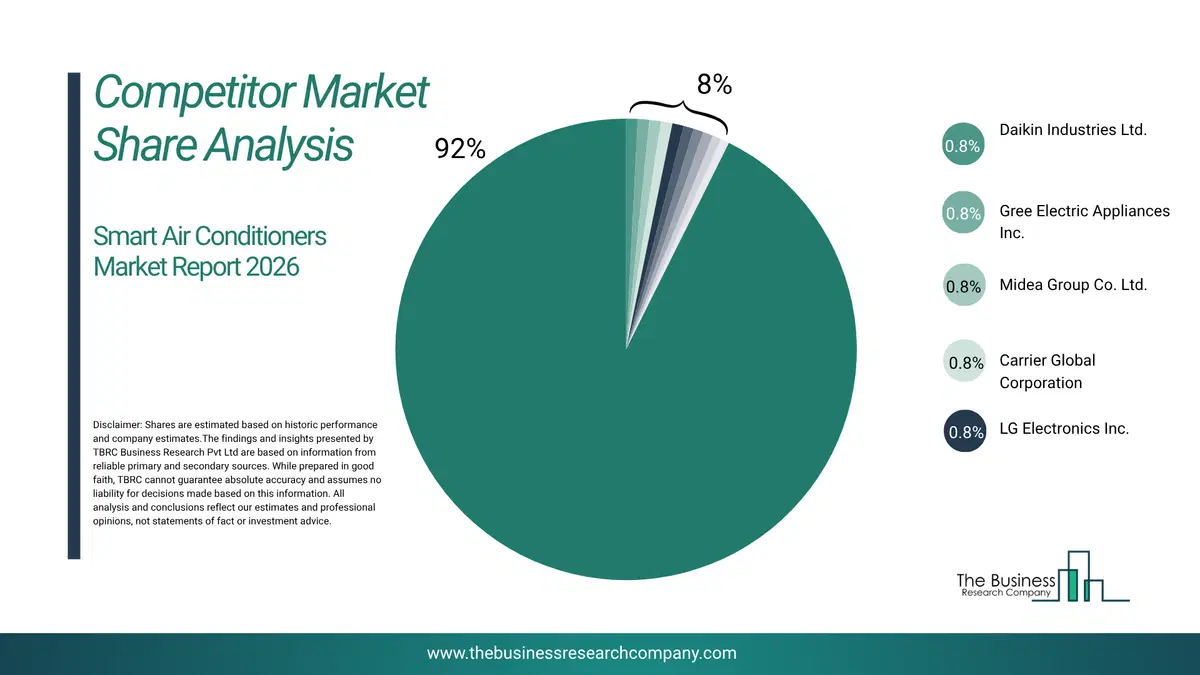
This chart is for illustrative purposes; the full report includes a detailed competitor analysis and comprehensive overview of the top 10 companies in the market.
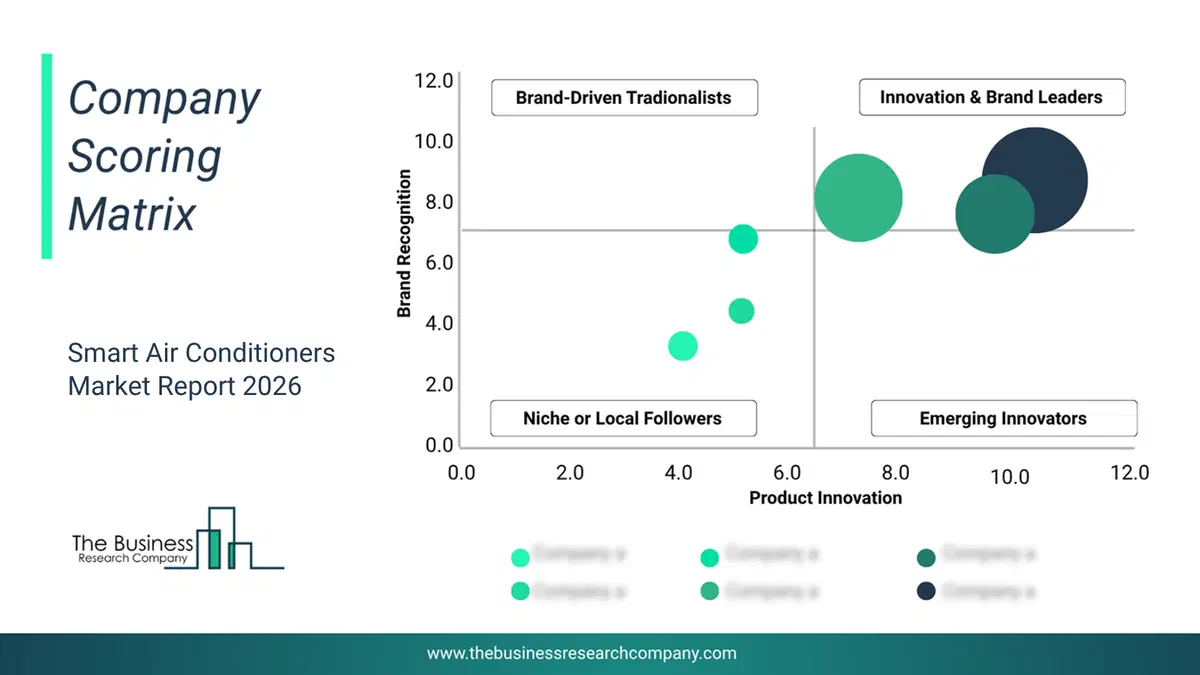
This chart maps companies by product innovation and brand strength, with bubble size indicating relative revenue, helping identify market leaders, challengers, and niche players. This is an illustrative chart; the full report provides a complete and accurate competitive analysis.
Global Smart Air Conditioners Market Trends and Insights
Major companies operating in the smart air conditioner market are developing cutting-edge technology that integrates artificial intelligence (AI) and the Internet of Things (IoT) to enhance energy efficiency and user convenience. These advancements allow for features such as predictive maintenance, enabling systems to anticipate failures and optimize performance, which ultimately leads to reduced energy consumption and lower operating costs. For instance, in April 2024, Voltas, an India-based company, launched its new HVAC line-up at ACREX 2024, featuring advanced AI capabilities that allow users to remotely monitor and control their systems through a mobile app. This launch not only reflects Voltas' commitment to sustainability and energy efficiency but also enhances user experience by providing real-time insights and analytics on system performance and energy usage.What Are Latest Mergers And Acquisitions In The Smart Air Conditioners Market?
In March 2023, Panasonic Corporation, a Japan‑based provider of electronics, HVAC systems, and smart home solutions, acquired the air‑conditioning business of Systemair AB of Sweden for $108 million (€100 million). With this acquisition, Panasonic aims to enhance its commercial HVAC product portfolio in Europe and accelerate its entry into hydronic and environmentally friendly HVAC systems. Systemair AB is a Sweden‑based provider of commercial air‑conditioning systems and hydronic chillers.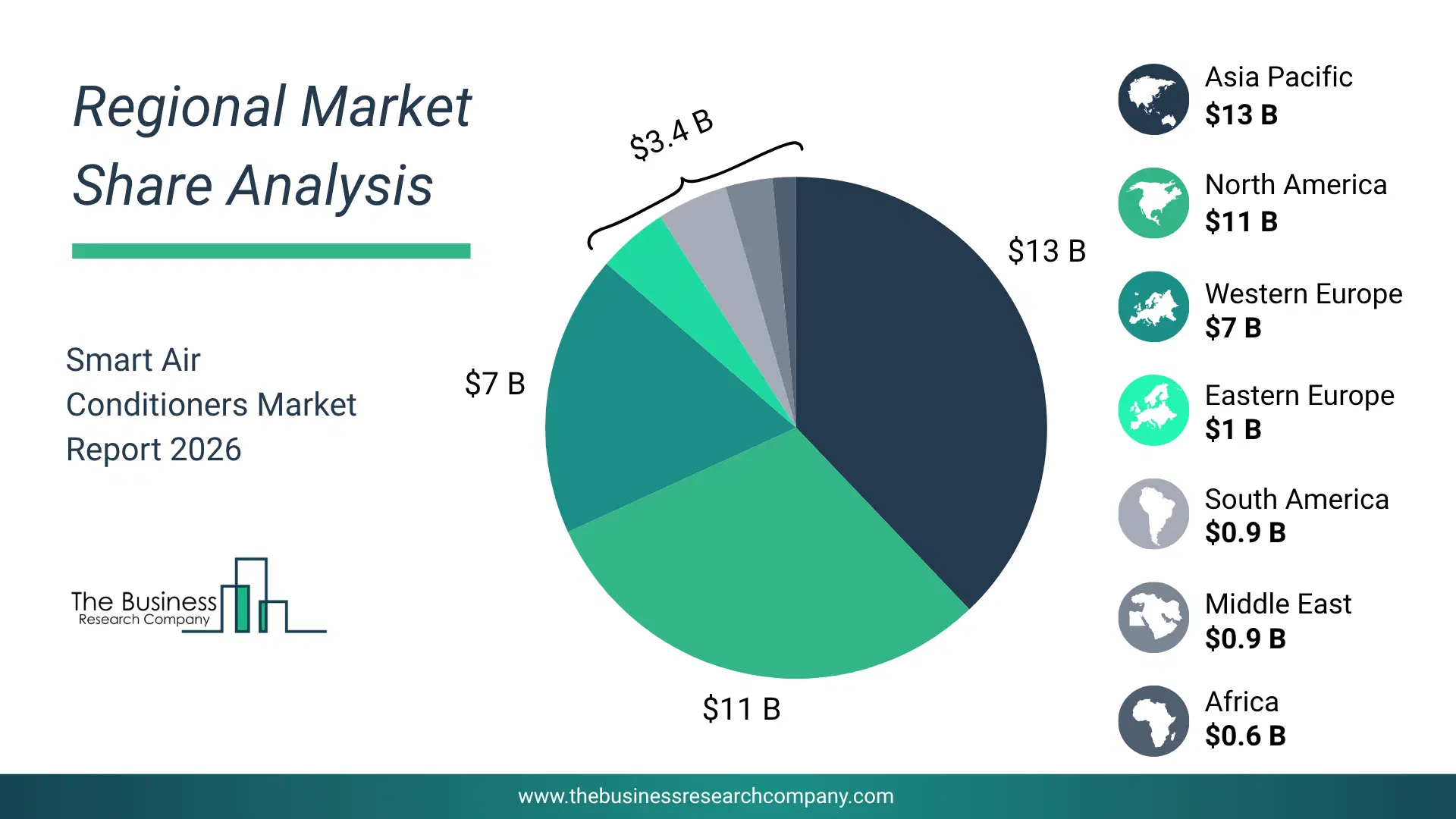
Regional Outlook
Asia-Pacific was the largest region in the smart air conditioner market in 2025. North America is expected to be the fastest-growing region in the forecast period. The regions covered in this market report are Asia-Pacific, South East Asia, Western Europe, Eastern Europe, North America, South America, Middle East, Africa. The countries covered in this market report are Australia, Brazil, China, France, Germany, India, Indonesia, Japan, Taiwan, Russia, South Korea, UK, USA, Canada, Italy, Spain.What Defines the Smart Air Conditioners Market?
The smart air conditioner market consists of sales of ductless mini-split, geothermal air conditioning system, hybrid or dual fuel air conditioner and evaporator coolers. Values in this market are ‘factory gate’ values, that is the value of goods sold by the manufacturers or creators of the goods, whether to other entities (including downstream manufacturers, wholesalers, distributors and retailers) or directly to end customers. The value of goods in this market includes related services sold by the creators of the goods.How is Market Value Defined and Measured?
The market value is defined as the revenues that enterprises gain from the sale of goods and/or services within the specified market and geography through sales, grants, or donations in terms of the currency (in USD unless otherwise specified). The revenues for a specified geography are consumption values that are revenues generated by organizations in the specified geography within the market, irrespective of where they are produced. It does not include revenues from resales along the supply chain, either further along the supply chain or as part of other products.
This chart presents market attractiveness based on a quantitative evaluation of growth, competition, strategic alignment, and risk, offering a clear view of opportunity areas for decision-making. This chart is for illustrative purposes; the full report contains the complete analysis.

This chart highlights the Total Addressable Market (TAM) by estimating the maximum revenue opportunity using an assumption-driven approach, supporting strategic planning and opportunity sizing across markets. The chart is illustrative; the full report provides a more comprehensive analysis.
What Key Data and Analysis Are Included in the Smart Air Conditioners Market Report 2026?
The smart air conditioners market research report is one of a series of new reports from The Business Research Company that provides market statistics, including industry global market size, regional shares, competitors with the market share, detailed market segments, market trends and opportunities, and any further data you may need to thrive in the smart air conditioners industry. The market research report delivers a complete perspective of everything you need, with an in-depth analysis of the current and future state of the industry.Smart Air Conditioners Market Report Forecast Analysis Market Report Forecast Analysis
| Report Attribute | Details |
|---|---|
| Market Size Value In 2026 | $22.85 billion |
| Revenue Forecast In 2030 | $34.99 billion |
| Growth Rate | CAGR of 10.9% from 2026 to 2030 |
| Base Year For Estimation | 2025 |
| Actual Estimates/Historical Data | 2020-2025 |
| Forecast Period | 2026 - 2030 |
| Market Representation | Revenue in USD Billion and CAGR from 2026 to 2030 |
| Segments Covered | Type, Connectivity, Application |
| Regional Scope | Asia-Pacific, Western Europe, Eastern Europe, North America, South America, Middle East, Africa |
| Country Scope | The countries covered in the report are Australia, Brazil, China, France, Germany, India, Indonesia, Japan, Taiwan, Russia, South Korea, UK, USA, Canada, Italy, Spain. |
| Key Companies Profiled | Samsung Electronics Co. Ltd., Robert Bosch GmbH, Hitachi Ltd., LG Electronics Inc., Panasonic Corporation, Haier Group Corporation, Midea Group Co. Ltd., Mitsubishi Electric Corporation, Toshiba Corporation, Gree Electric Appliances Inc., Daikin Industries Ltd., Johnson Controls International plc, Fujitsu General Ltd., Carrier Global Corporation, Whirlpool Corporation, Trane Technologies Plc, Electrolux AB, AUX Group Co. Ltd., Godrej Industries Limited, Lennox International Inc., Hisense Kelon Electrical Holdings Company Limited, Havells India Limited, Rheem Manufacturing Company, Blue Star Limited, Voltas Limited, Chigo Holding Ltd., Friedrich Air Conditioning Co. Ltd., Chunlan Group, Videocon Industries Limited, Bryant Ltd |
| Customization Scope | Request for Customization |
| Pricing And Purchase Options | Explore Purchase Options |