
Smart Berth Allocation Algorithm Market Report 2026
Global Outlook – By Component (Software; Hardware; Services), By Deployment Mode (On-Premises; Cloud-Based), By Application (Container Terminals; Bulk Terminals; Oil And Gas Terminals; Other Applications), By End-User (Port Authorities; Shipping Companies; Terminal Operators; Other End-Users) – Market Size, Trends, Strategies, and Forecast to 2030
Smart Berth Allocation Algorithm Market Overview
• Smart Berth Allocation Algorithm market size has reached to $1 billion in 2025 • Expected to grow to $1.94 billion in 2030 at a compound annual growth rate (CAGR) of 14.2% • Growth Driver: Increase In Global Maritime Trade Fueling The Growth Of The Market Due To Rising Demand For Efficient Vessel Scheduling And Cargo Handling • Market Trend: AI-Powered Solutions Enhancing Port Operational Efficiency • North America was the largest region in 2025 and Asia-Pacific is the fastest growing region.What Is Covered Under Smart Berth Allocation Algorithm Market?
Smart berth allocation algorithm refers to an advanced decision-making system that optimizes the assignment of vessels to berths in ports by using data-driven techniques and artificial intelligence to minimize waiting times, reduce congestion, and improve overall port efficiency while ensuring effective utilization of port infrastructure and enhancing service reliability. The main components of smart berth allocation algorithms include software, hardware, and services. Software refers to the digital solutions that utilize advanced algorithms and optimization models to assign vessels to berths efficiently, minimizing waiting times and improving port throughput. These systems are deployed through on-premises or cloud-based platforms and are applied across container terminals, bulk terminals, oil and gas terminals, and others. The key end-users include port authorities, shipping companies, terminal operators, and others.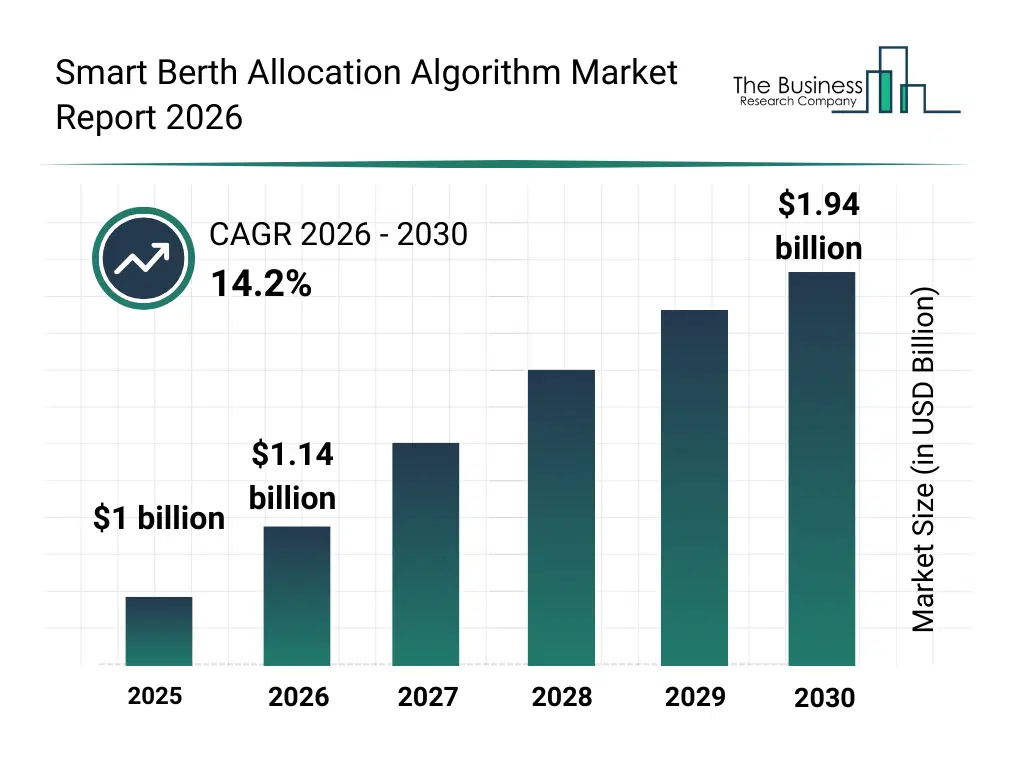
What Is The Smart Berth Allocation Algorithm Market Size and Share 2026?
The smart berth allocation algorithm market size has grown rapidly in recent years. It will grow from $1 billion in 2025 to $1.14 billion in 2026 at a compound annual growth rate (CAGR) of 14.5%. The growth in the historic period can be attributed to growth in global maritime trade volumes, increasing congestion at major ports, early adoption of terminal digitalization solutions, rising demand for operational efficiency in ports, deployment of vessel traffic management systems.What Is The Smart Berth Allocation Algorithm Market Growth Forecast?
The smart berth allocation algorithm market size is expected to see rapid growth in the next few years. It will grow to $1.94 billion in 2030 at a compound annual growth rate (CAGR) of 14.2%. The growth in the forecast period can be attributed to expansion of smart port initiatives, rising investments in port automation platforms, growing use of cloud-based optimization software, increased focus on predictive and prescriptive analytics, integration of ai-driven decision-support tools. Major trends in the forecast period include increasing adoption of ai-driven berth scheduling systems, rising integration with terminal operating systems, growing use of predictive vessel arrival analytics, expansion of real-time berth monitoring solutions, enhanced focus on congestion reduction algorithms.
Global Smart Berth Allocation Algorithm Market Segmentation
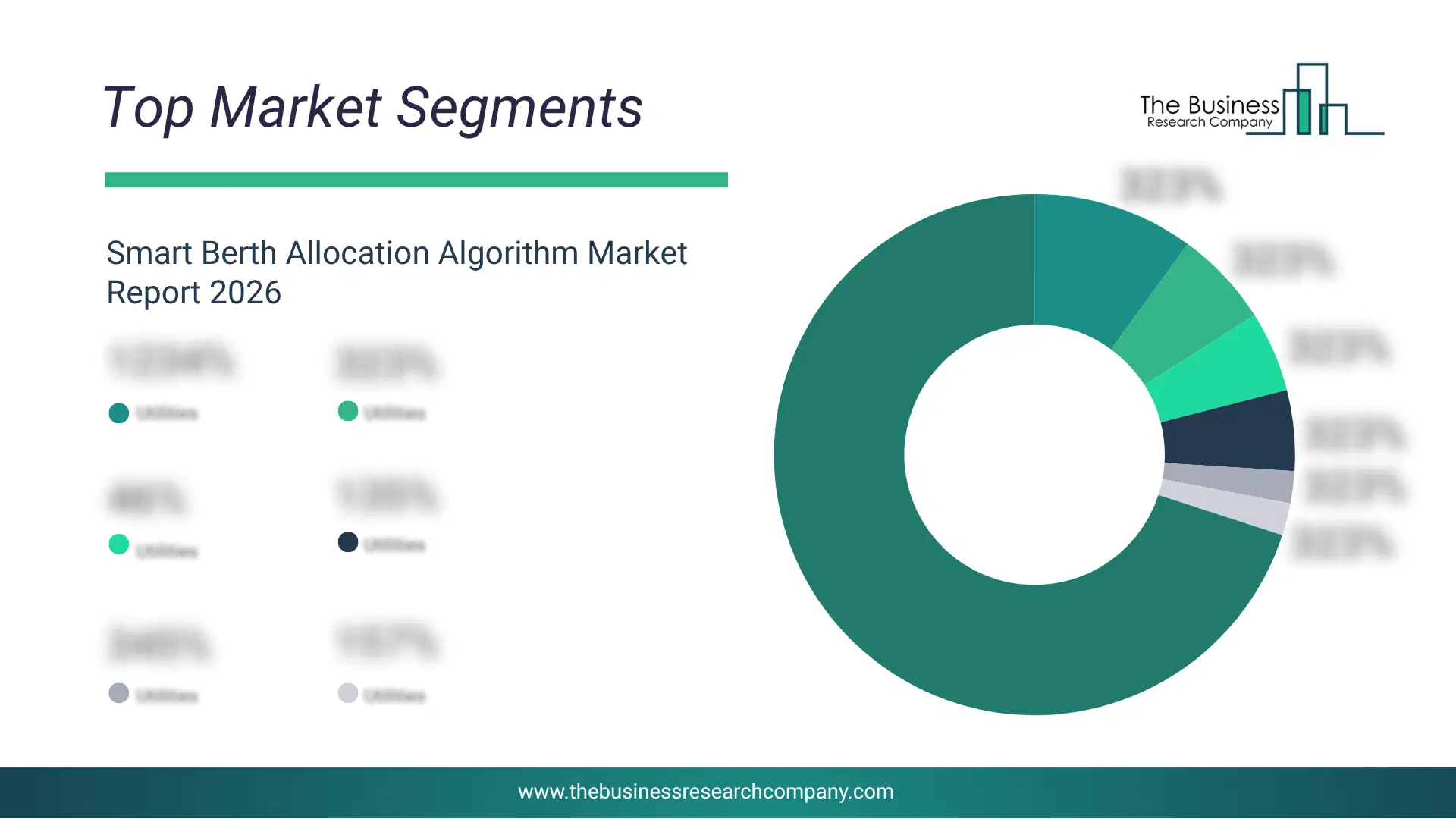
1) By Component: Software, Hardware, Services 2) By Deployment Mode: On-Premises, Cloud-Based 3) By Application: Container Terminals, Bulk Terminals, Oil And Gas Terminals, Other Applications 4) By End-User: Port Authorities, Shipping Companies, Terminal Operators, Other End-Users Subsegments: 1) By Software: Berth Scheduling And Optimization Software, Terminal Operating System (TOS) Integration Modules, Predictive Analytics And AI-Based Optimization Tools, Real-Time Vessel Tracking And Monitoring Software, Simulation And Scenario Planning Software, Data Analytics And Reporting Platforms 2) By Hardware: Vessel Traffic Management Systems (VTMS), Port Sensors And IoT Devices, Edge Computing Devices And Gateways, Servers And Data Storage Systems, Communication And Networking Equipment, Onshore Control Room Equipment And Displays 3) By Services: Implementation And Integration Services, Consulting And System Design Services, Training And Knowledge Transfer, Maintenance And Support Services, Managed Services, Upgrades And Customization ServicesWhat Is The Driver Of The Smart Berth Allocation Algorithm Market?
The increase in global maritime trade is expected to drive the growth of the smart berth allocation algorithm market going forward. Maritime trade refers to the transportation of goods by sea between countries or regions, playing a crucial role in global commerce efficiently and cost-effectively. Global maritime trade is rising due to growing international demand for goods, which drives more shipments across oceans. The smart berth allocation algorithm helps maritime trade by optimizing vessel scheduling and berth assignments and improving the overall efficiency of cargo handling and shipping operations. For instance, in June 2023, according to a report published by the United Nations Conference on Trade and Development, a Switzerland-based intergovernmental organization, maritime trade is projected to grow by 2.4% in 2023. From 2024 to 2028, it is expected to continue expanding at a rate of over 2% annually. Therefore, the increase in global maritime trade is driving the growth of the smart berth allocation algorithm industry.Key Players In The Global Smart Berth Allocation Algorithm Market
Major companies operating in the smart berth allocation algorithm market are Asea Brown Boveri Ltd., Wärtsilä Voyage Limited, PSA International Pte Ltd., Kalmar Corporation, CyberLogitec Co. Ltd., Tideworks Technology Inc., Veson Nautical LLC, Sinay Ltd., Portchain ApS, VoyageX AI, INFORM GmbH, PortOptimize (Ideal Tech FZCO), NexLink Maritime, Optko, NextPort, MarineTraffic, Saab Technologies, Orbita Ports & Terminals, Awake AI, Innovez One Pte Ltd.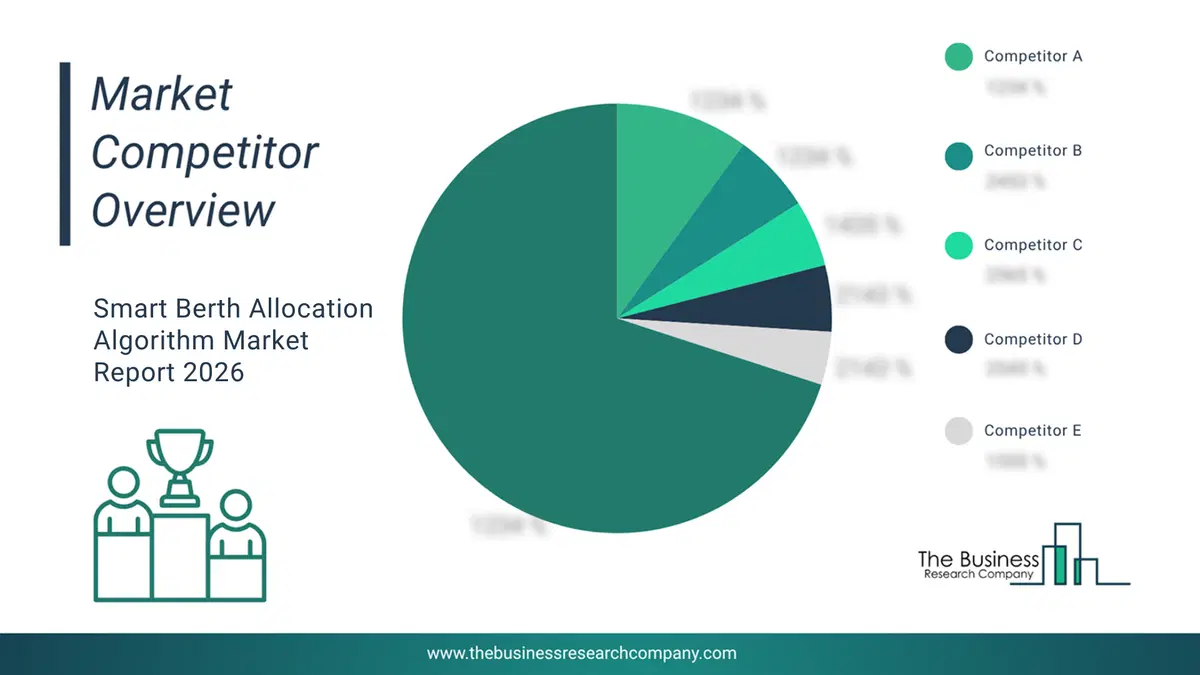
This chart is for illustrative purposes; the full report includes a detailed competitor analysis and comprehensive overview of the top 10 companies in the market.
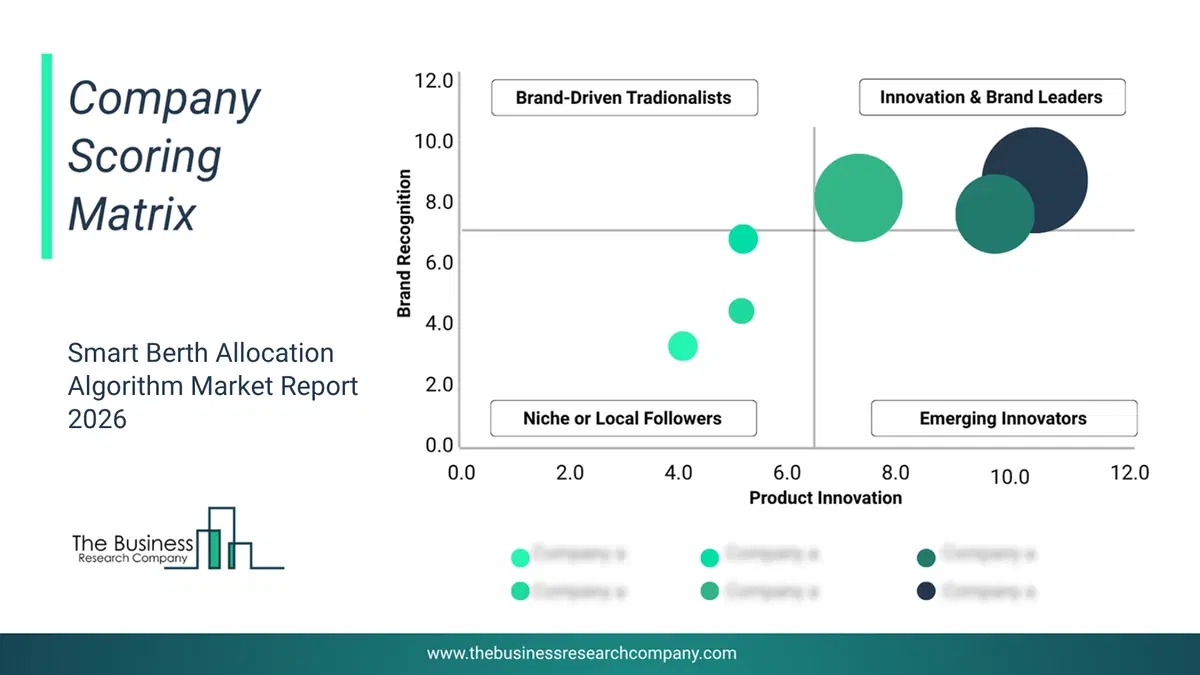
This chart maps companies by product innovation and brand strength, with bubble size indicating relative revenue, helping identify market leaders, challengers, and niche players. This is an illustrative chart; the full report provides a complete and accurate competitive analysis.
Global Smart Berth Allocation Algorithm Market Trends and Insights
Major companies operating in the smart berth allocation algorithm market are emphasizing technological innovations, such as AI-driven berth scheduling, to enhance port operational efficiency, optimize berth utilization, and boost overall logistics performance. AI-driven berth scheduling leverages artificial intelligence to automatically assign vessels to port berths, minimizing waiting times, maximizing berth usage, and improving overall port operations. For instance, in March 2025, Royal Vopak N.V., a Netherlands-based tank storage company, introduced its 66 Yunlian AI-powered solution to modernize port operations and optimize asset management. Leveraging advanced artificial intelligence, the platform enables automated berth scheduling, real-time monitoring of port activities, and predictive analytics for vessel arrivals and departures. This technology enhances overall operational efficiency, minimizes vessel turnaround times, improves resource utilization, and supports data-driven decision-making, positioning ports to handle increasing maritime traffic more effectively while maintaining high standards of service and safety.What Are Latest Mergers And Acquisitions In The Smart Berth Allocation Algorithm Market?
In March 2024, Peel Ports Group, a UK-based port operator providing cargo handling, logistics, and marine services, partnered with Awake.AI to implement AI-driven berth planning and predictive solutions. This collaboration is designed to optimize berth utilization, enhance operational coordination, reduce vessel turnaround times, and minimize emissions. Awake.AI is a Finland-based technology company specializing in AI-driven smart port and maritime logistics solutions.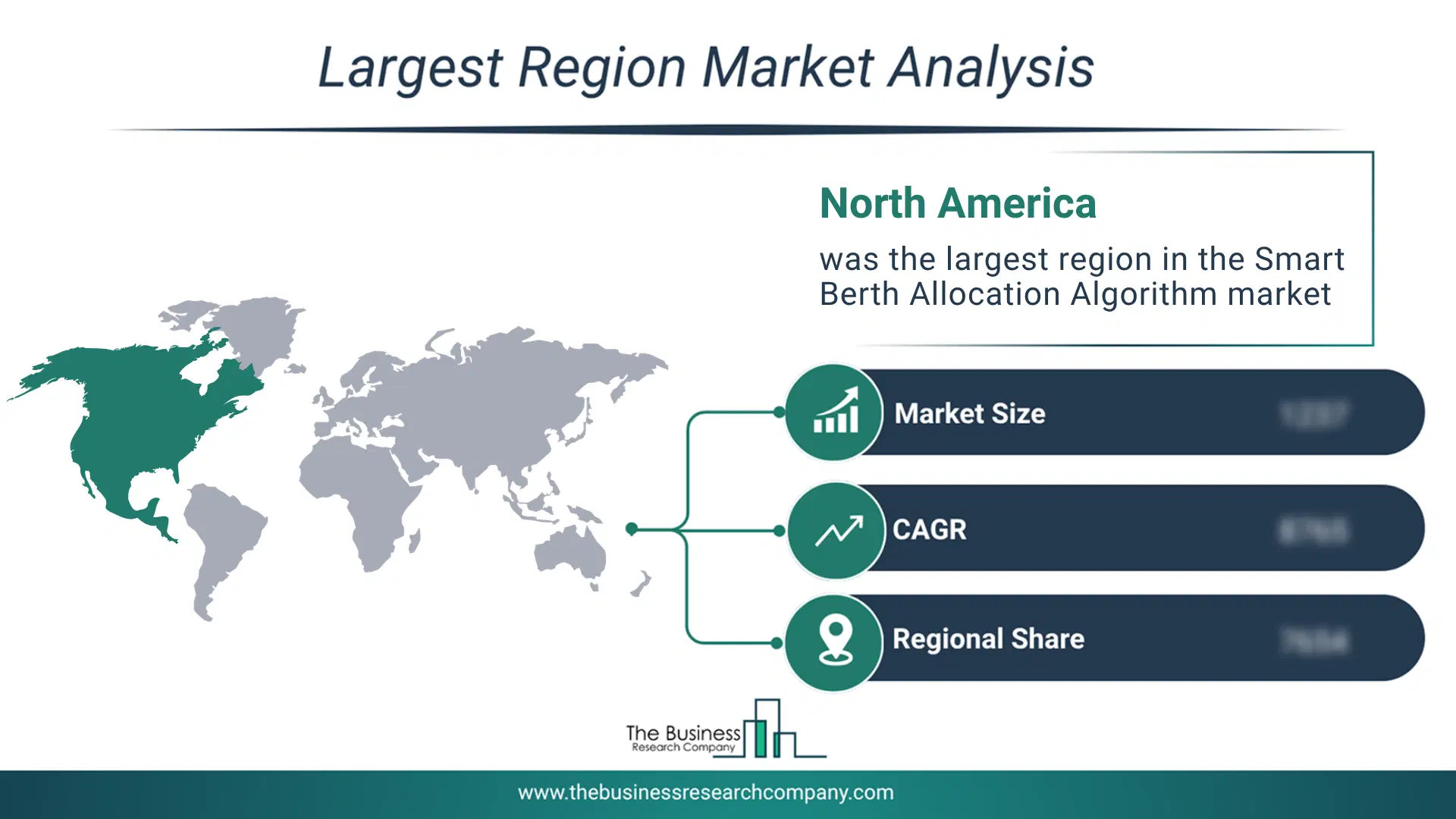
Regional Outlook
North America was the largest region in the smart berth allocation algorithm market in 2025. Asia-Pacific is expected to be the fastest-growing region in the forecast period. The regions covered in this market report are Asia-Pacific, South East Asia, Western Europe, Eastern Europe, North America, South America, Middle East, Africa. The countries covered in this market report are Australia; Brazil; China; France; Germany; India; Indonesia; Japan; Taiwan; Russia; South Korea; UK; USA; Canada; Italy; Spain.What Defines the Smart Berth Allocation Algorithm Market?
The smart berth allocation algorithm market consists of revenues earned by entities by providing services such as cost optimization services, dynamic berth scheduling services, operational risk management services, port traffic management services, and resource allocation optimization services. The market value includes the value of related goods sold by the service provider or included within the service offering. The smart berth allocation algorithm market also includes sales of digital scheduling dashboards, the portchain berth planning solution, kaleris berth window management, automated mooring, and big data analytics platforms. Values in this market are ‘factory gate’ values, that is, the value of goods sold by the manufacturers or creators of the goods, whether to other entities (including downstream manufacturers, wholesalers, distributors, and retailers) or directly to end customers. The value of goods in this market includes related services sold by the creators of the goods.How is Market Value Defined and Measured?
The market value is defined as the revenues that enterprises gain from the sale of goods and/or services within the specified market and geography through sales, grants, or donations in terms of the currency (in USD unless otherwise specified). The revenues for a specified geography are consumption values that are revenues generated by organizations in the specified geography within the market, irrespective of where they are produced. It does not include revenues from resales along the supply chain, either further along the supply chain or as part of other products.
This chart presents market attractiveness based on a quantitative evaluation of growth, competition, strategic alignment, and risk, offering a clear view of opportunity areas for decision-making. This chart is for illustrative purposes; the full report contains the complete analysis.

This chart highlights the Total Addressable Market (TAM) by estimating the maximum revenue opportunity using an assumption-driven approach, supporting strategic planning and opportunity sizing across markets. The chart is illustrative; the full report provides a more comprehensive analysis.
What Key Data and Analysis Are Included in the Smart Berth Allocation Algorithm Market Report 2026?
The smart berth allocation algorithm market research report is one of a series of new reports from The Business Research Company that provides market statistics, including Market Report 2026?global market size, regional shares, competitors with the market share, detailed market segments, market trends and opportunities, and any further data you may need to thrive in the smart berth allocation algorithm Market Report 2026? The market research report delivers a complete perspective of everything you need, with an in-depth analysis of the current and future state of the Market Report 2026?Smart Berth Allocation Algorithm Market Report Forecast Analysis
| Report Attribute | Details |
|---|---|
| Market Size Value In 2026 | $1.14 billion |
| Revenue Forecast In 2030 | $1.94 billion |
| Growth Rate | CAGR of 14.5% from 2026 to 2030 |
| Base Year For Estimation | 2025 |
| Actual Estimates/Historical Data | 2020-2025 |
| Forecast Period | 2026 - 2030 - 2030 |
| Market Representation | Revenue in USD Billion and CAGR from 2026 to 2030 |
| Segments Covered | Component, Deployment Mode, Application, End-User |
| Regional Scope | Asia-Pacific, Western Europe, Eastern Europe, North America, South America, Middle East, Africa |
| Country Scope | The countries covered in the report are Australia, Brazil, China, France, Germany, India, Indonesia, Japan, Taiwan, Russia, South Korea, UK, USA, Canada, Italy, Spain. |
| Key Companies Profiled | Asea Brown Boveri Ltd., Wärtsilä Voyage Limited, PSA International Pte Ltd., Kalmar Corporation, CyberLogitec Co. Ltd., Tideworks Technology Inc., Veson Nautical LLC, Sinay Ltd., Portchain ApS, VoyageX AI, INFORM GmbH, PortOptimize (Ideal Tech FZCO), NexLink Maritime, Optko, NextPort, MarineTraffic, Saab Technologies, Orbita Ports & Terminals, Awake AI, Innovez One Pte Ltd. |
| Customization Scope | Request for Customization |
| Pricing And Purchase Options | Explore Purchase Options |