
Smart Carbon Market Report 2026
Global Outlook – By Type (Chemical Looping Combustion (CLC), Solvents And Sorbents, Bio-Energy CCS (BECCS), Direct Air Capture (DAC)), By Source (Oil And Gas, Power Generation, Chemicals And Petrochemicals, Cement, Iron And Steel, Other Sources), By Application (Urea Manufacturing, Synthetic Fuel, Chemical Production, Building Aggregates, Dry Ice, Other Applications) – Market Size, Trends, Strategies, and Forecast to 2030
Smart Carbon Market Overview
• Smart Carbon market size has reached to $4.71 billion in 2025 • Expected to grow to $9.6 billion in 2030 at a compound annual growth rate (CAGR) of 15.2% • Growth Driver: Smart Cities Fueling The Growth Of Smart Carbon Market • Market Trend: Regenagri Introduces Carbon Insetting Platform To Accelerate Supply Chain Sustainability • North America was the largest region in 2025.What Is Covered Under Smart Carbon Market?
Smart Carbon refers to advanced carbon materials that are engineered for enhanced performance and sustainability. It is used to improve energy storage, enhance battery efficiency, and support environmental applications like carbon capture and storage. These materials play a crucial role in developing cleaner technologies and reducing greenhouse gas emissions. The main types of smart carbons are chemical looping combustion (CLC), solvents and sorbents, bio-energy ccs (BECCS), and direct air capture (DAC). Chemical looping combustion (CLC) is a concept that avoids direct contact between fuel and air by transferring oxygen from the combustion air to the fuel through the use of a metal oxide oxygen carrier. Their sources include oil and gas, power generation, chemicals and petrochemicals, cement, iron, and steel, and others, that are used for urea manufacturing, synthetic fuel, chemical production, building aggregates, dry ice and others.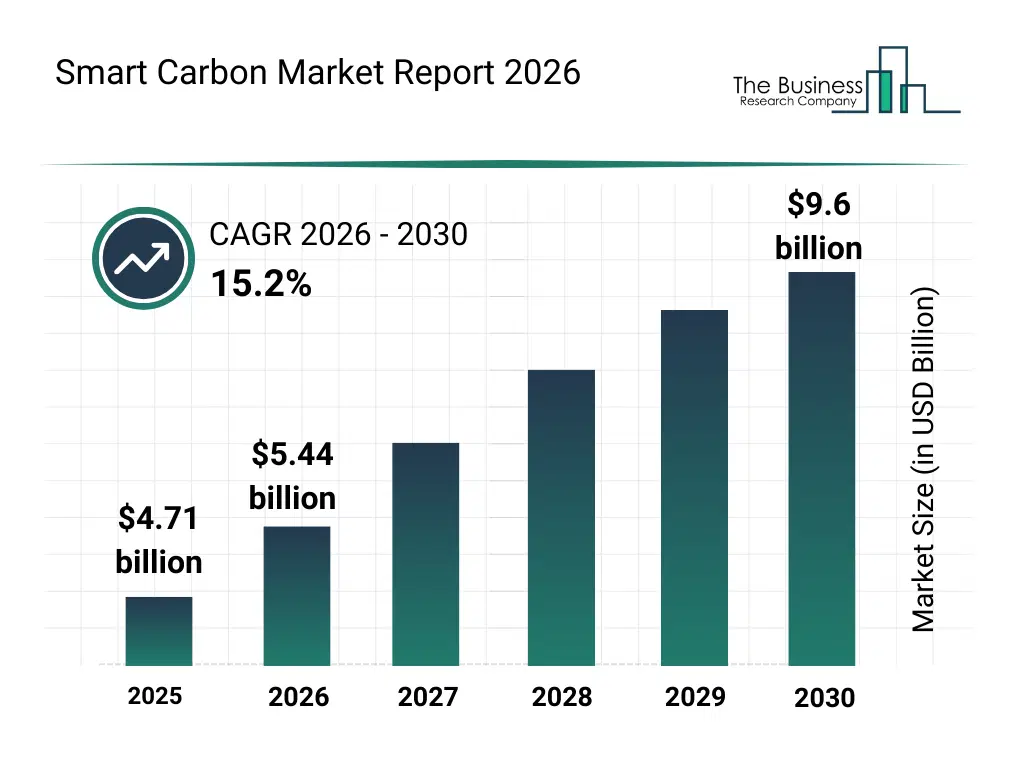
What Is The Smart Carbon Market Size and Share 2026?
The smart carbon market size has grown rapidly in recent years. It will grow from $4.71 billion in 2025 to $5.44 billion in 2026 at a compound annual growth rate (CAGR) of 15.5%. The growth in the historic period can be attributed to increasing demand for high-performance materials, early adoption of carbon-based storage solutions, expansion of industrial decarbonization efforts, growth in battery manufacturing, advances in material science research.What Is The Smart Carbon Market Growth Forecast?
The smart carbon market size is expected to see rapid growth in the next few years. It will grow to $9.6 billion in 2030 at a compound annual growth rate (CAGR) of 15.2%. The growth in the forecast period can be attributed to increasing investments in clean energy materials, rising deployment of carbon capture technologies, expansion of electric vehicle battery demand, growing focus on sustainable material innovation, scaling of advanced carbon production technologies. Major trends in the forecast period include increasing use of advanced carbon materials in energy storage, rising adoption of smart carbon in ccus applications, growing integration with battery and fuel cell technologies, expansion of high-performance carbon manufacturing, enhanced focus on material sustainability.
Global Smart Carbon Market Segmentation
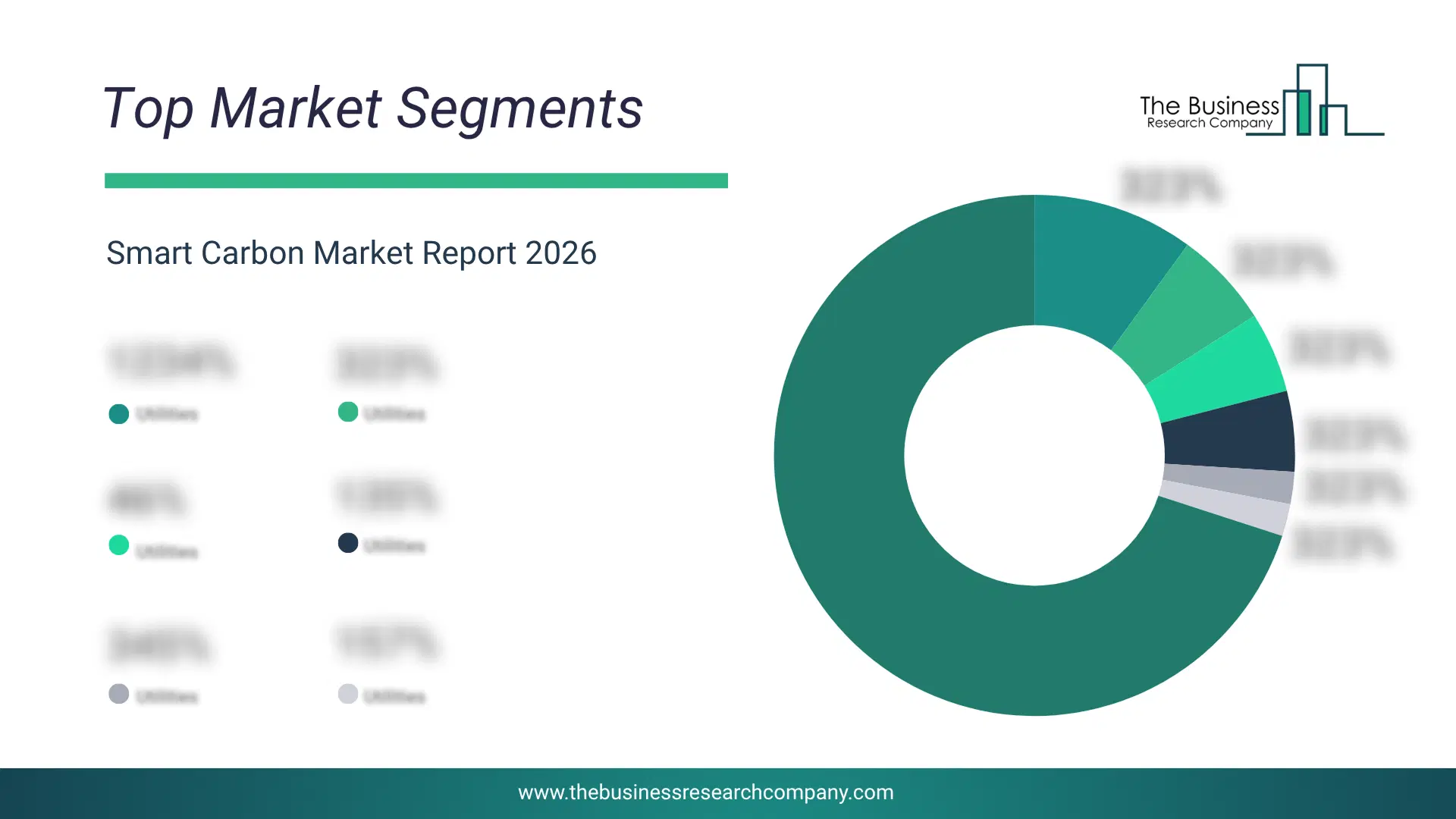
1) By Type: Chemical Looping Combustion (CLC), Solvents And Sorbents, Bio-Energy CCS (BECCS), Direct Air Capture (DAC) 2) By Source: Oil And Gas, Power Generation, Chemicals And Petrochemicals, Cement, Iron And Steel, Other Sources 3) By Application: Urea Manufacturing, Synthetic Fuel, Chemical Production, Building Aggregates, Dry Ice, Other Applications Subsegments: 1) By Chemical Looping Combustion (CLC): Oxy-fuel Combustion Systems, Integrated CLC Systems 2) By Solvents And Sorbents: Ionic Liquids, Amine-Based Solvents, Metal-Organic Frameworks (MOFs) 3) By Bio-Energy CCS (BECCS): Biomass Gasification, Bioenergy Production Technologies 4) By Direct Air Capture (DAC): Solid Sorbent Systems, Liquid Solvent SystemsWhat Is The Driver Of The Smart Carbon Market?
The growing number of smart cities is expected to propel the growth of the smart carbon market going forward. Smart cities refer to an administrative territory that uses information and communication technology (ICT) to improve its operational efficiency and provide better infrastructural facilities to its residents. Smart cities can help reduce carbon emissions and promote green and sustainable development. For instance, in March 2024, according to AXA Investment Managers, a France-based investment management firm, the global smart cities sector is projected to reach a valuation of US$3.7 trillion by 2030, indicating significant growth potential and strong investment opportunities. Therefore, the growing number of smart city projects across the globe is driving the smart carbon industry.Key Players In The Global Smart Carbon Market
Major companies operating in the smart carbon market are Aker Solutions ASA, Dakota Gasification Company, Fluor Corporation, Linde plc, Mitsubishi Heavy Industries Ltd., Siemens AG, Honeywell International Inc., Carbon Engineering Ltd., Climeworks, Global Thermostat, Carbon Clean Solutions, Blue Planet, CarbonCure Technologies, Carbon Lighthouse, Charm Industrial, Verdox, Aether Diamonds, Brightmark, Carbon Upcycling Technologies, Planetary Hydrogen, LanzaTech, Newlight Technologies, Svante Inc., Twelve, Carbon Recycling International, Solidia Technologies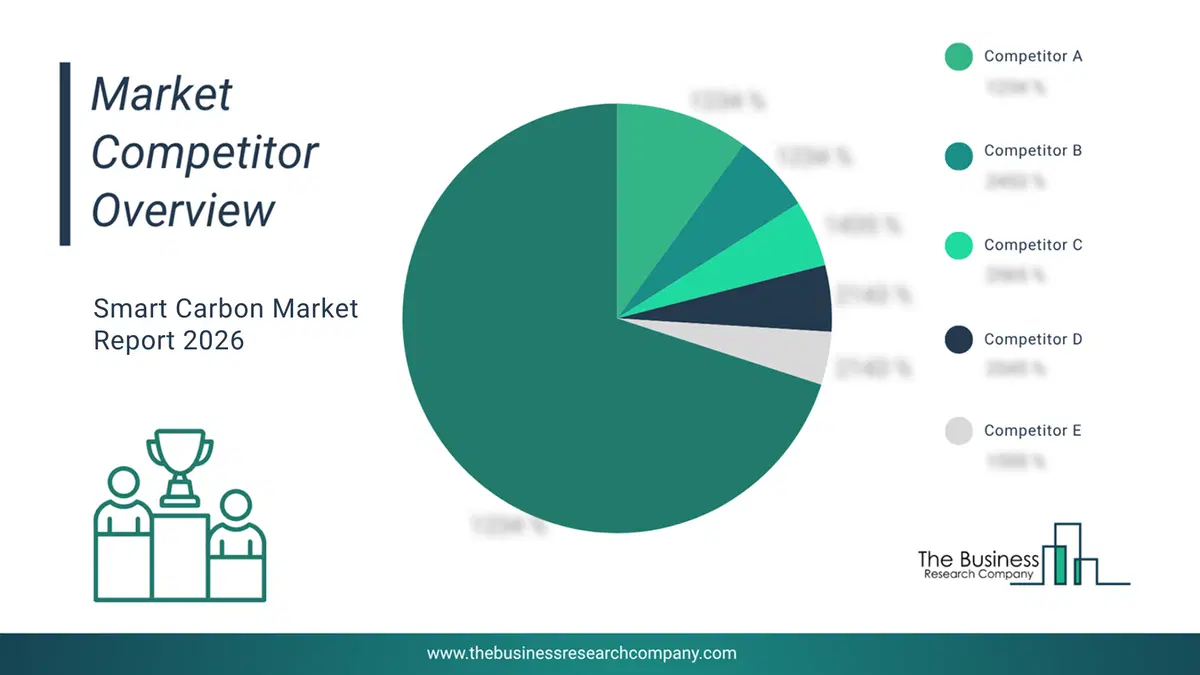
This chart is for illustrative purposes; the full report includes a detailed competitor analysis and comprehensive overview of the top 10 companies in the market.
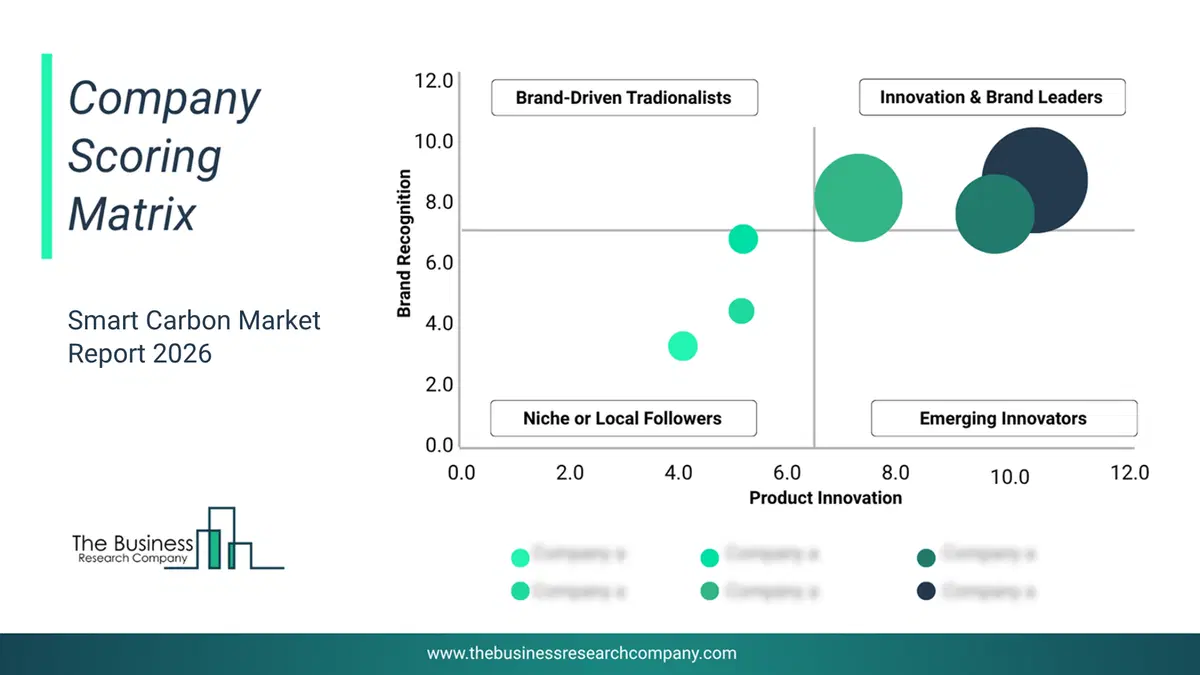
This chart maps companies by product innovation and brand strength, with bubble size indicating relative revenue, helping identify market leaders, challengers, and niche players. This is an illustrative chart; the full report provides a complete and accurate competitive analysis.
Global Smart Carbon Market Trends and Insights
Major companies operating in the smart carbon market are focusing on developing advanced solutions such as digital carbon management platforms to enhance sustainability and reduce greenhouse gas emissions across supply chains. Digital carbon management platforms are technology-driven systems that enable tracking, verification, and trading of carbon units while providing actionable insights to improve carbon performance. For instance, in November 2025, Shri Rajrajeshwar Cotton Pvt. Ltd., an India-based regenerative agriculture company, launched its Carbon In setting Platform featuring a digital dashboard and supply chain integration system. The platform allows farms to monitor carbon units generated through regenerative practices and make them available for purchase. Companies and brands can connect directly with producers to acquire carbon in setting units and reduce Scope 3 emissions. The platform covers over 828,000 acres across eight countries and manages 26 different crops, including cotton, coffee, soybean, and wheat. It provides secure and compliant tracking of carbon transactions, facilitates transparency in supply chain carbon management, and creates financial incentives for farms to improve soil health and climate resilience. This solution strengthens net zero strategies while promoting sustainable agricultural practices worldwide.What Are Latest Mergers And Acquisitions In The Smart Carbon Market?
In November 2025, Carbon Direct Capital Management L.L.C., a US based investment firm acquired Pachama for an undisclosed amount. Throughthis acquisition, Carbon Direct aimed to enhance its digital monitoring, reporting, and verification (MRV) capabilities by integrating Pachama’s advanced data and AI driven forest carbon project platform, strengthening its offerings across voluntary carbon markets and supporting deeper climate impact for clients. Pachama Inc. is a US based climate technology company that provides digital MRV products and tools for forest carbon removal projects, leveraging satellite and AI technologies to track, verify, and scale nature based carbon solutions.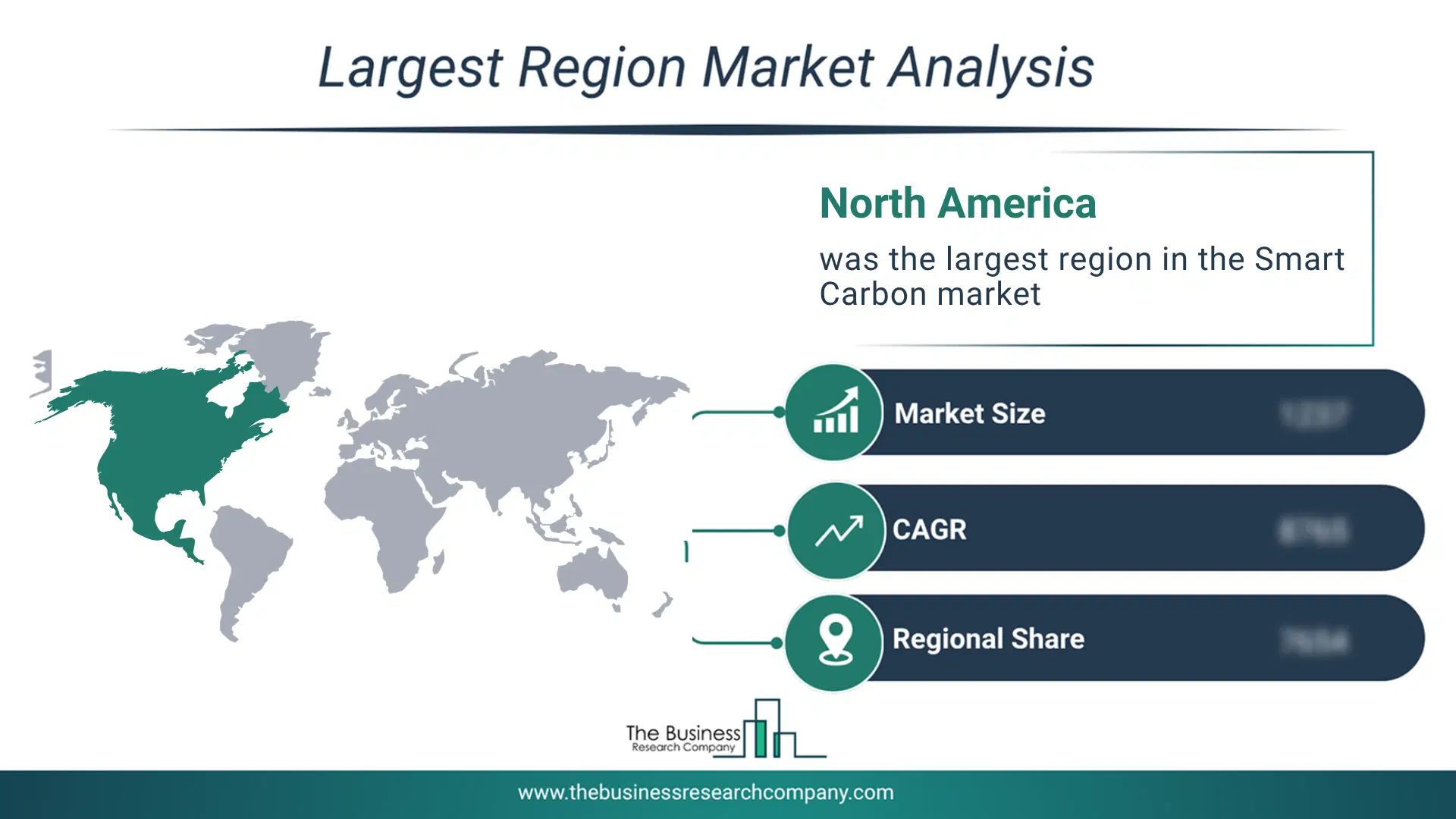
Regional Outlook
North America was the attractive region in the smart carbon market in 2025 The regions covered in this market report are Asia-Pacific, South East Asia, Western Europe, Eastern Europe, North America, South America, Middle East, Africa. The countries covered in this market report are Australia, Brazil, China, France, Germany, India, Indonesia, Japan, Taiwan, Russia, South Korea, UK, USA, Canada, Italy, SpainWhat Defines the Smart Carbon Market?
The smart carbon market includes revenues earned by entities through carbon capture and storage (CCS), clean electricity, and circular carbon. The market value includes the value of related goods sold by the service provider or included within the service offering. Only goods and services traded between entities or sold to end consumers are included.How is Market Value Defined and Measured?
The market value is defined as the revenues that enterprises gain from the sale of goods and/or services within the specified market and geography through sales, grants, or donations in terms of the currency (in USD unless otherwise specified). The revenues for a specified geography are consumption values that are revenues generated by organizations in the specified geography within the market, irrespective of where they are produced. It does not include revenues from resales along the supply chain, either further along the supply chain or as part of other products.
This chart presents market attractiveness based on a quantitative evaluation of growth, competition, strategic alignment, and risk, offering a clear view of opportunity areas for decision-making. This chart is for illustrative purposes; the full report contains the complete analysis.

This chart highlights the Total Addressable Market (TAM) by estimating the maximum revenue opportunity using an assumption-driven approach, supporting strategic planning and opportunity sizing across markets. The chart is illustrative; the full report provides a more comprehensive analysis.
What Key Data and Analysis Are Included in the Smart Carbon Market Report 2026?
The smart carbon market research report is one of a series of new reports from The Business Research Company that provides market statistics, including Market Report 2026?global market size, regional shares, competitors with the market share, detailed market segments, market trends and opportunities, and any further data you may need to thrive in the smart carbon Market Report 2026? The market research report delivers a complete perspective of everything you need, with an in-depth analysis of the current and future state of the Market Report 2026?Smart Carbon Market Report Forecast Analysis
| Report Attribute | Details |
|---|---|
| Market Size Value In 2026 | $5.44 billion |
| Revenue Forecast In 2030 | $9.6 billion |
| Growth Rate | CAGR of 15.5% from 2026 to 2030 |
| Base Year For Estimation | 2025 |
| Actual Estimates/Historical Data | 2020-2025 |
| Forecast Period | 2026 - 2030 - 2030 |
| Market Representation | Revenue in USD Billion and CAGR from 2026 to 2030 |
| Segments Covered | Type, Source, Application |
| Regional Scope | Asia-Pacific, Western Europe, Eastern Europe, North America, South America, Middle East, Africa |
| Country Scope | The countries covered in the report are Australia, Brazil, China, France, Germany, India, Indonesia, Japan, Taiwan, Russia, South Korea, UK, USA, Canada, Italy, Spain. |
| Key Companies Profiled | Aker Solutions ASA, Dakota Gasification Company, Fluor Corporation, Linde plc, Mitsubishi Heavy Industries Ltd., Siemens AG, Honeywell International Inc., Carbon Engineering Ltd., Climeworks, Global Thermostat, Carbon Clean Solutions, Blue Planet, CarbonCure Technologies, Carbon Lighthouse, Charm Industrial, Verdox, Aether Diamonds, Brightmark, Carbon Upcycling Technologies, Planetary Hydrogen, LanzaTech, Newlight Technologies, Svante Inc., Twelve, Carbon Recycling International, Solidia Technologies |
| Customization Scope | Request for Customization |
| Pricing And Purchase Options | Explore Purchase Options |