
Smart Demand Response Market Report 2026
Global Outlook – By Type (Voluntary Demand Response, Contractual Mandatory Demand Response), By Technology (Automated Demand Response, Direct Load Control, Dynamic Pricing), By Application (Residential, Commercial, Industrial) – Market Size, Trends, Strategies, and Forecast to 2030
Smart Demand Response Market Overview
• Smart Demand Response market size has reached to $36.03 billion in 2025 • Expected to grow to $65.4 billion in 2030 at a compound annual growth rate (CAGR) of 12.6% • Growth Driver: The Rise Of Smart Demand Response In Addressing Growing Energy Needs • Market Trend: Adoption Of Advanced Energy Monitoring Systems In Residential Demand Response To Enhance Grid Flexibility • Asia-Pacific was the largest region in 2025.Market Gains By 2030 – Top Opportunities By Segment
Market Gain identifies the most promising market opportunities by highlighting the segments or products expected to generate the highest incremental revenue growth over the next five years.
What Is Covered Under Smart Demand Response Market?
Smart demand response refers to a technology-driven approach to managing electricity consumption in response to changes in the supply-demand balance within the power grid. It is crucial in reducing peak demand, balancing the power grid, and improving energy efficiency. The main types of smart demand response are voluntary demand response and contractual mandatory demand response. Voluntary demand response refers to a strategy where electricity consumers willingly adjust their electricity consumption patterns in response to signals or incentives provided by the grid operator or utility company. The technologies involved are automated demand response, direct load control, and dynamic pricing used in residential, commercial, and industrial applications.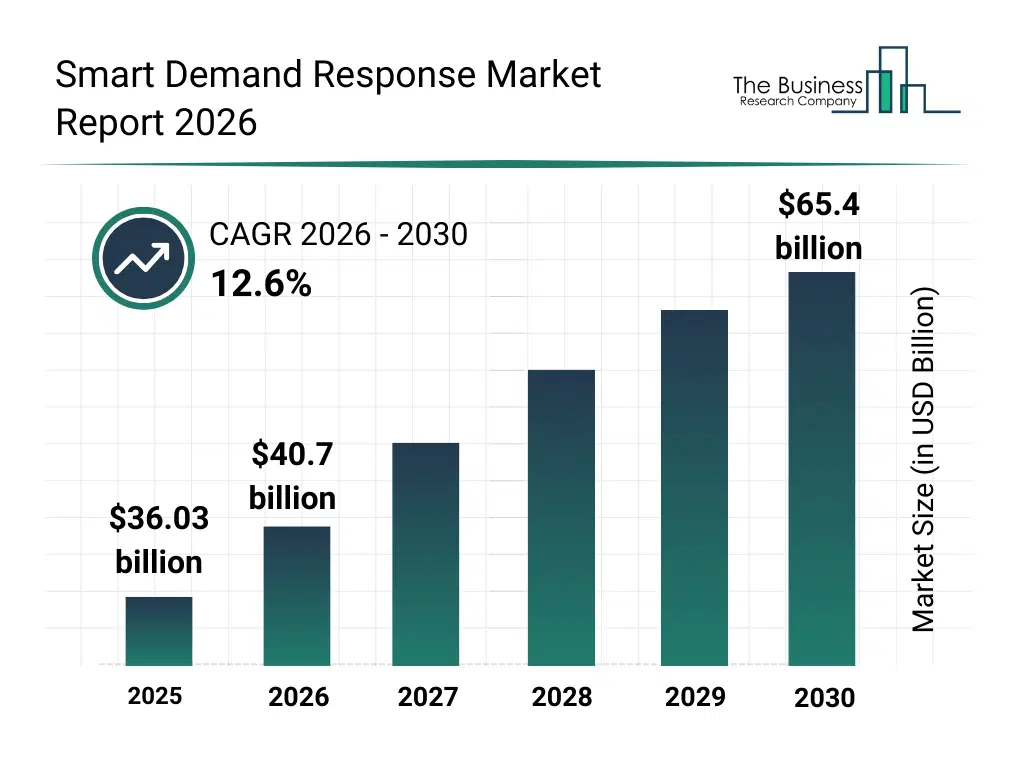
What Is The Smart Demand Response Market Size and Share 2026?
The smart demand response market size has grown rapidly in recent years. It will grow from $36.03 billion in 2025 to $40.7 billion in 2026 at a compound annual growth rate (CAGR) of 13.0%. The growth in the historic period can be attributed to growth in electricity demand volatility, expansion of smart grid infrastructure, early adoption of incentive-based demand response programs, increasing utility focus on peak load management, rising deployment of advanced metering infrastructure.What Is The Smart Demand Response Market Growth Forecast?
The smart demand response market size is expected to see rapid growth in the next few years. It will grow to $65.4 billion in 2030 at a compound annual growth rate (CAGR) of 12.6%. The growth in the forecast period can be attributed to increasing renewable energy integration, rising investments in grid digitalization, growing adoption of AI-driven energy management systems, expansion of residential and commercial demand response participation, increasing regulatory support for grid flexibility. Major trends in the forecast period include increasing deployment of automated demand response platforms, rising adoption of dynamic pricing programs, growing integration of smart meters and grid sensors, expansion of load control technologies, enhanced focus on peak load optimization.
Global Smart Demand Response Market Segmentation
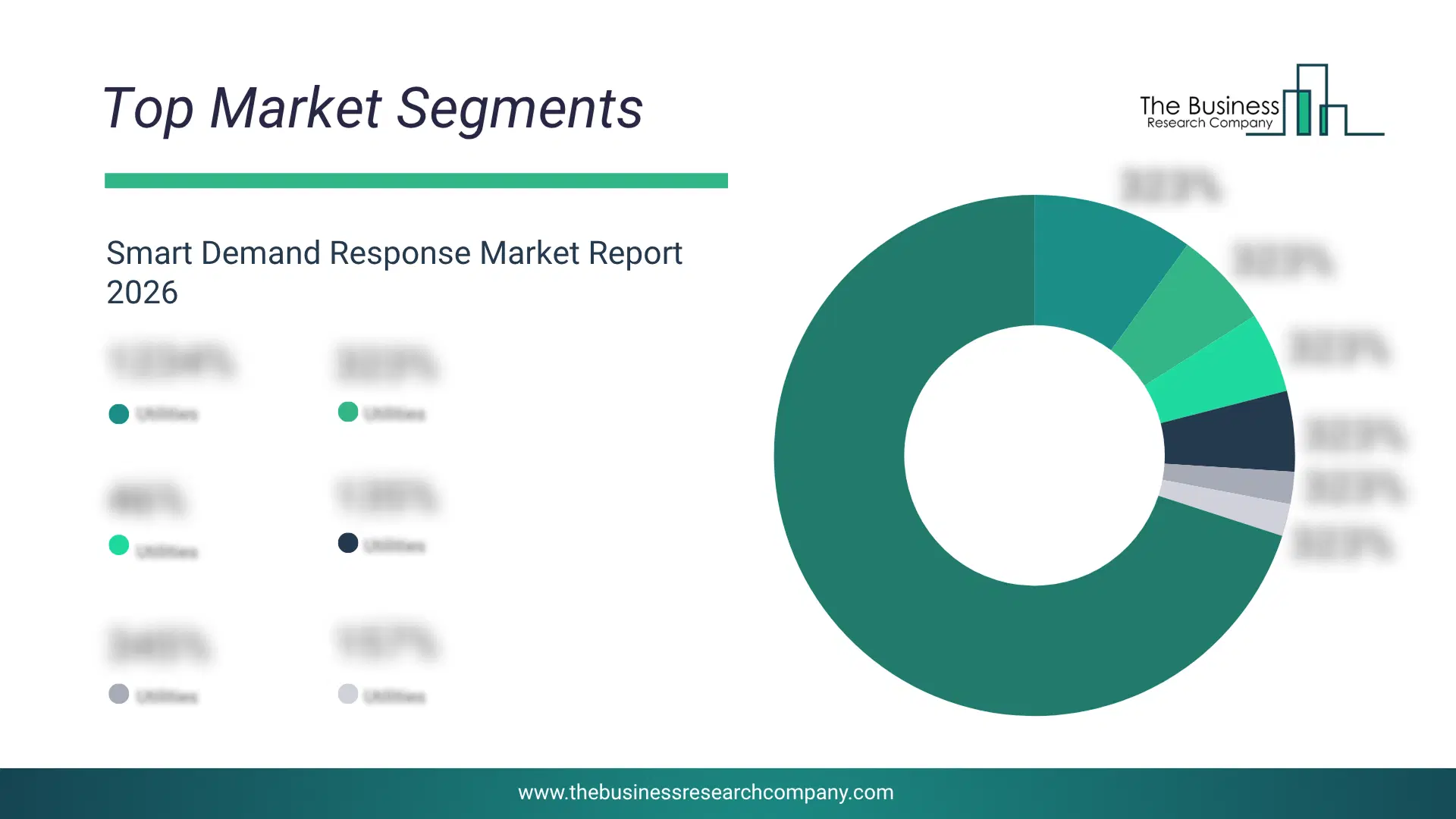
1) By Type: Voluntary Demand Response, Contractual Mandatory Demand Response 2) By Technology: Automated Demand Response, Direct Load Control, Dynamic Pricing 3) By Application: Residential, Commercial, Industrial Subsegments: 1) By Voluntary Demand Response: Incentive-Based Demand Response, Emergency Demand Response 2) By Contractual Mandatory Demand Response: Capacity Market-Based Demand Response, Regulatory Demand Response The top segments in the smart demand response market will be: • Voluntary Demand Response will reach $53.05 billion by 2030. • Contractual Mandatory Demand Response will reach $24.62 billion by 2030.What Is The Driver Of The Smart Demand Response Market?
The increasing power demand is expected to propel the growth of the smart demand response market going forward. Power demand refers to the total electrical energy consumers need at a specific point in time, measured in kilowatts (kW) or megawatts (MW). Smart demand response is crucial to managing power demand by dynamically adjusting electricity consumption in response to real-time grid conditions and pricing signals. For instance, in December 2025, according to GOV.UK, a U.K.-based government agency reported that the energy consumption in the U.K. between 2023 and 2024 increased by 2.6 percent to 128.1 million tonnes of oil equivalent (mtoe). Further, energy consumption in the domestic sector in 2024 increased compared to the record low seen in 2023 by 3.8 percent to 34.0 mtoe. Therefore, the increasing power demand is driving the growth of the smart demand response industry.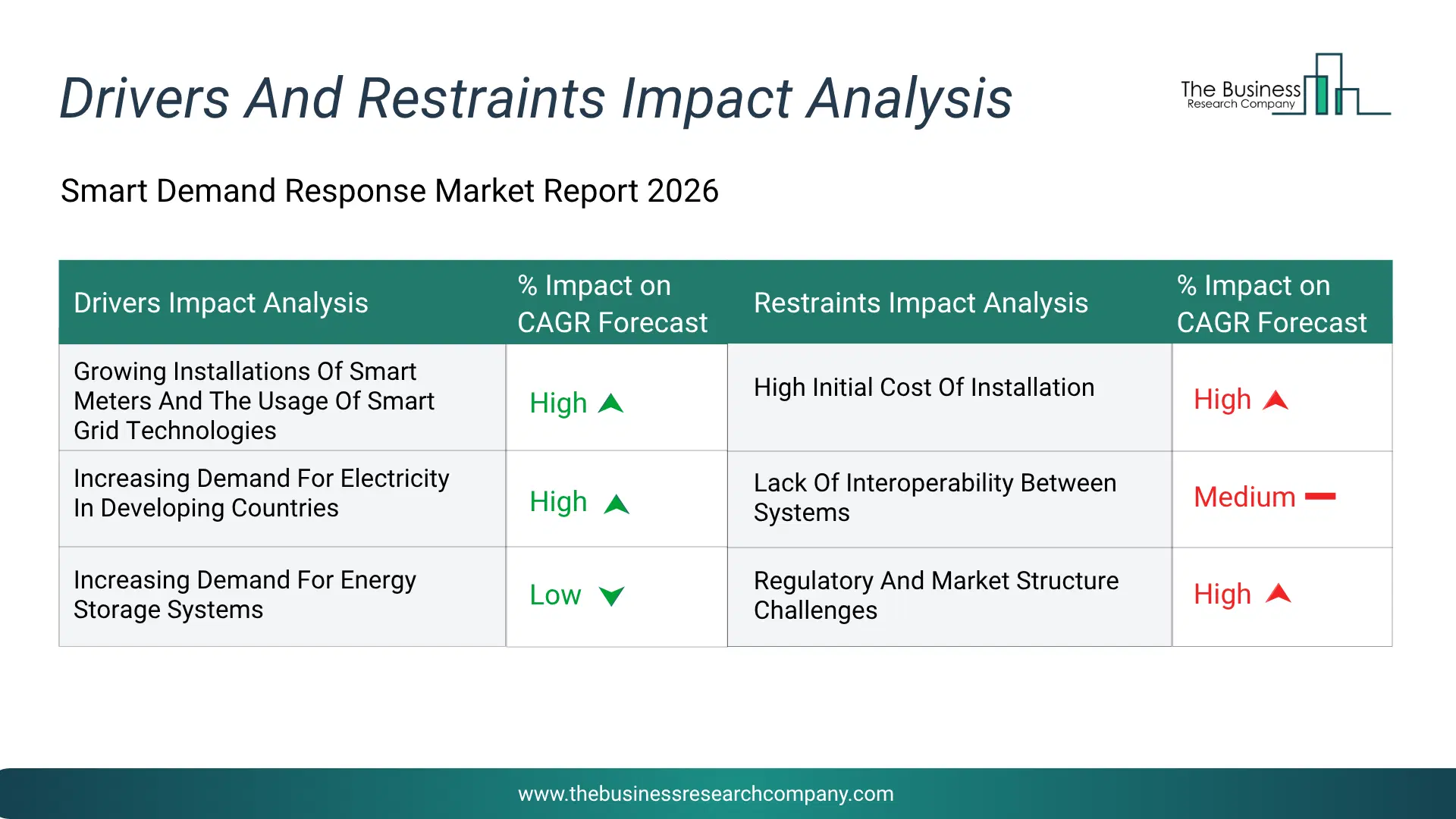
Infographic Chart Showing Key Market Drivers Analysis And Restraints For Smart Demand Response Market
The chart presents an impact analysis of key drivers and restraints, quantifying their relative influence on the market's growth rate and helping assess the balance between growth enablers and limiting factors. This chart offers a high-level perspective; the full report contains more detailed insights.
How Will The Drivers Impact Growth In The Global Smart Demand Response Market?
• Growing Installations Of Smart Meters And The Usage Of Smart Grid Technologies (High) – During the forecast period, the increasing deployment of smart meters and the expansion of smart grid infrastructure are expected to be key drivers of the smart demand response market by 2030. These technologies enable real -time tracking and control of electricity consumption, allowing utilities and consumers to better manage energy usage during peak and off -peak periods. Enhanced data visibility supports efficient load shifting and peak demand management, while smart grid systems enable automated communication between utilities and connected devices such as smart thermostats and energy management systems. This connectivity helps balance power supply and demand, reducing grid stress and improving reliability. As adoption expands across residential, commercial, and industrial sectors, it strengthens the foundation for advanced demand response solutions and accelerates market growth. • Increasing Demand For Electricity In Developing Countries (High) – During the forecast period, the increasing demand for electricity in developing countries is anticipated to significantly support the smart demand response market by 2030. Rapid urbanization, industrialization, and population growth are driving higher power consumption, creating challenges for grid stability and peak load management. Smart demand response solutions address these challenges by enabling flexible control of electricity usage and encouraging consumption during off-peak periods. This reduces pressure on existing infrastructure and limits the need for costly capacity expansion. At the same time, governments and utilities are investing in digital grid technologies to enhance energy distribution and minimize losses. As energy systems modernize, the adoption of smart devices and energy management solutions is expected to rise, further driving demand response implementation. • Increasing Demand For Energy Storage Systems (Low) – During the forecast period, the rising demand for energy storage systems is set to be a major growth catalyst for the smart demand response market by 2030. Storage technologies, particularly battery systems, allow excess electricity generated during low-demand periods to be stored and utilized when demand increases. When integrated with demand response programs, these systems enhance grid flexibility and improve overall energy management. During peak demand, stored energy can be deployed while consumption is simultaneously reduced through demand response mechanisms, ensuring grid stability and minimizing disruptions. Additionally, the increasing integration of renewable energy sources such as solar and wind further drives the need for combined storage and demand response solutions to address supply variability. With growing investments in energy storage infrastructure, the adoption of smart demand response technologies is expected to accelerate.How Will The Restraints Impact Growth In The Global Smart Demand Response Market?
• High Initial Cost Of Installation (High) – During the forecast period, the high initial installation costs act as a major restraint in the smart demand response market because implementing these systems requires significant investment in advanced infrastructure and connected devices. Utilities and consumers must invest in smart thermostats, smart appliances, communication networks, and home energy management systems to enable real-time monitoring and automated load control. Additionally, integrating these devices with existing grid infrastructure often requires upgrades to metering systems, data analytics platforms, and grid communication technologies. For residential consumers and small businesses, the upfront expense of purchasing smart devices and installing energy management systems may discourage adoption despite the long-term energy savings. Utilities also face financial challenges when deploying large-scale demand response programs, particularly in regions with limited funding or incentives. These financial barriers slow down the rollout of smart demand response solutions and delay market expansion, especially in developing energy markets. • Lack Of Interoperability Between Systems (Medium) – During the forecast period, the lack of interoperability between different smart devices and grid management platforms is another significant restraint affecting the smart demand response market. Smart demand response relies on seamless communication between various technologies such as smart thermostats, appliances, meters, and energy management systems. However, many manufacturers use proprietary communication protocols and software platforms that are not fully compatible with other systems. This lack of standardization makes it difficult for utilities and service providers to integrate multiple devices into a unified demand response network. As a result, system integration becomes more complex and costly, reducing operational efficiency and scalability. Utilities may also face challenges in managing diverse devices across large customer bases, limiting the effectiveness of demand response programs. Without widely accepted interoperability standards, the deployment of large-scale smart demand response systems remains slower and more complicated. • Regulatory And Market Structure Challenges (High) – During the forecast period, the regulatory and market structure challenges also limit the growth of the smart demand response market. Demand response programs depend heavily on supportive policies, incentive structures, and electricity market regulations that encourage participation from utilities, businesses, and residential consumers. In many regions, existing regulatory frameworks were designed for traditional power generation and consumption models and do not fully accommodate dynamic demand-side management technologies. Utilities may face restrictions in implementing demand response programs or lack financial incentives to invest in smart grid infrastructure. Additionally, complex approval processes and inconsistent regulatory policies across regions create uncertainty for companies developing smart demand response technologies. These regulatory barriers can delay project implementation and discourage investment in advanced demand response solutions, ultimately slowing the overall adoption of smart demand response technologies in the energy sector.Key Players In The Global Smart Demand Response Market
Major companies operating in the smart demand response market are Enel SpA, Siemens AG, General Electric Company, Schneider Electric SE, Honeywell International Inc, ABB Ltd, Johnson Controls, Eaton Corporation Plc, Con Edison Solutions, Itron Inc, Landis+Gyr, Aclara, EnerNOC, Opower Inc, Comverge Inc, GridPoint, Uplight, AutoGrid, Virtual Peaker, Axiom Exergy, Powerley, Bidgely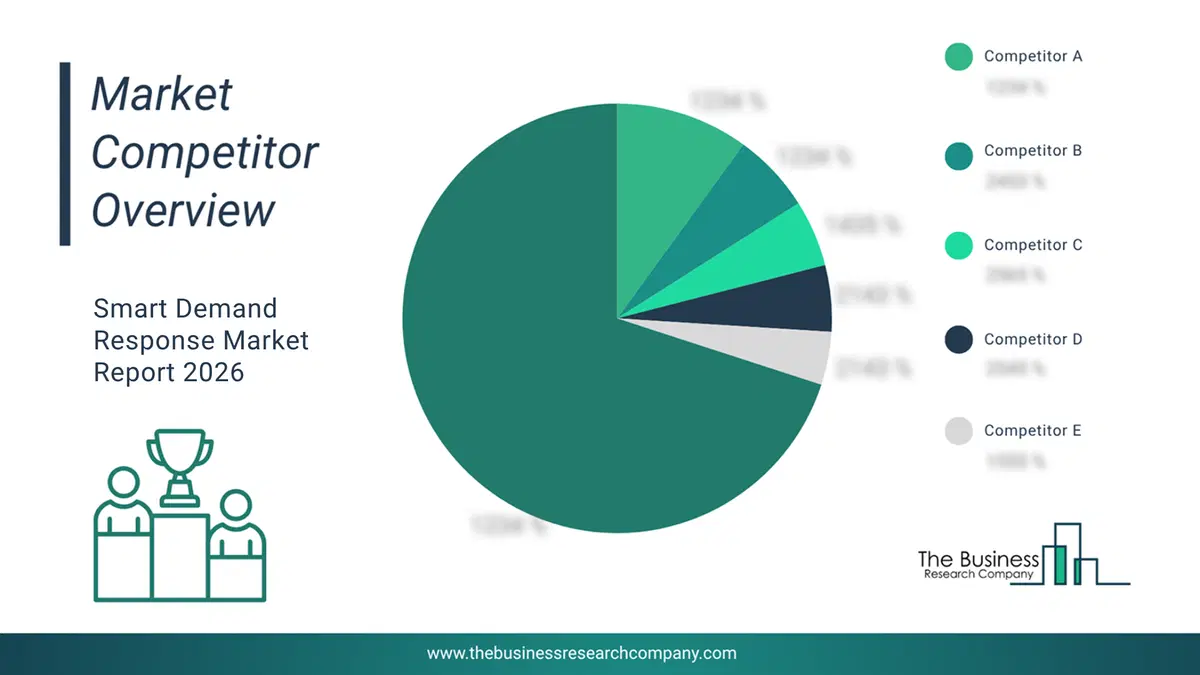
This chart is for illustrative purposes; the full report includes a detailed competitor analysis and comprehensive overview of the top 10 companies in the market.
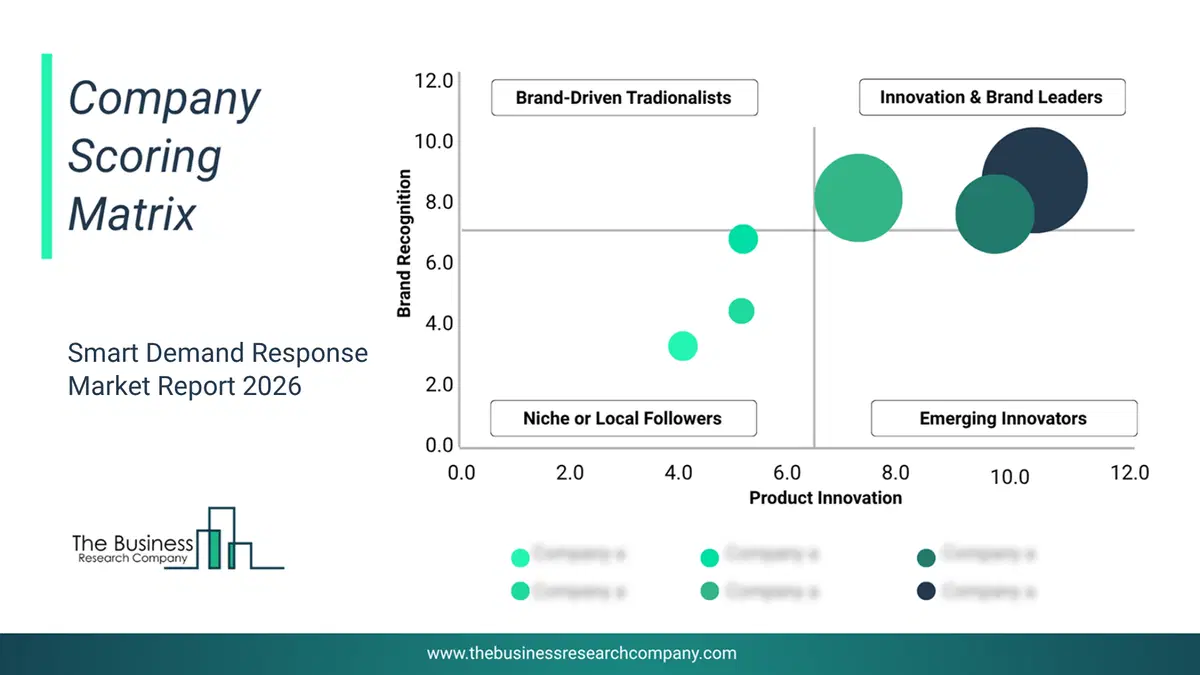
This chart maps companies by product innovation and brand strength, with bubble size indicating relative revenue, helping identify market leaders, challengers, and niche players. This is an illustrative chart; the full report provides a complete and accurate competitive analysis.
Global Smart Demand Response Market Trends and Insights
Major companies operating in the smart demand response market are focusing on developing technological advancements such as residential energy-monitoring and control systems to enhance grid interaction, improve household load flexibility, and reduce energy waste for consumers. A residential energy-monitoring and control system uses real-time circuit-level sensing, connected IoT devices, and insights to enable homeowners to track usage, shift loads, and participate in demand-response events offering more granular control compared with traditional whole-home meters and manual interventions. For instance, in May 2024, Siemens AG, a Germany-based industrial technology company, launched the Inhab Energy Monitor residential solution. The product combines a panel-mounted data hub with current-transformer sensors on individual circuits, a cloud-connected mobile app that displays real-time consumption (including EV charging and solar generation), automated alerts for abnormal power usage, and integrations allowing homeowners to shift usage to off-peak times or enroll in utility demand-response programs; it supports circuit-level monitoring rather than just total load, enabling smarter decision-making and improved grid responsiveness.What Are Latest Mergers And Acquisitions In The Smart Demand Response Market?
In December 2023, Uplight, a U.S.-based provider of consumer energy software, data analytics, and demand management solutions, acquired AutoGrid for an undisclosed amount. Through this acquisition, Uplight aims to enhance its smart demand response and grid flexibility capabilities by integrating AutoGrid’s AI-driven Virtual Power Plant (VPP) and Distributed Energy Resource Management System (DERMS) technologies. AutoGrid is a U.S.-based provider of VPP platforms, DERMS software, and demand response management solutions.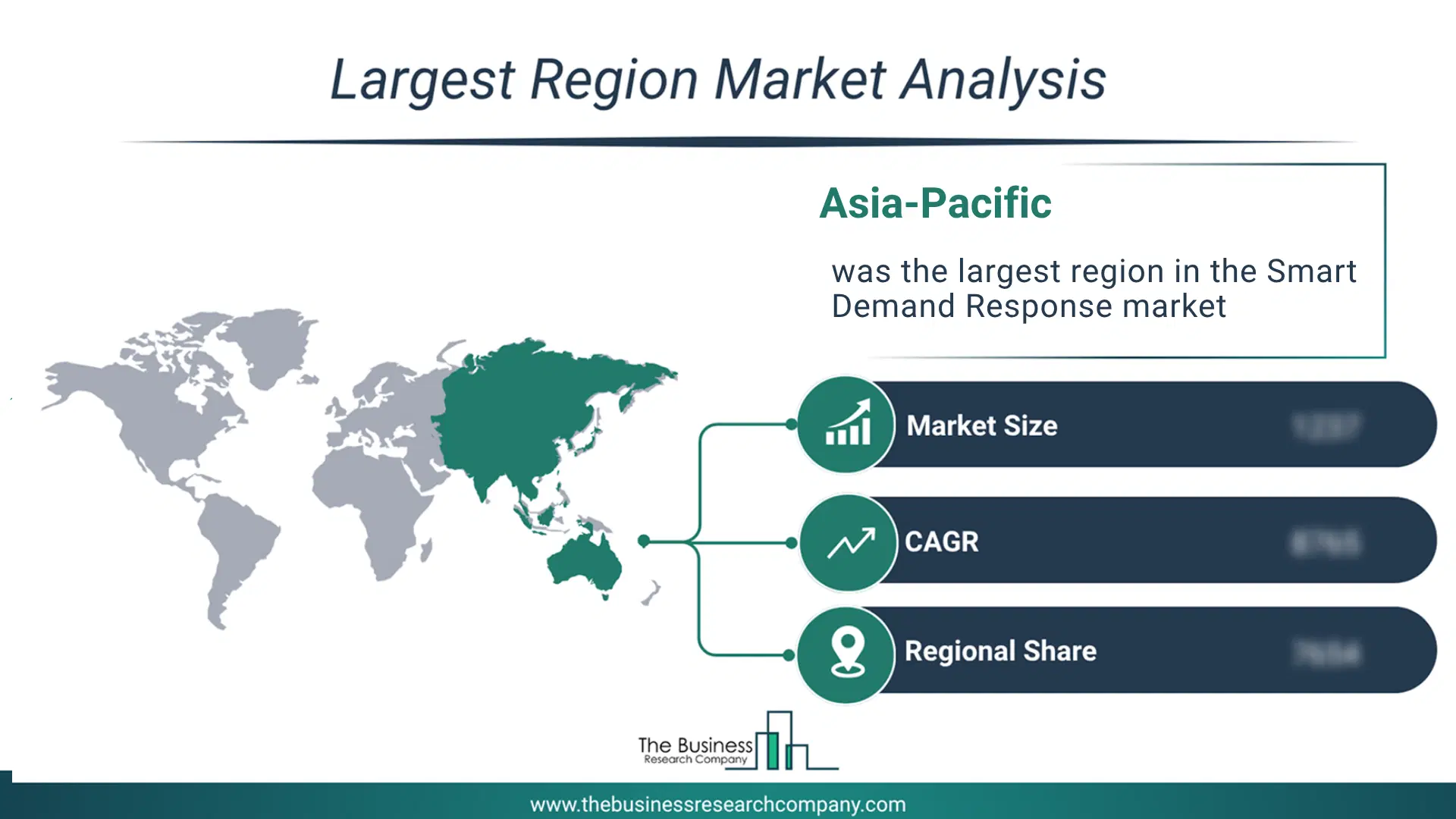
Regional Insights
Asia-Pacific was the largest region in the smart demand response market in 2025. The regions covered in this market report are Asia-Pacific, South East Asia, Western Europe, Eastern Europe, North America, South America, Middle East, Africa. The countries covered in this market report are Australia, Brazil, China, France, Germany, India, Indonesia, Japan, Taiwan, Russia, South Korea, UK, USA, Canada, Italy, Spain.What Defines the Smart Demand Response Market?
The smart demand response market includes revenues earned by entities through peak load management, load shifting, grid balancing, data analytics, and predictive modeling. The market value includes the value of related goods sold by the service provider or included within the service offering. The smart demand response market consists of sales of smart thermostats, smart appliances, and home energy management systems. Values in this market are ‘factory gate’ values, that is the value of goods sold by the manufacturers or creators of the goods, whether to other entities (including downstream manufacturers, wholesalers, distributors and retailers) or directly to end customers. The value of goods in this market includes related services sold by the creators of the goods.How is Market Value Defined and Measured?
The market value is defined as the revenues that enterprises gain from the sale of goods and/or services within the specified market and geography through sales, grants, or donations in terms of the currency (in USD unless otherwise specified). The revenues for a specified geography are consumption values that are revenues generated by organizations in the specified geography within the market, irrespective of where they are produced. It does not include revenues from resales along the supply chain, either further along the supply chain or as part of other products.
This chart presents market attractiveness based on a quantitative evaluation of growth, competition, strategic alignment, and risk, offering a clear view of opportunity areas for decision-making. This chart is for illustrative purposes; the full report contains the complete analysis.

This chart highlights the Total Addressable Market (TAM) by estimating the maximum revenue opportunity using an assumption-driven approach, supporting strategic planning and opportunity sizing across markets. The chart is illustrative; the full report provides a more comprehensive analysis.
What Key Data and Analysis Are Included in the Smart Demand Response Market Report 2026?
The smart demand response market research report is one of a series of new reports from The Business Research Company that provides market statistics, including industry global market size, regional shares, competitors with the market share, detailed market segments, market trends and opportunities, and any further data you may need to thrive in the smart demand response industry. The market research report delivers a complete perspective of everything you need, with an in-depth analysis of the current and future state of the industry.Smart Demand Response Market Report Forecast Analysis
| Report Attribute | Details |
|---|---|
| Market Size Value In 2026 | $40.7 billion |
| Revenue Forecast In 2030 | $65.4 billion |
| Growth Rate | CAGR of 12.6% from 2026 to 2030 |
| Base Year For Estimation | 2025 |
| Actual Estimates/Historical Data | 2020-2025 |
| Forecast Period | 2026 - 2030 |
| Market Representation | Revenue in USD Billion and CAGR from 2026 to 2030 |
| Segments Covered | Type, Technology, Application |
| Regional Scope | Asia-Pacific, Western Europe, Eastern Europe, North America, South America, Middle East, Africa |
| Country Scope | The countries covered in the report are Australia, Brazil, China, France, Germany, India, ... |
| Key Companies Profiled | Enel SpA, Siemens AG, General Electric Company, Schneider Electric SE, Honeywell International Inc, ABB Ltd, Johnson Controls, Eaton Corporation Plc, Con Edison Solutions, Itron Inc, Landis+Gyr, Aclara, EnerNOC, Opower Inc, Comverge Inc, GridPoint, Uplight, AutoGrid, Virtual Peaker, Axiom Exergy, Powerley, Bidgely |
| Customization Scope | Request for Customization |
| Pricing And Purchase Options | Explore Purchase Options |