
Smart Grid Communication Node Market Report 2026
Global Outlook – By Type ( Wired, Wireless Communication Systems), By Application ( Grid Monitoring And Control, Advanced Metering Infrastructure (AMI), Distribution Automation (DA), Demand Response And Load Management, Wide-Area And Field Area Networking (WAN/FAN), Home Area Networking (HAN) And Customer Energy Management), By End-User ( Residential, Commercial, Industrial, Government) – Market Size, Trends, Strategies, and Forecast to 2030
Smart Grid Communication Node Market Overview
• Smart Grid Communication Node market size has reached to $73.47 billion in 2025 • Expected to grow to $172.17 billion in 2030 at a compound annual growth rate (CAGR) of 18.5% • Growth Driver: Surge In Renewable Energy Adoption Fueling Market Growth Due To Rising Need For Efficient Grid Integration And Real-Time Energy Management • Market Trend: Advancing Grid Reliability Through Intelligent Networking Solutions • North America was the largest region in 2025 and Asia-Pacific is the fastest growing region.What Is Covered Under Smart Grid Communication Node Market?
A smart grid communication node is a key component in modern electrical grids that facilitates the seamless data exchange between various grid elements, including smart meters, sensors, substations, and control centers. It enables real-time monitoring, automation, and energy distribution optimization by supporting multiple communication protocols. These nodes enhance grid reliability, efficiency, and security by allowing two-way communication, fault detection, load balancing, and remote control of grid assets, making them essential for developing intelligent and resilient power systems. The main types of smart grid communication node are wired and wireless communication systems. Wired communication systems use physical cables and infrastructure, such as fiber optics or copper wires, to transmit data between smart grid devices. It is applied for command and control, communications, computers, and surveillance by various end-users such as residential, commercial, industrial and government.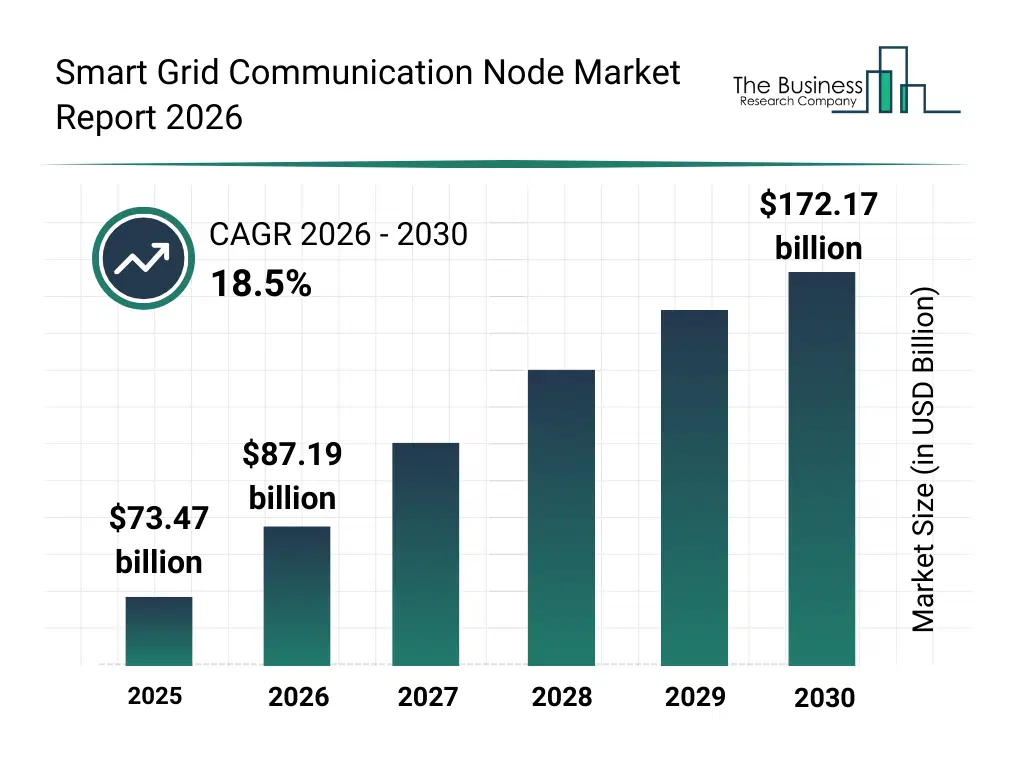
What Is The Smart Grid Communication Node Market Size 2026 And Growth Rate?
The smart grid communication node market size has grown rapidly in recent years. It will grow from $73.47 billion in 2025 to $87.19 billion in 2026 at a compound annual growth rate (CAGR) of 18.7%. The growth in the historic period can be attributed to grid modernization initiatives, early smart meter rollouts, demand for remote monitoring, rise of automated substations, expansion of fiber-optic utility networks.What Is The Smart Grid Communication Node Market Growth Forecast?
The smart grid communication node market size is expected to see rapid growth in the next few years. It will grow to $172.17 billion in 2030 at a compound annual growth rate (CAGR) of 18.5%. The growth in the forecast period can be attributed to increasing distributed energy resources (DERs), growing need for real-time grid intelligence, rising adoption of advanced metering infrastructure (AMI), expansion of utility cybersecurity mandates, integration of renewable-based microgrids. Major trends in the forecast period include real-time grid automation enhancement, multi-protocol interoperability integration, advanced fault detection and response, secure remote monitoring adoption, high-density communication node deployment.
Global Smart Grid Communication Node Market Segmentation
1) By Type: Wired, Wireless Communication Systems 2) By Application: Grid Monitoring And Control, Advanced Metering Infrastructure (AMI), Distribution Automation (DA), Demand Response And Load Management, Wide-Area And Field Area Networking (WAN/FAN), Home Area Networking (HAN) And Customer Energy Management 3) By End-User: Residential, Commercial, Industrial, Government Subsegments: 1) By Wired: Power Line Communication (PLC), Fiber Optic Communication, Coaxial Cable Communication 2) By Wireless Communication Systems: Cellular Networks, Wi-Fi, Zigbee, LoRaWAN, Satellite CommunicationWhat Is The Driver Of The Smart Grid Communication Node Market?
The rise in demand for renewable energy is expected to propel the growth of the smart grid communication node market going forward. Renewable energy is energy derived from naturally replenishing sources such as sunlight, wind, water, and biomass, which are sustainable and have minimal environmental impact. The demand for renewable energy is due to increasing environmental concerns, declining technology costs, government incentives, and the global push for energy security and sustainability. A smart grid communication node enables real-time data exchange between distributed energy sources, grid operators, and energy storage systems, ensuring efficient integration of variable power sources such as solar and wind. It enhances grid stability, optimizes power flow, and supports demand response by enabling two-way communication, remote monitoring, and automation of renewable energy assets. For instance, in December 2024, according to the Eurostat, a Luxembourg-based government agency, in 2023, renewable energy represented 24.5% of total energy consumption in the EU, up from 23.0% in 2022. Therefore, the rise in the demand for renewable energy is fueling the expansion of the smart grid communication node industry.Key Players In The Global Smart Grid Communication Node Market
Major companies operating in the smart grid communication node market are Huawei Technologies, Siemens AG, Cisco Systems Inc., Mitsubishi Electric Corp., Schneider Electric, Honeywell International, GE Vernova, ABB Ltd., Toshiba Corporation, Nokia Networks, Fujitsu Ltd., Hitachi Energy Ltd., Eaton Corporation, Rockwell Automation, Hubbell Inc., Landis+Gyr, Itron Inc., L&T Technology Services, S&C Electric Company, Sierra Wireless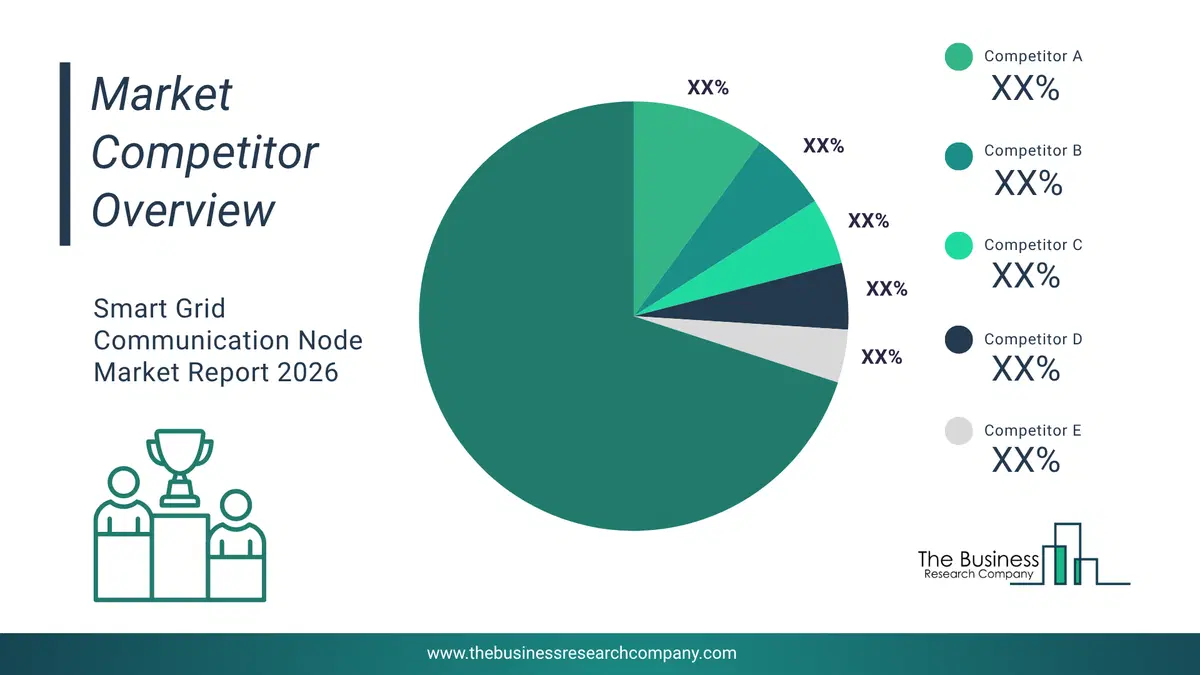
This chart is for illustrative purposes; the full report includes a detailed competitor analysis and comprehensive overview of the top 10 companies in the market.
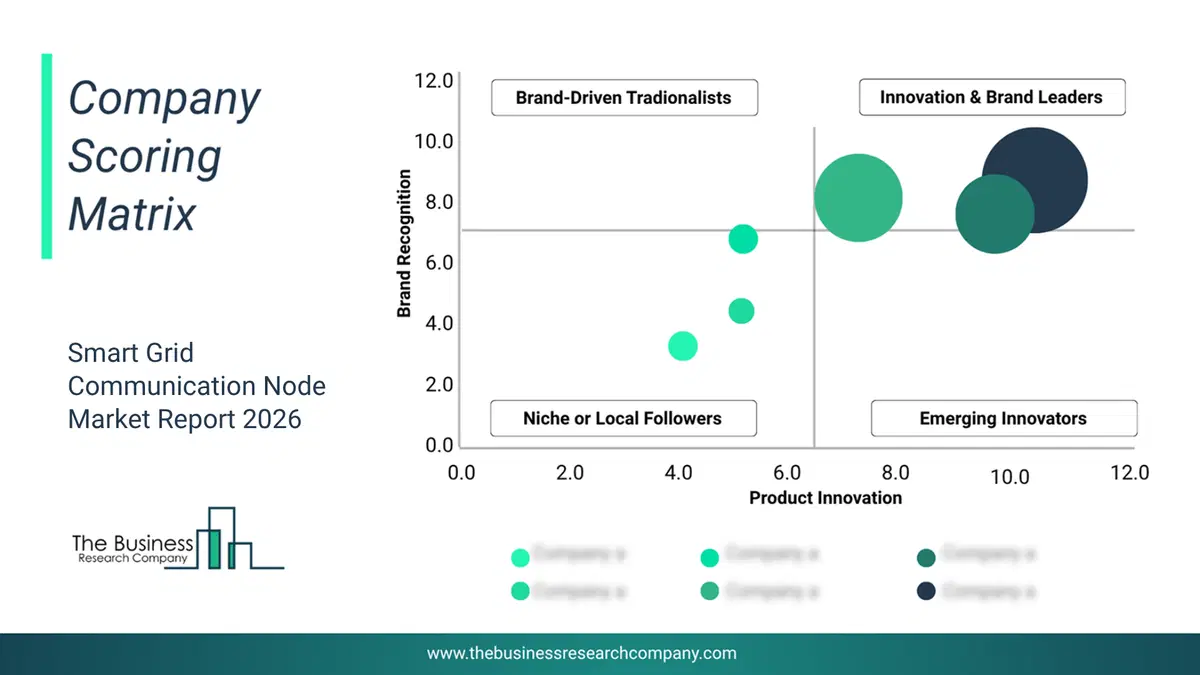
This chart maps companies by product innovation and brand strength, with bubble size indicating relative revenue, helping identify market leaders, challengers, and niche players. This is an illustrative chart; the full report provides a complete and accurate competitive analysis.
Global Smart Grid Communication Node Market Trends and Insights
Major companies operating in the smart grid communication node market are focusing on developing technologically advanced products, such as power distribution communication networks, to enhance grid reliability and enable real-time monitoring and automation. Power distribution communication networks are integrated systems that enable real-time data exchange between substations, smart meters, grid control centers, and distributed energy resources to enhance grid reliability, efficiency, and automation. For instance, in July 2023, Huawei Technologies Co. Ltd., a China-based provider of information and communications technology (ICT) infrastructure and smart devices, launched an intelligent power distribution communication network solution based on industrial switches and routers. A unique feature of the solution is its flexible networking capability, which supports various power distribution architectures like tree and ring structures. It integrates industrial switches, xTUs, and optical modules to create an all-optical Ethernet network using fiber connections. In areas without fiber infrastructure but with wireless network coverage, 4G/5G industrial routers enable seamless connectivity. Additionally, in high-density regions such as factories and urban areas, the solution ensures enhanced reliability by leveraging optical fiber and wireless communication as backup systems, improving network stability and power supply quality.What Are Latest Mergers And Acquisitions In The Smart Grid Communication Node Market?
In January 2023, TE Connectivity, an Ireland-based electronics company, acquired Kries for an undisclosed amount. With this acquisition, TE’s energy business unit strengthens its position as a leading provider of grid reliability solutions for utilities and power network owners worldwide. Kries is a Germany-based provider of smart grid communication nodes.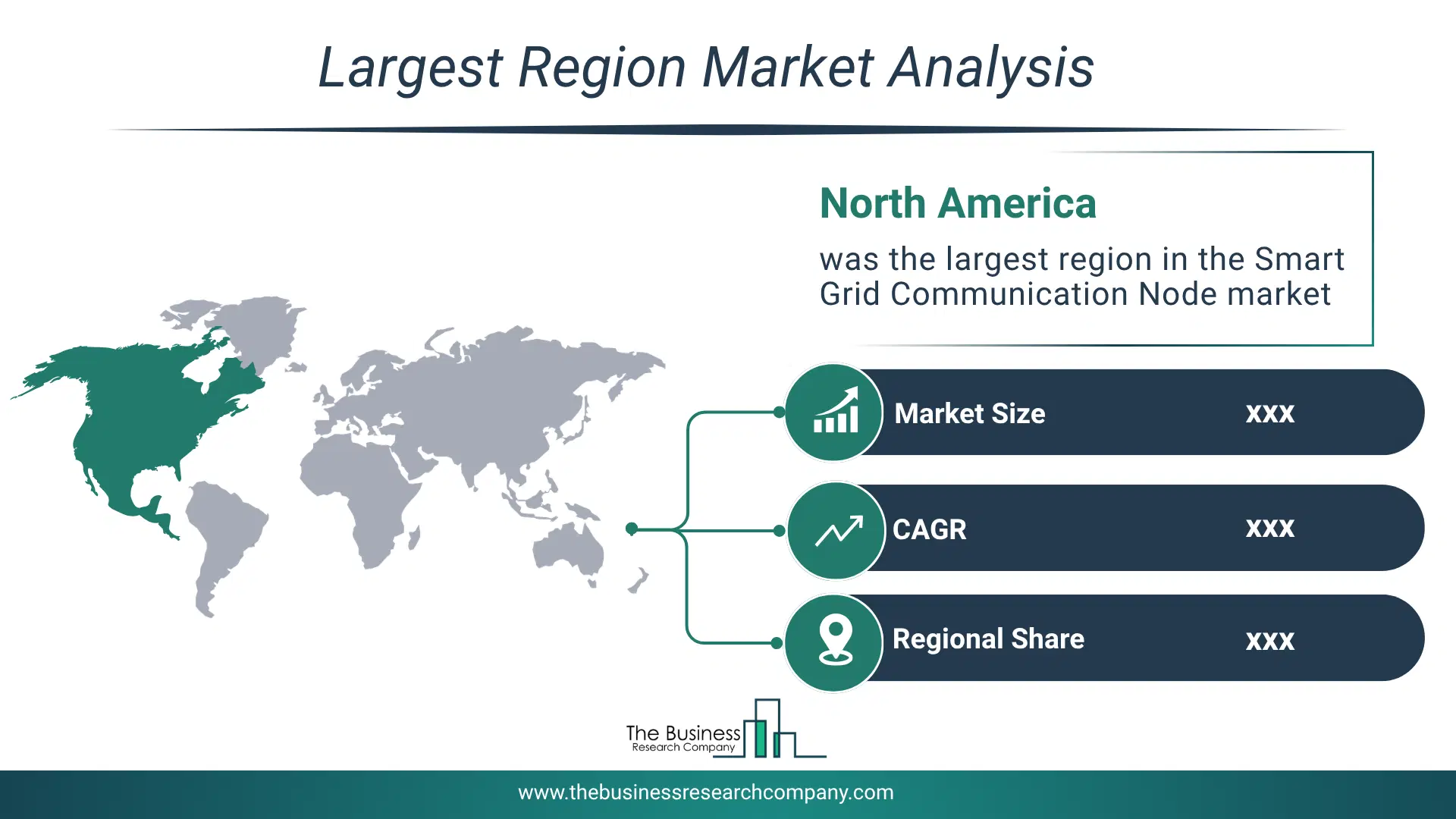
Regional Outlook
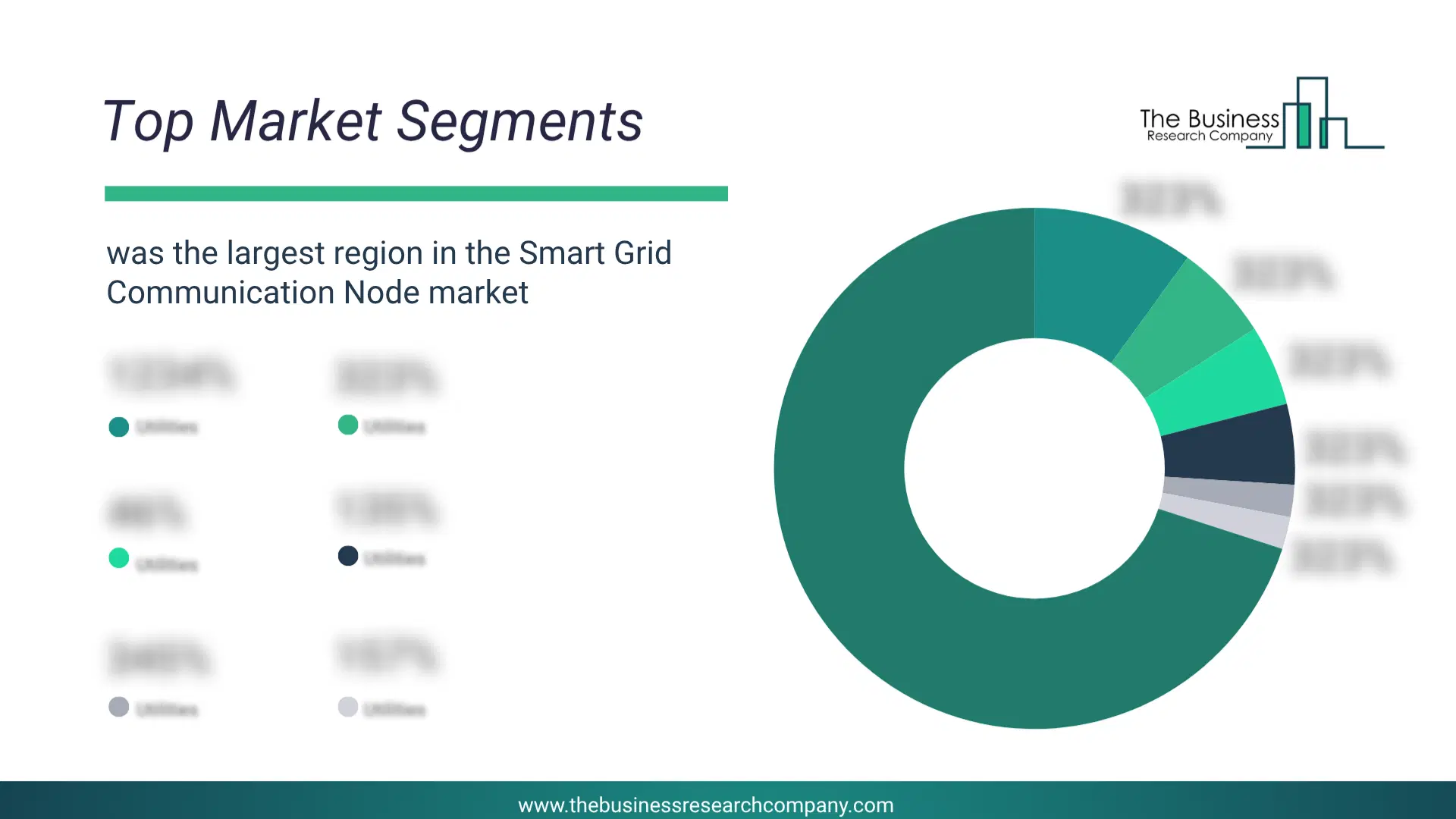
North America was the largest region in the smart grid communication node market in 2025. Asia-Pacific is expected to be the fastest-growing region in the forecast period. The regions covered in this market report are Asia-Pacific, South East Asia, Western Europe, Eastern Europe, North America, South America, Middle East, Africa. The countries covered in this market report are Australia, Brazil, China, France, Germany, India, Indonesia, Japan, Taiwan, Russia, South Korea, UK, USA, Canada, Italy, Spain.What Defines the Smart Grid Communication Node Market?
The smart grid communication node market consists of sales of smart meter communication nodes, distribution automation (DA) nodes, wide-area network (WAN) nodes, field area network (FAN) nodes, and home area network (HAN) nodes. Values in this market are ‘factory gate’ values, that is the value of goods sold by the manufacturers or creators of the goods, whether to other entities (including downstream manufacturers, wholesalers, distributors and retailers) or directly to end customers. The value of goods in this market includes related services sold by the creators of the goods.How is Market Value Defined and Measured?
The market value is defined as the revenues that enterprises gain from the sale of goods and/or services within the specified market and geography through sales, grants, or donations in terms of the currency (in USD unless otherwise specified). The revenues for a specified geography are consumption values that are revenues generated by organizations in the specified geography within the market, irrespective of where they are produced. It does not include revenues from resales along the supply chain, either further along the supply chain or as part of other products.
This chart presents market attractiveness based on a quantitative evaluation of growth, competition, strategic alignment, and risk, offering a clear view of opportunity areas for decision-making. This chart is for illustrative purposes; the full report contains the complete analysis.

This chart highlights the Total Addressable Market (TAM) by estimating the maximum revenue opportunity using an assumption-driven approach, supporting strategic planning and opportunity sizing across markets. The chart is illustrative; the full report provides a more comprehensive analysis.
What Key Data and Analysis Are Included in the Smart Grid Communication Node Market Report 2026?
The smart grid communication node market research report is one of a series of new reports from The Business Research Company that provides market statistics, including industry global market size, regional shares, competitors with the market share, detailed market segments, market trends and opportunities, and any further data you may need to thrive in the smart grid communication node industry. The market research report delivers a complete perspective of everything you need, with an in-depth analysis of the current and future state of the industry.Smart Grid Communication Node Market Report Forecast Analysis
| Report Attribute | Details |
|---|---|
| Market Size Value In 2026 | $87.19 billion |
| Revenue Forecast In 2030 | $172.17 billion |
| Growth Rate | CAGR of 18.5% from 2026 to 2030 |
| Base Year For Estimation | 2025 |
| Actual Estimates/Historical Data | 2020-2025 |
| Forecast Period | 2026 - 2030 |
| Market Representation | Revenue in USD Billion and CAGR from 2026 to 2030 |
| Segments Covered | Type, Application, End-User |
| Regional Scope | Asia-Pacific, Western Europe, Eastern Europe, North America, South America, Middle East, Africa |
| Country Scope | The countries covered in the report are Australia, Brazil, China, France, Germany, India, Indonesia, Japan, Taiwan, Russia, South Korea, UK, USA, Canada, Italy, Spain. |
| Key Companies Profiled | Huawei Technologies, Siemens AG, Cisco Systems Inc., Mitsubishi Electric Corp., Schneider Electric, Honeywell International, GE Vernova, ABB Ltd., Toshiba Corporation, Nokia Networks, Fujitsu Ltd., Hitachi Energy Ltd., Eaton Corporation, Rockwell Automation, Hubbell Inc., Landis+Gyr, Itron Inc., L&T Technology Services, S&C Electric Company, Sierra Wireless |
| Customization Scope | Request for Customization |
| Pricing And Purchase Options | Explore Purchase Options |