
Smart Healthcare Products Market Report 2026
Global Outlook – By Product Type (Telemedicine, Electronic Health Records, mHealth, Smart Pills And Syringes, Smart RFID Cabinets), By Application (Storage And Inventory Management, Monitoring, Treatment), By End User (Hospitals, Home Care Settings) - Market Size, Trends, Strategies, and Forecast to 2030
Smart Healthcare Products Market Overview
• Smart Healthcare Products market size has reached to $296.93 billion in 2025 • Expected to grow to $574.47 billion in 2030 at a compound annual growth rate (CAGR) of 14% • Growth Driver: Rising Healthcare Spending Fuels The Growth Of Smart Healthcare Products Market • Market Trend: Mindray’s FS-Sample Technology Enhances Diagnostic Efficiency: Ai-Driven Advancements And Innovative Smart Healthcare Devices Shaping The Healthcare Industry • North America was the largest region in 2025 and Asia-Pacific is the fastest growing region.What Is Covered Under Smart Healthcare Products Market?
Smart healthcare products are healthcare products that operate on cutting edge technologies such as IoT and AI. These are used to remote monitoring and diagnosis of a patients' health conditions and reduce the cost of the treatment for the user. The main types of smart healthcare products are telemedicine, electronic health records, mHealth, smart pills and syringes and smart RFID cabinets. Telemedicine refers to the electronic transmission of medical information from one location to another to enhance patient health. Smart healthcare products are used for storage and inventory management, monitoring, and treatment and are used in hospitals and home care facilities.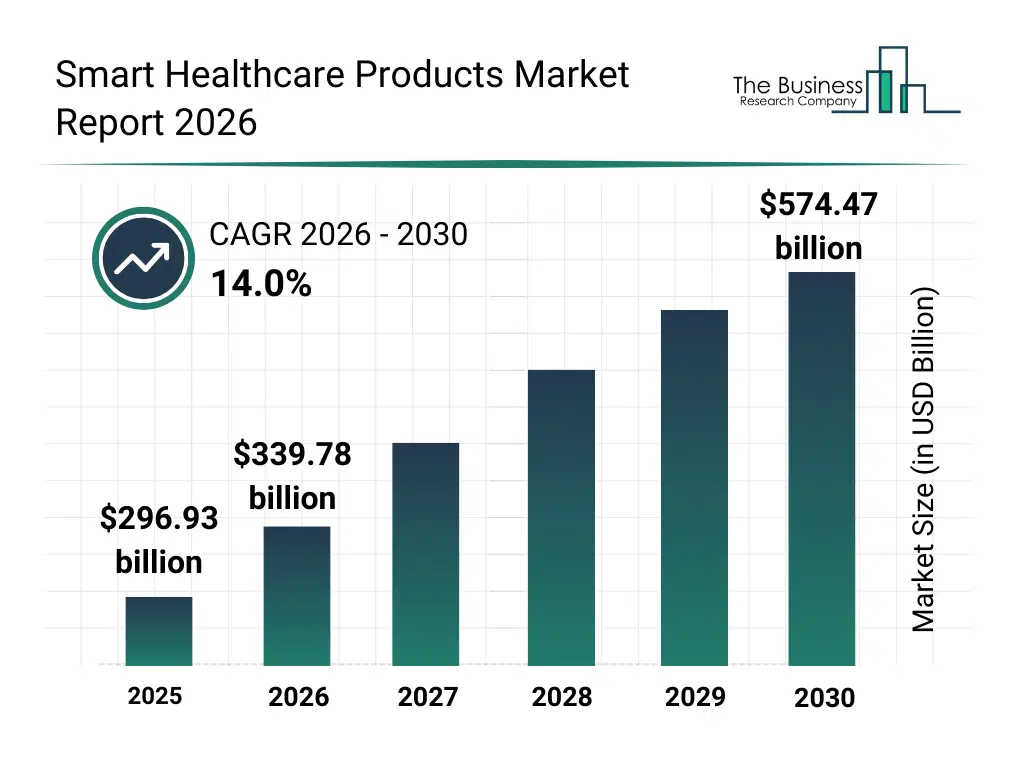
What Is The Smart Healthcare Products Market Size and Share 2026?
The smart healthcare products market size has grown rapidly in recent years. It will grow from $296.93 billion in 2025 to $339.78 billion in 2026 at a compound annual growth rate (CAGR) of 14.4%. The growth in the historic period can be attributed to healthcare digitization, smartphone penetration, demand for preventive care, wearable technology growth, healthcare cost containment.What Is The Smart Healthcare Products Market Growth Forecast?
The smart healthcare products market size is expected to see rapid growth in the next few years. It will grow to $574.47 billion in 2030 at a compound annual growth rate (CAGR) of 14.0%. The growth in the forecast period can be attributed to aging population, expansion of telehealth services, rising chronic disease burden, advancements in ai analytics, regulatory digital health support. Major trends in the forecast period include growth of connected diagnostic devices, integration of ai analytics, rising consumer health wearables, expansion of home monitoring solutions, interoperability improvements.
Global Smart Healthcare Products Market Segmentation
1) By Product Type: Telemedicine, Electronic Health Records, mHealth, Smart Pills And Syringes, Smart RFID Cabinets 2) By Application: Storage And Inventory Management, Monitoring, Treatment 3) By End User: Hospitals, Home Care Settings Subsegments: 1) By Telemedicine: Video Consultation Platforms, Remote Patient Monitoring Solutions, Telehealth Software Solutions 2) By Electronic Health Records: Cloud-Based EHR Systems, On-Premises EHR Solutions, EHR Interoperability Solutions 3) By mHealth: Mobile Health Applications, Wearable Health Devices, Mobile Health Monitoring Solutions 4) By Smart Pills And Syringes: Ingestible Sensors, Smart Insulin Pens, Connected Syringe Systems 5) By Smart RFID Cabinets: RFID Medication Management Systems, RFID Asset Tracking Cabinets, RFID-enabled Supply Chain SolutionsWhat Is The Driver Of The Smart Healthcare Products Market?
Increasing healthcare spending is contributing to the growth of the smart healthcare products market. The need for healthcare facilities has immensely increased due to the COVID-19 pandemic. The government's increased emphasis on providing universal healthcare, rising income levels, an aging population, improved healthcare knowledge, higher health insurance penetration, and the increasing burden of non-communicable diseases are the main drivers for healthcare spending growth. Smart healthcare products diagnose and treat an ailment anywhere and anytime. For instance, in December 2024, according to the Centers for Medicare & Medicaid Services, a US-based agency responsible for administering the Medicare and Medicaid programs, in 2023, U.S. health care expenditures increased by 7.5%, climbing to $4.9 trillion, or roughly $14,570 for each individual. Thus, the increasing healthcare spending will drive the market for smart healthcare products.Key Players In The Global Smart Healthcare Products Market
Major companies operating in the smart healthcare products market are AirStrip Technologies, Samsung Healthcare, Siemens Healthineers AG, Cerner Corporation, Allscripts Healthcare Solutions, Apple Inc., Cisco Systems Inc., GE Healthcare, Given Imaging Inc., International Business Machines Corporation, Abbott Laboratories, Agfa-Gevaert Group, Becton Dickinson and Company, Cognizant Technology Solutions India Private Limited, Fujifilm Holdings Corporation, Honeywell Life Care Solutions, Johnson & Johnson, Koninklijke Philips N.V., Medtronic Plc, Microsoft Corporation, Omron Corporation, Oracle Corporation, ResMed Inc, Epic Systems Corporation, Teladoc Health Inc
This chart is for illustrative purposes; the full report includes a detailed competitor analysis and comprehensive overview of the top 10 companies in the market.
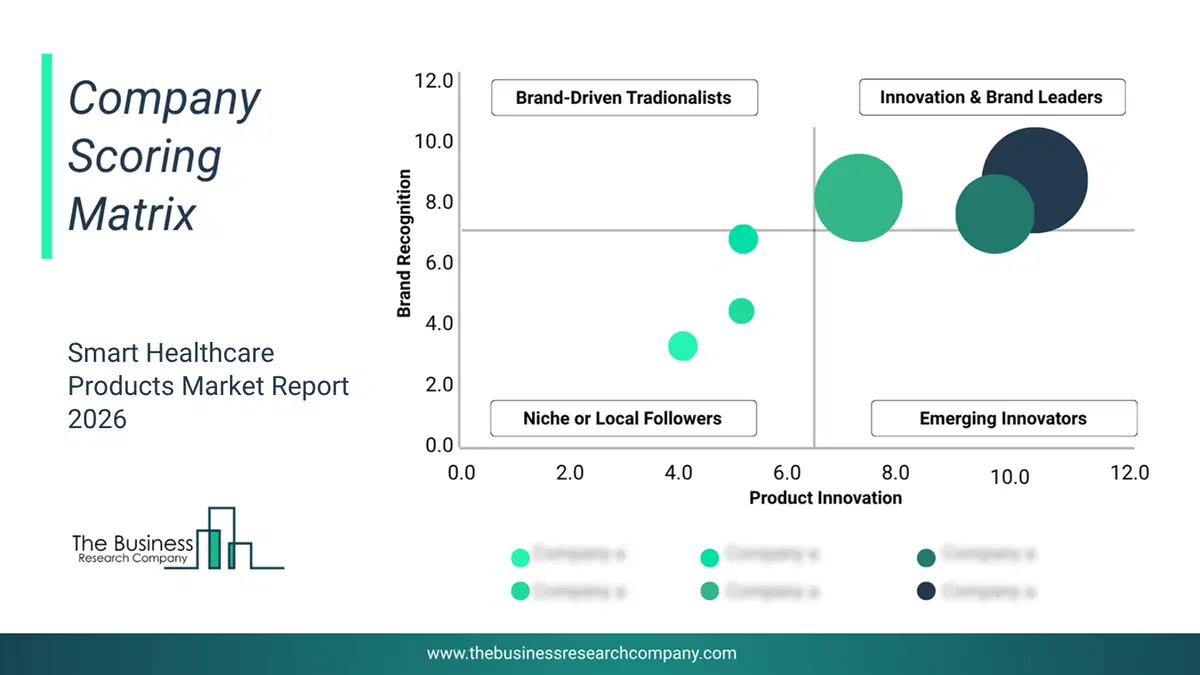
This chart maps companies by product innovation and brand strength, with bubble size indicating relative revenue, helping identify market leaders, challengers, and niche players. This is an illustrative chart; the full report provides a complete and accurate competitive analysis.
Global Smart Healthcare Products Market Trends and Insights
Major companies operating in the global smart healthcare products market are focusing on developing innovative technologies such as FS-Sample technology to enhance diagnostic accuracy, improve patient monitoring, and streamline healthcare processes, ultimately leading to better patient outcomes and more efficient healthcare delivery. FS-Sample technology is an advanced method for analyzing biological samples that enhances diagnostic precision and efficiency in healthcare settings. For instance, in April 2024, Mindray, a China-based medical device company, launched mid-volume laboratories. Mindray's latest innovations represent a significant step forward for mid-volume laboratories, providing them with the tools necessary to enhance operational efficiency and deliver reliable diagnostics. The focus on compact design, advanced technology, and modular integration positions these solutions as valuable assets in modern clinical settings.What Are Latest Mergers And Acquisitions In The Smart Healthcare Products Market?
In November 2024, Myant, a Canada-based smart textile company, acquired Nanoleq for an undisclosed amount. With this acquisition, Myant aims to advance preventive healthcare solutions through its wearable technology, enhance its smart textile offerings, and leverage Nanoleq’s expertise to accelerate the development and commercialization of innovative health-monitoring fabrics. Nanoleq is a Switzerland-based company specializing in textile-based sensing technologies for health and wellness applications.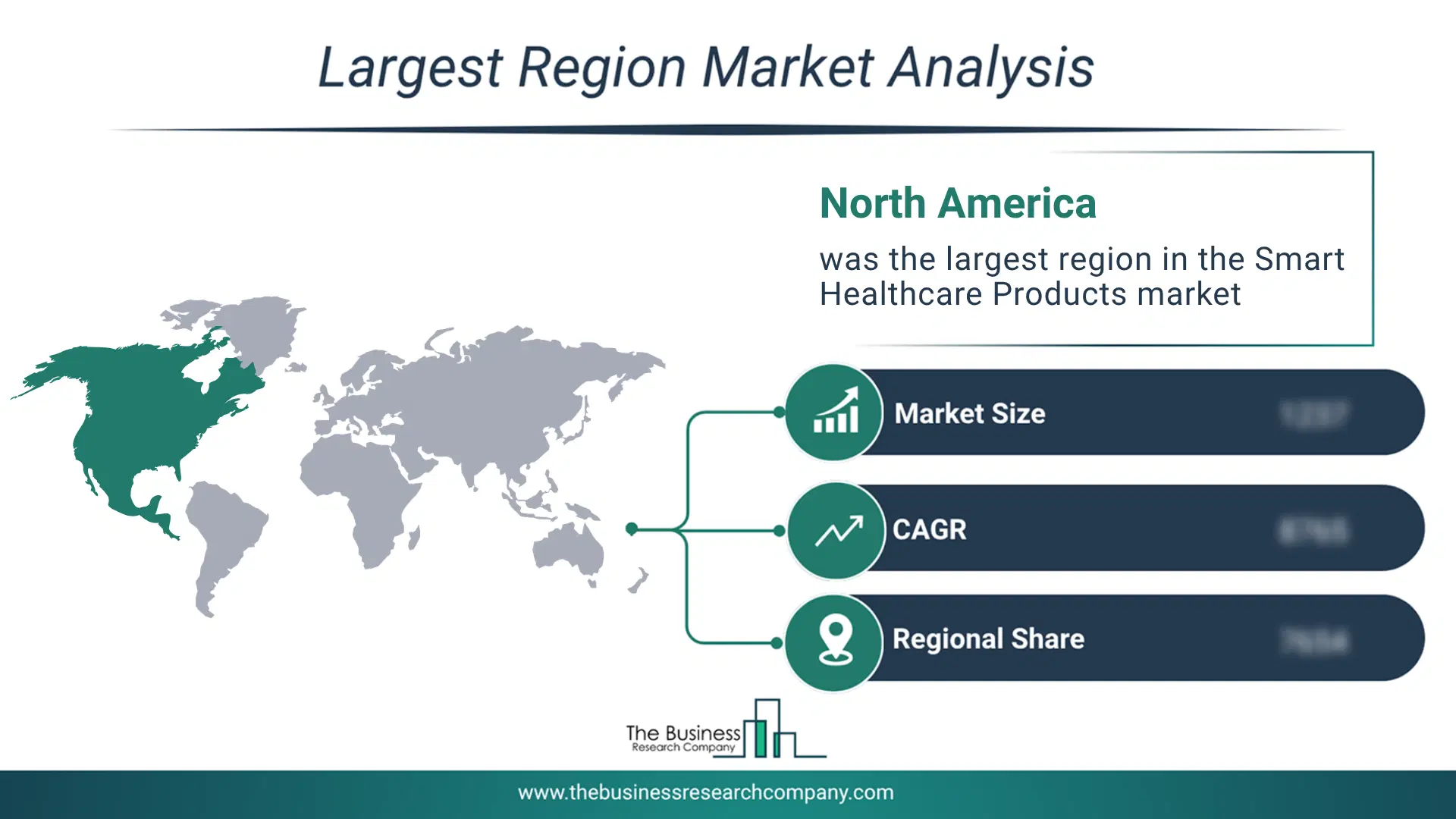
Regional Outlook
North America was the largest region in the smart healthcare products market in 2025. Asia-Pacific is expected to be the fastest-growing region in the forecast period. The regions covered in this market report are Asia-Pacific, South East Asia, Western Europe, Eastern Europe, North America, South America, Middle East, Africa. The countries covered in this market report are Australia, Brazil, China, France, Germany, India, Indonesia, Japan, Taiwan, Russia, South Korea, UK, USA, Canada, Italy, Spain.What Defines the Smart Healthcare Products Market?
The smart healthcare products market consists of sales of wearable activity trackers, wearable biosensors, ECG wearable devices, and other devices. Values in this market are ‘factory gate’ values, that is the value of goods sold by the manufacturers or creators of the goods, whether to other entities (including downstream manufacturers, wholesalers, distributors and retailers) or directly to end customers. The value of goods in this market includes related services sold by the creators of the goods.How is Market Value Defined and Measured?
The market value is defined as the revenues that enterprises gain from the sale of goods and/or services within the specified market and geography through sales, grants, or donations in terms of the currency (in USD unless otherwise specified). The revenues for a specified geography are consumption values that are revenues generated by organizations in the specified geography within the market, irrespective of where they are produced. It does not include revenues from resales along the supply chain, either further along the supply chain or as part of other products.
This chart presents market attractiveness based on a quantitative evaluation of growth, competition, strategic alignment, and risk, offering a clear view of opportunity areas for decision-making. This chart is for illustrative purposes; the full report contains the complete analysis.

This chart highlights the Total Addressable Market (TAM) by estimating the maximum revenue opportunity using an assumption-driven approach, supporting strategic planning and opportunity sizing across markets. The chart is illustrative; the full report provides a more comprehensive analysis.
What Key Data and Analysis Are Included in the Smart Healthcare Products Market Report 2026?
The smart healthcare products market research report is one of a series of new reports from The Business Research Company that provides market statistics, including industry global market size, regional shares, competitors with the market share, detailed market segments, market trends and opportunities, and any further data you may need to thrive in the smart healthcare products industry. The market research report delivers a complete perspective of everything you need, with an in-depth analysis of the current and future state of the industry.Smart Healthcare Products Market Report Forecast Analysis
| Report Attribute | Details |
|---|---|
| Market Size Value In 2026 | $339.78 billion |
| Revenue Forecast In 2030 | $574.47 billion |
| Growth Rate | CAGR of 14% from 2026 to 2030 |
| Base Year For Estimation | 2025 |
| Actual Estimates/Historical Data | 2020-2025 |
| Forecast Period | 2026 - 2030 |
| Market Representation | Revenue in USD Billion and CAGR from 2026 to 2030 |
| Segments Covered | Product Type, Application, End User |
| Regional Scope | Asia-Pacific, Western Europe, Eastern Europe, North America, South America, Middle East, Africa |
| Country Scope | The countries covered in the report are Australia, Brazil, China, France, Germany, India, Indonesia, Japan, Taiwan, Russia, South Korea, UK, USA, Canada, Italy, Spain |
| Key Companies Profiled | AirStrip Technologies, Samsung Healthcare, Siemens Healthineers AG, Cerner Corporation, Allscripts Healthcare Solutions, Apple Inc., Cisco Systems Inc., GE Healthcare, Given Imaging Inc., International Business Machines Corporation, Abbott Laboratories, Agfa-Gevaert Group, Becton Dickinson and Company, Cognizant Technology Solutions India Private Limited, Fujifilm Holdings Corporation, Honeywell Life Care Solutions, Johnson & Johnson, Koninklijke Philips N.V., Medtronic Plc, Microsoft Corporation, Omron Corporation, Oracle Corporation, ResMed Inc, Epic Systems Corporation, Teladoc Health Inc |
| Customization Scope | Request for Customization |
| Pricing And Purchase Options | Explore Purchase Options |