
Smart Home Security Systems Market Report 2026
Global Outlook – By Component (Hardware, Software, Service), By Device Type (Smart Alarms, Smart Locks, Smart Sensors And Detectors, Smart Camera And Monitoring System, Other Device Types), By Types Of Homes (Independent Homes, Apartment, Condominiums) – Market Size, Trends, Strategies, and Forecast to 2030
Smart Home Security Systems Market Overview
• Smart Home Security Systems market size has reached to $68.8 billion in 2025 • Expected to grow to $100.89 billion in 2030 at a compound annual growth rate (CAGR) of 7.7% • Growth Driver: Rising Crime Rates Propel Surge In Demand For The Smart Home Security Systems Market • Market Trend: Innovations In Smart Home Security With Advancements In Wireless Automation Solutions • North America was the largest region in 2025 and Asia-Pacific is the fastest growing region.Market Gains By 2030 – Top Opportunities By Segment
Market Gain identifies the most promising market opportunities by highlighting the segments or products expected to generate the highest incremental revenue growth over the next five years.
What Is Covered Under Smart Home Security Systems Market?
Smart home security systems refer to integrated technologies that enhance the security of a residence from unauthorized access, intrusions, and other security threats. These systems can be remotely monitored and controlled via smartphone apps or web interfaces, providing homeowners with real-time information and control over their home security. The main components of smart home security systems are hardware, software, and services. Hardware encompasses physical devices such as cameras, sensors, and control panels, facilitating monitoring, detection, and control for enhanced security through automation and remote management. Several types of devices, including smart alarms, smart locks, smart sensors and detectors, smart cameras and monitoring systems, and others, are used in various types of homes, such as independent homes, apartments, and condominiums.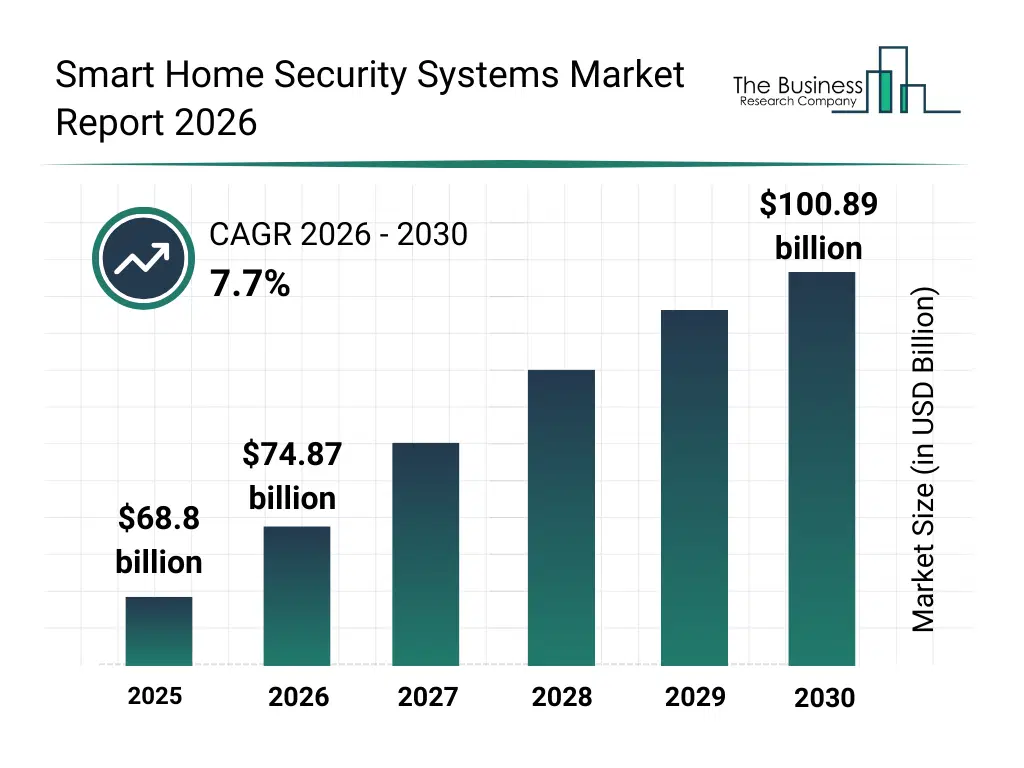
What Is The Smart Home Security Systems Market Size and Share 2026?
The smart home security systems market size has grown strongly in recent years. It will grow from $68.8 billion in 2025 to $74.87 billion in 2026 at a compound annual growth rate (CAGR) of 8.8%. The growth in the historic period can be attributed to increasing residential security concerns, expansion of smart home adoption, growth in internet-connected household devices, rising demand for remote home monitoring, increased availability of wireless security systems.What Is The Smart Home Security Systems Market Growth Forecast?
The smart home security systems market size is expected to see strong growth in the next few years. It will grow to $100.89 billion in 2030 at a compound annual growth rate (CAGR) of 7.7%. The growth in the forecast period can be attributed to increasing integration of AI-driven threat detection, rising consumer demand for end-to-end smart home ecosystems, expansion of subscription-based security services, growing focus on data privacy and cybersecurity, increasing adoption in multi-dwelling residential buildings. Major trends in the forecast period include increasing adoption of AI-based video surveillance, rising deployment of smart locks and sensors, growing integration of cloud-based monitoring platforms, expansion of mobile app-controlled security systems, enhanced focus on cybersecurity for home devices.
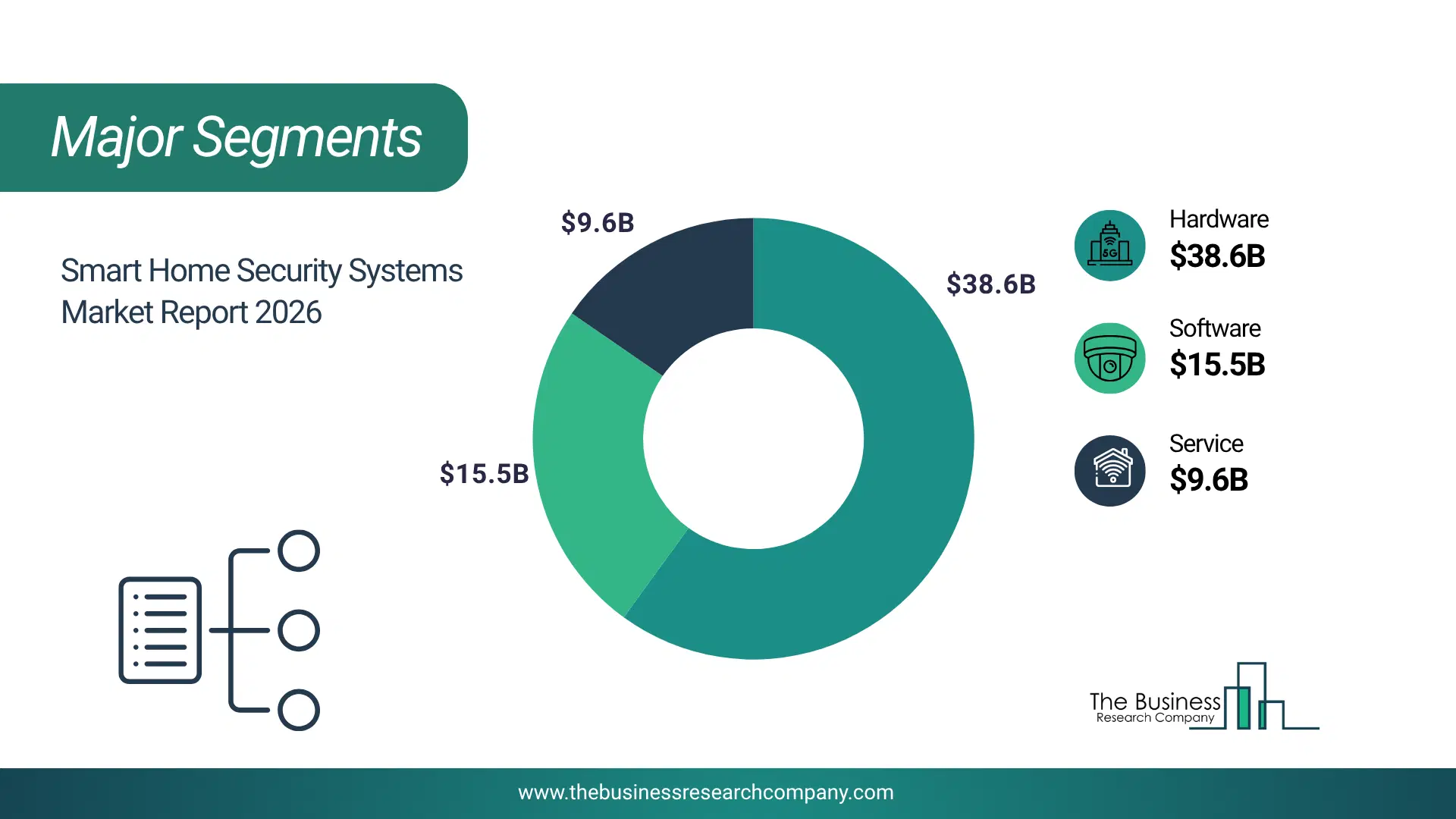
Global Smart Home Security Systems Market Segmentation
1) By Component: Hardware, Software, Service 2) By Device Type: Smart Alarms, Smart Locks, Smart Sensors And Detectors, Smart Camera And Monitoring System, Other Device Types 3) By Types Of Homes: Independent Homes, Apartment, Condominiums Subsegments: 1) By Hardware: Cameras, Sensors, Control Panels, Smart Locks, Alarms 2) By Software: Security Management Software, Monitoring Software, Analytics Software, Mobile Applications 3) By Service: Professional Monitoring, Installation And Integration Services, Maintenance And Support Services, Cloud Services The top segments in the smart home security systems market will be: • Hardware will reach $38.55 billion by 2030. • Software will reach $15.41 billion by 2030. • Service will reach $9.6 billion by 2030.What Is The Driver Of The Smart Home Security Systems Market?
The growing crime rates are expected to fuel the growth of the smart home security systems market going forward. Crime refers to unlawful activities or acts that violate legal norms, while crime rates indicate the frequency or incidence of these unlawful activities within a specific population or geographic area. Growing crime rates may be attributed to various factors, such as economic inequality, social unrest, and inadequate law enforcement. Smart home security systems deter crime by providing real-time monitoring, automated alerts, and remote control, enhancing overall home protection. Visible security elements, such as outdoor cameras, can actively deter criminals by signaling that the property is well protected. For instance, in September 2024, the Bureau of Justice Statistics, a U.S.-based government agency, reported that the rate of property victimization in urban areas increased from 176.1 per 1,000 in 2022 to 192.3 per 1,000 in 2023. Therefore, the growing crime rates are driving the growth of the smart home security systems industry.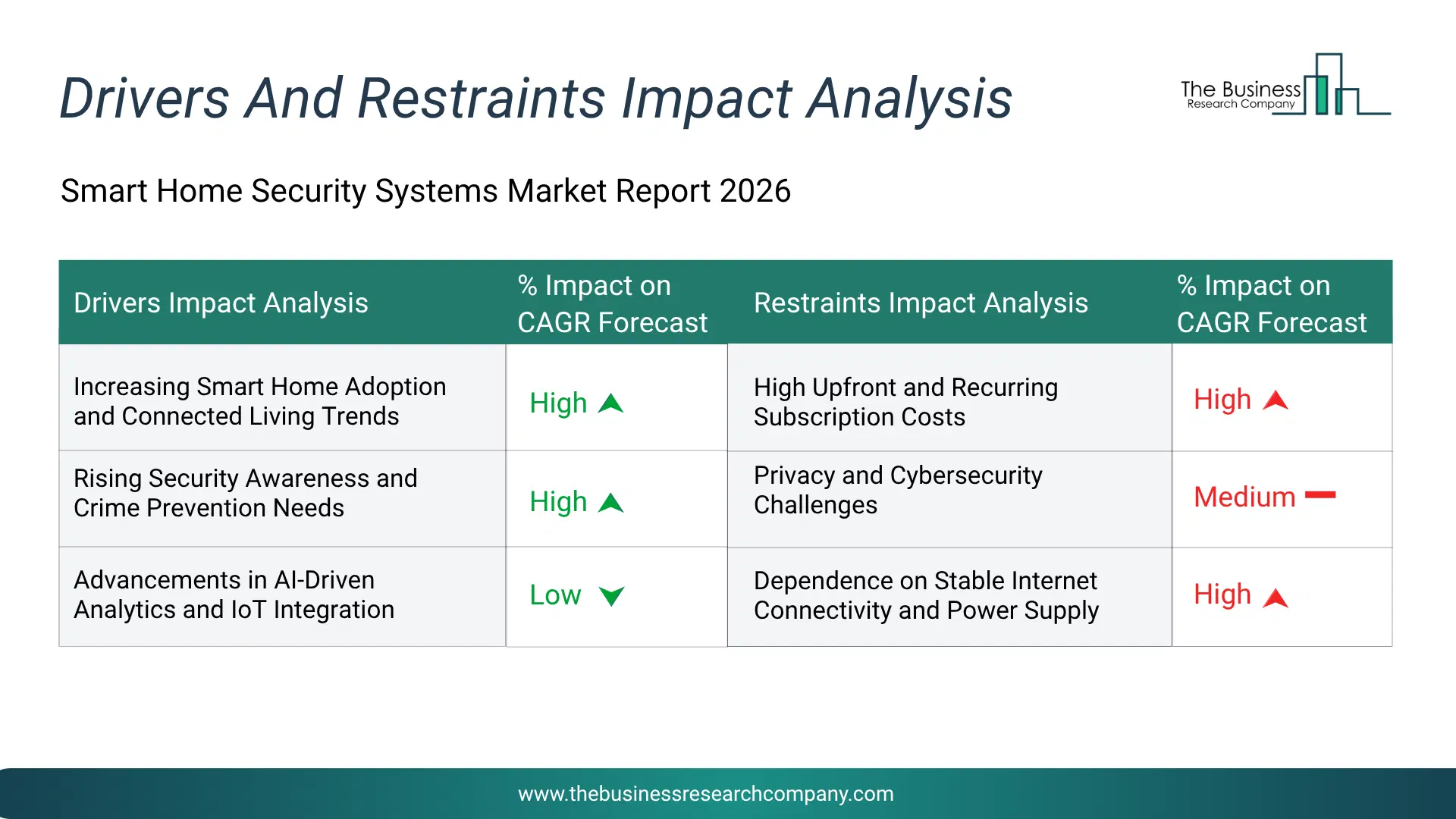
Infographic Chart Showing Key Market Drivers Analysis And Restraints For Smart Home Security Systems Market
The chart presents an impact analysis of key drivers and restraints, quantifying their relative influence on the market's growth rate and helping assess the balance between growth enablers and limiting factors. This chart offers a high-level perspective; the full report contains more detailed insights.
How Will The Drivers Impact Growth In The Global Smart Home Security Systems Market?
• Increasing Smart Home Adoption and Connected Living Trends (High) – During the forecast period, the increasing smart home adoption and connected living trends is expected to become a key growth driver for the smart home security systems market by 2030. The rapid proliferation of smart home adoption and increasing focus on connected living strongly drives the smart home security systems market. Homeowners are prioritizing safety, remote monitoring, and real -time alerts, leading to widespread deployment of cameras, motion sensors, smart locks, and alarm systems. Integration with mobile apps and voice assistants enhances convenience and situational awareness. As residential construction grows and consumer preference shifts toward intelligent homes, demand for advanced security solutions continues to rise significantly. • Rising Security Awareness and Crime Prevention Needs (High) – During the forecast period, the rising security awareness and crime prevention needs is expected to emerge as a major factor driving the expansion of the smart home security systems market by 2030. Growing concerns about property crime rates, burglary, and unauthorized access are key drivers fuelling market expansion. Both urban and suburban households are investing in smart security systems to mitigate risks, safeguard valuables, and protect family members. Advanced features like geofencing, 24/7 monitoring, ai-powered threat detection, and emergency response integrations offer enhanced peace of mind. As awareness of home security solutions increases, more consumers seek customizable, scalable systems tailored to specific safety needs. • Advancements in AI‑Driven Analytics and IoT Integration (Low) – During the forecast period, the advancements in ai‑driven analytics and iot integration is expected to act as a key growth catalyst for the smart home security systems market by 2030. Technological advancements in ai, machine learning, and cloud connectivity significantly stimulate market growth. Ai-enabled analytics provide smarter motion detection, facial recognition, and false-alarm reduction capabilities. Cloud‑based data storage and remote firmware updates enhance system reliability and extend functionality. Integration with broader iot ecosystems, home automation platforms, and energy‑management systems increases value for consumers. Continuous innovation expands product appeal and long‑term adoption potential.How Will The Restraints Impact Growth In The Global Smart Home Security Systems Market?
• High Upfront and Recurring Subscription Costs (High) – During the forecast period, the high upfront costs and ongoing subscription fees act as a significant restraint on market growth. Premium smart home security systems can be expensive to purchase and install, particularly when professional setup is required. Additionally, many vendors charge monthly or annual fees for cloud storage, professional monitoring services, and advanced analytics features. These recurring costs can dissuade price?sensitive consumers and slow broader adoption — especially in emerging markets. • Privacy and Cybersecurity Challenges (Medium) – During the forecast period, the privacy concerns and cybersecurity vulnerabilities also restrain market expansion. Smart home security devices collect sensitive video footage and personal behavior data, creating potential targets for hacking and unauthorized access. Consumers worry about data breaches, weak encryption, insecure cloud storage, and exploitation of iot devices. These security and privacy risks can slow market penetration among more cautious users, particularly where regulatory standards are not well?established. • Dependence on Stable Internet Connectivity and Power Supply (High) – During the forecast period, the dependence on stable internet connectivity and power supply acts as a restraint for the smart home security systems market by limiting system reliability in areas with weak broadband infrastructure or frequent power outages. Most smart security devices rely on continuous internet access for real-time monitoring, cloud storage, and remote alerts, making them vulnerable to service interruptions. Inconsistent connectivity can lead to delayed notifications or system failures, reducing user trust. Similarly, power disruptions can disable critical components such as cameras and sensors unless backup systems are installed. This dependence restricts adoption in underdeveloped and infrastructure-limited regions.Key Players In The Global Smart Home Security Systems Market
Major companies operating in the smart home security systems market are Vivint Inc., SimpliSafe Inc., ADT Inc., Ring LLC, Arlo Technologies Inc., Google LLC, Amazon.com Inc., Abode Systems Inc., Canary Connect Inc., Frontpoint Security Solutions LLC, Eufy Security, Netatmo SAS, Wyze Labs Inc., Bosch Smart Home GmbH, Panasonic Corporation, Honeywell International Inc., Legrand S.A., Schneider Electric SE, Xiaomi Corporation, Ezviz Network, Alarm.com Holdings Inc.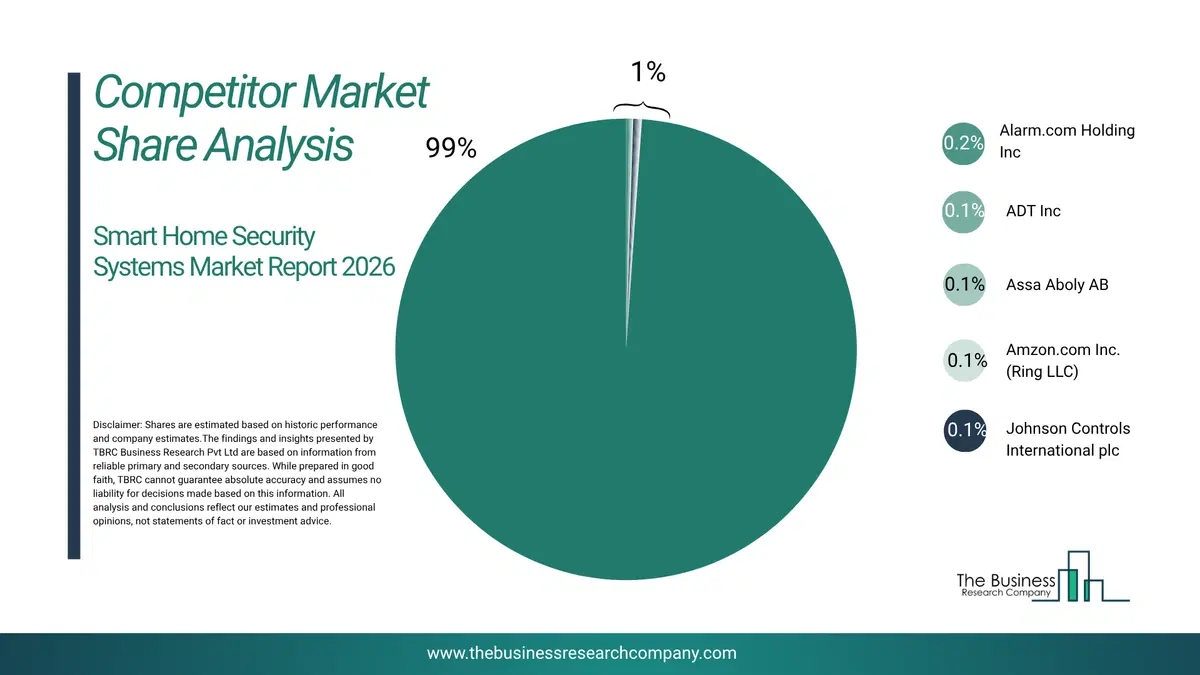
This chart is for illustrative purposes; the full report includes a detailed competitor analysis and comprehensive overview of the top 10 companies in the market.
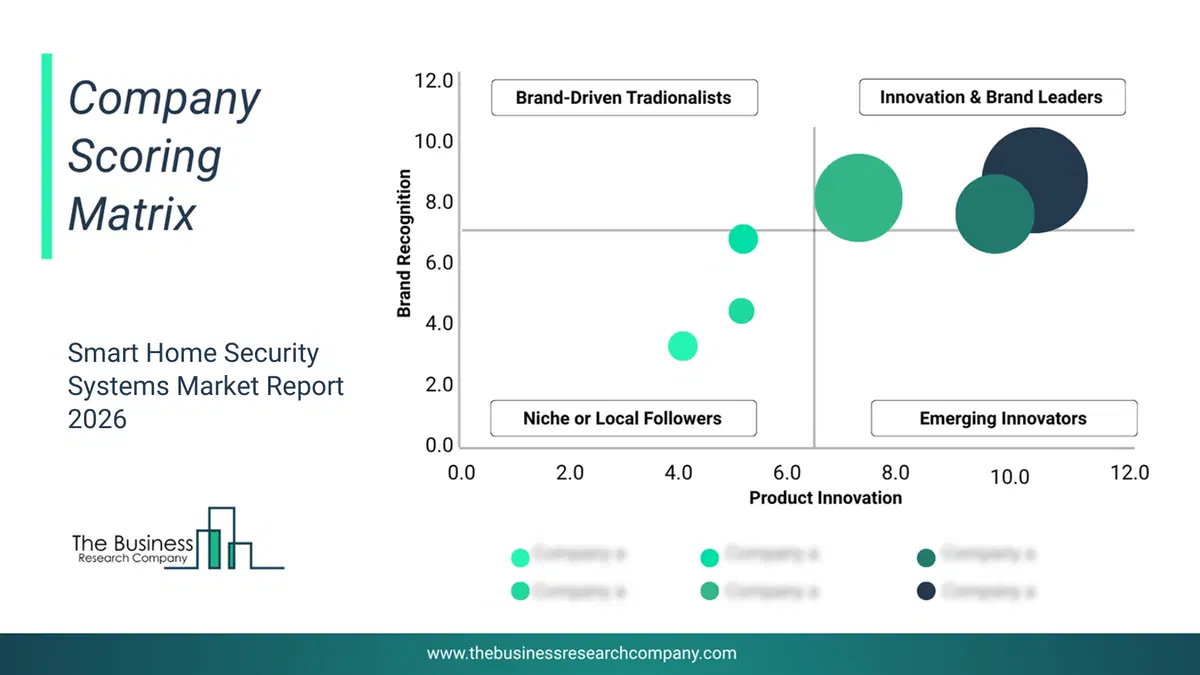
This chart maps companies by product innovation and brand strength, with bubble size indicating relative revenue, helping identify market leaders, challengers, and niche players. This is an illustrative chart; the full report provides a complete and accurate competitive analysis.
Global Smart Home Security Systems Market Trends and Insights
Major companies operating in the smart home security systems market are focused on developing advanced solutions, such as wireless home automation solutions, to enhance user convenience, improve system integration, and provide real-time monitoring and control capabilities, ultimately ensuring greater safety and security for homeowners. Wireless home automation solutions refer to systems and technologies that allow homeowners to remotely control and monitor various devices and functions within their homes using wireless communication. For instance, in September 2024, ABB Ltd., a Switzerland-based company that offers automation services, launched ABB-free@home, an innovative wireless home automation system aimed at enhancing comfort, security, and energy efficiency for residential users. This feature utilizes the Matter standard, an open-source connectivity protocol that allows different smart devices to communicate effectively within the home ecosystem. This capability enhances the customization and expansion of smart home setups.What Are Latest Mergers And Acquisitions In The Smart Home Security Systems Market?
In April 2024, Resideo Technologies, Inc., a US-based provider of home safety and security solutions, acquired Snap One, Inc. for approximately US $1.4 billion, including net debt. Through this acquisition, Resideo aims to expand its smart home security and automation offerings by integrating Snap One’s smart-living products, services, and software for professional integrators. Snap One, Inc. is a US-based company that provides smart-living and security solutions, including surveillance cameras, home automation systems, and connected devices.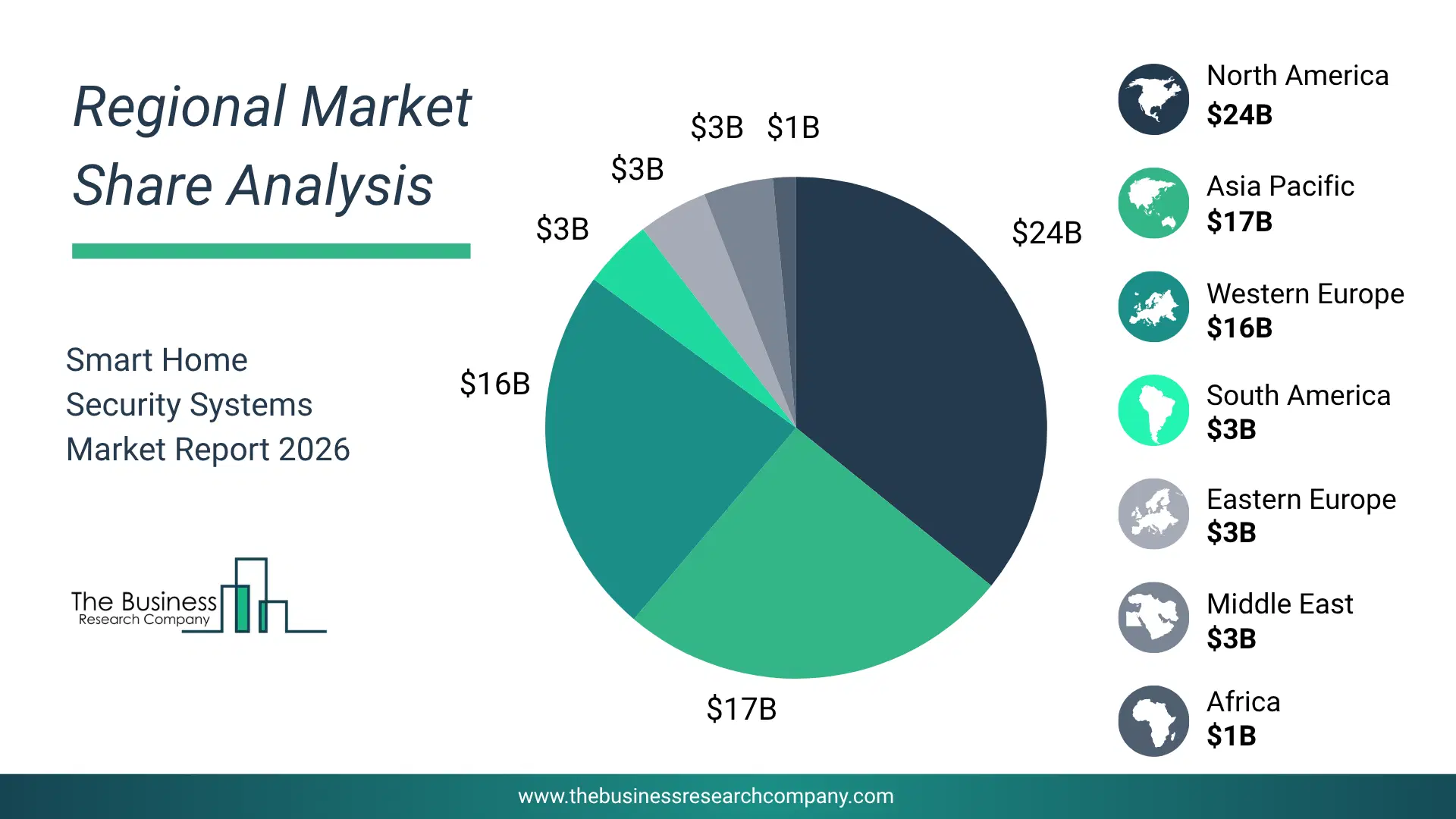
Regional Insights
North America was the largest region in the smart home security systems market in 2025. Asia-Pacific is expected to be the fastest-growing region in the forecast period. The regions covered in this market report are Asia-Pacific, South East Asia, Western Europe, Eastern Europe, North America, South America, Middle East, Africa. The countries covered in this market report are Australia, Brazil, China, France, Germany, India, Indonesia, Japan, Taiwan, Russia, South Korea, UK, USA, Canada, Italy, Spain.What Defines the Smart Home Security Systems Market?
The smart home security systems market consists of revenues earned by entities by providing services such as Integration with smart devices, video surveillance, professional monitoring, and motion detection. The market value includes the value of related goods sold by the service provider or included within the service offering. The smart home security systems market also includes sales of glass break detectors, smart lighting, environmental sensors, and control panels. Values in this market are ‘factory gate’ values, that is the value of goods sold by the manufacturers or creators of the goods, whether to other entities (including downstream manufacturers, wholesalers, distributors and retailers) or directly to end customers. The value of goods in this market includes related services sold by the creators of the goods.How is Market Value Defined and Measured?
The market value is defined as the revenues that enterprises gain from the sale of goods and/or services within the specified market and geography through sales, grants, or donations in terms of the currency (in USD unless otherwise specified). The revenues for a specified geography are consumption values that are revenues generated by organizations in the specified geography within the market, irrespective of where they are produced. It does not include revenues from resales along the supply chain, either further along the supply chain or as part of other products.
This chart presents market attractiveness based on a quantitative evaluation of growth, competition, strategic alignment, and risk, offering a clear view of opportunity areas for decision-making. This chart is for illustrative purposes; the full report contains the complete analysis.

This chart highlights the Total Addressable Market (TAM) by estimating the maximum revenue opportunity using an assumption-driven approach, supporting strategic planning and opportunity sizing across markets. The chart is illustrative; the full report provides a more comprehensive analysis.
What Key Data and Analysis Are Included in the Smart Home Security Systems Market Report 2026?
The smart home security systems market research report is one of a series of new reports from The Business Research Company that provides market statistics, including industry global market size, regional shares, competitors with the market share, detailed market segments, market trends and opportunities, and any further data you may need to thrive in the smart home security systems industry. The market research report delivers a complete perspective of everything you need, with an in-depth analysis of the current and future state of the industry.Smart Home Security Systems Market Report Forecast Analysis
| Report Attribute | Details |
|---|---|
| Market Size Value In 2026 | $74.87 billion |
| Revenue Forecast In 2030 | $100.89 billion |
| Growth Rate | CAGR of 7.7% from 2026 to 2030 |
| Base Year For Estimation | 2025 |
| Actual Estimates/Historical Data | 2020-2025 |
| Forecast Period | 2026 - 2030 |
| Market Representation | Revenue in USD Billion and CAGR from 2026 to 2030 |
| Segments Covered | Component, Device Type, Types Of Homes |
| Regional Scope | Asia-Pacific, Western Europe, Eastern Europe, North America, South America, Middle East, Africa |
| Country Scope | The countries covered in the report are Australia, Brazil, China, France, Germany, India, ... |
| Key Companies Profiled | Vivint Inc., SimpliSafe Inc., ADT Inc., Ring LLC, Arlo Technologies Inc., Google LLC, Amazon.com Inc., Abode Systems Inc., Canary Connect Inc., Frontpoint Security Solutions LLC, Eufy Security, Netatmo SAS, Wyze Labs Inc., Bosch Smart Home GmbH, Panasonic Corporation, Honeywell International Inc., Legrand S.A., Schneider Electric SE, Xiaomi Corporation, Ezviz Network, Alarm.com Holdings Inc. |
| Customization Scope | Request for Customization |
| Pricing And Purchase Options | Explore Purchase Options |