
Smart Homes Market Report 2026
Global Outlook – By Product (Lighting Control, Security And Access Control, Heating, Ventilation, And Air Conditioning (HVAC) Control, Entertainment Control And Other Controls, Smart Speaker, Smart Kitchen, Home Appliances, Smart Furniture), By Component (Software, Services, Hardware), By Sales Channel (Direct, Indirect), By Technology (Wireless Technology, Cellular Network Technology) – Market Size, Trends, Strategies, and Forecast to 2030
Smart Homes Market Overview
• Smart Homes market size has reached to $150.26 billion in 2025 • Expected to grow to $385.38 billion in 2030 at a compound annual growth rate (CAGR) of 20.6% • Growth Driver: Increase In The Aging Population Drives The Smart Homes Market • Market Trend: Innovations In Smart Home Connectivity • Asia-Pacific was the largest region and fastest growing region.Market Gains By 2030 – Top Opportunities By Segment
Market Gain identifies the most promising market opportunities by highlighting the segments or products expected to generate the highest incremental revenue growth over the next five years.
What Is Covered Under Smart Homes Market?
Smart homes are defined as a system that connects with the appliances in the house for automating various tasks. Smart homes offer homeowners comfort, security, energy efficiency, and convenience by allowing them to control their smart devices. They are remotely controlled through a smart home app on the smartphone or various other networked devices. The main types of smart homes are lighting control, security and access control, heating, ventilation, and air conditioning (HVAC) control, entertainment control, and other controls, smart speaker, home healthcare, smart kitchen, home appliances, and smart furniture. Lighting controls refer to a group of smart lighting systems that can control the amount, quality, and characteristics of light in a specific area. They come in behavioral and proactive software and services and are sold by direct, and indirect channels. The technologies used are wireless technology and cellular network technology that has various standards and protocols such as wireless protocols, wired protocols, and hybrid protocols.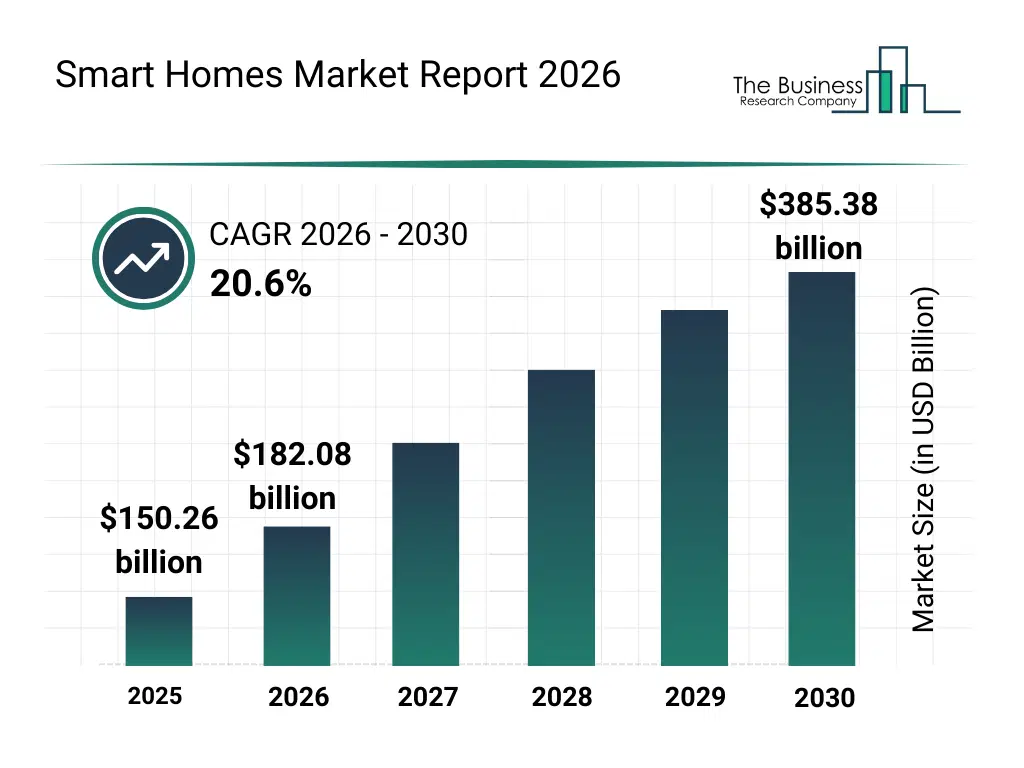
What Is The Smart Homes Market Size and Share 2026?
The smart homes market size has grown exponentially in recent years. It will grow from $150.26 billion in 2025 to $182.08 billion in 2026 at a compound annual growth rate (CAGR) of 21.2%. The growth in the historic period can be attributed to increasing penetration of broadband connectivity, rising consumer demand for home convenience solutions, adoption of wireless home technologies, growth of smart consumer electronics usage, increasing focus on residential energy management.What Is The Smart Homes Market Growth Forecast?
The smart homes market size is expected to see exponential growth in the next few years. It will grow to $385.38 billion in 2030 at a compound annual growth rate (CAGR) of 20.6%. The growth in the forecast period can be attributed to increasing adoption of ai-enabled home automation, rising demand for sustainable smart home solutions, expansion of iot-based residential ecosystems, growing integration of home healthcare technologies, increasing investments in connected living platforms. Major trends in the forecast period include increasing adoption of integrated home automation systems, rising demand for energy-efficient smart devices, growing use of voice-controlled home interfaces, expansion of connected home security solutions, enhanced focus on user-centric smart living.
Global Smart Homes Market Segmentation
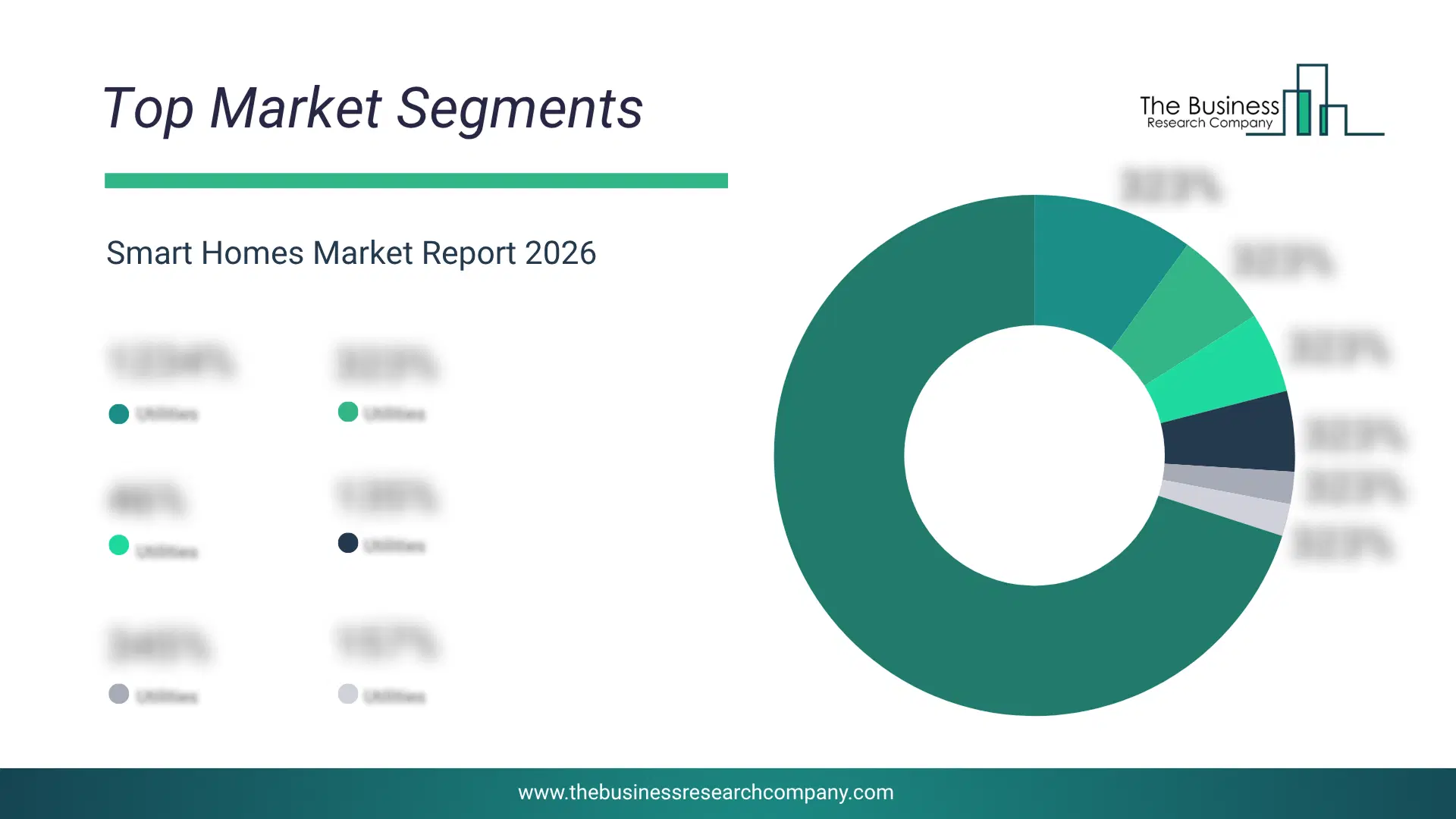
1) By Product: Lighting Control, Security And Access Control, Heating, Ventilation, And Air Conditioning (HVAC) Control, Entertainment Control And Other Controls, Smart Speaker, Smart Kitchen, Home Appliances, Smart Furniture 2) By Component: Software, Services, Hardware 3) By Sales Channel: Direct, Indirect 4) By Technology: Wireless Technology, Cellular Network Technology Subsegments: 1) By Lighting Control: Smart Bulbs, Smart Switches, Lighting Sensors, Dimming Systems 2) By Security And Access Control: Smart Locks, Security Cameras, Alarm Systems, Motion Sensors, Video Doorbells 3) By Heating, Ventilation, And Air Conditioning (HVAC) Control: Smart Thermostats, Smart HVAC Systems, Ventilation Systems, Air Quality Sensors 4) By Entertainment Control And Other Controls: Smart TVs, Streaming Devices, Multi-Room Audio Systems, Home Theater Systems 5) By Smart Speaker: Voice-Activated Speakers, Smart Displays, Integrated Sound Systems 6) By Smart Kitchen: Smart Refrigerators, Smart Ovens, Smart Coffee Makers, Smart Dishwashers 7) By Home Appliances: Smart Washers And Dryers, Smart Vacuum Cleaners, Smart Irrigation Systems 8) By Smart Furniture: Smart Beds, Adjustable Desks, Integrated Charging Stations The top segments in the smart homes market will be: • Wireless Technology will reach $126519.74 Million by 2025. • Behavioural will reach $101223.63 Million by 2025. • Indirect will reach $98171.2 Million by 2025. • Direct will reach $53288.04 Million by 2025. • Proactive will reach $50235.61 Million by 2025.What Is The Driver Of The Smart Homes Market?
Increase in the aging population is expected to propel the growth of the smart homes market going forward. Aging population involves people who are in the later stages of their life, typically aged 65 and older. Smart homes offer valuable support for the aging population by enhancing their quality of life and independence. These homes are equipped with technologies such as fall detection systems, remote health monitoring, voice-activated controls, and automated safety features that allow seniors to live comfortably in their own homes while receiving necessary assistance and healthcare monitoring. For instance, in 2023, according to an article published by the United Nations, a US-based intergovernmental organization, the number of people aged 65 years or older worldwide is projected to more than double, rising from 761 million in 2021 to 1.6 billion in 2050. Therefore, an increase in the aging population will drive the smart homes industry.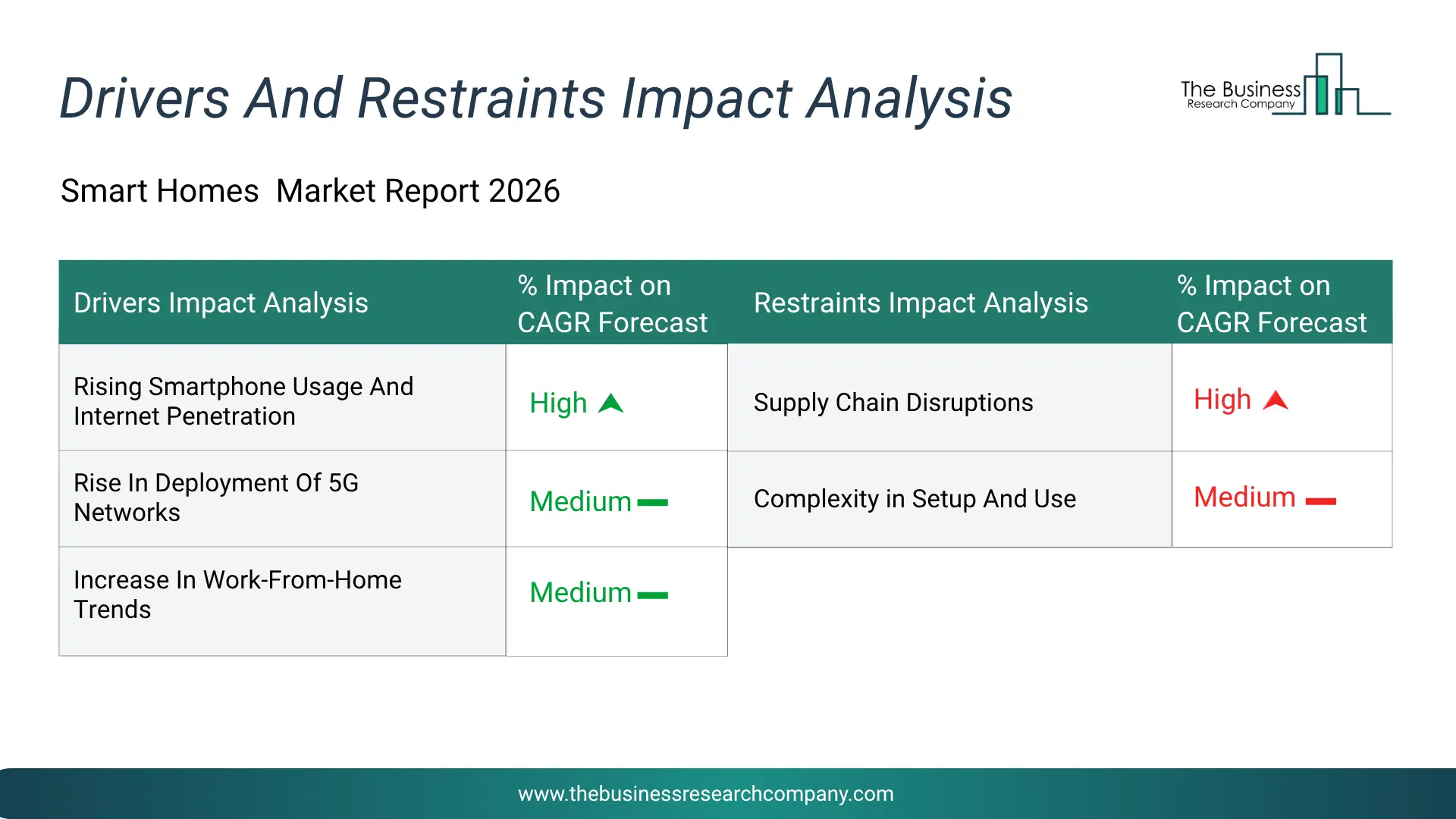
Infographic Chart Showing Key Market Drivers Analysis And Restraints For Smart Homes Market
The chart presents an impact analysis of key drivers and restraints, quantifying their relative influence on the market's growth rate and helping assess the balance between growth enablers and limiting factors. This chart offers a high-level perspective; the full report contains more detailed insights.
How Will The Drivers Impact Growth In The Global Smart Homes Market?
• Rising Smartphone Usage And Internet Penetration (High) – The rising smartphone usage and internet penetration will become a key driver of growth in the smart homes market by 2030. As smartphones become essential hubs for managing connected devices ranging from lighting and security to HVAC and entertainment businesses are investing in IoT-enabled solutions that enhance convenience and efficiency. The widespread availability of high-speed internet and the proliferation of mobile applications enable real-time monitoring, automation, and remote control, driving consumer interest in smart living. As a result, the rising smartphone usage and internet penetration growth is anticipated to contributing to a 1.9% annual growth in the market. • Rise In Deployment Of 5G Networks (Medium) – The rise in deployment of 5g networks will emerge as a major factor driving the expansion of the market by 2030. As 5G infrastructure expands globally, consumers benefit from enhanced performance of connected devices, supporting real-time automation, high-definition streaming, and seamless interaction between multiple IoT-enabled systems. The improved network capabilities of 5G allow for the integration of advanced smart home solutions such as AI-driven security systems, smart appliances, and immersive entertainment platforms. Consequently, the rise in deployment of 5G networks demand growth is projected to contributing to a 1.4% annual growth in the market. • Increase In Work-From-Home Trends (Medium) – The increase in work-from-home trends will serve as a key growth catalyst for the market by 2030. As remote and hybrid work models become more widespread, consumers are investing in smart solutions such as advanced lighting systems, smart thermostats, and noise-canceling devices to create efficient and adaptable workspaces. The integration of connected devices enhances the work-from-home experience by enabling automation, energy management, and remote access to home functions. Businesses are responding by offering smart home products tailored to remote workers, including collaboration tools, smart security systems, and IoT-enabled appliances. Therefore, this increase in work-from-home trends growth is projected to supporting to a 0.9% annual growth in the market. • Expansion Of E-Commerce (Low) – The expansion of e-commerce will become a significant driver contributing to the growth of the market by 2030. The surge in online shopping is driving demand for smart doorbells, locks, and surveillance systems that enable contactless delivery and real-time monitoring of parcels. Additionally, smart home hubs and voice assistants are increasingly used to streamline online transactions, track orders, and manage household inventories. Consequently, the expansion of e-commerce growth is projected to contributing to a 0.4% annual growth in the market.How Will The Restraints Impact Growth In The Global Smart Homes Market?
• Supply Chain Disruptions (High) – Supply Chain Disruptions will restrict the growth of the Smart Homes market during the forecast period. Smart home device production depends on global supply chains for semiconductors, sensors, and electronic components. Supply chain disruptions can affect product availability, lead to price increases, and delay product launches. The semiconductor shortage particularly affects smart home device manufacturers, limiting their ability to meet growing consumer demand. • Complexity in Setup And Use (Medium) – Complexity in Setup And Use will restrict the growth of the Smart Homes market during the forecast period. Smart home systems often involve complex setup procedures, device compatibility issues, and connectivity challenges. Non-technical consumers may find it difficult to install and configure smart home devices, leading to frustration and product returns. The complexity of managing multiple devices from different manufacturers through different platforms creates user experience challenges, affecting adoption rates.Key Players In The Global Smart Homes Market
Major companies operating in the smart homes market are Honeywell International Inc.; Siemens Aktiengesellschaft; Johnson Controls International plc; Schneider Electric SE; United Technologies Corporation; Amazon. com Inc.; Apple Inc.; Google LLC; ADT Inc.; Robert Bosch GmbH; Samsung Electronics Co. Ltd.; LG Electronics Inc.; ABB Ltd; Sony Group Corporation; Control4 Corporation; Comcast Corporation; Lutron Electronics Co. Inc.; Legrand SA; Smart home Inc.; General Electric Company; Ingersoll Rand plc; Xiaomi Corporation; Ooma Inc.; Delta Controls Inc.; Axis Communications AB; Crestron Electronics Inc.; SimpliSafe Inc.; Armorax Corporation; Canary Connect Inc.; Leviton Manufacturing Co. Inc.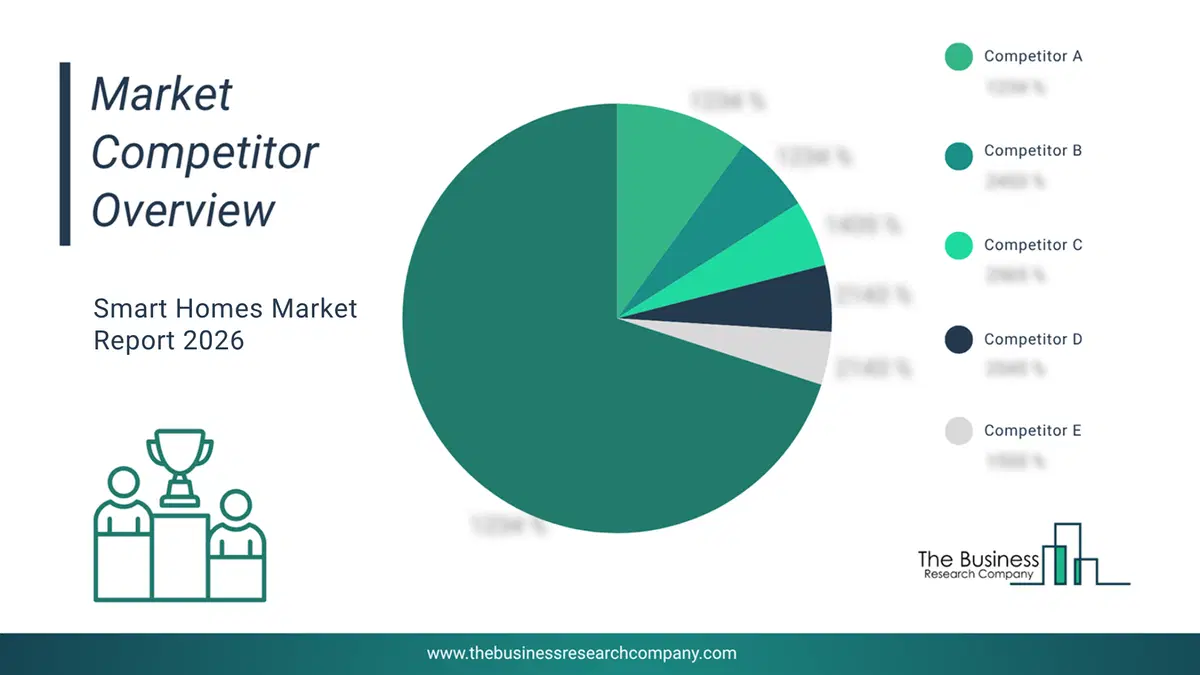
This chart is for illustrative purposes; the full report includes a detailed competitor analysis and comprehensive overview of the top 10 companies in the market.
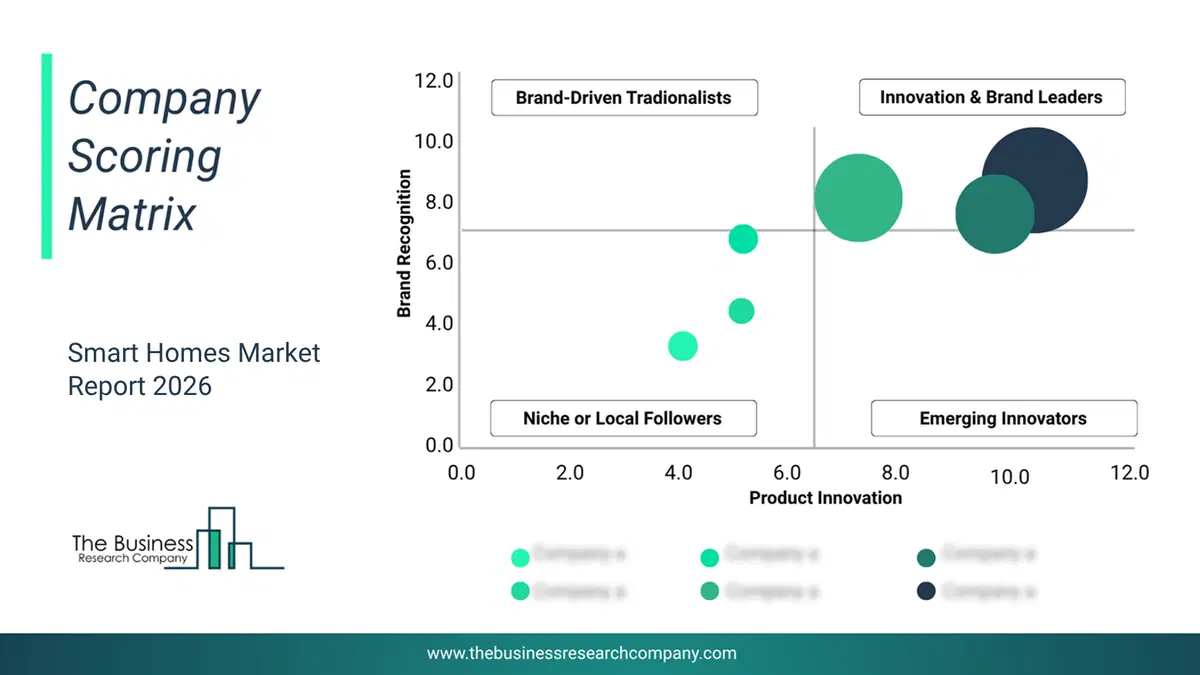
This chart maps companies by product innovation and brand strength, with bubble size indicating relative revenue, helping identify market leaders, challengers, and niche players. This is an illustrative chart; the full report provides a complete and accurate competitive analysis.
Global Smart Homes Market Trends and Insights
Major companies in the smart homes market are launching innovative products to sustain their position in the smart homes market. Innovative products in smart homes are advanced, interconnected devices and systems that enhance convenience, efficiency, and automation, such as voice-controlled assistants, smart thermostats, and security cameras with AI recognition. For instance, in January 2023, SwitchBot US, a US-based smart home technology company launched the SwitchBot Hub 2, a smart home device that acts as a bridge that connects SwitchBot Bluetooth devices to Wi-Fi and makes them Matter-compatible. With Matter support, the SwitchBot Hub 2 enables customers to add and manage SwitchBot devices from their preferred home automation system, such as Apple HomeKit or Google applications. Together with Matter support for SwitchBot Bluetooth products and temperature and humidity sensors, the Hub 2 has twice as much infrared control coverage than other home devices and two scene keys on the display that can be programmed in the SwitchBot app for device control.What Are Latest Mergers And Acquisitions In The Smart Homes Market?
In July 2024, LG Electronics, a South Korea-based technology company, acquired an 80% stake in Athom for an undisclosed amount. This strategic move aims to enhance LG's connectivity within open smart home ecosystems and integrate Athom’s technology into its ThinQ platform, facilitating AI-powered control of appliances and lighting devices. Athom is a Netherlands-based smart home company.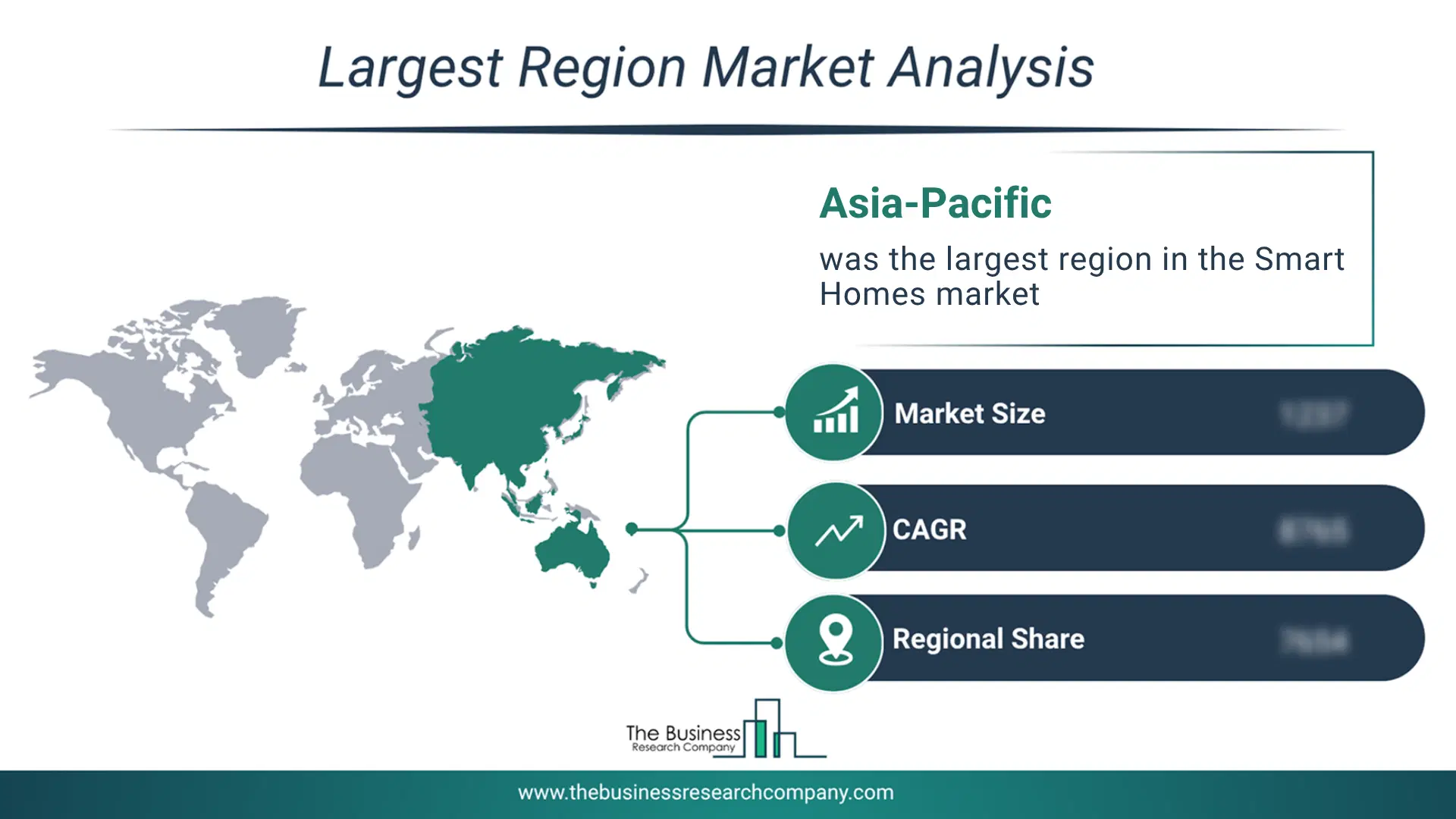
Regional Insights
Asia-Pacific was the largest region in the smart homes market in 2025.Asia-Pacific is expected to be the fastest-growing region in the forecast period. The regions covered in this market report are Asia-Pacific, South East Asia, Western Europe, Eastern Europe, North America, South America, Middle East, Africa. The countries covered in this market report are Australia, Brazil, China, France, Germany, India, Indonesia, Japan, Taiwan, Russia, South Korea, UK, USA, Canada, Italy, SpainWhat Defines the Smart Homes Market?
The smart homes market includes revenues earned by entities by providing services such as smart speakers, smart plugs, smart bulbs, smart thermostats, smart cookers, smart refrigerators, smart showers, and smart mattresses. The market value includes the value of related goods sold by the service provider or included within the service offering. Only goods and services traded between entities or sold to end consumers are included.How is Market Value Defined and Measured?
The market value is defined as the revenues that enterprises gain from the sale of goods and/or services within the specified market and geography through sales, grants, or donations in terms of the currency (in USD unless otherwise specified). The revenues for a specified geography are consumption values that are revenues generated by organizations in the specified geography within the market, irrespective of where they are produced. It does not include revenues from resales along the supply chain, either further along the supply chain or as part of other products.
This chart presents market attractiveness based on a quantitative evaluation of growth, competition, strategic alignment, and risk, offering a clear view of opportunity areas for decision-making. This chart is for illustrative purposes; the full report contains the complete analysis.

This chart highlights the Total Addressable Market (TAM) by estimating the maximum revenue opportunity using an assumption-driven approach, supporting strategic planning and opportunity sizing across markets. The chart is illustrative; the full report provides a more comprehensive analysis.
What Key Data and Analysis Are Included in the Smart Homes Market Report 2026?
The smart homes market research report is one of a series of new reports from The Business Research Company that provides market statistics, including industry global market size, regional shares, competitors with the market share, detailed market segments, market trends and opportunities, and any further data you may need to thrive in the smart homes industry. The market research report delivers a complete perspective of everything you need, with an in-depth analysis of the current and future state of the industry.Smart Homes Market Report Forecast Analysis
| Report Attribute | Details |
|---|---|
| Market Size Value In 2026 | $182.08 billion |
| Revenue Forecast In 2030 | $385.38 billion |
| Growth Rate | CAGR of 21.2% from 2026 to 2030 |
| Base Year For Estimation | 2025 |
| Actual Estimates/Historical Data | 2020-2025 |
| Forecast Period | 2026 - 2030 |
| Market Representation | Revenue in USD Billion and CAGR from 2026 to 2030 |
| Segments Covered | Product, Component, Sales Channel, Technology |
| Regional Scope | Asia-Pacific, Western Europe, Eastern Europe, North America, South America, Middle East, Africa |
| Country Scope | The countries covered in the report are Australia, Brazil, China, France, Germany, India, Indonesia, Japan, Taiwan, Russia, South Korea, UK, USA, Canada, Italy, Spain. |
| Key Companies Profiled | Honeywell International Inc.; Siemens Aktiengesellschaft; Johnson Controls International plc; Schneider Electric SE; United Technologies Corporation; Amazon. com Inc.; Apple Inc.; Google LLC; ADT Inc.; Robert Bosch GmbH; Samsung Electronics Co. Ltd.; LG Electronics Inc.; ABB Ltd; Sony Group Corporation; Control4 Corporation; Comcast Corporation; Lutron Electronics Co. Inc.; Legrand SA; Smart home Inc.; General Electric Company; Ingersoll Rand plc; Xiaomi Corporation; Ooma Inc.; Delta Controls Inc.; Axis Communications AB; Crestron Electronics Inc.; SimpliSafe Inc.; Armorax Corporation; Canary Connect Inc.; Leviton Manufacturing Co. Inc. |
| Customization Scope | Request for Customization |
| Pricing And Purchase Options | Explore Purchase Options |