
Smart Life Sciences Manufacturing Market Report 2026
Global Outlook – By Component (Solution, Services), By Technology (Internet of Things (IoT), Artificial Intelligence, Cybersecurity, Big Data, Other Technologies), By Application (Pharma, Bio-Pharma, Medical Device) – Market Size, Trends, Strategies, and Forecast to 2030
Smart Life Sciences Manufacturing Market Overview
• Smart Life Sciences Manufacturing market size has reached to $28.59 billion in 2025 • Expected to grow to $59.21 billion in 2030 at a compound annual growth rate (CAGR) of 15.9% • Growth Driver: Rising Demand For Personalized Medicine Drives Growth In The Smart Life Sciences Manufacturing Market • Market Trend: Innovation In Smart Life Sciences Manufacturing • North America was the largest region in 2025 and Asia-Pacific is the fastest growing region.Market Gains By 2030 – Top Opportunities By Segment
Market Gain identifies the most promising market opportunities by highlighting the segments or products expected to generate the highest incremental revenue growth over the next five years.
What Is Covered Under Smart Life Sciences Manufacturing Market?
Smart life sciences manufacturing is a technology-driven strategy to monitor the production process in the life sciences business using Internet-connected gear. It is used to find opportunities for automating activities and to improve industrial performance through data analytics. The main components of smart life sciences manufacturing are solutions and services. A solution component refers to a distinct and essential part or element within a larger solution or system. It includes various technologies, such as augmented reality and virtual reality systems, the Internet of Things (IoT), artificial intelligence, cybersecurity, big data, and others. These are used for several applications, including pharmaceuticals, biopharmaceuticals, and medical devices.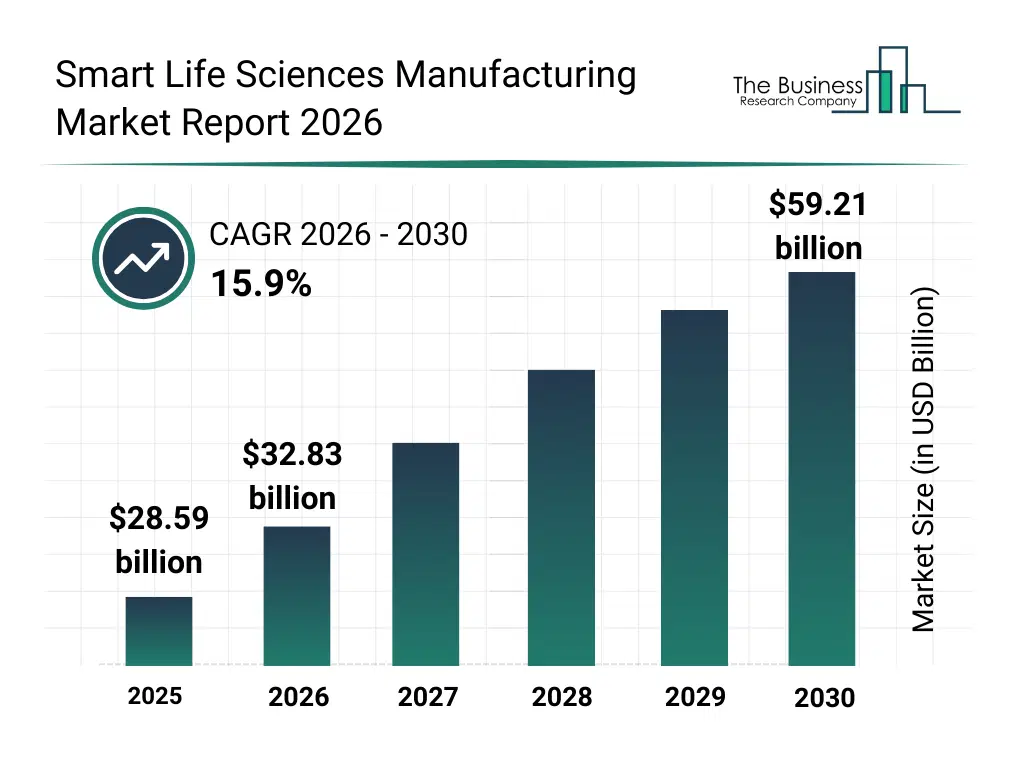
What Is The Smart Life Sciences Manufacturing Market Size and Share 2026?
The smart life sciences manufacturing market size has grown rapidly in recent years. It will grow from $28.59 billion in 2025 to $32.83 billion in 2026 at a compound annual growth rate (CAGR) of 14.8%. The growth in the historic period can be attributed to increasing complexity of life sciences manufacturing processes, rising regulatory scrutiny on product quality, expansion of pharmaceutical and biopharma production capacity, early adoption of automation technologies, growing demand for manufacturing traceability.What Is The Smart Life Sciences Manufacturing Market Growth Forecast?
The smart life sciences manufacturing market size is expected to see rapid growth in the next few years. It will grow to $59.21 billion in 2030 at a compound annual growth rate (CAGR) of 15.9%. The growth in the forecast period can be attributed to increasing investments in smart pharma factories, rising adoption of digital twin technologies, expansion of personalized medicine manufacturing, growing integration of AI-driven quality analytics, increasing focus on supply chain visibility and resilience. Major trends in the forecast period include increasing adoption of digital manufacturing execution systems, rising integration of iot-enabled production monitoring, growing use of advanced data analytics for process optimization, expansion of automation and robotics in pharma manufacturing, enhanced focus on regulatory compliance and quality control.
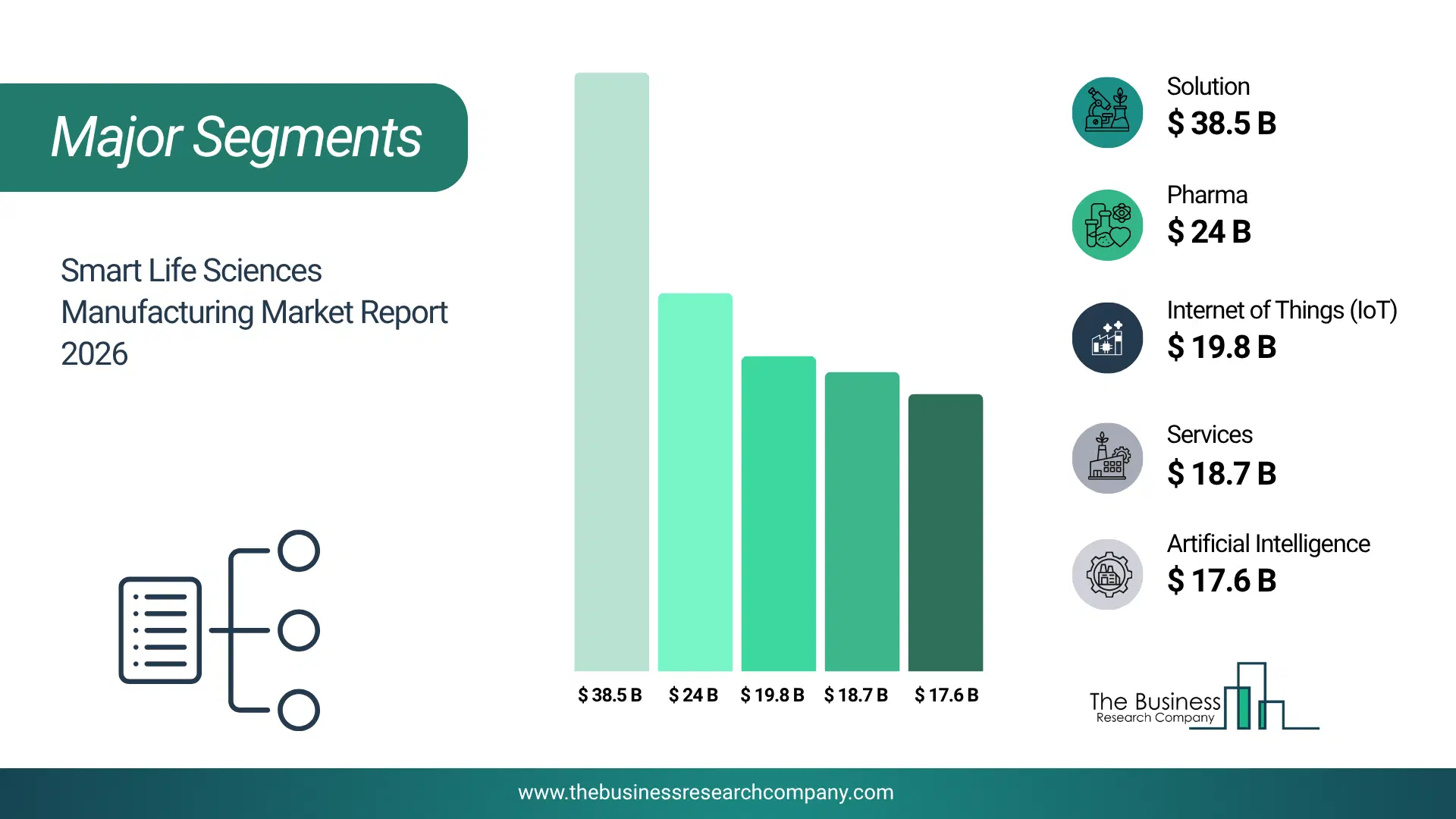
Global Smart Life Sciences Manufacturing Market Segmentation
1) By Component: Solution, Services 2) By Technology: Internet of Things (IoT), Artificial Intelligence, Cybersecurity, Big Data, Other Technologies 3) By Application: Pharma, Bio-Pharma, Medical Device Subsegments: 1) By Solution: Manufacturing Execution Systems (MES), Quality Management Systems (QMS), Automation and Control, Data Analytics And Reporting 2) By Services: Consulting Services, Integration And Implementation, Maintenance and Support The top segments in the smart life sciences manufacturing market will be: • Solution will reach $38588.58 Million by 2030. • Pharma will reach $24026.49 Million by 2030. • Internet of Things (IoT) will reach $19824.46 Million by 2030. • Services will reach $18762.16 Million by 2030. • Artificial Intelligence will reach $17634.74 Million by 2030.What Is The Driver Of The Smart Life Sciences Manufacturing Market?
Rising demand for personalized medicine is expected to propel the growth of the smart life sciences manufacturing market going forward. Personalized medicine refers to an approach to medical treatment and healthcare that tailors medical decisions, practices, interventions, and therapies to individual patients. Rising demand for personalized medicine is pushing the life sciences industry to adopt smart manufacturing technologies and processes to enable efficient, precise, and flexible production of customized pharmaceuticals and therapies and improve treatment outcomes. For instance, in February 2024, according to the Personalized Medicine Coalition, a US-based non-profit organization, in 2023, the FDA approved 16 new personalized treatments for rare disease patients, up from six in 2022. The newly approved personalized treatments for 2023 also include seven cancer drugs and three for other diseases and conditions. Therefore, the rising demand for personalized medicine is driving the growth of the smart life sciences manufacturing industry.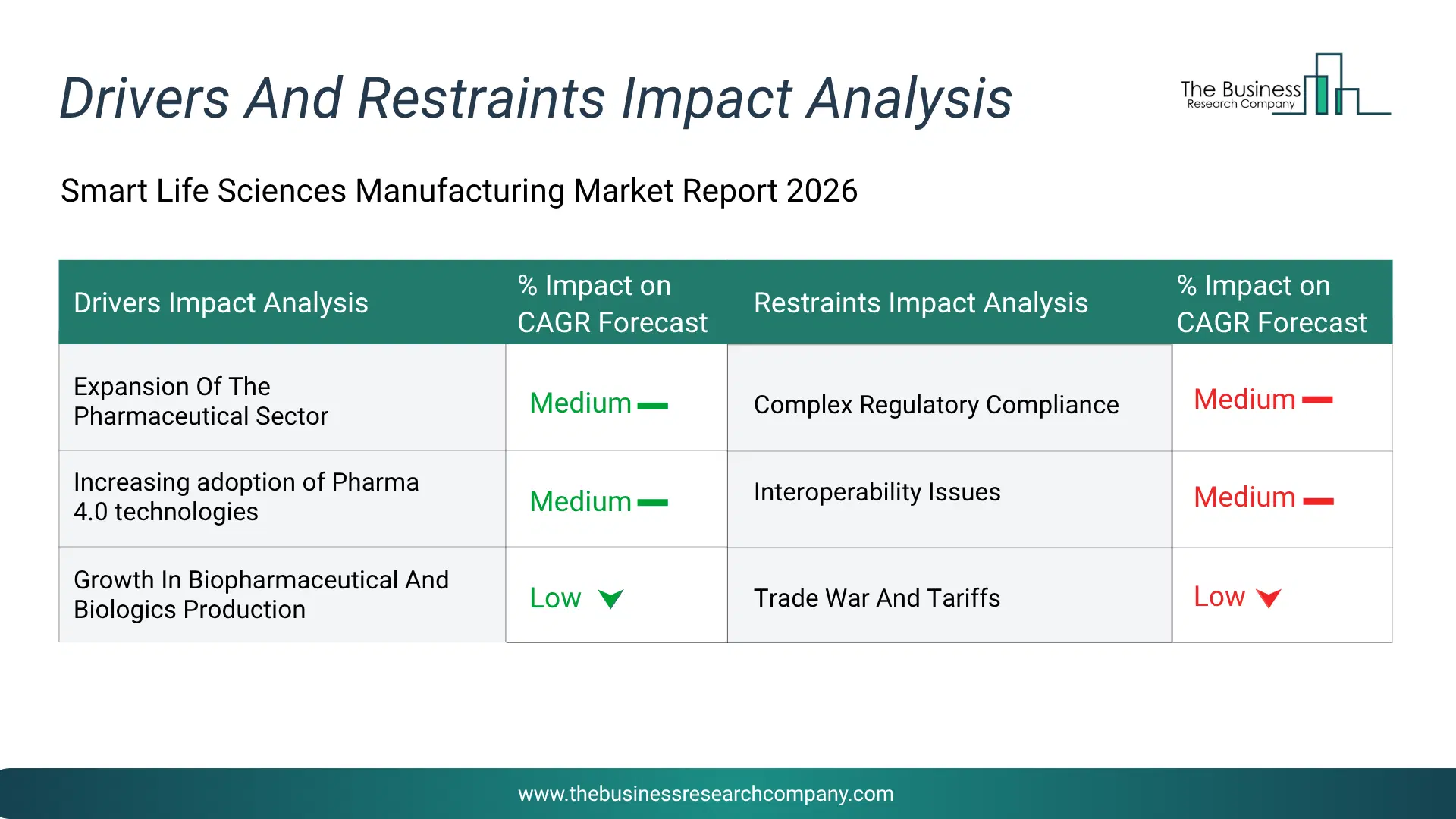
Infographic Chart Showing Key Market Drivers Analysis And Restraints For Smart Life Sciences Manufacturing Market
The chart presents an impact analysis of key drivers and restraints, quantifying their relative influence on the market's growth rate and helping assess the balance between growth enablers and limiting factors. This chart offers a high-level perspective; the full report contains more detailed insights.
How Will The Drivers Impact Growth In The Global Smart Life Sciences Manufacturing Market?
• Expansion Of The Pharmaceutical Sector (Medium) – During the forecast period, the expansion of the pharmaceutical sector is driving increased demand for smart life sciences manufacturing. rapid growth in global pharmaceutical infrastructure has enhanced production capabilities and expanded research facilities, enabling the development and manufacturing of advanced therapies and precision medicines. investments in state-of-the-art labs, automated production lines, and quality control systems facilitate higher output with consistent quality, directly supporting smarter manufacturing practices. increased capacity also allows companies to integrate digital tracking and data analytics, improving efficiency and compliance with regulatory standards. this expansion encourages adoption of more sophisticated production methods and innovative drug formulations. the expansion of the pharmaceutical sector growth contribution during the forecast period in 2025 is 1.5%. • Increasing adoption of Pharma 4.0 technologies (Medium) – During the forecast period, the increasing adoption of pharma 4.0 technologies is driving demand for smart life sciences manufacturing. the implementation of pharma 4.0 technologies, including ai-driven process optimization, robotics, iot sensors, and digital twins, is transforming manufacturing operations by enhancing precision, reducing errors, and enabling real-time monitoring. these technologies streamline production workflows, improve supply chain management, and support predictive maintenance, minimizing downtime. integration of smart analytics allows for adaptive decision-making, ensuring consistent quality and operational efficiency. the shift toward automated and data-driven processes makes pharmaceutical operations more flexible and responsive to market needs. the increasing adoption of pharma 4.0 technologies growth contribution during the forecast period in 2025 is 1.0%. • Growth In Biopharmaceutical And Biologics Production (Low) – During the forecast period, growth in biopharmaceutical and biologics production are accelerating the adoption of smart life sciences manufacturing. rising investments in biopharmaceuticals and biologics, such as monoclonal antibodies, gene therapies, and recombinant proteins, require sophisticated manufacturing platforms capable of handling complex molecules. advanced cell culture systems, bioreactors, and purification technologies improve yield, reduce contamination risk, and maintain product efficacy. these developments drive the adoption of digital monitoring, process control, and automation to meet stringent regulatory and quality requirements. as production becomes more intricate, manufacturers increasingly rely on smart systems to maintain efficiency and scalability. the growth in biopharmaceutical and biologics production growth contribution during the forecast period in 2025 is 0.8%. • Expansion Of Vaccine Manufacturing Capacity Globally (Low) – During the forecast period, the expansion of vaccine manufacturing capacity is accelerating the adoption of smart life sciences manufacturing. expanding vaccine manufacturing capacity worldwide addresses growing global demand for immunization and pandemic preparedness. large-scale production facilities equipped with automation, real-time quality control, and cold-chain monitoring enhance throughput while maintaining product integrity. this expansion promotes adoption of integrated data systems and predictive analytics for resource optimization and batch tracking. by enabling rapid and efficient vaccine production, it reinforces the need for digitalized, connected, and intelligent manufacturing processes across pharmaceutical operations. the expansion of vaccine manufacturing capacity growth contribution during the forecast period in 2025 is 0.5%.How Will The Restraints Impact Growth In The Global Smart Life Sciences Manufacturing Market?
• Complex Regulatory Compliance (Medium) – During the forecast period, the complex regulatory compliance limits a significant barrier to market expansion. stringent and evolving regulations in pharmaceuticals, biotechnology, and medical devices create significant hurdles for manufacturers. companies must invest heavily in compliance systems, staff training, and frequent audits to meet global standards. delays in approvals and certifications can slow down production and innovation cycles. non-compliance risks legal penalties, product recalls, and reputational damage, making organizations cautious about adopting new manufacturing technologies. this can limit the pace at which advanced digital and automated processes are implemented. growth affected by complex regulatory compliance during the forecast period in 2025 is -1.5%. • Interoperability Issues (Medium) – During the forecast period, the interoperability issues remains a significant barrier to market expansion. many life sciences facilities rely on a mix of legacy equipment and modern digital solutions, which often struggle to communicate effectively. lack of standardized protocols can lead to data silos, errors in production tracking, and inefficiencies in quality management. integrating diverse systems requires substantial technical expertise and costs, deterring seamless automation. without smooth interoperability, the benefits of real-time monitoring, predictive maintenance, and data-driven decision-making remain underutilized. growth affected by interoperability issues during the forecast period in 2025 is -1.0%. • Trade War And Tariffs (Low) – During the forecast period, the trade war and tariffs remains a significant barrier to market expansion. global trade tensions and tariffs increase the cost of importing essential raw materials, equipment, and advanced technologies. supply chain disruptions can delay production schedules and lead to uncertainty in sourcing critical components. manufacturers may be forced to explore alternative suppliers or regions, increasing operational complexity. such uncertainties discourage large-scale investments in cutting-edge manufacturing infrastructure. the unpredictability of trade policies adds financial risk and slows the adoption of innovative production methods. growth affected by trade war and tariffs during the forecast period in 2025 is -0.3%.Key Players In The Global Smart Life Sciences Manufacturing Market
Major companies operating in the smart life sciences manufacturing market are Pfizer Inc., Johnson and Johnson, F. Hoffmann-La Roche AG, Novartis AG, Merck and Co Inc, Sanofi S A, GlaxoSmithKline plc, AstraZeneca plc, Bristol Myers Squibb, Eli Lilly and Company, AbbVie Inc, Amgen Inc, Gilead Sciences Inc, Biogen Inc, Takeda Pharmaceutical Company Limited, Bayer AG, Boehringer Ingelheim, Novo Nordisk A S, Teva Pharmaceutical Industries Ltd, CSL Limited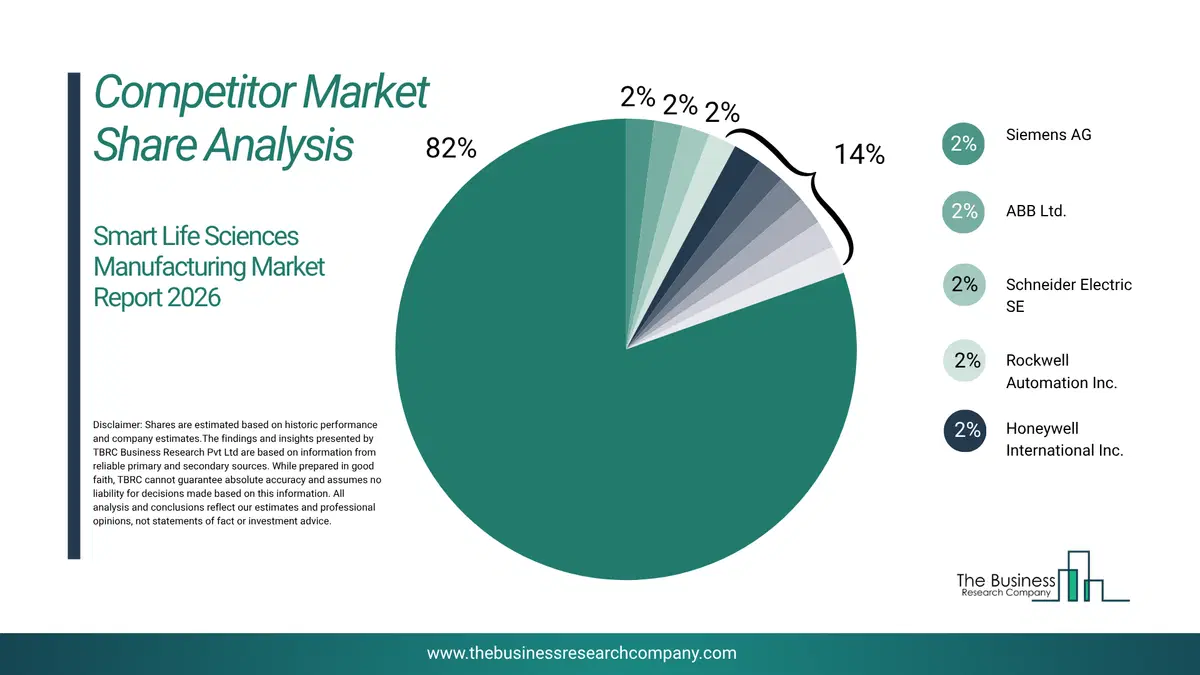
This chart is for illustrative purposes; the full report includes a detailed competitor analysis and comprehensive overview of the top 10 companies in the market.
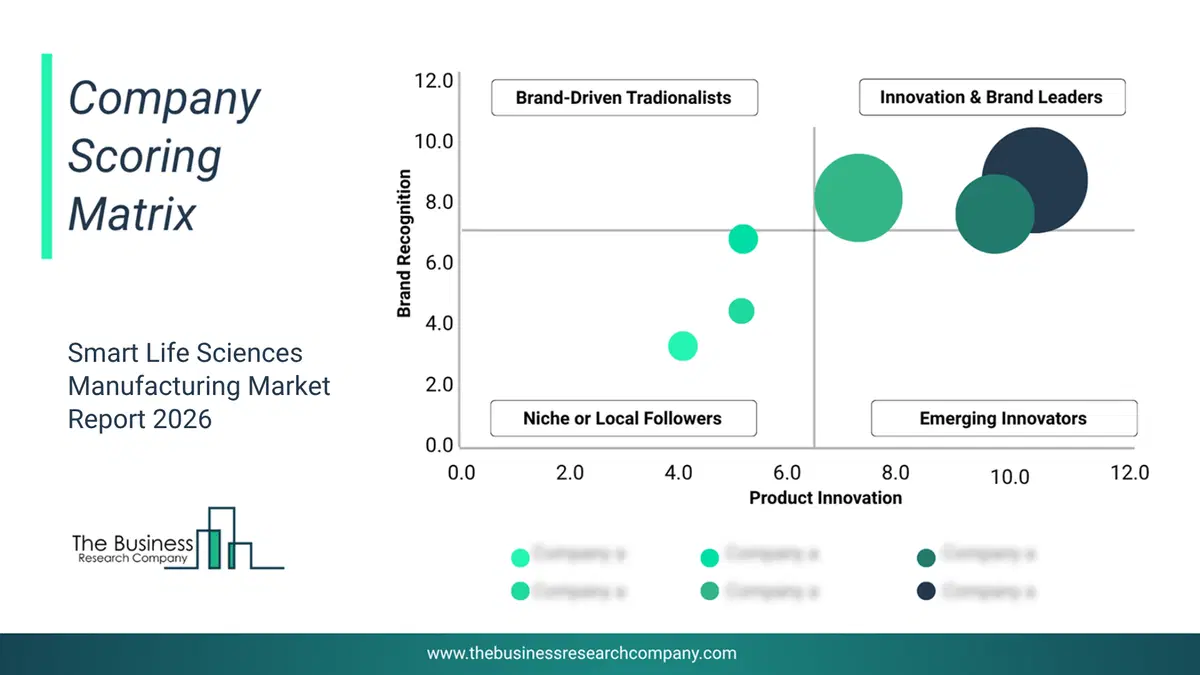
This chart maps companies by product innovation and brand strength, with bubble size indicating relative revenue, helping identify market leaders, challengers, and niche players. This is an illustrative chart; the full report provides a complete and accurate competitive analysis.
Global Smart Life Sciences Manufacturing Market Trends and Insights
Major market players are concentrating their efforts on creating innovative AI (artificial intelligence) medical technologies to sustain their position in the market. AI-based advancements are needed in smart life science to analyze and interpret vast amounts of data, streamline processes, and enable more personalized engagement. For instance, in May 2023, Google Cloud Platform LLC, a US-based technology company, launched two new AI-powered solutions to accelerate drug discovery and precision medicine. This innovative tool can help researchers discover new drugs faster and more efficiently. Additionally, these tools can help improve the accuracy of drug development and reduce the cost of bringing new drugs to market. Moreover, it has the potential to accelerate the growth of new drugs and improve patients' lives.What Are Latest Mergers And Acquisitions In The Smart Life Sciences Manufacturing Market?
In March 2024, Ingersoll Rand Inc., a US-based provider of industrial and precision technologies, acquired ILC Dover for approximately US $2.325 billion. Through this acquisition, Ingersoll Rand aims to expand its presence in the life sciences manufacturing market by integrating ILC Dover’s single-use powder and liquid containment solutions and advanced components for biopharmaceutical and medical device production. ILC Dover is a US-based company that provides engineered solutions for biopharma, pharmaceutical, and medical device manufacturing, including single-use containment systems and specialty components.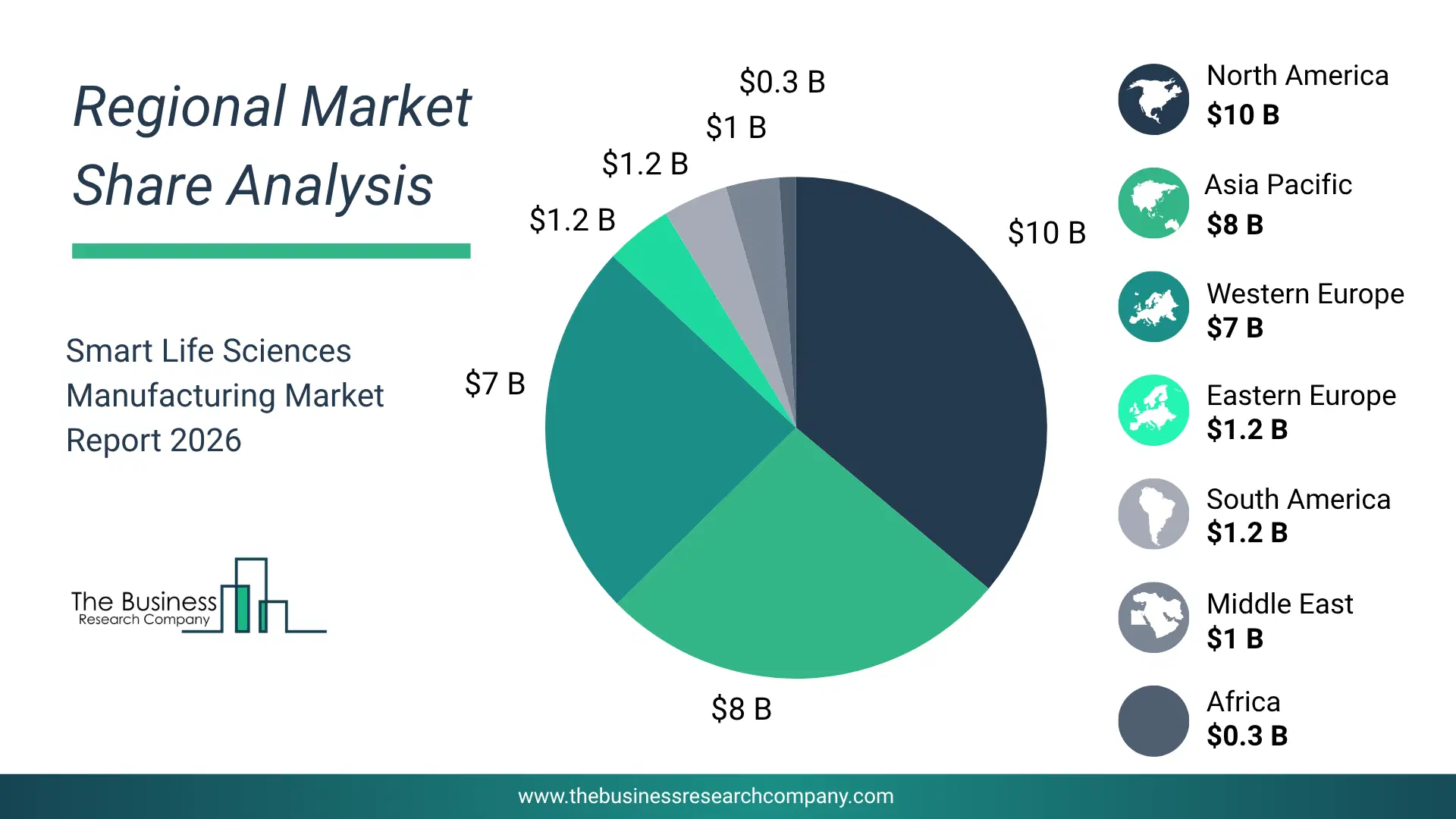
Regional Insights
North America was the largest region in the smart life sciences manufacturing market in 2025. Asia-Pacific is expected to be the fastest-growing region in the forecast period. The regions covered in this market report are Asia-Pacific, South East Asia, Western Europe, Eastern Europe, North America, South America, Middle East, Africa. The countries covered in this market report are Australia, Brazil, China, France, Germany, India, Indonesia, Japan, Taiwan, Russia, South Korea, UK, USA, Canada, Italy, Spain.What Defines the Smart Life Sciences Manufacturing Market?
The smart life sciences manufacturing includes revenues earned by entities by providing services such as process automation and integration, supply chain optimization, bioprocessing solutions, process optimization, digital twin implementation and robotics integration. The market value includes the value of related goods sold by the service provider or included within the service offering. The smart life sciences manufacturing market also includes sales of manufacturing execution systems, robotic systems, laboratory automation equipment, real-time monitoring devices and Internet of Things (IoT) devices that are used in providing smart life sciences manufacturing. Values in this market are ‘factory gate’ values, that is, the value of goods sold by the manufacturers or creators of the goods, whether to other entities (including downstream manufacturers, wholesalers, distributors and retailers) or directly to end customers. The value of goods in this market includes related services sold by the creators of the goods.How is Market Value Defined and Measured?
The market value is defined as the revenues that enterprises gain from the sale of goods and/or services within the specified market and geography through sales, grants, or donations in terms of the currency (in USD unless otherwise specified). The revenues for a specified geography are consumption values that are revenues generated by organizations in the specified geography within the market, irrespective of where they are produced. It does not include revenues from resales along the supply chain, either further along the supply chain or as part of other products.
This chart presents market attractiveness based on a quantitative evaluation of growth, competition, strategic alignment, and risk, offering a clear view of opportunity areas for decision-making. This chart is for illustrative purposes; the full report contains the complete analysis.

This chart highlights the Total Addressable Market (TAM) by estimating the maximum revenue opportunity using an assumption-driven approach, supporting strategic planning and opportunity sizing across markets. The chart is illustrative; the full report provides a more comprehensive analysis.
What Key Data and Analysis Are Included in the Smart Life Sciences Manufacturing Market Report 2026?
The smart life sciences manufacturing market research report is one of a series of new reports from The Business Research Company that provides market statistics, including industry global market size, regional shares, competitors with the market share, detailed market segments, market trends and opportunities, and any further data you may need to thrive in the smart life sciences manufacturing industry. The market research report delivers a complete perspective of everything you need, with an in-depth analysis of the current and future state of the industry.Smart Life Sciences Manufacturing Market Report Forecast Analysis
| Report Attribute | Details |
|---|---|
| Market Size Value In 2026 | $32.83 billion |
| Revenue Forecast In 2030 | $59.21 billion |
| Growth Rate | CAGR of 14.8% from 2026 to 2030 |
| Base Year For Estimation | 2025 |
| Actual Estimates/Historical Data | 2020-2025 |
| Forecast Period | 2026 - 2030 - 2035 |
| Market Representation | Revenue in USD Billion and CAGR from 2026 to 2030 |
| Segments Covered | Component, Technology, Application |
| Regional Scope | Asia-Pacific, Western Europe, Eastern Europe, North America, South America, Middle East, Africa |
| Country Scope | The countries covered in the report are Australia, Brazil, China, France, Germany, India, Indonesia, Japan, Taiwan, Russia, South Korea, UK, USA, Canada, Italy, Spain. |
| Key Companies Profiled | Pfizer Inc., Johnson and Johnson, F. Hoffmann-La Roche AG, Novartis AG, Merck and Co Inc, Sanofi S A, GlaxoSmithKline plc, AstraZeneca plc, Bristol Myers Squibb, Eli Lilly and Company, AbbVie Inc, Amgen Inc, Gilead Sciences Inc, Biogen Inc, Takeda Pharmaceutical Company Limited, Bayer AG, Boehringer Ingelheim, Novo Nordisk A S, Teva Pharmaceutical Industries Ltd, CSL Limited |
| Customization Scope | Request for Customization |
| Pricing And Purchase Options | Explore Purchase Options |