
Smart Polymers Market Report 2026
Global Outlook – By Type (Physical Stimuli-Responsive, Chemical Stimuli-Responsive, Biological Stimuli-Responsive, Self-Healing Polymers, Other Types), By Distribution Channel (Offline, Online), By Applications (Medical Devices, Tissue Engineering, Textile, Automotive, Other Applications), By End User (Hospitals, Clinics, Other End Users) – Market Size, Trends, Strategies, and Forecast to 2030
Smart Polymers Market Overview
• Smart Polymers market size has reached to $6.06 billion in 2025 • Expected to grow to $11.25 billion in 2030 at a compound annual growth rate (CAGR) of 13.2% • Growth Driver: The Impact Of Automotive Industry Growth On The Smart Polymer Market • Market Trend: Innovative Developments In Smart Polymer Technology • North America was the largest region in 2025 and Asia-Pacific is the fastest growing region.Market Gains By 2030 – Top Opportunities By Segment
Market Gain identifies the most promising market opportunities by highlighting the segments or products expected to generate the highest incremental revenue growth over the next five years.
What Is Covered Under Smart Polymers Market?
Smart polymers are advanced polymer materials that respond to external stimuli, such as temperature, pH, light, electric or magnetic fields, and mechanical stress, by altering their properties. These polymers are integral to various cutting-edge applications, including drug delivery systems, tissue engineering, sensors, actuators, and self-healing materials, making them essential in modern technological advancements. The main types of smart polymers are physical stimuli-responsive, chemical stimuli-responsive, biological stimuli-responsive, self-healing polymers, and others. Physical stimuli-responsive polymers are materials that undergo reversible changes in their physical properties, such as shape, size, or stiffness, in response to external stimuli like temperature, pH, or light. It is distributed through both offline and online channels and is applied for medical devices, tissue engineering, textiles, automotive, and others. It is used by various end users, including hospitals, clinics, and others.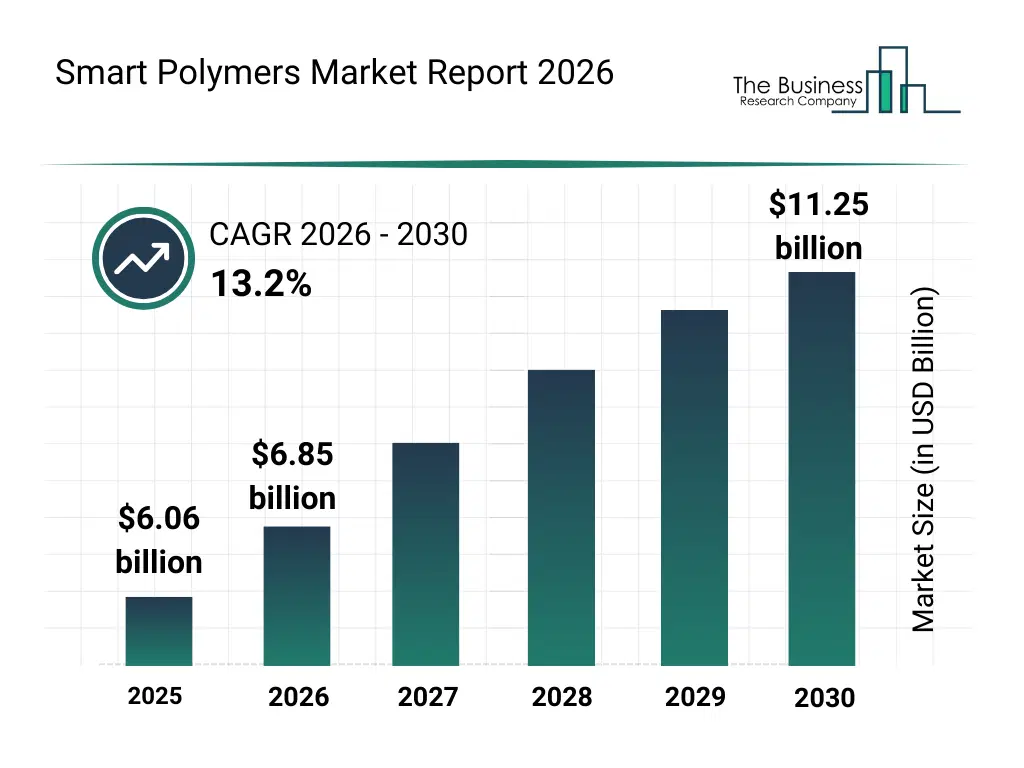
What Is The Smart Polymers Market Size and Share 2026?
The smart polymers market size has grown rapidly in recent years. It will grow from $6.06 billion in 2025 to $6.85 billion in 2026 at a compound annual growth rate (CAGR) of 13.0%. The growth in the historic period can be attributed to advancements in polymer chemistry research, increased funding for advanced materials development, early adoption in biomedical applications, expansion of high-performance material demand, growth of specialty polymer manufacturing.What Is The Smart Polymers Market Growth Forecast?
The smart polymers market size is expected to see rapid growth in the next few years. It will grow to $11.25 billion in 2030 at a compound annual growth rate (CAGR) of 13.2%. The growth in the forecast period can be attributed to rising demand for smart medical devices, increasing adoption in soft robotics and electronics, expansion of sustainable and recyclable polymers, growing integration in automotive lightweighting, continuous innovation in multifunctional polymers. Major trends in the forecast period include expanding use of stimuli-responsive materials, rising adoption in drug delivery applications, growing demand for self-healing polymer systems, increased integration in advanced sensors and actuators, enhanced focus on functional material performance.
Global Smart Polymers Market Segmentation
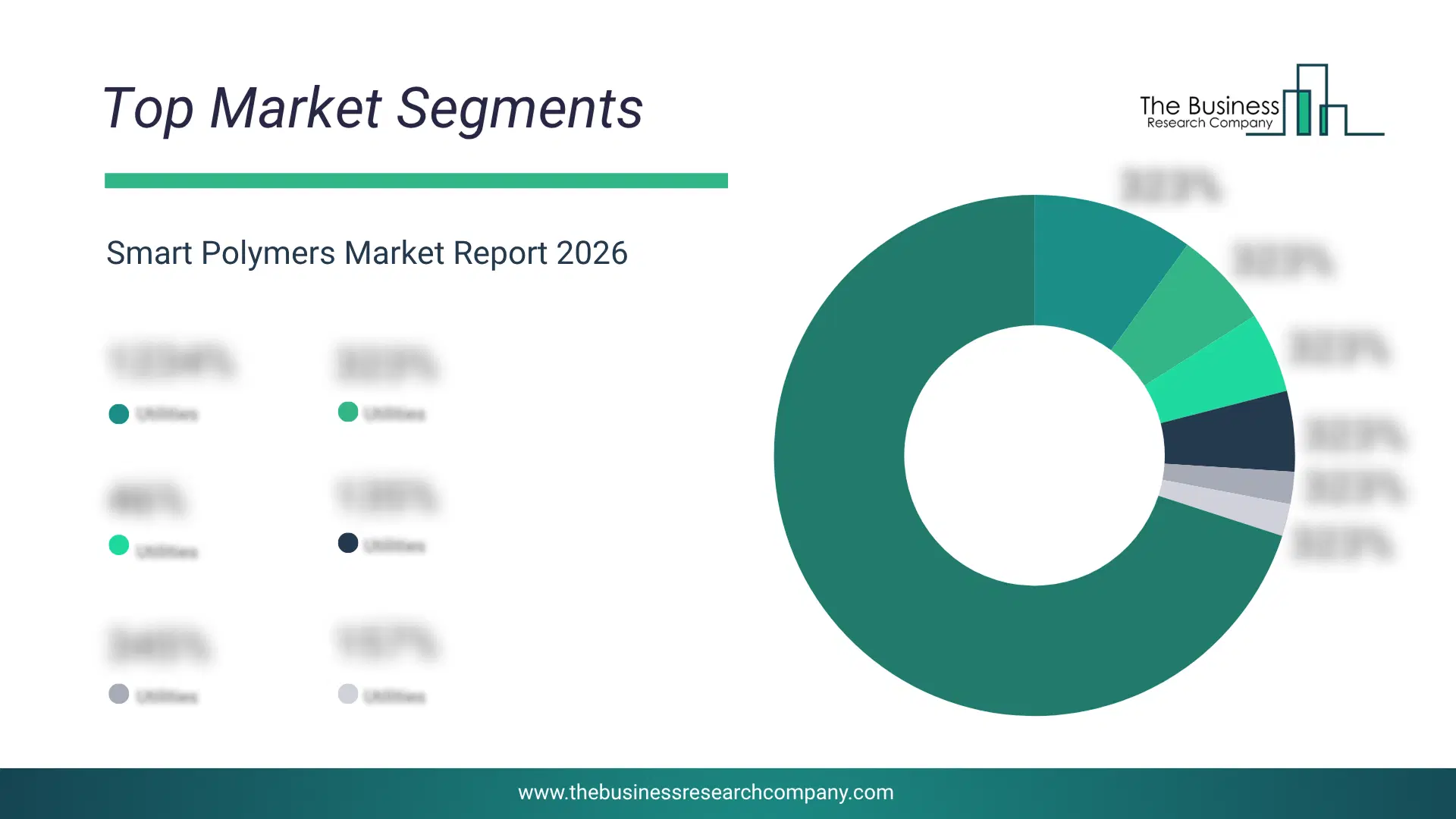
1) By Type: Physical Stimuli-Responsive, Chemical Stimuli-Responsive, Biological Stimuli-Responsive, Self-Healing Polymers, Other Types 2) By Distribution Channel: Offline, Online 3) By Applications: Medical Devices, Tissue Engineering, Textile, Automotive, Other Applications 4) By End User: Hospitals, Clinics, Other End Users Subsegments: 1) By Physical Stimuli-Responsive: Temperature-Responsive Polymers (Thermoresponsive), PH-Responsive Polymers (pH-sensitive), Light-Responsive Polymers (Photoreactive), Electric Field-Responsive Polymers (Electroactive), Magnetic Field-Responsive Polymers 2) By Chemical Stimuli-Responsive: Ion-Responsive Polymers, Solvent-Responsive Polymers, Redox-Responsive Polymers 3) By Biological Stimuli-Responsive: Enzyme-Responsive Polymers, Glucose-Responsive Polymers, Antibody-Responsive Polymers 4) By Self-Healing Polymers: Reversible Cross-Linking Polymers, Shape Memory Polymers, Dynamic Covalent Bond-Based Polymers 5) By Other Types: Conductive Polymers, Ionic Liquids-Based Polymers, Hybrid Smart Polymers The top segments in the smart polymers market will be: • Offline will reach $5650.23 Million by 2025. • Physical Stimuli-Responsive will reach $2394.16 Million by 2025. • Medical Devices will reach $2298.77 Million by 2025. • Chemical Stimuli-Responsive will reach $2120.75 Million by 2025. • Textile will reach $1163.29 Million by 2025.What Is The Driver Of The Smart Polymers Market?
The growth of the automotive industry is expected to drive the growth of the smart polymer market going forward. The automotive industry encompasses the design, development, manufacturing, marketing, and sale of motor vehicles, including cars, trucks, motorcycles, and their components. The growth of the automotive industry is due to increasing demand for electric vehicles, advancements in autonomous driving technology, and the global push for sustainable transportation solutions. Smart polymers are used in the automotive industry for their ability to adapt to environmental changes, enhancing vehicle performance, durability, and safety through self-healing, shape memory, and responsive functionalities. For instance, in April 2024, according to the Serbian Association of Vehicle and Parts Importers, a Serbia-based professional automotive organization, 93, 546, 599 vehicles (including 67, 133, 570 passenger vehicles) were produced worldwide in 2023, up from 84, 830, 376 vehicles in 2022. Therefore, the rising growth of the automotive industry is driving the growth of smart polymers.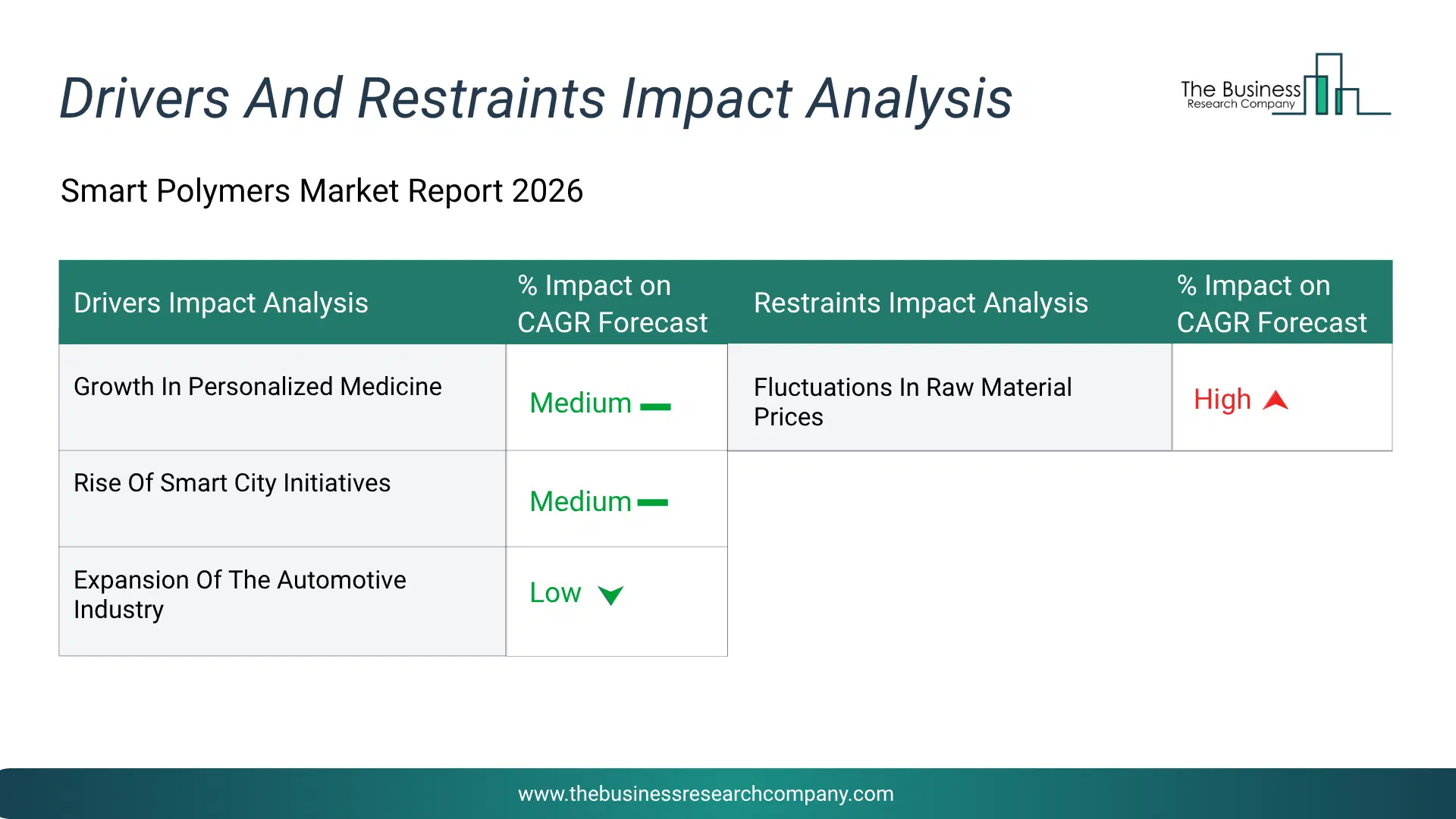
Infographic Chart Showing Key Market Drivers Analysis And Restraints For Smart Polymers Market
The chart presents an impact analysis of key drivers and restraints, quantifying their relative influence on the market's growth rate and helping assess the balance between growth enablers and limiting factors. This chart offers a high-level perspective; the full report contains more detailed insights.
How Will The Drivers Impact Growth In The Global Smart Polymers Market?
• Growth In Personalized Medicine (Medium) – The growth in personalized medicine will become a key driver of growth in the smart polymers market by 2030. Smart polymers are gaining traction in drug delivery systems, offering the ability to release medications in response to specific biological triggers, such as pH, temperature, or enzymes. In the realm of personalized medicine, these polymers can be customized to target specific tissues or cells, enhancing treatment efficacy while minimizing side effects. As personalized therapies become increasingly prevalent, the demand for these advanced drug delivery solutions is expected to grow. Furthermore, smart polymers are highly biocompatible and can be designed to closely mimic the behavior of natural tissues, making them a valuable asset in modern healthcare solutions. As a result, the growth in personalized medicine is anticipated to contributing to annual growth in the market. • Rise Of Smart City Initiatives (Medium) – The rise of smart city initiatives will emerge as a major factor driving the expansion of the smart polymers market by 2030. Smart cities focus on the development and improvement of infrastructure through the integration of advanced technologies. smart polymers play a crucial role in these initiatives by offering the ability to respond to environmental stimuli. For instance, they can be incorporated into self-healing concrete or materials that adjust to changes in temperature, moisture, or stress. This contributes to the enhanced durability and longevity of urban infrastructure, which is essential for the success of smart cities. Additionally, smart polymers are increasingly utilized in environmental monitoring systems within these cities. As a result, the rise of smart city initiatives is anticipated to contributing to annual growth in the market. • Expansion Of The Automotive Industry (Low) – The expansion of the automotive industry will serve as a key growth catalyst for the smart polymers market by 2030. As automotive manufacturers prioritize weight reduction to enhance fuel efficiency and comply with environmental regulations, smart polymers are gaining significant importance. These advanced materials are being utilized in various vehicle components, including body panels, seats and interior trims. Due to their lightweight and durable nature, smart polymers play a key role in lowering the overall vehicle weight, thereby improving energy efficiency and reducing emissions. As a result, the expansion of the automotive is anticipated to contributing to annual growth in the market. • Increasing Government Regulations For Sustainable Material Use (Low) – The increasing government regulations for sustainable material use will become a significant driver contributing to the growth of the smart polymers market by 2030. Governments across the globe are enforcing stricter environmental regulations to curb carbon emissions, reduce waste and mitigate environmental pollution. As a result, industries face increasing pressure to adopt sustainable materials in their production processes. Smart polymers, known for their versatility and recyclability, provide an effective solution, offering eco-friendly alternatives to traditional materials and helping businesses meet these evolving environmental standards. As a result, the increasing government regulations for sustainable material is anticipated to contributing to annual growth in the market.How Will The Restraints Impact Growth In The Global Smart Polymers Market?
• Fluctuations In Raw Material Prices (Medium) – Fluctuations In Raw Material Prices will restrict the growth of the Smart Polymers market during the forecast period. Smart polymer production depends on specialty monomers, catalysts, and advanced materials subject to price volatility. Fluctuations in raw material costs affect production expenses and product pricing. Price volatility can impact profit margins and affect investment in research and development for smart polymer applications.Key Players In The Global Smart Polymers Market
Major companies operating in the smart polymers market are Dow Chemical Company, Saudi Basic Industries Corporation (SABIC), Merck KGaA, Solvay S.A., Covestro AG, Evonik Industries AG, DuPont de Nemours Inc., Arkema S.A., Huntsman Corporation, Avient Corporation, Croda International plc, Nippon Shokubai Co. Ltd., Lubrizol Corporation, Ashland Global Holdings Inc., Medshape Inc., Autonomic Materials Inc., Echelon Biosciences Inc., SMP Technologies Inc., Nexgenia Inc., Kuraray Co. Ltd., Paragon Polymer Products Pvt. Ltd., Spintech Holdings Inc.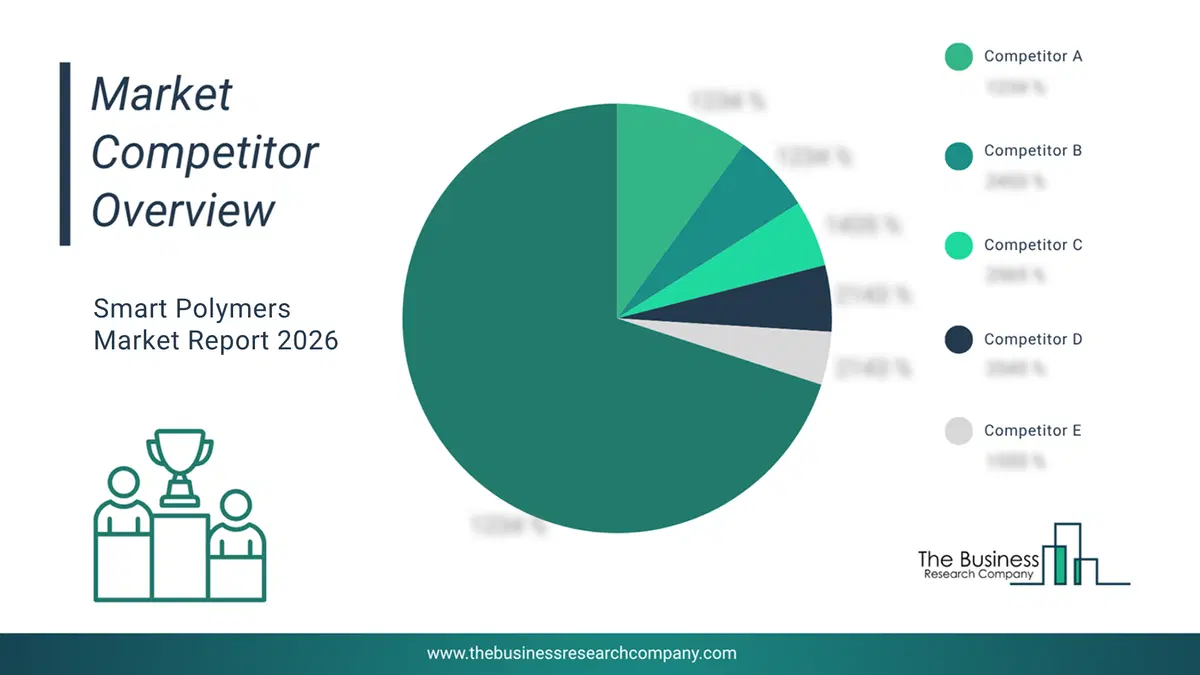
This chart is for illustrative purposes; the full report includes a detailed competitor analysis and comprehensive overview of the top 10 companies in the market.
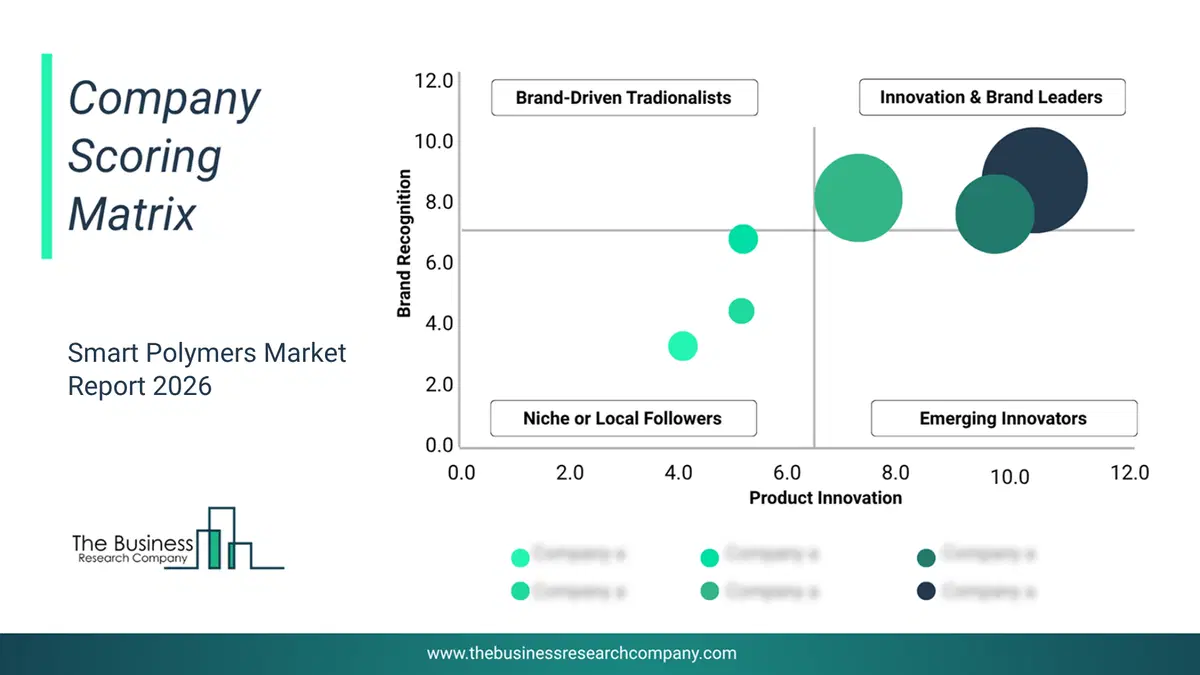
This chart maps companies by product innovation and brand strength, with bubble size indicating relative revenue, helping identify market leaders, challengers, and niche players. This is an illustrative chart; the full report provides a complete and accurate competitive analysis.
Global Smart Polymers Market Trends and Insights
Major companies operating in the smart polymer market are focused on developing advanced products, such as polymer spill pads, to ensure effective containment and cleanup of spills while minimizing environmental impact. A polymer spill pad is a specialized absorbent mat made from synthetic polymers designed to contain and absorb spills of liquids, including chemicals and oils. For instance, in April 2023, Justrite Manufacturing Company, a US-based manufacturer of safety products, launched the PetroPad Smart Polymer Spill Pad. The PetroPad Smart Polymer Spill Pad is a revolutionary solution for managing incidental spills, designed to absorb hazardous hydrocarbons and solidify and permanently contain them without any risk of leakage or overflow. Its advanced polymer technology, embedded in a geotextile fabric, transforms hydrocarbons into a non-hazardous, rubber-like compound. It ensures that once absorbed, the hydrocarbons remain securely contained, preventing any leaching or contamination of water. The PetroPad is more user-friendly and cost-effective than traditional absorbent pads, making it an indispensable tool for construction, refueling points, machinery, and maintenance industries.What Are Latest Mergers And Acquisitions In The Smart Polymers Market?
In June 2023, STRATEC SE, a Germany-based technology company, acquired Natech Plastics Inc. for an undisclosed amount. The acquisition will bolster STRATEC's ability to meet customer needs in the U.S. market by expanding its presence, integrating complementary products and customers, and capitalizing on synergies. This strategic move diversified the STRATEC offerings and fueled growth, ultimately enhancing its market position. Natech Plastics Inc. is a US-based company that designs and manufactures smart polymer-based consumables for customers in medical technology, in vitro diagnostics, life sciences, consumer goods, and specialist packaging solutions.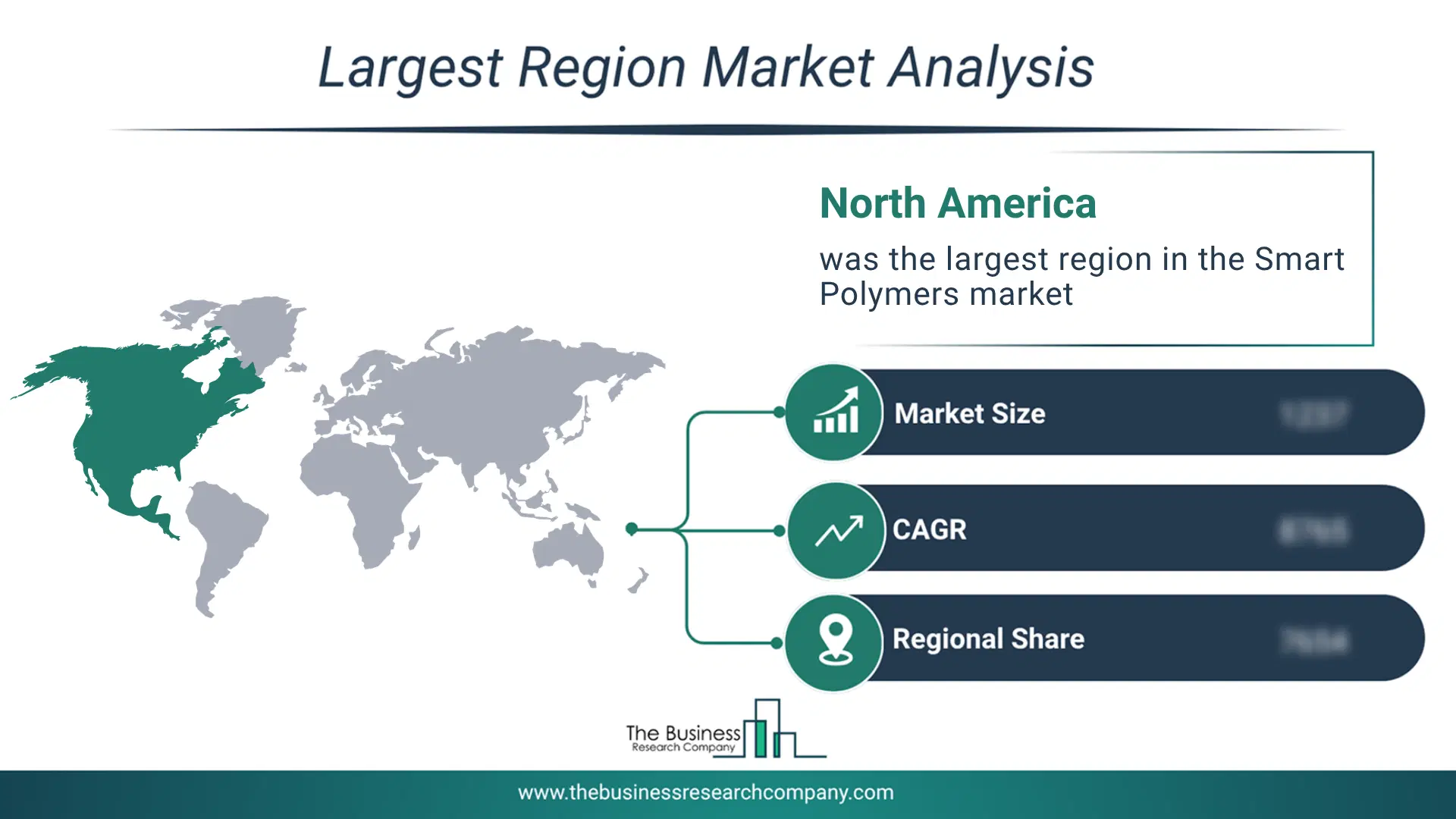
Regional Outlook
North America was the largest region in the smart polymer market in 2025. Asia-Pacific is expected to be the fastest-growing region in the forecast period. The regions covered in this market report are Asia-Pacific, South East Asia, Western Europe, Eastern Europe, North America, South America, Middle East, Africa. The countries covered in this market report are Australia, Brazil, China, France, Germany, India, Indonesia, Japan, Taiwan, Russia, South Korea, UK, USA, Canada, Italy, Spain.What Defines the Smart Polymers Market?
The smart polymers market consists of sales of shape-memory polymers, hydrogels, adhesives and sealants. Values in this market are ‘factory gate’ values, that is the value of goods sold by the manufacturers or creators of the goods, whether to other entities (including downstream manufacturers, wholesalers, distributors and retailers) or directly to end customers. The value of goods in this market includes related services sold by the creators of the goods.How is Market Value Defined and Measured?
The market value is defined as the revenues that enterprises gain from the sale of goods and/or services within the specified market and geography through sales, grants, or donations in terms of the currency (in USD unless otherwise specified). The revenues for a specified geography are consumption values that are revenues generated by organizations in the specified geography within the market, irrespective of where they are produced. It does not include revenues from resales along the supply chain, either further along the supply chain or as part of other products.
This chart presents market attractiveness based on a quantitative evaluation of growth, competition, strategic alignment, and risk, offering a clear view of opportunity areas for decision-making. This chart is for illustrative purposes; the full report contains the complete analysis.

This chart highlights the Total Addressable Market (TAM) by estimating the maximum revenue opportunity using an assumption-driven approach, supporting strategic planning and opportunity sizing across markets. The chart is illustrative; the full report provides a more comprehensive analysis.
What Key Data and Analysis Are Included in the Smart Polymers Market Report 2026?
The smart polymers market research report is one of a series of new reports from The Business Research Company that provides market statistics, including Market Report 2026?global market size, regional shares, competitors with the market share, detailed market segments, market trends and opportunities, and any further data you may need to thrive in the smart polymers Market Report 2026? The market research report delivers a complete perspective of everything you need, with an in-depth analysis of the current and future state of the Market Report 2026?Smart Polymers Market Report Forecast Analysis
| Report Attribute | Details |
|---|---|
| Market Size Value In 2026 | $6.85 billion |
| Revenue Forecast In 2030 | $11.25 billion |
| Growth Rate | CAGR of 13.0% from 2026 to 2030 |
| Base Year For Estimation | 2025 |
| Actual Estimates/Historical Data | 2020-2025 |
| Forecast Period | 2026 - 2030 |
| Market Representation | Revenue in USD Billion and CAGR from 2026 to 2030 |
| Segments Covered | Type, Distribution Channel, Applications, End User |
| Regional Scope | Asia-Pacific, Western Europe, Eastern Europe, North America, South America, Middle East, Africa |
| Country Scope | The countries covered in the report are Australia, Brazil, China, France, Germany, India, Indonesia, Japan, Taiwan, Russia, South Korea, UK, USA, Canada, Italy, Spain. |
| Key Companies Profiled | Dow Chemical Company, Saudi Basic Industries Corporation (SABIC), Merck KGaA, Solvay S.A., Covestro AG, Evonik Industries AG, DuPont de Nemours Inc., Arkema S.A., Huntsman Corporation, Avient Corporation, Croda International plc, Nippon Shokubai Co. Ltd., Lubrizol Corporation, Ashland Global Holdings Inc., Medshape Inc., Autonomic Materials Inc., Echelon Biosciences Inc., SMP Technologies Inc., Nexgenia Inc., Kuraray Co. Ltd., Paragon Polymer Products Pvt. Ltd., Spintech Holdings Inc. |
| Customization Scope | Request for Customization |
| Pricing And Purchase Options | Explore Purchase Options |