
Smart Sleep Monitor Market Report 2026
Global Outlook – By Type (Wearable Devices, Non-Wearable Devices), By Technology (Sensing Technology, Computing Technology, Display Technology), By Application (Sleep Quality Monitoring, Sleep Pattern Analysis And Insights) – Market Size, Trends, Strategies, and Forecast to 2030
Smart Sleep Monitor Market Overview
• Smart Sleep Monitor market size has reached to $28.94 billion in 2025 • Expected to grow to $55.51 billion in 2030 at a compound annual growth rate (CAGR) of 13.9% • Growth Driver: Surge in Sleep Disorders Drives Demand For Advanced Sleep Monitoring Solutions • Market Trend: Advancements In Smart Sleep Monitors Enhanced Market Growth • North America was the largest region in 2025.What Is Covered Under Smart Sleep Monitor Market?
A smart sleep monitor is a device equipped with sensors and connectivity features designed to track and analyze various sleep metrics, such as sleep duration, stages, heart rate, and movement. It provides insights and recommendations to improve sleep quality through apps or other interfaces, often integrating with other smart home devices and health platforms. The main types of smart sleep monitoring are wearable devices and non-wearable devices. Smart sleep monitor wearable devices are gadgets designed to track and analyze sleep patterns and related health metrics in real-time through sensors worn on the body. These devices incorporate technologies such as sensing technology, computing technology, and display technology. They are used for various applications, including both online and offline sales.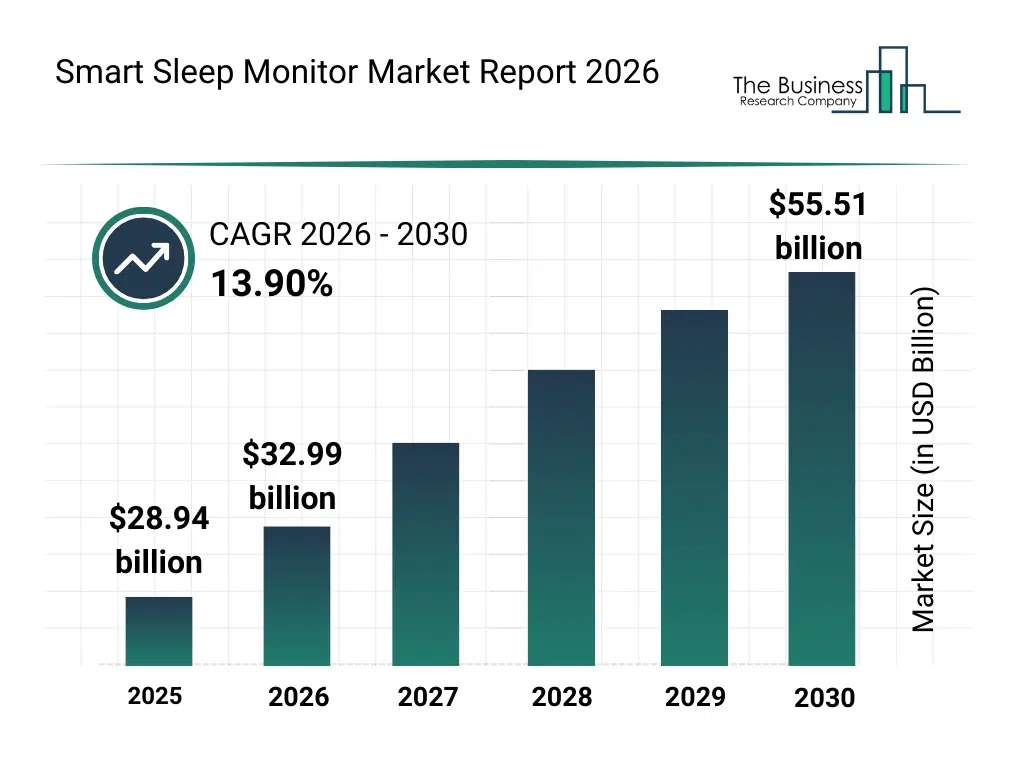
What Is The Smart Sleep Monitor Market Size and Share 2026?
The smart sleep monitor market size has grown rapidly in recent years. It will grow from $28.94 billion in 2025 to $32.99 billion in 2026 at a compound annual growth rate (CAGR) of 14.0%. The growth in the historic period can be attributed to growing consumer awareness of sleep health, increasing adoption of wearable health devices, expansion of digital health platforms, rising prevalence of sleep disorders, increased smartphone penetration.What Is The Smart Sleep Monitor Market Growth Forecast?
The smart sleep monitor market size is expected to see rapid growth in the next few years. It will grow to $55.51 billion in 2030 at a compound annual growth rate (CAGR) of 13.9%. The growth in the forecast period can be attributed to increasing demand for preventive healthcare monitoring, rising integration of sleep data with health platforms, expansion of subscription-based digital health services, growing adoption of non-wearable monitoring solutions, increasing focus on mental wellness technologies. Major trends in the forecast period include increasing adoption of ai-based sleep analytics, rising demand for contactless sleep monitoring devices, growing integration with smart home ecosystems, expansion of wearable sleep tracking devices, enhanced focus on personalized sleep insights.
Global Smart Sleep Monitor Market Segmentation
1) By Type: Wearable Devices, Non-Wearable Devices 2) By Technology: Sensing Technology, Computing Technology, Display Technology 3) By Application: Sleep Quality Monitoring, Sleep Pattern Analysis And Insights Subsegments: 1) By Wearable Devices: Smartwatches, Fitness Trackers, Sleep Headbands, Smart Rings, Wearable Sleep Sensors 2) By Non-Wearable Devices: Sleep Tracking Mats, Under-Mattress Sensors, Smart Pillows, Non-Wearable Sleep Bands, Bedside Sleep MonitorsWhat Is The Driver Of The Smart Sleep Monitor Market?
The rising incidence of sleep-related ailments is expected to propel the growth of the smart sleep monitor market going forward. Sleep-related ailments refer to conditions that disrupt the ability to sleep well regularly, affecting the quantity, quality, or timing of sleep and potentially leading to excessive daytime sleepiness. The rise in the incidence of sleep-related ailments is largely driven by socioeconomic stress, shifts in lifestyle, and an aging population. A sophisticated sleep monitor tracks various metrics, such as heart rate, fluctuations in heart rate, breathing patterns, snoring, body temperature, and periods of wakefulness, to analyze sleep patterns and identify potential health issues. For instance, in May 2023, according to SleepFoundation.org, a US-based non-profit organization dedicated to sleep health information and comprehensive product testing, between 50 million and 70 million people experienced persistent sleep disorders, with a rise attributed to post-traumatic stress disorder (PTSD). Additionally, 70% of adults are affected by seasonal affective disorder (SAD). Therefore, the rising incidence of sleep-related ailments is driving the growth of the smart sleep monitor industry.Key Players In The Global Smart Sleep Monitor Market
Major companies operating in the smart sleep monitor market are Apple Inc., Samsung Electronics Co. Ltd, Xiaomi Corporation, Koninklijke Philips NV, Garmin Ltd, ResMed Inc., Sleep Number Corporation, Fitbit LLC, Misfit Inc., Withings Corporation, Owlet Inc., Empatica Inc., Sibel Health Inc., Sleepiz AG, Eight Sleep, Early Sense Inc., Beddit Inc., Emfit Inc., Ultrahuman Inc., Onera Health Inc.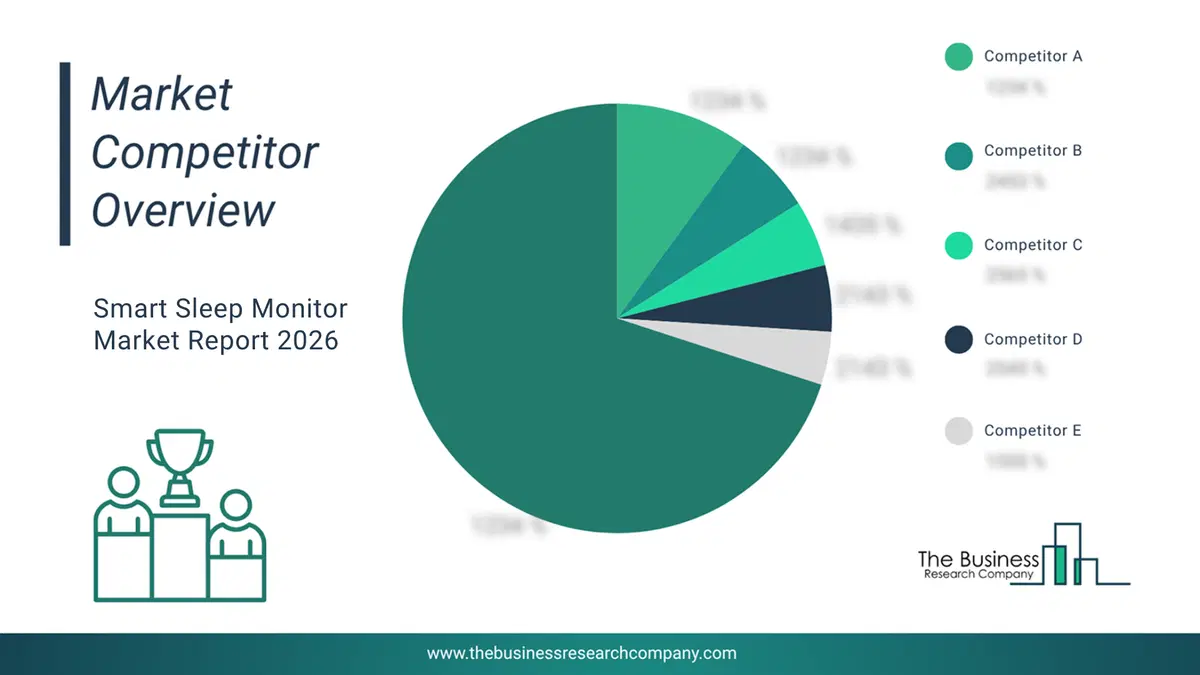
This chart is for illustrative purposes; the full report includes a detailed competitor analysis and comprehensive overview of the top 10 companies in the market.
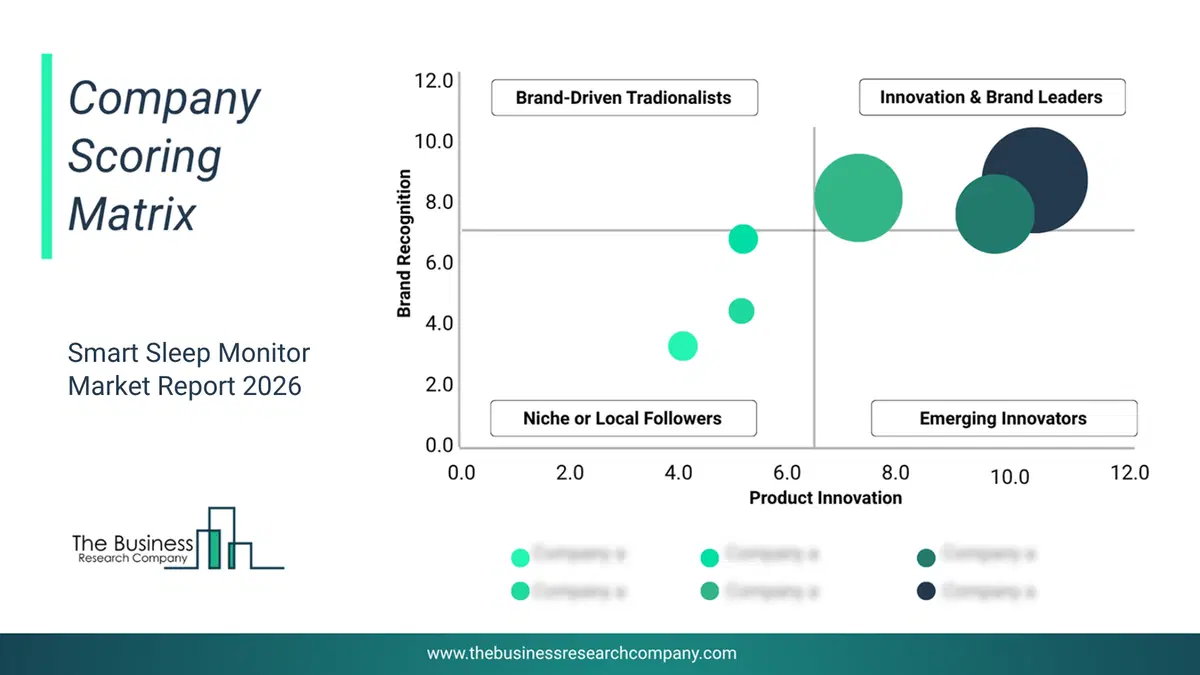
This chart maps companies by product innovation and brand strength, with bubble size indicating relative revenue, helping identify market leaders, challengers, and niche players. This is an illustrative chart; the full report provides a complete and accurate competitive analysis.
Global Smart Sleep Monitor Market Trends and Insights
Major companies operating in the smart sleep monitor market are focusing on developing advanced solutions, such as artificial intelligence-based integrated smart sleep monitor devices, to enhance accuracy, provide personalized insights, and improve the overall user experience. Artificial intelligence-based integrated smart sleep monitor devices refer to advanced sleep tracking systems that utilize AI algorithms to analyze sleep patterns, predict sleep quality, and offer personalized recommendations for improving sleep. For instance, in July 2024, Samsung Electronics Co. Ltd., a South Korea-based electronic appliances company, launched the Galaxy Ring, which features extensive health tracking capabilities, including metrics for sleep such as movement, sleep latency, heart rate, and respiratory rate. It also tracks menstrual cycles through overnight skin temperature monitoring. Additionally, the ring offers continuous heart rate monitoring, alerting users to any unusual fluctuations, automatically detecting and tracking different exercises, and sending inactivity alerts to promote movement.What Are Latest Mergers And Acquisitions In The Smart Sleep Monitor Market?
In July 2023, Beacon Biosignals Inc., a US-based computational neurodiagnostic and electroencephalogram (EEG) analytics company, acquired Dreem for an undisclosed amount. The acquisition allows Beacon to integrate Dreem's clinically validated hardware with its advanced EEG analytics platform, transforming the Dreem device and advancing clinical trials and treatments for conditions such as narcolepsy, Alzheimer’s disease, and schizophrenia. Dreem Inc. is a France-based company that provides smart sleep monitors.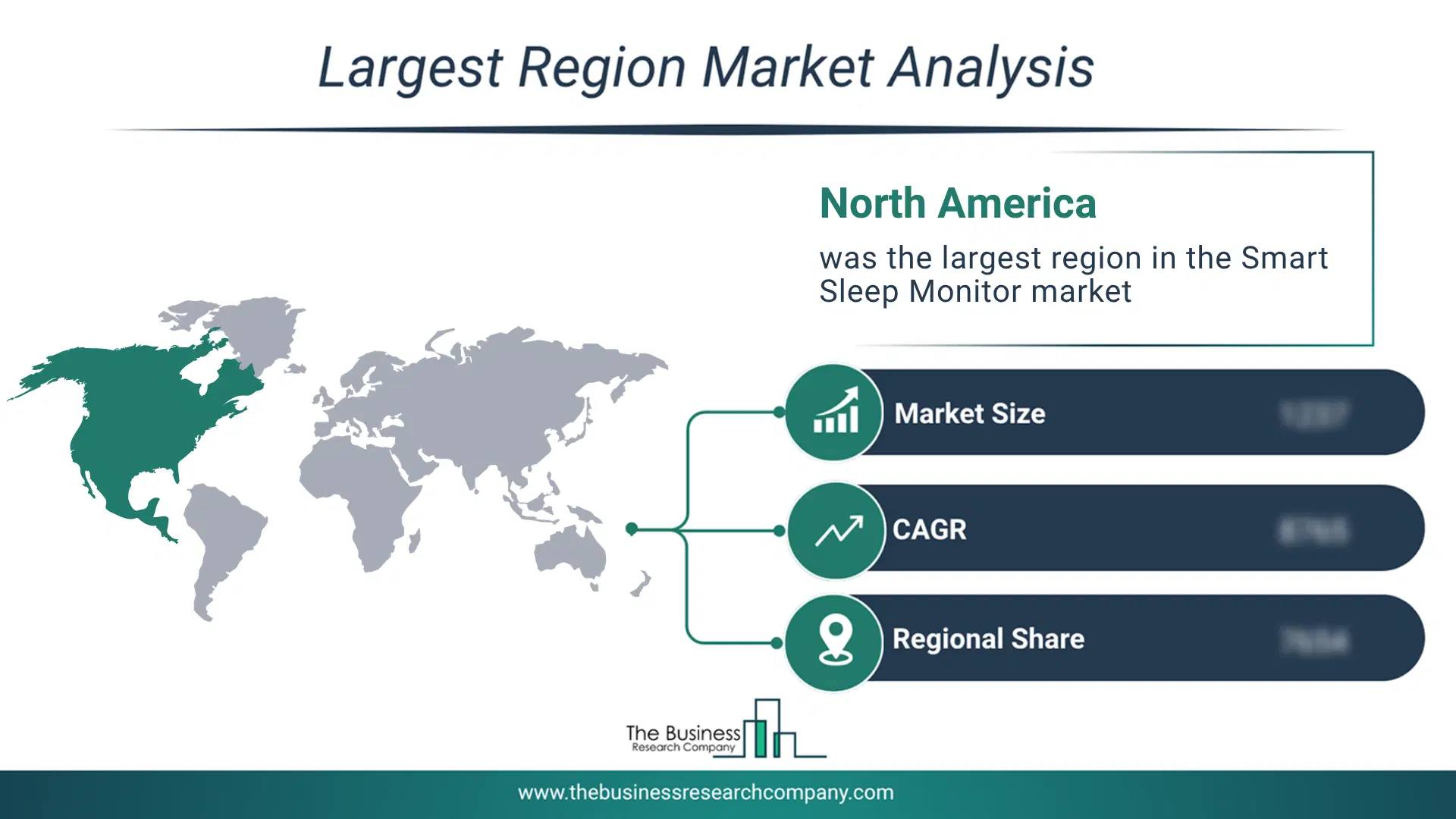
Regional Outlook
North America was the largest region in the smart sleep monitor market in 2025. The regions covered in this market report are Asia-Pacific, South East Asia, Western Europe, Eastern Europe, North America, South America, Middle East, Africa. The countries covered in this market report are Australia, Brazil, China, France, Germany, India, Indonesia, Japan, Taiwan, Russia, South Korea, UK, USA, Canada, Italy, SpainWhat Defines the Smart Sleep Monitor Market?
The smart sleep monitor market consists of sales of fitness trackers, smartwatches, sleep-tracking mattresses, and sleep monitoring pads. Values in this market are ‘factory gate’ values, that is the value of goods sold by the manufacturers or creators of the goods, whether to other entities (including downstream manufacturers, wholesalers, distributors, and retailers) or directly to end customers. The value of goods in this market includes related services sold by the creators of the goods.How is Market Value Defined and Measured?
The market value is defined as the revenues that enterprises gain from the sale of goods and/or services within the specified market and geography through sales, grants, or donations in terms of the currency (in USD unless otherwise specified). The revenues for a specified geography are consumption values that are revenues generated by organizations in the specified geography within the market, irrespective of where they are produced. It does not include revenues from resales along the supply chain, either further along the supply chain or as part of other products.
This chart presents market attractiveness based on a quantitative evaluation of growth, competition, strategic alignment, and risk, offering a clear view of opportunity areas for decision-making. This chart is for illustrative purposes; the full report contains the complete analysis.

This chart highlights the Total Addressable Market (TAM) by estimating the maximum revenue opportunity using an assumption-driven approach, supporting strategic planning and opportunity sizing across markets. The chart is illustrative; the full report provides a more comprehensive analysis.
What Key Data and Analysis Are Included in the Smart Sleep Monitor Market Report 2026?
The smart sleep monitor market research report is one of a series of new reports from The Business Research Company that provides market statistics, including industry global market size, regional shares, competitors with the market share, detailed market segments, market trends and opportunities, and any further data you may need to thrive in the smart sleep monitor industry. The market research report delivers a complete perspective of everything you need, with an in-depth analysis of the current and future state of the industry.Smart Sleep Monitor Market Report Forecast Analysis
| Report Attribute | Details |
|---|---|
| Market Size Value In 2026 | $32.99 billion |
| Revenue Forecast In 2030 | $55.51 billion |
| Growth Rate | CAGR of 13.9% from 2026 to 2030 |
| Base Year For Estimation | 2025 |
| Actual Estimates/Historical Data | 2020-2025 |
| Forecast Period | 2026 - 2030 |
| Market Representation | Revenue in USD Billion and CAGR from 2026 to 2030 |
| Segments Covered | Type, Technology, Application |
| Regional Scope | Asia-Pacific, Western Europe, Eastern Europe, North America, South America, Middle East, Africa |
| Country Scope | The countries covered in the report are Australia, Brazil, China, France, Germany, India, Indonesia, Japan, Taiwan, Russia, South Korea, UK, USA, Canada, Italy, Spain. |
| Key Companies Profiled | Apple Inc., Samsung Electronics Co. Ltd, Xiaomi Corporation, Koninklijke Philips NV, Garmin Ltd, ResMed Inc., Sleep Number Corporation, Fitbit LLC, Misfit Inc., Withings Corporation, Owlet Inc., Empatica Inc., Sibel Health Inc., Sleepiz AG, Eight Sleep, Early Sense Inc., Beddit Inc., Emfit Inc., Ultrahuman Inc., Onera Health Inc. |
| Customization Scope | Request for Customization |
| Pricing And Purchase Options | Explore Purchase Options |