

Smart Stadium Market Report 2026
Global Outlook – By Component (Software, Services), By Deployment (On-Premise, Cloud, Hybrid), By Application (Stadium And Public Security, Building Automation, Event Management, Crowd Management, Other Applications) – Market Size, Trends, Strategies, and Forecast to 2030
Smart Stadium Market Overview
• Smart Stadium market size has reached to $16.48 billion in 2025 • Expected to grow to $45.97 billion in 2030 at a compound annual growth rate (CAGR) of 22.6% • Growth Driver: Driving Force Of Smart Stadium Market Is The Rise Of sports Leagues And Expanding Fan Experiences • Market Trend: Collaborative To Elevate Fan Experience And Operational Efficiency • Europe was the largest region in 2025 and Asia-Pacific is the fastest growing region.What Is Covered Under Smart Stadium Market?
Smart stadium refers to an arena that integrates a significant number of servers, wired and wireless networks, cameras, and digital signage. The number of hot dogs available at concession stands, waiting lines, and other stadium data are all provided by sensors in real-time. A smart stadium uses wired and wireless networks to connect cameras, sensors, and digital signs. Smart stadiums provide a lot of information to the audience and crew, and they directly respond to audience demands such as in-stadium retail pricing, restroom availability, and a variety of other issues. The ability to give a tailored experience to the audience has been made possible by smart stadiums. The main types of components in smart stadiums are software and services. Stadium software is designed to integrate connected systems and the data collected by such systems with various other smart solutions. The smart stadium software includes building automation, crowd management, stadium and public security, and digital content management. The different modes of deployment include on-premise, cloud, and hybrid and are used in stadium and public security, building automation, event management, crowd management, and others.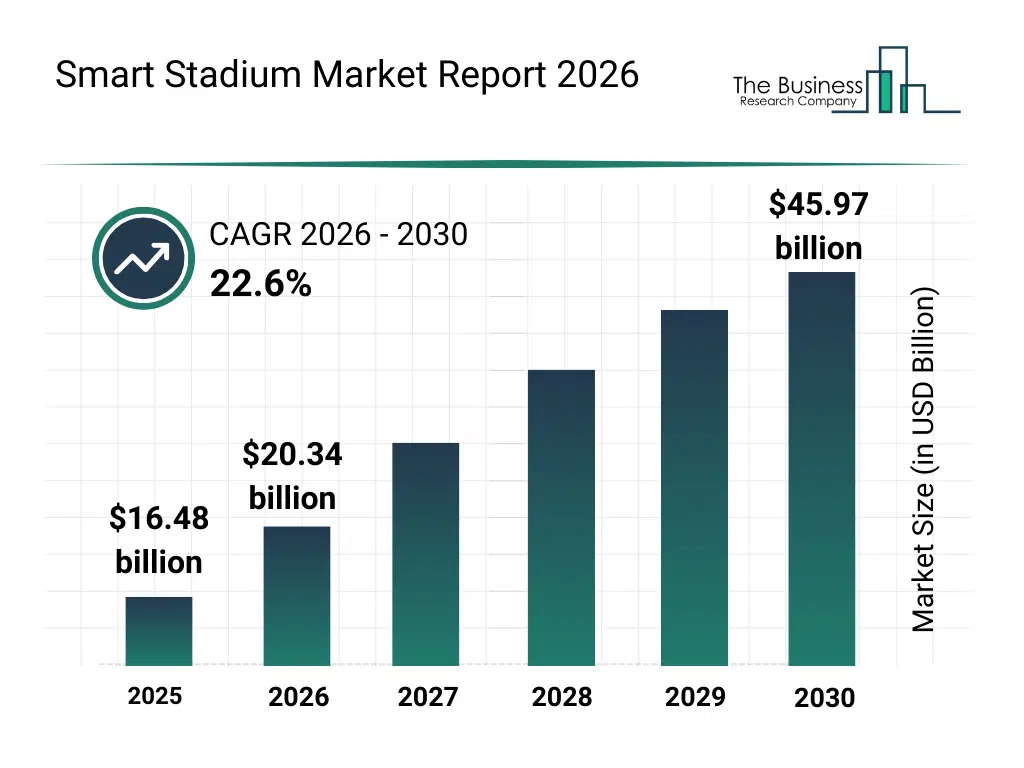
What Is The Smart Stadium Market Size and Share 2026?
The smart stadium market size has grown exponentially in recent years. It will grow from $16.48 billion in 2025 to $20.34 billion in 2026 at a compound annual growth rate (CAGR) of 23.4%. The growth in the historic period can be attributed to adoption of digital signage, deployment of basic surveillance cameras, early implementation of event management software, integration of wired and wireless networks, demand for enhanced fan experience.What Is The Smart Stadium Market Growth Forecast?
The smart stadium market size is expected to see exponential growth in the next few years. It will grow to $45.97 billion in 2030 at a compound annual growth rate (CAGR) of 22.6%. The growth in the forecast period can be attributed to ai-driven audience insights, cloud-based stadium management solutions, immersive fan experience technologies, predictive crowd management systems, expansion of smart stadiums in emerging markets. Major trends in the forecast period include real-time audience analytics, smart concession and retail management, crowd flow and safety optimization, integrated ticketing and access control, personalized fan engagement solutions.
Global Smart Stadium Market Segmentation
1) By Component: Software, Services 2) By Deployment: On-Premise, Cloud, Hybrid 3) By Application: Stadium And Public Security, Building Automation, Event Management, Crowd Management, Other Applications Subsegments: 1) By Software: Event Management Software, Crowd Management Software, Ticketing Solutions, Digital Signage Solutions 2) By Services: Consulting Services, Integration And Deployment Services, Support and Maintenance Services, Managed ServicesWhat Is The Driver Of The Smart Stadium Market?
The growing sports league culture is projected to propel the growth of the smart stadiums market in the coming years. A sports league is a group of clubs that play against one another with a set of rules and procedures. Smart stadiums provide fans and employees with a wealth of information about the game, parking options, seat upgrades, and the overall experience at their sports facility. For instance, in August 2023, construction management, a US-based magazine, the stadium's capacity will reach over 50,000 with the addition of 7,300 seats from the new stand, which will also have commercial space, better accessibility, and local transportation. Therefore, the growing sports league culture drives the smart stadiums industry growth.Key Players In The Global Smart Stadium Market
Major companies operating in the smart stadium market are Nippon Telegraph and Telephone Corporation; Huawei Technologies Co Ltd.; Intel Corporation; International Business Machines Corporation; Cisco Systems Inc.; Schneider Electric SE; Honeywell International Inc.; Fujitsu Limited; Telefonaktiebolaget LM Ericsson; Johnson Controls International plc; NEC Corporation; CenturyLink Inc.; Infosys Limited; NXP Semiconductors NV; Locbee; Atos SE; Tech Mahindra Limited; HPE Aruba Networking; Vix IP Pty Ltd.; Hawk-Eye Innovations Ltd.; Volteo Technology Pvt Ltd.; Dignia Systems Limited; Precision Sports Technologies Ltd.; AllGoVision Technologies Pvt Ltd.; GP Smart Stadium; Intechnology Byrom Ltd.; Ucopia Communications SA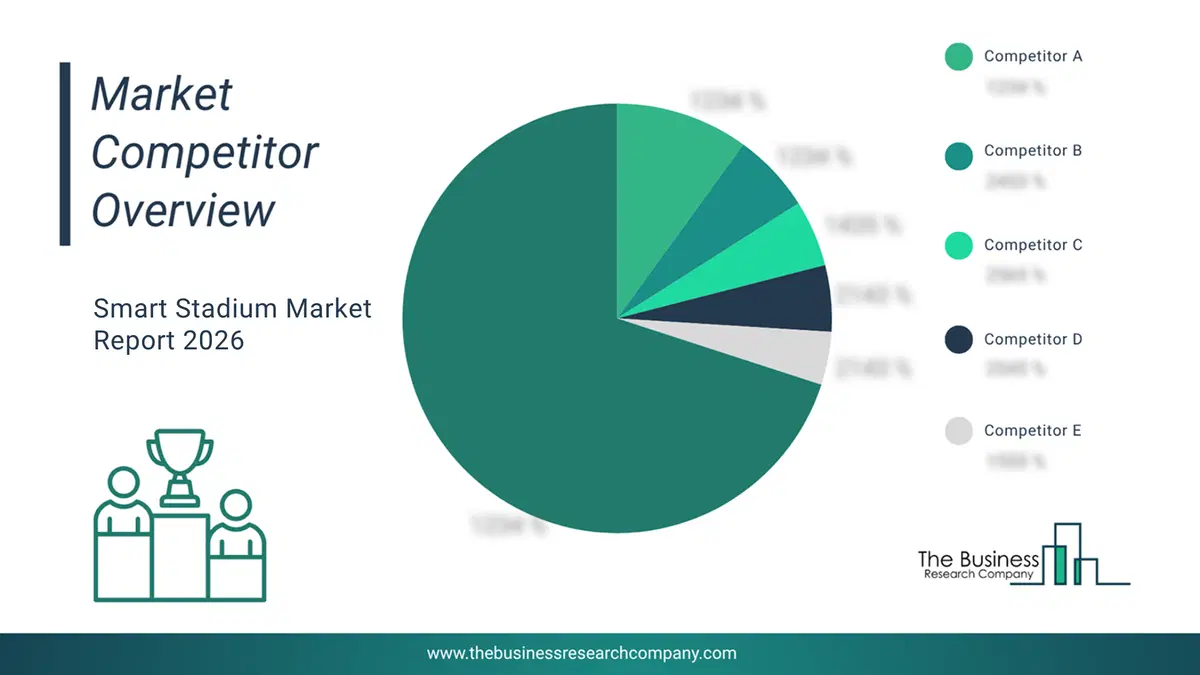
This chart is for illustrative purposes; the full report includes a detailed competitor analysis and comprehensive overview of the top 10 companies in the market.
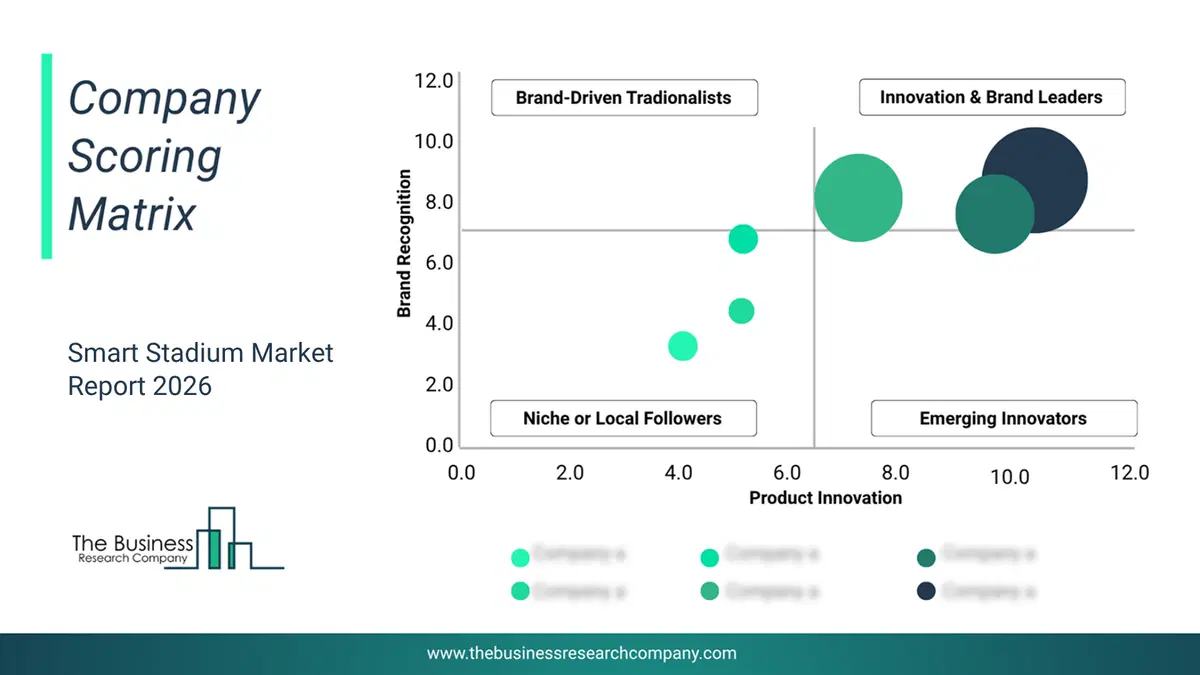
This chart maps companies by product innovation and brand strength, with bubble size indicating relative revenue, helping identify market leaders, challengers, and niche players. This is an illustrative chart; the full report provides a complete and accurate competitive analysis.
Global Smart Stadium Market Trends and Insights
Major companies operating in the smart stadiums market are forming partnerships to develop new products and strengthen their positions in the market. Collaborations and partnerships in the smart stadiums market foster innovation, leverage complementary expertise, and accelerate the development and commercialization of advanced therapies by combining resources and capabilities. For instance, in September 2023, JIG-SAW, a US-based provider of business information and data services partnered with Climatec LLC a US-based company that provides building technologies and energy solutions. This partnership is to provide the San Diego Padres (MLB) with Smart Stadium technology. Through this partnership, Petco Park will become an intelligent and connected venue through the integration of Climatec's building automation solutions and the deployment of JIG-SAW's IoT technology to develop and manage networks of smart equipment. The partnership between the two businesses, which will use IoT and building automation technology to improve the entire fan experience and streamline stadium operations, marks a significant step in the digital revolution of sporting stadiums.What Are Latest Mergers And Acquisitions In The Smart Stadium Market?
In September 2023, JIG-SAW company, a US-based IT investment company partners with Climatec to bring Smart Stadium technology to San Diego Padres (MLB) to enhance the fan experience, improve operational efficiency, and implement sustainable practices within the stadium, leveraging advanced technologies for real-time data analytics, energy management, and connectivity. With this partnership, JIG-SAW and Climatec aim to revolutionize the San Diego Padres' stadium by integrating Smart Stadium technology that enhances the overall fan experience through real-time data analytics, optimizes operational efficiency, and promotes sustainability by implementing energy-efficient systems and innovative connectivity solutions. Climatec is a US-based company that offers smart stadium.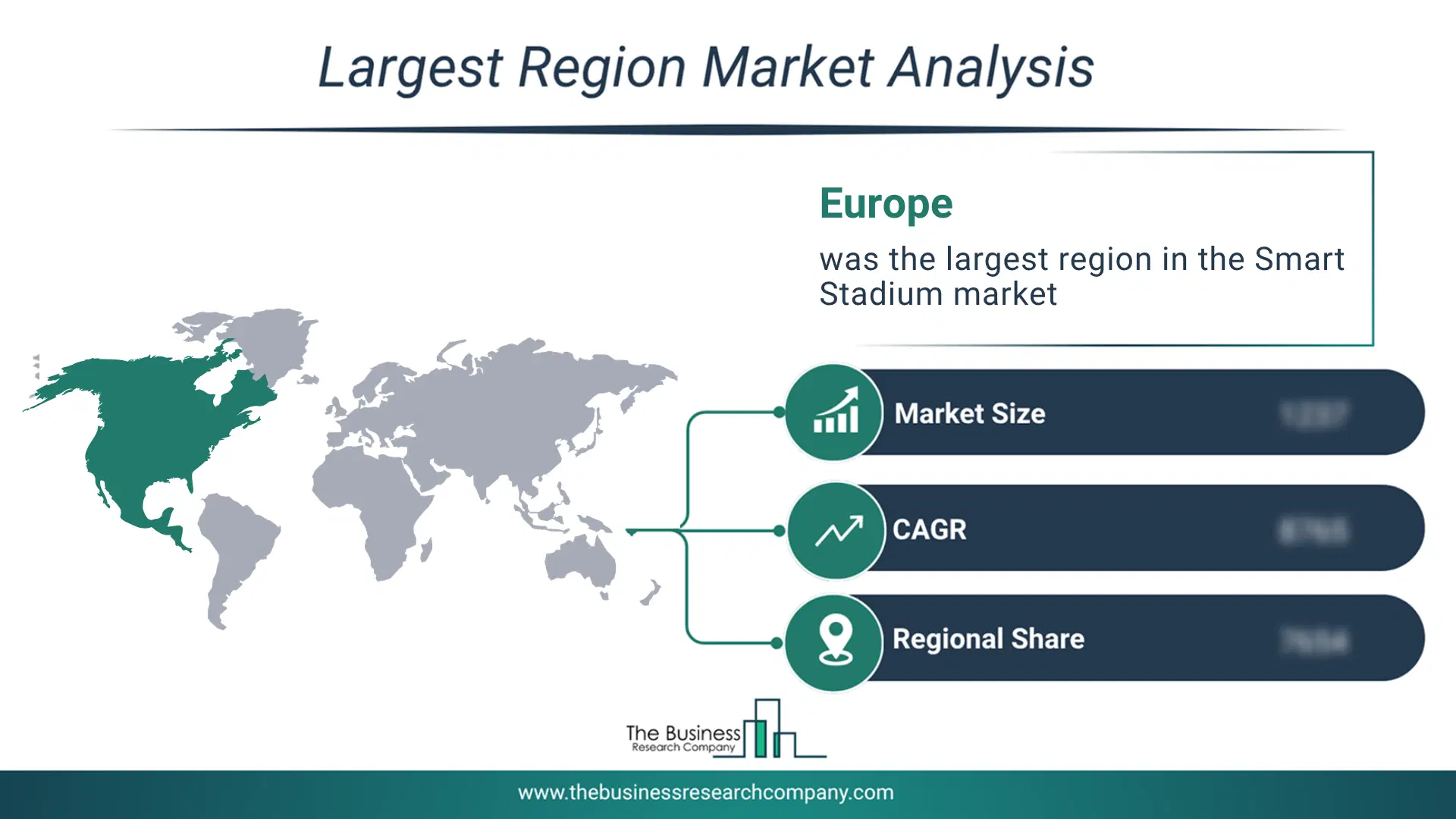
Regional Insights
Europe was the largest region in the smart stadium market in 2025. Asia-Pacific is expected to be the fastest-growing region in the forecast period. The regions covered in this market report are Asia-Pacific, South East Asia, Western Europe, Eastern Europe, North America, South America, Middle East, Africa. The countries covered in this market report are Australia, Brazil, China, France, Germany, India, Indonesia, Japan, Taiwan, Russia, South Korea, UK, USA, Canada, Italy, SpainWhat Defines the Smart Stadium Market?
The smart stadium market consists of revenues earned by entities by providing security, venue control and club management solutions. The market value includes the value of related goods sold by the service provider or included within the service offering. The smart stadium market also includes sales of sensors, cameras and digital signs that connect to wired and wireless networks. Values in this market are ‘factory gate’ values, that is the value of goods sold by the manufacturers or creators of the goods, whether to other entities (including downstream manufacturers, wholesalers, distributors and retailers) or directly to end customers. The value of goods in this market includes related services sold by the creators of the goods.How is Market Value Defined and Measured?
The market value is defined as the revenues that enterprises gain from the sale of goods and/or services within the specified market and geography through sales, grants, or donations in terms of the currency (in USD unless otherwise specified). The revenues for a specified geography are consumption values that are revenues generated by organizations in the specified geography within the market, irrespective of where they are produced. It does not include revenues from resales along the supply chain, either further along the supply chain or as part of other products.
This chart presents market attractiveness based on a quantitative evaluation of growth, competition, strategic alignment, and risk, offering a clear view of opportunity areas for decision-making. This chart is for illustrative purposes; the full report contains the complete analysis.

This chart highlights the Total Addressable Market (TAM) by estimating the maximum revenue opportunity using an assumption-driven approach, supporting strategic planning and opportunity sizing across markets. The chart is illustrative; the full report provides a more comprehensive analysis.
What Key Data and Analysis Are Included in the Smart Stadium Market Report 2026?
The smart stadium market research report is one of a series of new reports from The Business Research Company that provides market statistics, including industry global market size, regional shares, competitors with the market share, detailed market segments, market trends and opportunities, and any further data you may need to thrive in the smart stadium industry. The market research report delivers a complete perspective of everything you need, with an in-depth analysis of the current and future state of the industry.Smart Stadium Market Report Forecast Analysis
| Report Attribute | Details |
|---|---|
| Market Size Value In 2026 | $20.34 billion |
| Revenue Forecast In 2030 | $45.97 billion |
| Growth Rate | CAGR of 22.6% from 2026 to 2030 |
| Base Year For Estimation | 2025 |
| Actual Estimates/Historical Data | 2020-2025 |
| Forecast Period | 2026 - 2030 |
| Market Representation | Revenue in USD Billion and CAGR from 2026 to 2030 |
| Segments Covered | Component, Deployment, Application |
| Regional Scope | Asia-Pacific, Western Europe, Eastern Europe, North America, South America, Middle East, Africa |
| Country Scope | The Countries Covered In This Market Report Are Australia, Brazil, China, France, Germany, India, Indonesia, Japan, Taiwan, Russia, South Korea, Uk, Usa, Canada, Italy, Spain. |
| Key Companies Profiled | Nippon Telegraph and Telephone Corporation, Huawei Technologies Co Ltd., Intel Corporation, International Business Machines Corporation, Cisco Systems Inc., Schneider Electric SE, Honeywell International Inc., Fujitsu Limited, Telefonaktiebolaget LM Ericsson, Johnson Controls International plc, NEC Corporation, CenturyLink Inc., Infosys Limited, NXP Semiconductors NV, Locbee, Atos SE, Tech Mahindra Limited, HPE Aruba Networking, Vix IP Pty Ltd., Hawk-Eye Innovations Ltd., Volteo Technology Pvt Ltd., Dignia Systems Limited, Precision Sports Technologies Ltd., AllGoVision Technologies Pvt Ltd., GP Smart Stadium, Intechnology Byrom Ltd., Ucopia Communications SA |
| Customization Scope | Request for Customization |
| Pricing And Purchase Options | Explore Purchase Options |