
Smart Surgical Helmet Systems Market Report 2026
Global Outlook – By Product Type (Integrated Camera Systems, Ventilated Helmet Systems, Communication Enabled Helmets, Other Product Types), By Distribution Channel (Direct Sales, Distributors, Online Sales, Other Distribution Channel), By Application (Orthopedic Surgery, Neurosurgery, General Surgery, Ear Nose And Throat Surgery, Other Applications), By End User (Hospitals, Ambulatory Surgical Centers, Specialty Clinics, Other End Users) – Market Size, Trends, Strategies, and Forecast to 2030
Smart Surgical Helmet Systems Market Overview
• Smart Surgical Helmet Systems market size has reached to $0.65 billion in 2025 • Expected to grow to $1.27 billion in 2030 at a compound annual growth rate (CAGR) of 14.5% • Growth Driver: Expansion Of Surgical Procedure Volumes Fueling The Growth Of The Market Due To Rising Demand For Enhanced Surgical Safety And Efficiency • Market Trend: Advancing Surgical Visualization With Extended Reality Wearable Displays, Real-Time Data Access, And Immersive Operating Room Insights • North America was the largest region in 2025 and Asia-Pacific is the fastest growing region.What Is Covered Under Smart Surgical Helmet Systems Market?
Smart surgical helmet systems are advanced wearable devices used by surgeons to provide enhanced protection, visualization, and communication during operations. They integrate features such as high-definition displays, voice control, and real-time data access. These systems are used to improve surgical precision, maintain sterility, and enhance the overall safety and efficiency of surgical procedures. These systems also support augmented reality applications and intraoperative guidance. The main product types of smart surgical helmet systems are integrated camera systems, ventilated helmet systems, communication enabled helmets, and others. Integrated camera systems are advanced surgical helmets equipped with high-definition imaging capabilities that allow real-time visualization, documentation, and remote collaboration during surgical procedures. These systems are distributed through direct sales, distributors, online sales, and others, used in applications such as orthopedic surgery, neurosurgery, general surgery, ear nose and throat surgery, and others, among end users including hospitals, ambulatory surgical centers, specialty clinics, and others.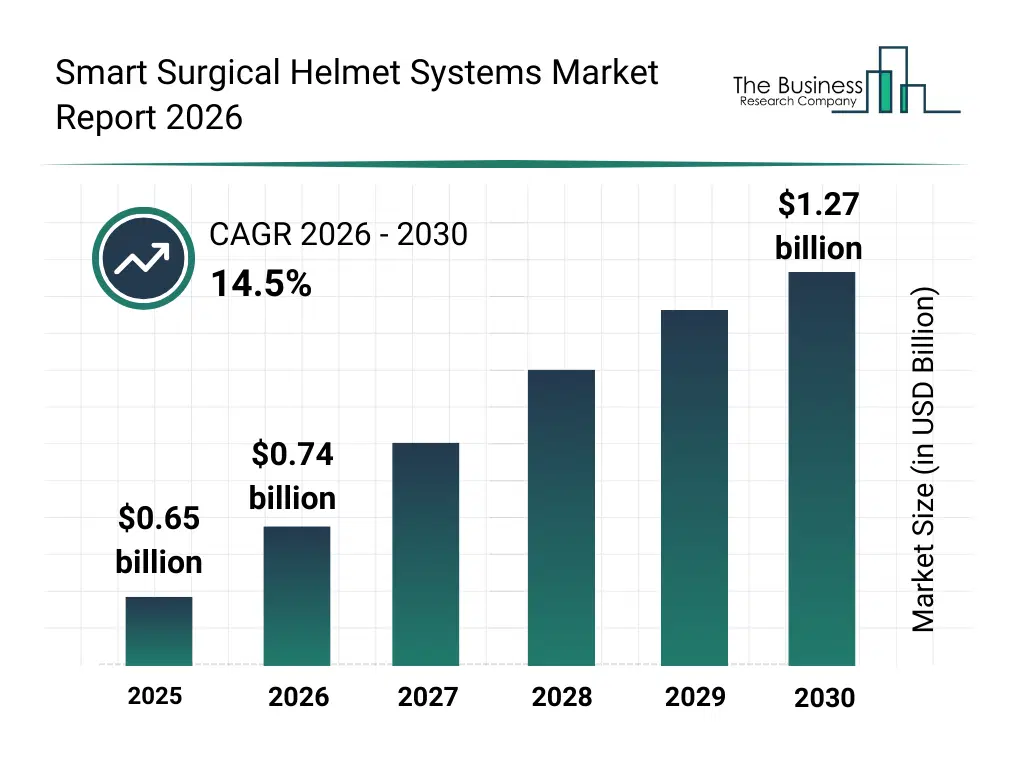
What Is The Smart Surgical Helmet Systems Market Size and Share 2026?
The smart surgical helmet systems market size has grown rapidly in recent years. It will grow from $0.65 billion in 2025 to $0.74 billion in 2026 at a compound annual growth rate (CAGR) of 14.8%. The growth in the historic period can be attributed to growing adoption of advanced surgical protective equipment, increasing demand for infection control in operating rooms, rising use of wearable technology in healthcare, expansion of orthopedic and complex surgical procedures, and growing focus on surgeon safety and comfort.What Is The Smart Surgical Helmet Systems Market Growth Forecast?
The smart surgical helmet systems market size is expected to see rapid growth in the next few years. It will grow to $1.27 billion in 2030 at a compound annual growth rate (CAGR) of 14.5%. The growth in the forecast period can be attributed to increasing integration of smart surgical helmet systems with artificial intelligence (AI) and augmented reality (AR) technologies, rising demand for enhanced surgical visualization, growing adoption of minimally invasive and robotic surgeries, expansion of hospital and surgical center infrastructure, and a rise in investment for ergonomic and connected surgical equipment. Major trends in the forecast period include technology-driven innovations in lightweight and ergonomic helmet designs, advancements in artificial intelligence (AI)-assisted surgical navigation, developments in augmented reality (AR) overlays and real-time imaging, rising research and development in smart sterilization and safety features, and innovation in integrated communication and monitoring systems.
Global Smart Surgical Helmet Systems Market Segmentation
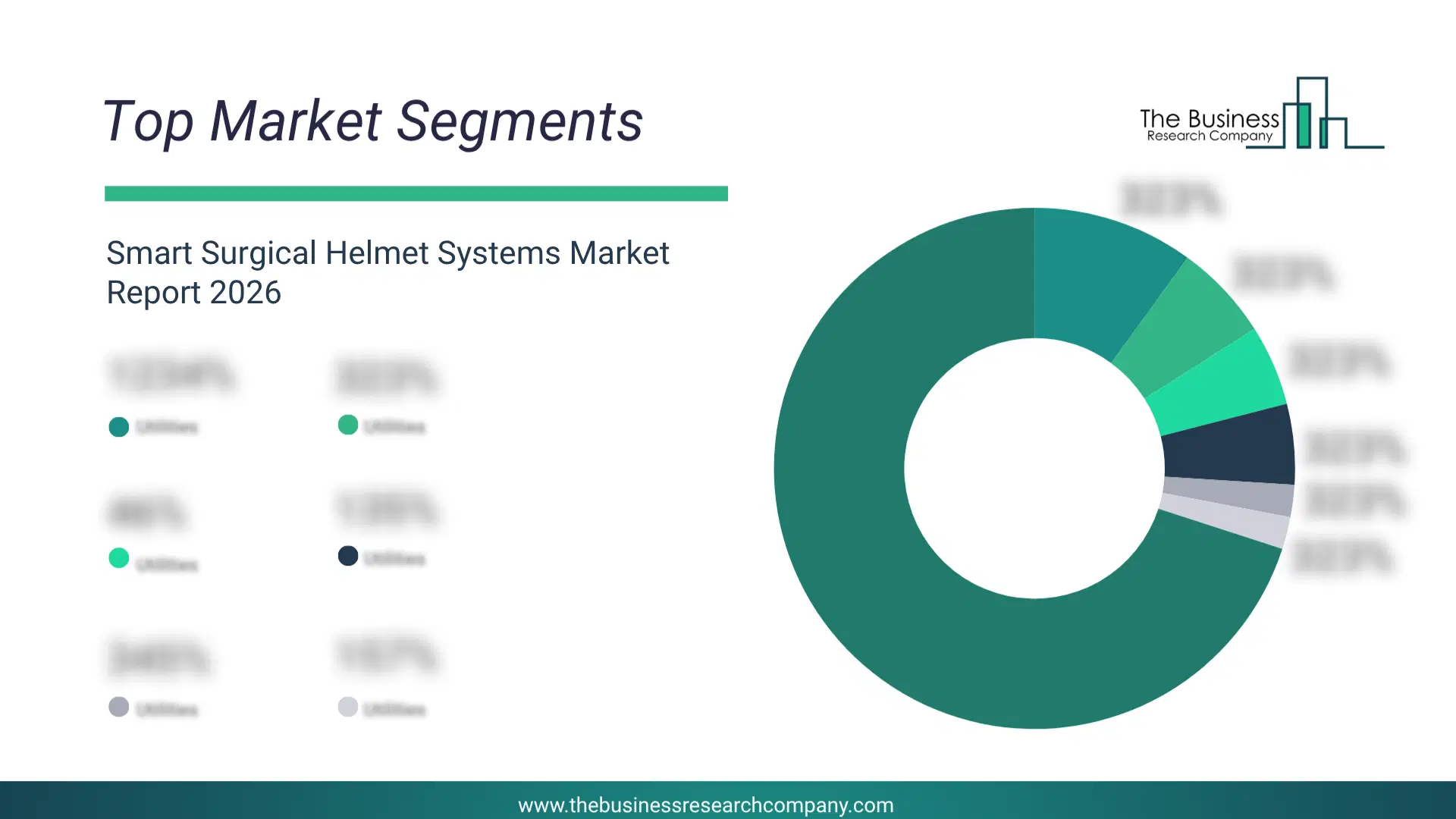
1) By Product Type: Integrated Camera Systems, Ventilated Helmet Systems, Communication Enabled Helmets, Other Product Types 2) By Distribution Channel: Direct Sales, Distributors, Online Sales, Other Distribution Channel 3) By Application: Orthopedic Surgery, Neurosurgery, General Surgery, Ear Nose And Throat Surgery, Other Applications 4) By End User: Hospitals, Ambulatory Surgical Centers, Specialty Clinics, Other End Users Subsegments: 1) By Integrated Camera Systems: High Resolution Camera Systems, Thermal Imaging Camera Systems, Three Dimensional Imaging Camera Systems 2) By Ventilated Helmet Systems: Active Airflow Helmet Systems, Filter Equipped Helmet Systems, Cooling Enhanced Helmet Systems 3) By Communication Enabled Helmets: Wireless Communication Helmet Systems, Hands Free Communication Helmet Systems, Integrated Audio Visual Communication Helmets 4) By Other Product Types: Protective Helmet Accessories, Lighting Integrated Helmet Systems, Modular Surgical Helmet ComponentsWhat Are The Drivers Of The Smart Surgical Helmet Systems Market?
The expansion of surgical procedure volumes is expected to propel the smart surgical helmet systems market going forward. Expansion of surgical procedure volumes refers to the increasing number of elective and emergency surgeries performed across hospitals and surgical centers due to aging populations, rising prevalence of chronic diseases, and improved access to healthcare services. Surgical procedure volumes are rising as the global population ages and chronic and lifestyle-related diseases increase, as these conditions often require more surgical treatments. Smart surgical helmet systems aid in surgical procedures by providing enhanced protection, real-time monitoring, and integrated visualization for surgeons. They improve procedural efficiency and patient safety by combining ergonomic design with advanced technological support in the operating room. For instance, in June 2025, according to Intuitive Surgical Inc., a US-based medical technology company, approximately 2,683,000 procedures were performed using da Vinci surgical systems in 2024, compared to 2,286,000 procedures in 2023 and 1,875,000 in 2022, with the year on year increase in 2024. Therefore, the expansion of surgical procedure volumes is driving the growth of the smart surgical helmet systems industry. The increasing focus on infection control is expected to propel the growth of the smart surgical helmet systems market going forward. Infection control refers to practices, procedures, and measures implemented in healthcare and other settings to prevent the spread of infections and protect patients, healthcare workers, and the community. The emphasis on infection control is rising as healthcare systems worldwide intensify efforts to prevent healthcare associated infections and safeguard patients and staff. Smart surgical helmet systems support infection control by providing a protective barrier that reduces the risk of contaminant exposure in the operating room. They improve surgical safety by combining advanced filtration, airflow management, and ergonomic design to minimize the spread of pathogens. For instance, in November 2024, according to the Center for Infectious Disease Research and Policy, a US-based infectious disease research center, US acute care hospitals saw a 15% decline in central line-associated bloodstream infections and an 11% drop in catheter-associated urinary tract infections in 2023 compared with 2022, reflecting enhanced infection control measures that include improved environmental controls such as HVAC systems. Therefore, the increasing focus on infection control and air quality compliance is driving the smart surgical helmet systems industry.Key Players In The Global Smart Surgical Helmet Systems Market
Major companies operating in the smart surgical helmet systems market are Cardinal Health Inc., Johnson & Johnson, Medtronic plc, 3M Company, Stryker Corporation, Ecolab Inc., Smith & Nephew plc, Baxter International Inc., Zimmer Biomet Holdings Inc., STERIS plc, Arthrex Inc., KARL STORZ SE & Co. KG, Ansell Limited, Integra LifeSciences Holdings Corporation, NuVasive Inc., MicroPort Scientific Corporation, Orthofix Medical Inc., Synaptive Medical Inc., SurgiTel, Maxair Systems, Enova Illumination, Bioservo Technologies AB, Illumigyn Ltd., Kaiser Technology Co. Ltd., THI Total Healthcare Innovation GmbH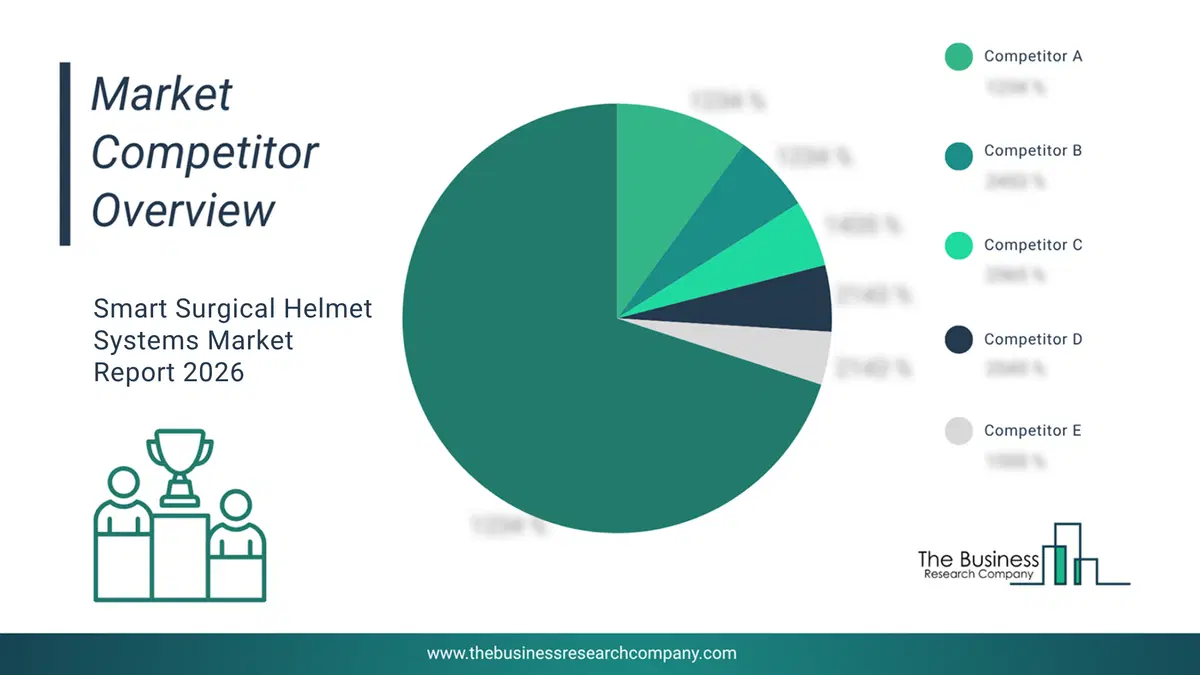
This chart is for illustrative purposes; the full report includes a detailed competitor analysis and comprehensive overview of the top 10 companies in the market.
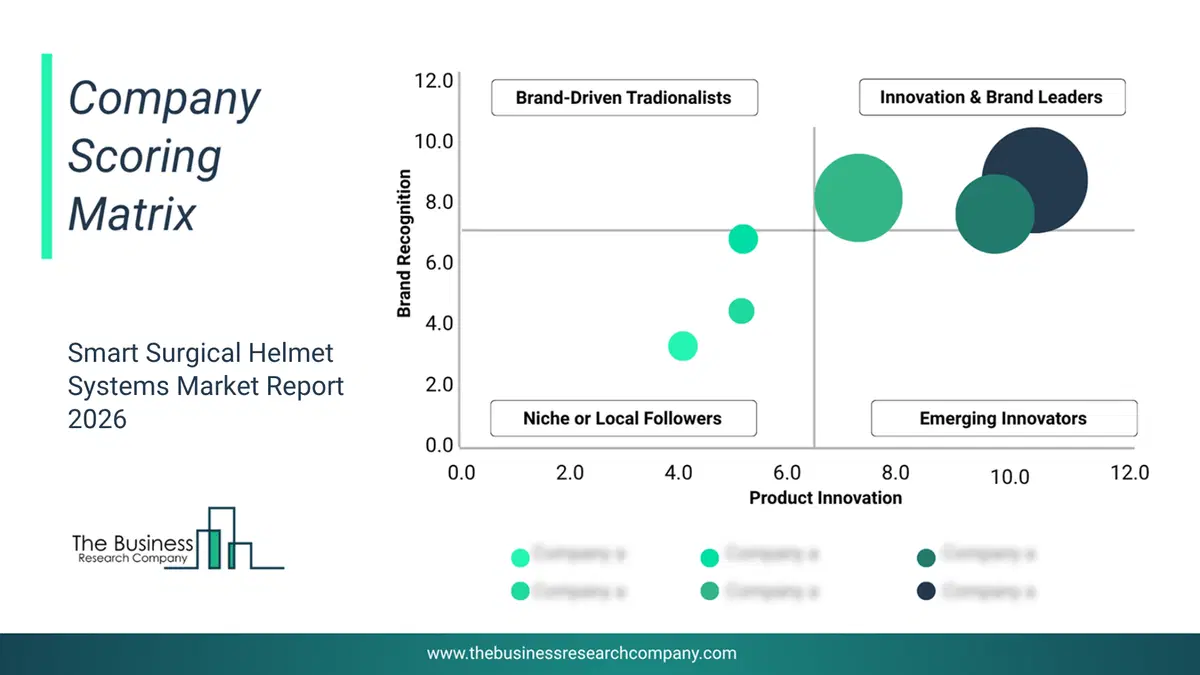
This chart maps companies by product innovation and brand strength, with bubble size indicating relative revenue, helping identify market leaders, challengers, and niche players. This is an illustrative chart; the full report provides a complete and accurate competitive analysis.
Global Smart Surgical Helmet Systems Market Trends and Insights
Major companies operating in the smart surgical helmet systems market are focusing on developing technologically advanced products, such as extended reality (XR) wearable displays, to enhance surgical precision, situational awareness, and intraoperative decision-making. Extended reality wearable displays refer to head-mounted devices that integrate virtual, augmented, or mixed reality content into a surgeon’s field of view, allowing for overlay of critical imaging, real-time patient data, and interactive guidance during procedures. For instance, in April 2024, MediThinQ Inc., a South Korea-based medical technology startup, launched extended reality (XR) surgical displays designed for smart surgical helmet systems. These wearable displays provide surgeons with immersive, real-time visualization of patient anatomy, procedural guidance, and collaborative data sharing in the operating room. By integrating XR technology into wearable surgical helmets, MediThinQ enables enhanced precision, reduces cognitive load, and supports safer, more efficient surgical workflows, broadening access to next-generation surgical visualization tools worldwide.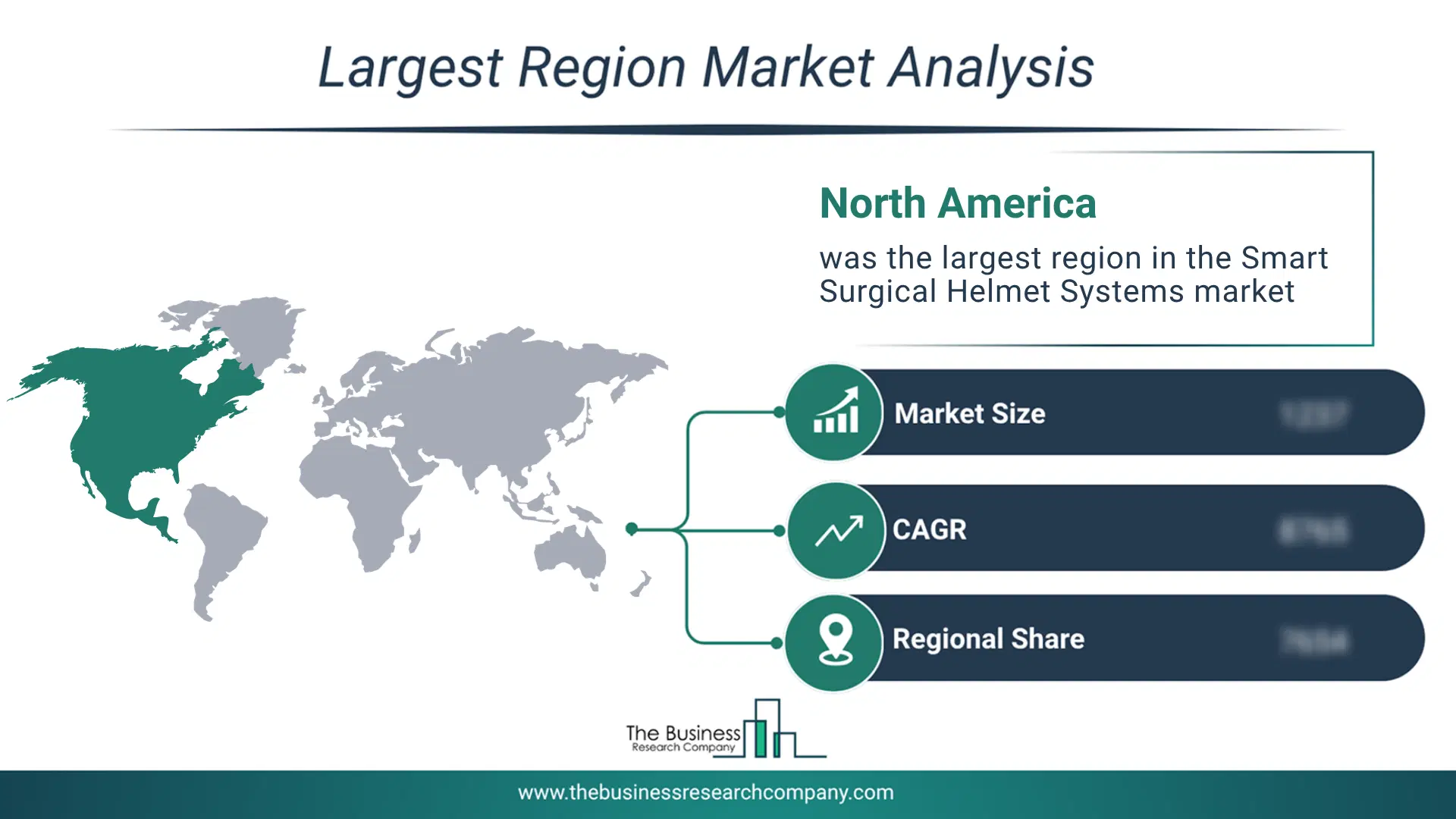
Regional Insights
North America was the largest region in the smart surgical helmet systems market in 2025. Asia-Pacific is expected to be the fastest-growing region in the forecast period. The regions covered in this market report are Asia-Pacific, South East Asia, Western Europe, Eastern Europe, North America, South America, Middle East, Africa. The countries covered in this market report are Australia, Brazil, China, France, Germany, India, Indonesia, Japan, Taiwan, Russia, South Korea, UK, USA, Canada, Italy, Spain.What Defines the Smart Surgical Helmet Systems Market?
The smart surgical helmet systems market consists of revenues earned by entities by providing services such as enhanced surgical field visualization, integrated communication support, airflow and contamination control, real-time environmental monitoring, and technical maintenance and training services. The market value includes the value of related goods sold by the service provider or included within the service offering. The smart surgical helmet systems market also includes sales of smart surgical helmets, powered air-purifying surgical helmet systems, integrated visor and face-shield units, helmet-mounted lighting and communication modules, and smart protective headgear for surgical environments. Values in this market are ‘factory gate’ values, that is, the value of goods sold by the manufacturers or creators of the goods, whether to other entities (including downstream manufacturers, wholesalers, distributors, and retailers) or directly to end customers. The value of goods in this market includes related services sold by the creators of the goods.How is Market Value Defined and Measured?
The market value is defined as the revenues that enterprises gain from the sale of goods and/or services within the specified market and geography through sales, grants, or donations in terms of the currency (in USD unless otherwise specified). The revenues for a specified geography are consumption values that are revenues generated by organizations in the specified geography within the market, irrespective of where they are produced. It does not include revenues from resales along the supply chain, either further along the supply chain or as part of other products.
This chart presents market attractiveness based on a quantitative evaluation of growth, competition, strategic alignment, and risk, offering a clear view of opportunity areas for decision-making. This chart is for illustrative purposes; the full report contains the complete analysis.

This chart highlights the Total Addressable Market (TAM) by estimating the maximum revenue opportunity using an assumption-driven approach, supporting strategic planning and opportunity sizing across markets. The chart is illustrative; the full report provides a more comprehensive analysis.
What Key Data and Analysis Are Included in the Smart Surgical Helmet Systems Market Report 2026?
The smart surgical helmet systems market research report is one of a series of new reports from The Business Research Company that provides market statistics, including industry global market size, regional shares, competitors with the market share, detailed market segments, market trends and opportunities, and any further data you may need to thrive in the smart surgical helmet systems industry. The market research report delivers a complete perspective of everything you need, with an in-depth analysis of the current and future state of the industry.Smart Surgical Helmet Systems Market Report Forecast Analysis
| Report Attribute | Details |
|---|---|
| Market Size Value In 2026 | $0.74 billion |
| Revenue Forecast In 2030 | $1.27 billion |
| Growth Rate | CAGR of 14.5% from 2026 to 2030 |
| Base Year For Estimation | 2025 |
| Actual Estimates/Historical Data | 2020-2025 |
| Forecast Period | 2026 - 2030 |
| Market Representation | Revenue in USD Billion and CAGR from 2026 to 2030 |
| Segments Covered | Product Type, Distribution Channel, Application, End User |
| Regional Scope | Asia-Pacific, Western Europe, Eastern Europe, North America, South America, Middle East, Africa |
| Country Scope | The countries covered in the report are Australia, Brazil, China, France, Germany, India, Indonesia, Japan, Taiwan, Russia, South Korea, UK, USA, Canada, Italy, Spain. |
| Key Companies Profiled | Cardinal Health Inc., Johnson & Johnson, Medtronic plc, 3M Company, Stryker Corporation, Ecolab Inc., Smith & Nephew plc, Baxter International Inc., Zimmer Biomet Holdings Inc., STERIS plc, Arthrex Inc., KARL STORZ SE & Co. KG, Ansell Limited, Integra LifeSciences Holdings Corporation, NuVasive Inc., MicroPort Scientific Corporation, Orthofix Medical Inc., Synaptive Medical Inc., SurgiTel, Maxair Systems, Enova Illumination, Bioservo Technologies AB, Illumigyn Ltd., Kaiser Technology Co. Ltd., THI Total Healthcare Innovation GmbH |
| Customization Scope | Request for Customization |
| Pricing And Purchase Options | Explore Purchase Options |