
Smart Textiles For Military Market Report 2026
Global Outlook – By Type (Passive Smart Textiles, Active Smart Textiles, Ultra-Smart Textiles), By Raw Material (Conductive Fibers, Phase Change Materials, Nanofibers, Smart Polymers), By Application (Camouflage, Ballistic Protection, Energy Harvesting, Health Monitoring, Other Applications), By End User (Army, Navy, Air Force, Special Forces) – Market Size, Trends, Strategies, and Forecast to 2030
Smart Textiles For Military Market Overview
• Smart Textiles For Military market size has reached to $3.07 billion in 2025 • Expected to grow to $5.88 billion in 2030 at a compound annual growth rate (CAGR) of 14% • Growth Driver: Rising Exposure To Chemical And Biological Threats Growth Due To Increasing Risk From Hazardous Agents • Market Trend: Next-Generation Textiles Minimize Discomfort And Maximize Operational Efficiency • North America was the largest region in 2025 and Asia-Pacific is the fastest growing region.Market Gains By 2030 – Top Opportunities By Segment
Market Gain identifies the most promising market opportunities by highlighting the segments or products expected to generate the highest incremental revenue growth over the next five years.
What Is Covered Under Smart Textiles For Military Market?
Smart textiles for military are advanced fabrics designed to enhance soldier performance and protection. They can monitor physiological conditions, adapt to environmental changes, or provide camouflage and defense capabilities. These textiles combine functionality with durability, aiming to improve safety, efficiency, and operational effectiveness in challenging conditions. The main types in the smart textiles for military market are passive smart textiles, active smart textiles, and ultra-smart textiles. Passive smart textiles refer to fabrics that possess inherent functional properties without requiring external power or stimuli to operate. The various raw materials include conductive fibers, phase change materials, nanofibers, and smart polymers. Key applications encompass camouflage, ballistic protection, energy harvesting, health monitoring, and others, serving diverse end users such as the army, navy, air force, and special forces.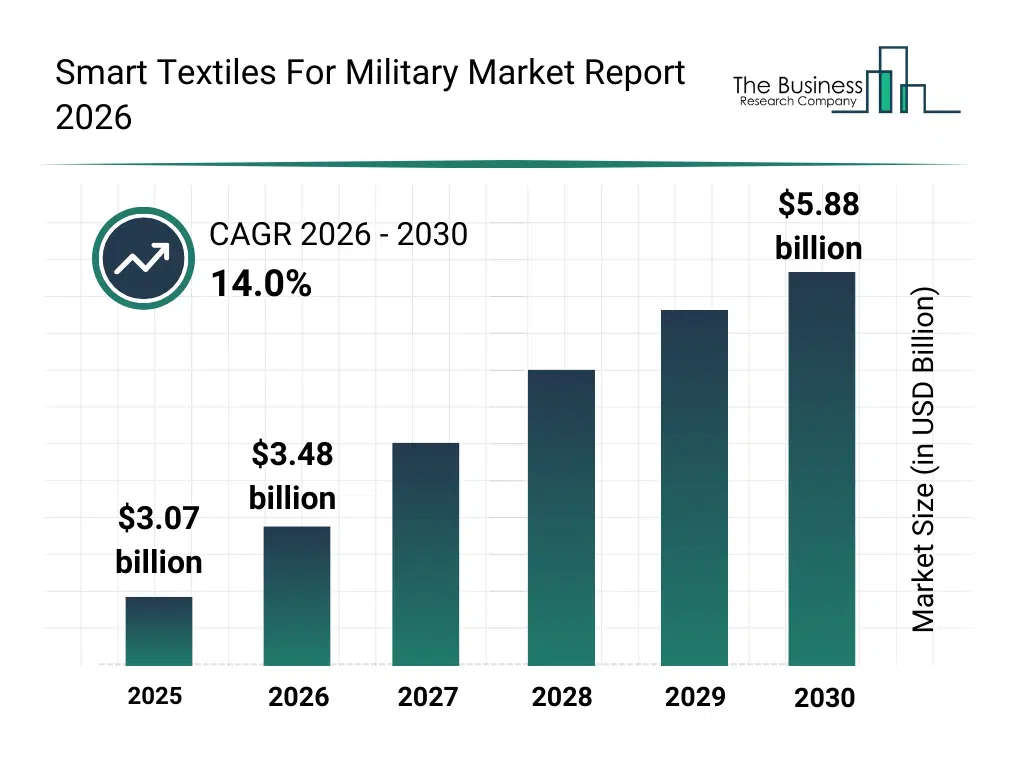
What Is The Smart Textiles For Military Market Size and Share 2026?
The smart textiles for military market size has grown rapidly in recent years. It will grow from $3.07 billion in 2025 to $3.48 billion in 2026 at a compound annual growth rate (CAGR) of 13.6%. The growth in the historic period can be attributed to adoption of wearable monitoring systems, development of electroactive and conductive fabrics, integration with protective clothing, growth in soldier safety and performance programs, advancement in adaptive camouflage textiles.What Is The Smart Textiles For Military Market Growth Forecast?
The smart textiles for military market size is expected to see rapid growth in the next few years. It will grow to $5.88 billion in 2030 at a compound annual growth rate (CAGR) of 14.0%. The growth in the forecast period can be attributed to development of fully integrated sensor and navigation fabrics, expansion in smart armor applications, integration with AI for real-time physiological monitoring, adoption in extreme environmental operations, growth in multifunctional protective and adaptive clothing. Major trends in the forecast period include growing development of lightweight high-durability combat fabrics, increasing integration of on-uniform physiological monitoring systems, expansion of adaptive camouflage and thermal signature management, rising adoption of energy-harvesting military wearables, strengthening emphasis on enhanced ballistic and blast protection.
Global Smart Textiles For Military Market Segmentation
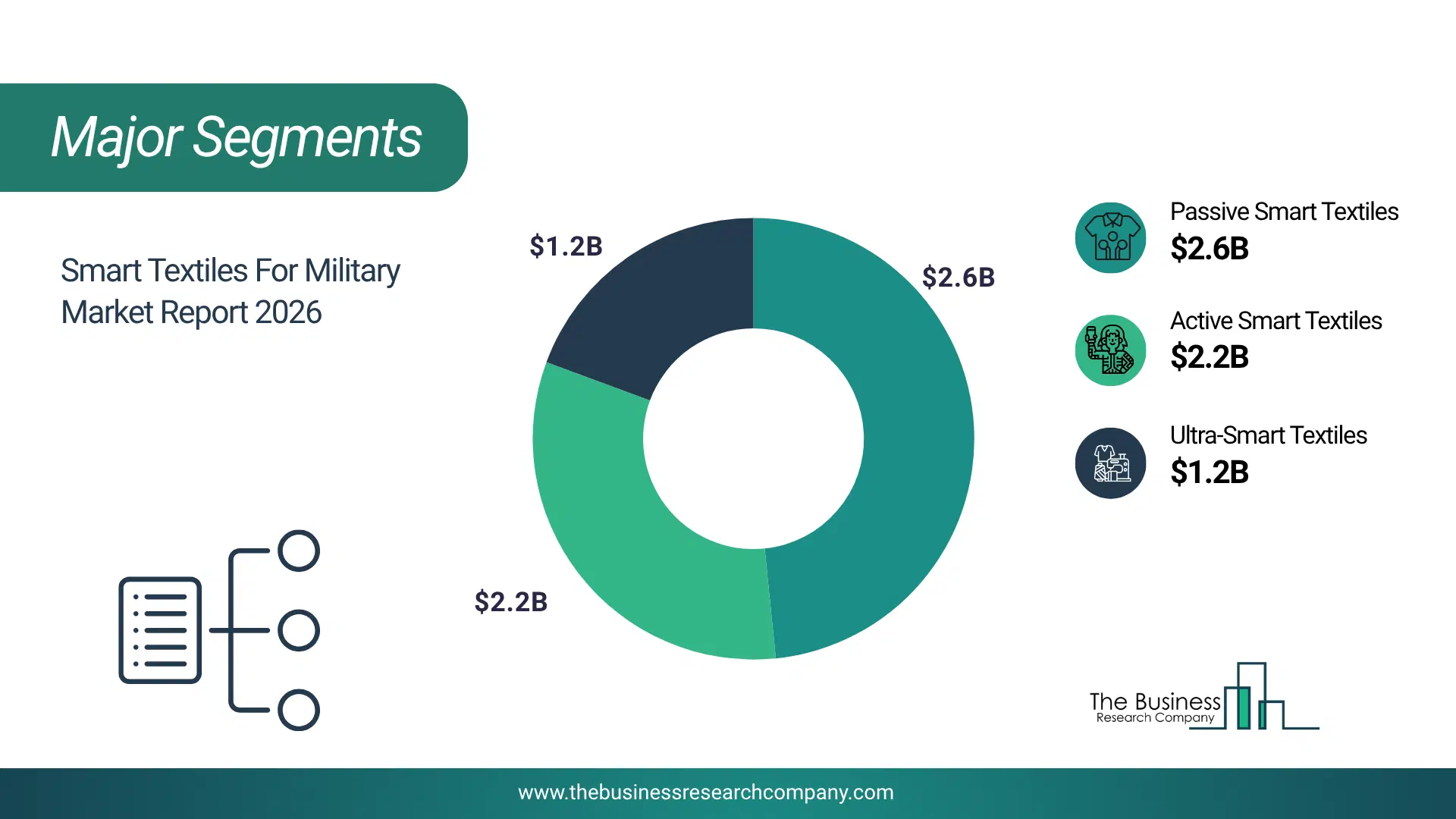
1) By Type: Passive Smart Textiles, Active Smart Textiles, Ultra-Smart Textiles 2) By Raw Material: Conductive Fibers, Phase Change Materials, Nanofibers, Smart Polymers 3) By Application: Camouflage, Ballistic Protection, Energy Harvesting, Health Monitoring, Other Applications 4) By End User: Army, Navy, Air Force, Special Forces Subsegments: 1) By Passive Smart Textiles: Temperature Regulating Fabrics, Moisture Absorbing Fabrics, Antimicrobial Fabrics, Ultraviolet Protecting Fabrics 2) By Active Smart Textiles: Energy Harvesting Fabrics, Conductive Fabrics, Shape Memory Fabrics, Thermochromic Fabrics 3) By Ultra-Smart Textiles: Sensor Integrated Fabrics, Communication Enabled Fabrics, Health Monitoring Fabrics, Adaptive Camouflage Fabrics The top segments in the smart textiles for military market will be: • Passive Smart Textiles will reach $2.55 billion by 2030. • Active Smart Textiles will reach $2.13 billion by 2030. • Ultra-Smart Textiles will reach $1.19 billion by 2030.What Is Driver Of The Smart Textiles For Military Market?
The rising exposure to chemical and biological threats is expected to propel the growth of the smart textiles for military market going forward. Chemical and biological threats refer to the use or potential use of hazardous chemical substances or biological agents such as toxins, viruses, or bacteria that can cause harm to human health, animals, plants, or the environment, often in the context of warfare, terrorism, or accidental exposure. Exposure to chemical and biological threats is rising due to increased industrialization, which leads to higher production, more widespread use of hazardous substances, and greater risk of accidental or intentional release into the environment. Smart textiles for military help address chemical and biological threats by providing protective clothing embedded with sensors and materials that detect, neutralize, or shield against hazardous agents. For instance, in June 2025, according to the report published by United Nations, a US-based intergovernmental organization, from February 2023 to June 2025, there were 9,712 documented cases of Russian occupation forces using munitions containing hazardous chemical agents, including riot control agents, as a method of warfare. Therefore, the rising exposure to chemical and biological threats is driving the growth of the smart textiles for military industry.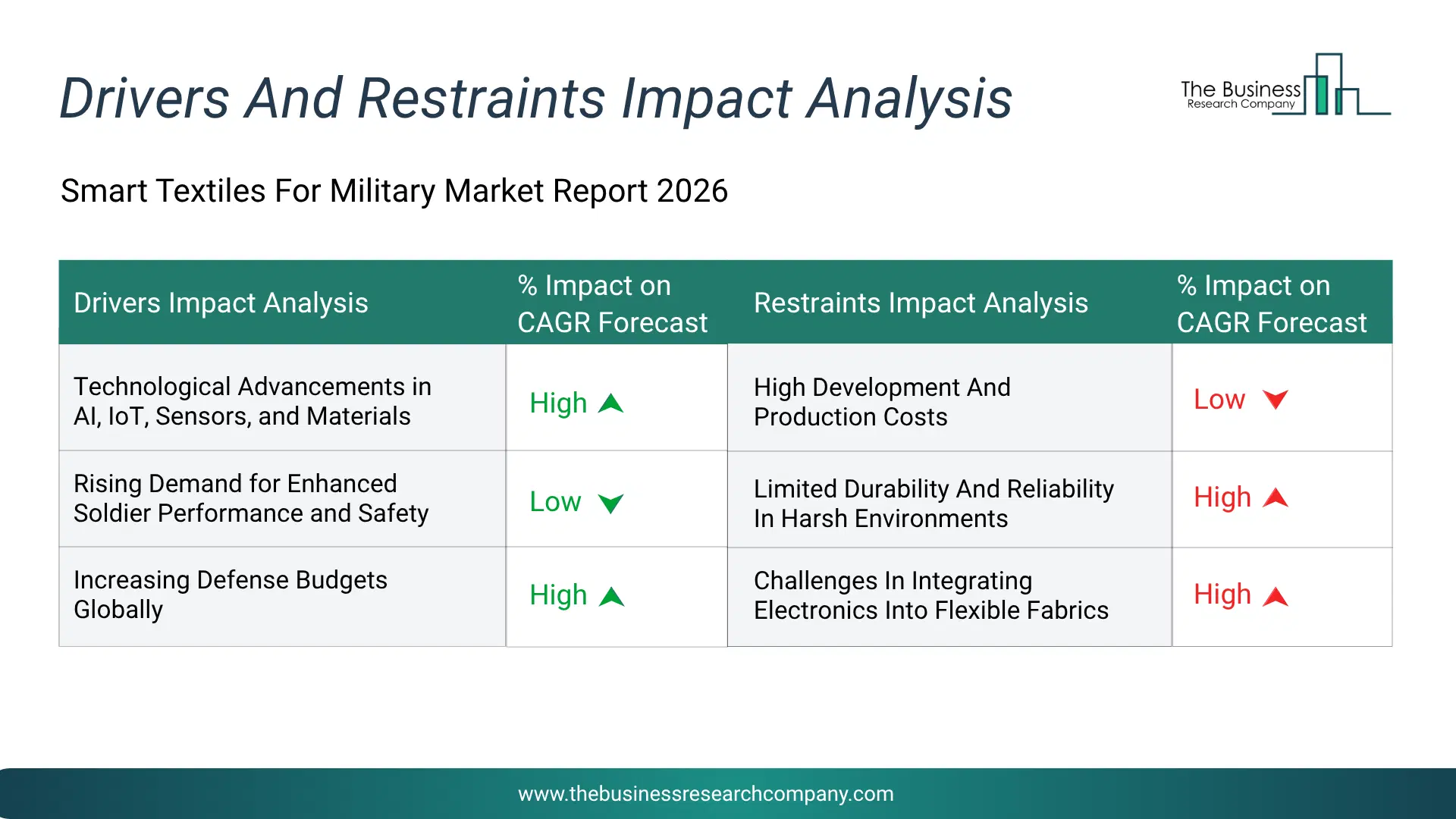
Infographic Chart Showing Key Market Drivers Analysis And Restraints For Smart Textiles For Military Market
The chart presents an impact analysis of key drivers and restraints, quantifying their relative influence on the market's growth rate and helping assess the balance between growth enablers and limiting factors. This chart offers a high-level perspective; the full report contains more detailed insights.
How Will The Drivers Impact Growth In The Global Smart Textiles For Military Market?
• Technological Advancements in AI, IoT, Sensors, and Materials (High) – During the forecast period, technological progress in artificial intelligence, iot connectivity, sensor systems, and advanced materials is projected to serve as a significant growth driver for the smart textiles for military market by 2030. Ongoing innovations in ai, iot integration, and sensor technologies are turning smart fabrics into advanced military solutions. These textiles are now capable of monitoring vital signs, tracking positioning, and delivering real-time situational awareness. The development of conductive fibers and nanotechnology-based materials further improves performance while preserving flexibility and wearer comfort. • Rising Demand for Enhanced Soldier Performance and Safety (Low) – During the forecast period, the growing emphasis on improving soldier performance and ensuring safety is anticipated to be a major factor driving the expansion of the smart textiles for military market by 2030. Armed forces around the world are actively pursuing technologies that enhance operational effectiveness while protecting personnel. Smart textiles can monitor fatigue levels, assess stress, and detect potential injuries, helping soldiers maintain combat readiness. This capability supports better strategic decisions by commanders and enhances troop protection in high-risk environments. • Increasing Defense Budgets Globally (High) – During the forecast period, the rise in defense spending worldwide is expected to function as a key catalyst for the growth of the smart textiles for military market by 2030. Higher military expenditures across leading nations are driving investments in sophisticated defense equipment, including smart textile solutions. Governments are concentrating on modernization initiatives that prioritize advanced soldier systems. This increasing funding accelerates research, development, and acquisition of smart textile technologies, promoting wider market adoption.How Will The Restraints Impact Growth In The Global Smart Textiles For Military Market?
• High Development And Production Costs (Low) – During the forecast period, the integration of advanced electronics and specialized fibers makes smart textiles significantly more expensive than conventional fabrics. High r&d expenditure, along with manufacturing complexity, limits large-scale deployment, especially in cost-sensitive defense programs. As a result, affordability remains a major challenge for widespread adoption. • Limited Durability And Reliability In Harsh Environments (High) – During the forecast period, the military operations often involve extreme weather and rugged terrain, which can compromise the performance of electronic textiles. Many smart fabrics face issues with washability, wear resistance, and sustained reliability in combat scenarios. These limitations raise concerns over long-term usability under battlefield conditions. • Challenges In Integrating Electronics Into Flexible Fabrics (High) – During the forecast period, the embedding circuits, sensors, and energy systems into lightweight, flexible fabrics remains a significant technical hurdle. Designers must balance comfort, flexibility, and wearability while ensuring functionality is not compromised. This integration challenge slows down large-scale commercialization and adoption in defense forces.Key Players In The Global Smart Textiles For Military Market
Major companies operating in the smart textiles for military market are BAE Systems plc, Sioen Industries NV, Teijin Limited (Teijin Aramid), DuPont de Nemours Inc., TenCate Protective Fabrics, WL Gore & Associates Inc., Milliken & Company, Schoeller Textil AG, Noble Biomaterials Inc., Mide Technology Corporation, Myant Inc., Bally Ribbon Mills, Nano Dimension Ltd., BeBop Sensors, Advanced Fabric Technology LLC, Ohmatex A/S, Outlast Technologies LLC, MMI Textiles Inc., Hexoskin, Loomia Inc., Elitac Wearables BV, Directa Plus S.p.A, Nautilus Defense, Texas Instruments (TI) Inc., Toray Industries Inc., Hyperstealth Biotechnology Corp.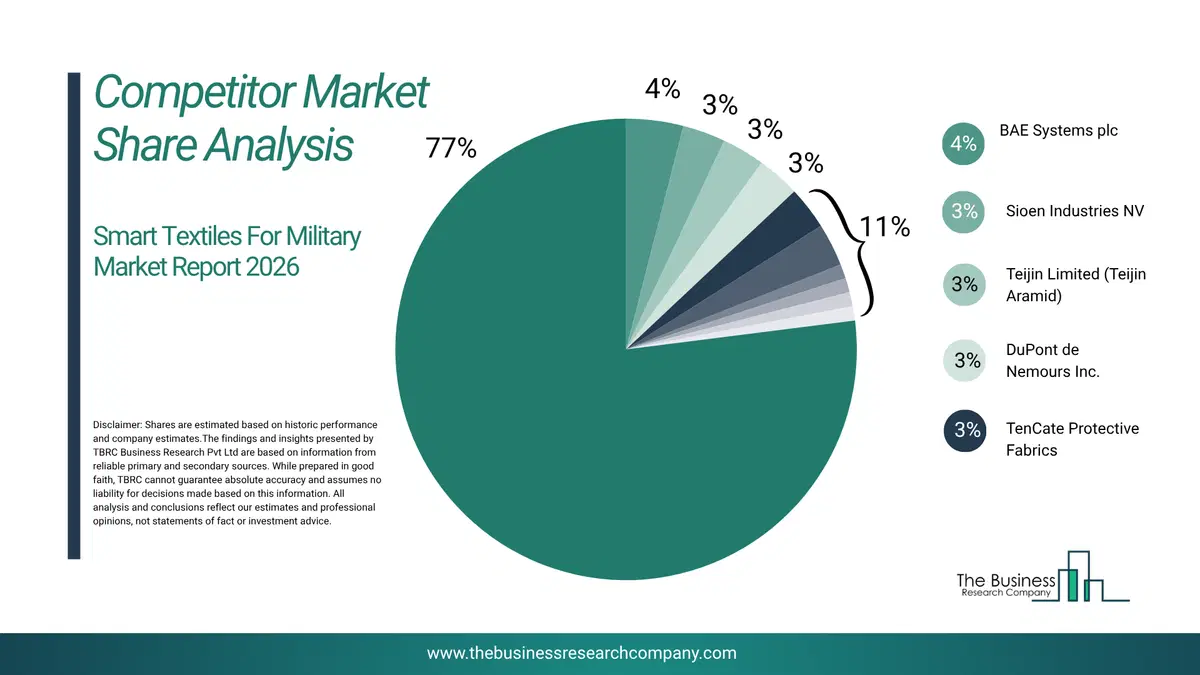
This chart is for illustrative purposes; the full report includes a detailed competitor analysis and comprehensive overview of the top 10 companies in the market.
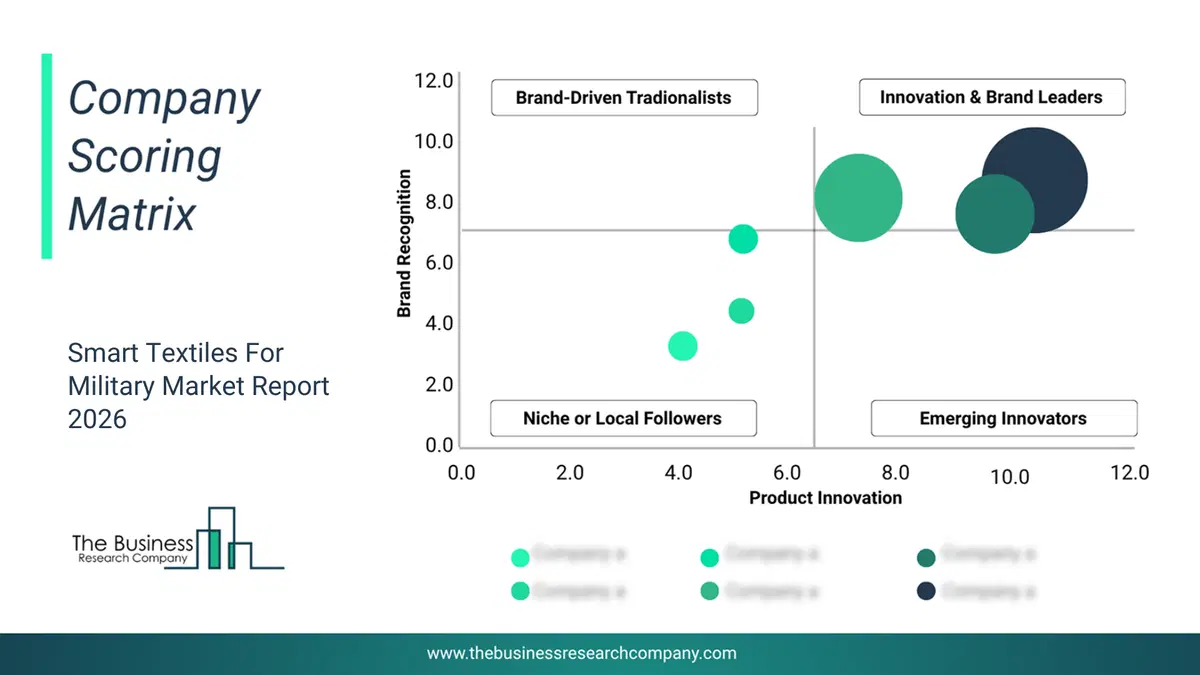
This chart maps companies by product innovation and brand strength, with bubble size indicating relative revenue, helping identify market leaders, challengers, and niche players. This is an illustrative chart; the full report provides a complete and accurate competitive analysis.
Global Smart Textiles For Military Market Trends and Insights
Major companies operating in the smart textiles for military market are focusing on developing innovative solutions such as moisture-wicking fabrics to enhance soldier comfort, performance, and endurance in challenging conditions. Moisture-wicking fabrics are textiles that draw sweat away from the skin to the outer surface to evaporate, helping keep the wearer dry, regulate body temperature, prevent chafing, reduce discomfort during prolonged activity, and improve overall performance and endurance in challenging conditions. For instance, in April 2024, Heathcoat Fabrics Limited, a UK-based manufacturing company, launched Drytec, a patent-pending surface-to-surface moisture-wicking spacer fabric designed specifically for military gear, which not only draws moisture away from the skin and disperses it to the outer surface but also incorporates advanced breathable and quick-drying properties to maintain optimal body temperature, reduce discomfort during prolonged activity, and enhance overall operational performance and endurance in extreme and challenging environments. Drytec has been engineered with durability and abrasion resistance suitable for the rigorous demands of military operations, while its lightweight construction ensures ease of movement and flexibility. The fabric’s innovative structure also supports long-term wearability, minimizing the risk of skin irritation, chafing, and heat-related stress, thereby contributing to the safety, comfort, and effectiveness of soldiers in a variety of climates and operational scenarios.What Are Latest Mergers And Acquisitions In The Smart Textiles For Military Market? Shanghai Sunwin Acquires Outlast Technologies To Boost Innovation In Military Thermoregulation And Smart Textiles
In October 2024, Shanghai Sunwin Industry Group Co. Ltd., a China-based home textile company, acquired Outlast Technologies GmbH for an undisclosed amount. The acquisition aims to expand Sunwin's core competencies in research, development, and application of new materials, as well as creative product design, and to accelerate technological innovation and global expansion. Outlast Technologies GmbH is a Germany-based company that develops thermoregulation and insulation technologies for military gear, enhancing comfort and performance by maintaining optimal body temperature.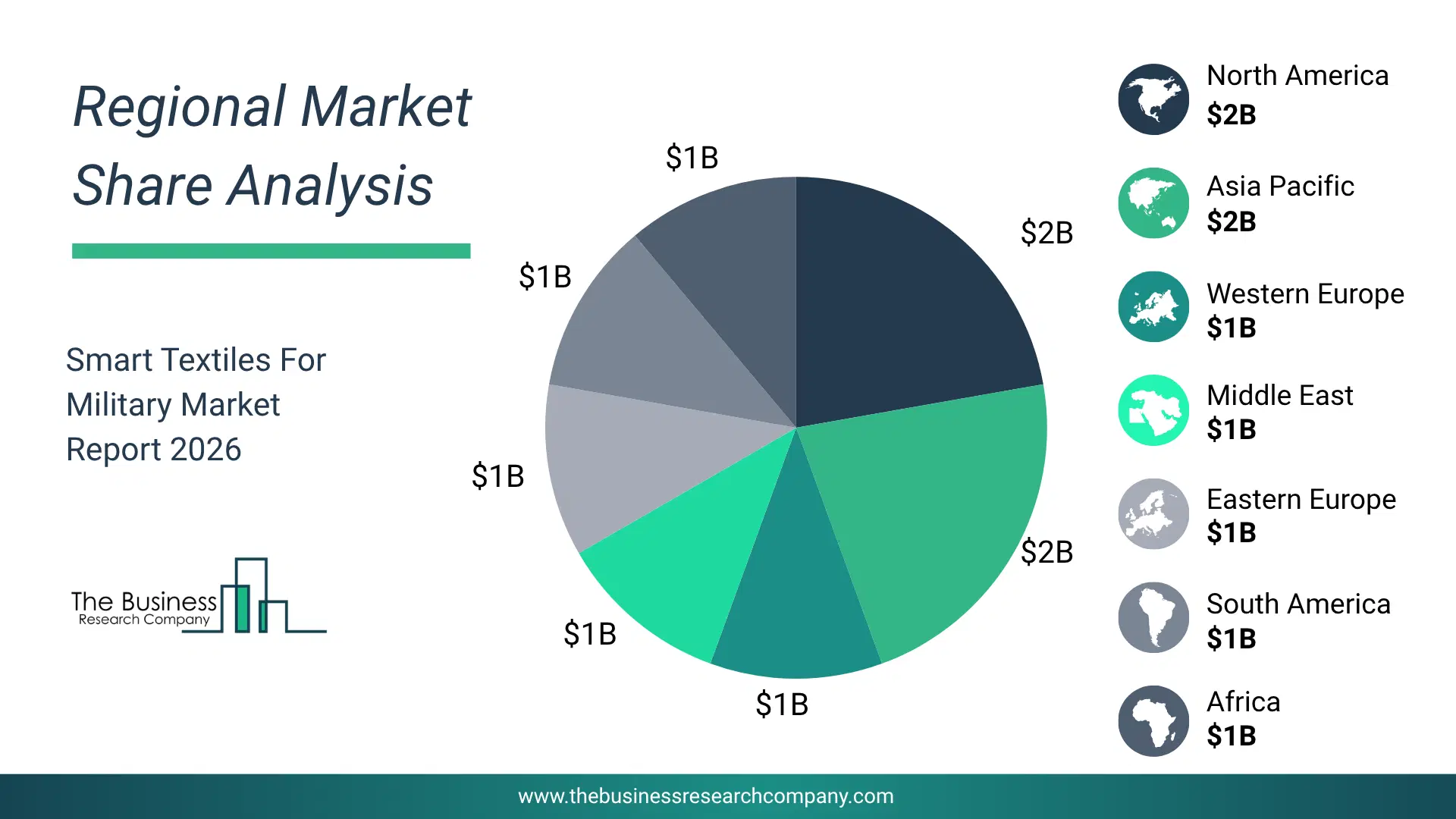
Regional Insights
North America was the largest region in the smart textiles for military market in 2025. Asia-Pacific is expected to be the fastest-growing region in the forecast period. The regions covered in this market report are Asia-Pacific, South East Asia, Western Europe, Eastern Europe, North America, South America, Middle East, Africa. The countries covered in this market report are Australia, Brazil, China, France, Germany, India, Indonesia, Japan, Taiwan, Russia, South Korea, UK, USA, Canada, Italy, SpainWhat Defines the Smart Textiles For Military Market?
The smart textiles for military market includes revenues earned by entities by providing services such as research and development, design and prototyping, testing and certification, maintenance and repair. The market value includes the value of related goods sold by the service provider or included within the service offering. The smart textiles for military market also consists of sales of electroactive fabrics, smart armor and protective clothing, smart sensors, conductive textiles, and integrated navigation fabrics. Values in this market are ‘factory gate’ values, that is, the value of goods sold by the manufacturers or creators of the goods, whether to other entities (including downstream manufacturers, wholesalers, distributors, and retailers) or directly to end customers. The value of goods in this market includes related services sold by the creators of the goods.How is Market Value Defined and Measured?
The market value is defined as the revenues that enterprises gain from the sale of goods and/or services within the specified market and geography through sales, grants, or donations in terms of the currency (in USD unless otherwise specified). The revenues for a specified geography are consumption values that are revenues generated by organizations in the specified geography within the market, irrespective of where they are produced. It does not include revenues from resales along the supply chain, either further along the supply chain or as part of other products.
This chart presents market attractiveness based on a quantitative evaluation of growth, competition, strategic alignment, and risk, offering a clear view of opportunity areas for decision-making. This chart is for illustrative purposes; the full report contains the complete analysis.

This chart highlights the Total Addressable Market (TAM) by estimating the maximum revenue opportunity using an assumption-driven approach, supporting strategic planning and opportunity sizing across markets. The chart is illustrative; the full report provides a more comprehensive analysis.
What Key Data and Analysis Are Included in the Smart Textiles For Military Market Report 2026?
The smart textiles for military market research report is one of a series of new reports from The Business Research Company that provides market statistics, including industry global market size, regional shares, competitors with the market share, detailed market segments, market trends and opportunities, and any further data you may need to thrive in the smart textiles for military industry. The market research report delivers a complete perspective of everything you need, with an in-depth analysis of the current and future state of the industry.Smart Textiles For Military Market Report Forecast Analysis
| Report Attribute | Details |
|---|---|
| Market Size Value In 2026 | $3.48 billion |
| Revenue Forecast In 2030 | $5.88 billion |
| Growth Rate | CAGR of 14% from 2026 to 2030 |
| Base Year For Estimation | 2025 |
| Actual Estimates/Historical Data | 2020-2025 |
| Forecast Period | 2026 - 2030 |
| Market Representation | Revenue in USD Billion and CAGR from 2026 to 2030 |
| Segments Covered | Type, Raw Material, Application, End User |
| Regional Scope | Asia-Pacific, Western Europe, Eastern Europe, North America, South America, Middle East, Africa |
| Country Scope | The countries covered in the report are Australia, Brazil, China, France, Germany, India, ... |
| Key Companies Profiled | BAE Systems plc, Sioen Industries NV, Teijin Limited (Teijin Aramid), DuPont de Nemours Inc., TenCate Protective Fabrics, WL Gore & Associates Inc., Milliken & Company, Schoeller Textil AG, Noble Biomaterials Inc., Mide Technology Corporation, Myant Inc., Bally Ribbon Mills, Nano Dimension Ltd., BeBop Sensors, Advanced Fabric Technology LLC, Ohmatex A/S, Outlast Technologies LLC, MMI Textiles Inc., Hexoskin, Loomia Inc., Elitac Wearables BV, Directa Plus S.p.A, Nautilus Defense, Texas Instruments (TI) Inc., Toray Industries Inc., Hyperstealth Biotechnology Corp. |
| Customization Scope | Request for Customization |
| Pricing And Purchase Options | Explore Purchase Options |