
Smart Thermostat Market Report 2026
Global Outlook – By Product (Connected Smart Thermostat, Learning Smart Thermostat, Standalone Smart Thermostat), By Technology (Wi-Fi, Bluetooth, Zigbee, Other Technologies), By Application (Air Conditioning, Heating, Ventilation), By End-User (Residential, Commercial, Industrial, Other End-Users) – Market Size, Trends, Strategies, and Forecast to 2030
Smart Thermostat Market Overview
• Smart Thermostat market size has reached to $4.17 billion in 2025 • Expected to grow to $10.45 billion in 2030 at a compound annual growth rate (CAGR) of 20.1% • Growth Driver: Surge In Smart Home Adoption Fuels Growth Of The Smart Thermostat Market • Market Trend: Technological Advancements Drive Growth In The Smart Thermostat Market • North America was the largest region in 2025 and Asia-Pacific is the fastest growing region.Market Gains By 2030 – Top Opportunities By Segment
Market Gain identifies the most promising market opportunities by highlighting the segments or products expected to generate the highest incremental revenue growth over the next five years.
What Is Covered Under Smart Thermostat Market?
A smart thermostat is a device used to control the temperature and climate settings of a building or individual rooms in an intelligent and automated manner. A smart thermostat can automatically adjust the temperature based on preset schedules and occupancy detection. The main types of products in the smart thermostat are connected smart thermostats, learning smart thermostats, and stand-alone smart thermostats. A connected smart thermostat refers to a thermostat that is equipped with connectivity capabilities, typically through Wi-Fi or another wireless protocol. It includes various technologies such as Wi-Fi, Bluetooth, Zigbee, and others. These are used for several applications, including air conditioning, heating, and ventilation. The main end users are residential, commercial, industrial, and others.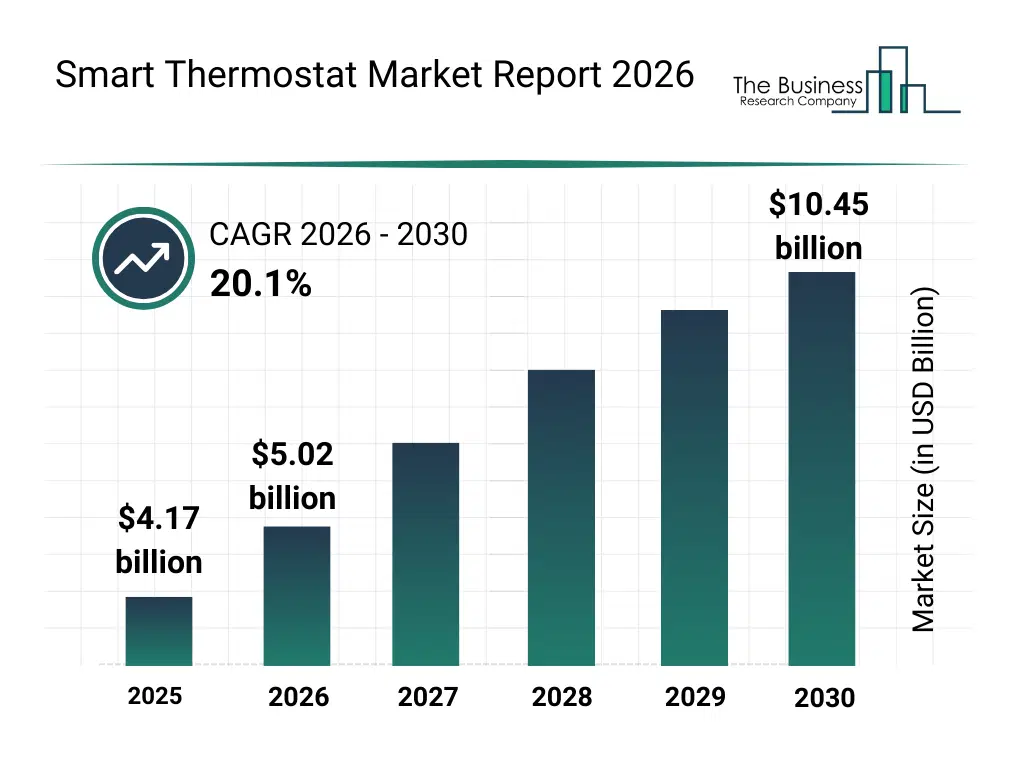
What Is The Smart Thermostat Market Size and Share 2026?
The smart thermostat market size has grown exponentially in recent years. It will grow from $4.17 billion in 2025 to $5.02 billion in 2026 at a compound annual growth rate (CAGR) of 20.3%. The growth in the historic period can be attributed to rising energy efficiency awareness, adoption of programmable thermostats, growth in smart home adoption, increasing residential construction, demand for cost saving heating solutions.What Is The Smart Thermostat Market Growth Forecast?
The smart thermostat market size is expected to see exponential growth in the next few years. It will grow to $10.45 billion in 2030 at a compound annual growth rate (CAGR) of 20.1%. The growth in the forecast period can be attributed to stringent energy efficiency regulations, growth of connected home ecosystems, increasing focus on carbon footprint reduction, adoption of AI powered learning thermostats, expansion of commercial smart buildings. Major trends in the forecast period include adaptive temperature control, occupancy based climate automation, remote hvac management, energy usage optimization, smart scheduling algorithms.
Global Smart Thermostat Market Segmentation
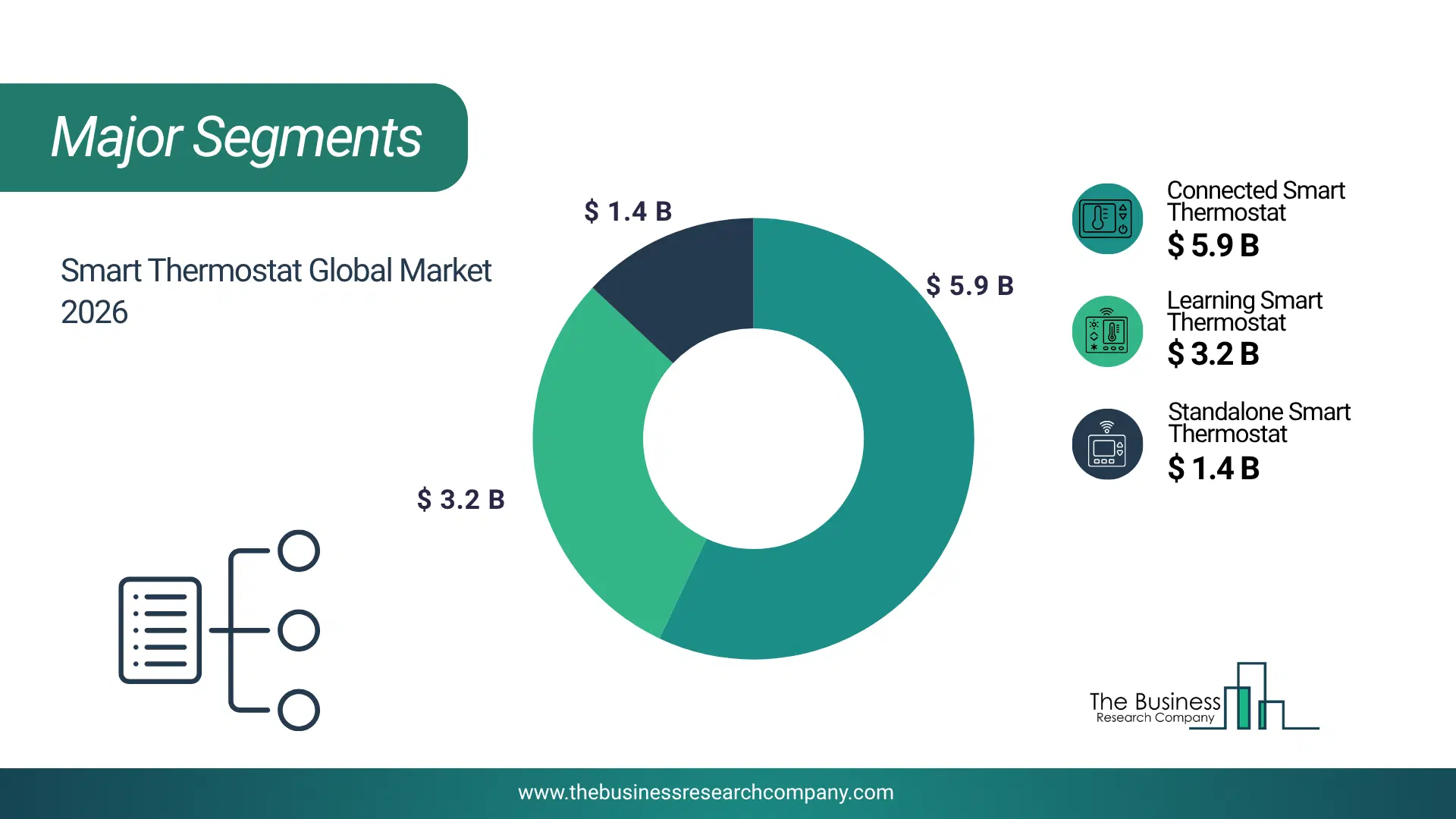
1) By Product: Connected Smart Thermostat, Learning Smart Thermostat, Standalone Smart Thermostat 2) By Technology: Wi-Fi, Bluetooth, Zigbee, Other Technologies 3) By Application: Air Conditioning, Heating, Ventilation 4) By End-User: Residential, Commercial, Industrial, Other End-Users Subsegments: 1) By Connected Smart Thermostat: Wi-Fi Enabled Thermostats, Zigbee Or Z-Wave Enabled Thermostats 2) By Learning Smart Thermostat: AI-Powered Learning Thermostats, Adaptive Learning Thermostats 3) By Standalone Smart Thermostat: Basic Programmable Thermostats, Digital Non-Programmable Thermostats The top segments in the smart thermostat market will be: • Connected Smart Thermostat will reach $5.92 billion by 2030. • Learning Smart Thermostat will reach $3.17 billion by 2030. • Standalone Smart Thermostat will reach $1.36 billion by 2030.What Is The Driver Of The Smart Thermostat Market?
The increasing adoption of smart homes is expected to propel the growth of the smart thermostat market going forward. The adoption of smart homes refers to homeowners' growing acceptance and integration of smart home technologies and devices. It signifies the willingness of individuals or households to embrace the benefits and conveniences offered by a connected and automated living environment. A smart thermostat is one of the most used devices in smart homes, where a connected and programmable thermostat allows homeowners to remotely control and manage their heating, ventilation, and air conditioning (HVAC) systems. For instance, in June 2024, according to Samsung Electronics Co., Ltd., a South Korea-based electronics company, in 2024, 79% of individuals planning to move, either renting or buying within the next five years, express a preference for smart homes. Demographic trends further highlight this shift, with 48% of Gen Z actively seeking smart homes, while the interest among those aged 65 and above is also rising steadily, indicating a growing cross-generational demand for connected living spaces. Therefore, the increasing adoption of smart homes is driving the growth of the smart thermostat industry.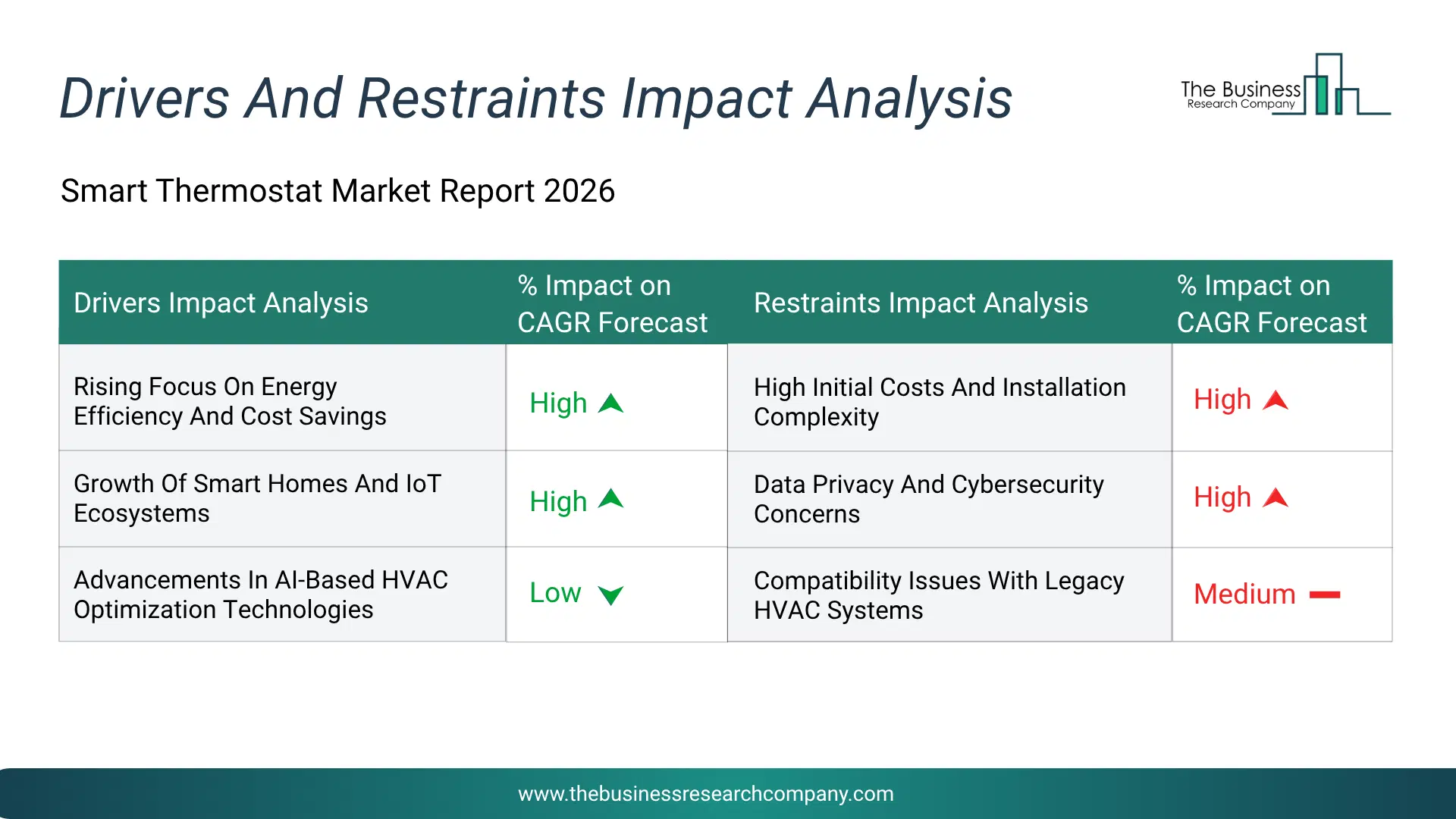
Infographic Chart Showing Key Market Drivers Analysis And Restraints For Smart Thermostat Market
The chart presents an impact analysis of key drivers and restraints, quantifying their relative influence on the market's growth rate and helping assess the balance between growth enablers and limiting factors. This chart offers a high-level perspective; the full report contains more detailed insights.
How Will The Drivers Impact Growth In The Global Smart Thermostat Market?
• Rising Focus On Energy Efficiency And Cost Savings (High) – During the forecast period, the rising focus on energy efficiency and cost savings is expected to become a key growth driver for the smart thermostat market by 2030. The increasing emphasis on energy efficiency and rising electricity costs are primary growth drivers for the smart thermostat market. Governments worldwide are promoting energy conservation through building codes, efficiency standards, and incentive programs. Smart thermostats enable automated temperature control, occupancy sensing, and ai -based learning to optimize hvac usage and reduce energy bills. As residential and commercial users prioritize cost savings and carbon footprint reduction, demand for intelligent climate control systems is expected to grow steadily. • Growth Of Smart Homes And IoT Ecosystems (High) – During the forecast period, the growth of smart homes and iot ecosystems is expected to emerge as a major factor driving the expansion of the smart thermostat market by 2030. The rapid expansion of smart homes and iot-enabled ecosystems significantly accelerates market growth. Smart thermostats integrate seamlessly with voice assistants, home automation platforms, and mobile applications, offering enhanced convenience and remote accessibility. Growing consumer adoption of connected devices and smart appliances strengthens ecosystem demand. As broadband penetration and wireless connectivity improve globally, smart thermostat adoption is projected to expand across both developed and emerging markets. • Advancements In AI-Based HVAC Optimization Technologies (Low) – During the forecast period, the advancements in ai-based hvac optimization technologies is expected to act as a key growth catalyst for the smart thermostat market by 2030. Technological advancements in ai-driven climate control and predictive analytics further support market expansion. Modern smart thermostats utilize machine learning algorithms to analyze usage patterns, weather conditions, and occupancy trends to optimize heating and cooling cycles. Enhanced user interfaces, geofencing features, and compatibility with renewable energy systems improve overall functionality. Continuous innovation in user experience and device intelligence strengthens long-term adoption prospects.How Will The Restraints Impact Growth In The Global Smart Thermostat Market?
• High Initial Costs And Installation Complexity (High) – During the forecast period, the high initial device and installation costs act as a key restraint in the smart thermostat market. Although long-term energy savings are significant, upfront investment may discourage price-sensitive consumers. In certain regions, professional installation may be required due to compatibility issues with legacy hvac systems, increasing overall cost. This financial barrier can limit rapid penetration, particularly in developing economies. • Data Privacy And Cybersecurity Concerns (High) – During the forecast period, the data privacy concerns and cybersecurity risks also restrain market growth. Smart thermostats collect user behavior data, occupancy information, and usage patterns, raising concerns about unauthorized access or data breaches. Vulnerabilities within iot ecosystems can expose connected devices to cyber threats. These concerns may slow adoption among consumers who are cautious about data security and connected home technologies. • Compatibility Issues With Legacy HVAC Systems (Medium) – During the forecast period, the compatibility issues with legacy hvac systems act as a restraint for the smart thermostat market by limiting easy adoption in older residential and commercial buildings. Many existing heating, ventilation, and air conditioning systems are not designed to support advanced smart controls, requiring additional adapters or complete system upgrades. This increases installation complexity and overall costs for consumers and service providers. In some cases, technical limitations prevent full functionality of smart features, reducing user satisfaction. As a result, these compatibility challenges slow down market penetration, especially in regions with aging infrastructure.Key Players In The Global Smart Thermostat Market
Major companies operating in the smart thermostat market are Bosch Thermotechnology; Siemens AG; Honeywell International Inc.; Schnieder Electric SE; Johnson Controls International plc; Emerson Electric Co.; Trane Technologies plc; Legrand Group; Ingersoll Rand plc; Resideo Technologies Inc.; Lennox International Inc.; Nortek Inc.; Tado GmbH; Centrica Hive Limited; Netatmo SA; Lux Products Corporation; Salus Controls GmbH; Eve Systems GmbH; Nest Labs Inc.; Vine Connected Corporation; Climote Ltd.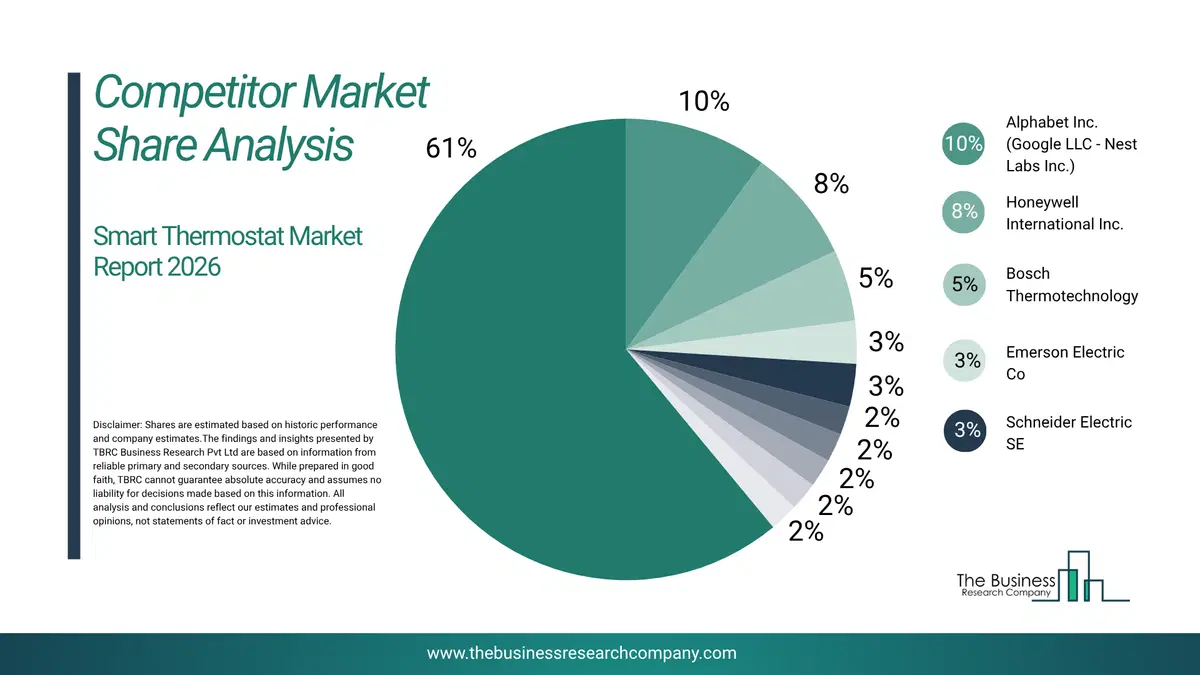
This chart is for illustrative purposes; the full report includes a detailed competitor analysis and comprehensive overview of the top 10 companies in the market.
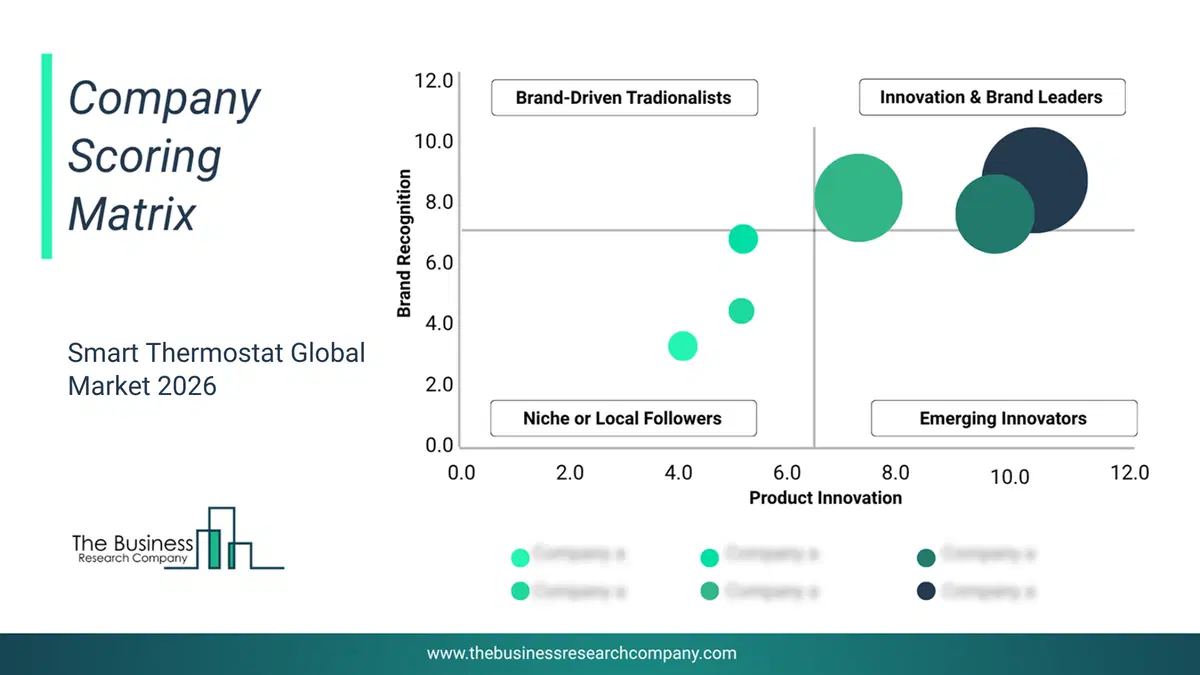
This chart maps companies by product innovation and brand strength, with bubble size indicating relative revenue, helping identify market leaders, challengers, and niche players. This is an illustrative chart; the full report provides a complete and accurate competitive analysis.
Global Smart Thermostat Market Trends and Insights
Major companies operating in the smart thermostat market are developing advanced technologies, such as radar sensor technology, to meet larger customer bases, increase sales, and increase revenue. Radar sensor technology is an amazing tool used to detect, locate, and track objects using radio waves. For instance, in August 2024, Google, a US-based technology company, launched the Nest Learning Thermostat 4th Generation. This smart thermostat features Soli radar sensor technology, representing the company’s most advanced sensor innovation to date. This technology enhances occupancy detection, motion sensing, and energy optimization by detecting when someone is present in the home. Notably, the 4th‑Generation variant stands out for its Dynamic Farsight display, which activates when a person approaches, providing easy access to temperature and home status information. The integrated radar sensor works in combination with phone-based geolocation to support the Home and Away feature, automatically adjusting heating or cooling based on occupancy. Additionally, the device is compatible with a wide range of HVAC systems through a redesigned 12‑wire backplate, ensuring precise control and improved comfort throughout the living space.What Are Latest Mergers And Acquisitions In The Smart Thermostat Market?
In May 2023, Mysa Smart Thermostats, a Canada-based home automation company, acquired the assets of Zen Ecosystems for an undisclosed amount. Through this acquisition, Mysa Smart Thermostats aims to expand its reach into a new market, grow its customer base, gain access to these technologies, develop new products and features that will differentiate it from its competitors, and strengthen its position in the smart thermostat market. Zen Ecosystems is a US-based manufacturer of smart thermostats for commercial spaces.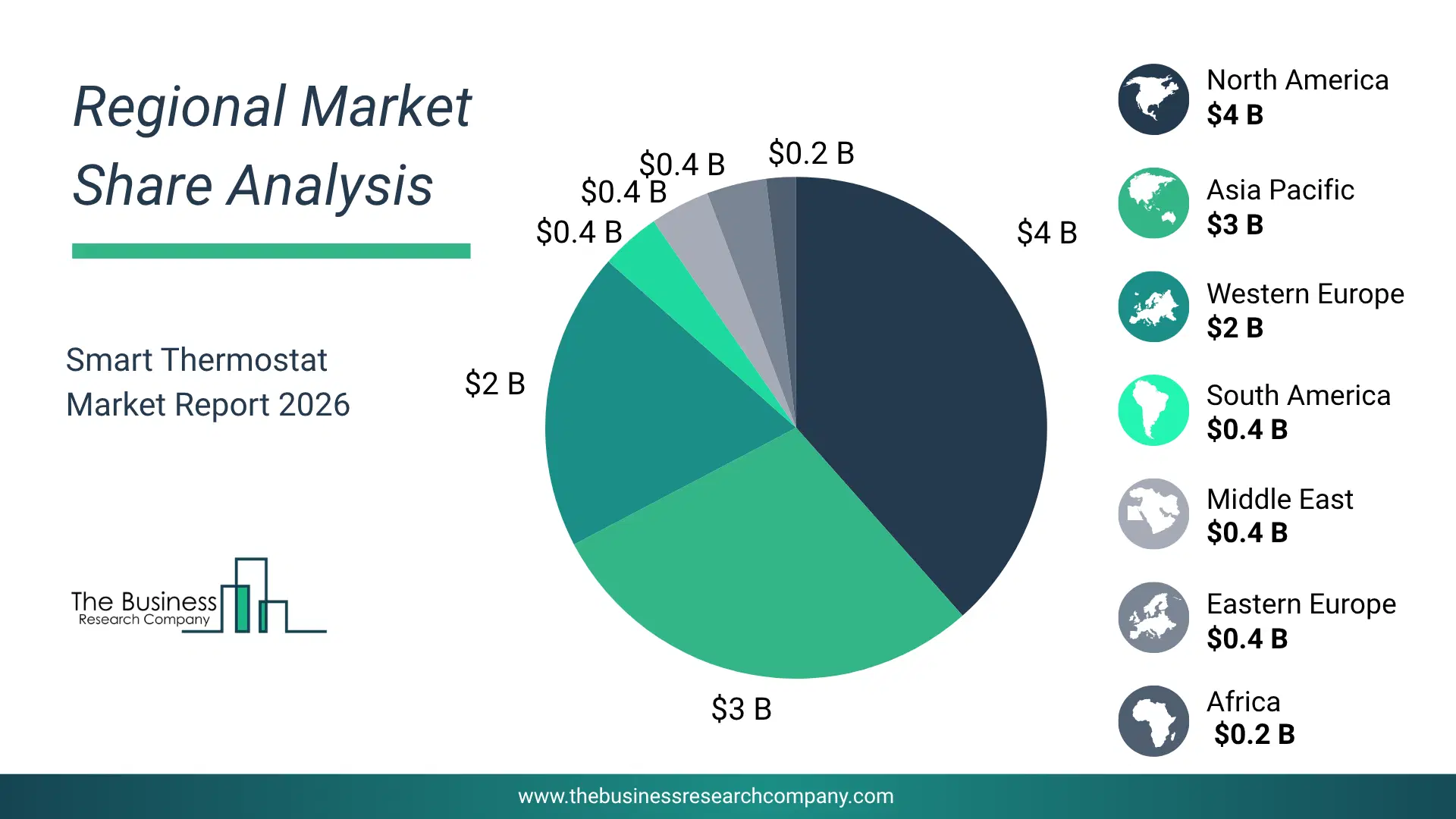
Regional Insights
North America was the largest region in the smart thermostat market in 2025. Asia-Pacific is expected to be the fastest-growing region in the smart thermostat market report during the forecast period. The regions covered in this market report are Asia-Pacific, South East Asia, Western Europe, Eastern Europe, North America, South America, Middle East, Africa. The countries covered in this market report are Australia, Brazil, China, France, Germany, India, Indonesia, Japan, Taiwan, Russia, South Korea, UK, USA, Canada, Italy, SpainWhat Defines the Smart Thermostat Market?
The smart thermostat market consists of revenues earned by entities by providing smart thermostat services such as temperature control, energy savings, learning and adaptability, remote access, and control services. The market value includes the value of related goods sold by the service provider or included within the service offering. The smart thermostat market also includes sales of temperature sensors, programmable thermostats, remote access thermostats, geofencing thermostats, zoned thermostats, voice-enabled thermostats, and eco thermostats, which are used in providing smart thermostat services. Values in this market are ‘factory gate’ values, that is, the value of goods sold by the manufacturers or creators of the goods, whether to other entities (including downstream manufacturers, wholesalers, distributors, and retailers) or directly to end customers. The value of goods in this market includes related services sold by the creators of the goods.How is Market Value Defined and Measured?
The market value is defined as the revenues that enterprises gain from the sale of goods and/or services within the specified market and geography through sales, grants, or donations in terms of the currency (in USD unless otherwise specified). The revenues for a specified geography are consumption values that are revenues generated by organizations in the specified geography within the market, irrespective of where they are produced. It does not include revenues from resales along the supply chain, either further along the supply chain or as part of other products.
This chart presents market attractiveness based on a quantitative evaluation of growth, competition, strategic alignment, and risk, offering a clear view of opportunity areas for decision-making. This chart is for illustrative purposes; the full report contains the complete analysis.

This chart highlights the Total Addressable Market (TAM) by estimating the maximum revenue opportunity using an assumption-driven approach, supporting strategic planning and opportunity sizing across markets. The chart is illustrative; the full report provides a more comprehensive analysis.
What Key Data and Analysis Are Included in the Smart Thermostat Market Report 2026?
The smart thermostat market research report is one of a series of new reports from The Business Research Company that provides market statistics, including industry global market size, regional shares, competitors with the market share, detailed market segments, market trends and opportunities, and any further data you may need to thrive in the smart thermostat industry. The market research report delivers a complete perspective of everything you need, with an in-depth analysis of the current and future state of the industry.Smart Thermostat Market Report Forecast Analysis
| Report Attribute | Details |
|---|---|
| Market Size Value In 2026 | $5.02 billion |
| Revenue Forecast In 2030 | $10.45 billion |
| Growth Rate | CAGR of 20.3% from 2026 to 2030 |
| Base Year For Estimation | 2025 |
| Actual Estimates/Historical Data | 2020-2025 |
| Forecast Period | 2026 - 2030 |
| Market Representation | Revenue in USD Billion and CAGR from 2026 to 2030 |
| Segments Covered | Product, Technology, Application, End-User |
| Regional Scope | Asia-Pacific, Western Europe, Eastern Europe, North America, South America, Middle East, Africa |
| Country Scope | The countries covered in the report are Australia, Brazil, China, France, Germany, India, Indonesia, Japan, Taiwan, Russia, South Korea, UK, USA, Canada, Italy, Spain. |
| Key Companies Profiled | Bosch Thermotechnology; Siemens AG; Honeywell International Inc.; Schnieder Electric SE; Johnson Controls International plc; Emerson Electric Co.; Trane Technologies plc; Legrand Group; Ingersoll Rand plc; Resideo Technologies Inc.; Lennox International Inc.; Nortek Inc.; Tado GmbH; Centrica Hive Limited; Netatmo SA; Lux Products Corporation; Salus Controls GmbH; Eve Systems GmbH; Nest Labs Inc.; Vine Connected Corporation; Climote Ltd. |
| Customization Scope | Request for Customization |
| Pricing And Purchase Options | Explore Purchase Options |