

Smart Weed Control Market Report 2026
Global Outlook – By Type (Weed Mapping, Weed Sensing And Management), By Technique (Herbicidal, Tillage), By Application (Agriculture, Non-Agriculture) – Market Size, Trends, Strategies, and Forecast to 2030
Smart Weed Control Market Overview
• Smart Weed Control market size has reached to $1.44 billion in 2025 • Expected to grow to $3.7 billion in 2030 at a compound annual growth rate (CAGR) of 20.6% • Growth Driver: Rising Agricultural Productivity Fuels Growth In The Smart Weed Control Market • Market Trend: Camera-Based AI Systems Enhancing Precision And Efficiency • North America was the largest region in 2025 and Asia-Pacific is the fastest growing region.What Is Covered Under Smart Weed Control Market?
Smart weed control refers to advanced, technology-driven methods for managing and eliminating weeds in agricultural or landscaping settings. It integrates data analytics, automation, and precision tools to optimize weed management while minimizing environmental impact. Smart weed control aims for sustainable and efficient weed management, enhancing crop yields while reducing labor, chemical use, and ecological harm. The main types of smart weed controls include weed mapping, weed sensing, and management. Weed mapping refers to the process of identifying and locating weed infestations within a specific area, such as an agricultural field or a natural landscape. It uses both herbicidal and tillage techniques and is applied for agriculture and non-agriculture.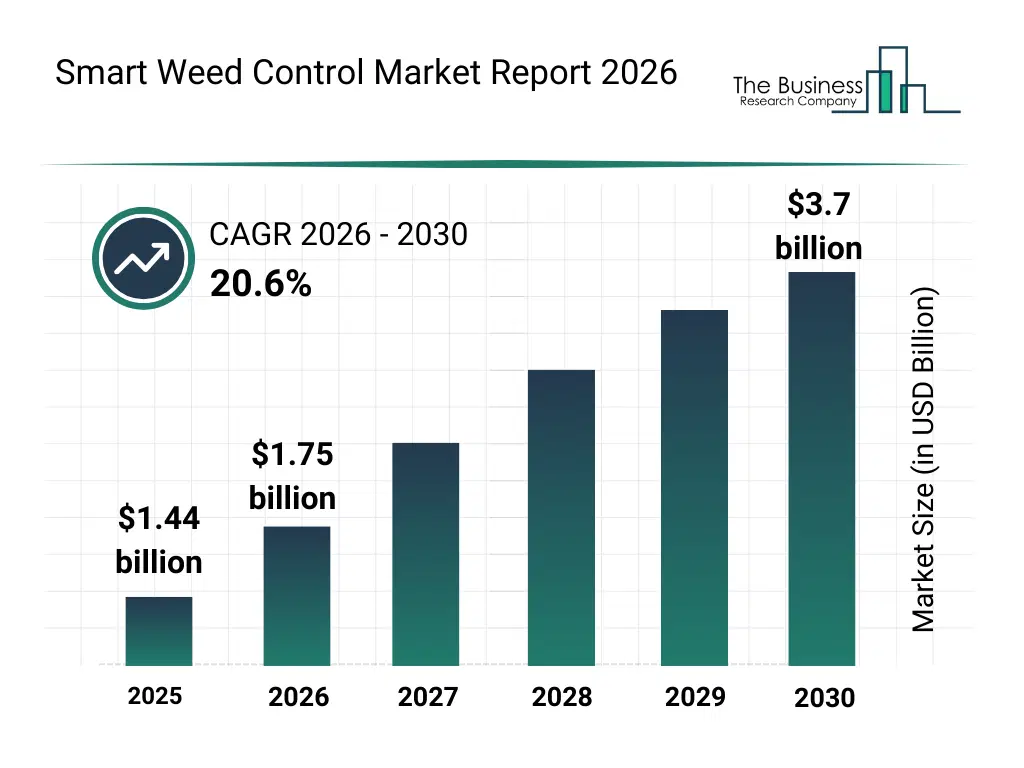
What Is The Smart Weed Control Market Size and Share 2026?
The smart weed control market size has grown exponentially in recent years. It will grow from $1.44 billion in 2025 to $1.75 billion in 2026 at a compound annual growth rate (CAGR) of 20.9%. The growth in the historic period can be attributed to traditional reliance on manual weeding, rising labor shortages in agriculture, increasing weed resistance to herbicides, early adoption of mechanized weed removal tools, growing need to reduce chemical usage.What Is The Smart Weed Control Market Growth Forecast?
The smart weed control market size is expected to see exponential growth in the next few years. It will grow to $3.7 billion in 2030 at a compound annual growth rate (CAGR) of 20.6%. The growth in the forecast period can be attributed to growing adoption of AI-driven weed detection, rising deployment of autonomous weed removal robots, increasing use of precision weed management tools, expanding integration of real-time field analytics, rising emphasis on sustainable crop protection. Major trends in the forecast period include rising adoption of targeted weed removal techniques, increasing use of drone-based weed mapping, growth in precision herbicide application, expansion of integrated pest and weed management solutions, rising demand for non-chemical weed control alternatives.
Global Smart Weed Control Market Segmentation
1) By Type: Weed Mapping, Weed Sensing And Management 2) By Technique: Herbicidal, Tillage 3) By Application : Agriculture, Non-Agriculture Subsegments: 1) By Weed Mapping: Geographic Information System (GIS)-Based Mapping, Drone And Aerial Imaging For Weed Mapping, Satellite Imagery For Weed Detection, Mobile App Solutions For Weed Mapping 2) By Weed Sensing And Management: Automated Weed Sensing Technologies, Smart Spraying Systems, Integrated Pest Management (IPM) Tools, Data Analytics For Weed Management, Robotics For Automated Weed Removal, Soil Moisture And Nutrient Sensors For Weed ControlWhat Is Driver Of The Smart Weed Control Market?
The growth in the agricultural sector is expected to drive the growth of the smart weed control market going forward. The agricultural sector is a vital component of the global economy, responsible for producing food, fiber, and other essential goods. It encompasses various activities, from crop cultivation and livestock farming to forestry, fisheries, and agricultural technology. The growth of agricultural is due to improved crop varieties, better farming practices, and increased use of data-driven management systems. Smart weed control is used in the agricultural sector to efficiently manage weeds with precision, reducing crop competition, optimizing resource use, and minimizing chemical inputs, leading to higher yields and sustainability. For instance, in April 2024, according to a report published by the United States Department of Agriculture, a US-based government agency, agriculture, food, and related industries contributed approximately $1.530 trillion to the U.S. gross domestic product (GDP) in 2023, making up about 5.6% of the total GDP. Therefore, growth in the agricultural sector is driving the growth of the smart weed control industry.Key Players In The Global Smart Weed Control Market
Major companies operating in the smart weed control market are BASF SE, Deere & Company, Corteva Agriscience, LEMKEN GmbH & Co. KG, AgroStar, Terramera Inc., FarmWise Labs Inc., Carbon Robotics Inc., Blue River Technology Inc., PrecisionHawk Inc., Garford Farm Machinery Ltd., Laser Zentrum Hannover e.V., Ecorobotix SA, Tertill Corporation, Agremo Ltd., Weed-It Ag by Rometron B.V., Carbon Bee, Earth Rover Ltd., Robovator, Ecosmart Weed Control LLC, Greeneye Technology, Naïo Technologies SAS, EcoWeed Solutions, Trimble Weed Mapping Division, Topcon Agriculture Weed Sensing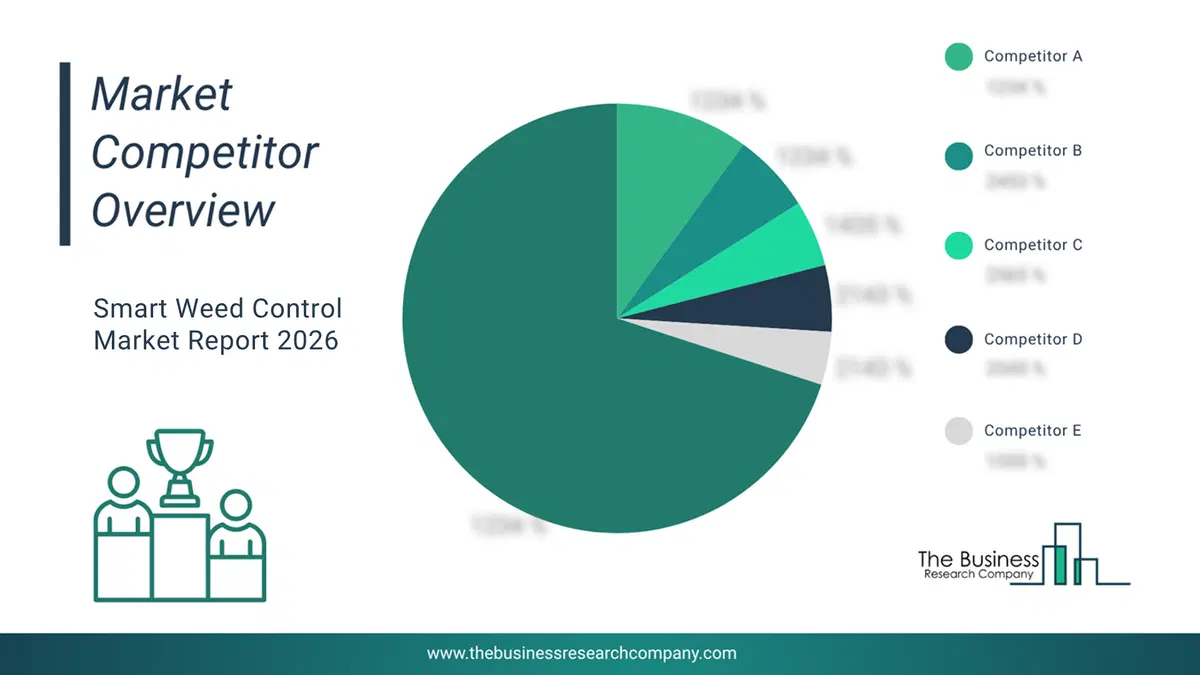
This chart is for illustrative purposes; the full report includes a detailed competitor analysis and comprehensive overview of the top 10 companies in the market.
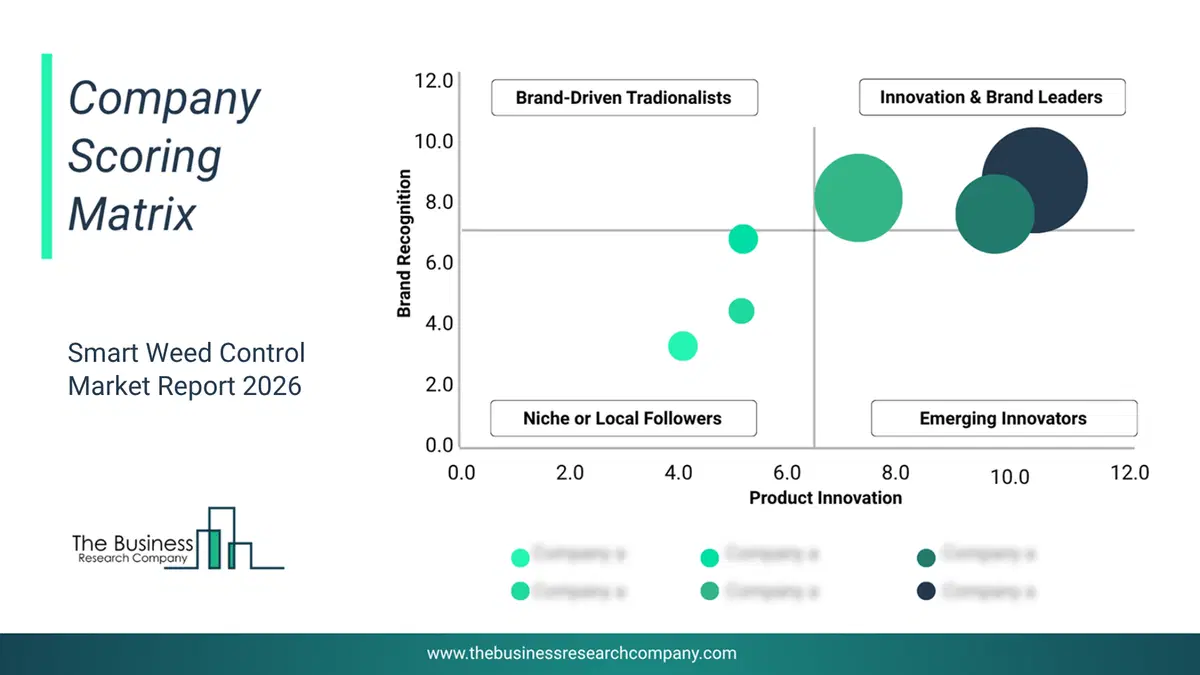
This chart maps companies by product innovation and brand strength, with bubble size indicating relative revenue, helping identify market leaders, challengers, and niche players. This is an illustrative chart; the full report provides a complete and accurate competitive analysis.
Global Smart Weed Control Market Trends and Insights
Major companies operating in the smart weed control market are focused on developing advanced technology, such as camera-based AI systems, to improve weed detection accuracy and optimize crop yields through precise and efficient weed management. Camera-based AI systems refer to the use of artificial intelligence and image recognition technology to detect and differentiate between crops and weeds in real time. For instance, in May 2024, Stara, a Brazil-based agricultural machinery company, launched the Imperador 4000 Eco Spray weed management sprayer. The Imperador 4000 Eco Spray utilizes a camera-based AI system developed by Bosch for real-time weed detection, allowing selective herbicide application only where needed. This innovation aims to increase farming efficiency, reduce costs, and minimize environmental impact, operating 24/7 with LED lighting for pre- and post-emergence applications.What Are Latest Mergers And Acquisitions In The Smart Weed Control Market? Homburg Acquires Ekobot, Enhancing Its Vision For Agricultural Innovation And Scale-Up
In June 2024, Homburg, a Netherlands-based agriculture company, acquired Ekobot for an undisclosed amount. With this acquisition, Homburg will develop Ekobot according to their vision of agriculture to be well-positioned for the scale-up phase. Ekobot is a Sweden-based manufacturer of autonomous robotic systems for weed control in agriculture.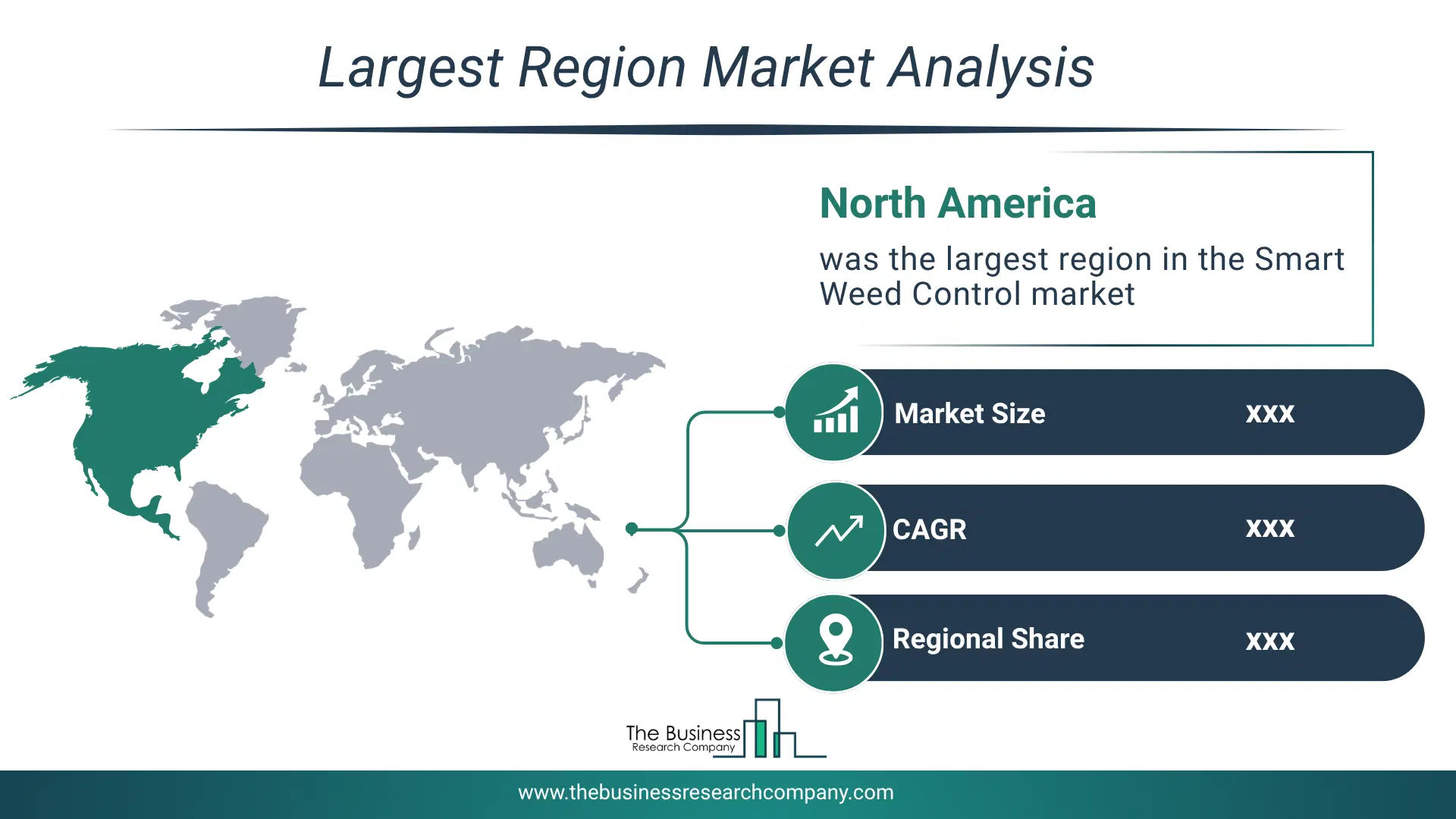
Regional Outlook
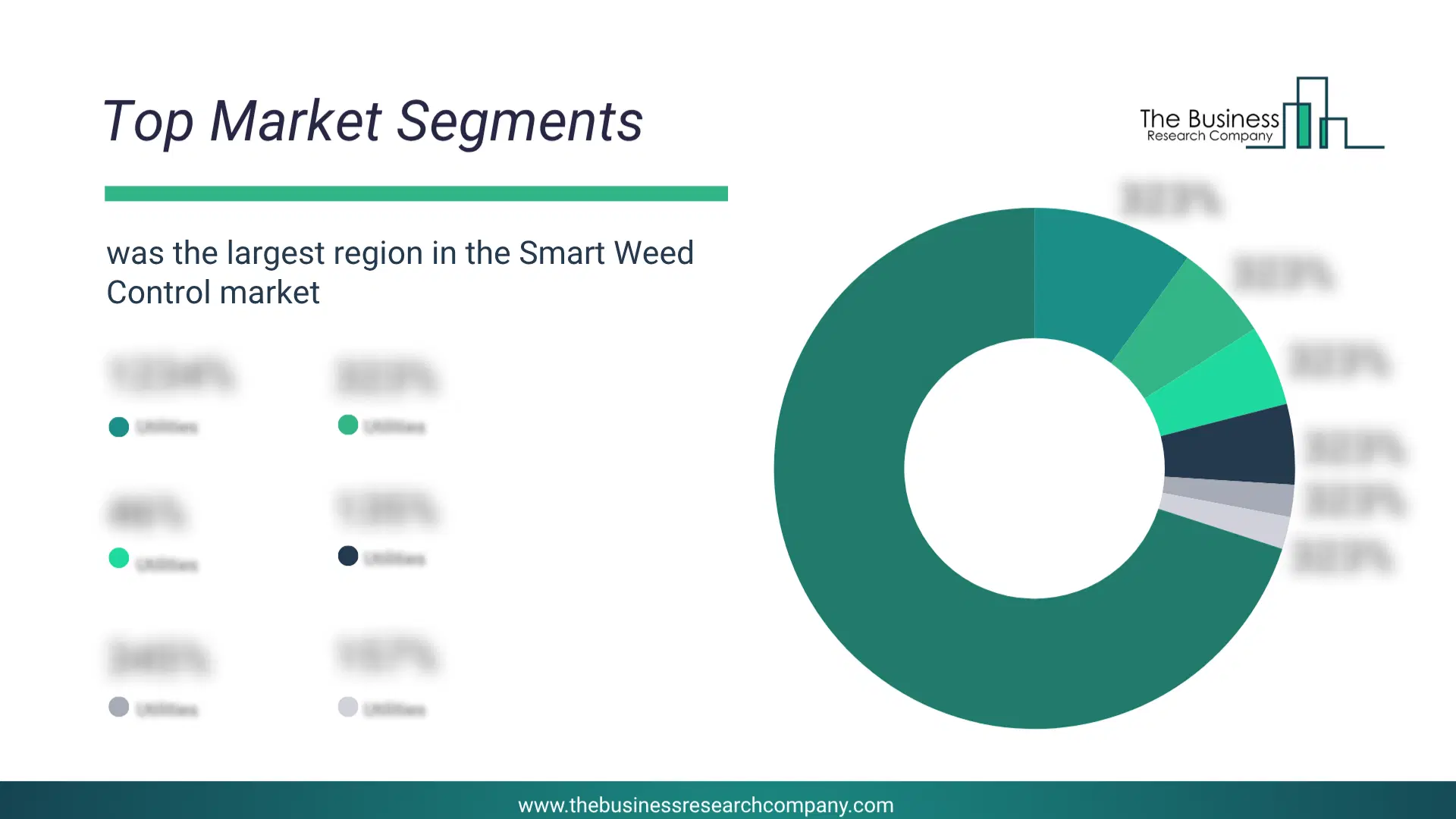
North America was the largest region in the smart weed control market in 2025. Asia-Pacific is expected to be the fastest-growing region in the forecast period. The regions covered in this market report are Asia-Pacific, South East Asia, Western Europe, Eastern Europe, North America, South America, Middle East, Africa. The countries covered in this market report are Australia, Brazil, China, France, Germany, India, Indonesia, Japan, Taiwan, Russia, South Korea, UK, USA, Canada, Italy, SpainWhat Defines the Smart Weed Control Market?
The smart weed control market consists of revenues earned by entities by providing services such as automated weeding, weed monitoring, weed identification and remote sensing. The market value includes the value of related goods sold by the service provider or included within the service offering. The smart weed control market also includes sales of autonomous weeding robots, AI-powered weed detection systems, smart herbicide dispensers, IoT-connected sensors and weed management software. Values in this market are ‘factory gate’ values, that is the value of goods sold by the manufacturers or creators of the goods, whether to other entities (including downstream manufacturers, wholesalers, distributors and retailers) or directly to end customers. The value of goods in this market includes related services sold by the creators of the goods.How is Market Value Defined and Measured?
The market value is defined as the revenues that enterprises gain from the sale of goods and/or services within the specified market and geography through sales, grants, or donations in terms of the currency (in USD unless otherwise specified). The revenues for a specified geography are consumption values that are revenues generated by organizations in the specified geography within the market, irrespective of where they are produced. It does not include revenues from resales along the supply chain, either further along the supply chain or as part of other products.
This chart presents market attractiveness based on a quantitative evaluation of growth, competition, strategic alignment, and risk, offering a clear view of opportunity areas for decision-making. This chart is for illustrative purposes; the full report contains the complete analysis.

This chart highlights the Total Addressable Market (TAM) by estimating the maximum revenue opportunity using an assumption-driven approach, supporting strategic planning and opportunity sizing across markets. The chart is illustrative; the full report provides a more comprehensive analysis.
What Key Data and Analysis Are Included in the Smart Weed Control Market Report 2026?
The smart weed control market research report is one of a series of new reports from The Business Research Company that provides market statistics, including industry global market size, regional shares, competitors with the market share, detailed market segments, market trends and opportunities, and any further data you may need to thrive in the smart weed control industry. The market research report delivers a complete perspective of everything you need, with an in-depth analysis of the current and future state of the industry.Smart Weed Control Market Report Forecast Analysis
| Report Attribute | Details |
|---|---|
| Market Size Value In 2026 | $1.75 billion |
| Revenue Forecast In 2030 | $3.7 billion |
| Growth Rate | CAGR of 20.6% from 2026 to 2030 |
| Base Year For Estimation | 2025 |
| Actual Estimates/Historical Data | 2020-2025 |
| Forecast Period | 2026 - 2030 |
| Market Representation | Revenue in USD Billion and CAGR from 2026 to 2030 |
| Segments Covered | Type, Technique, Application |
| Regional Scope | Asia-Pacific, Western Europe, Eastern Europe, North America, South America, Middle East, Africa |
| Country Scope | The countries covered in the report are Australia, Brazil, China, France, Germany, India, Indonesia, Japan, Taiwan, Russia, South Korea, UK, USA, Canada, Italy, Spain |
| Key Companies Profiled | BASF SE, Deere & Company, Corteva Agriscience, LEMKEN GmbH & Co. KG, AgroStar, Terramera Inc., FarmWise Labs Inc., Carbon Robotics Inc., Blue River Technology Inc., PrecisionHawk Inc., Garford Farm Machinery Ltd., Laser Zentrum Hannover e.V., Ecorobotix SA, Tertill Corporation, Agremo Ltd., Weed-It Ag by Rometron B.V., Carbon Bee, Earth Rover Ltd., Robovator, Ecosmart Weed Control LLC, Greeneye Technology, Naïo Technologies SAS, EcoWeed Solutions, Trimble Weed Mapping Division, Topcon Agriculture Weed Sensing |
| Customization Scope | Request for Customization |
| Pricing And Purchase Options | Explore Purchase Options |