
Sodium-Ion Battery Market Report 2026
Global Outlook – By Type ( Carbon-Based Sodium-Ion Batteries, Transition Metal Oxide Sodium-Ion Batteries, Graphite Anode Sodium-Ion Batteries, Layered Oxide Cathode Sodium-Ion Batteries, Polyanionic Sodium-Ion Batteries), By Technology ( Aqueous, Non-aqueous), By Application ( Energy Storage And Grid Integration, Electric Vehicles (EVs), Residential Energy Storage, Emergency Backup And UPS, Other Applications) – Market Size, Trends, Strategies, and Forecast to 2030
Sodium-Ion Battery Market Overview
• Sodium-Ion Battery market size has reached to $0.93 billion in 2025 • Expected to grow to $1.93 billion in 2030 at a compound annual growth rate (CAGR) of 15.6% • Growth Driver: Electric Vehicle Demand Boosts Sodium-Ion Battery Market Growth • Market Trend: CATL Launches Second-Generation Fast-Charging Sodium-Ion Battery to Boost EV and Energy Storage Applications • Europe was the largest region in 2025 and Asia-Pacific is the fastest growing region.Market Gains By 2030 – Top Opportunities By Segment
Market Gain identifies the most promising market opportunities by highlighting the segments or products expected to generate the highest incremental revenue growth over the next five years.
What Is Covered Under Sodium-Ion Battery Market?
Sodium-ion batteries (SIBs) are rechargeable batteries that rely on sodium ions as the carriers of charge, akin to lithium-ion batteries (LIBs), but substitute lithium with sodium as the intercalating ion. Due to their eco-friendliness, safety features, and capacity to operate in cold conditions, sodium-ion batteries are a promising alternative to lithium-ion batteries for specific applications. The main types of sodium-ion batteries are sodium-sulfur batteries, sodium-salt batteries (zebra batteries), and sodium-oxygen (sodium air) batteries. Sodium-sulfur (NaS) batteries are a type of high-temperature rechargeable battery that uses sodium (Na) and sulfur (S) as the active materials. Aqueous and non-aqueous technologies are used for energy storage and grid integration, electric vehicles (EVs), residential energy storage, emergency backup and ups, and other applications.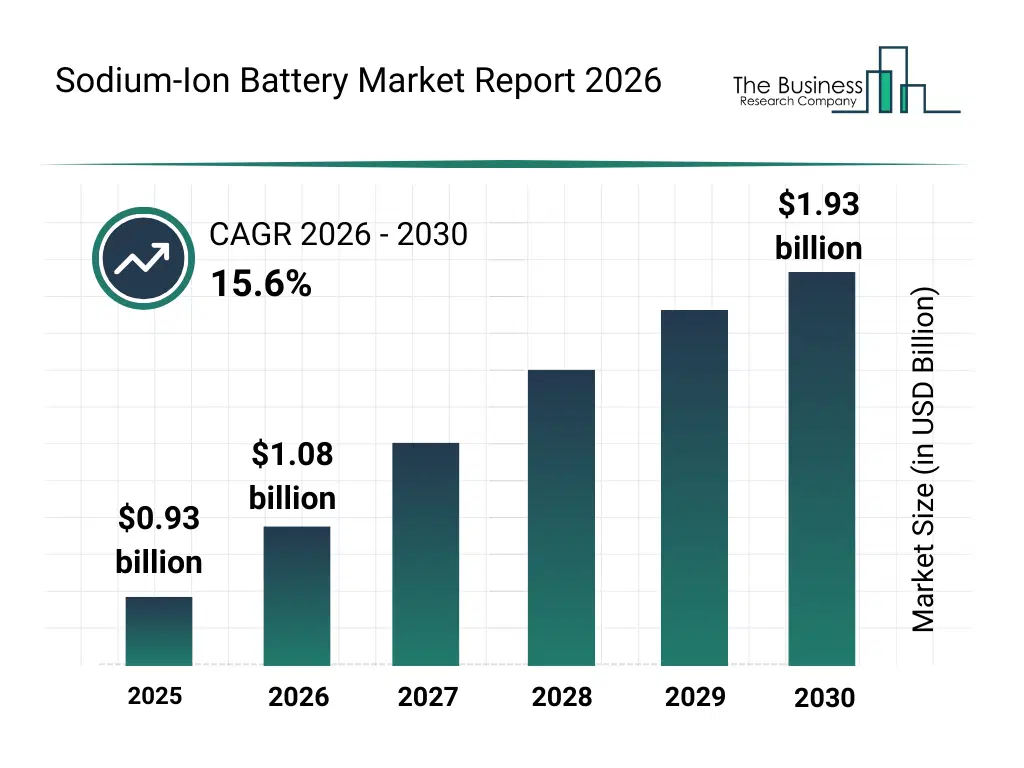
What Is The Sodium-Ion Battery Market Size 2026 And Growth Rate?
The sodium-ion battery market size has grown rapidly in recent years. It will grow from $0.93 billion in 2025 to $1.08 billion in 2026 at a compound annual growth rate (CAGR) of 15.8%. The growth in the historic period can be attributed to early research in sodium based electrochemistry, rising demand for alternative battery chemistries, growth in renewable energy storage needs, limitations of lithium resource availability, development of high temperature sodium sulfur systems.What Is The Sodium-Ion Battery Market Growth Forecast?
The sodium-ion battery market size is expected to see rapid growth in the next few years. It will grow to $1.93 billion in 2030 at a compound annual growth rate (CAGR) of 15.6%. The growth in the forecast period can be attributed to increasing deployment of low cost grid storage solutions, rising adoption of sodium ion batteries in evs, expanding renewable energy integration, advancements in non aqueous electrolyte systems, growing demand for cold climate battery performance. Major trends in the forecast period include increasing focus on low cost battery chemistries, rising development of cold temperature battery technologies, growing adoption of sodium based grid storage solutions, expansion of large scale renewable integration systems, shift toward safer non flammable battery materials.
Global Sodium-Ion Battery Market Segmentation
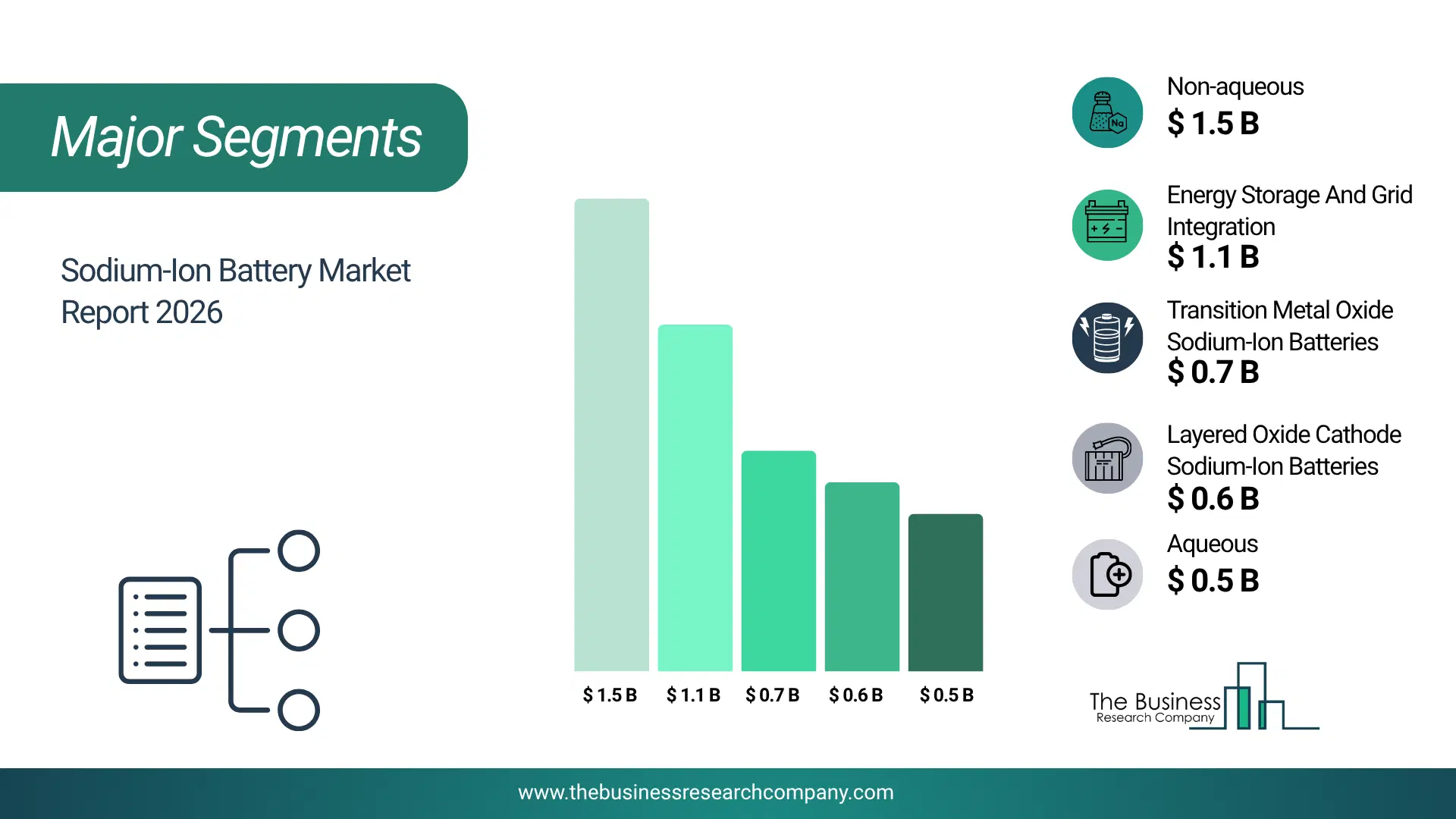
1) By Type: Carbon-Based Sodium-Ion Batteries, Transition Metal Oxide Sodium-Ion Batteries, Graphite Anode Sodium-Ion Batteries, Layered Oxide Cathode Sodium-Ion Batteries, Polyanionic Sodium-Ion Batteries 2) By Technology: Aqueous, Non-aqueous 3) By Application: Energy Storage And Grid Integration, Electric Vehicles (EVs), Residential Energy Storage, Emergency Backup And UPS, Other Applications Subsegments: 1) By Carbon-Based Sodium-Ion Batteries: Hard Carbon Batteries, Soft Carbon Batteries, Composite Carbon Batteries 2) By Transition Metal Oxide Sodium-Ion Batteries: Layered TM Oxide Batteries, Tunnel-Structured TM Oxide Batteries, Prussian Blue/Prussian White Batteries 3) By Graphite Anode Sodium-Ion Batteries: Expanded Graphite Batteries, Graphite–Carbon Hybrid Batteries, Graphite Composite Batteries 4) By Layered Oxide Cathode Sodium-Ion Batteries: P2-Type Batteries, O3-Type Batteries, P3-Type Batteries 5) By Polyanionic Sodium-Ion Batteries: Sodium Iron Phosphate Batteries, Sodium Vanadium Phosphate Batteries, Sodium Manganese Phosphate Batteries The top segments in the sodium-ion battery market will be: • Non-aqueous will reach $1541.51 Million by 2030. • Energy Storage And Grid Integration will reach $1164.05 Million by 2030. • Transition Metal Oxide Sodium-Ion Batteries will reach $773.39 Million by 2030. • Layered Oxide Cathode Sodium-Ion Batteries will reach $666.84 Million by 2030. • Aqueous will reach $492.48 Million by 2030.What Is The Driver Of The Sodium-Ion Battery Market?
The increasing demand for electric vehicles is expected to propel the growth of the sodium-ion battery market going forward. An electric vehicle (EV) is a vehicle that uses one or more electric motors for propulsion, powered by a battery that can be charged from an external power source. The surge in demand for electric vehicles can be attributed to various factors, including concerns over environmental sustainability, government incentives, advancements in battery technology leading to improved range and performance, and a shift in consumer preferences towards cleaner and greener transportation options. Sodium-ion batteries can be used with minimal modifications in existing electric vehicle designs, providing a more straightforward transition from lithium-ion technology. For instance, in July 2023, according to the Internal Energy Agency, a France-based autonomous intergovernmental organization, over 2.3 million electric cars were sold in the first quarter of 2023, a 25% increase from the same period in 2022. By the end of 2023, sales are expected to reach 14 million, representing a 35% year-on-year increase, with growth accelerating in the second half of the year. Therefore, increasing demand for electric vehicles is driving the growth of the sodium-ion battery industry.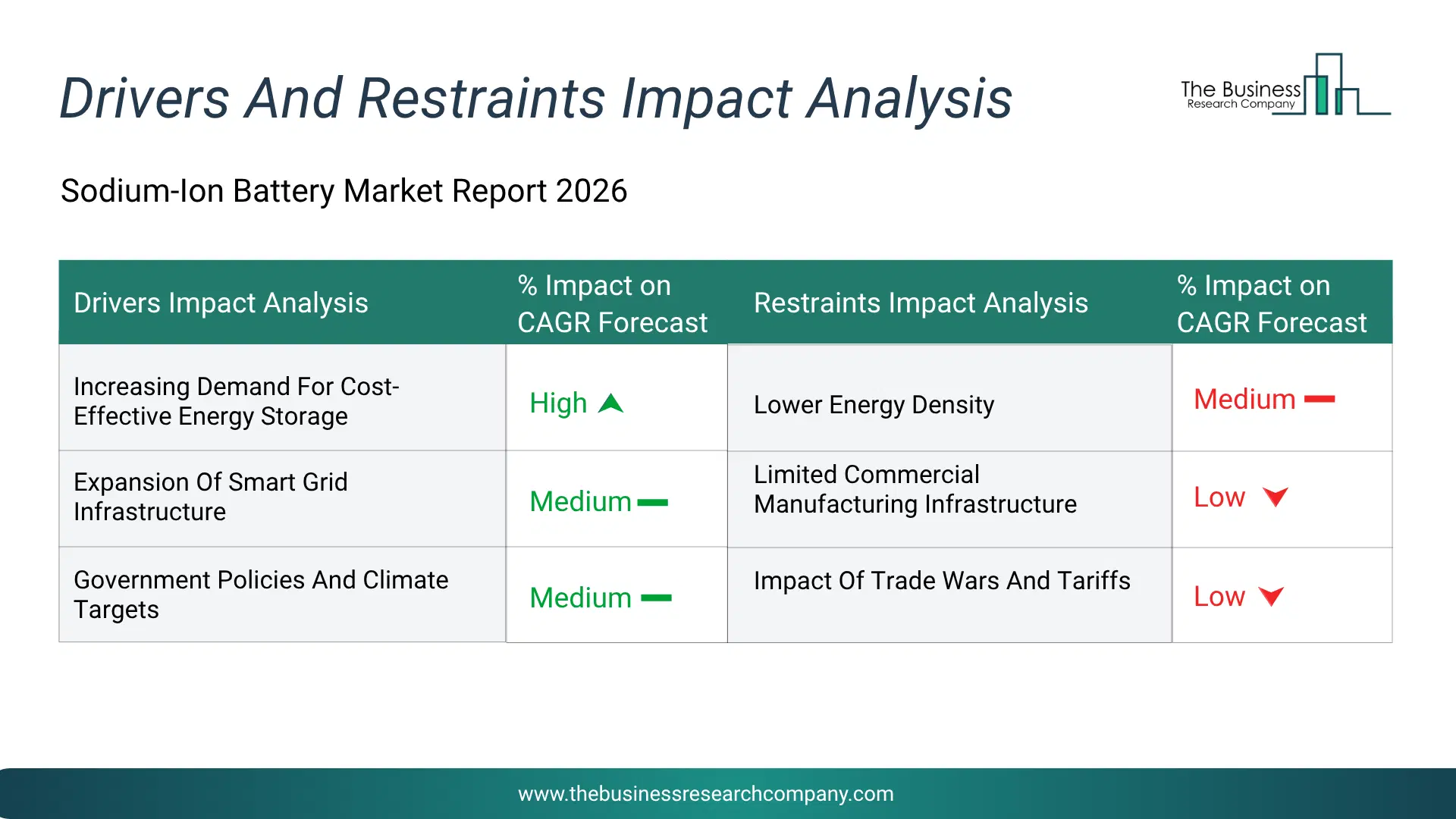
Infographic Chart Showing Key Market Drivers Analysis And Restraints For Sodium-Ion Battery Market
The chart presents an impact analysis of key drivers and restraints, quantifying their relative influence on the market's growth rate and helping assess the balance between growth enablers and limiting factors. This chart offers a high-level perspective; the full report contains more detailed insights.
How Will The Drivers Impact Growth In The Global Sodium-Ion Battery Market?
• Increasing Demand For Cost-Effective Energy Storage (High) – During the forecast period, the increasing demand for cost-effective energy storage is expected to be a key driver propelling expansion in the sodium ion battery market. Rising emphasis on affordable energy storage solutions encourages adoption of sodium-ion systems as cost-efficient alternatives to lithium-ion batteries, especially in large-scale applications like utility storage and backup power. Their lower material cost, use of abundant sodium resources and simpler manufacturing processes reduce overall expenditure, making long-duration storage projects more financially feasible. Businesses and utilities seeking to optimize operational costs increasingly integrate these batteries into energy storage schemes. This drives deployment in both commercial and industrial energy storage projects. The increasing demand for cost-effective energy storage growth contribution during the forecast period in 2025 is 2.0%. • Expansion Of Smart Grid Infrastructure (Medium) – During the forecast period, the expansion of smart grid infrastructure is expected to be a key driver propelling growth in the sodium ion battery market. Deployment of intelligent electricity networks relies on advanced storage solutions to balance supply and demand in real time, integrating variable renewable sources like solar and wind. Sodium-ion systems support grid stability through rapid charge-discharge cycles and enhanced cycle life, enabling smoother load management and reduced peak stress on transmission infrastructure. Smart grid initiatives also prioritize modular, scalable storage, which aligns well with the adaptable design of sodium-ion technologies. This facilitates more reliable, responsive electricity distribution. The expansion of smart grid infrastructure growth contribution during the forecast period in 2025 is 1.6%. • Government Policies And Climate Targets (Medium) – During the forecast period, the government policies and climate targets are expected to be a key driver propelling growth in the sodium ion battery market. Regulatory frameworks and national carbon reduction commitments incentivize cleaner, sustainable energy storage solutions, encouraging organizations to adopt technologies with lower environmental impact. Sodium-ion systems offer reduced reliance on critical and conflict minerals, aligning with green procurement policies and climate action goals. Governments also provide financial incentives, subsidies and tax benefits for energy storage projects meeting renewable energy targets. Such policy support accelerates investment in and integration of sustainable battery solutions across sectors. The government policies and climate targets growth contribution during the forecast period in 2025 is 1.2%. • Expansion Of Rural Electrification And Microgrids (Low) – During the forecast period, the expansion of rural electrification and microgrids is expected to be a key driver propelling growth in the sodium ion battery market. Electrification of remote areas and the rollout of microgrid projects require dependable, locally deployable energy storage to support off-grid power generation. Sodium-ion solutions are advantageous due to their safety, temperature tolerance and low maintenance requirements, which suit rural and decentralized environments. These batteries enable renewable-powered microgrids, enhancing energy access and reliability for communities without stable grid connections. As a result, they become preferred choices for infrastructure expansion in underserved regions. The expansion of rural electrification and microgrids growth contribution during the forecast period in 2025 is 0.5%.How Will The Restraints Impact Growth In The Global Sodium-Ion Battery Market?
• Lower Energy Density (High) – During the forecast period, lower energy density are restricting the growth of the sodium ion battery market. Sodium-ion batteries generally store less energy per unit weight or volume compared with lithium-ion alternatives, which can limit their application in high-energy-demand sectors like electric vehicles and aerospace. This lower energy density makes them more suitable for stationary storage, backup power and short-range mobility solutions, influencing project design and adoption strategies. Developers must optimize system architecture, often using modular setups or larger battery packs to meet capacity requirements. Consequently, deployment focuses on applications where weight and space constraints are less critical. Growth affected by the lower energy density during the forecast period in 2025 is -1.0%. • Limited Commercial Manufacturing Infrastructure (Medium) – During the forecast period, limited commercial manufacturing infrastructure is restricting the growth of the sodium ion battery market. Production of sodium-ion cells is still concentrated in pilot plants and a few commercial-scale facilities, resulting in limited supply capacity and slower scale-up. Insufficient manufacturing infrastructure affects cost, delivery timelines and availability for large-scale projects. Companies need to invest in specialized equipment, quality control systems and supply chain partnerships to expand output. This bottleneck also encourages collaborations and technology licensing to accelerate production capabilities globally. Growth affected by the limited commercial manufacturing infrastructure during the forecast period in 2025 is -0.5%. • Impact Of Trade Wars And Tariffs (Medium) – During the forecast period, the impact of trade wars and tariffs is restricting the growth of the sodium ion battery market. Global trade tensions and tariff impositions on key battery materials, components, or finished products disrupt supply chains and increase costs for sodium-ion deployments. Manufacturers face higher expenses for sourcing cathode materials, anodes and electrolytes, while cross-border restrictions delay shipments. Strategic sourcing, regional production and localized supply chains become critical to mitigate risk. Such geopolitical factors influence project planning, pricing and international adoption strategies. Growth affected by the impact of trade wars and tariffs during the forecast period in 2025 is -0.3%.Key Players In The Global Sodium-Ion Battery Market
Major companies operating in the sodium-ion battery market are Mitsubishi Corporation, Toyota Tsusho Corporation, Panasonic Corporation, Contemporary Amperex Technology Co. Limited, Blackstone Technology GmbH, Jiangsu Zhongna Energy Technology Co., Ltd., NGK Insulators Ltd, Kishida Chemical, Ionic Materials, Natron Energy Inc., AMTE Power plc, Aquion Energy, Altris AB, BLUETTI Power Inc., HiNa Battery Technology Co. Ltd, NEI Corporation, Tiamat Energy, Indigenous Energy Storage Technologies Pvt. Ltd., Moixa Energy Holdings Ltd., Natrium Energy, Ronbay Technology, Zoolnasm Energy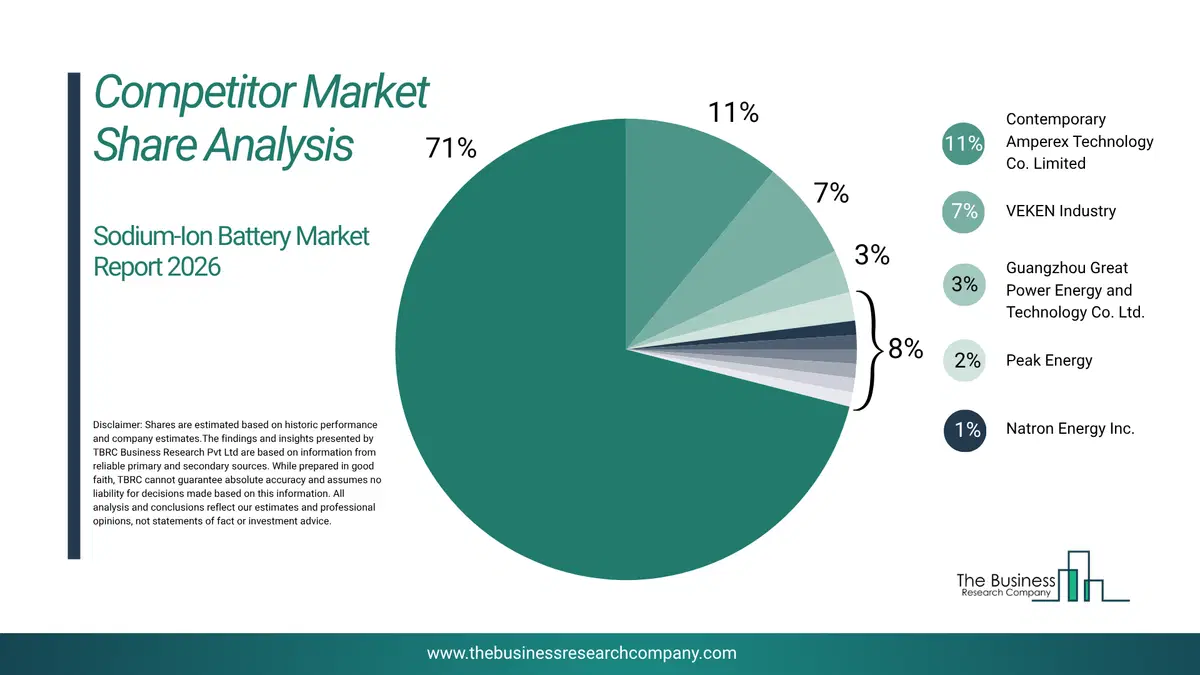
This chart is for illustrative purposes; the full report includes a detailed competitor analysis and comprehensive overview of the top 10 companies in the market.
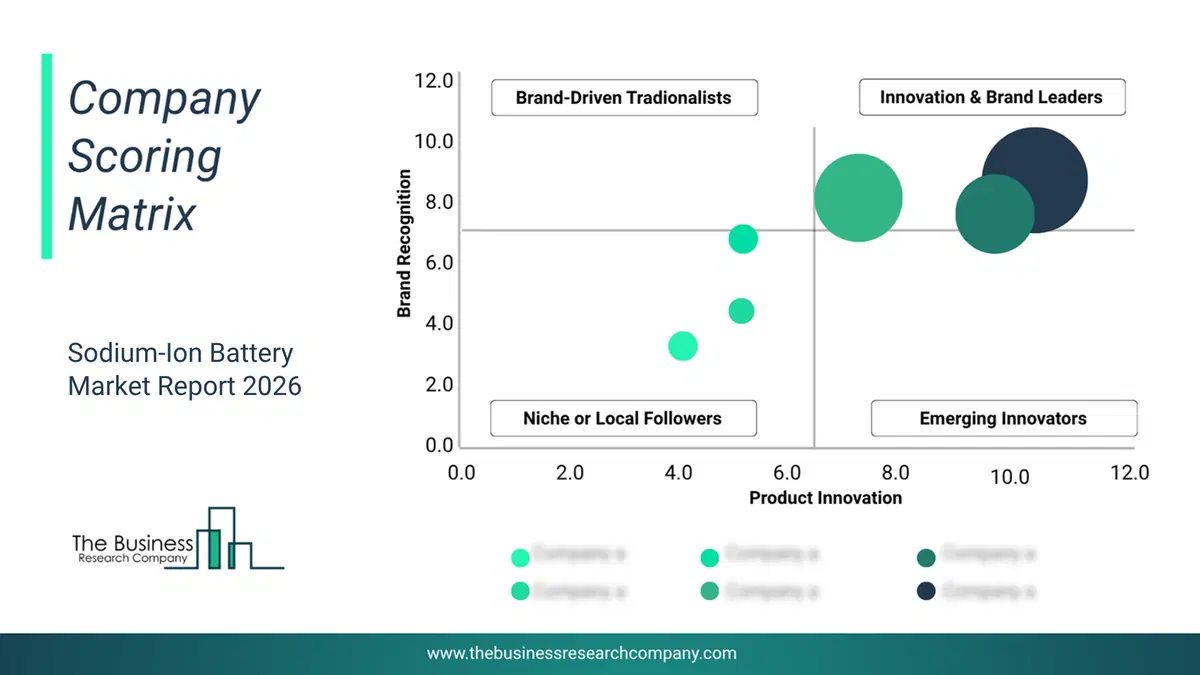
This chart maps companies by product innovation and brand strength, with bubble size indicating relative revenue, helping identify market leaders, challengers, and niche players. This is an illustrative chart; the full report provides a complete and accurate competitive analysis.
Global Sodium-Ion Battery Market Trends and Insights
Major companies operating in the sodium-ion battery market are focusing on developing innovative solutions such as fast-charging battery technology to enhance electric vehicle (EV) performance, increase energy density, and reduce charging time. Fast-charging battery technology refers to advanced battery designs and chemistries that enable rapid energy intake without compromising safety or longevity, allowing EVs to cover longer distances with minimal downtime. For instance, in April 2025, CATL, a China-based battery manufacturer, launched Naxtra, a new sodium-ion battery brand, and introduced the second generation of its Shenxing fast-charging battery capable of enabling a 520 km driving range with a five-minute charge and reaching 80% charge from 0% in 15 minutes under cold weather conditions. This technology leverages optimized sodium-ion chemistry to provide a cost-effective, high-performance alternative to lithium-ion batteries, supporting broader adoption of sustainable energy storage solutions in the EV sector.What Are Latest Mergers And Acquisitions In The Sodium-Ion Battery Market?
In January 2024, LionVolt, a Netherlands-based company that develops and scales 3D solid-state batteries, acquired a battery cell production line in Scotland from AMTE Power PLC for an undisclosed amount. Acquiring the battery cell production line in Scotland from AMTE Power PLC allows LionVolt to enhance its manufacturing capabilities and increase production efficiency, supporting the company's growth and innovation in battery technology. AMTE Power PLC is a UK-based company that develops and manufactures lithium-ion and sodium-ion battery cells.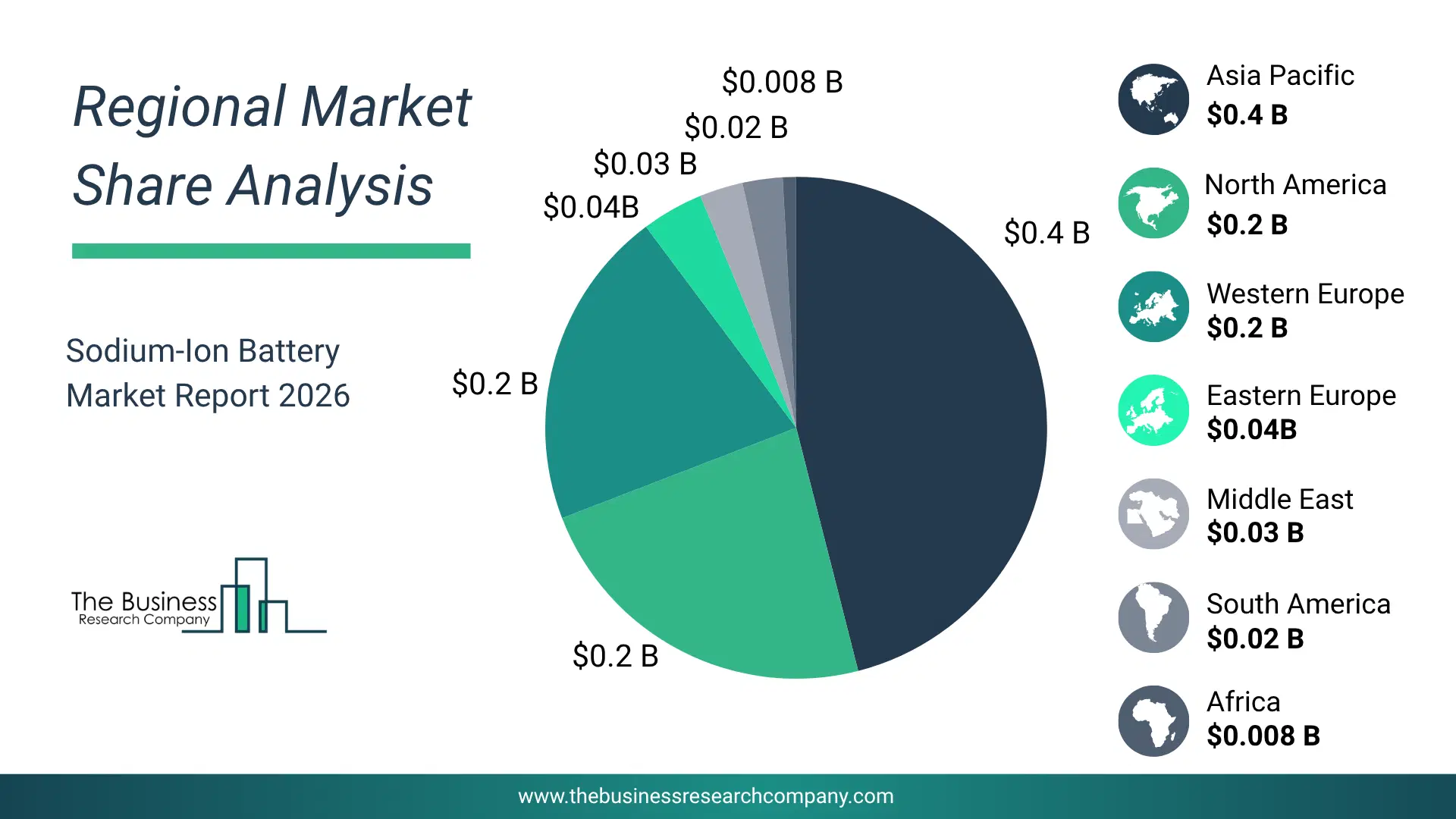
Regional Outlook
Europe was the largest region in the sodium-ion battery market in 2025. Asia-Pacific is expected to be the fastest-growing region in the forecast period. The regions covered in this market report are Asia-Pacific, South East Asia, Western Europe, Eastern Europe, North America, South America, Middle East, Africa. The countries covered in this market report are Australia, Brazil, China, France, Germany, India, Indonesia, Japan, Taiwan, Russia, South Korea, UK, USA, Canada, Italy, Spain.What Defines the Sodium-Ion Battery Market?
The sodium-ion batteries market consists of sales of carbon-based sodium-ion batteries, transition metal oxide sodium-ion batteries, graphite anode sodium-ion battery, layered oxide cathode sodium-ion battery. Values in this market are ‘factory gate’ values, that is the value of goods sold by the manufacturers or creators of the goods, whether to other entities (including downstream manufacturers, wholesalers, distributors and retailers) or directly to end customers. The value of goods in this market includes related services sold by the creators of the goods.How is Market Value Defined and Measured?
The market value is defined as the revenues that enterprises gain from the sale of goods and/or services within the specified market and geography through sales, grants, or donations in terms of the currency (in USD unless otherwise specified). The revenues for a specified geography are consumption values that are revenues generated by organizations in the specified geography within the market, irrespective of where they are produced. It does not include revenues from resales along the supply chain, either further along the supply chain or as part of other products.
This chart presents market attractiveness based on a quantitative evaluation of growth, competition, strategic alignment, and risk, offering a clear view of opportunity areas for decision-making. This chart is for illustrative purposes; the full report contains the complete analysis.

This chart highlights the Total Addressable Market (TAM) by estimating the maximum revenue opportunity using an assumption-driven approach, supporting strategic planning and opportunity sizing across markets. The chart is illustrative; the full report provides a more comprehensive analysis.
What Key Data and Analysis Are Included in the Sodium-Ion Battery Market Report 2026?
The sodium-ion battery market research report is one of a series of new reports from The Business Research Company that provides market statistics, including industry global market size, regional shares, competitors with the market share, detailed market segments, market trends and opportunities, and any further data you may need to thrive in the sodium-ion battery industry. The market research report delivers a complete perspective of everything you need, with an in-depth analysis of the current and future state of the industry.Sodium-Ion Battery Market Report 2026 Market Report Forecast Analysis
| Report Attribute | Details |
|---|---|
| Market Size Value In 2026 | $1.08 billion |
| Revenue Forecast In 2030 | $1.93 billion |
| Growth Rate | CAGR of 15.8% from 2026 to 2030 |
| Base Year For Estimation | 2025 |
| Actual Estimates/Historical Data | 2020-2025 |
| Forecast Period | 2026 - 2030 - 2035 |
| Market Representation | Revenue in USD Billion and CAGR from 2026 to 2030 |
| Segments Covered | Type, Technology, Application |
| Regional Scope | Asia-Pacific, Western Europe, Eastern Europe, North America, South America, Middle East, Africa |
| Country Scope | The countries covered in the report are Australia, Brazil, China, France, Germany, India, Indonesia, Japan, Taiwan, Russia, South Korea, UK, USA, Canada, Italy, Spain. |
| Key Companies Profiled | Mitsubishi Corporation, Toyota Tsusho Corporation, Panasonic Corporation, Contemporary Amperex Technology Co. Limited, Blackstone Technology GmbH, Jiangsu Zhongna Energy Technology Co., Ltd., NGK Insulators Ltd, Kishida Chemical, Ionic Materials, Natron Energy Inc., AMTE Power plc, Aquion Energy, Altris AB, BLUETTI Power Inc., HiNa Battery Technology Co. Ltd, NEI Corporation, Tiamat Energy, Indigenous Energy Storage Technologies Pvt. Ltd., Moixa Energy Holdings Ltd., Natrium Energy, Ronbay Technology, Zoolnasm Energy |
| Customization Scope | Request for Customization |
| Pricing And Purchase Options | Explore Purchase Options |