
Sodium Reduction Ingredients Market Report 2026
Global Outlook – By Type (Mineral Blend, Amino Acid, Yeast Extracts, Other Types), By Mineral Blend (Calcium Chloride, Potassium lactate, Potassium chloride), By Application (Bakery And Confectionery, Dairy And Frozen Foods, Meat products, Sauces, Snacks) – Market Size, Trends, Strategies, and Forecast to 2030
Sodium Reduction Ingredients Market Overview
• Sodium Reduction Ingredients market size has reached to $1.56 billion in 2025 • Expected to grow to $2.53 billion in 2030 at a compound annual growth rate (CAGR) of 10.2% • Growth Driver: The Rising Appetite For Processed Foods Ignites Growth In The Sodium Reduction Ingredients Market • Market Trend: Cargill's Collaborative Leap With Ciech To Enhance Salt Solutions For European Food Manufacturers • North America was the largest region in 2025.What Is Covered Under Sodium Reduction Ingredients Market?
Sodium reduction ingredients are food additives that reduce sodium levels in food while keeping the same flavor and functioning as salt. Sodium reduction ingredients increase the gustatory effects of sodium on the taste, even though the concentration of salt (sodium chloride) has been decreased. The major types of sodium reduction ingredients are mineral blend, amino acid, yeast extracts, and other types. Mineral blend refers to a salt that helps reduce sodium without compromising taste. It allows for significant sodium reduction while achieving identical functionality in finished products. The mineral blend is widely used in baking, snacks, confectioneries, meat, seafood, and plant-based products. The various mineral blends include potassium sulphate, magnesium sulphate, calcium chloride, potassium lactate, and potassium chloride. These are used in various applications, such as bakery and confectionery, dairy and frozen foods, meat products sauces, and snacks.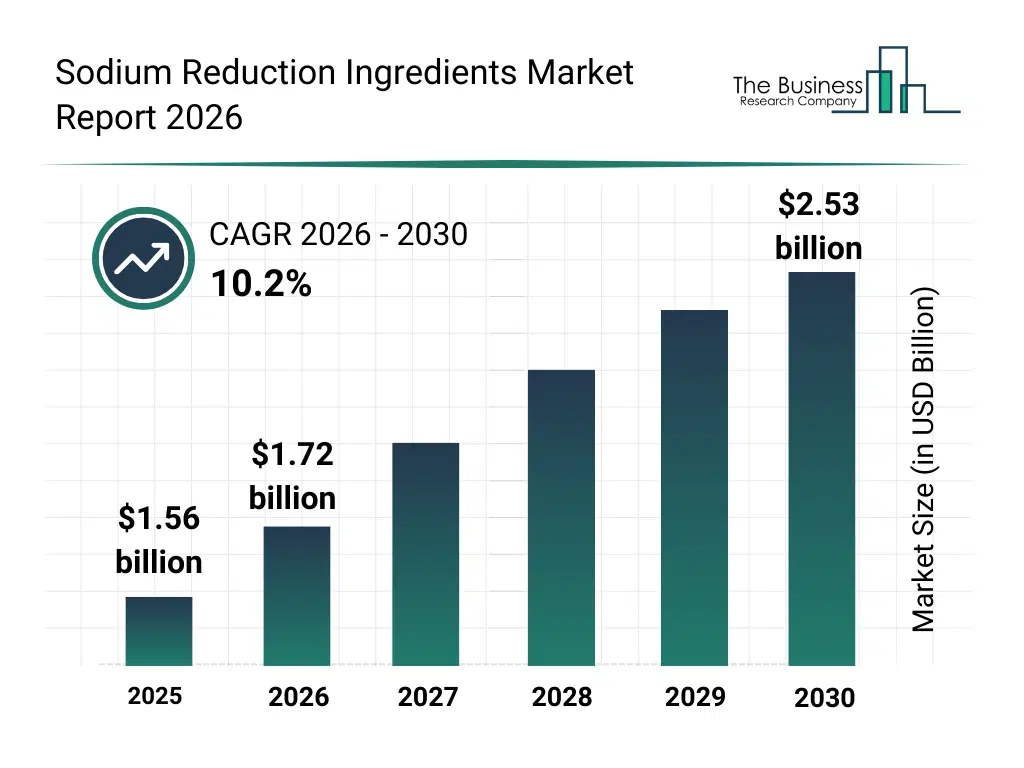
What Is The Sodium Reduction Ingredients Market Size and Share 2026?
The sodium reduction ingredients market size has grown rapidly in recent years. It will grow from $1.56 billion in 2025 to $1.72 billion in 2026 at a compound annual growth rate (CAGR) of 10.1%. The growth in the historic period can be attributed to rising consumer awareness of hypertension risks, regulatory pressure on food sodium levels, increased use of processed and packaged foods, expansion of functional food formulations, availability of mineral-based substitutes.What Is The Sodium Reduction Ingredients Market Growth Forecast?
The sodium reduction ingredients market size is expected to see rapid growth in the next few years. It will grow to $2.53 billion in 2030 at a compound annual growth rate (CAGR) of 10.2%. The growth in the forecast period can be attributed to growing demand for low-sodium processed foods, increasing innovation in flavor enhancement systems, rising adoption by bakery and snack manufacturers, expansion of health-focused food portfolios, growing use in ready-to-eat meals. Major trends in the forecast period include increasing adoption of potassium-based salt alternatives, rising use of yeast extract flavor enhancers, growing demand for clean-label sodium reduction solutions, expansion of functional ingredient blends, enhanced focus on taste masking technologies.
Global Sodium Reduction Ingredients Market Segmentation
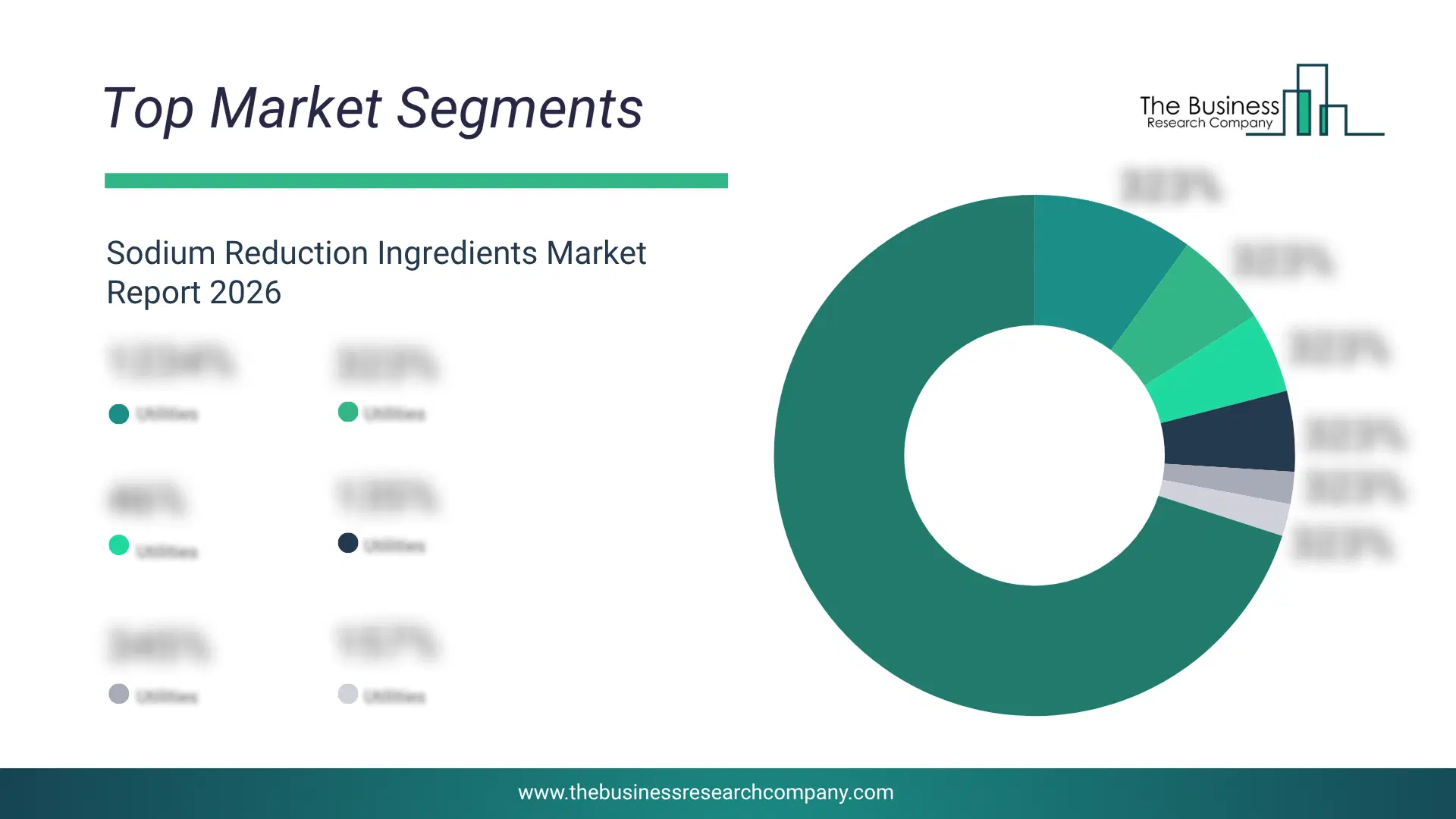
1) By Type: Mineral Blend, Amino Acid, Yeast Extracts, Other Types 2) By Mineral Blend: Calcium Chloride, Potassium lactate, Potassium chloride 2) By Application: Bakery And Confectionery, Dairy And Frozen Foods, Meat products, Sauces, Snacks Subsegments: 1) By Mineral Blend: Potassium-Based Salts, Magnesium-Based Salts, Calcium-Based Salts 2) By Amino Acid: L-Glutamate, L-Lysine, Other Amino Acids Used For Flavor Enhancement 3) By Yeast Extracts: Autolyzed Yeast Extract, Yeast Extract Powder 4) By Other Types: Flavor Enhancers, Herbal And Spice BlendsWhat Is The Driver Of The Sodium Reduction Ingredients Market?
The surge in demand for processed foods is expected to drive the sodium reduction ingredient market. Processed food is food that has undergone any modification during preparation. The increase in the income levels of people due to the growth of the economy, particularly in emerging countries, led to an increase in demand for processed and fast foods. Sodium is added to processed and packaged foods for various reasons, including microbial growth inhibition. Sodium is used to enhance flavor and texture and to bake and cure meat. For instance, in April 2024, according to a report published by the National Association of Convenience Stores (NACS), a US-based trade association, total industry foodservice sales, including prepared food, commissary items, and dispensed beverages, accounted for 26.9% of in-store sales in 2023, up from 25.6% in 2022, with prepared food sales per store per month growing by 12.2%. Therefore, the surge in demand for packaged food will drive the growth of the demand for the sodium reduction ingredients industry.Key Players In The Global Sodium Reduction Ingredients Market
Major companies operating in the sodium reduction ingredients market are Cargill Incorporated, Angel Yeast Co. Ltd., Kerry Group PLC, Givaudan SA, Innophos Holdings Inc., Tate & Lyle PLC, Biospringer, Corbion NV, Advanced Food Systems Inc., DuPont de Nemours Inc., Dr. Paul Lohmann GmbH & Co. KGaA, K+S Kali GmbH, Koninklijke DSM NV, Ajinomoto Co. Inc., DSM Food Specialties BV, Jungbunzlauer International AG, Fufeng Group Company Limited, Meihua Holdings Group Co. Ltd., Foodchem International Corporation, Henan Jindan Lactic Acid Technology Co. Ltd., Qingdao Huifenghe MSG Co. Ltd., Shandong Qilu Biotechnology Group Co. Ltd., Saltwell AB, Savoury Systems International, Salt of the Earth Ltd., Sensient Technologies Corporation, Associated British Foods PLC, Ingredion Incorporated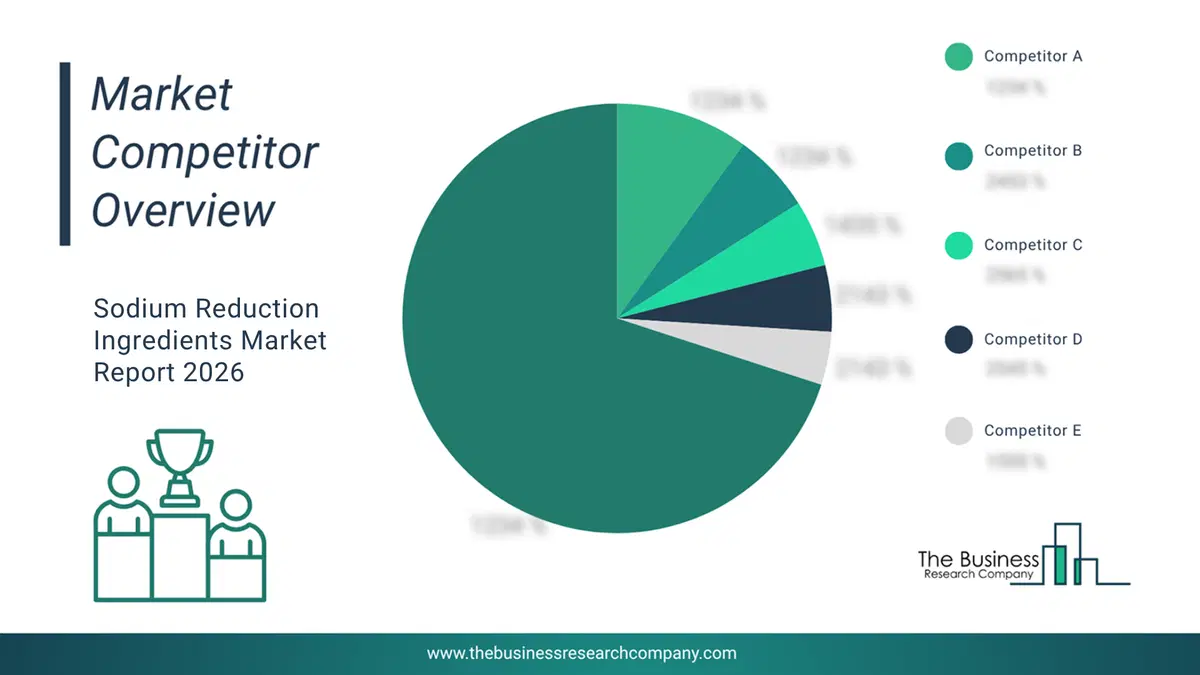
This chart is for illustrative purposes; the full report includes a detailed competitor analysis and comprehensive overview of the top 10 companies in the market.
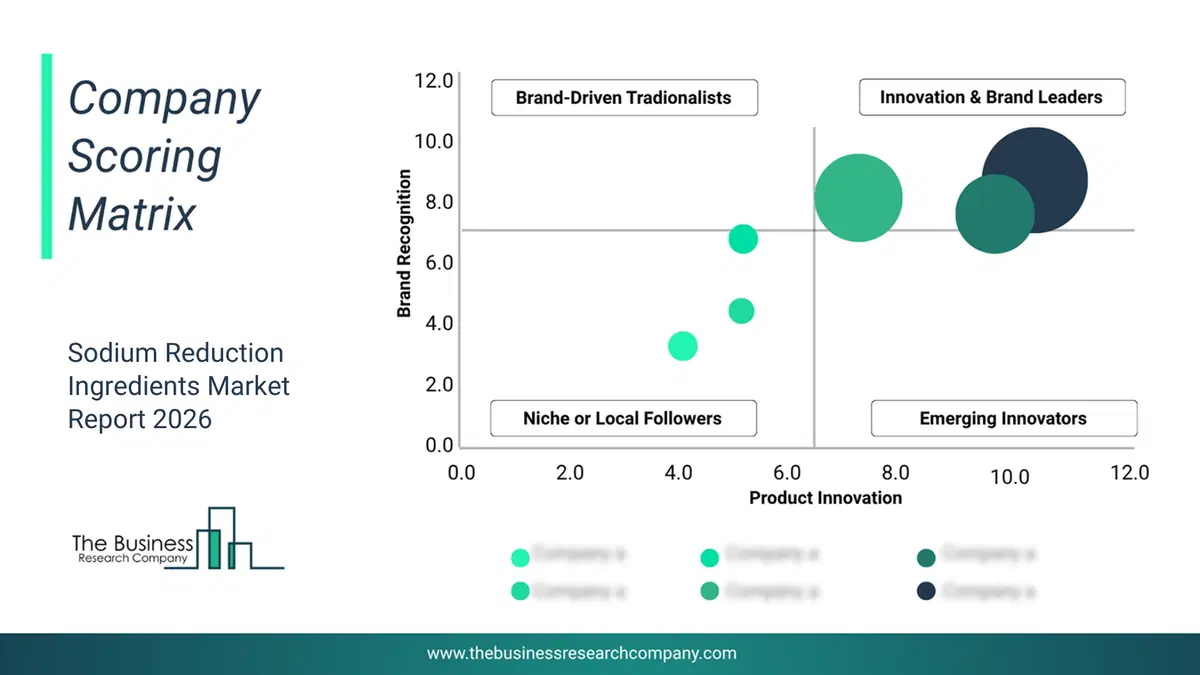
This chart maps companies by product innovation and brand strength, with bubble size indicating relative revenue, helping identify market leaders, challengers, and niche players. This is an illustrative chart; the full report provides a complete and accurate competitive analysis.
Global Sodium Reduction Ingredients Market Trends and Insights
Major companies operating in sodium reduction ingredients market are going into partnerships to strengthen their position in the market. A business strategic partnership refers to a structured affiliation between two or more commercial enterprises, typically established via one or more business agreements or contracts. For instance, in May 2023, Cargill, a US-based food company, partnered with CIECH. The collaboration aims to expand Cargill's product portfolio and to assist them to provide access to a full range of specialty and evaporated food salt solutions to European food manufacturers. CIECH is a Poland-based chemical company.What Are Latest Mergers And Acquisitions In The Sodium Reduction Ingredients Market?
In January 2025, Solina, a France-based provider of savory food solutions, acquired Advanced Food Systems, Inc. (AFS) for an undisclosed amount. With this acquisition, Solina aims to expand its North American footprint and enhance its portfolio of functional and flavor solutions by integrating AFS's complementary expertise in ingredient systems and product performance technologies. Advanced Food Systems, Inc. is a US-based provider of custom dry seasoning blends and functional ingredient systems used in meat, poultry, frozen foods, sauces, marinades, and sodium-reduction applications.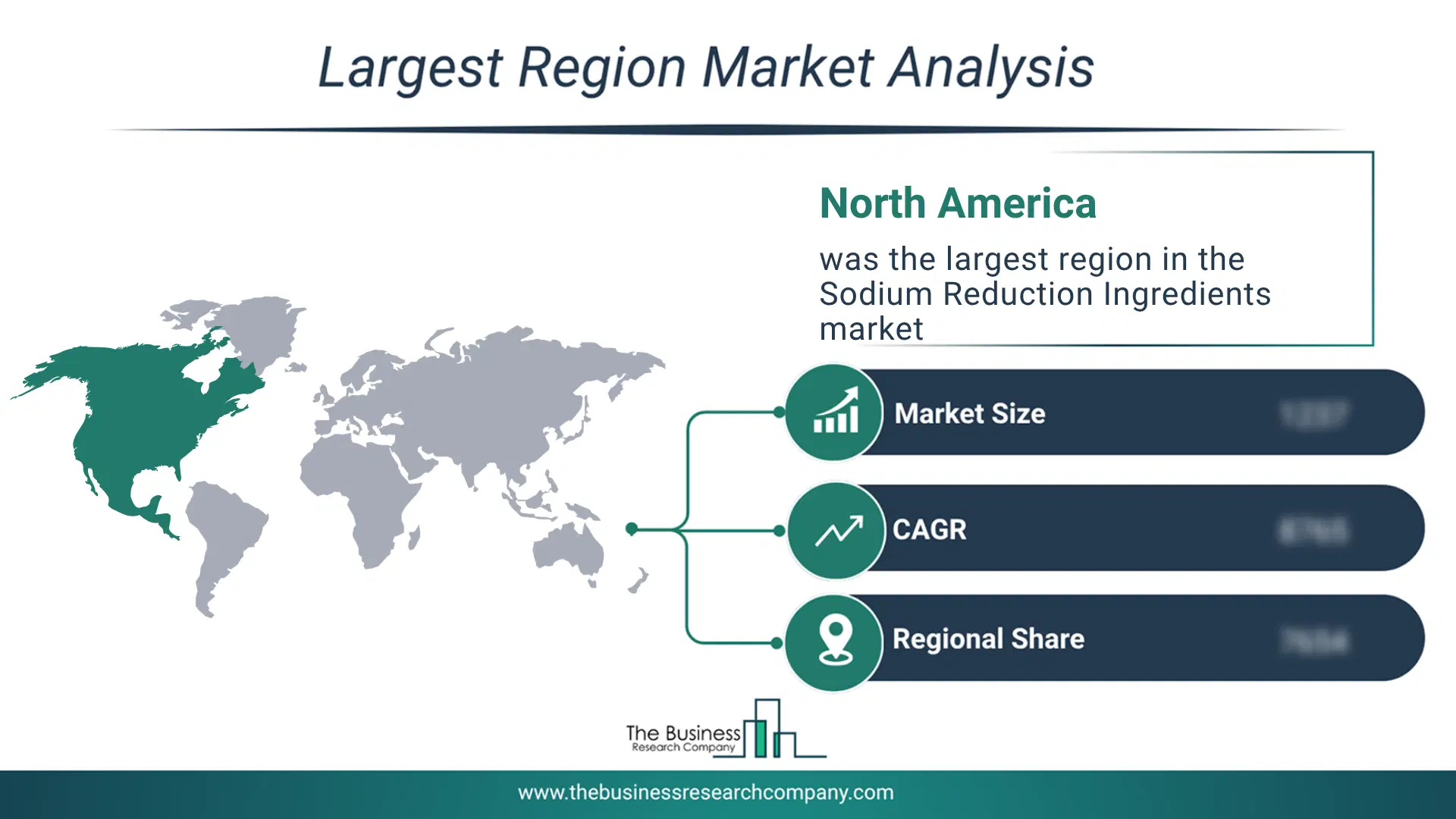
Regional Outlook
North America was the largest region in the sodium reduction ingredients market share in 2025. The regions covered in this market report are Asia-Pacific, South East Asia, Western Europe, Eastern Europe, North America, South America, Middle East and Africa. The countries covered in this market report are Australia, Brazil, China, France, Germany, India, Indonesia, Japan, Taiwan, Russia, South Korea, UK, USA, Italy, Spain, CanadaWhat Defines the Sodium Reduction Ingredients Market?
The sodium reduction ingredients market consists of sales of sea salts, salt blends, natural peptide extracts, tomatoes, parmesan cheese, mushrooms and soy. Values in this market are 'factory gate' values, that is the value of goods sold by the manufacturers or creators of the goods, whether to other entities (including downstream manufacturers, wholesalers, distributors and retailers) or directly to end customers. The value of goods in this market includes related services sold by the creators of the goods.How is Market Value Defined and Measured?
The market value is defined as the revenues that enterprises gain from the sale of goods and/or services within the specified market and geography through sales, grants, or donations in terms of the currency (in USD unless otherwise specified). The revenues for a specified geography are consumption values that are revenues generated by organizations in the specified geography within the market, irrespective of where they are produced. It does not include revenues from resales along the supply chain, either further along the supply chain or as part of other products.
This chart presents market attractiveness based on a quantitative evaluation of growth, competition, strategic alignment, and risk, offering a clear view of opportunity areas for decision-making. This chart is for illustrative purposes; the full report contains the complete analysis.

This chart highlights the Total Addressable Market (TAM) by estimating the maximum revenue opportunity using an assumption-driven approach, supporting strategic planning and opportunity sizing across markets. The chart is illustrative; the full report provides a more comprehensive analysis.
What Key Data and Analysis Are Included in the Sodium Reduction Ingredients Market Report 2026?
The sodium reduction ingredients market research report is one of a series of new reports from The Business Research Company that provides market statistics, including industry global market size, regional shares, competitors with the market share, detailed market segments, market trends and opportunities, and any further data you may need to thrive in the sodium reduction ingredients industry. The market research report delivers a complete perspective of everything you need, with an in-depth analysis of the current and future state of the industry.Sodium Reduction Ingredients Market Report Forecast Analysis
| Report Attribute | Details |
|---|---|
| Market Size Value In 2026 | $1.72 billion |
| Revenue Forecast In 2030 | $2.53 billion |
| Growth Rate | CAGR of 10.1% from 2026 to 2030 |
| Base Year For Estimation | 2025 |
| Actual Estimates/Historical Data | 2020-2025 |
| Forecast Period | 2026 - 2030 |
| Market Representation | Revenue in USD Billion and CAGR from 2026 to 2030 |
| Segments Covered | Type, Mineral Blend, Application |
| Regional Scope | Asia-Pacific, Western Europe, Eastern Europe, North America, South America, Middle East, Africa |
| Country Scope | The countries covered in the report are Australia, Brazil, China, France, Germany, India, Indonesia, Japan, Taiwan, Russia, South Korea, UK, USA, Canada, Italy, Spain. |
| Key Companies Profiled | Cargill Incorporated, Angel Yeast Co. Ltd., Kerry Group PLC, Givaudan SA, Innophos Holdings Inc., Tate & Lyle PLC, Biospringer, Corbion NV, Advanced Food Systems Inc., DuPont de Nemours Inc., Dr. Paul Lohmann GmbH & Co. KGaA, K+S Kali GmbH, Koninklijke DSM NV, Ajinomoto Co. Inc., DSM Food Specialties BV, Jungbunzlauer International AG, Fufeng Group Company Limited, Meihua Holdings Group Co. Ltd., Foodchem International Corporation, Henan Jindan Lactic Acid Technology Co. Ltd., Qingdao Huifenghe MSG Co. Ltd., Shandong Qilu Biotechnology Group Co. Ltd., Saltwell AB, Savoury Systems International, Salt of the Earth Ltd., Sensient Technologies Corporation, Associated British Foods PLC, Ingredion Incorporated |
| Customization Scope | Request for Customization |
| Pricing And Purchase Options | Explore Purchase Options |