
Software Defined Radio Market Report 2026
Global Outlook – By Type (Joint Tactical Radio System (JTRS), Cognitive Radio, General Purpose Radio, Terrestrial Trunked Radio (TETRA)), By Component (Hardware, Software, Service), By Platform (Airborne, Naval, Land, Space), By Frequency Band (High Frequency (HF), Very High Frequency (VHF), Ultra-High Frequency (UHF), Other Bands), By End-Users (Aerospace And Defense, Telecommunication, Public Safety, Commercial, Other End-Users) – Market Size, Trends, Strategies, and Forecast to 2030
Software Defined Radio Market Overview
• Software Defined Radio market size has reached to $24.63 billion in 2025 • Expected to grow to $39.16 billion in 2030 at a compound annual growth rate (CAGR) of 9.7% • Growth Driver: Rising Defense Spending Enhances Software-Defined Radio Market Strengthening Defense Communication Systems • Market Trend: Innovative Technological Advancements Drive The Software-Defined Radio Market Redefining Communication Solutions • North America was the largest region in 2025 and Asia-Pacific is the fastest growing region.Market Gains By 2030 – Top Opportunities By Segment
Market Gain identifies the most promising market opportunities by highlighting the segments or products expected to generate the highest incremental revenue growth over the next five years.
What Is Covered Under Software Defined Radio Market?
The software defined radio refer to a radio communication system that uses reconfigurable software-based elements for digital signal processing and conversion. The system can tune to any frequency band, integrate different modulation-demodulation schemes, and support multiple standards in the same device using reconfigurable hardware and powerful software. The purpose of SDR is to act as a programmable transceiver that supports various wireless technologies. The main types of software-defined radio are joint tactical radio systems (JTRS), cognitive radio, general purpose radio, and terrestrial trunked radio (TETRA). A joint tactical radio system (JTRS) refers to software-defined radio used for the transmission of information in military and naval operations. A joint tactical radio system is a set of software-based radio systems used in ground vehicles and military vehicles. Hardware, software, and service are the components, and airborne, naval, land, and space are the platforms for software-defined radio. High frequency (HF), very high frequency (VFH), and ultra-high frequency (UFH) are the frequencies of software-defined radio. Aerospace & defense, telecommunication, public safety, and commercial are the end users of software-defined radio.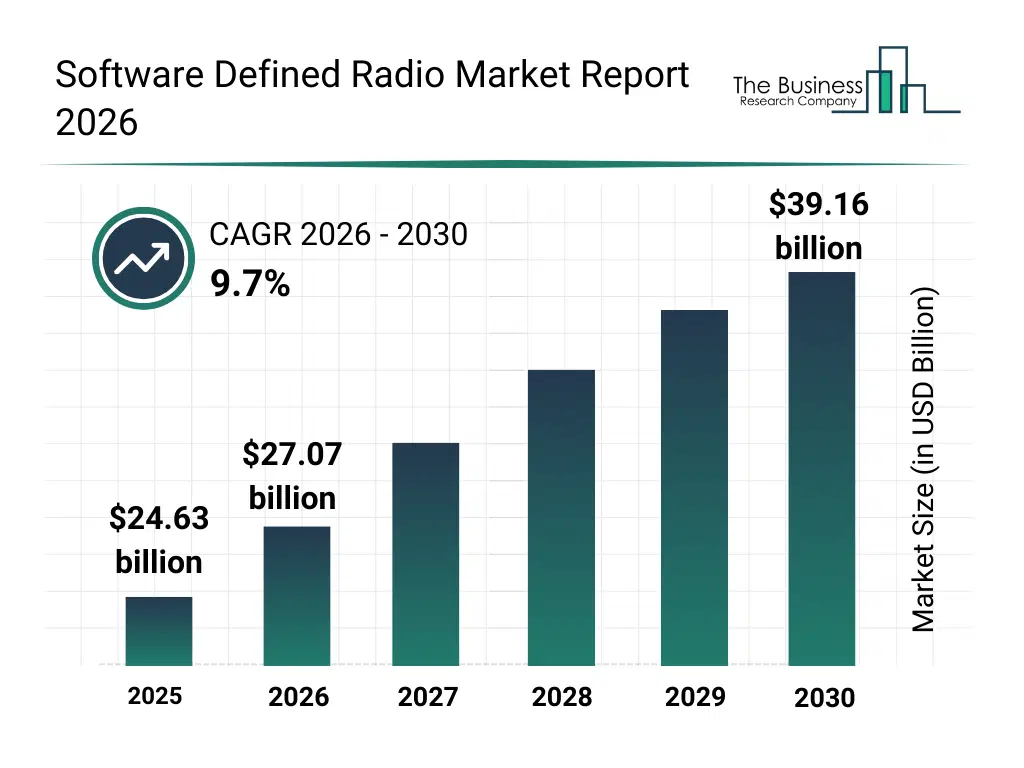
What Is The Software Defined Radio Market Size and Share 2026?
The software defined radio market size has grown strongly in recent years. It will grow from $24.63 billion in 2025 to $27.07 billion in 2026 at a compound annual growth rate (CAGR) of 9.9%. The growth in the historic period can be attributed to increasing military communication modernization programs, expansion of public safety communication networks, rising demand for spectrum-efficient radio systems, adoption of reconfigurable communication hardware, growth in multi-standard wireless devices.What Is The Software Defined Radio Market Growth Forecast?
The software defined radio market size is expected to see strong growth in the next few years. It will grow to $39.16 billion in 2030 at a compound annual growth rate (CAGR) of 9.7%. The growth in the forecast period can be attributed to increasing deployment of 5G and beyond communication systems, rising investments in software-centric defense radios, growing demand for adaptive spectrum management, expansion of satellite-based communication platforms, increasing focus on cyber-resilient radio systems. Major trends in the forecast period include increasing adoption of multi-band programmable radios, rising deployment of cognitive radio systems, growing integration of software-based waveforms, expansion of secure and encrypted communication platforms, enhanced focus on interoperable radio architectures.
Global Software Defined Radio Market Segmentation
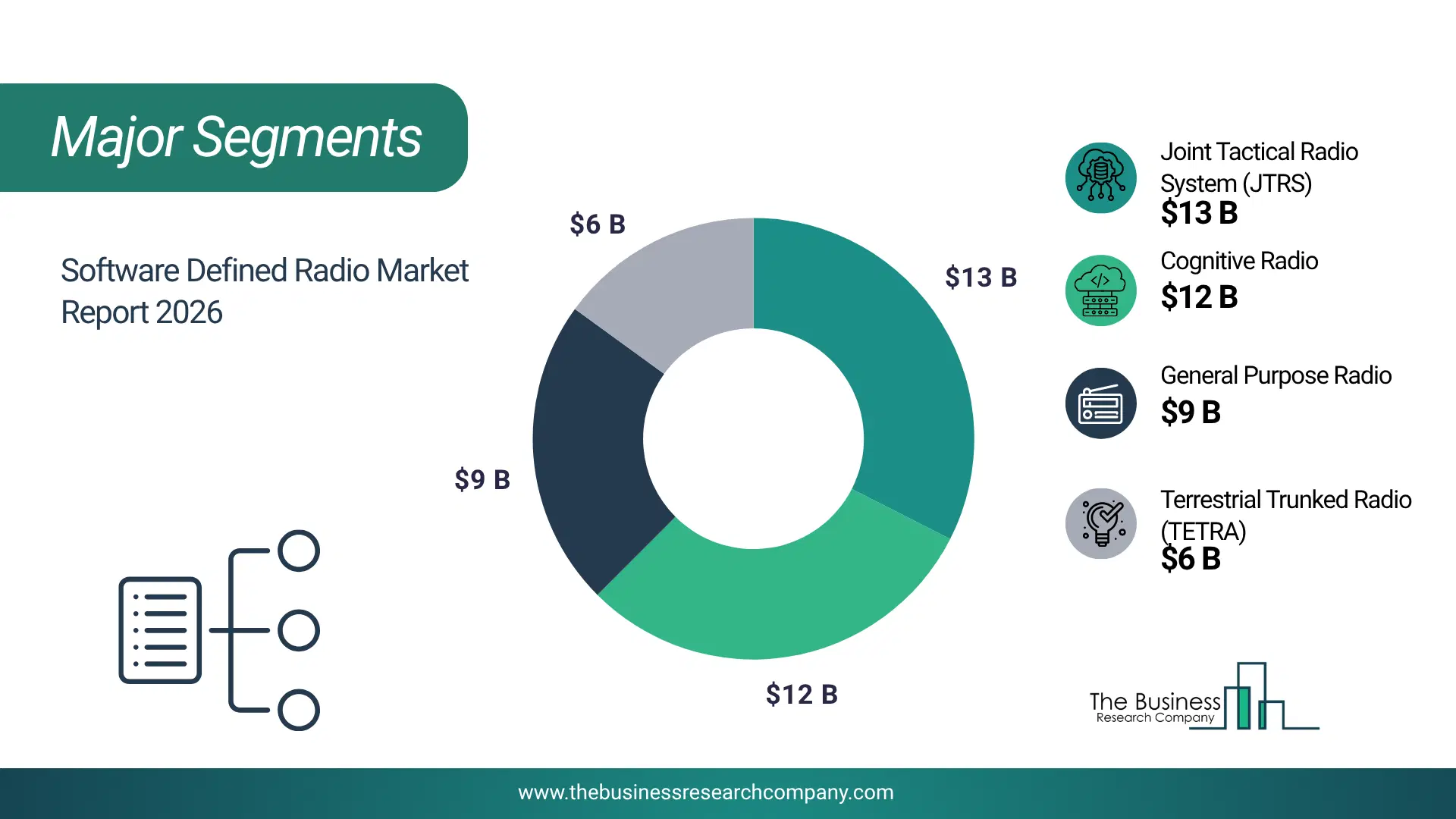
1) By Type: Joint Tactical Radio System (JTRS), Cognitive Radio, General Purpose Radio, Terrestrial Trunked Radio (TETRA) 2) By Component: Hardware, Software, Service 3) By Platform: Airborne, Naval, Land, Space 4) By Frequency Band: High Frequency (HF), Very High Frequency (VHF), Ultra-High Frequency (UHF), Other Bands 5) By End-Users: Aerospace And Defense, Telecommunication, Public Safety, Commercial, Other End-Users Subsegments: 1) By Joint Tactical Radio System (JTRS): Handheld Radios, Vehicular Radios, Base Station Radios 2) By Cognitive Radio: Spectrum Sensing, Dynamic Spectrum Access, Network Management 3) By General Purpose Radio: VHF Radio, UHF Radio, HF Radio 4) By Terrestrial Trunked Radio (TETRA): Mobile TETRA Radios, Portable TETRA Radios, Infrastructure Equipment The top segments in the software defined radio market will be: • Joint Tactical Radio System (JTRS) will reach $13.15 Billion by 2030. • Cognitive Radio will reach $12.18 Billion by 2030. • General Purpose Radio will reach $8.83 Billion by 2030. • Terrestrial Trunked Radio (TETRA) will reach $6.04 Billion by 2030.What Is The Driver Of The Software Defined Radio Market?
The rising defense spending to upgrade defense communication systems is expected to propel the software-defined radio market. The defense sector provides soldiers with technological advantages that enable them to work tactfully in wartime by providing them with enhanced data transmission capability, voice clarity, and data transmission accuracy systems. These advanced communication systems aid in the protection of sensitive data throughout the defense sector. Furthermore, as cross-border disputes and terrorism become more prevalent, investments in defense communication are increasing. These factors would likely increase the use of advanced communication systems for greater security and safety. For instance, in May 2024, the UK Parliament, UK-based government, in the 2023-24 financial year, the UK's defense spending was £54.2 billion. This amount is projected to increase to £57.1 billion in 2024-25, reflecting a 4.5% rise in real terms. Therefore, the increase in defense spending on defense communications systems will drive the software-defined radio market growth.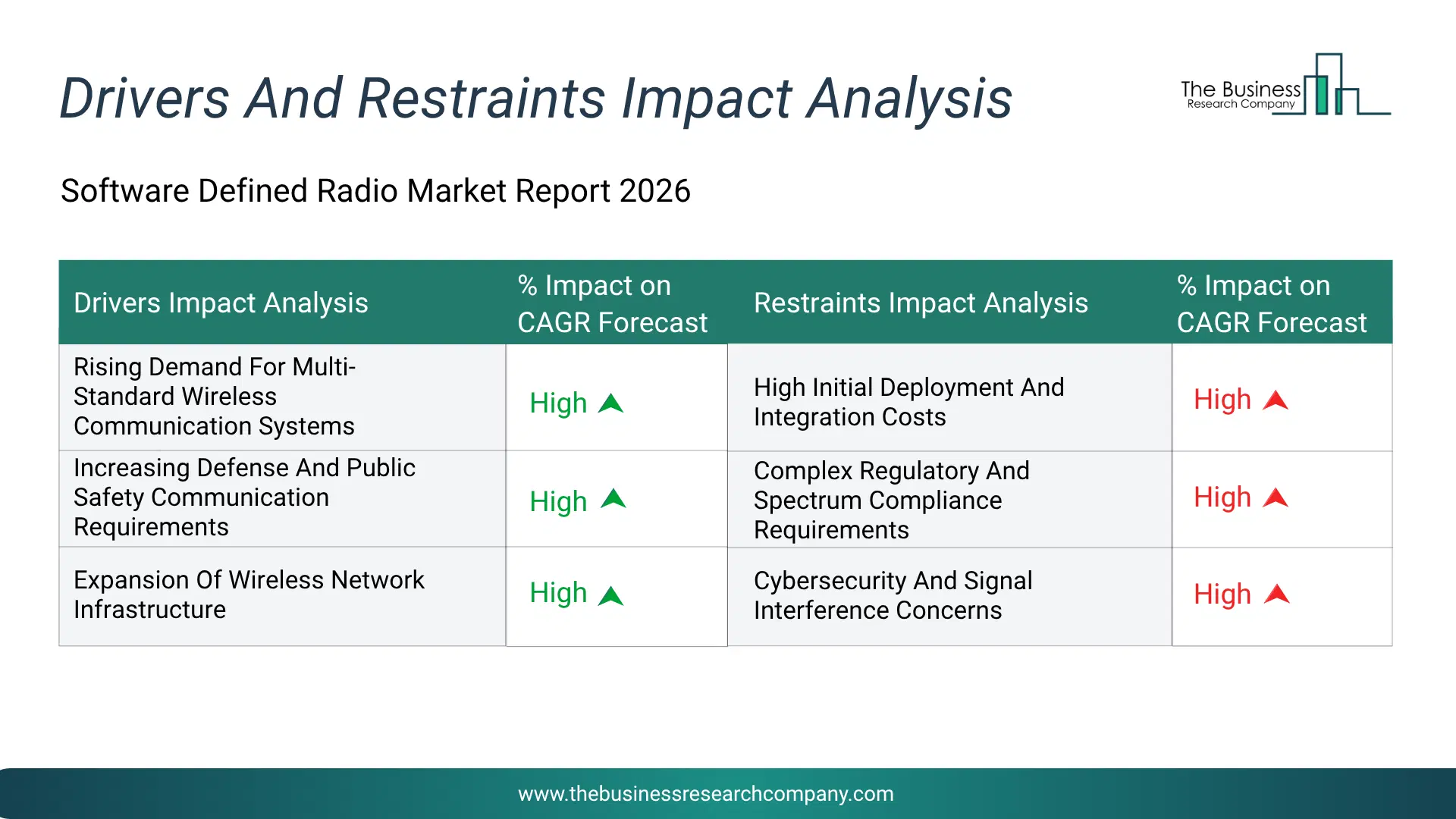
Infographic Chart Showing Key Market Drivers Analysis And Restraints For Software Defined Radio Market
The chart presents an impact analysis of key drivers and restraints, quantifying their relative influence on the market's growth rate and helping assess the balance between growth enablers and limiting factors. This chart offers a high-level perspective; the full report contains more detailed insights.
How Will The Drivers Impact Growth In The Global Software Defined Radio Market?
• Rising Demand For Multi-Standard Wireless Communication Systems (High) – During the forecast period, the rising demand for multi-standard wireless communication systems is expected to become a key growth driver for the software defined radio market by 2030. Rising demand for multi-standard wireless communication systems is driving the growth of the software defined radio market due to the increasing need for communication systems capable of supporting multiple wireless standards within a single device. Industries such as defense, telecommunications, transportation, and public safety require interoperable communication networks to ensure seamless connectivity across different platforms and frequencies. Software defined radios provide flexibility by enabling software-based configuration instead of deploying separate hardware for every communication protocol. This capability reduces operational complexity and improves spectrum utilization across diverse applications. The growing adoption of integrated wireless communication systems across commercial and government sectors is further supporting market expansion. • Increasing Defense And Public Safety Communication Requirements (High) – During the forecast period, the increasing defense and public safety communication requirements is expected to emerge as a major factor driving the expansion of the software defined radio market by 2030. Increasing defense and public safety communication requirements is accelerating the adoption of software defined radios as military and emergency response organizations require highly reliable and adaptable communication systems. Software defined radios enable secure communication, frequency agility, and interoperability between different agencies operating in mission-critical environments. Defense organizations increasingly rely on programmable radio systems for tactical communication, surveillance, and disaster management operations. Public safety agencies also require efficient communication systems capable of functioning during emergencies and natural disasters. The ability of software defined radios to support multiple communication standards in dynamic operational conditions is significantly contributing to market growth. • Expansion Of Wireless Network Infrastructure (High) – During the forecast period, the expansion of wireless network infrastructure is expected to act as a key growth catalyst for the software defined radio market by 2030. Expansion of wireless network infrastructure is contributing to the growth of the software defined radio market due to the increasing deployment of advanced wireless communication networks across urban and remote areas. Telecommunications operators and enterprise users require flexible communication systems capable of adapting to changing network requirements and spectrum conditions. Software defined radios support efficient integration with diverse network architectures and facilitate improved communication coverage. The growing demand for uninterrupted connectivity across industries such as transportation, aviation, and industrial automation is further encouraging adoption. Increasing investments in wireless infrastructure development by governments and private organizations are creating favorable opportunities for market expansion.How Will The Restraints Impact Growth In The Global Software Defined Radio Market?
• High Initial Deployment And Integration Costs (High) – During the forecast period, the high initial deployment and integration costs is restraining the growth of the software defined radio market because organizations often face substantial expenses associated with hardware procurement, software customization, and system integration. Deploying software defined radio systems requires specialized components, advanced processing capabilities, and compatibility testing with existing communication infrastructure. Small and medium-sized enterprises may face financial limitations in adopting these systems due to high capital investment requirements. Additionally, ongoing maintenance and operational expenses increase the overall cost burden for end users. These financial challenges can limit large-scale adoption across cost-sensitive industries and developing economies. • Complex Regulatory And Spectrum Compliance Requirements (High) – During the forecast period, the complex regulatory and spectrum compliance requirements is limiting the expansion of the software defined radio market due to strict government regulations governing wireless communication frequencies and transmission standards. Software defined radios operate across multiple frequency bands, requiring compliance with regional and international communication regulations. Obtaining certifications and approvals for programmable radio systems can be time-consuming and costly for manufacturers and service providers. Regulatory inconsistencies across countries also create operational challenges for multinational deployments. These compliance-related barriers can delay product commercialization and reduce market penetration in regulated industries. • Cybersecurity And Signal Interference Concerns (High) – During the forecast period, the cybersecurity and signal interference concerns is restraining the growth of the software defined radio market because software-based communication systems are vulnerable to unauthorized access, signal disruption, and cyberattacks. The programmable nature of software defined radios increases the risk of malicious manipulation of communication channels and network operations. Organizations handling sensitive military, aviation, or public safety communications require highly secure systems to prevent operational failures. Additionally, signal interference and unauthorized frequency access can negatively affect communication reliability and performance. These security and operational concerns may reduce adoption among industries requiring highly protected communication infrastructure.Key Players In The Global Software Defined Radio Market
Major companies operating in the software defined radio market are Elbit Systems Ltd.; L3Harris Technologies Inc.; BAE Systems plc; General Dynamics Corporation; Leonardo S.p.A.; Aselsan A.S.; Bharat Electronics Limited; Thales Group; Raytheon Technologies Corporation; Rafael Advanced Defense Systems Ltd.; Rohde & Schwarz GmbH & Co. KG; Israel Aerospace Industries Ltd.; Indra Sistemas S.A.; LIG Nex1 Co. Ltd.; ViaSat Inc.; Ultra Electronics Holdings; Curtiss-Wright Corporation; Silvus Technologies Inc.; FlexRadio Systems; Epiq Solutions; Giga-tronics Inc.; SDRplay Limited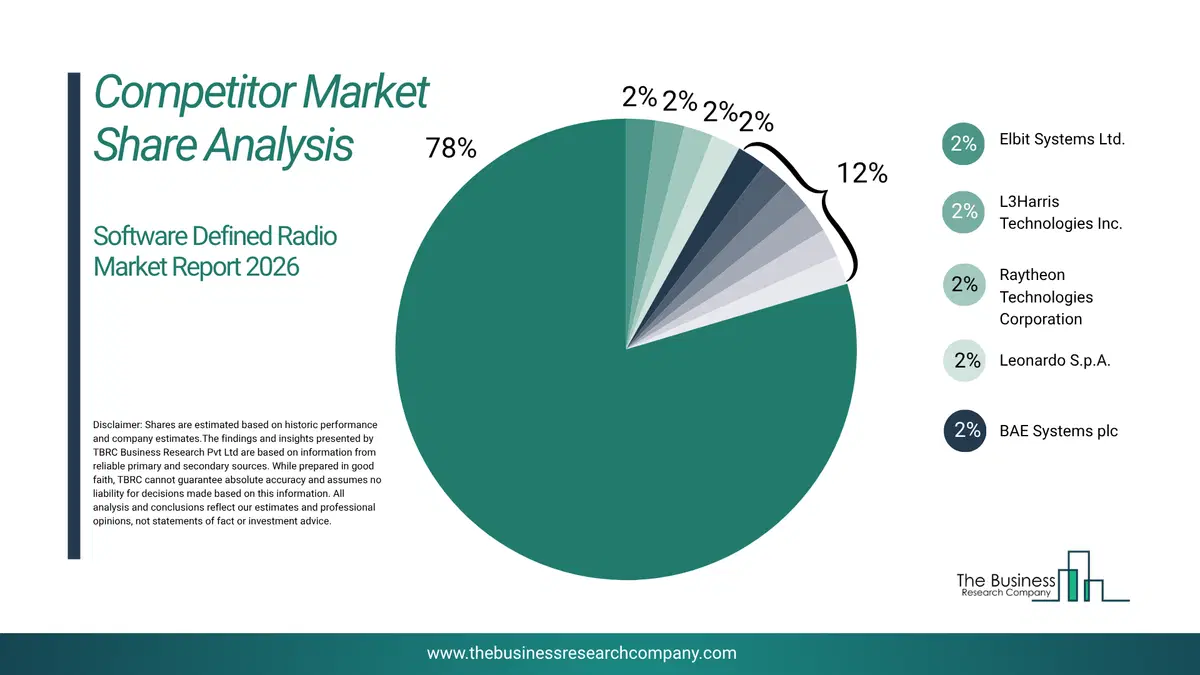
This chart is for illustrative purposes; the full report includes a detailed competitor analysis and comprehensive overview of the top 10 companies in the market.
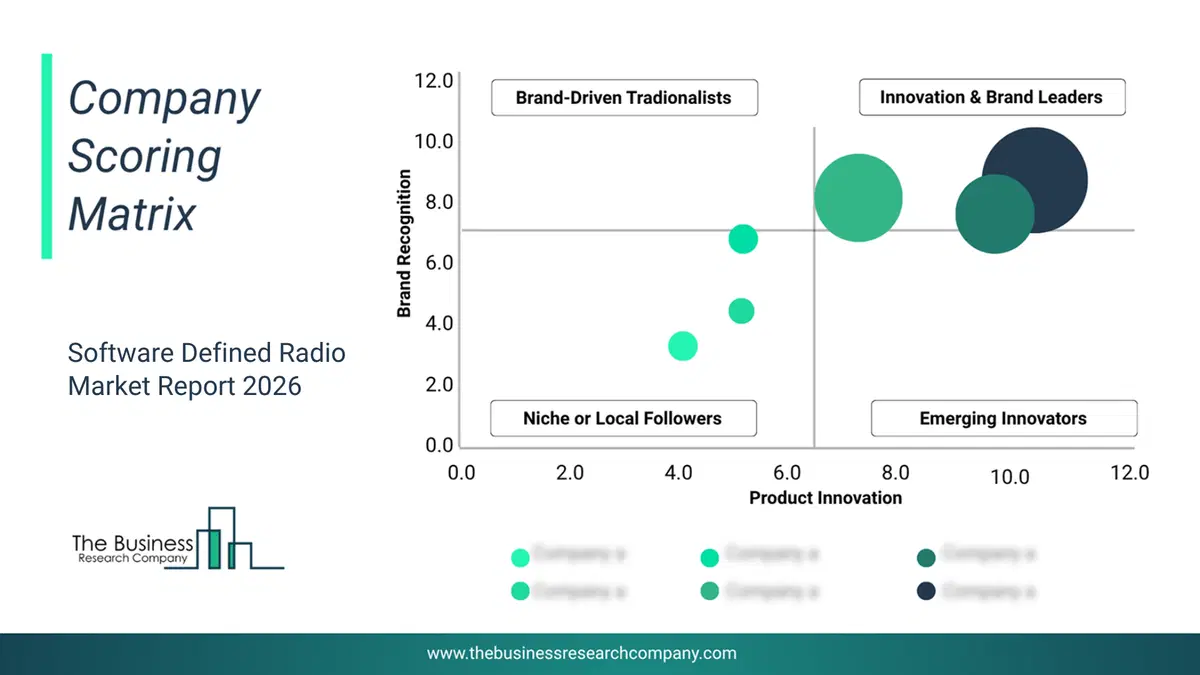
This chart maps companies by product innovation and brand strength, with bubble size indicating relative revenue, helping identify market leaders, challengers, and niche players. This is an illustrative chart; the full report provides a complete and accurate competitive analysis.
Global Software Defined Radio Market Trends and Insights
Major companies operating in the software-defined radio (SDR) market are focusing on leveraging innovative products such as advanced multi-band modular software-defined radios to enhance interoperability, improve mission flexibility, and support evolving communication standards across defense and commercial applications. Advanced multi-band modular software-defined radios are reconfigurable communication systems that use software to switch between multiple frequencies and waveforms, helping users adapt quickly to different missions, improve interoperability, and reduce the need for multiple dedicated hardware radios. For instance, in March 2023, Elta Systems, an Israel-based aerospace and defense company, launched the ARC 840 SDR – Network Centric Operations (SDR-NCO) airborne communication system. It is compliant with the latest SCA 4.1 standard from the US Joint Tactical Networking Centre. This software-defined radio enables voice, video, and data communications. Operating across very high frequency (VHF), ultra-high frequency (UHF), and L-band ranges, the ARC 840 is interoperable with various military and commercial radios, facilitating communication among air, ground, and sea forces. Its modular design features two user-swappable radio frequency (RF) modules, allowing customization for different mission requirements. The system also includes transmission and communications security features, such as frequency hopping and low probability of intercept (LPI) techniques, ensuring secure communications.What Are Latest Mergers And Acquisitions In The Software Defined Radio Market?
In April 2024, Epiq Solutions, a US-based technology company that specializes in developing software-defined radio (SDR) platforms, acquired G3 Technologies’ CyberRadio Solutions for an undisclosed amount. aims to expand its software-defined radio (SDR) and RF communication offerings, enhance its cybersecurity capabilities, and broaden its market reach, particularly in defense and intelligence sectors. G3 Technologies is a US-based company specialized in creating advanced software-defined radio (SDR) platforms and RF communication systems.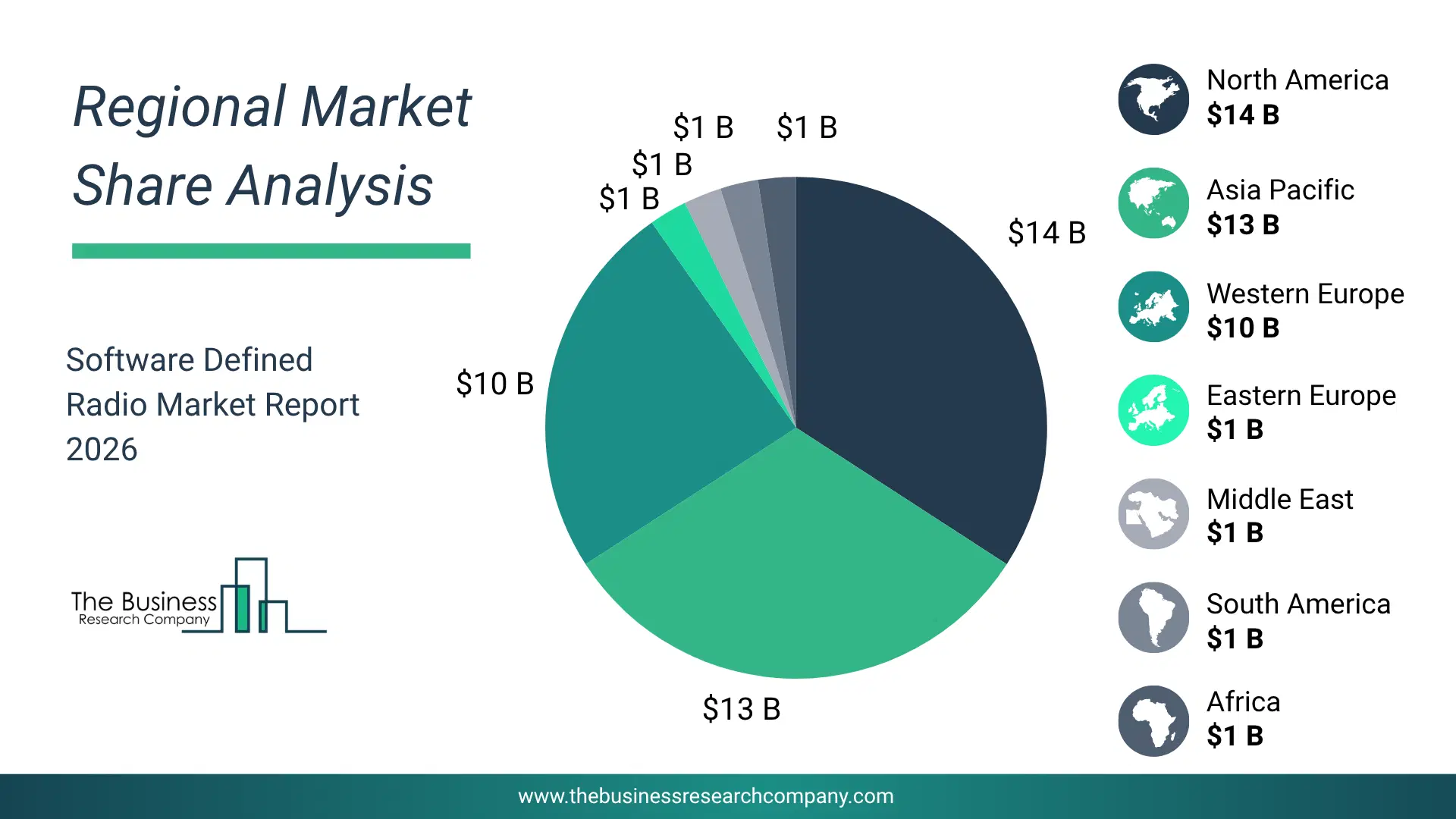
Regional Insights
North America was the largest region in the modular data center market in 2025. Asia-Pacific is expected to be the fastest-growing region in the forecast period. The regions covered in this market report are Asia-Pacific, South East Asia, Western Europe, Eastern Europe, North America, South America, Middle East, Africa. The countries covered in this market report are Australia, Brazil, China, France, Germany, India, Indonesia, Japan, Taiwan, Russia, South Korea, UK, USA, Canada, Italy, SpainWhat Defines the Software Defined Radio Market?
The software defined radio market consist of sales of transmitter, receiver, auxiliary systems, and antenna. Values in this market are ‘factory gate’ values, that is the value of goods sold by the manufacturers or creators of the goods, whether to other entities (including downstream manufacturers, wholesalers, distributors and retailers) or directly to end customers. The value of goods in this market includes related services sold by the creators of the goods.How is Market Value Defined and Measured?
The market value is defined as the revenues that enterprises gain from the sale of goods and/or services within the specified market and geography through sales, grants, or donations in terms of the currency (in USD unless otherwise specified). The revenues for a specified geography are consumption values that are revenues generated by organizations in the specified geography within the market, irrespective of where they are produced. It does not include revenues from resales along the supply chain, either further along the supply chain or as part of other products.
This chart presents market attractiveness based on a quantitative evaluation of growth, competition, strategic alignment, and risk, offering a clear view of opportunity areas for decision-making. This chart is for illustrative purposes; the full report contains the complete analysis.

This chart highlights the Total Addressable Market (TAM) by estimating the maximum revenue opportunity using an assumption-driven approach, supporting strategic planning and opportunity sizing across markets. The chart is illustrative; the full report provides a more comprehensive analysis.
What Key Data and Analysis Are Included in the Software Defined Radio Market Report 2026?
The software defined radio market research report is one of a series of new reports from The Business Research Company that provides market statistics, including industry global market size, regional shares, competitors with the market share, detailed market segments, market trends and opportunities, and any further data you may need to thrive in the software defined radio industry. The market research report delivers a complete perspective of everything you need, with an in-depth analysis of the current and future state of the industry.Software Defined Radio Market Report Forecast Analysis
| Report Attribute | Details |
|---|---|
| Market Size Value In 2026 | $27.07 billion |
| Revenue Forecast In 2030 | $39.16 billion |
| Growth Rate | CAGR of 9.9% from 2026 to 2030 |
| Base Year For Estimation | 2025 |
| Actual Estimates/Historical Data | 2020-2025 |
| Forecast Period | 2026 - 2030 |
| Market Representation | Revenue in USD Billion and CAGR from 2026 to 2030 |
| Segments Covered | Type, Component, Platform, Frequency Band, End-Users |
| Regional Scope | Asia-Pacific, Western Europe, Eastern Europe, North America, South America, Middle East, Africa |
| Country Scope | The countries covered in the report are Australia, Brazil, China, France, Germany, India, Indonesia, Japan, Taiwan, Russia, South Korea, UK, USA, Canada, Italy, Spain. |
| Key Companies Profiled | Elbit Systems Ltd.; L3Harris Technologies Inc.; BAE Systems plc; General Dynamics Corporation; Leonardo S.p.A.; Aselsan A.S.; Bharat Electronics Limited; Thales Group; Raytheon Technologies Corporation; Rafael Advanced Defense Systems Ltd.; Rohde & Schwarz GmbH & Co. KG; Israel Aerospace Industries Ltd.; Indra Sistemas S.A.; LIG Nex1 Co. Ltd.; ViaSat Inc.; Ultra Electronics Holdings; Curtiss-Wright Corporation; Silvus Technologies Inc.; FlexRadio Systems; Epiq Solutions; Giga-tronics Inc.; SDRplay Limited |
| Customization Scope | Request for Customization |
| Pricing And Purchase Options | Explore Purchase Options |