

Solar Artificial Intelligence Market Report 2026
Global Outlook – By Technology (Natural Language Processing, Machine Learning, Computer vision, Other Technologies), By Application (Energy Management, Smart Grids, Energy Production, Smart Meters, Demand Forecasting, Other Applications), By End-Use (Residential, Commercial, Industrial) – Market Size, Trends, Strategies, and Forecast to 2030
Solar Artificial Intelligence Market Overview
• Solar Artificial Intelligence market size has reached to $1.06 billion in 2025 • Expected to grow to $2.11 billion in 2030 at a compound annual growth rate (CAGR) of 14.8% • Growth Driver: Renewable Energy Focus On The Growth Of The Solar Artificial Intelligence • Market Trend: AI-Enabled Solar Installation Robot To Revolutionize Efficiency And Cost In Solar Projects • Asia-Pacific was the largest region in 2025.What Is Covered Under Solar Artificial Intelligence Market?
Solar artificial intelligence refers to the use of AI technologies to optimize solar energy systems by enhancing efficiency, predicting maintenance needs, and improving grid integration. This integration helps maximize energy production and streamline the management of solar power. The main types of technologies in solar artificial intelligence are natural language processing, machine learning, computer vision, and others. Natural language processing is a branch of artificial intelligence that focuses on enabling computers to understand, interpret, and respond to human languages in a way that is both meaningful and useful. This technology finds applications in areas such as energy management, smart grids, energy production, smart meters, demand forecasting, and others and benefits a range of end users, including residential, commercial, and industrial sectors.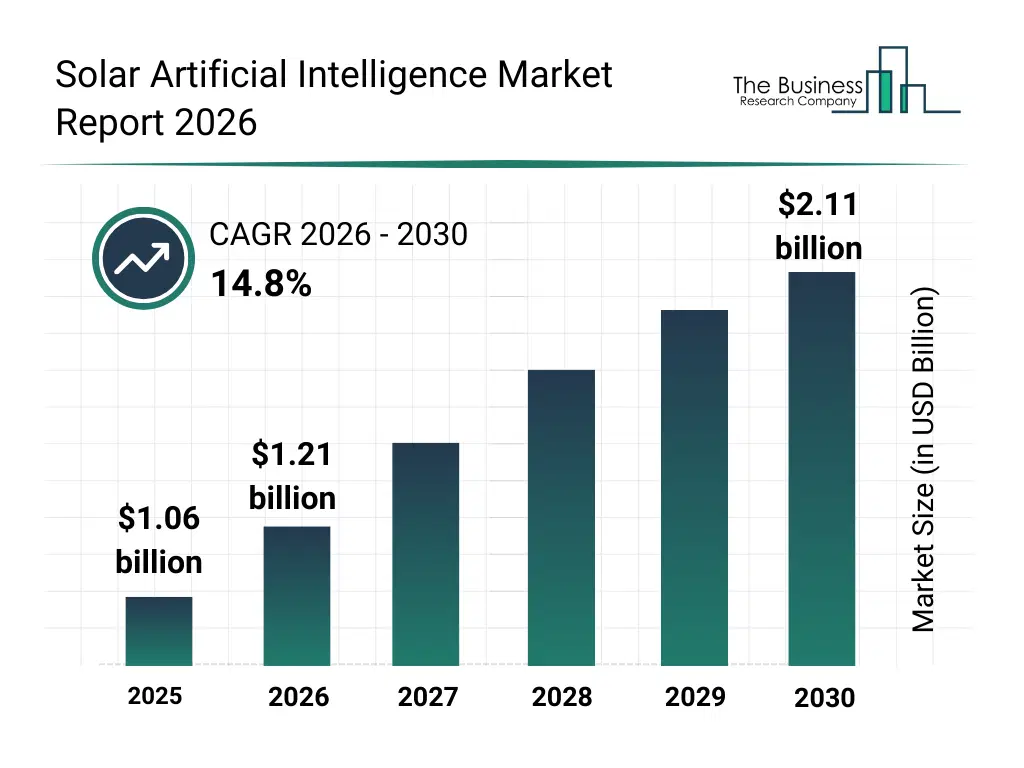
What Is The Solar Artificial Intelligence Market Size and Share 2026?
The solar artificial intelligence market size has grown rapidly in recent years. It will grow from $1.06 billion in 2025 to $1.21 billion in 2026 at a compound annual growth rate (CAGR) of 15.1%. The growth in the historic period can be attributed to growth of solar energy installations, early adoption of energy management systems, increasing focus on renewable energy efficiency, rising investments in clean energy technology, development of smart meters and grid monitoring devices.What Is The Solar Artificial Intelligence Market Growth Forecast?
The solar artificial intelligence market size is expected to see rapid growth in the next few years. It will grow to $2.11 billion in 2030 at a compound annual growth rate (CAGR) of 14.8%. The growth in the forecast period can be attributed to adoption of AI-based predictive maintenance, integration with smart grid and energy storage solutions, expansion of commercial and industrial solar systems, increasing use of computer vision for panel monitoring, development of demand forecasting solutions. Major trends in the forecast period include predictive maintenance for solar panels, AI-driven energy production optimization, real-time energy consumption monitoring, integration with smart grid systems, forecasting renewable energy demand.
Global Solar Artificial Intelligence Market Segmentation
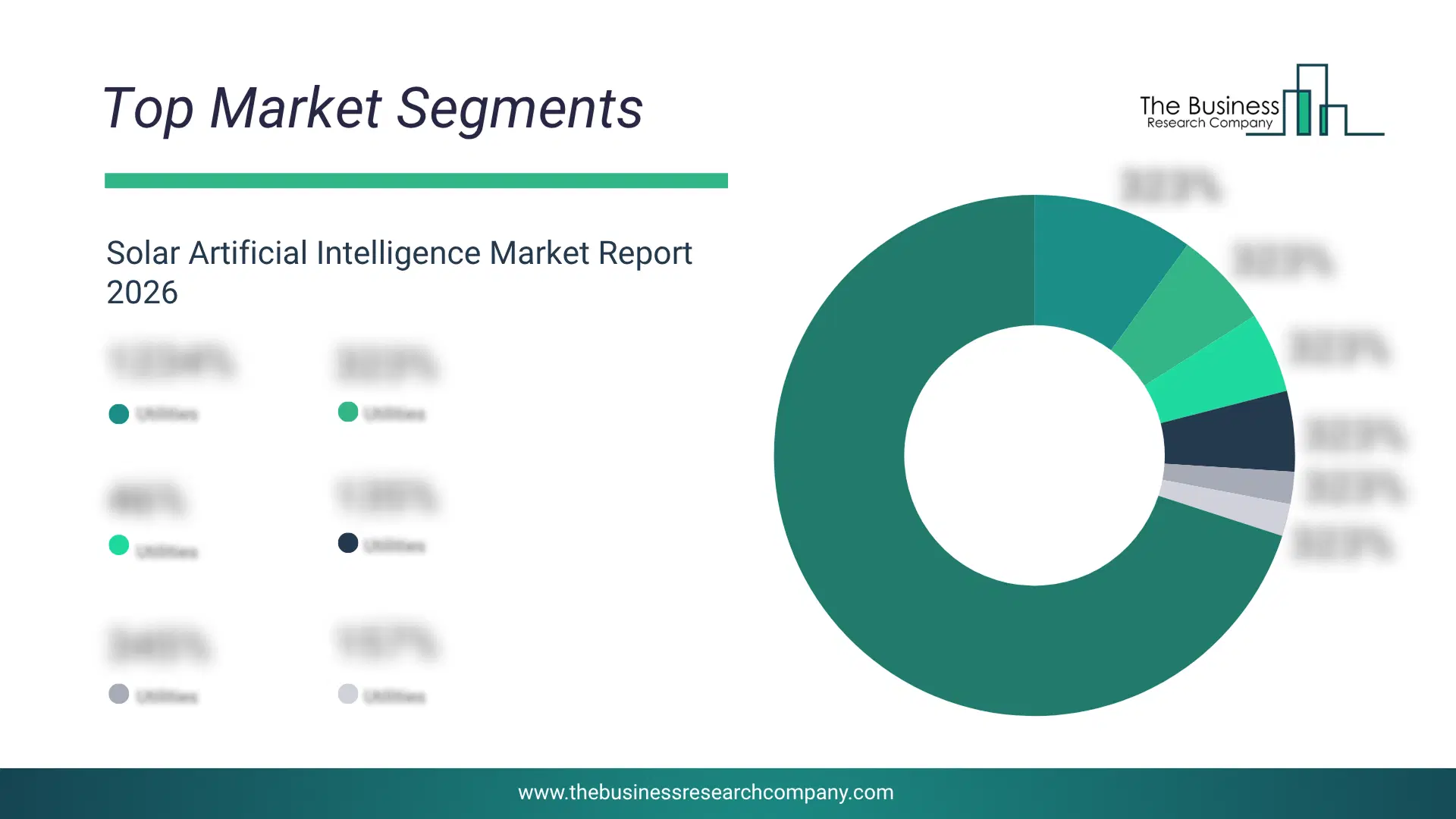
1) By Technology: Natural Language Processing, Machine Learning, Computer vision, Other Technologies 2) By Application: Energy Management, Smart Grids, Energy Production, Smart Meters, Demand Forecasting, Other Applications 3) By End-Use: Residential, Commercial, Industrial Subsegments: 1) By Natural Language Processing: Text Analysis, Voice Recognition, Chatbots 2) By Machine Learning: Predictive Analytics, Pattern Recognition, Data Mining 3) By Computer Vision: Image Recognition, Object Detection, Video Analysis 4) By Other Technologies: Robotics, Expert Systems, Neural NetworksWhat Is The Driver Of The Solar Artificial Intelligence Market?
The growing focus on renewable energy is expected to propel the growth of the solar artificial intelligence market going forward. Renewable energy refers to energy sourced from natural processes that are continually replenished, such as sunlight, wind, and water. The increasing emphasis on renewable energy is fueled by the urgent need to address climate change and cut greenhouse gas emissions, coupled with technological advancements and falling costs that enhance the viability and appeal of these technologies. Solar artificial intelligence boosts the focus on renewable energy by optimizing energy production with predictive maintenance and efficient grid management, while also enhancing solar forecasting accuracy for improved integration into the energy grid. For instance, in June 2023, according to the U.S. Energy Information Administration, a US-based government agency, renewable energy made up about 13% of total U.S. energy consumption in 2022, with the electric power sector using 61% of this and renewables contributing 21% to U.S. electricity generation. Therefore, the growing focus on renewable energy drives the growth of solar artificial intelligence industry.Key Players In The Global Solar Artificial Intelligence Market
Major companies operating in the solar artificial intelligence market are Aurora Solar, Raycatch, Smart Helio, Heliogen, Scopito, Glint Solar, Absolar Solutions, Solarify, Enphase Energy, TransitionZero, Omdena, Loggma Technologies, SenseHawk, Raptor Maps, DroneBase, Solavio Labs, QOS Energy, PowerFactors, Arctura, Sunbotics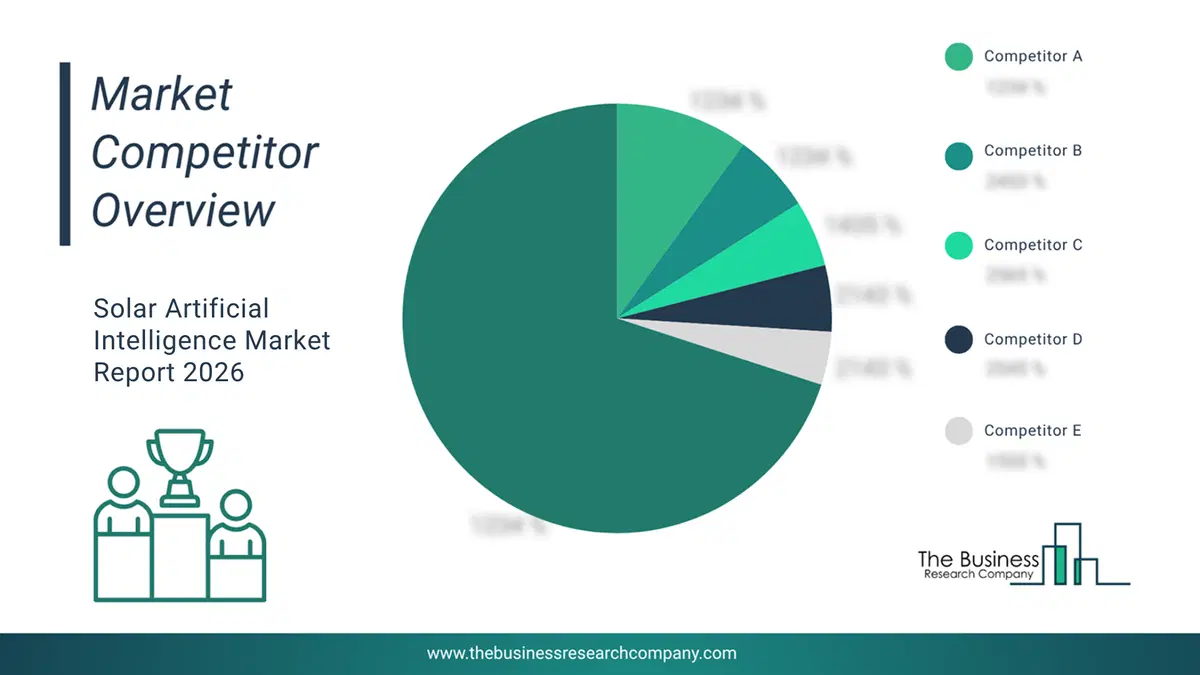
This chart is for illustrative purposes; the full report includes a detailed competitor analysis and comprehensive overview of the top 10 companies in the market.
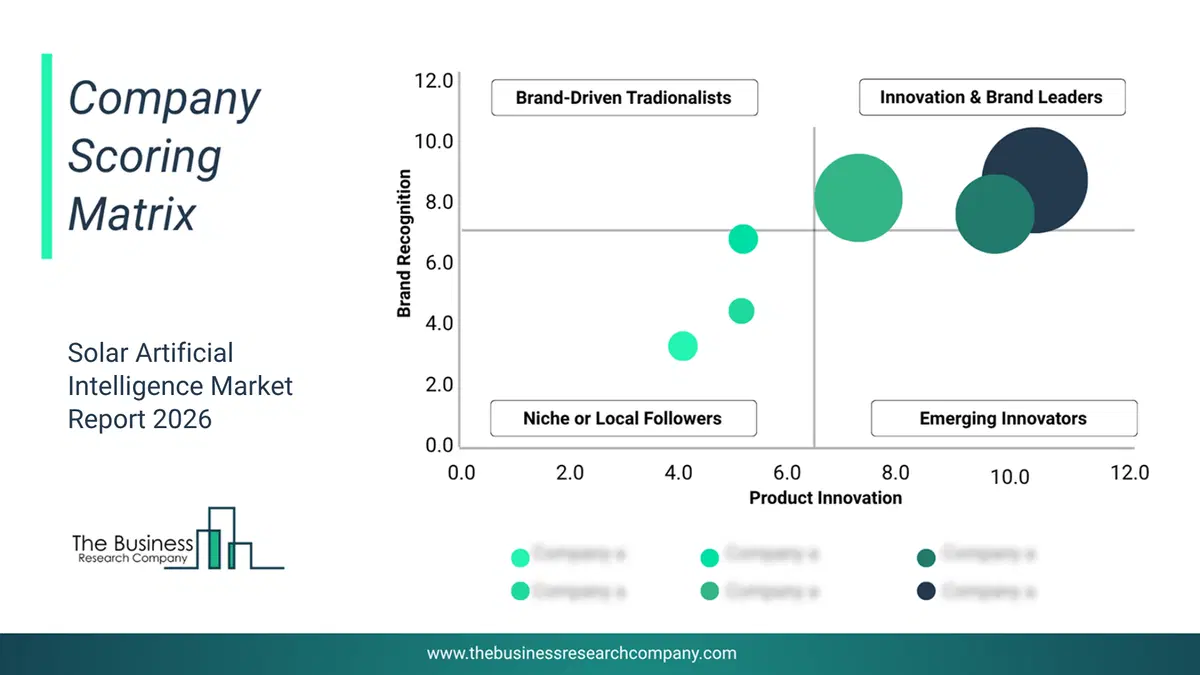
This chart maps companies by product innovation and brand strength, with bubble size indicating relative revenue, helping identify market leaders, challengers, and niche players. This is an illustrative chart; the full report provides a complete and accurate competitive analysis.
Global Solar Artificial Intelligence Market Trends and Insights
Major companies operating in the solar artificial intelligence market are focusing on expanding their service offerings by developing technologically advanced solutions, such as AI-enabled solar installation robots, to enhance efficiency and reduce operational costs. AI-enabled solar installation robots are advanced systems that use artificial intelligence to automate and optimize the placement and installation of solar panels, enhancing efficiency and accuracy while reducing labor costs. For instance, in July 2024, AES Corporation, a US-based energy company, launched Maximo, the first AI-enabled solar installation robot that can install panels in half the time and at half the cost compared to traditional methods. This robot includes AI-powered computer vision for precise panel placement, continuous learning for efficiency improvements, and image reconstruction to enhance operational effectiveness in various environments. With Maximo, AES aims to install 100 MW of solar capacity by 2025 and build up to 5 GW of its solar backlog over the next three years, including significant projects like the 2 GW Bellefield solar-plus-storage project in California. The introduction of Maximo is expected to create new high-tech job opportunities and engage a broader workforce, while also accelerating project timelines and enhancing the scalability of solar installations as the demand for renewable energy grows, driven by factors such as the rise of AI and data centers.What Are Latest Mergers And Acquisitions In The Solar Artificial Intelligence Market?
In December 2023, Powermers Smart Industries, Inc. (PSI)., a US-based green-powered solutions company, merged with OCA Acquisition Corp. for approximately $2 billion. Powermers Smart Industries' merger with OCA Acquisition Corp. brings several strategic benefits, including increased access to capital and the public markets, which will accelerate the development and commercialization of its smart materials technologies. The merger also positions Powermers for stronger growth opportunities in key industries, such as energy storage and electronics, enhancing its competitive edge in the smart materials sector. OCA Acquisition Corp. is a US-based capital market special purpose acquisition company.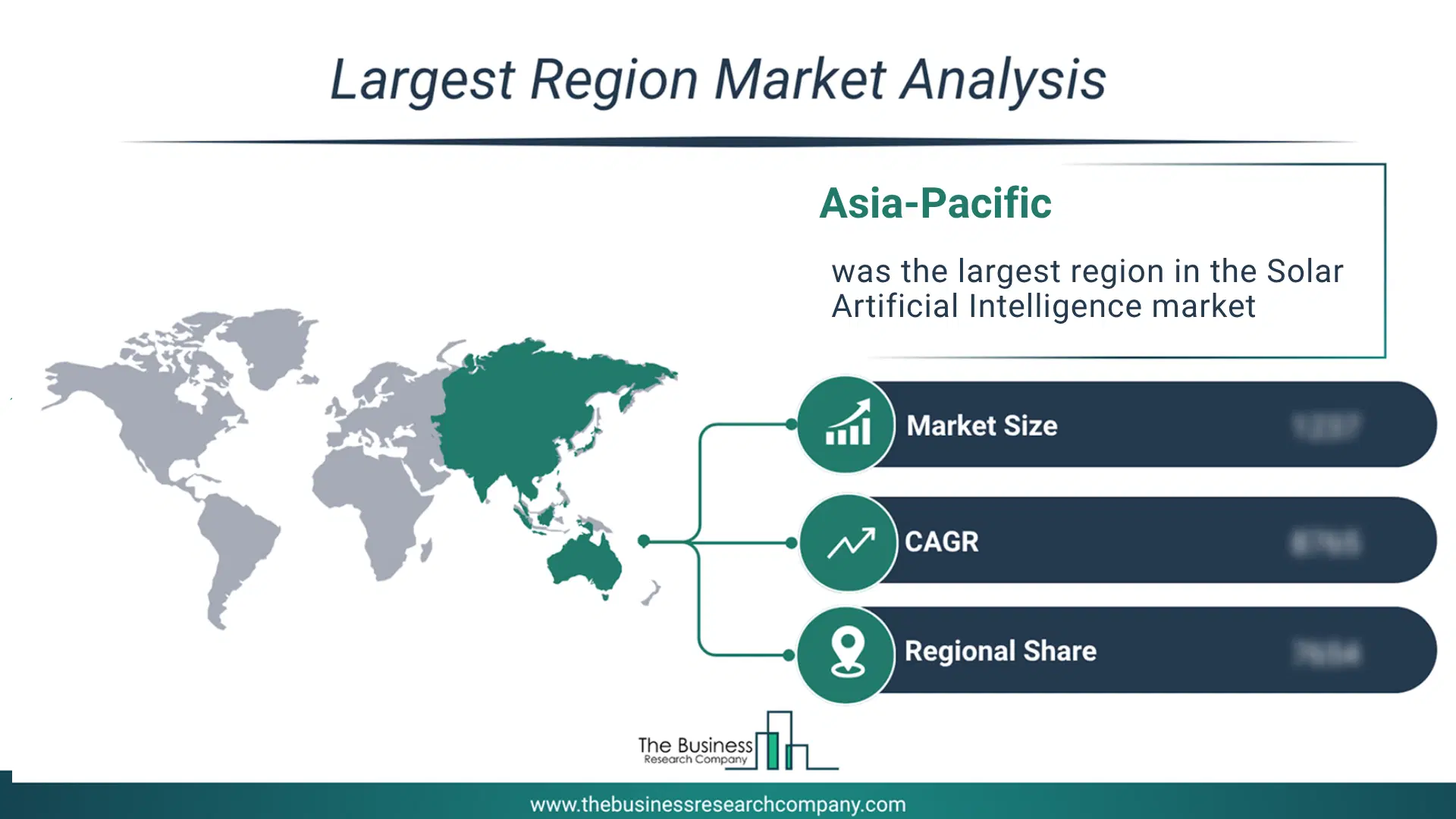
Regional Insights
Asia-Pacific was the largest region in the solar artificial intelligence market in 2025. The regions covered in this market report are Asia-Pacific, South East Asia, Western Europe, Eastern Europe, North America, South America, Middle East, Africa. The countries covered in this market report are Australia, Brazil, China, France, Germany, India, Indonesia, Japan, Taiwan, Russia, South Korea, UK, USA, Canada, Italy, Spain.What Defines the Solar Artificial Intelligence Market?
The solar artificial intelligence market consists of revenues earned by entities by providing services such as predictive maintenance, energy optimization, smart grid management, performance monitoring, automated design and simulation, and supply chain optimization. The market value includes the value of related goods sold by the service provider or included within the service offering. The solar artificial intelligence market also includes sales of artificial intelligence-enhanced solar panels, smart inverters, artificial intelligence-based solar forecasting tools, automated solar panel cleaning systems, and AI-based solar monitoring systems. Values in this market are ‘factory gate’ values, that is, the value of goods sold by the manufacturers or creators of the goods, whether to other entities (including downstream manufacturers, wholesalers, distributors, and retailers) or directly to end customers. The value of goods in this market includes related services sold by the creators of the goods.How is Market Value Defined and Measured?
The market value is defined as the revenues that enterprises gain from the sale of goods and/or services within the specified market and geography through sales, grants, or donations in terms of the currency (in USD unless otherwise specified). The revenues for a specified geography are consumption values that are revenues generated by organizations in the specified geography within the market, irrespective of where they are produced. It does not include revenues from resales along the supply chain, either further along the supply chain or as part of other products.
This chart presents market attractiveness based on a quantitative evaluation of growth, competition, strategic alignment, and risk, offering a clear view of opportunity areas for decision-making. This chart is for illustrative purposes; the full report contains the complete analysis.

This chart highlights the Total Addressable Market (TAM) by estimating the maximum revenue opportunity using an assumption-driven approach, supporting strategic planning and opportunity sizing across markets. The chart is illustrative; the full report provides a more comprehensive analysis.
What Key Data and Analysis Are Included in the Solar Artificial Intelligence Market Report 2026?
The solar artificial intelligence market research report is one of a series of new reports from The Business Research Company that provides market statistics, including industry global market size, regional shares, competitors with the market share, detailed market segments, market trends and opportunities, and any further data you may need to thrive in the solar artificial intelligence industry. The market research report delivers a complete perspective of everything you need, with an in-depth analysis of the current and future state of the industry.Solar Artificial Intelligence Market Report Forecast Analysis
| Report Attribute | Details |
|---|---|
| Market Size Value In 2026 | $1.21 billion |
| Revenue Forecast In 2030 | $2.11 billion |
| Growth Rate | CAGR of 14.8% from 2026 to 2030 |
| Base Year For Estimation | 2025 |
| Actual Estimates/Historical Data | 2020-2025 |
| Forecast Period | 2026 - 2030 |
| Market Representation | Revenue in USD Billion and CAGR from 2026 to 2030 |
| Segments Covered | Technology, Application, End-Use |
| Regional Scope | Asia-Pacific, Western Europe, Eastern Europe, North America, South America, Middle East, Africa |
| Country Scope | The Countries Covered In This Market Report Are Australia, Brazil, China, France, Germany, India, Indonesia, Japan, Taiwan, Russia, South Korea, Uk, Usa, Canada, Italy, Spain. |
| Key Companies Profiled | Aurora Solar, Raycatch, Smart Helio, Heliogen, Scopito, Glint Solar, Absolar Solutions, Solarify, Enphase Energy, TransitionZero, Omdena, Loggma Technologies, SenseHawk, Raptor Maps, DroneBase, Solavio Labs, QOS Energy, PowerFactors, Arctura, Sunbotics |
| Customization Scope | Request for Customization |
| Pricing And Purchase Options | Explore Purchase Options |