
Sound Measuring Instrument Market Report 2026
Global Outlook – By Type (Sound Level Meters, Dosimeters, Acoustic Cameras), By Technology (Analog Sound Measuring Instruments, Digital Sound Measuring Instruments, Smart Sound Measuring Instruments, Wireless Sound Measuring Instruments), By Application (Noise Measurement, Workplace Safety, Environmental Compliance, Research And Development), By End-Use Industry (Construction, Manufacturing, Environmental Monitoring) – Market Size, Trends, Strategies, and Forecast to 2030
Sound Measuring Instrument Market Overview
• Sound Measuring Instrument market size has reached to $1.56 billion in 2025 • Expected to grow to $2.27 billion in 2030 at a compound annual growth rate (CAGR) of 7.8% • Growth Driver: Rising Regulatory Pressure On Environmental Noise Monitoring Fueling The Growth Of The Market Due To Stricter Compliance Requirements • Market Trend: Innovations In Enhanced Sound Level Meters For Accurate Noise Monitoring • North America was the largest region in 2025 and Asia-Pacific is the fastest growing region.Market Gains By 2030 – Top Opportunities By Segment
Market Gain identifies the most promising market opportunities by highlighting the segments or products expected to generate the highest incremental revenue growth over the next five years.
What Is Covered Under Sound Measuring Instrument Market?
A sound measuring instrument refers to a precision device engineered to capture and quantify acoustic vibrations in the environment, converting the fluctuating sound waves into measurable electrical or digital signals. It is designed to analyze various parameters of sound, including intensity, frequency, and pressure levels, providing detailed and accurate information about the characteristics of the acoustic signals being measured. The main types of sound measuring instruments are sound level meters, dosimeters, noise barriers, vibration meters, and acoustic cameras. Sound level meters are devices used to measure the intensity of sound in an environment. It includes various technologies used, such as analog sound measuring instruments, digital sound measuring instruments, smart sound measuring instruments, and wireless sound measuring instruments, and they are distributed through online sales, direct sales, retail stores, distributors, and service providers. It finds application in noise measurement, vibration measurement, workplace safety, environmental compliance, research and development, and serving end-user industries, such as construction, manufacturing, environmental monitoring, healthcare, and aerospace.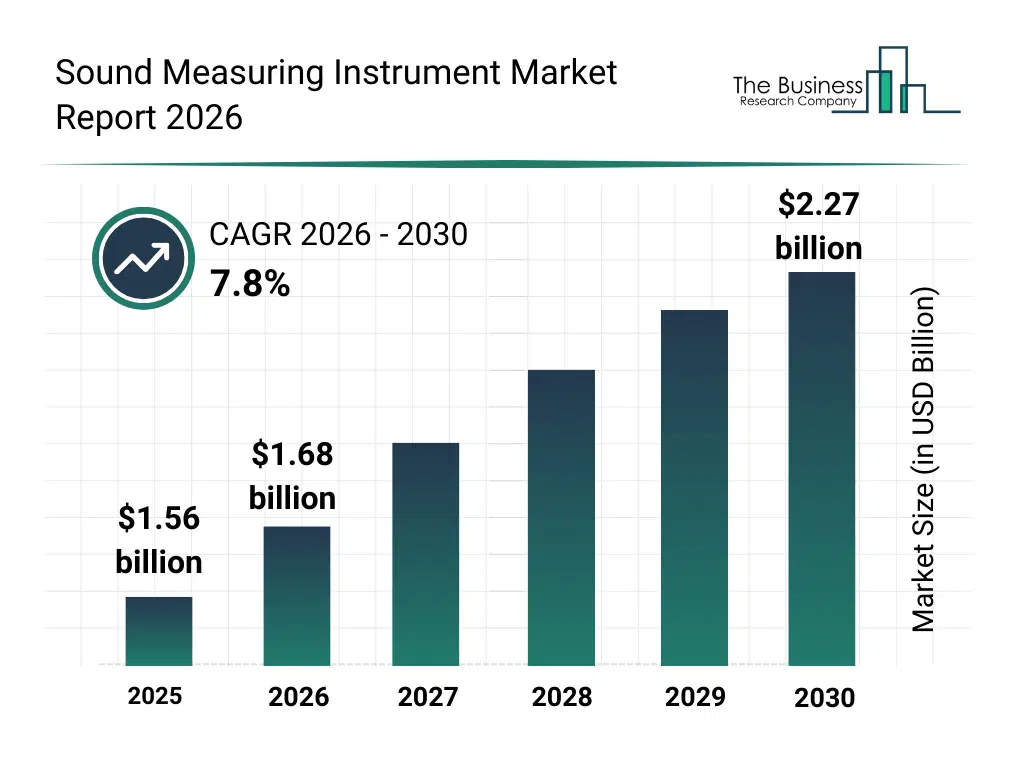
What Is The Sound Measuring Instrument Market Size and Share 2026?
The sound measuring instrument market size has grown strongly in recent years. It will grow from $1.56 billion in 2025 to $1.68 billion in 2026 at a compound annual growth rate (CAGR) of 8.0%. The growth in the historic period can be attributed to expansion of industrial safety regulations, increasing use of sound measurement in construction, growth of environmental noise monitoring programs, rising workplace safety awareness, technological improvements in sensor accuracy.What Is The Sound Measuring Instrument Market Growth Forecast?
The sound measuring instrument market size is expected to see strong growth in the next few years. It will grow to $2.27 billion in 2030 at a compound annual growth rate (CAGR) of 7.8%. The growth in the forecast period can be attributed to increasing deployment of iot-enabled noise monitoring networks, growing demand for predictive noise analytics, expansion of smart city noise management projects, rising investments in workplace health monitoring, increased adoption in research and development. Major trends in the forecast period include increasing adoption of smart and wireless sound measurement devices, rising demand for real-time noise monitoring systems, growing integration of data analytics in acoustic measurement, expansion of portable and handheld instruments, enhanced focus on regulatory noise compliance.
Global Sound Measuring Instrument Market Segmentation
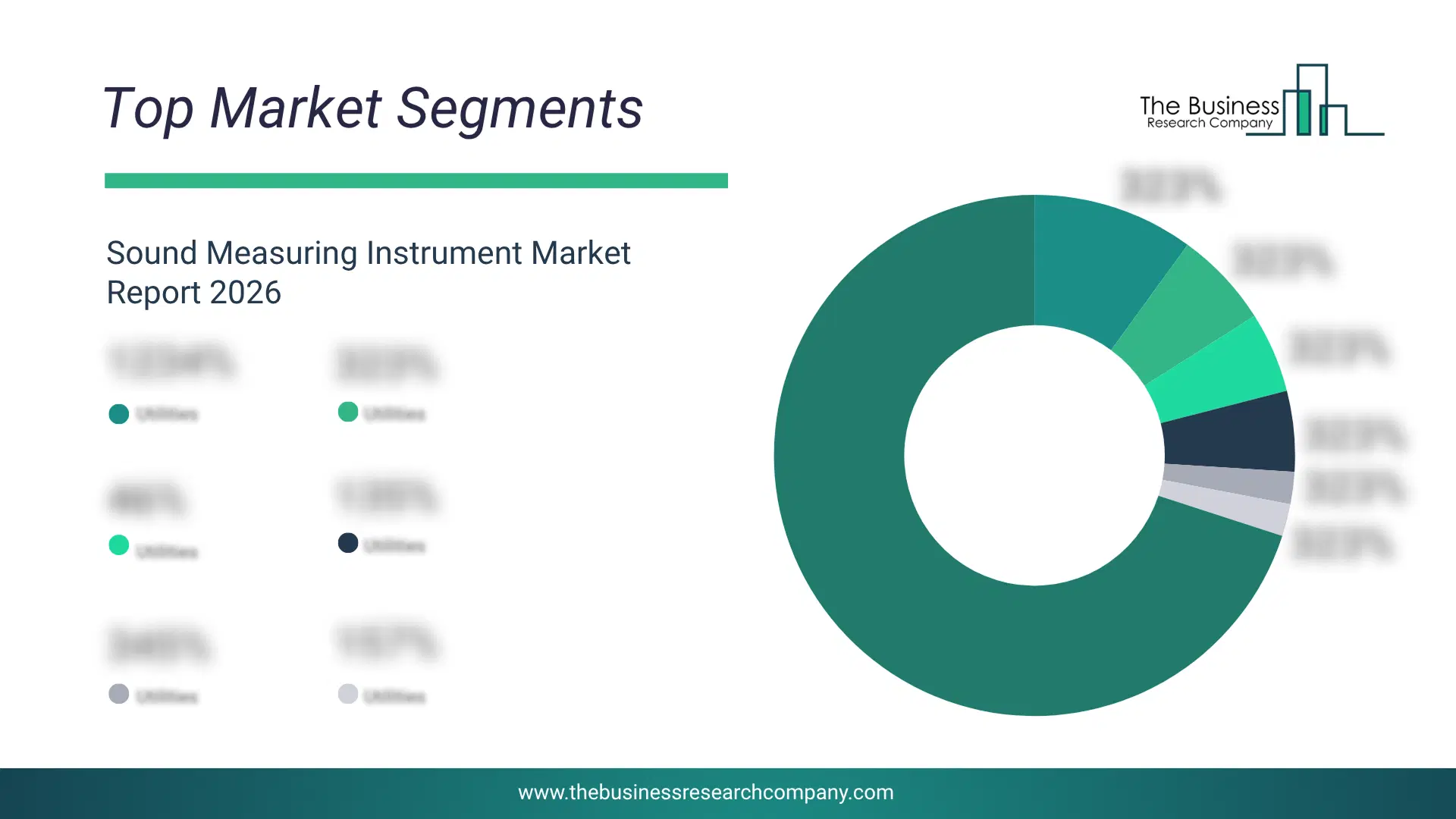
1) By Type: Sound Level Meters, Dosimeters, Acoustic Cameras 2) By Technology: Analog Sound Measuring Instruments, Digital Sound Measuring Instruments, Smart Sound Measuring Instruments, Wireless Sound Measuring Instruments 3) By Application: Noise Measurement, Workplace Safety, Environmental Compliance, Research And Development 4) By End-Use Industry: Construction, Manufacturing, Environmental Monitoring Subsegments: 1) By Sound Level Meters: Handheld, Integrating, Precision, Personal 2) By Dosimeters: Personal, Area, Noise 3) By Acoustic Cameras: Compact, Array, Beamforming, Real Time The top segments in the sound measuring instrument market will be: • Sound Level Meters will reach $1.45 Billion by 2030. • Dosimeters will reach $0.43 Billion by 2030. • Acoustic Cameras will reach $0.41 Billion by 2030.What Are The Drivers Of The Sound Measuring Instrument Market?
The increasing regulatory pressure on environmental noise monitoring is expected to propel the growth of the sound measuring instrument market going forward. Environmental noise regulation refers to legally enforced rules that require public authorities, industries, transportation systems, and urban operators to monitor, assess, and reduce harmful noise levels that affect public health. Regulatory pressure is rising as governments tighten compliance requirements due to growing evidence linking environmental noise to cardiovascular disease, sleep disturbance, and long-term health risks. Sound measuring instruments support these regulatory mandates by enabling accurate measurement, continuous monitoring, and reporting of environmental noise levels to ensure compliance with national and regional noise-control standards. For instance, in March 2024, according to the European Environment Agency (EEA), a Denmark-based government agency, more than 20% of Europe’s population is exposed to harmful long-term noise levels, making environmental noise the second-largest environmental health risk in the EU after air pollution, which has intensified regulatory actions and monitoring obligations across Member States. Therefore, the increasing regulatory pressure on environmental noise monitoring is driving the growth of the sound measuring instrument industry. The increasing construction activities are expected to drive the growth of the sound measuring instrument market going forward. Construction activities refer to the processes involved in the planning, design, execution, and completion of building structures, infrastructure, or engineering projects. Construction activities are rising due to increased urbanization, which drives demand for housing, infrastructure, and commercial spaces. Sound measuring instruments are used in construction to monitor noise levels and ensure compliance with safety and environmental regulations. For instance, in July 2023, according to the Australian Bureau of Statistics, an Australian-based government administration, reported that in the March quarter of 2023, the number of dwellings under construction increased to 240,813, up from 240,065 in 2022. Among these, new houses made up 103,778, compared to 101,240 in the previous year. Therefore, the increasing construction activities are driving the growth of the sound measuring instrument industry.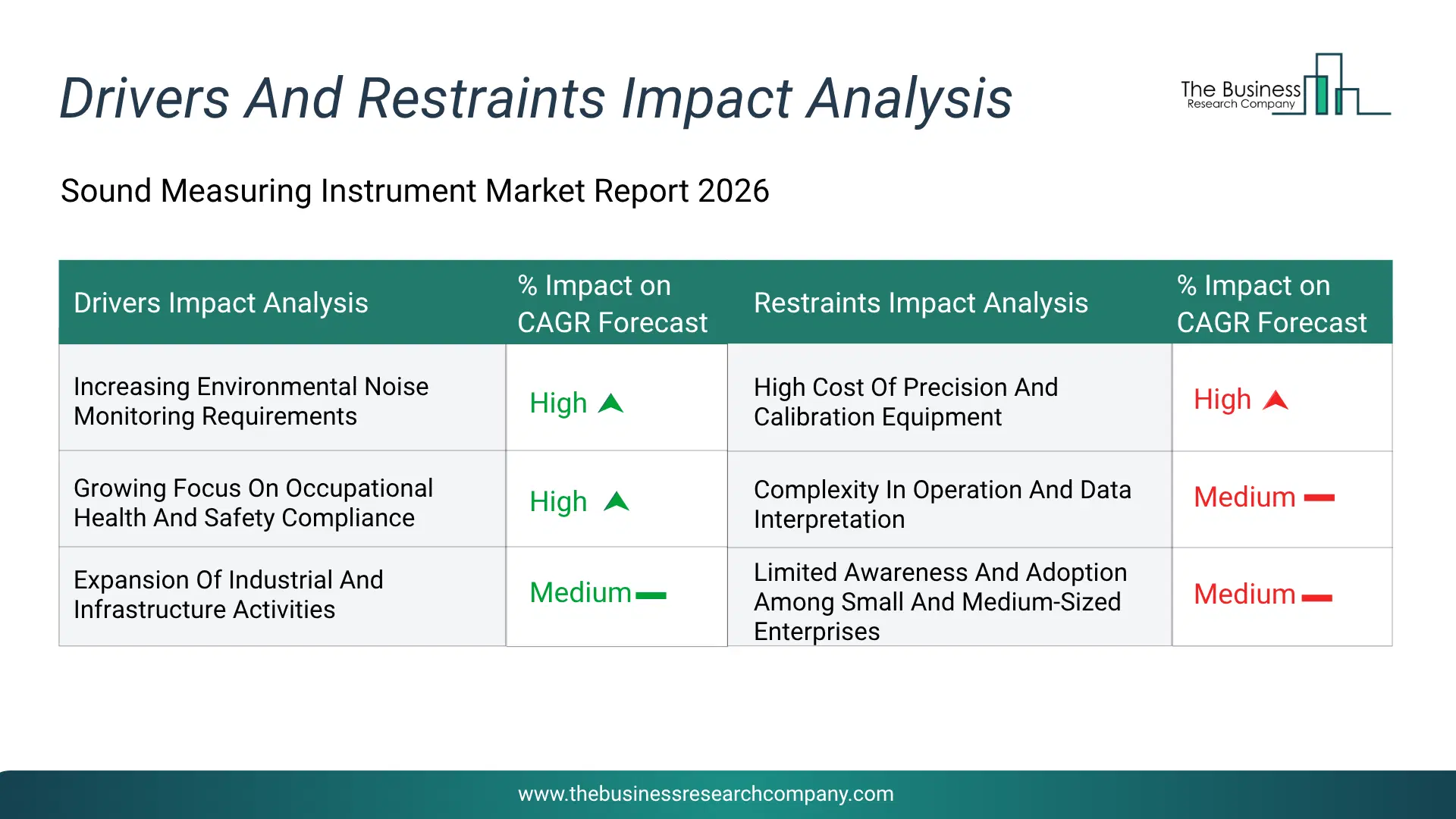
Infographic Chart Showing Key Market Drivers Analysis And Restraints For Sound Measuring Instrument Market
The chart presents an impact analysis of key drivers and restraints, quantifying their relative influence on the market's growth rate and helping assess the balance between growth enablers and limiting factors. This chart offers a high-level perspective; the full report contains more detailed insights.
How Will The Drivers Impact Growth In The Global Sound Measuring Instrument Market?
• Increasing Environmental Noise Monitoring Requirements (High) – During the forecast period, the increasing environmental noise monitoring requirements are expected to become a key growth driver for the sound measuring instrument market by 2030. Rising urbanization, transportation activities, and industrial operations are increasing the need for effective noise assessment and monitoring solutions. Governments and regulatory authorities are implementing strict environmental noise control standards, encouraging the adoption of accurate sound measuring devices. Municipal organizations, environmental consultants, and infrastructure developers are increasingly using advanced instruments to measure, analyze, and manage noise levels. Continuous monitoring programs and growing awareness regarding noise pollution impacts are further supporting the demand for reliable acoustic measurement technologies. • Growing Focus On Occupational Health And Safety Compliance (High) – During the forecast period, the growing focus on occupational health and safety compliance is expected to emerge as a major factor driving the expansion of the sound measuring instrument market by 2030. Industries operating in high-noise environments, including manufacturing, construction, and energy sectors, are adopting sound measurement solutions to monitor employee noise exposure and improve workplace conditions. Regulatory agencies are strengthening safety requirements, creating demand for regular acoustic assessments and documentation. Sound measuring instruments enable organizations to identify harmful noise levels, support preventive measures, and maintain compliance with workplace safety guidelines. Increasing investments in employee protection programs are further accelerating the adoption of these devices. • Expansion Of Industrial And Infrastructure Activities (Medium) – During the forecast period, the expansion of industrial and infrastructure activities is expected to act as a key growth catalyst for the sound measuring instrument market by 2030. The development of transportation networks, commercial buildings, manufacturing facilities, and large-scale industrial projects is increasing the requirement for accurate noise monitoring solutions. Sound measuring instruments are widely used to evaluate acoustic conditions, control operational noise, and support regulatory approvals during project development. Companies are increasingly integrating noise evaluation processes to reduce environmental impact and improve operational management. Growing infrastructure investments and expanding industrial activities worldwide are expected to create strong demand for advanced acoustic testing equipment.How Will The Restraints Impact Growth In The Global Sound Measuring Instrument Market?
• High Cost Of Precision And Calibration Equipment (High) – During the forecast period, high cost of precision and calibration equipment acts as a significant restraint on the sound measuring instrument market because advanced sound measurement devices require highly accurate sensors, calibration systems, and sophisticated software technologies. These features increase the overall purchase and maintenance costs, making the equipment expensive for small businesses and budget-constrained organizations. Regular calibration is essential to ensure measurement accuracy, adding recurring operational expenses throughout the product lifecycle. Many end users may delay equipment upgrades or limit deployments due to financial constraints. High initial investment requirements can also discourage adoption in developing regions where cost sensitivity is greater. Additionally, specialized accessories and certification requirements further increase ownership costs. As a result, the high expense associated with precision sound measuring instruments can restrict market growth and broader adoption. • Complexity In Operation And Data Interpretation (High) – During the forecast period, complexity in operation and data interpretation restrains the sound measuring instrument market by creating challenges for users who lack specialized technical knowledge. Advanced sound measuring instruments often generate detailed acoustic data that requires proper understanding and analysis to produce meaningful results. Organizations may need trained professionals to operate the equipment and interpret measurements accurately. The learning curve associated with sophisticated monitoring systems can discourage adoption among smaller businesses and non-technical users. Incorrect operation or misinterpretation of data may lead to inaccurate assessments and compliance issues. Training costs and the need for skilled personnel further increase implementation expenses. Consequently, operational complexity can limit the widespread use of sound measuring instruments, particularly in organizations with limited technical resources. • Limited Awareness And Adoption Among Small And Medium-Sized Enterprises (Medium) – During the forecast period, limited awareness and adoption among small and medium-sized enterprises (SMEs) act as a significant restraint on the sound measuring instrument market because many smaller businesses have limited knowledge of the benefits of professional noise monitoring and acoustic measurement solutions. Budget constraints and lower regulatory pressure often lead SMEs to prioritize other operational investments over advanced sound measurement equipment. In several industries, sound monitoring is performed only when required to meet specific workplace safety or environmental compliance standards, resulting in lower voluntary adoption. Additionally, limited technical expertise and inadequate awareness of long-term benefits such as occupational safety, equipment diagnostics, and noise pollution management further reduce demand. This relatively low adoption among SMEs restricts market penetration, particularly in developing economies. Consequently, limited awareness and adoption among small and medium-sized enterprises can restrain the growth of the sound measuring instrument market.Key Players In The Global Sound Measuring Instrument Market
Major companies operating in the sound measuring instrument market are Brüel & Kjær Sound & Vibration Measurement A/S, Rion Co. Ltd., Ono Sokki Co. Ltd., Casella Inc., Castle Group Limited, CESVA Instruments S.A., Svantek Sp. z o.o., Cirrus Research plc, Acoem Group, Testo SE & Co. KGaA, 3M Company, SINUS Messtechnik GmbH, Norsonic AS, Larson Davis Inc., NTi Audio AG, Pulsar Instruments plc, Neurtek S.L., Center Technology Co. Ltd., Tenmars Electronics Co. Ltd., Uni-Trend Technology (China) Co. Ltd., PCE Deutschland GmbH, Stanlay Instruments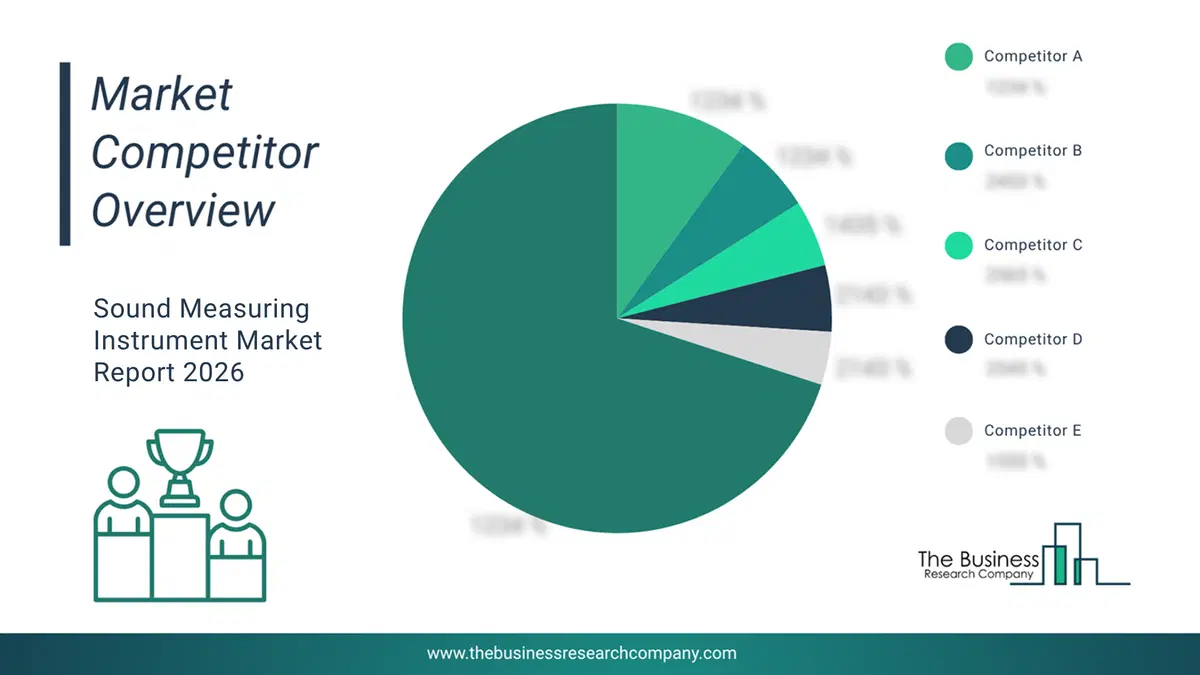
This chart is for illustrative purposes; the full report includes a detailed competitor analysis and comprehensive overview of the top 10 companies in the market.
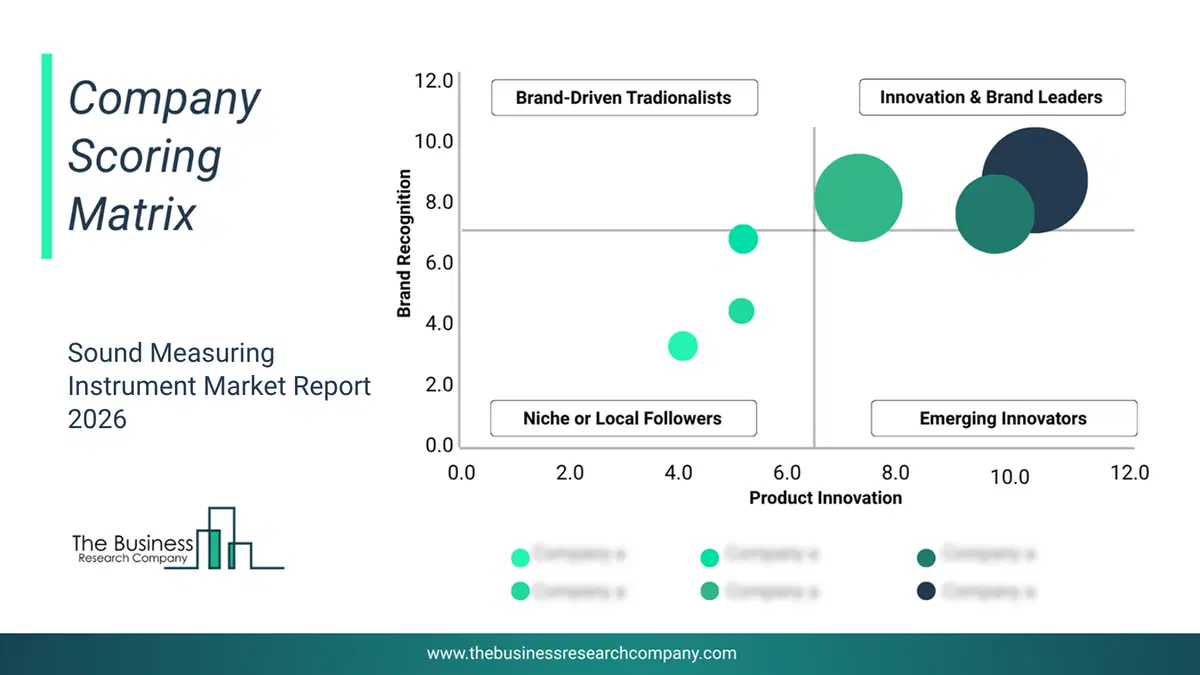
This chart maps companies by product innovation and brand strength, with bubble size indicating relative revenue, helping identify market leaders, challengers, and niche players. This is an illustrative chart; the full report provides a complete and accurate competitive analysis.
Global Sound Measuring Instrument Market Trends and Insights
Major companies operating in the sound measuring instrument market are focusing on developing innovative solutions, such as enhanced sound level meters, to improve measurement accuracy, provide real-time monitoring, and meet stringent regulatory standards across industrial, environmental, and occupational applications. An enhanced sound level meter is a sophisticated device that measures sound intensity with higher accuracy, advanced features, and real-time monitoring capabilities for precise and comprehensive noise assessment. For instance, in June 2023, Casella Waste Systems, Inc., a US-based waste management company, launched its enhanced 620 sound level meter, a compact and rugged device designed for workplace noise measurement and occupational hygiene. This advanced meter features a high-resolution color display with intuitive color coding, time history storage from 1-second to 30-minute intervals, voice notes for audio annotation during measurements, GPS location tagging, and a large memory capacity that stores up to 999 runs and 33 hours of audio. It supports simultaneous measurement of key noise parameters, including peak and average levels and, in certain models, real-time octave band analysis for hearing protection selection.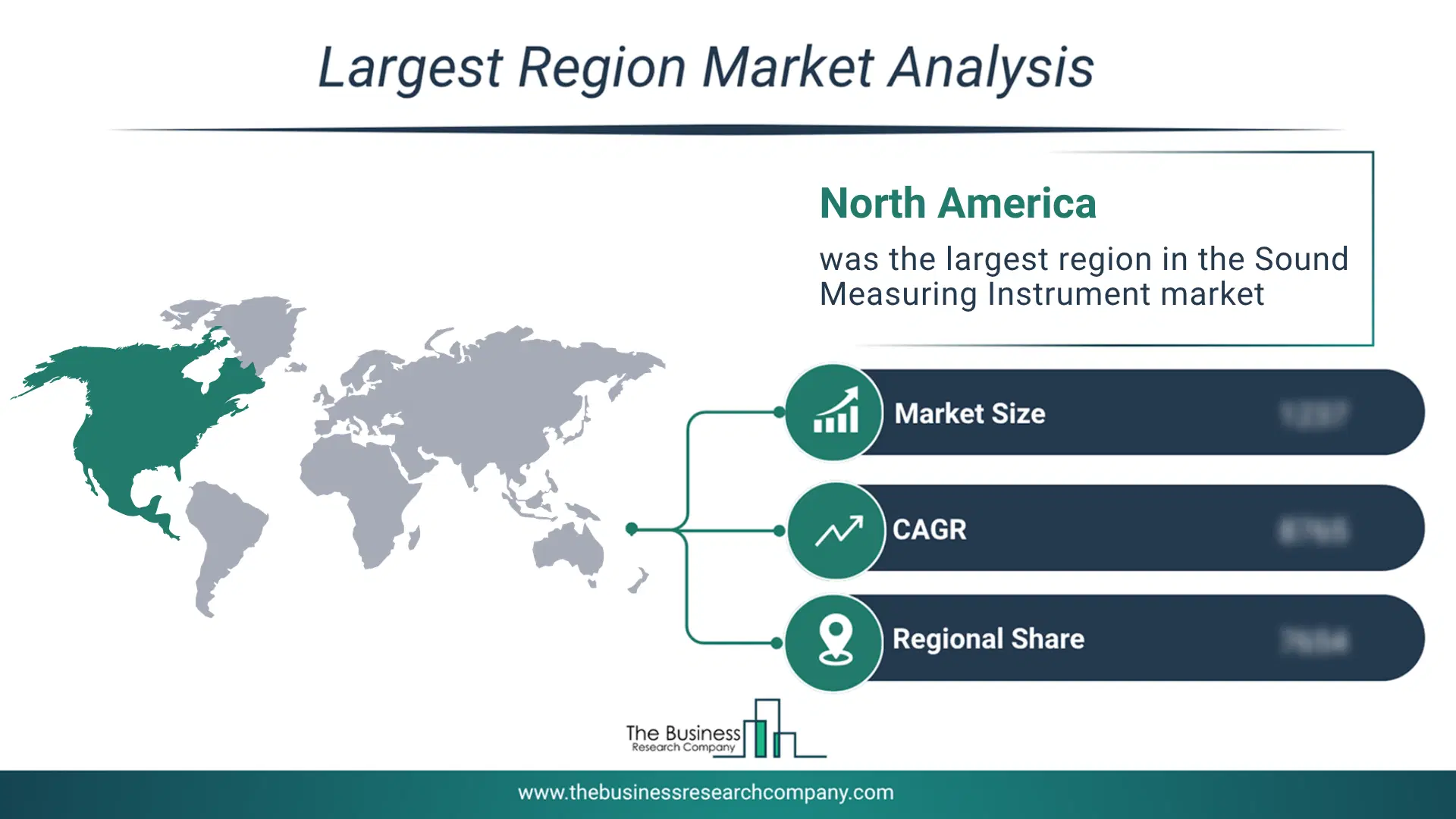
Regional Outlook
North America was the largest region in the sound measuring instrument market in 2025. Asia-Pacific is expected to be the fastest-growing region in the forecast period. The regions covered in this market report are Asia-Pacific, South East Asia, Western Europe, Eastern Europe, North America, South America, Middle East, Africa The countries covered in this market report are Australia, Brazil, China, France, Germany, India, Indonesia, Japan, Taiwan, Russia, South Korea, UK, USA, Canada, Italy, Spain.What Defines the Sound Measuring Instrument Market?
The sound measuring instrument market consists of sales of products, such as environmental noise monitors, precision sound meters, integrating or logging sound meters, octave band analyzers, and calibration equipment for sound instruments. Values in this market are ‘factory gate’ values, that is, the value of goods sold by the manufacturers or creators of the goods, whether to other entities (including downstream manufacturers, wholesalers, distributors, and retailers) or directly to end customers. The value of goods in this market includes related services sold by the creators of the goods.How is Market Value Defined and Measured?
The market value is defined as the revenues that enterprises gain from the sale of goods and/or services within the specified market and geography through sales, grants, or donations in terms of the currency (in USD unless otherwise specified). The revenues for a specified geography are consumption values that are revenues generated by organizations in the specified geography within the market, irrespective of where they are produced. It does not include revenues from resales along the supply chain, either further along the supply chain or as part of other products.
This chart presents market attractiveness based on a quantitative evaluation of growth, competition, strategic alignment, and risk, offering a clear view of opportunity areas for decision-making. This chart is for illustrative purposes; the full report contains the complete analysis.

This chart highlights the Total Addressable Market (TAM) by estimating the maximum revenue opportunity using an assumption-driven approach, supporting strategic planning and opportunity sizing across markets. The chart is illustrative; the full report provides a more comprehensive analysis.
What Key Data and Analysis Are Included in the Sound Measuring Instrument Market Report 2026?
The sound measuring instrument market research report is one of a series of new reports from The Business Research Company that provides market statistics, including industry global market size, regional shares, competitors with the market share, detailed market segments, market trends and opportunities, and any further data you may need to thrive in the sound measuring instrument industry. The market research report delivers a complete perspective of everything you need, with an in-depth analysis of the current and future state of the industry.Sound Measuring Instrument Market Report Forecast Analysis
| Report Attribute | Details |
|---|---|
| Market Size Value In 2026 | $1.68 billion |
| Revenue Forecast In 2030 | $2.27 billion |
| Growth Rate | CAGR of 8.0% from 2026 to 2030 |
| Base Year For Estimation | 2025 |
| Actual Estimates/Historical Data | 2020-2025 |
| Forecast Period | 2026 - 2030 |
| Market Representation | Revenue in USD Billion and CAGR from 2026 to 2030 |
| Segments Covered | Type, Technology, Application, End-Use Industry |
| Regional Scope | Asia-Pacific, Western Europe, Eastern Europe, North America, South America, Middle East, Africa |
| Country Scope | The countries covered in the report are Australia, Brazil, China, France, Germany, India, ... |
| Key Companies Profiled | Brüel & Kjær Sound & Vibration Measurement A/S, Rion Co. Ltd., Ono Sokki Co. Ltd., Casella Inc., Castle Group Limited, CESVA Instruments S.A., Svantek Sp. z o.o., Cirrus Research plc, Acoem Group, Testo SE & Co. KGaA, 3M Company, SINUS Messtechnik GmbH, Norsonic AS, Larson Davis Inc., NTi Audio AG, Pulsar Instruments plc, Neurtek S.L., Center Technology Co. Ltd., Tenmars Electronics Co. Ltd., Uni-Trend Technology (China) Co. Ltd., PCE Deutschland GmbH, Stanlay Instruments |
| Customization Scope | Request for Customization |
| Pricing And Purchase Options | Explore Purchase Options |