
Sovereign Cloud Market Report 2026
Global Outlook – By Component (Solutions, Services), By Deployment Mode (Fully Managed Sovereign Cloud, Hybrid Sovereign Cloud, On-Premises Sovereign Cloud), By Enterprise Size (Large Enterprises, Small And Medium Enterprises), By Application (Operational Sovereignty, Technical Sovereignty, Data Sovereignty), By End User (Government And Public Sector, Banking, Financial Services, And Insurance (BFSI), Healthcare And Life Sciences, Media And Entertainment, Telecommunications, Manufacturing, Energy And Utilities, Other End Users) – Market Size, Trends, Strategies, and Forecast to 2030
Sovereign Cloud Market Overview
• Sovereign Cloud market size has reached to $103.97 billion in 2025 • Expected to grow to $298.45 billion in 2030 at a compound annual growth rate (CAGR) of 23.4% • Growth Driver: Surge In Cybersecurity And National Security Concerns Fuelling The Growth Of The Market Due To Heightening Public Sector Risks • Market Trend: Secure And Scalable Telco-Grade Cloud Platforms For Modern Enterprises • North America was the largest region in 2025 and Asia-Pacific is the fastest growing region.Market Gains By 2030 – Top Opportunities By Segment
Market Gain identifies the most promising market opportunities by highlighting the segments or products expected to generate the highest incremental revenue growth over the next five years.
What Is Covered Under Sovereign Cloud Market?
A sovereign cloud is a cloud computing environment designed to comply with the laws and regulations of a specific country or region, ensuring that data remains under local jurisdiction. It provides organizations with full control over data residency, security, and privacy according to national standards. This type of cloud is typically used to meet strict regulatory, legal, or compliance requirements. The main components in a sovereign cloud are solutions and services. Solutions refer to cloud services designed to keep data within a specific country, ensuring regulatory compliance and enhanced data security. They can be categorized by deployment mode, including fully managed sovereign cloud, hybrid sovereign cloud, or on-premises sovereign cloud, and by enterprise size, including large enterprises or small and medium enterprises. They are used for various applications, including operational sovereignty, technical sovereignty, and data sovereignty, serving end users such as government and public sector organizations, banking, financial services and insurance, healthcare and life sciences, media and entertainment, telecommunications, manufacturing, energy and utilities, and other industries.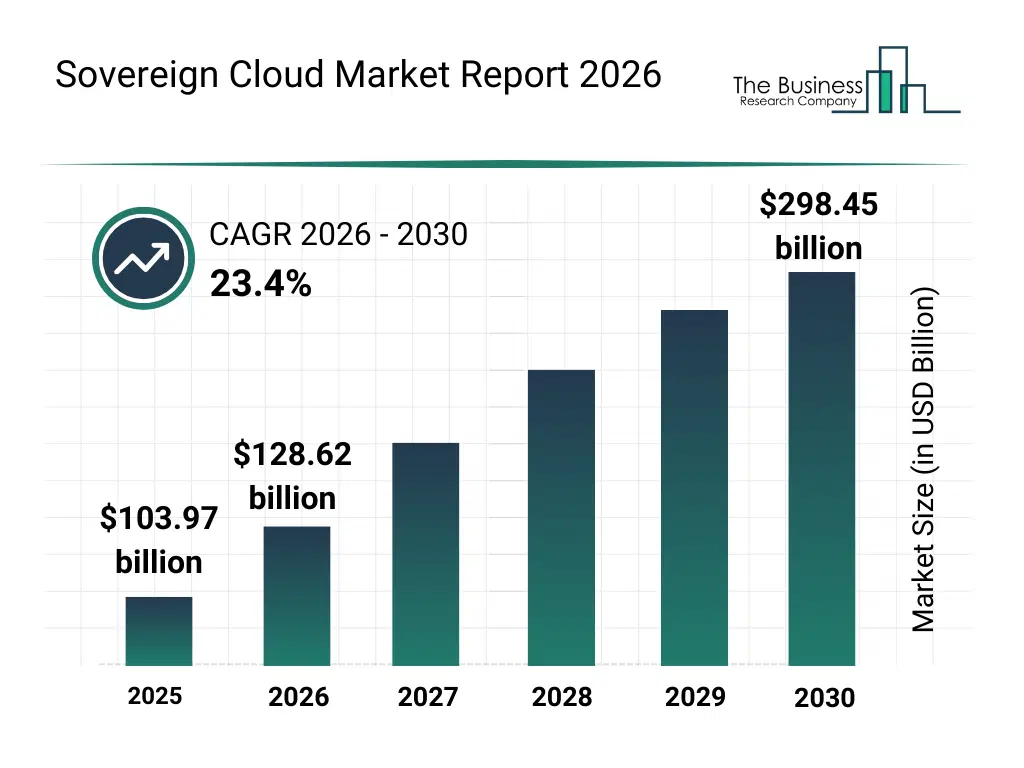
What Is The Sovereign Cloud Market Size and Share 2026?
The sovereign cloud market size has grown exponentially in recent years. It will grow from $103.97 billion in 2025 to $128.62 billion in 2026 at a compound annual growth rate (CAGR) of 23.7%. The growth in the historic period can be attributed to growth in data protection regulations, expansion of government digital services, rising cybersecurity concerns, adoption of cloud migration strategies, increase in compliance driven IT investments.What Is The Sovereign Cloud Market Growth Forecast?
The sovereign cloud market size is expected to see exponential growth in the next few years. It will grow to $298.45 billion in 2030 at a compound annual growth rate (CAGR) of 23.4%. The growth in the forecast period can be attributed to strengthening of data sovereignty laws, expansion of regional cloud infrastructure, rising adoption by public sector organizations, growth in regulated industry cloud demand, integration with secure national networks. Major trends in the forecast period include national data residency compliance, government controlled cloud infrastructure, localized cloud security frameworks, hybrid sovereign cloud deployment, regulatory driven cloud adop.
Global Sovereign Cloud Market Segmentation
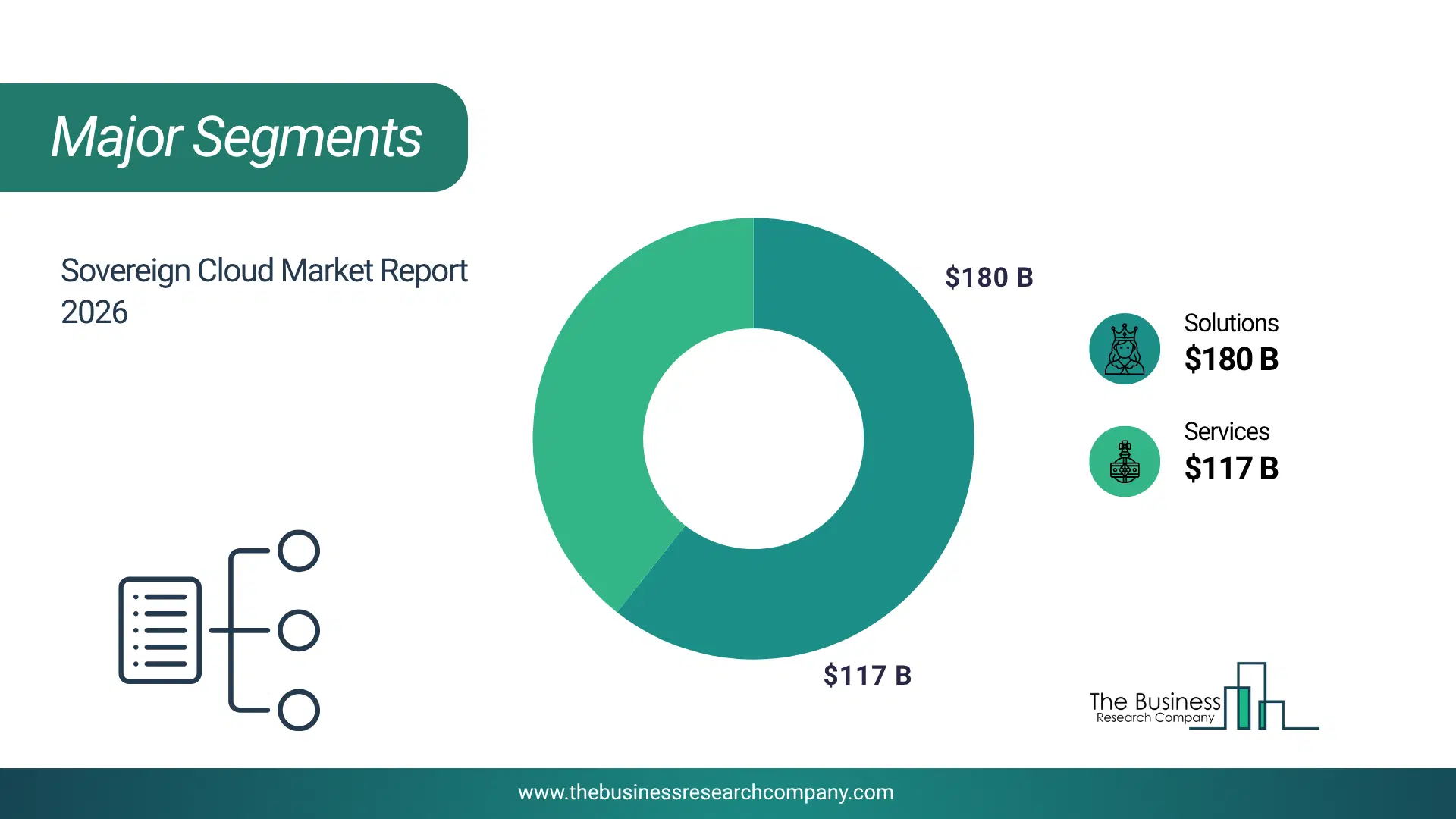
1) By Component: Solutions, Services 2) By Deployment Mode: Fully Managed Sovereign Cloud, Hybrid Sovereign Cloud, On-Premises Sovereign Cloud 3) By Enterprise Size: Large Enterprises, Small And Medium Enterprises 4) By Application: Operational Sovereignty, Technical Sovereignty, Data Sovereignty 5) By End User: Government And Public Sector, Banking, Financial Services, And Insurance (BFSI), Healthcare And Life Sciences, Media And Entertainment, Telecommunications, Manufacturing, Energy And Utilities, Other End Users Subsegments: 1) By Solution: Infrastructure As A Service, Platform As A Service, Software As A Service, Security And Compliance Solutions, Data Management Solutions 2) By Services: Consulting Services, Implementation Services, Managed Services, Support And Maintenance Services, Training And Advisory Services The top segments in the sovereign cloud market will be: • Solutions will reach $180.37 Billion by 2030. • Services will reach $116.76 Billion by 2030.What Is The Driver Of The Sovereign Cloud Market?
The rising cybersecurity and national security concerns are expected to propel the growth of the sovereign cloud market going forward. Cybersecurity and national security concerns refer to the risks and threats posed by cyberattacks, data breaches, and digital espionage that can compromise a nation’s critical infrastructure, defense systems, and sensitive information. Rising cybersecurity and national security concerns are due to the surge in geopolitical tensions as conflicts between nations often lead to more cyberattacks, espionage, and attempts to disrupt critical infrastructure. Sovereign cloud helps mitigate cybersecurity and national security concerns by ensuring sensitive data is stored and managed within a country’s legal framework, reducing exposure to foreign access and cyber threats. For instance, in October 2024, according to Check Point Software Technologies, an Israel-based cybersecurity vendor, organizations faced an average of 1,876 cyberattacks per week, up 75% from the same period in 2023. Therefore, the rising cybersecurity and national security concerns are driving the growth of the sovereign cloud industry.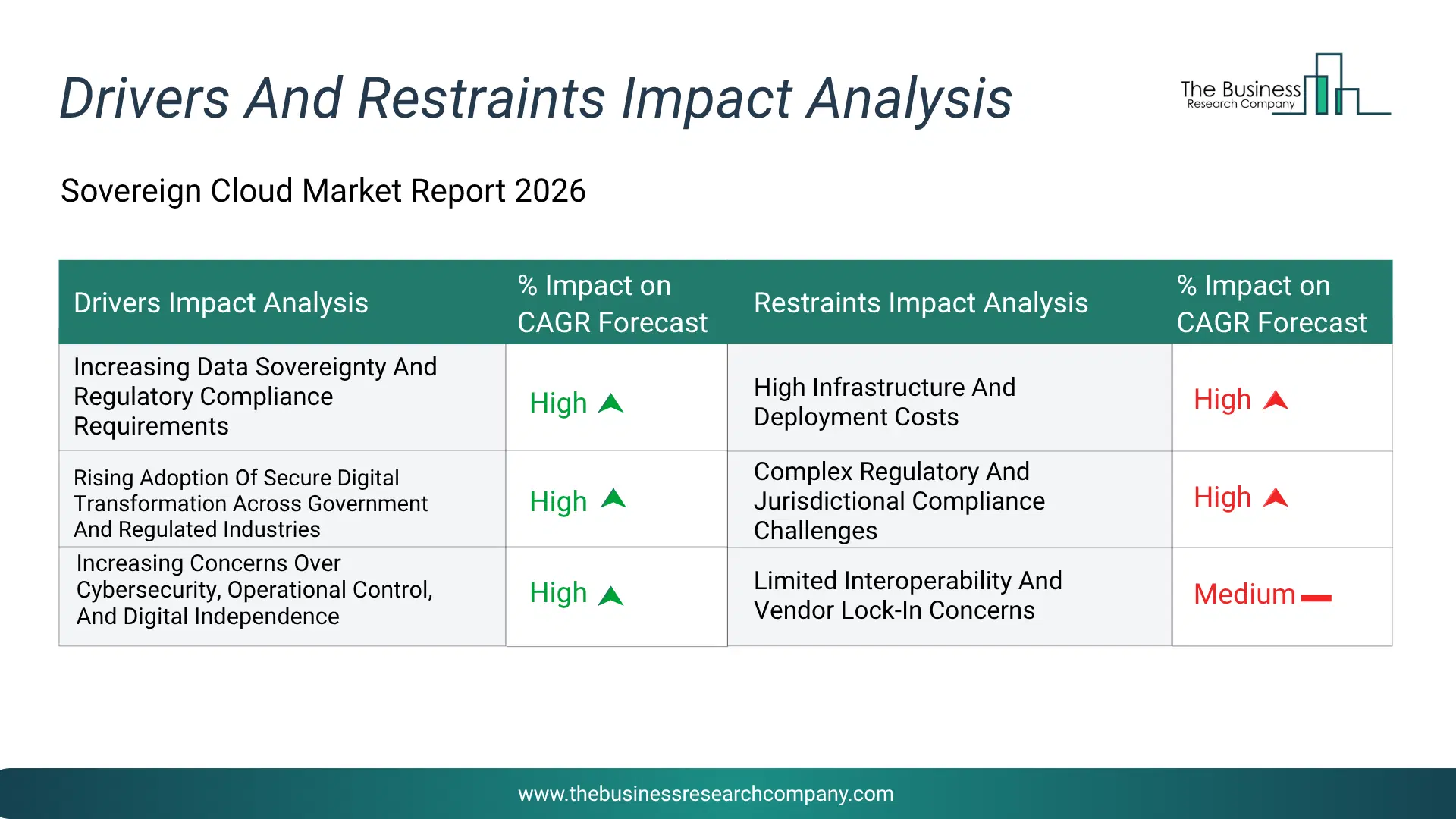
Infographic Chart Showing Key Market Drivers Analysis And Restraints For Sovereign Cloud Market
The chart presents an impact analysis of key drivers and restraints, quantifying their relative influence on the market's growth rate and helping assess the balance between growth enablers and limiting factors. This chart offers a high-level perspective; the full report contains more detailed insights.
How Will The Drivers Impact Growth In The Global Sovereign Cloud Market?
• Increasing Data Sovereignty And Regulatory Compliance Requirements (High) – During the forecast period, the increasing data sovereignty and regulatory compliance requirements are expected to become a key growth driver for the sovereign cloud market by 2030. Organizations are facing stricter regulations governing data storage, processing, and cross-border data transfers, compelling enterprises to adopt cloud environments that ensure jurisdictional compliance. Sovereign cloud platforms provide localized infrastructure, governance controls, and policy enforcement capabilities that help organizations meet evolving legal and industry-specific requirements. As regulatory frameworks continue to expand across multiple regions, demand for compliant cloud environments is expected to strengthen significantly. • Rising Adoption Of Secure Digital Transformation Across Government And Regulated Industries (High) – During the forecast period, the rising adoption of secure digital transformation across government and regulated industries is expected to emerge as a major factor driving the expansion of the sovereign cloud market by 2030. Public sector agencies and highly regulated organizations are modernizing critical operations through cloud-enabled technologies while maintaining strict oversight of sensitive information. Sovereign cloud environments provide trusted platforms for deploying digital services, modern applications, and mission-critical workloads without compromising governance obligations. The growing need to balance innovation with compliance is encouraging broader implementation of sovereign cloud strategies. • Increasing Concerns Over Cybersecurity, Operational Control, And Digital Independence (High) – During the forecast period, the increasing concerns over cybersecurity, operational control, and digital independence are expected to act as a key growth catalyst for the sovereign cloud market by 2030. Enterprises and government organizations are seeking greater visibility and authority over cloud operations as cyber threats become more sophisticated and geopolitical risks influence technology decisions. Sovereign cloud solutions enable organizations to strengthen resilience, maintain control over critical digital assets, and reduce dependency on external jurisdictions. The growing emphasis on securing strategic data and infrastructure is expected to accelerate investment in sovereign cloud deployments worldwide.How Will The Restraints Impact Growth In The Global Sovereign Cloud Market?
• High Infrastructure And Deployment Costs (High) – During the forecast period, the high infrastructure and deployment costs remain a major restraint for the sovereign cloud market, as establishing sovereign cloud environments requires substantial investments in localized data centers, advanced cybersecurity frameworks, compliance management systems, and dedicated operational infrastructure. Cloud providers and enterprises must also invest heavily in data residency capabilities, encryption technologies, network security, and region-specific regulatory certifications to meet strict sovereignty requirements. Additionally, maintaining isolated cloud architectures, ensuring continuous compliance updates, and operating within national jurisdictional boundaries increase operational complexity and long-term maintenance expenses. These high capital and operational expenditures can limit adoption among small and medium-sized enterprises and slow large-scale deployment across cost-sensitive markets. • Complex Regulatory And Jurisdictional Compliance Challenges (High) – During the forecast period, the complex regulatory and jurisdictional compliance requirements act as a significant restraint for the sovereign cloud market, as organizations operating across multiple regions must comply with diverse and frequently evolving data protection, cybersecurity, and data residency laws. Different countries impose unique regulations regarding data storage locations, cross-border data transfers, encryption standards, and government access controls, creating operational and legal complexities for cloud service providers and multinational enterprises. Ensuring compliance across varying national frameworks often requires customized infrastructure, localized operational models, and continuous monitoring of regulatory changes, which increases administrative burden and implementation costs. Additionally, inconsistencies between international privacy regulations and national sovereignty policies can complicate cloud interoperability and delay deployment decisions in global business environments. • Limited Interoperability And Vendor Lock-In Concerns (High) – During the forecast period, the limited interoperability and vendor lock-in concerns are restraining the growth of the sovereign cloud market, as organizations often face difficulties integrating sovereign cloud platforms with existing multi-cloud and hybrid IT environments. Many sovereign cloud solutions operate within specialized regulatory and operational frameworks, which can limit compatibility with third-party applications, global cloud ecosystems, and standardized data-sharing systems. Enterprises also worry about becoming overly dependent on specific regional cloud providers, making future migration, scalability, and system flexibility more challenging and costly. Additionally, differences in proprietary technologies, compliance architectures, and infrastructure standards can hinder seamless workload portability and reduce operational efficiency, particularly for multinational organizations managing complex digital operations across multiple jurisdictions.Key Players In The Global Sovereign Cloud Market
Major companies operating in the sovereign cloud market are Amazon.com Inc., Google LLC, Microsoft Corporation, Huawei Technologies Co. Ltd., International Business Machines Corporation, Oracle Corporation, SAP SE, NTT DATA Corporation, Hewlett Packard Enterprise Company, Fujitsu Limited, Thales S.A., Atos SE, T-Systems International GmbH, Rackspace Technology Inc., OVH Groupe SAS, CloudSigma AG, Clever Cloud SAS, Scaleway SAS, Hetzner Online GmbH, Swisscom AG, Orange Business (Orange S.A.), Parallel Wireless Inc., SpiderCloud Wireless (Corning Wireless), Comba Telecom Systems Holdings Ltd.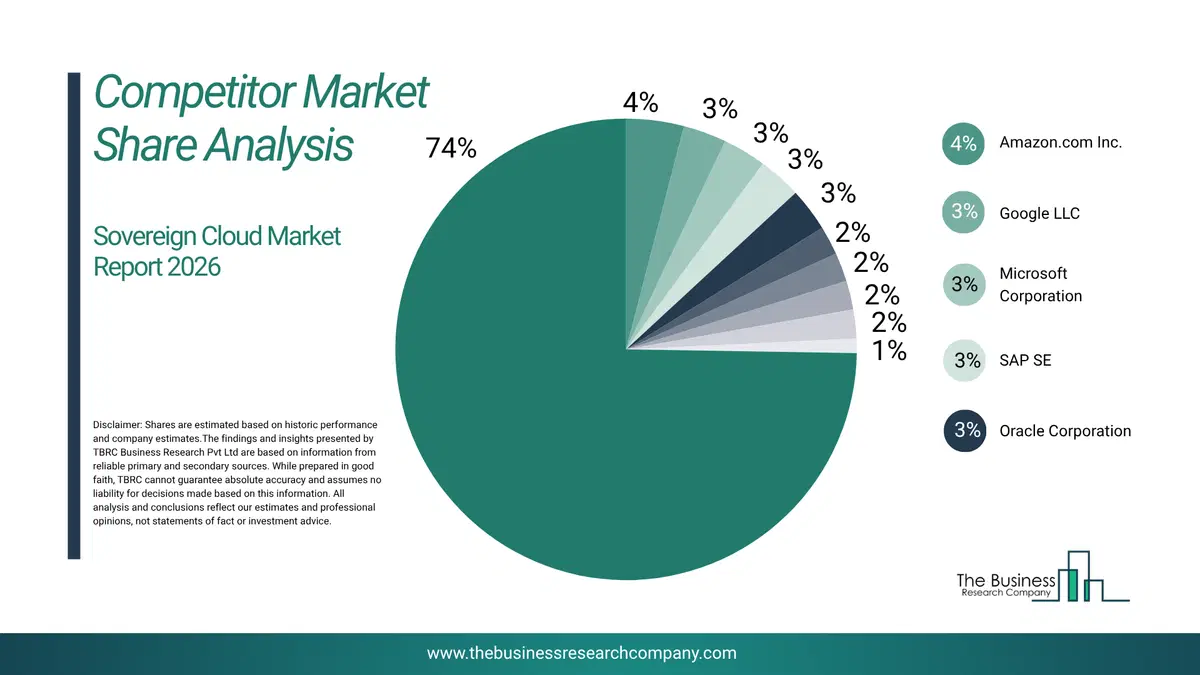
This chart is for illustrative purposes; the full report includes a detailed competitor analysis and comprehensive overview of the top 10 companies in the market.
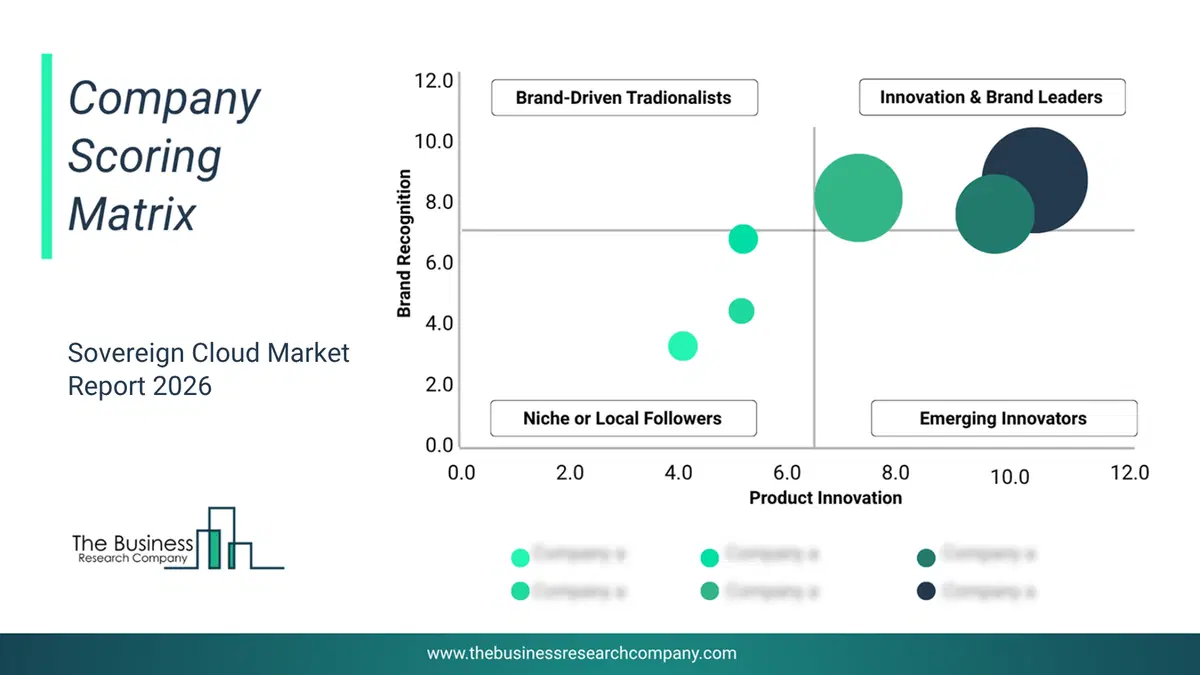
This chart maps companies by product innovation and brand strength, with bubble size indicating relative revenue, helping identify market leaders, challengers, and niche players. This is an illustrative chart; the full report provides a complete and accurate competitive analysis.
Global Sovereign Cloud Market Trends and Insights
Major companies operating in the sovereign cloud market are focusing on developing innovative solutions such as telco-grade cloud platforms to ensure data sovereignty, enhance security, and support scalability. A telco-grade cloud platform is a high-performance, highly reliable cloud infrastructure designed for telecom operations, helping ensure secure, scalable, low-latency services, support AI-driven operations, and improve customer experience. For instance, in August 2025, Xtelify Ltd., a fully owned digital subsidiary of Bharti Airtel, an India-based telecommunication company, launched Airtel Cloud, a sovereign, telco-grade cloud platform designed to ensure data sovereignty, high reliability, and scalable performance for businesses and telecom operations. Airtel cloud is capable of handling massive transaction volumes. It was originally built to process up to 140 crore transactions per minute for Airtel’s internal operations and is now being extended to enterprises and telecom operators across India and other countries. Hosted on next-generation sustainable data centres and powered by GenAI-based provisioning, the platform offers infrastructure-as-a-service (IaaS), platform-as-a-service (PaaS), and advanced connectivity solutions while enabling AI-driven operations, real-time analytics, enhanced customer experience, fraud and spam protection, and secure, low-latency services that meet the demanding needs of modern telecom and enterprise environments.What Are Latest Mergers And Acquisitions In The Sovereign Cloud Market?
In November 2023, Broadcom Inc., a US-based company that offers telecommunications, acquired VMware Inc. for an undisclosed amount. With this acquisition, Broadcom aims to strengthen its position as a infrastructure technology company by investing in VMware Cloud Foundation and enabling enterprises to build, modernize, and secure their private and hybrid cloud environments, while also expanding its portfolio with VMware Tanzu, advanced security and load balancing services, and software-defined edge solutions. VMware Inc. is a US-based cloud computing and virtualization technology company that specializes in providing sovereign cloud.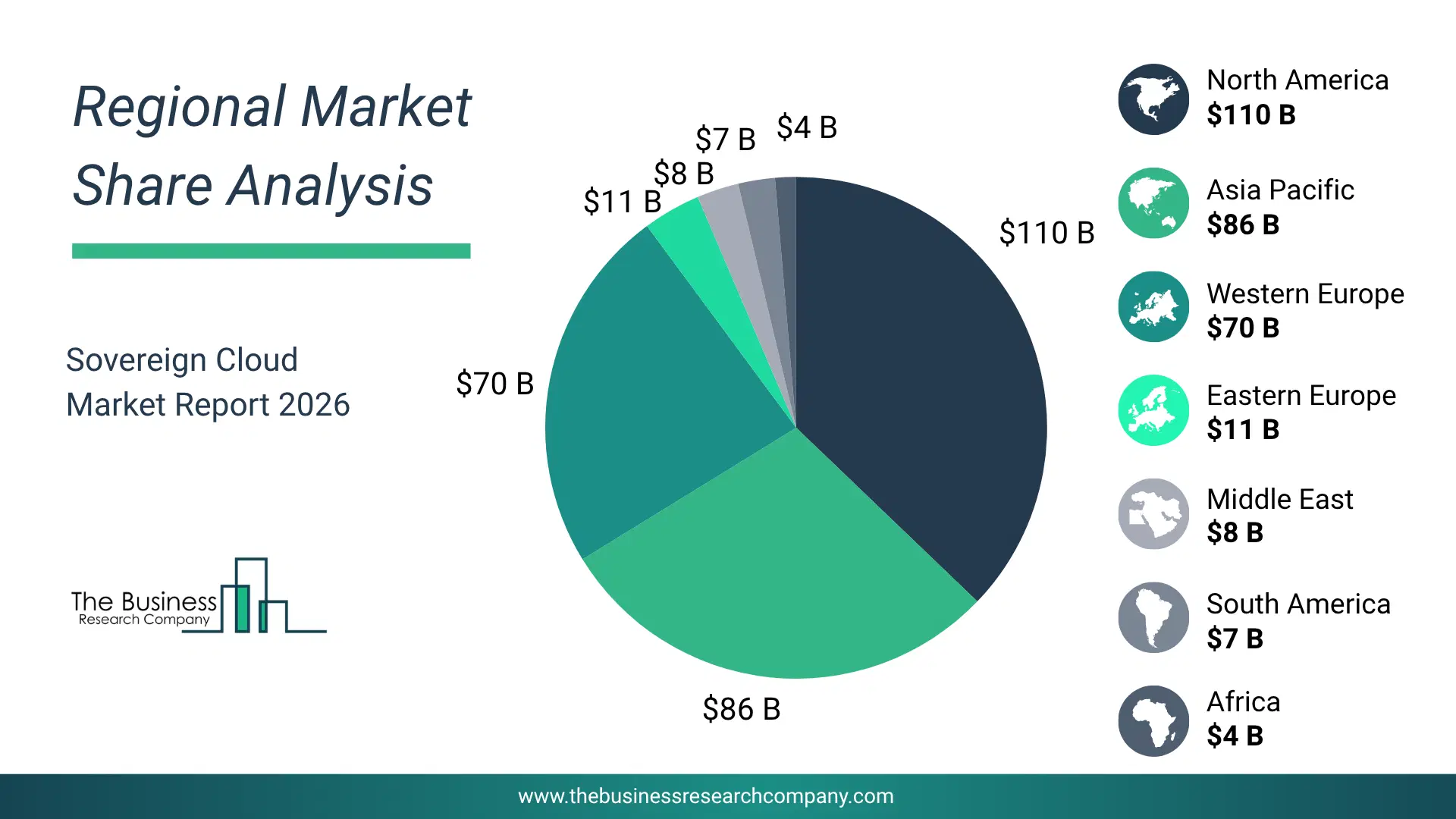
Regional Insights
North America was the largest region in the sovereign cloud market in 2025. Asia-Pacific is expected to be the fastest-growing region in the forecast period. The regions covered in this market report are Asia-Pacific, South East Asia, Western Europe, Eastern Europe, North America, South America, Middle East, Africa. The countries covered in this market report are Australia, Brazil, China, France, Germany, India, Indonesia, Japan, Taiwan, Russia, South Korea, UK, USA, Canada, Italy, Spain.What Defines the Sovereign Cloud Market?
The sovereign cloud market consists of revenues earned by entities by providing services such as data residency and sovereignty services, regulatory compliance services, secure cloud infrastructure, identity and access management and encryption services. The market value includes the value of related goods sold by the service provider or included within the service offering. The sovereign cloud market also consists of sales of virtual machines, compliance management tools, identity and access management (IAM) solutions, Security monitoring and auditing tools. Values in this market are ‘factory gate’ values, that is, the value of goods sold by the manufacturers or creators of the goods, whether to other entities (including downstream manufacturers, wholesalers, distributors, and retailers) or directly to end customers. The value of goods in this market includes related services sold by the creators of the goods.How is Market Value Defined and Measured?
The market value is defined as the revenues that enterprises gain from the sale of goods and/or services within the specified market and geography through sales, grants, or donations in terms of the currency (in USD unless otherwise specified). The revenues for a specified geography are consumption values that are revenues generated by organizations in the specified geography within the market, irrespective of where they are produced. It does not include revenues from resales along the supply chain, either further along the supply chain or as part of other products.
This chart presents market attractiveness based on a quantitative evaluation of growth, competition, strategic alignment, and risk, offering a clear view of opportunity areas for decision-making. This chart is for illustrative purposes; the full report contains the complete analysis.

This chart highlights the Total Addressable Market (TAM) by estimating the maximum revenue opportunity using an assumption-driven approach, supporting strategic planning and opportunity sizing across markets. The chart is illustrative; the full report provides a more comprehensive analysis.
What Key Data and Analysis Are Included in the Sovereign Cloud Market Report 2026?
The sovereign cloud market research report is one of a series of new reports from The Business Research Company that provides market statistics, including industry global market size, regional shares, competitors with the market share, detailed market segments, market trends and opportunities, and any further data you may need to thrive in the sovereign cloud industry. The market research report delivers a complete perspective of everything you need, with an in-depth analysis of the current and future state of the industry.Sovereign Cloud Market Report Forecast Analysis
| Report Attribute | Details |
|---|---|
| Market Size Value In 2026 | $128.62 billion |
| Revenue Forecast In 2030 | $298.45 billion |
| Growth Rate | CAGR of 23.7% from 2026 to 2030 |
| Base Year For Estimation | 2025 |
| Actual Estimates/Historical Data | 2020-2025 |
| Forecast Period | 2026 - 2030 |
| Market Representation | Revenue in USD Billion and CAGR from 2026 to 2030 |
| Segments Covered | Component, Deployment Mode, Enterprise Size, Application, End User |
| Regional Scope | Asia-Pacific, Western Europe, Eastern Europe, North America, South America, Middle East, Africa |
| Country Scope | The countries covered in the report are Australia, Brazil, China, France, Germany, India, Indonesia, Japan, Taiwan, Russia, South Korea, UK, USA, Canada, Italy, Spain. |
| Key Companies Profiled | Amazon.com Inc., Google LLC, Microsoft Corporation, Huawei Technologies Co. Ltd., International Business Machines Corporation, Oracle Corporation, SAP SE, NTT DATA Corporation, Hewlett Packard Enterprise Company, Fujitsu Limited, Thales S.A., Atos SE, T-Systems International GmbH, Rackspace Technology Inc., OVH Groupe SAS, CloudSigma AG, Clever Cloud SAS, Scaleway SAS, Hetzner Online GmbH, Swisscom AG, Orange Business (Orange S.A.), Parallel Wireless Inc., SpiderCloud Wireless (Corning Wireless), Comba Telecom Systems Holdings Ltd. |
| Customization Scope | Request for Customization |
| Pricing And Purchase Options | Explore Purchase Options |