
Space-Based Fuel Cell Market Report 2026
Global Outlook – By Type (Proton Exchange Membrane Fuel Cells, Alkaline Fuel Cells, Other Types), By Power Capacity (Low Power, Medium Power), By Application (Satellites, Spacecraft, Rovers, Other Applications), By End-User (Commercial, Scientific Research) – Market Size, Trends, Strategies, and Forecast to 2030
Space-Based Fuel Cell Market Overview
• Space-Based Fuel Cell market size has reached to $3.38 billion in 2025 • Expected to grow to $5.72 billion in 2030 at a compound annual growth rate (CAGR) of 11.1% • Growth Driver: Surge In Space Exploration Fueling the Growth Of The Market Due To Increasing Demand For Clean And Reliable Power Solutions In Harsh Space Environments • Market Trend: Advancement Of Multi-Functional Fuel Cell Systems For Sustainable Space Missions • North America was the largest region in 2025 and Asia-Pacific is the fastest growing region.Market Gains By 2030 – Top Opportunities By Segment
Market Gain identifies the most promising market opportunities by highlighting the segments or products expected to generate the highest incremental revenue growth over the next five years.
What Is Covered Under Space-Based Fuel Cell Market?
A space-based fuel cell is a power-generating device that converts chemical energy into electricity by reacting hydrogen with oxygen. This process yields clean energy, producing only water and heat as byproducts, making it well-suited for the controlled environment of space missions. It serves as a dependable and efficient power source for spacecraft systems, including life support, instruments, and propulsion. The main types of space-based fuel cells are proton exchange membrane fuel cells, solid oxide fuel cells, molten carbonate fuel cells, alkaline fuel cells, and others. Proton exchange membrane (PEM) fuel cells use a solid polymer membrane to generate electricity and water at low temperatures, making them ideal for lightweight, rapid-response space and portable systems. It is available in different power capacities, such as low power, medium power, and high power, for various applications, including satellites, spacecraft, rovers, and others, and is used by several end-users, such as commercial, military, and scientific research.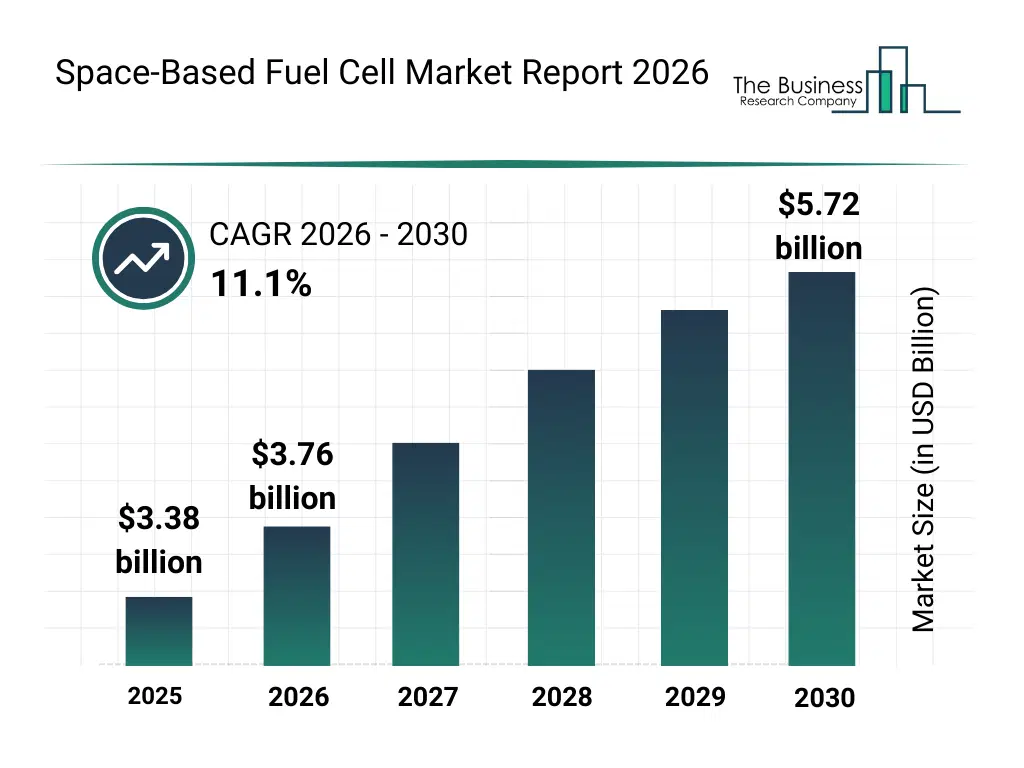
What Is The Space-Based Fuel Cell Market Size and Share 2026?
The space-based fuel cell market size has grown rapidly in recent years. It will grow from $3.38 billion in 2025 to $3.76 billion in 2026 at a compound annual growth rate (CAGR) of 11.2%. The growth in the historic period can be attributed to space exploration programs, satellite deployment growth, fuel cell reliability, military space missions, early aerospace fuel cell use.What Is The Space-Based Fuel Cell Market Growth Forecast?
The space-based fuel cell market size is expected to see rapid growth in the next few years. It will grow to $5.72 billion in 2030 at a compound annual growth rate (CAGR) of 11.1%. The growth in the forecast period can be attributed to deep space exploration missions, commercial satellite launches, reusable spacecraft development, defense space investment, advanced propulsion research. Major trends in the forecast period include growing demand for reliable space power systems, increased use in long duration space missions, expansion of satellite power applications, rising adoption of regenerative fuel cells, focus on lightweight and high efficiency designs.
Global Space-Based Fuel Cell Market Segmentation
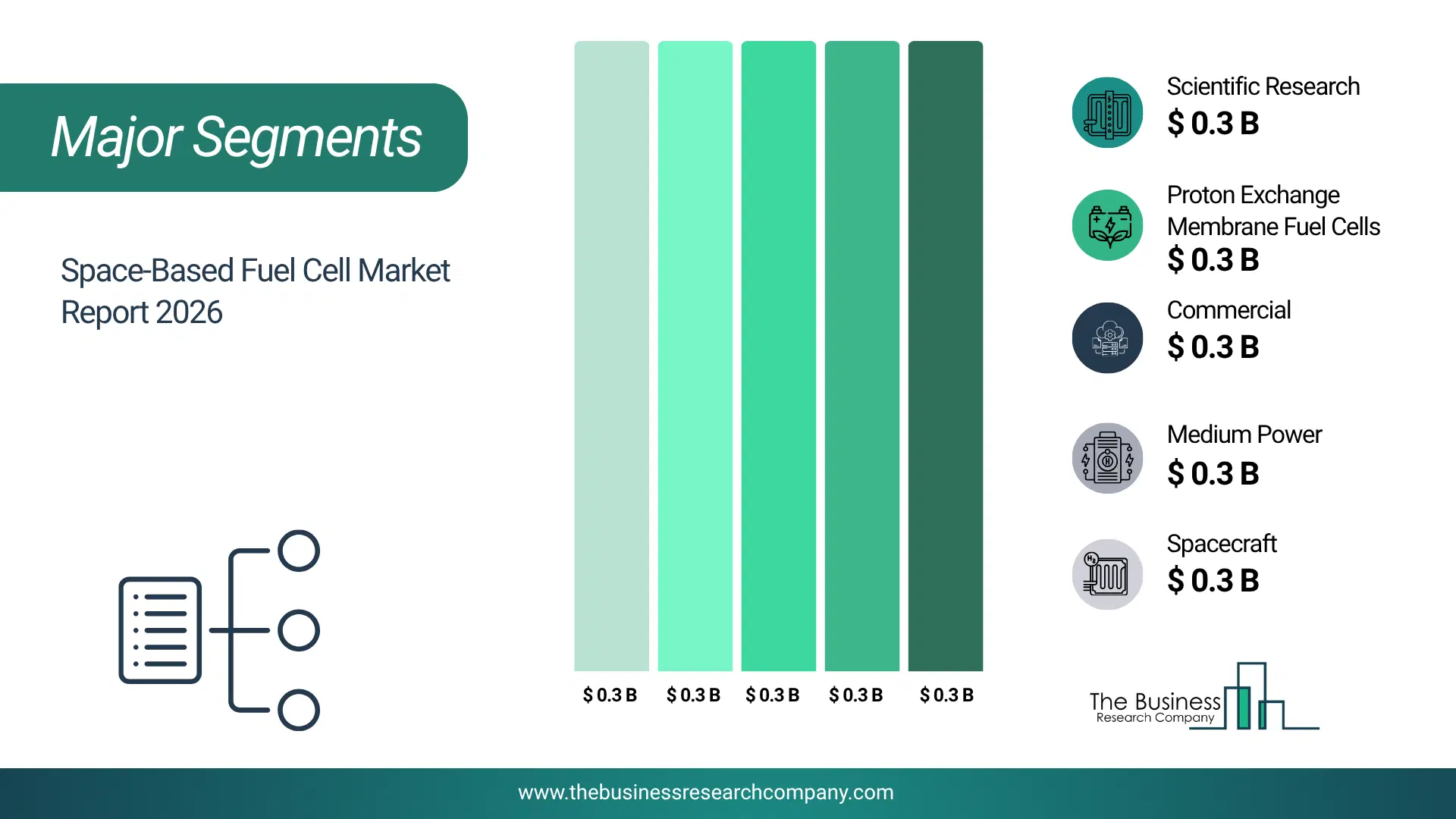
1) By Type: Proton Exchange Membrane Fuel Cells, Alkaline Fuel Cells, Other Types 2) By Power Capacity: Low Power, Medium Power 3) By Application: Satellites, Spacecraft, Rovers, Other Applications 4) By End-User: Commercial, Scientific Research Subsegments: 1) By Proton Exchange Membrane Fuel Cells (PEMFC): Low-Temperature Proton Exchange Membrane Fuel Cells (PEMFC), Reversible Proton Exchange Membrane (PEM) Fuel Cells, Proton Exchange Membrane Fuel Cells (PEMFC) For Power Supply 2) By Alkaline Fuel Cells (AFC): Static Alkaline Fuel Cells (AFC) Systems, Regenerative Alkaline Fuel Cells (AFC) Systems, Potassium Hydroxide Alkaline Fuel Cells (AFC), Alkaline Fuel Cells (AFC) For Life Support Systems, Alkaline Fuel Cells (AFC) For Space Shuttle Applications 5) By Other Types: Regenerative Fuel Cells, Bio-Inspired Fuel Cells, Metal-Air Fuel Cells The top segments in the space-based fuel cell market will be: • Scientific Research will reach $372.55 Million by 2030. • Proton Exchange Membrane Fuel Cells will reach $361 Million by 2030. • Commercial will reach $379.96 Million by 2030. • Medium Power will reach $330.21 Million by 2030. • Spacecraft will reach $325.03 Million by 2030.What Is The Driver Of The Space-Based Fuel Cell Market?
The rising number of space explorations is expected to propel the growth of the space-based fuel cell market going forward. Space exploration is the activity of sending people or machines into space to learn more about the Moon, planets, stars, and the universe. Space exploration is growing as countries pursue strategic and technological dominance in space, driving investment in missions and satellite systems. Space-based fuel cells help space exploration by providing a reliable and clean source of electricity and water, enabling spacecraft, satellites, and space habitats to operate efficiently even in dark or harsh space environments. For instance, in March 2024, according to the Global Change Data Lab, a UK-based non-profit research organization, 2,895 objects were launched into orbit in 2023, compared to 2,477 in 2022. Therefore, the rising number of space explorations is driving the growth of the space-based fuel cell industry.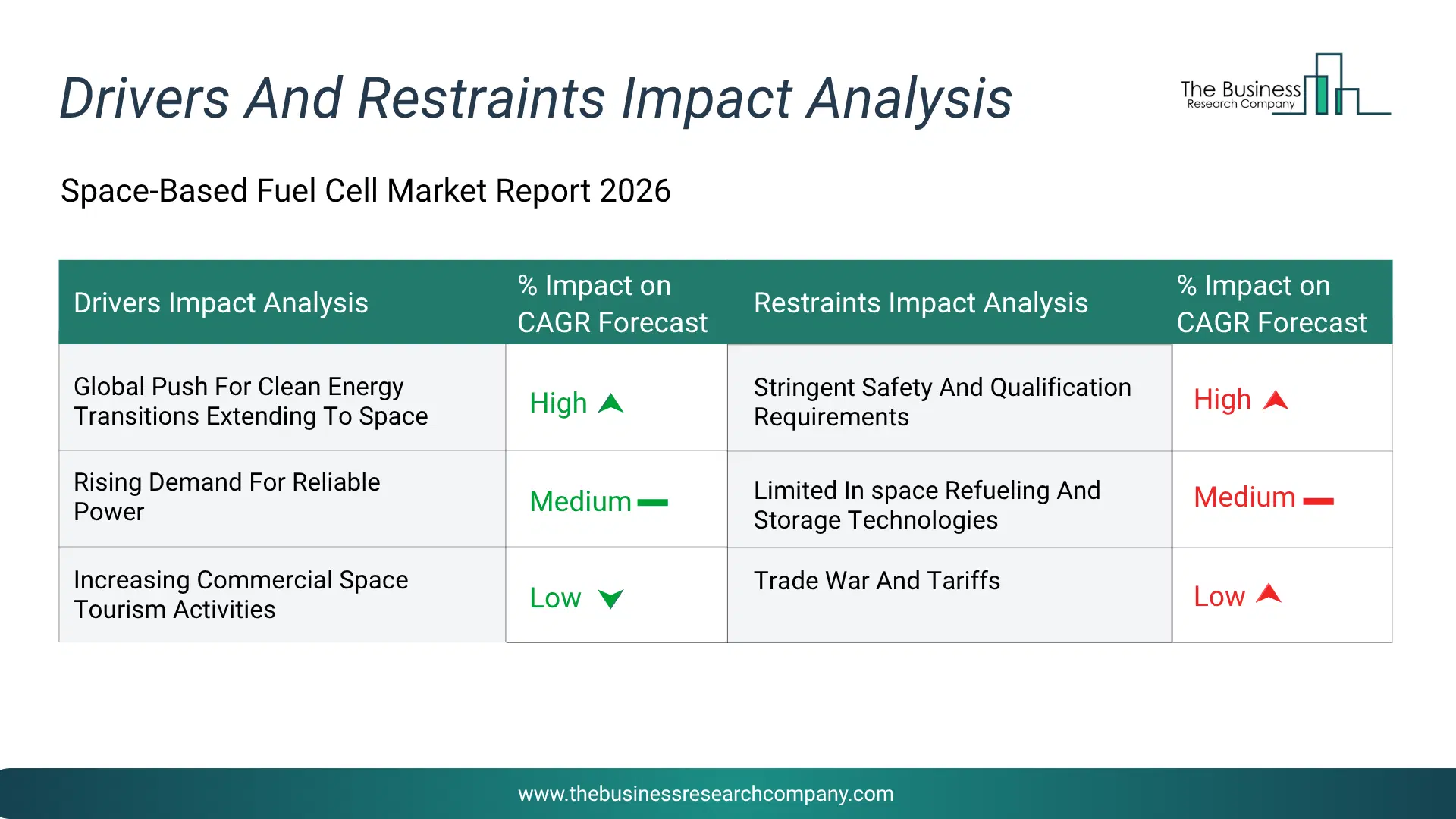
Infographic Chart Showing Key Market Drivers Analysis And Restraints For Space-Based Fuel Cell Market
The chart presents an impact analysis of key drivers and restraints, quantifying their relative influence on the market's growth rate and helping assess the balance between growth enablers and limiting factors. This chart offers a high-level perspective; the full report contains more detailed insights.
How Will The Drivers Impact Growth In The Global Space-Based Fuel Cell Market?
• Global Push For Clean Energy Transitions Extending To Space (High) – During the forecast period, the global push for clean energy transitions extending to space is driving increased demand for space-based fuel cell. the global emphasis on reducing carbon emissions and shifting toward renewable energy solutions is extending into aerospace, prompting adoption of hydrogen and fuel cell technologies for spacecraft and orbital platforms. fuel cells provide clean, efficient, and compact energy solutions, aligning with sustainability goals for long-duration missions. space agencies and private companies are increasingly integrating zero-emission power systems to minimize environmental impact beyond earth. this green approach encourages the development and testing of high-performance fuel cells for propulsion and onboard energy needs, driving technology deployment in space. the global push for clean energy transitions extending to space growth contribution during the forecast period in 2025 is 2.0%. • Rising Demand For Reliable Power (Medium) – During the forecast period, the rising demand for reliable power is accelerating the adoption of space-based fuel cell. space missions require uninterrupted and resilient energy to maintain critical systems such as communications, life support, and scientific instruments. fuel cells provide stable and continuous power regardless of solar availability, making them essential for deep-space probes and habitats. increasing investment in long-duration missions and autonomous platforms highlights the need for dependable energy sources. as a result, fuel cells are being prioritized for both exploratory and commercial space activities where consistent performance is vital. the rising demand for reliable power growth contribution during the forecast period in 2025 is 1.5%. • Increasing Commercial Space Tourism Activities (Low) – During the forecast period, increasing commercial space tourism activities are accelerating the adoption of space-based fuel cell. the growth of suborbital and orbital tourism has increased demand for reliable, lightweight, and safe energy sources to support passenger safety and onboard systems. fuel cells offer high energy density, compact design, and low thermal signature, making them suitable for spacecraft carrying humans. as private companies expand space tourism programs, reliable power generation becomes critical for life support, lighting, and communication systems. this operational need encourages innovation and adoption of fuel cell solutions capable of supporting repeated commercial flights. the increasing commercial space tourism activities growth contribution during the forecast period in 2025 is 0.8%. • Growing Awareness Of Environmental Concerns (Low) – During the forecast period, the growing awareness of environmental concerns is driving demand for space-based fuel cell. rising concern over climate change, space debris, and pollution from traditional propulsion systems is pushing stakeholders to consider environmentally responsible alternatives. fuel cells produce minimal byproducts, reducing chemical waste and greenhouse gas emissions during missions. awareness campaigns, regulatory frameworks, and public interest in sustainable space operations are influencing mission planning. organizations are prioritizing technologies that balance performance with ecological impact, boosting the role of fuel cells in powering satellites, stations, and deep-space probes. the in growing awareness of environmental concerns growth contribution during the forecast period in 2025 is 0.5%.How Will The Restraints Impact Growth In The Global Space-Based Fuel Cell Market?
• Stringent Safety And Qualification Requirements (High) – During the forecast period, the stringent safety and qualification requirements remains a significant barrier to market expansion. as device performance continues to increase and die stacking becomes more complex, localized heat accumulation and high-power density in vertically integrated chips are creating significant thermal challenges. inefficient heat spreading through multiple layers, interfaces, and materials can limit operating frequency, accelerate aging, and reduce overall reliability. the rising need for effective thermal design strategies, including optimized stack organization, interface materials, and cooling solutions, is driving demand for advanced space-based fuel cell solutions that ensure performance, yield, and system longevity. growth affected by stringent safety and qualification requirements during the forecast period in 2025 is -2.0%. • Limited In space Refueling And Storage Technologies (Medium) – During the forecast period, the limited in space refueling and storage technologies a significant barrier to market expansion. the scarcity of advanced refueling and propellant storage systems in orbit restricts the ability to maintain continuous operations for spacecraft and stations. fuel cells, which rely on hydrogen or other reactants, face challenges in long-duration missions due to limited in-space replenishment options. without efficient storage solutions, energy supply becomes constrained, forcing mission planners to carry larger reserves or limit operational time. this drives the need for innovations in compact, safe, and high-capacity storage technologies to fully leverage fuel cells for extended space missions. growth affected by limited in space refueling and storage technologies during the forecast period in 2025 is -1.0%. • Trade War And Tariffs (Low) – During the forecast period, the trade war and tariffs remains a significant barrier to market expansion. geopolitical tensions and trade disputes can impose tariffs on key materials like platinum catalysts, specialized membranes, and aerospace-grade components. such restrictions can increase procurement costs and limit access to critical supply chains. companies must adapt by sourcing alternative suppliers, localizing production, or redesigning systems to maintain performance. these challenges impact planning, budgeting, and global collaboration, making supply chain resilience a key consideration in fuel cell deployment for space applications. growth affected by trade war and tariffs during the forecast period in 2025 is -0.2%.Key Players In The Global Space-Based Fuel Cell Market
Major companies operating in the space-based fuel cell market are Infinity Fuel Cell & Hydrogen, Inc., Honeywell International Inc., Northrop Grumman Corporation, Raytheon Technologies Corporation, Airbus Defence and Space, Thales Group, Lockheed Martin Corporation, Boeing Company, Blue Origin, LLC, SpaceX, Aerojet Rocketdyne, Safran S.A., Mitsubishi Heavy Industries, Ltd., Japan Aerospace Exploration Agency (JAXA), Indian Space Research Organisation (ISRO), NASA, European Space Agency (ESA), Ballard Power Systems, Intelligent Energy Limited, PowerCell Sweden AB, Panasonic Corporation, SFC Energy AG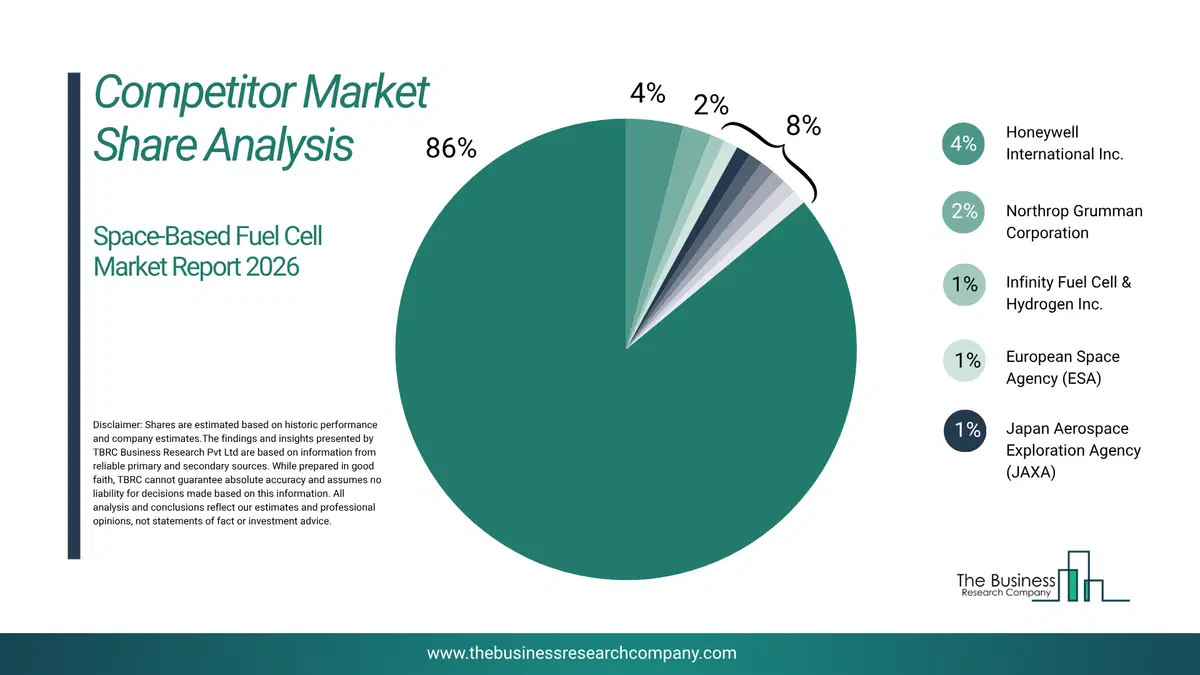
This chart is for illustrative purposes; the full report includes a detailed competitor analysis and comprehensive overview of the top 10 companies in the market.
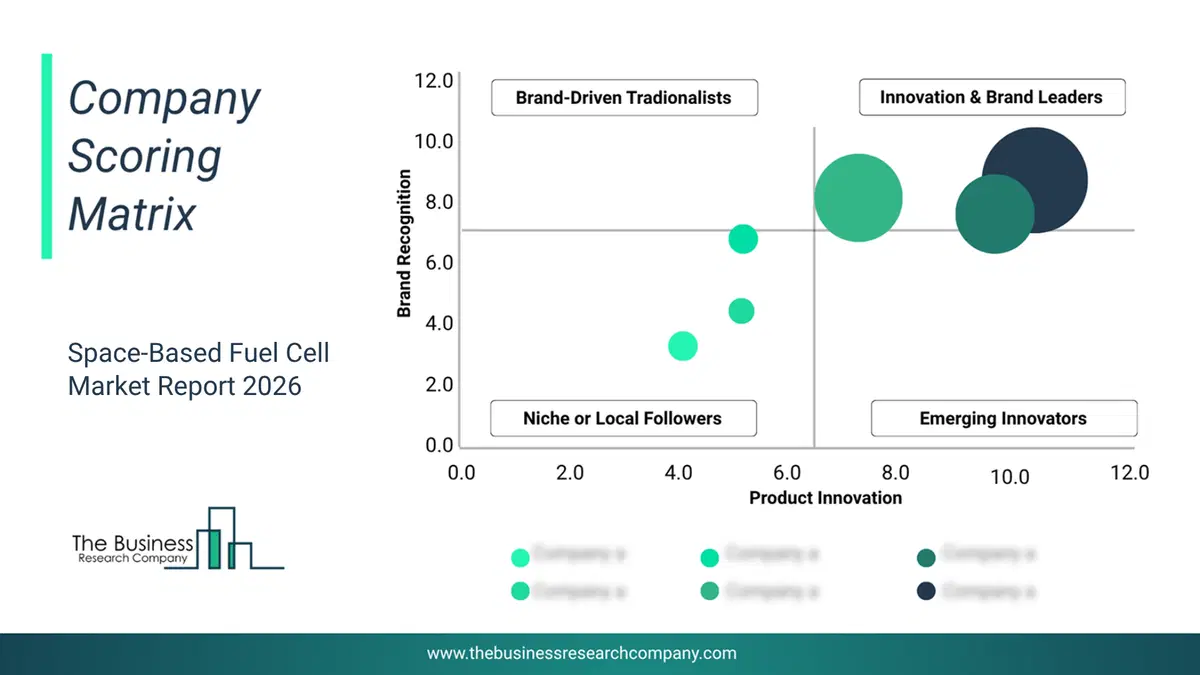
This chart maps companies by product innovation and brand strength, with bubble size indicating relative revenue, helping identify market leaders, challengers, and niche players. This is an illustrative chart; the full report provides a complete and accurate competitive analysis.
Global Space-Based Fuel Cell Market Trends and Insights
Major companies operating in the space-based fuel cell market are focusing on developing advanced products such as multi-functional power solutions to support extended space mission durations in harsh space environments. Multi-functional power solutions are compact systems that unify power generation, storage, and control. They enhance efficiency, minimize system complexity, and conserve space and weight, key advantages for space missions. For instance, in January 2024, the Indian Space Research Organization (ISRO), an India-based government space agency, launched and successfully tested a 100W class Polymer Electrolyte Membrane Fuel Cell Power System (FCPS) onboard the PSLV-C58 mission. It is a step toward powering the future Bharatiya Space Station. This fuel cell system generates electricity directly from hydrogen and oxygen gases, producing only pure water and heat as byproducts, making it highly efficient and emission-free, key advantages for long-duration human space missions where both power and water are essential. The test generated up to 180 W of power and provided valuable data for designing future space station systems, marking a significant milestone in ISRO’s efforts to develop sustainable and multi-functional power solutions for space exploration.What Are Latest Mergers And Acquisitions In The Space-Based Fuel Cell Market?
In December 2024, Blue Origin, a US-based aerospace and space exploration company, partnered with Nimbus Power Systems to power space missions with efficient, gravity-independent fuel cell innovation. The partnership aims to develop advanced PEM fuel cell systems that deliver reliable power and water in zero-gravity environments for in-space and lunar operations. Nimbus Power Systems is a US–based provider of fuel cell technology crucial for efficient operation in the zero-gravity environment of space.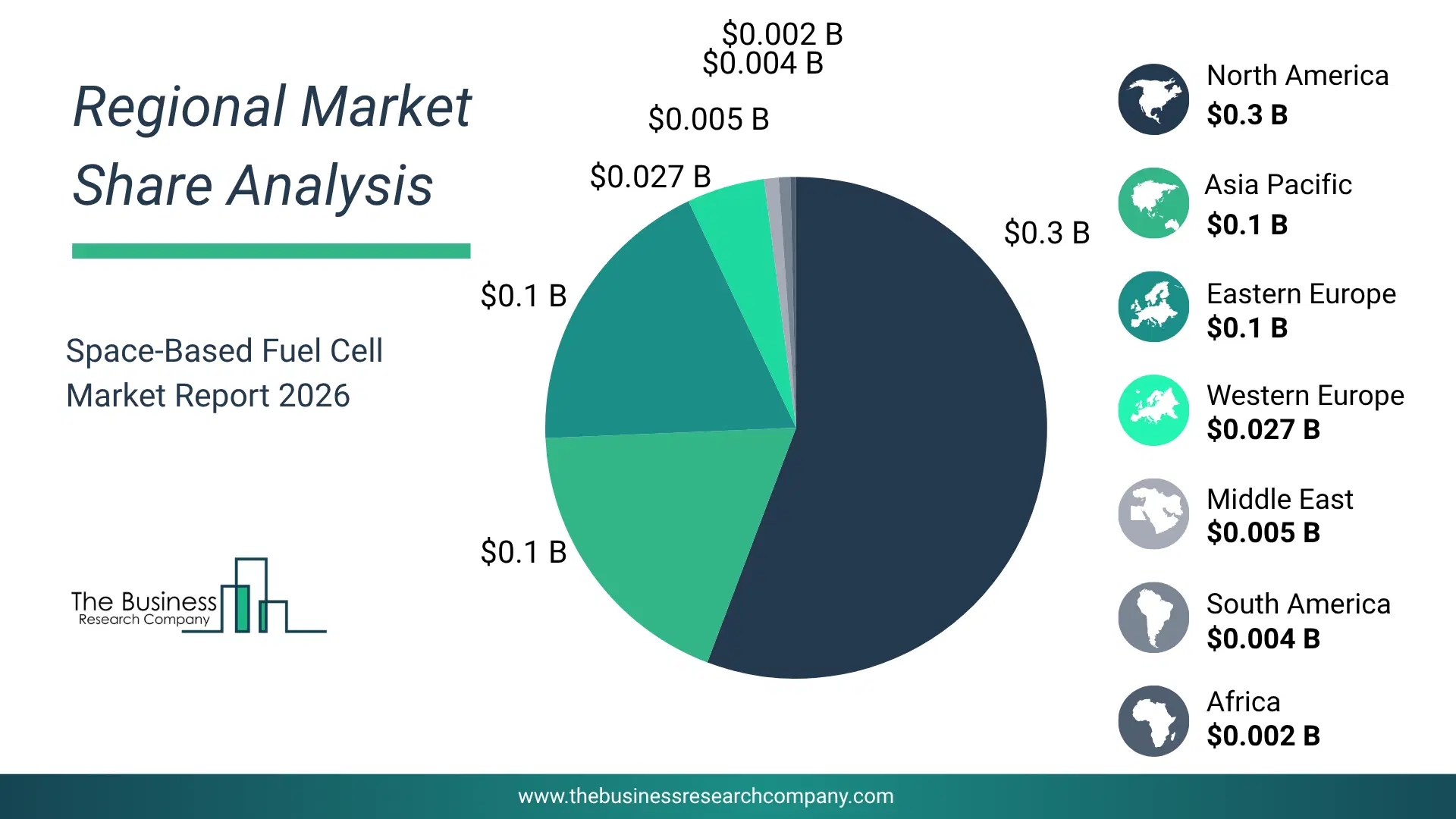
Regional Insights
North America was the largest region in the space-based fuel cell market in 2025. Asia-Pacific is expected to be the fastest-growing region in the forecast period. The regions covered in this market report are Asia-Pacific, South East Asia, Western Europe, Eastern Europe, North America, South America, Middle East, Africa The countries covered in this market report are Australia, Brazil, China, France, Germany, India, Indonesia, Japan, Taiwan, Russia, South Korea, UK, USA, Canada, Italy, SpainWhat Defines the Space-Based Fuel Cell Market?
The space-based fuel cell market consists of sales of hydrogen fuel cell modules, regenerative fuel cell systems, electrolyzers, power management units, thermal control systems, and water recovery components. Values in this market are ‘factory gate’ values, that is, the value of goods sold by the manufacturers or creators of the goods, whether to other entities (including downstream manufacturers, wholesalers, distributors, and retailers) or directly to end customers. The value of goods in this market includes related services sold by the creators of the goods.How is Market Value Defined and Measured?
The market value is defined as the revenues that enterprises gain from the sale of goods and/or services within the specified market and geography through sales, grants, or donations in terms of the currency (in USD unless otherwise specified). The revenues for a specified geography are consumption values that are revenues generated by organizations in the specified geography within the market, irrespective of where they are produced. It does not include revenues from resales along the supply chain, either further along the supply chain or as part of other products.
This chart presents market attractiveness based on a quantitative evaluation of growth, competition, strategic alignment, and risk, offering a clear view of opportunity areas for decision-making. This chart is for illustrative purposes; the full report contains the complete analysis.

This chart highlights the Total Addressable Market (TAM) by estimating the maximum revenue opportunity using an assumption-driven approach, supporting strategic planning and opportunity sizing across markets. The chart is illustrative; the full report provides a more comprehensive analysis.
What Key Data and Analysis Are Included in the Space-Based Fuel Cell Market Report 2026?
The space-based fuel cell market research report is one of a series of new reports from The Business Research Company that provides market statistics, including industry global market size, regional shares, competitors with the market share, detailed market segments, market trends and opportunities, and any further data you may need to thrive in the space-based fuel cell industry. The market research report delivers a complete perspective of everything you need, with an in-depth analysis of the current and future state of the industry.Space Based Fuel Cell Market Report Forecast Analysis
| Report Attribute | Details |
|---|---|
| Market Size Value In 2026 | $3.76 billion |
| Revenue Forecast In 2030 | $5.72 billion |
| Growth Rate | CAGR of 11.2% from 2026 to 2030 |
| Base Year For Estimation | 2025 |
| Actual Estimates/Historical Data | 2020-2025 |
| Forecast Period | 2026 - 2030 - 2035 |
| Market Representation | Revenue in USD Billion and CAGR from 2026 to 2030 |
| Segments Covered | Type, Power Capacity, Application, End-User |
| Regional Scope | Asia-Pacific, Western Europe, Eastern Europe, North America, South America, Middle East, Africa |
| Country Scope | The countries covered in the report are Australia, Brazil, China, France, Germany, India, Indonesia, Japan, Taiwan, Russia, South Korea, UK, USA, Canada, Italy, Spain. |
| Key Companies Profiled | Infinity Fuel Cell & Hydrogen, Inc., Honeywell International Inc., Northrop Grumman Corporation, Raytheon Technologies Corporation, Airbus Defence and Space, Thales Group, Lockheed Martin Corporation, Boeing Company, Blue Origin, LLC, SpaceX, Aerojet Rocketdyne, Safran S.A., Mitsubishi Heavy Industries, Ltd., Japan Aerospace Exploration Agency (JAXA), Indian Space Research Organisation (ISRO), NASA, European Space Agency (ESA), Ballard Power Systems, Intelligent Energy Limited, PowerCell Sweden AB, Panasonic Corporation, SFC Energy AG |
| Customization Scope | Request for Customization |
| Pricing And Purchase Options | Explore Purchase Options |