
Space Based Fuel Management System Market Report 2026
Global Outlook – By Component (Engine, Tank, Pumps, Flow Control Components, Heat Exchanger, Engine Control Unit, Other Components), By Fuel Type (Solid, Liquid), By Application (Satellite, Deep Space Vehicle, Launch Vehicle) – Market Size, Trends, Strategies, and Forecast to 2030
Space Based Fuel Management System Market Overview
• Space Based Fuel Management System market size has reached to $5.98 billion in 2025 • Expected to grow to $8.6 billion in 2030 at a compound annual growth rate (CAGR) of 7.5% • Growth Driver: Surge In Satellite Launches Catalyzes Growth Of Space-Based Fuel Management Systems Market • Market Trend: Tech Advancements Drive Evolution In The Space-Based Fuel Management System Market • Europe was the largest region in 2025.What Is Covered Under Space Based Fuel Management System Market?
A space-based fuel management system refers to a comprehensive set of technologies, components, and processes used to monitor, control, and optimize fuel usage in spacecraft and satellites operating in space. It encompasses hardware components and software solutions designed specifically for managing fuel in the unique environment of space. The main components of space-based fuel management systems are the engine, tank, pumps, flow control components, heat exchanger, engine control unit, and others. Engine refers to a device that can produce force and motion by converting thermal energy into mechanical energy or power, optimize fuel usage, and increase mission duration by providing precise thrust control and maneuver planning. These systems use fuel types such as solid and liquid for several applications, including satellites, deep space vehicles, and launch vehicles.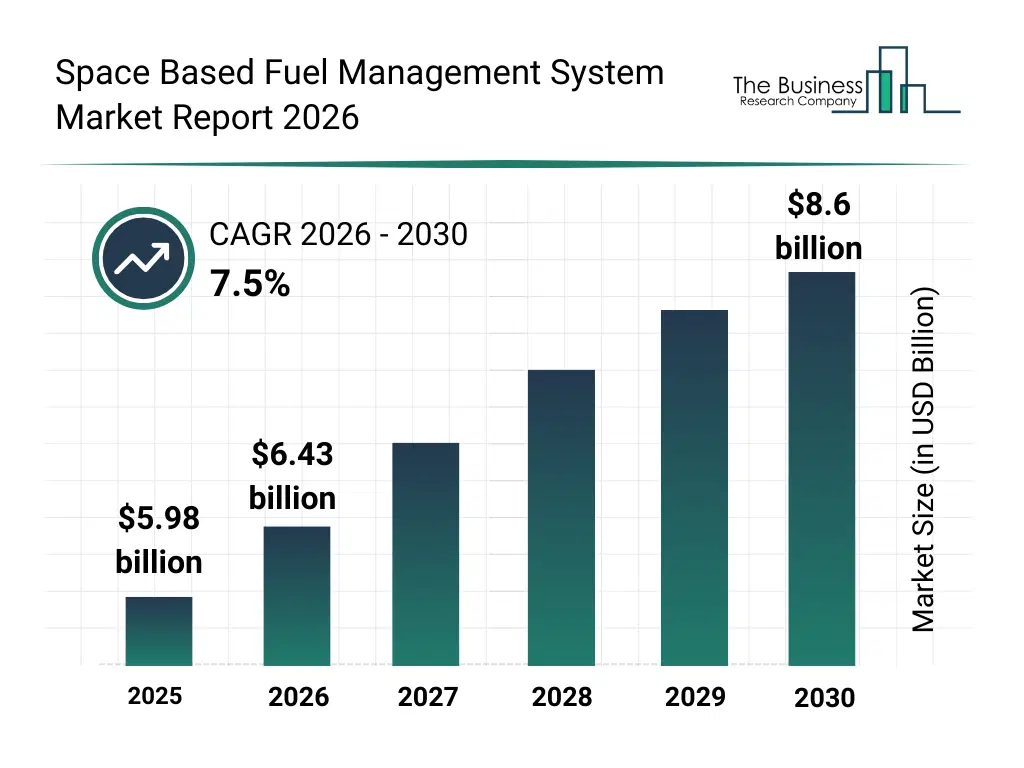
What Is The Space Based Fuel Management System Market Size and Share 2026?
The space based fuel management system market size has grown strongly in recent years. It will grow from $5.98 billion in 2025 to $6.43 billion in 2026 at a compound annual growth rate (CAGR) of 7.7%. The growth in the historic period can be attributed to increased deployment of satellites driving demand for accurate fuel tank management systems, rising need for orbital maneuvering efficiency boosting adoption of advanced fuel monitoring sensors, growth in remote spacecraft operations requiring reliable remote fuel management interfaces, advancements in valve fuel monitoring software improving mission control precision, expansion of satellite lifetime extension initiatives increasing reliance on fuel efficiency analytics.What Is The Space Based Fuel Management System Market Growth Forecast?
The space based fuel management system market size is expected to see strong growth in the next few years. It will grow to $8.6 billion in 2030 at a compound annual growth rate (CAGR) of 7.5%. The growth in the forecast period can be attributed to development of orbital refueling technologies enabling longer satellite mission durations, rising adoption of ai-driven fuel optimization tools enhancing spacecraft operational efficiency, increasing deployment of large satellite constellations driving need for scalable fuel management systems, growth in in-orbit servicing missions boosting demand for precise fuel status visibility, advancement in miniaturized fuel sensors and digital twins improving predictive fuel management and mission planning. Major trends in the forecast period include advancements in micro-propulsion and fuel-efficient thruster technologies, growing demand for real-time fuel telemetry and autonomous monitoring interfaces, development of lightweight composite fuel tanks and high-durability materials, increased adoption of on-orbit refueling and servicing missions, integration of multi-fuel system architectures for long-duration deep-space missions,.
Global Space Based Fuel Management System Market Segmentation
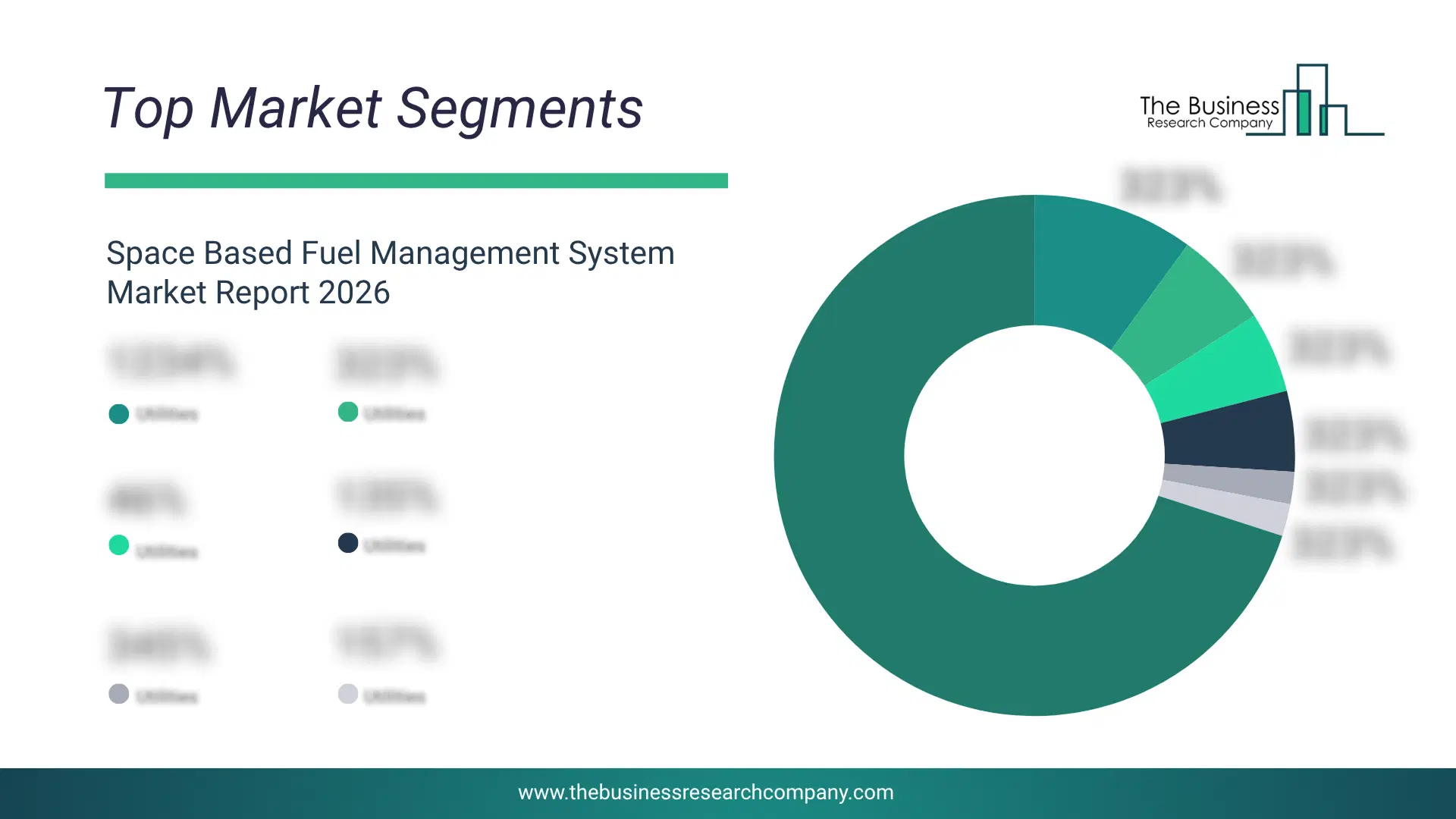
1) By Component: Engine, Tank, Pumps, Flow Control Components, Heat Exchanger, Engine Control Unit, Other Components 2) By Fuel Type: Solid, Liquid 3) By Application: Satellite, Deep Space Vehicle, Launch Vehicle Subsegments: 1) By Engine: Rocket Engines, Auxiliary Engines 2) By Tank: Fuel Tanks, Oxidizer Tanks 3) By Pumps: Fuel Pumps, Oxidizer Pumps, Flow Control Components 4) By Flow Control Components: Valves, Flow Meters 5) By Heat Exchanger: Regenerative Heat Exchangers, Recuperative Heat Exchangers 6) By Engine Control Unit: Digital Control Units, Analog Control Units 7) By Other Components: Sensors, Piping And FittingsWhat Is Driver Of The Space Based Fuel Management System Market?
The increase in satellite launches is expected to propel the growth of the space-based fuel management systems market going forward. Satellite launches refer to sending satellites into space using satellite launch vehicles. With the growing number of satellites in orbit, space-based fuel management systems will demand optimizing fuel consumption, maximizing mission performance, and ensuring operational longevity. For instance, in January 2024, according to the Space Foundation, a US-based nonprofit organization that promotes space education, innovation, and collaboration across the global space industry, Global launch activity hit a record high for the third consecutive year, with 223 launch attempts and 212 successful missions, while commercial launches surged by 50% compared to 2022. Therefore, the increase in satellite launches drives the space-based fuel management systems market.Key Players In The Global Space Based Fuel Management System Market
Major companies operating in the space based fuel management system market are The Boeing Company, Lockheed Martin Corporation, Airbus SE, Northrop Grumman Corporation, Safran S.A., L3Harris Technologies Inc., TE Connectivity Ltd, Ball Aerospace & Technologies Corp., AMETEK.Inc., Teledyne Technologies Incorporated, Raytheon Technologies Corp, Moog Inc., Cobham Limited, Space Exploration Technologies Corp., Maxar Technologies Inc, Rocket Lab USA Inc, Firefly Aerospace Inc, NanoAvionics Corp, Reaction Engines Limited, Exotrail SA, Accion System Inc, Virgin Galactic Holdings Inc., Orbion Space Technology Inc, Benchmark Space System Inc, IHI Aerospace Co. Ltd, Microcosm Inc., Thales Alenia Space SAS, ThrustMe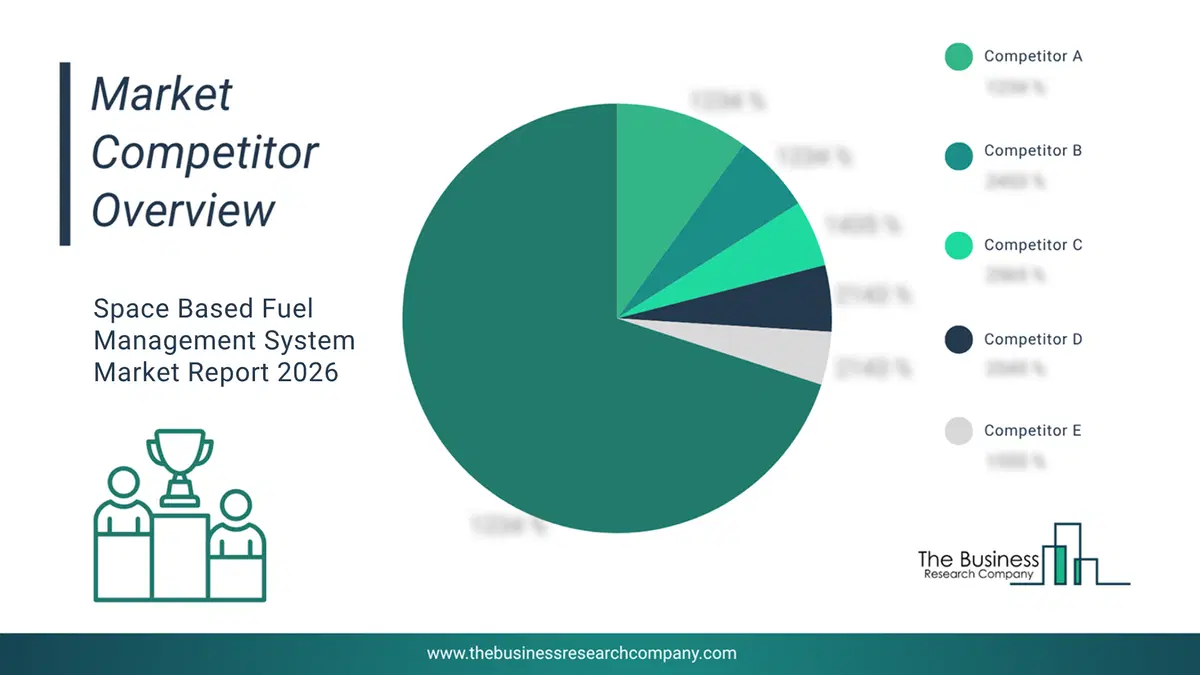
This chart is for illustrative purposes; the full report includes a detailed competitor analysis and comprehensive overview of the top 10 companies in the market.
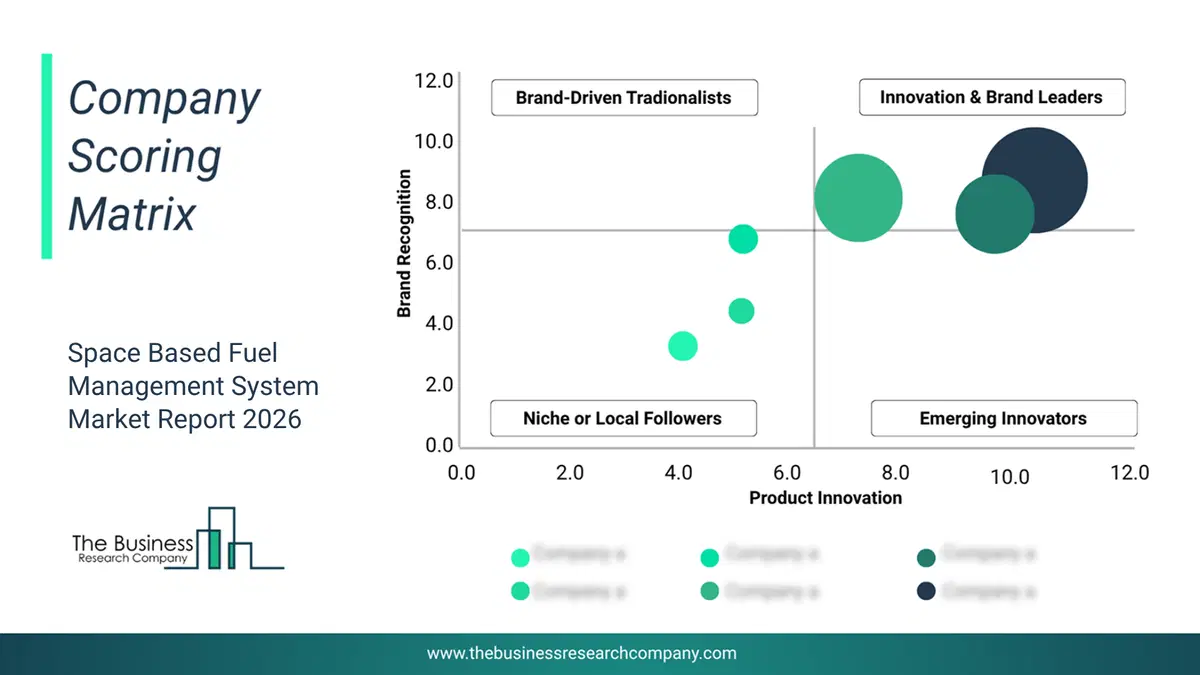
This chart maps companies by product innovation and brand strength, with bubble size indicating relative revenue, helping identify market leaders, challengers, and niche players. This is an illustrative chart; the full report provides a complete and accurate competitive analysis.
Global Space Based Fuel Management System Market Trends and Insights
Major companies operating in the space-based fuel management system market are focusing on advanced spacecraft contracts to address the growing demand for efficient satellite propulsion and mission capabilities. Advanced spacecraft contracts involve intricate agreements between space agencies, private companies, and international collaborators, outlining technical specifications, mission parameters, and financial commitments for cutting-edge space exploration endeavors. For instance, in July 2023, Lockheed Martin, a US-based dynamic software engineering company, received a contract from the Defense Advanced Research Projects Agency (DARPA) to develop and demonstrate a nuclear-powered spacecraft under a project called Demonstration Rocket for Agile Cislunar Operations (DRACO). The project will represent a rapid advancement in propulsion technology to benefit exploration and national defense.What Are Latest Mergers And Acquisitions In The Space Based Fuel Management System Market? Thales Group Expands Portfolio With Acquisition Of Cobham Aerospace Communications
In April 2024, Thales Group, a France-based company, acquired Cobham Aerospace Communications for $1.1 billion. With this acquisition, Thales aims to expand its portfolio by incorporating Cobham's expertise in providing space-based fuel management systems. Cobham Limited is a France-based company that offers space-based fuel management systems.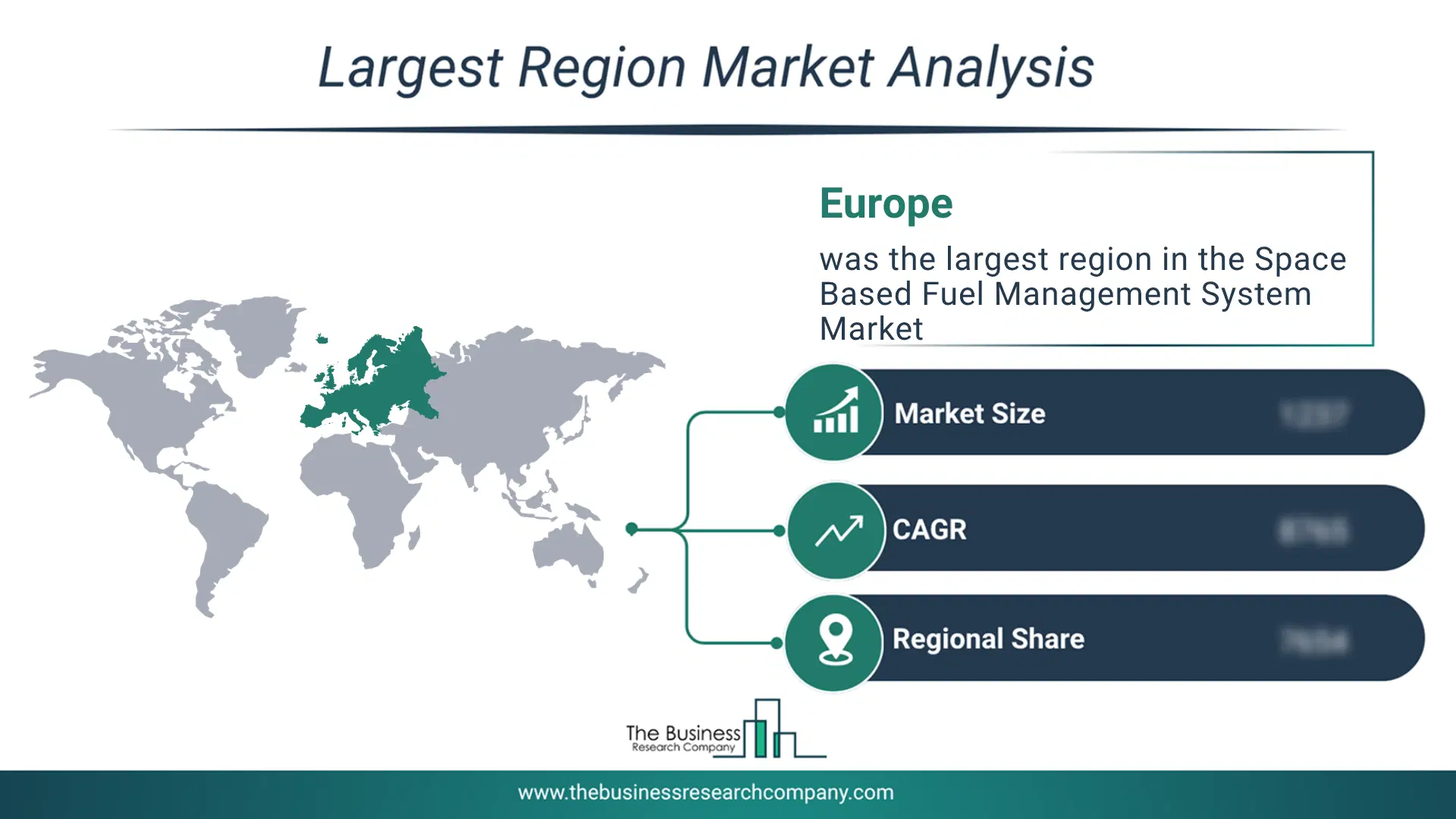
Regional Insights
Europe was the largest region in the space based fuel management system market in 2025. The regions covered in this market report are Asia-Pacific, South East Asia, Western Europe, Eastern Europe, North America, South America, Middle East, Africa. The countries covered in this market report are Australia, Brazil, China, France, Germany, India, Indonesia, Japan, Taiwan, Russia, South Korea, UK, USA, Canada, Italy, SpainWhat Defines the Space Based Fuel Management System Market?
The space-based fuel management system market consists of revenues earned by entities by providing fuel tank management, orbital refueling, remote fuel management interfaces, and fuel efficiency analytics services. The market value includes the value of related goods sold by the service provider or included within the service offering. The space-based fuel management system market also includes sales of satellite fuel sensors, valve fuel monitoring software, and data analysis tools that are used in space-based fuel management services. Values in this market are ‘factory gate’ values, that is the value of goods sold by the manufacturers or creators of the goods, whether to other entities (including downstream manufacturers, wholesalers, distributors and retailers) or directly to end customers. The value of goods in this market includes related services sold by the creators of the goods.How is Market Value Defined and Measured?
The market value is defined as the revenues that enterprises gain from the sale of goods and/or services within the specified market and geography through sales, grants, or donations in terms of the currency (in USD unless otherwise specified). The revenues for a specified geography are consumption values that are revenues generated by organizations in the specified geography within the market, irrespective of where they are produced. It does not include revenues from resales along the supply chain, either further along the supply chain or as part of other products.
This chart presents market attractiveness based on a quantitative evaluation of growth, competition, strategic alignment, and risk, offering a clear view of opportunity areas for decision-making. This chart is for illustrative purposes; the full report contains the complete analysis.

This chart highlights the Total Addressable Market (TAM) by estimating the maximum revenue opportunity using an assumption-driven approach, supporting strategic planning and opportunity sizing across markets. The chart is illustrative; the full report provides a more comprehensive analysis.
What Key Data and Analysis Are Included in the Space Based Fuel Management System Market Report 2026?
The space based fuel management system market research report is one of a series of new reports from The Business Research Company that provides market statistics, including industry global market size, regional shares, competitors with the market share, detailed market segments, market trends and opportunities, and any further data you may need to thrive in the space based fuel management system industry. The market research report delivers a complete perspective of everything you need, with an in-depth analysis of the current and future state of the industry.Space Based Fuel Management System Market Report Forecast Analysis
| Report Attribute | Details |
|---|---|
| Market Size Value In 2026 | $6.43 billion |
| Revenue Forecast In 2030 | $8.6 billion |
| Growth Rate | CAGR of 7.5% from 2026 to 2030 |
| Base Year For Estimation | 2025 |
| Actual Estimates/Historical Data | 2020-2025 |
| Forecast Period | 2026 - 2030 |
| Market Representation | Revenue in USD Billion and CAGR from 2026 to 2030 |
| Segments Covered | Component, Fuel Type, Application |
| Regional Scope | Asia-Pacific, Western Europe, Eastern Europe, North America, South America, Middle East, Africa |
| Country Scope | The countries covered in the space based fuel management system market report are Australia, Brazil, China, France, Germany, India, Indonesia, Japan, Taiwan, Russia, South Korea, UK, USA, Canada, Italy, Spain |
| Key Companies Profiled | The Boeing Company, Lockheed Martin Corporation, Airbus SE, Northrop Grumman Corporation, Safran S.A., L3Harris Technologies Inc., TE Connectivity Ltd, Ball Aerospace & Technologies Corp., AMETEK.Inc., Teledyne Technologies Incorporated, Raytheon Technologies Corp, Moog Inc., Cobham Limited, Space Exploration Technologies Corp., Maxar Technologies Inc, Rocket Lab USA Inc, Firefly Aerospace Inc, NanoAvionics Corp, Reaction Engines Limited, Exotrail SA, Accion System Inc, Virgin Galactic Holdings Inc., Orbion Space Technology Inc, Benchmark Space System Inc, IHI Aerospace Co. Ltd, Microcosm Inc., Thales Alenia Space SAS, ThrustMe |
| Customization Scope | Request for Customization |
| Pricing And Purchase Options | Explore Purchase Options |