
Space Infrastructure As A Service Market Report 2026
Global Outlook – By Service Type (Launch Infrastructure As A Service, Satellite Infrastructure As A Service, Ground Station As A Service, Mission Operations As A Service, Data Infrastructure As A Service, In Orbit Infrastructure As A Service), By Deployment Model (Public Cloud, Private Cloud, Hybrid Cloud), By Orbit Type (Low Earth Orbit, Medium Earth Orbit, Geostationary Earth Orbit, Beyond Geostationary Orbit), By Application (Satellite Communications, Earth Observation, Navigation And Positioning, Space Exploration), By End User (Government, Commercial Enterprises, Defense Organizations, Research Institutions, Space Agencies) – Market Size, Trends, Strategies, and Forecast to 2030
Space Infrastructure As A Service Market Overview
• Space Infrastructure As A Service market size has reached to $8.82 billion in 2025 • Expected to grow to $17.6 billion in 2030 at a compound annual growth rate (CAGR) of 14.8% • Growth Driver: Rising Investments In Space Exploration And Research Missions Driving The Market Growth Due To Increasing Space Technology Development • Market Trend: Satellite Platform Innovations Driving Scalable Space-Based Data Services • North America was the largest region in 2025 and Asia-Pacific is the fastest growing region.What Is Covered Under Space Infrastructure As A Service Market?
Space infrastructure as a service (SIaaS) refers to a business model that provides access to space-based infrastructure through a flexible, scalable, and subscription-based approach, reducing the need for organisations to develop and own complete space systems. It includes the use of shared or dedicated space assets, enabling organisations to leverage advanced space capabilities with reduced cost and operational complexity. The main service types of space infrastructure as a service include launch infrastructure as a service, satellite infrastructure as a service, ground station as a service, mission operations as a service, data infrastructure as a service, and in orbit infrastructure as a service. Launch infrastructure as a service refers to the provision of launch-related facilities, systems, and operational resources through a service-based model to support the deployment of spacecraft and payloads into space. These services are delivered through public cloud, private cloud, and hybrid cloud deployment models and support low earth orbit, medium earth orbit, geostationary earth orbit, and beyond geostationary orbit. The various applications involved are satellite communications, earth observation, navigation and positioning, and space exploration and they are utilized by end users including government, commercial enterprises, defense organizations, research institutions, and space agencies.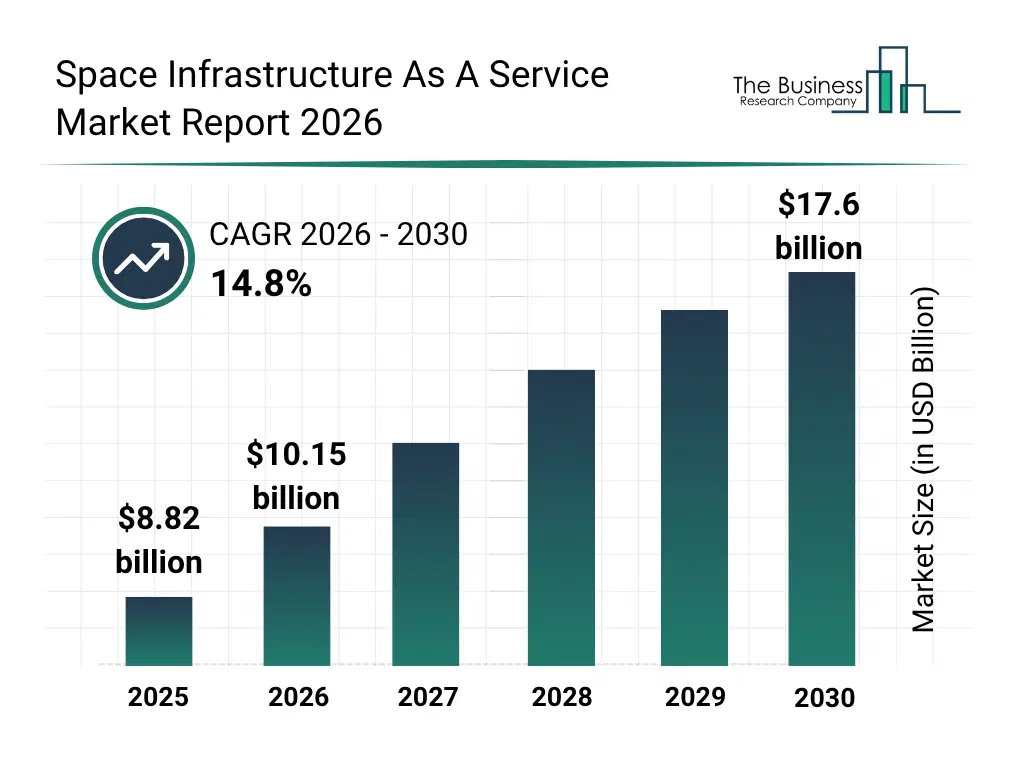
What Is The Space Infrastructure As A Service Market Size and Share 2026?
The space infrastructure as a service market size has grown rapidly in recent years. It will grow from $8.82 billion in 2025 to $10.15 billion in 2026 at a compound annual growth rate (CAGR) of 15.2%. The growth in the historic period can be attributed to increasing satellite deployment, rising commercial space activity, growing demand for satellite connectivity, expansion of private space companies, increasing government investment in space infrastructure.What Is The Space Infrastructure As A Service Market Growth Forecast?
The space infrastructure as a service market size is expected to see rapid growth in the next few years. It will grow to $17.6 billion in 2030 at a compound annual growth rate (CAGR) of 14.8%. The growth in the forecast period can be attributed to rising demand for scalable space infrastructure, increasing adoption of cloud-based space services, growing deployment of satellite constellations, expansion of commercial space applications, increasing demand for cost-efficient access to space capabilities. Major trends in the forecast period include increasing adoption of subscription-based space infrastructure, growing demand for flexible and scalable space services, rising use of shared space assets, increasing outsourcing of space infrastructure development, growing demand for cost-effective space system access.
Global Space Infrastructure As A Service Market Segmentation
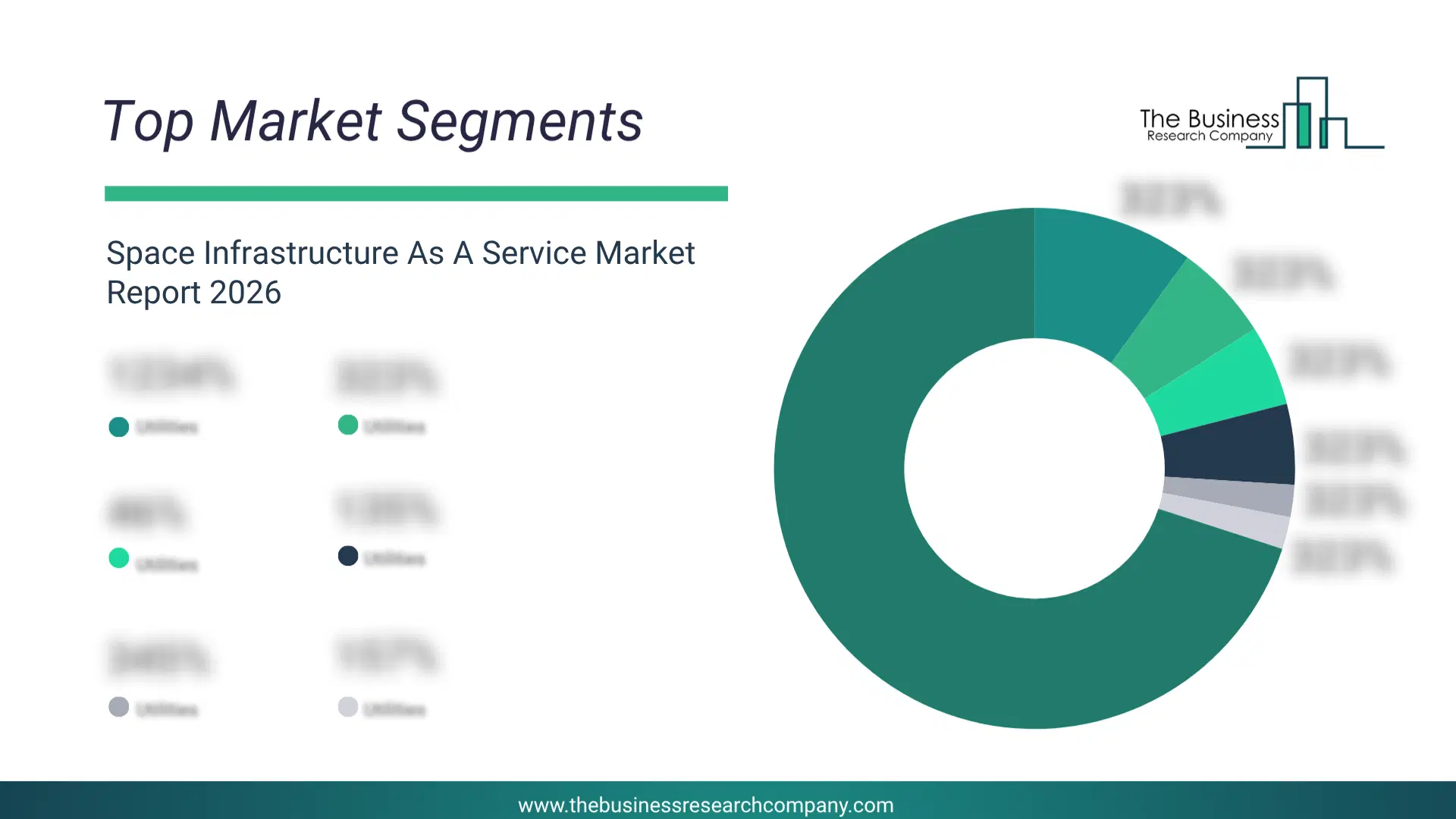
1) By Service Type: Launch Infrastructure As A Service, Satellite Infrastructure As A Service, Ground Station As A Service, Mission Operations As A Service, Data Infrastructure As A Service, In Orbit Infrastructure As A Service 2) By Deployment Model: Public Cloud, Private Cloud, Hybrid Cloud 3) By Orbit Type: Low Earth Orbit, Medium Earth Orbit, Geostationary Earth Orbit, Beyond Geostationary Orbit 4) By Application: Satellite Communications, Earth Observation, Navigation And Positioning, Space Exploration 5) By End User: Government, Commercial Enterprises, Defense Organizations, Research Institutions, Space Agencies Subsegments: 1) By Launch Infrastructure As A Service: Heavy Lift Launch Services, Dedicated Launch Services, Rideshare Launch Services, Launch Integration Services 2) By Satellite Infrastructure As A Service: Satellite Hosting Services, Satellite Capacity Leasing Services, Satellite Platform Services, Payload Integration Services 3) By Ground Station As A Service: Antenna Access Services, Telemetry Services, Tracking Services, Command Services 4) By Mission Operations As A Service: Mission Planning Services, Flight Dynamics Services, Spacecraft Monitoring Services, Orbit Management Services 5) By Data Infrastructure As A Service: Data Storage Services, Data Processing Services, Data Distribution Services, Data Analytics Services 6) By In Orbit Infrastructure As A Service: Debris Removal Services, Satellite Refueling Services, Orbital Transfer Services, Space Tug ServicesWhat Is The Driver Of The Space Infrastructure As A Service Market?
The rising investments in space exploration and research missions are expected to propel the growth of the space infrastructure as a service market going forward. Investments in space exploration and research missions refer to financial commitments made toward developing advanced space systems, conducting scientific investigations, and supporting missions that expand knowledge of space and enable new space capabilities. Investments in space exploration and research missions are increasing due to the growing demand for advanced space technologies, as nations and private companies are investing in new spacecraft, exploration programs, and research initiatives to strengthen space capabilities and gain scientific knowledge. Investments in space exploration and research missions support space infrastructure as a service by increasing the need for scalable space infrastructure solutions that enable efficient satellite operations, mission management, and access to space capabilities. For instance, in July 2024, according to the Space Foundation, a US-based nonprofit group, international government spending on space programs increased by 11% year-over-year, reaching $125 billion in 2024. Therefore, the rising investments in space exploration and research missions are driving the growth of the space infrastructure as a service industry.Key Players In The Global Space Infrastructure As A Service Market
Major companies operating in the space infrastructure as a service market are Lockheed Martin Corporation, Airbus Defence and Space SAS, Northrop Grumman Corporation, Thales Alenia Space SAS, Blue Origin LLC, Rocket Lab USA Inc., Voyager Technologies Inc., Sierra Space Corporation, Swedish Space Corporation, Redwire Corporation, Axiom Space Inc., Kongsberg Satellite Services AS, D-Orbit S.p.A., Vast Space LLC, Astroscale Holdings Inc., Loft Orbital Solutions Inc., LeoLabs Inc., Exotrail SA, Slingshot Aerospace Inc., Impulse Space Inc., ClearSpace SA, Atlas Space Operations Inc., Leaf Space S.r.l., RBC Signals LLC, Infinite Orbits SAS, Momentus Inc., Northwood Space Corporation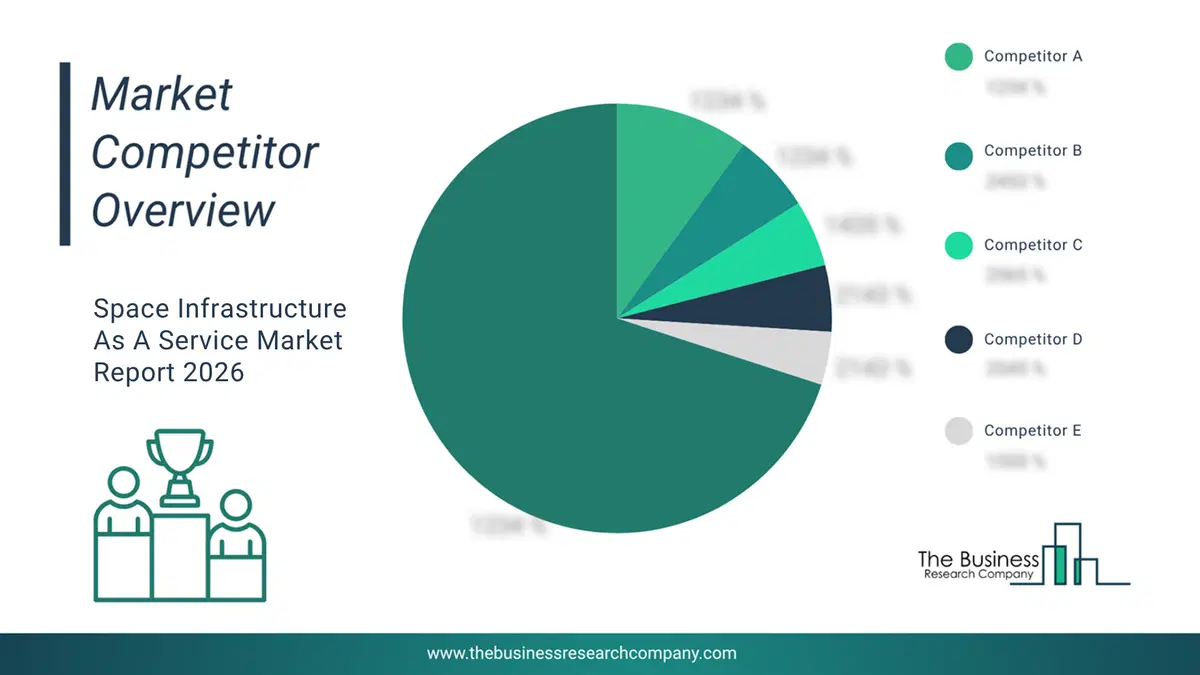
This chart is for illustrative purposes; the full report includes a detailed competitor analysis and comprehensive overview of the top 10 companies in the market.
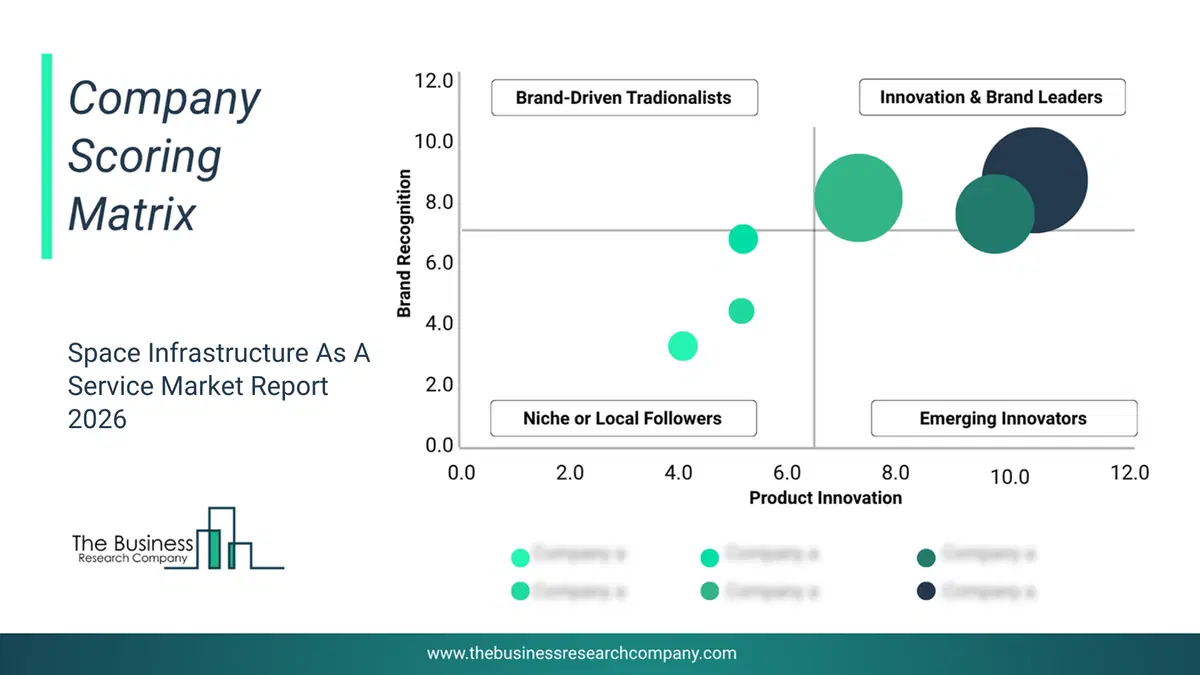
This chart maps companies by product innovation and brand strength, with bubble size indicating relative revenue, helping identify market leaders, challengers, and niche players. This is an illustrative chart; the full report provides a complete and accurate competitive analysis.
Global Space Infrastructure As A Service Market Trends and Insights
Major companies operating in the space infrastructure as a service market are focusing on developing innovative solutions, such as modular satellite platforms to provide scalable space capabilities, enhance mission flexibility, and support cost-effective access to on-orbit infrastructure. Modular satellite platforms refer to spacecraft systems designed with configurable components, standardized interfaces, and adaptable architectures that allow multiple payloads and mission requirements to be integrated efficiently. For instance, in March 2024, Sidus Space, a US-based space technology company, launched LizzieSat, a modular satellite platform designed to provide flexible on-orbit data collection and space-based services through an adaptable satellite architecture. It offers benefits such as rapid deployment, multi-mission capability, and scalable data solutions. The launch aims to help customers access customized space infrastructure capabilities while supporting the growing adoption of commercial space services and next-generation satellite solutions. By transitioning capital-intensive aerospace operations into flexible, usage-based subscriptions, Space Infrastructure as a Service (SIaaS) enables commercial and defense organizations to deploy, host, and manage payloads without owning complete space hardware. The market encompasses high-demand infrastructure solutions, including in-orbit satellite transport, hosted research modules, space traffic management, and automated ground-station-as-a-service networks. By eliminating multi-million-dollar upfront infrastructure costs, SIaaS significantly accelerates mission timelines while expanding accessibility to the broader commercial space economy.What Are Latest Mergers And Acquisitions In The Space Infrastructure As A Service Market?
In March 2026, Infinite Orbits, a France-based space infrastructure and in-orbit servicing company, acquired Lúnasa Space for an undisclosed amount. Through this acquisition, Infinite Orbits aims to strengthen its satellite life-extension and in-orbit servicing capabilities by enhancing its rendezvous, proximity operations, and docking technologies while expanding its European footprint. Lúnasa Space is a UK-based space technology company that provides space infrastructure as a service.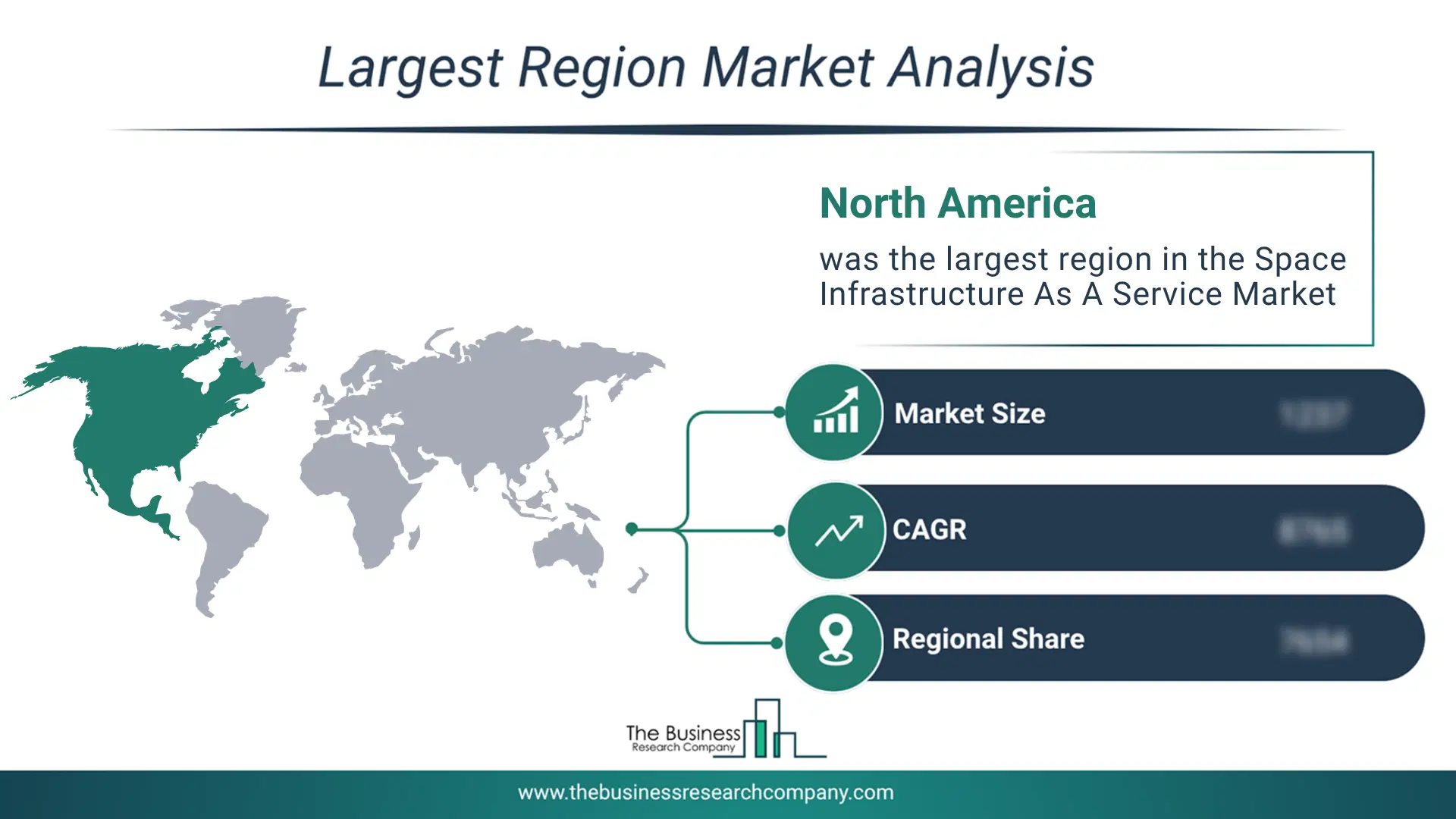
Regional Outlook
North America was the largest region in the space infrastructure as a service market in 2025. Asia-Pacific is expected to be the fastest-growing region in the forecast period. The regions covered in this market report are Asia-Pacific, South East Asia, Western Europe, Eastern Europe, North America, South America, Middle East, Africa. The countries covered in this market report are Australia, Brazil, China, France, Germany, India, Indonesia, Japan, Taiwan, Russia, South Korea, UK, USA, Canada, Italy, Spain.What Defines the Space Infrastructure As A Service Market?
The space infrastructure as a service market includes revenues earned by entities providing services such as space manufacturing as a service, space testing as a service, payload integration as a service, and space traffic management as a service. The market value includes the value of related goods sold by the service provider or included within the service offering. Only goods and services traded between entities or sold to end consumers are included.How is Market Value Defined and Measured?
The market value is defined as the revenues that enterprises gain from the sale of goods and/or services within the specified market and geography through sales, grants, or donations in terms of the currency (in USD unless otherwise specified). The revenues for a specified geography are consumption values that are revenues generated by organizations in the specified geography within the market, irrespective of where they are produced. It does not include revenues from resales along the supply chain, either further along the supply chain or as part of other products.
This chart presents market attractiveness based on a quantitative evaluation of growth, competition, strategic alignment, and risk, offering a clear view of opportunity areas for decision-making. This chart is for illustrative purposes; the full report contains the complete analysis.

This chart highlights the Total Addressable Market (TAM) by estimating the maximum revenue opportunity using an assumption-driven approach, supporting strategic planning and opportunity sizing across markets. The chart is illustrative; the full report provides a more comprehensive analysis.
What Key Data and Analysis Are Included in the Space Infrastructure As A Service Market Report 2026?
The space infrastructure as a service market research report is one of a series of new reports from The Business Research Company that provides market statistics, including industry global market size, regional shares, competitors with the market share, detailed market segments, market trends and opportunities, and any further data you may need to thrive in the space infrastructure as a service industry. The market research report delivers a complete perspective of everything you need, with an in-depth analysis of the current and future state of the industry.Space Infrastructure As A Service Market Report Forecast Analysis
| Report Attribute | Details |
|---|---|
| Market Size Value In 2026 | $10.15 billion |
| Revenue Forecast In 2030 | $17.6 billion |
| Growth Rate | CAGR of 14.8% from 2026 to 2030 |
| Base Year For Estimation | 2025 |
| Actual Estimates/Historical Data | 2020-2025 |
| Forecast Period | 2026 - 2030 |
| Market Representation | Revenue in USD Billion and CAGR from 2026 to 2030 |
| Segments Covered | Service Type, Deployment Model, Orbit Type, Application, End User |
| Regional Scope | Asia-Pacific, Western Europe, Eastern Europe, North America, South America, Middle East, Africa |
| Country Scope | The countries covered in the report are Australia, Brazil, China, France, Germany, India, Indonesia, Japan, Taiwan, Russia, South Korea, UK, USA, Canada, Italy, Spain. |
| Key Companies Profiled | Lockheed Martin Corporation, Airbus Defence and Space SAS, Northrop Grumman Corporation, Thales Alenia Space SAS, Blue Origin LLC, Rocket Lab USA Inc., Voyager Technologies Inc., Sierra Space Corporation, Swedish Space Corporation, Redwire Corporation, Axiom Space Inc., Kongsberg Satellite Services AS, D-Orbit S.p.A., Vast Space LLC, Astroscale Holdings Inc., Loft Orbital Solutions Inc., LeoLabs Inc., Exotrail SA, Slingshot Aerospace Inc., Impulse Space Inc., ClearSpace SA, Atlas Space Operations Inc., Leaf Space S.r.l., RBC Signals LLC, Infinite Orbits SAS, Momentus Inc., Northwood Space Corporation |
| Customization Scope | Request for Customization |
| Pricing And Purchase Options | Explore Purchase Options |