
Spatial Computing Global Market Opportunities And Strategies To 2035
By Component (Hardware, Software, Services), By Technology (Augmented Reality, Virtual Reality, Mixed Reality), By End User (Automotive, Healthcare, Gaming, Manufacturing, Retail, Education, Other End Users), And By Region, Opportunities And Strategies – Global Forecast To 2035
Spatial Computing Market Definition
Spatial computing refers to a technology paradigm that enables digital systems to interact with and understand the physical world in three dimensions by integrating data from sensors, devices, and environments. It encompasses technologies that allow users and machines to perceive, process, and respond to spatial information in real time. The spatial computing market consists of sales by entities (organizations, sole traders and partnerships) of spatial computing used by a wide range of stakeholders including consumers, enterprises, industrial operators, healthcare professionals, educators, and developers who rely on immersive and context-aware digital interactions. It is typically used in scenarios where physical and digital environments converge, such as simulation, visualization, navigation, remote collaboration, and real-time monitoring.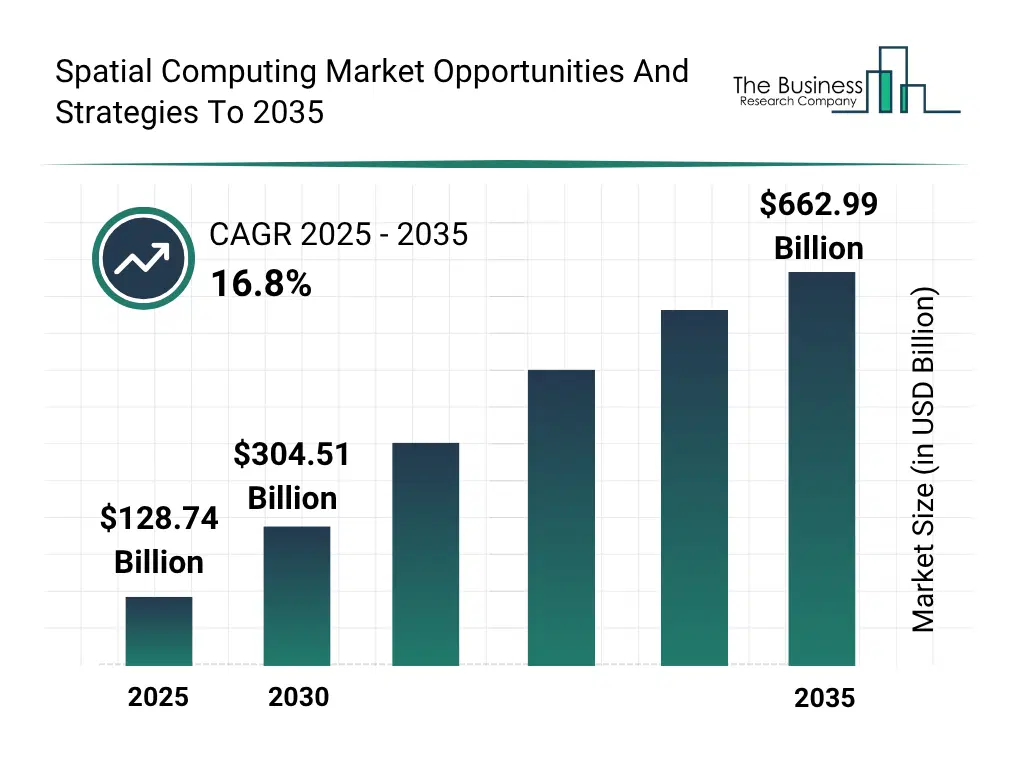
Spatial Computing Market Size
The global spatial computing market reached a value of nearly $128,743.0 million in 2025, having grown at a compound annual growth rate (CAGR) of 20.0% since 2020. The market is expected to grow from $128,743.0 million in 2025 to $304,512.3 million in 2030 at a rate of 18.8%. The market is then expected to grow at a CAGR of 16.8% from 2030 and reach $662,992.5 million in 2035. Growth in the historic period resulted from rise in number of international students, rise in medical costs, rising chronic disease burden and rise in medical tourism. Factors that negatively affected growth in the historic period were rising total cost of ownership a rising data privacy concern. Going forward, rising demand for real-time data visualization, rising popularity of virtual commerce and immersive shopping experiences, increasing investments and funding in spatial computing and increasing demand for immersive digital experiences will drive the growth. Factors that could hinder the growth of the spatial computing market in the future include high upfront cost of devices and deployment, limited availability of skilled workforce and expertise and impact of trade wars and tariffs.
Spatial Computing Market Segmentation
The spatial computing market is segmented by component, by technology and by end-user.By Component–
The spatial computing market is segmented by component into:
- a) Hardware
- b) Software
- c) Services
By Technology –
The spatial computing market is segmented by technology into:
- a) Augmented Reality
- b) Virtual Reality
- c) Mixed Reality
- d) Internet Of Things (IoT)
- e) Other Technologies
By End-User–
The spatial computing market is segmented by end-user into:
- a) Automotive
- b) Healthcare
- c) Gaming
- d) Manufacturing
- e) Retail
- f) Education
- g) Other End Users
By Geography - The spatial computing market is segmented by geography into:
- China
- India
- Japan
- Australia
- Indonesia
- South Korea
- USA
- Canada
- Brazil
- France
- Germany
- UK
- Italy
- Spain
- Russia
-
o Asia Pacific
o Africa