
Spinning Machinery Market Report 2026
Global Outlook – By Machine Type (Ring Spinning Machine, Rotor Spinning Machine, Air Jet Spinning Machine, Friction Spinning Machine, Other Machine Types), By Material Type (Natural Fibers, Synthetic Fibers, Blended Fibers), By Spinning Process (Short Staple Spinning, Long Staple Spinning), By Sales Channel (Direct Sales, Distributors And Dealers, Online Channels), By End Use Industry (Apparel And Fashion, Home Textiles, Industrial Textiles, Medical Textiles, Automotive Textiles, Other End Use Industries) – Market Size, Trends, Strategies, and Forecast to 2030
Spinning Machinery Market Overview
• Spinning Machinery market size has reached to $5.01 billion in 2025 • Expected to grow to $7.33 billion in 2030 at a compound annual growth rate (CAGR) of 7.8% • Growth Driver: Surge In Automation Adoption Fueling The Growth Of The Market Due To Increasing Demand For Higher Productivity And Operational Efficiency • Market Trend: Innovations in Ring Spinning Technology Improve Productivity and Energy Efficiency • North America was the largest region in 2025 and Asia-Pacific is the fastest growing region.What Is Covered Under Spinning Machinery Market?
Spinning machinery refers to industrial equipment used to convert natural or synthetic fibers into yarn through processes such as opening, cleaning, drafting, and twisting. It operates as part of the textile production process where raw fibers are progressively refined and aligned to form continuous, uniform yarn strands. Spinning machinery is designed to ensure efficiency, consistency, and high-quality output in yarn formation while supporting large-scale textile manufacturing operations. The main machine types of spinning machinery include ring spinning machine, rotor spinning machine, air jet spinning machine, friction spinning machine, and other machine types. Ring spinning machines refer to textile manufacturing equipment that twists and draws fibers into yarn through a ring and traveler mechanism, producing high-quality yarn for a wide range of textile applications. These machines process natural fibers, synthetic fibers, and blended fibers and support short staple spinning and long staple spinning processes. They are distributed through direct sales, distributors and dealers, and online channels and are utilized by end use industries including apparel and fashion, home textiles, industrial textiles, medical textiles, automotive textiles, and others.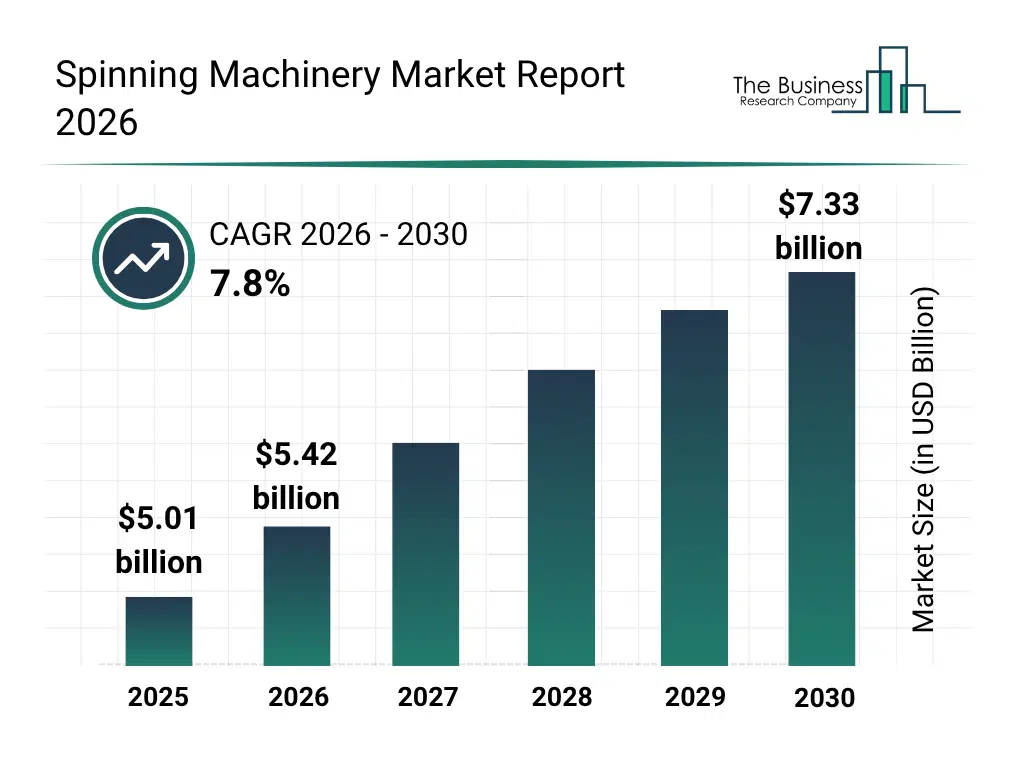
What Is The Spinning Machinery Market Size and Share 2026?
The spinning machinery market size has grown strongly in recent years. It will grow from $5.01 billion in 2025 to $5.42 billion in 2026 at a compound annual growth rate (CAGR) of 8.3%. The growth in the historic period can be attributed to increasing demand for textile and apparel production, growing expansion of global textile manufacturing facilities, rising adoption of automated textile production equipment, increasing demand for high quality yarn output, expanding use of synthetic and blended fibers.What Is The Spinning Machinery Market Growth Forecast?
The spinning machinery market size is expected to see strong growth in the next few years. It will grow to $7.33 billion in 2030 at a compound annual growth rate (CAGR) of 7.8%. The growth in the forecast period can be attributed to growing demand for smart textile manufacturing solutions, increasing investments in advanced spinning machinery upgrades, rising adoption of energy efficient spinning technologies, expanding production of technical and industrial textiles, increasing focus on improving yarn quality and manufacturing efficiency. Major trends in the forecast period include development of high speed automated spinning systems, increasing adoption of energy efficient textile machinery, advancement in precision yarn formation technologies, growing demand for flexible and modular spinning equipment, integration of advanced fiber processing capabilities.
Global Spinning Machinery Market Segmentation
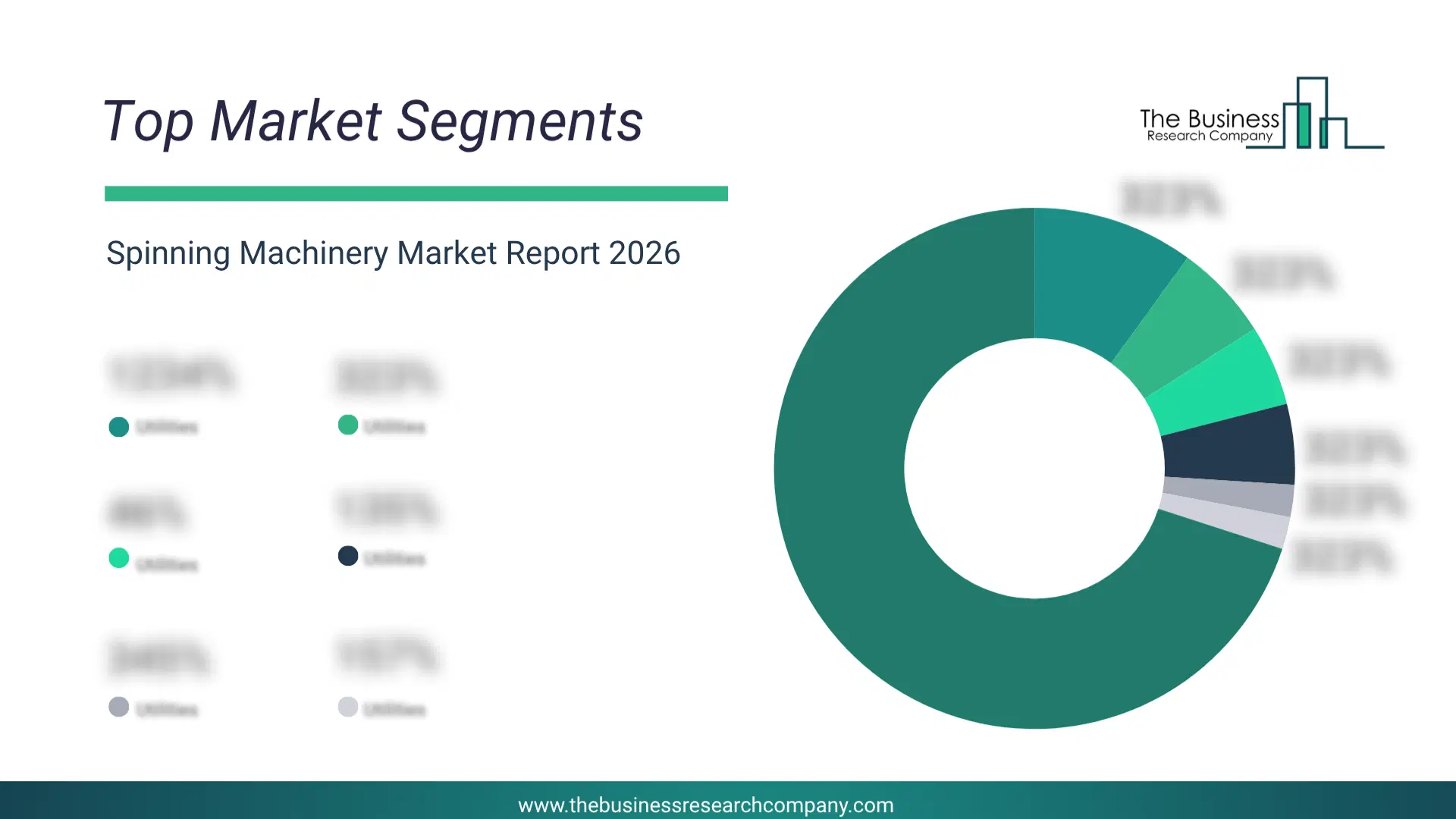
1) By Machine Type: Ring Spinning Machine, Rotor Spinning Machine, Air Jet Spinning Machine, Friction Spinning Machine, Other Machine Types 2) By Material Type: Natural Fibers, Synthetic Fibers, Blended Fibers 3) By Spinning Process: Short Staple Spinning, Long Staple Spinning 4) By Sales Channel: Direct Sales, Distributors And Dealers, Online Channels 5) By End Use Industry: Apparel And Fashion, Home Textiles, Industrial Textiles, Medical Textiles, Automotive Textiles, Other End Use Industries Subsegments: 1) By Ring Spinning Machine: Compact Ring Spinning Machine, Conventional Ring Spinning Machine, Fully Automated Ring Spinning Machine, Semi Automated Ring Spinning Machine 2) By Rotor Spinning Machine: Single Rotor Spinning Machine, Multi Rotor Spinning Machine, Fully Automated Rotor Spinning Machine, Semi Automated Rotor Spinning Machine 3) By Air Jet Spinning Machine: Single Air Jet Spinning Machine, Dual Air Jet Spinning Machine, Vortex Air Jet Spinning Machine 4) By Friction Spinning Machine: Drum Friction Spinning Machine, Disc Friction Spinning Machine 5) By Other Machine Types: Woolen Spinning Machine, Worsted Spinning Machine, Self Twist Spinning Machine, Electrostatic Spinning Machine, Wrap Spinning MachineWhat Is The Driver Of The Spinning Machinery Market?
The rising automation adoption is expected to propel the growth of the spinning machinery market going forward. Automation adoption refers to the increasing implementation of automated technologies, such as robotics and intelligent systems, to improve efficiency, productivity, and operational performance across industries. The rising adoption of automation is driven by the need for higher productivity, as automated systems streamline manufacturing processes, reduce manual intervention, and improve operational efficiency. Spinning machinery helps drive automation adoption by integrating advanced control systems, automated material handling, and real-time monitoring capabilities, enabling textile manufacturers to improve productivity, reduce labor dependency, and enhance production efficiency. For instance, in April 2024, according to the International Federation of Robotics, a Germany-based nonprofit organization, manufacturers increased their investment in automation in 2024, driving industrial robot installations up by 12% to 44,303 units. Therefore, the rising automation adoption is driving the growth of the spinning machinery industry.Key Players In The Global Spinning Machinery Market
Major companies operating in the spinning machinery market are Toyota Industries Corporation, Rieter Holding AG, Murata Machinery Ltd. (Muratec), Saurer Intelligent Technology Co. Ltd., Vandewiele Group, Trützschler Group SE, Lakshmi Machine Works Limited (LMW), Jingwei Textile Machinery Co. Ltd., TMT Machinery Inc., Marzoli Machines Textile S.r.l., Zhejiang Taitan Co. Ltd., RIFA Textile Machinery Co. Ltd., Zhejiang Golden Eagle Co. Ltd., Shandong Tongda Textile Machinery (Group) Co. Ltd., Electro-Jet S.A., Qingdao Dongjia Textile Machinery Co. Ltd., Grossenhainer Textilmaschinen GmbH, Gaudino S.p.A., Qingdao Haitaijia Textile Machinery Co. Ltd., Henan Huafang Textile Technology Co. Ltd.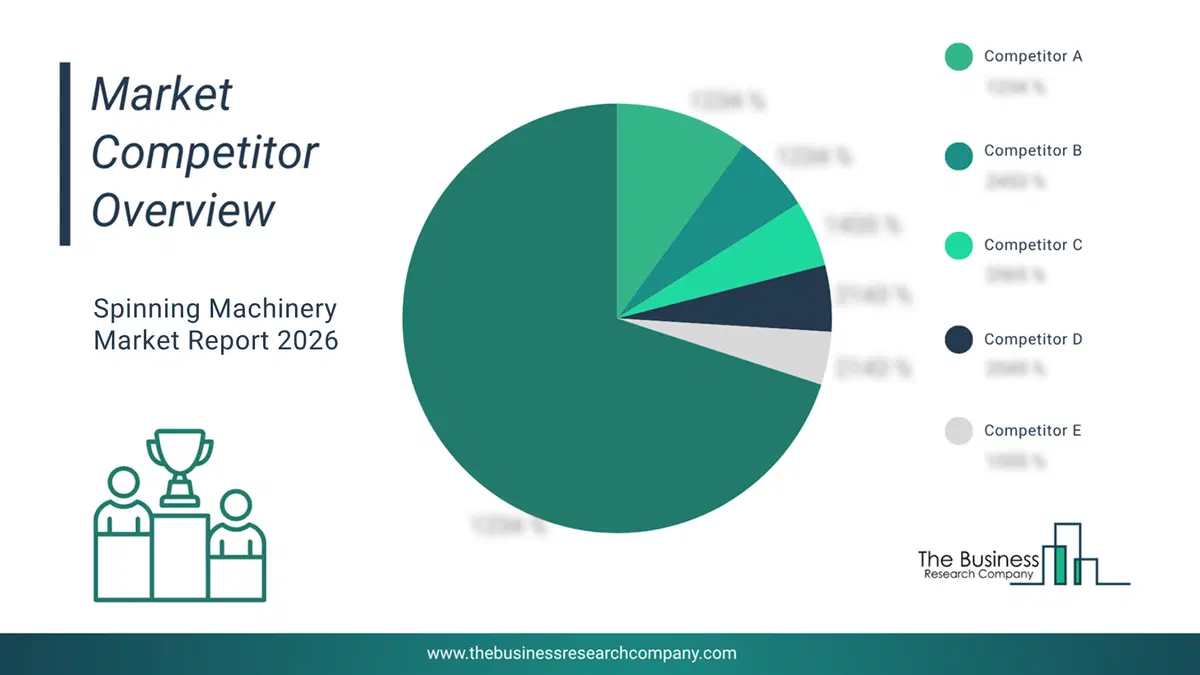
This chart is for illustrative purposes; the full report includes a detailed competitor analysis and comprehensive overview of the top 10 companies in the market.
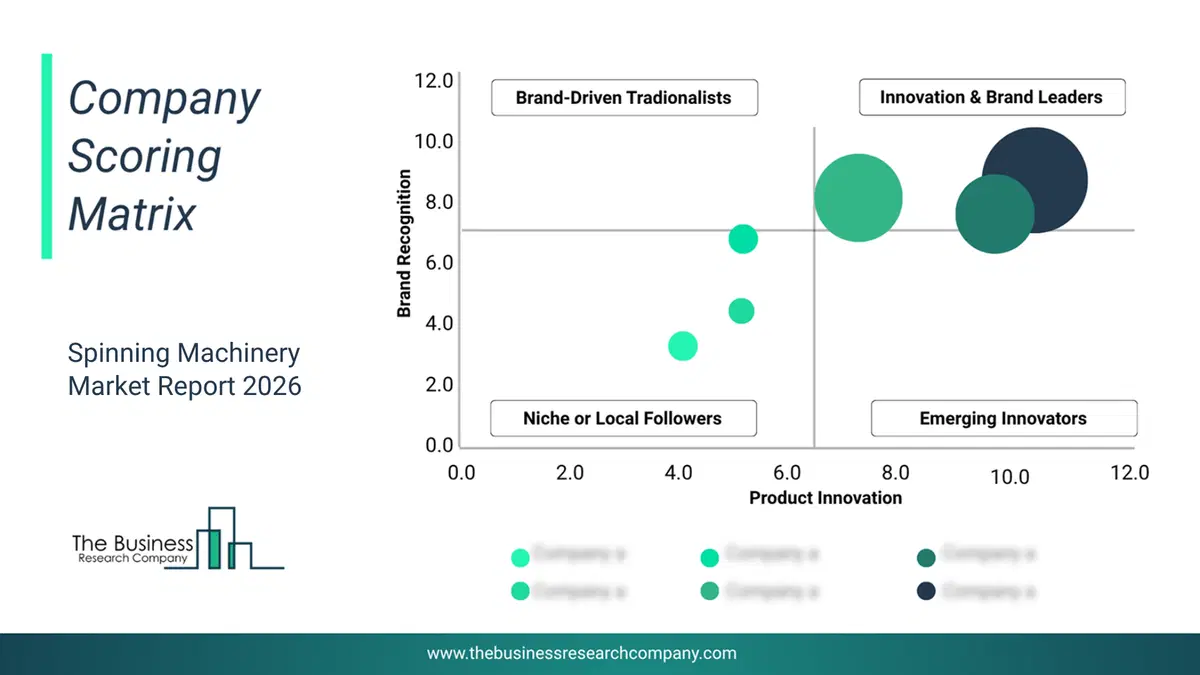
This chart maps companies by product innovation and brand strength, with bubble size indicating relative revenue, helping identify market leaders, challengers, and niche players. This is an illustrative chart; the full report provides a complete and accurate competitive analysis.
Global Spinning Machinery Market Trends and Insights
Major companies operating in the spinning machinery market are focusing on developing advanced spinning solutions, such as ring spinning machines, to reduce operating costs and support diverse textile manufacturing requirements. A ring-spinning machine is a textile manufacturing machine that transforms roving into yarn through continuous drawing, twisting, and winding, producing high-strength, uniform, and high-quality yarn for textile applications. For instance, in August 2025, Saurer, an India-based textile machinery manufacturer, launched the Zinser 51 ring spinning machine at its Karjan facility in Gujarat, India. The machine is offered in both ring-spinning and compact-spinning configurations and incorporates advanced technologies, including Easyspin, Twinsuction, Optisuction, and the NSD-i drafting system. These features enhance operational flexibility, improve energy efficiency, reduce maintenance requirements, and support high-speed production. The machine is designed to process natural, synthetic, blended, recycled, and technical yarns while maintaining consistent yarn quality.What Are Latest Mergers And Acquisitions In The Spinning Machinery Market?
In February 2026, Rieter, a Switzerland-based provider of systems and machinery used to convert natural fibers, acquired Barmag for an undisclosed amount. Through this acquisition, Rieter strengthened its position in the spinning machinery market by expanding its capabilities in man-made fiber and synthetic fiber spinning technologies, enabling it to offer a broader range of fiber-to-yarn production solutions across natural and synthetic fibers. Barmag is a Germany-based manufacturer of filament spinning systems and texturing machines.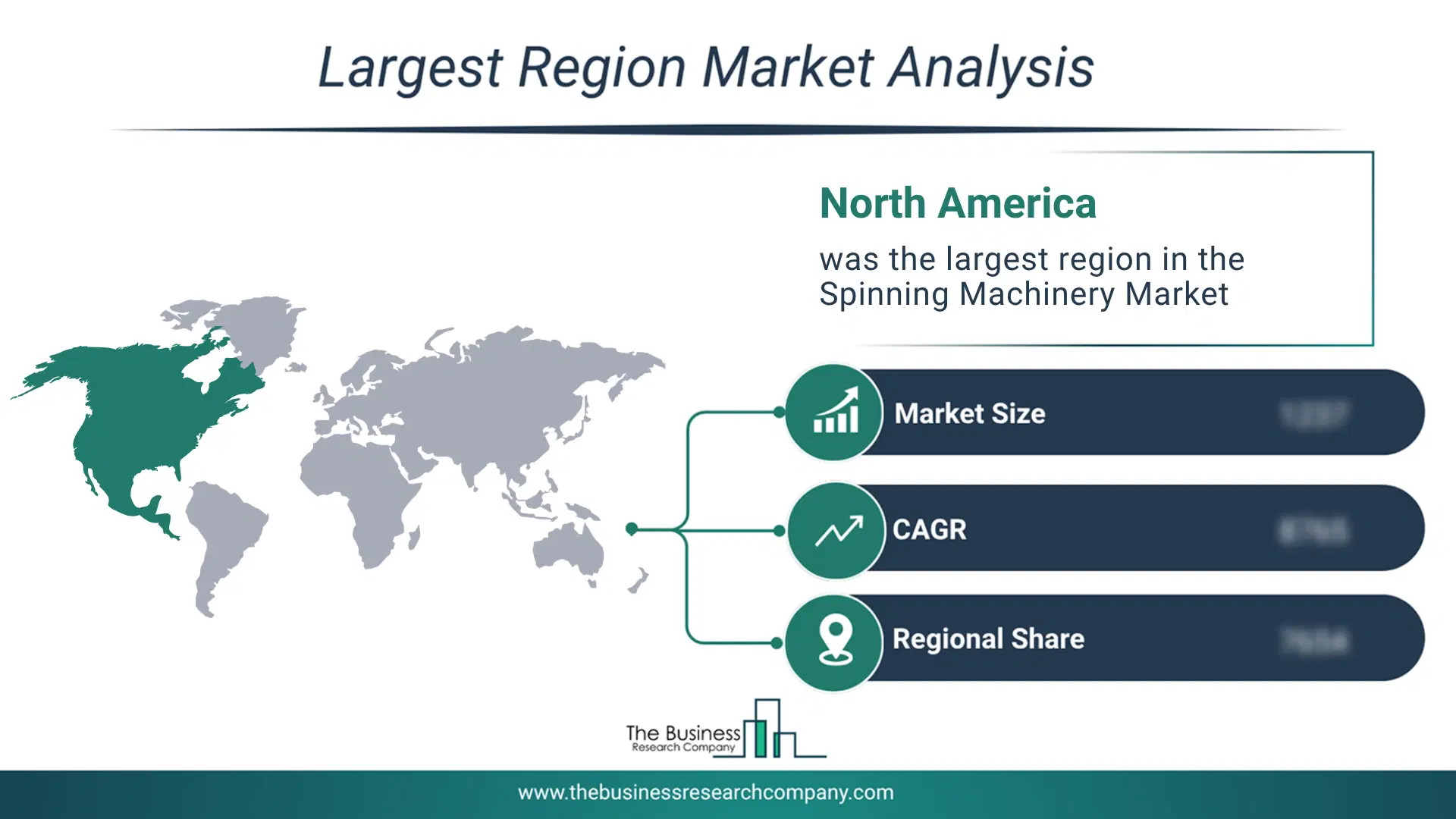
Regional Outlook
North America was the largest region in the spinning machinery market in 2025. Asia-Pacific is expected to be the fastest-growing region in the forecast period. The regions covered in this market report are Asia-Pacific, South East Asia, Western Europe, Eastern Europe, North America, South America, Middle East, Africa. The countries covered in this market report are Australia, Brazil, China, France, Germany, India, Indonesia, Japan, Taiwan, Russia, South Korea, UK, USA, Canada, Italy, Spain.What Defines the Spinning Machinery Market?
The spinning machinery market consists of sales of speed frames, autoconers, yarn conditioning machines, fiber openers, bale openers, and doffing machines. Values in this market are ‘factory gate’ values, that is, the value of goods sold by the manufacturers or creators of the goods, whether to other entities (including downstream manufacturers, wholesalers, distributors, and retailers) or directly to end customers. The value of goods in this market includes related services sold by the creators of the goods.How is Market Value Defined and Measured?
The market value is defined as the revenues that enterprises gain from the sale of goods and/or services within the specified market and geography through sales, grants, or donations in terms of the currency (in USD unless otherwise specified). The revenues for a specified geography are consumption values that are revenues generated by organizations in the specified geography within the market, irrespective of where they are produced. It does not include revenues from resales along the supply chain, either further along the supply chain or as part of other products.
This chart presents market attractiveness based on a quantitative evaluation of growth, competition, strategic alignment, and risk, offering a clear view of opportunity areas for decision-making. This chart is for illustrative purposes; the full report contains the complete analysis.

This chart highlights the Total Addressable Market (TAM) by estimating the maximum revenue opportunity using an assumption-driven approach, supporting strategic planning and opportunity sizing across markets. The chart is illustrative; the full report provides a more comprehensive analysis.
What Key Data and Analysis Are Included in the Spinning Machinery Market Report 2026?
The spinning machinery market research report is one of a series of new reports from The Business Research Company that provides market statistics, including industry global market size, regional shares, competitors with the market share, detailed market segments, market trends and opportunities, and any further data you may need to thrive in the spinning machinery industry. The market research report delivers a complete perspective of everything you need, with an in-depth analysis of the current and future state of the industry.Spinning Machinery Market Report Forecast Analysis
| Report Attribute | Details |
|---|---|
| Market Size Value In 2026 | $5.42 billion |
| Revenue Forecast In 2030 | $7.33 billion |
| Growth Rate | CAGR of 7.8% from 2026 to 2030 |
| Base Year For Estimation | 2025 |
| Actual Estimates/Historical Data | 2020-2025 |
| Forecast Period | 2026 - 2030 |
| Market Representation | Revenue in USD Billion and CAGR from 2026 to 2030 |
| Segments Covered | Machine Type, Material Type, Spinning Process, Sales Channel, End Use Industry |
| Regional Scope | Asia-Pacific, Western Europe, Eastern Europe, North America, South America, Middle East, Africa |
| Country Scope | The countries covered in the report are Australia, Brazil, China, France, Germany, India, Indonesia, Japan, Taiwan, Russia, South Korea, UK, USA, Canada, Italy, Spain. |
| Key Companies Profiled | Toyota Industries Corporation, Rieter Holding AG, Murata Machinery Ltd. (Muratec), Saurer Intelligent Technology Co. Ltd., Vandewiele Group, Trützschler Group SE, Lakshmi Machine Works Limited (LMW), Jingwei Textile Machinery Co. Ltd., TMT Machinery Inc., Marzoli Machines Textile S.r.l., Zhejiang Taitan Co. Ltd., RIFA Textile Machinery Co. Ltd., Zhejiang Golden Eagle Co. Ltd., Shandong Tongda Textile Machinery (Group) Co. Ltd., Electro-Jet S.A., Qingdao Dongjia Textile Machinery Co. Ltd., Grossenhainer Textilmaschinen GmbH, Gaudino S.p.A., Qingdao Haitaijia Textile Machinery Co. Ltd., Henan Huafang Textile Technology Co. Ltd. |
| Customization Scope | Request for Customization |
| Pricing And Purchase Options | Explore Purchase Options |