
Sports Apparel Market Report 2026
Global Outlook – By Product Type (Athletic Footwear, Sports Apparel, Accessories), By Distribution Channel (E-Commerce, Supermarket Or Hypermarket, Brand Outlets, Discount Stores), By End User (Children, Men, Women) – Market Size, Trends, Strategies, and Forecast to 2030
Sports Apparel Market Overview
• Sports Apparel market size has reached to $221.65 billion in 2025 • Expected to grow to $288.41 billion in 2030 at a compound annual growth rate (CAGR) of 5.4% • Growth Driver: The Role Of Sports And Fitness Activities In Driving The Sports Apparel Market • Market Trend: Advancing Sustainability And Performance In Athletic Footwear • North America was the largest region in 2025 and Asia-Pacific is the fastest growing region.Market Gains By 2030 – Top Opportunities By Segment
Market Gain identifies the most promising market opportunities by highlighting the segments or products expected to generate the highest incremental revenue growth over the next five years.
What Is Covered Under Sports Apparel Market?
Sports apparel refers to clothing worn for sports, physical exercise, and athletic activities. They are made from moisture-wicking fabrics to keep the wearer dry and comfortable during physical exertion. Sports apparel is designed to be lightweight and breathable to help athletes stay comfortable and perform at their best during exercise. The main products of sports apparel are athletic footwear, sports apparel, and accessories. Athletic footwear refers to shoes designed for sports and other physical activities. They are sold through various distribution channels, including e-commerce, supermarkets or hypermarkets, brand outlets, and discount stores, to several end-users, such as children, men, and women.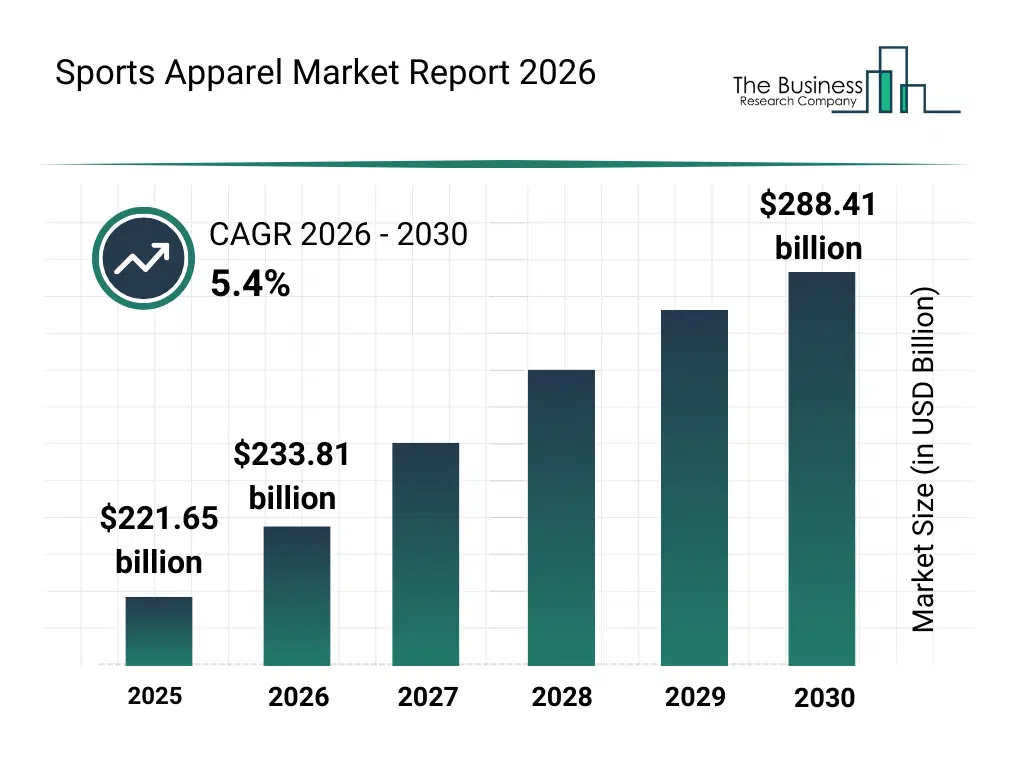
What Is The Sports Apparel Market Size and Share 2026?
The sports apparel market size has grown strongly in recent years. It will grow from $221.65 billion in 2025 to $233.81 billion in 2026 at a compound annual growth rate (CAGR) of 5.5%. The growth in the historic period can be attributed to expansion of global sports participation, rising influence of professional sports leagues, growth of casual fitness activities, increasing demand for branded sports clothing, development of advanced textile materials.What Is The Sports Apparel Market Growth Forecast?
The sports apparel market size is expected to see strong growth in the next few years. It will grow to $288.41 billion in 2030 at a compound annual growth rate (CAGR) of 5.4%. The growth in the forecast period can be attributed to increasing demand for sustainable sports apparel, rising growth of e-commerce distribution channels, expansion of smart textile applications, growing popularity of inclusive sizing and designs, increased focus on circular fashion models. Major trends in the forecast period include increasing use of moisture-wicking and breathable fabrics, growing demand for lightweight sports apparel, expansion of eco-friendly apparel collections, rising adoption of customised sportswear designs, enhanced focus on durability and wash performance.
Global Sports Apparel Market Segmentation
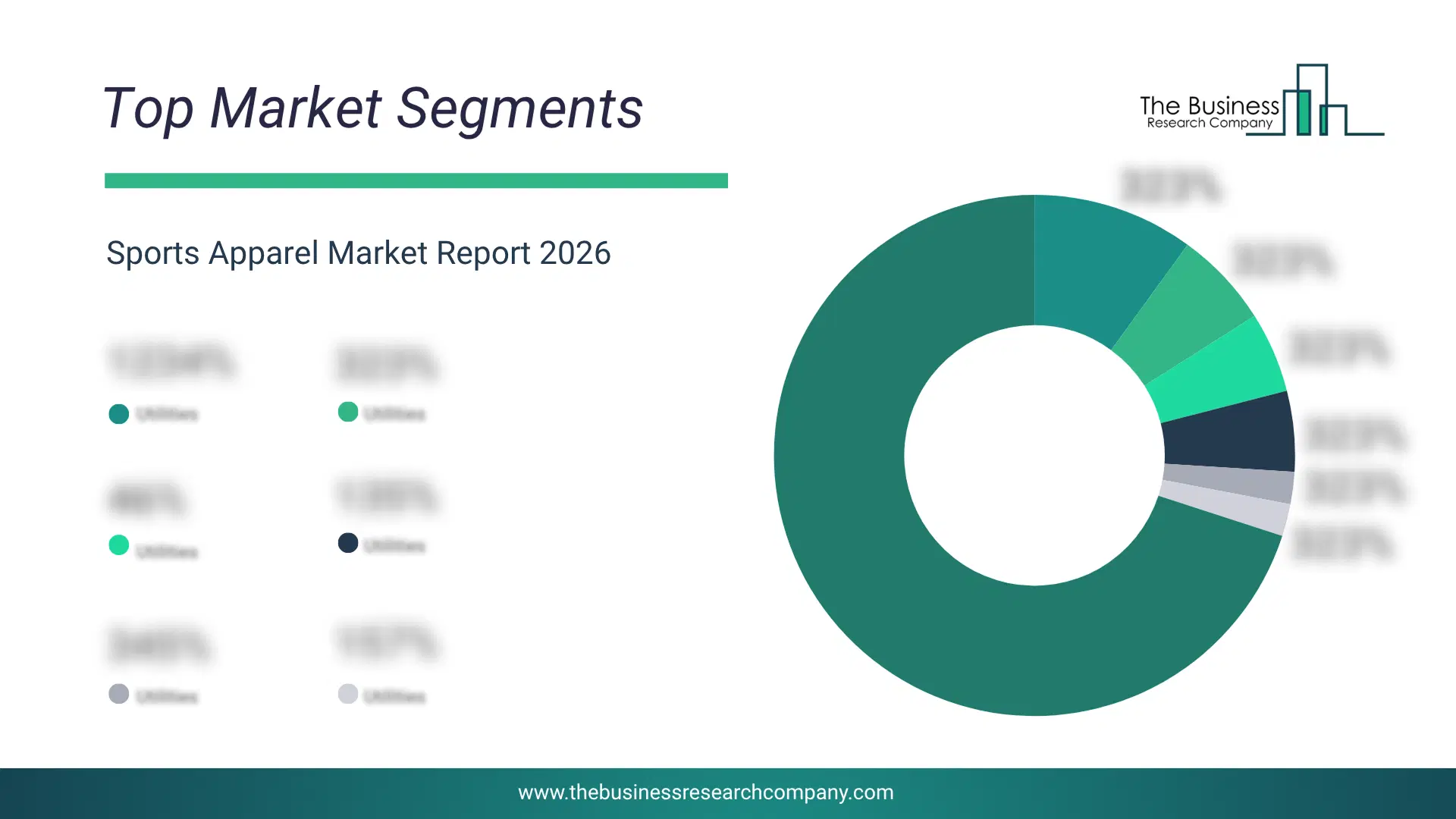
1) By Product Type: Athletic Footwear, Sports Apparel, Accessories 2) By Distribution Channel: E-Commerce, Supermarket Or Hypermarket, Brand Outlets, Discount Stores 3) By End User: Children, Men, Women Subsegments: 1) By Athletic Footwear: Running Shoes, Training Shoes, Sports-Specific Shoes, Casual Sports Footwear 2) By Sports Apparel: Tops, Bottoms, Outerwear, Sports Bras, Compression Wear 3) By Accessories: Sports Bags, Hats And Caps, Socks, Gloves, Headbands Or Visors, Knee Or Elbow Supports The top segments in the sports apparel market will be: • Sports Clothing will reach $136.03 Billion by 2030. • Athletic Footwear will reach $110.87 Billion by 2030. • Sports Accessories will reach $39.09 Billion by 2030.What Is The Driver Of The Sports Apparel Market?
The increasing popularity of sports and fitness activities is expected to propel the growth of the sports apparel market. Sports activities refer to physical activities that involve physical exertion, skill, and competition, often governed by rules and patterns of behavior. The popularity of sports and fitness activities is driven by their health benefits, social interaction opportunities, stress-relieving effects, personal development aspects, entertainment value, and media influence. Sports apparel plays a significant role in enhancing the performance, comfort, and safety of athletes during sports and fitness activities, contributing to a more enjoyable and effective workout experience. For instance, in February 2025, according to Sports & Fitness Industry Association (SFIA), an US-based trade association, in 2024, 19.8 million Americans participated in pickleball, a 45.8% increase from the 2023 figure and an incredible 311% increase from three years ago. Therefore, the increasing popularity of sports and fitness activities is driving the growth of the sports apparel industry.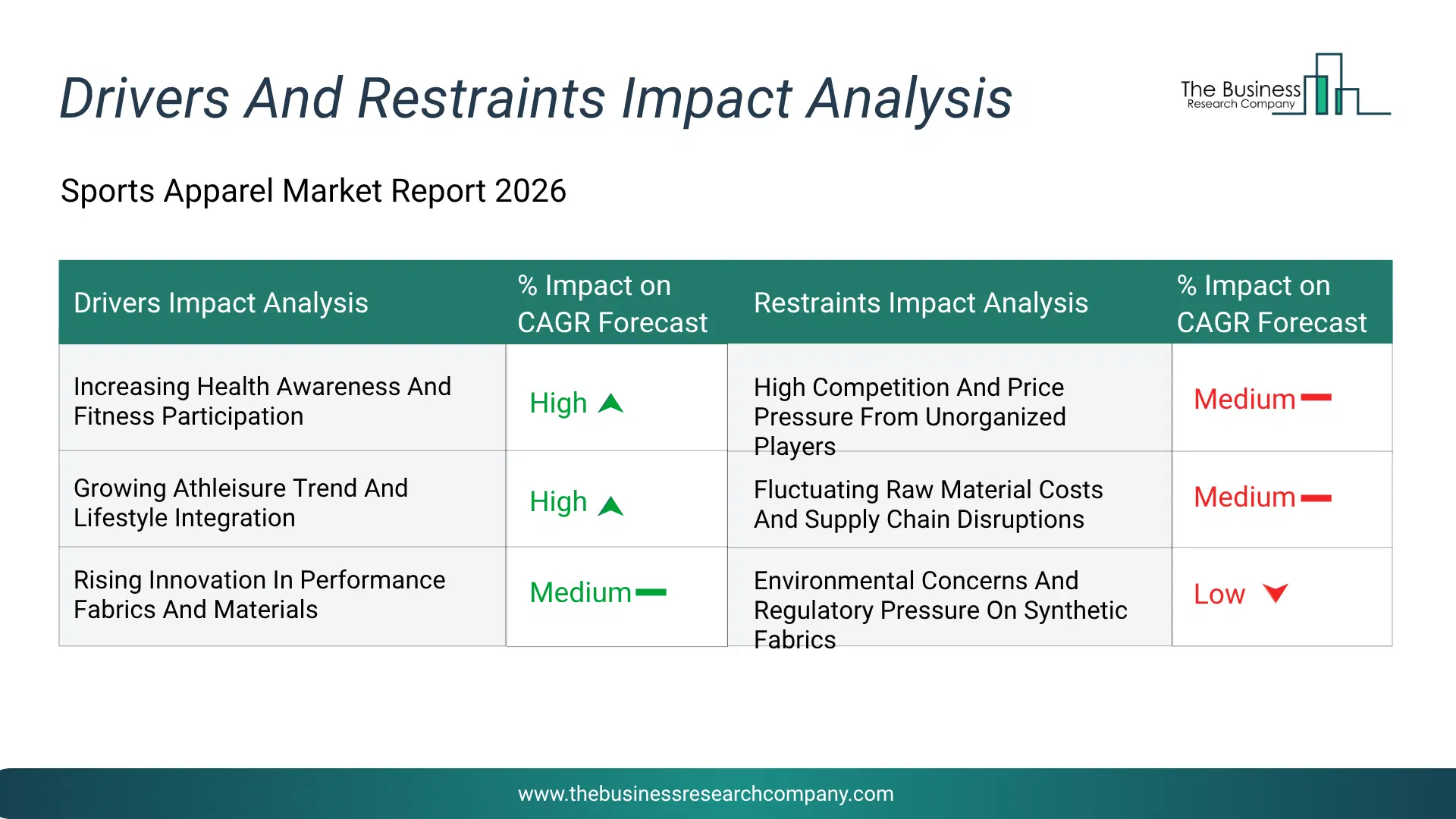
Infographic Chart Showing Key Market Drivers Analysis And Restraints For Sports Apparel Market
The chart presents an impact analysis of key drivers and restraints, quantifying their relative influence on the market's growth rate and helping assess the balance between growth enablers and limiting factors. This chart offers a high-level perspective; the full report contains more detailed insights.
How Will The Drivers Impact Growth In The Global Sports Apparel Market?
• Increasing Health Awareness And Fitness Participation (High) – During the forecast period, the increasing health awareness and fitness participation is expected to become a key growth driver for the sports apparel market by 2030. The rising awareness about health, fitness, and active lifestyles is a major driver for the sports apparel market. Consumers are increasingly engaging in activities such as gym workouts, running, yoga, and sports, which directly boosts demand for performance-oriented clothing. Sports apparel provides comfort, moisture control, and flexibility, making it essential for such activities. As more people prioritize physical well-being, the frequency of usage of athletic wear increases. This continuous rise in fitness participation significantly drives market growth. • Growing Athleisure Trend And Lifestyle Integration (High) – During the forecast period, the growing athleisure trend and lifestyle integration is expected to emerge as a major factor driving the expansion of the sports apparel market by 2030. The increasing popularity of athleisure, where sportswear is worn for casual and everyday use, is strongly driving the market. Consumers are blending comfort with style, using sports apparel beyond fitness activities. This shift expands the use-case of athletic clothing into daily fashion, increasing purchase frequency. Brands are innovating with stylish and multifunctional designs to cater to this trend. As a result, the boundary between sportswear and casual wear is blurring, significantly boosting demand. • Rising Innovation In Performance Fabrics And Materials (Medium) – During the forecast period, the rising innovation in performance fabrics and materials is expected to act as a key growth catalyst for the sports apparel market by 2030. Continuous innovation in fabric technology is accelerating the growth of the sports apparel market. Advanced materials such as moisture-wicking polyester, breathable nylon, and temperature-regulating fabrics enhance athletic performance and comfort. These innovations attract both professional athletes and everyday consumers seeking high-performance wear. Companies are investing heavily in R&D to differentiate their products and improve durability and sustainability. As a result, technological advancements in fabrics act as a strong driver for increased adoption.How Will The Restraints Impact Growth In The Global Sports Apparel Market?
• High Competition And Price Pressure From Unorganized Players (High) – During the forecast period, the sports apparel market faces intense competition from numerous global brands as well as low-cost local and unorganized players. These smaller manufacturers often offer similar products at significantly lower prices, creating strong price pressure across the market. This reduces profit margins for established companies and limits their ability to maintain premium pricing. Additionally, brand differentiation becomes challenging in saturated segments. As a result, intense competition and pricing pressure act as a restraint on overall market profitability and growth. • Fluctuating Raw Material Costs And Supply Chain Disruptions (High) – During the forecast period, the sports apparel relies heavily on raw materials such as polyester, nylon, and spandex, which are subject to price volatility due to changes in oil prices and global supply conditions. Any disruption in supply chains, including transportation delays or geopolitical issues, directly impacts production costs and timelines. Manufacturers may face difficulty in maintaining stable pricing and consistent supply. This uncertainty affects operational efficiency and profitability. Hence, fluctuating raw material costs and supply disruptions act as a key restraint for the market. • Environmental Concerns And Regulatory Pressure On Synthetic Fabrics (Medium) – During the forecast period, the increasing environmental concerns related to synthetic fabrics like polyester and nylon are restraining market growth. These materials contribute to microplastic pollution and have a high environmental footprint, attracting regulatory scrutiny and consumer criticism. Governments and environmental bodies are pushing for sustainable alternatives, increasing compliance costs for manufacturers. Transitioning to eco-friendly materials often requires significant investment in R&D and supply chain adjustments. Therefore, environmental regulations and sustainability concerns act as a restraint on the expansion of the sports apparel market.Key Players In The Global Sports Apparel Market
Major companies operating in the sports apparel market are Nike Inc., Adidas AG, Decathlon Group, Kappa, VF Corporation, Puma SE, Anta Sports Products Limited, Karhu Holding B.V., Lululemon Athletica Inc., Under Armour Inc., New Balance Athletics Inc., ASICS Corporation, The North Face Inc., Columbia Sportswear Company, Li Ning Company Limited, Mizuno Corporation, Brooks Sports Inc., Deckers Outdoor Corp., Fila Holdings Corp., Reebok International Limited, Umbro International Limited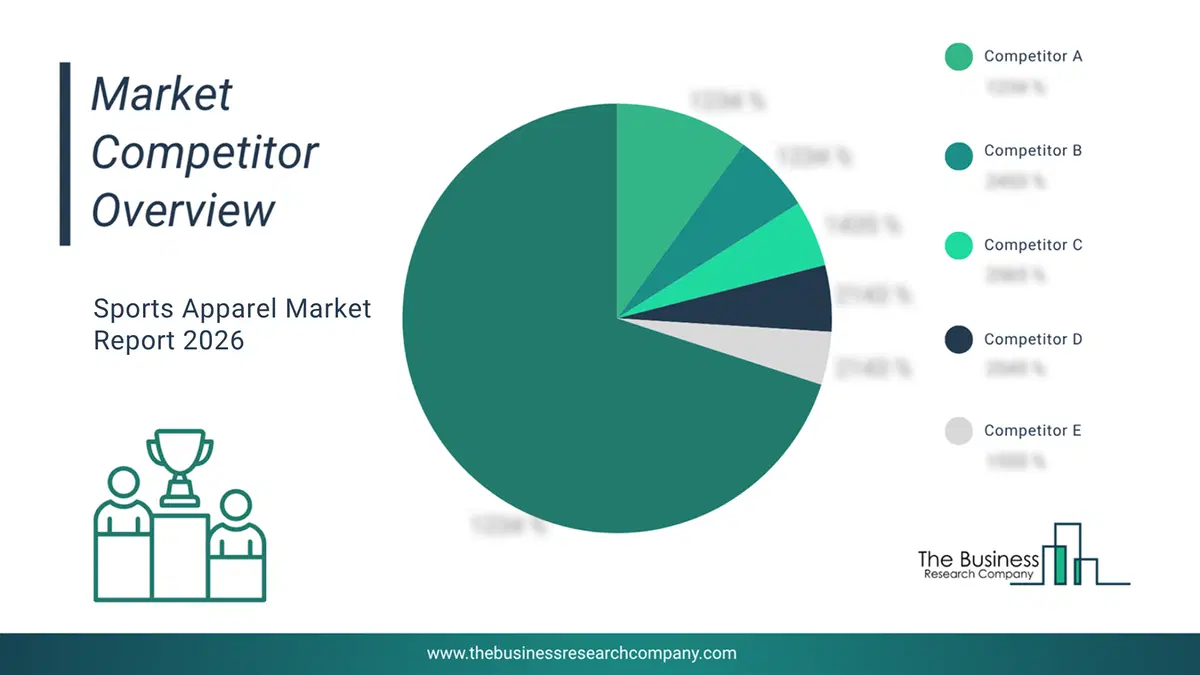
This chart is for illustrative purposes; the full report includes a detailed competitor analysis and comprehensive overview of the top 10 companies in the market.
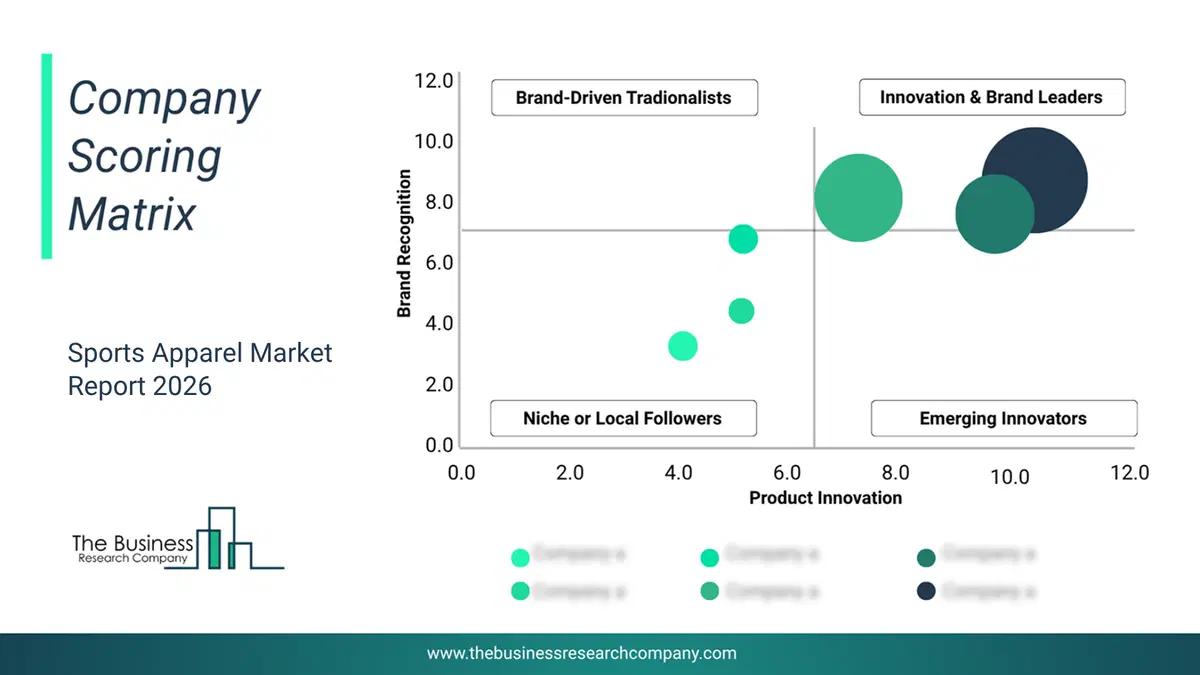
This chart maps companies by product innovation and brand strength, with bubble size indicating relative revenue, helping identify market leaders, challengers, and niche players. This is an illustrative chart; the full report provides a complete and accurate competitive analysis.
Global Sports Apparel Market Trends and Insights
Major companies operating in the sports apparel market are developing and integrating innovative technologies, such as advanced foam technologies, into their sports apparel to enhance their performance and better serve customers. Advanced foam technologies involve the use of innovative foam materials and manufacturing processes to create lightweight, supportive, and protective garments for athletes. For instance, in July 2023, Nike, a US-based footwear company, unveiled ReactX, its newest installment of advanced foam technology. Nike has incorporated the updated foam into its InfinityRN 4 model running shoes to provide a higher energy return with a lower carbon footprint compared to its predecessors. This release marked a significant advancement in Nike's commitment to sustainability and performance in athletic footwear, catering to the needs of runners seeking supportive cushioning for a smooth run. ReactX is designed to reduce a pair of midsoles' carbon footprint by at least 43% through reduced energy in the production process while increasing energy return by 13%.What Are Latest Mergers And Acquisitions In The Sports Apparel Market?
In June 2025, Kontoor Brands, Inc., a U.S.-based provider of lifestyle and performance apparel, acquired Helly Hansen AS for an undisclosed amount. With this acquisition, Kontoor Brands, Inc., aims to expand its portfolio into the outdoor and performance apparel segment, diversifying product offerings and reaching new customer segments. Helly Hansen AS is a Norway-based provider of technical outdoor and performance apparel.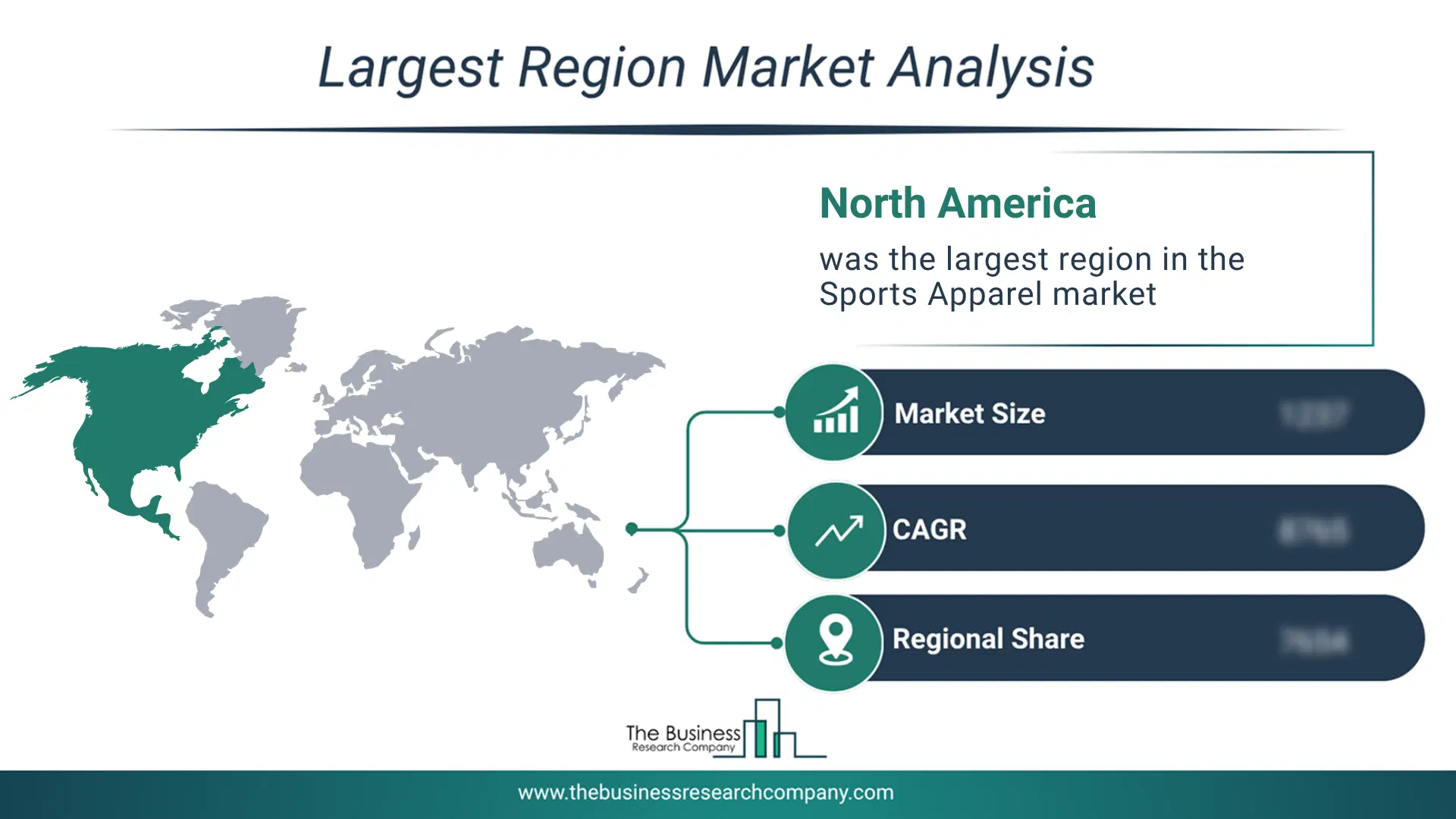
Regional Outlook
North America was the largest region in the sports apparel market in 2025. Asia-Pacific is expected to be the fastest-growing region in the forecast period. The regions covered in this market report are Asia-Pacific, South East Asia, Western Europe, Eastern Europe, North America, South America, Middle East, Africa. The countries covered in this market report are Australia, Brazil, China, France, Germany, India, Indonesia, Japan, Taiwan, Russia, South Korea, UK, USA, Canada, Italy, Spain.What Defines the Sports Apparel Market?
The sports apparel market consists of sales of polyester, spandex, nylon, merino wool, and other fabrics. Values in this market are ‘factory gate’ values, that is the value of goods sold by the manufacturers or creators of the goods, whether to other entities (including downstream manufacturers, wholesalers, distributors and retailers) or directly to end customers. The value of goods in this market includes related services sold by the creators of the goods.How is Market Value Defined and Measured?
The market value is defined as the revenues that enterprises gain from the sale of goods and/or services within the specified market and geography through sales, grants, or donations in terms of the currency (in USD unless otherwise specified). The revenues for a specified geography are consumption values that are revenues generated by organizations in the specified geography within the market, irrespective of where they are produced. It does not include revenues from resales along the supply chain, either further along the supply chain or as part of other products.
This chart presents market attractiveness based on a quantitative evaluation of growth, competition, strategic alignment, and risk, offering a clear view of opportunity areas for decision-making. This chart is for illustrative purposes; the full report contains the complete analysis.

This chart highlights the Total Addressable Market (TAM) by estimating the maximum revenue opportunity using an assumption-driven approach, supporting strategic planning and opportunity sizing across markets. The chart is illustrative; the full report provides a more comprehensive analysis.
What Key Data and Analysis Are Included in the Sports Apparel Market Report 2026?
The sports apparel market research report is one of a series of new reports from The Business Research Company that provides market statistics, including Market Report 2026?global market size, regional shares, competitors with the market share, detailed market segments, market trends and opportunities, and any further data you may need to thrive in the sports apparel Market Report 2026? The market research report delivers a complete perspective of everything you need, with an in-depth analysis of the current and future state of the Market Report 2026?Sports Apparel Market Report Forecast Analysis
| Report Attribute | Details |
|---|---|
| Market Size Value In 2026 | $233.81 billion |
| Revenue Forecast In 2030 | $288.41 billion |
| Growth Rate | CAGR of 5.5% from 2026 to 2030 |
| Base Year For Estimation | 2025 |
| Actual Estimates/Historical Data | 2020-2025 |
| Forecast Period | 2026 - 2030 |
| Market Representation | Revenue in USD Billion and CAGR from 2026 to 2030 |
| Segments Covered | Product Type, Distribution Channel, End User |
| Regional Scope | Asia-Pacific, Western Europe, Eastern Europe, North America, South America, Middle East, Africa |
| Country Scope | The countries covered in the report are Australia, Brazil, China, France, Germany, India, Indonesia, Japan, Taiwan, Russia, South Korea, UK, USA, Canada, Italy, Spain. |
| Key Companies Profiled | Nike Inc., Adidas AG, Decathlon Group, Kappa, VF Corporation, Puma SE, Anta Sports Products Limited, Karhu Holding B.V., Lululemon Athletica Inc., Under Armour Inc., New Balance Athletics Inc., ASICS Corporation, The North Face Inc., Columbia Sportswear Company, Li Ning Company Limited, Mizuno Corporation, Brooks Sports Inc., Deckers Outdoor Corp., Fila Holdings Corp., Reebok International Limited, Umbro International Limited |
| Customization Scope | Request for Customization |
| Pricing And Purchase Options | Explore Purchase Options |