
Sports Drinks Market Report 2026
Global Outlook – By Soft Drink Type (Electrolyte-Enhanced Water, Hypertonic, Hypotonic, Isotonic, Protein-Based Sport Drinks), By Ingredient (Citric Acid, Flavors And Preservatives, Salts And Electrolytes, Carbohydrates, Vitamins, Other Ingredients), By Packaging Type (Aseptic Packages, Metal Can, Polyethylene Terephthalate (PET) Bottles), By Sub Distribution Channel (Convenience Stores, Online Retail, Specialty Stores, Supermarket Or Hypermarket, Other Sub Distribution Channels), By End User (Athletes, Casual Consumers, Lifestyle User) – Market Size, Trends, Strategies, and Forecast to 2030
Sports Drinks Market Overview
• Sports Drinks market size has reached to $25.62 billion in 2025 • Expected to grow to $33.25 billion in 2030 at a compound annual growth rate (CAGR) of 5.2% • Growth Driver: Growth In Sports And Athletics Fuels The Sports Drinks Market • Market Trend: Key Players Innovations Revolutionize The Sports Drinks Market • North America was the largest region in 2025 and Asia-Pacific is the fastest growing region.Market Gains By 2030 – Top Opportunities By Segment
Market Gain identifies the most promising market opportunities by highlighting the segments or products expected to generate the highest incremental revenue growth over the next five years.
What Is Covered Under Sports Drinks Market?
Sports drinks refer to beverages designed to replenish fluids, electrolytes, and carbohydrates lost during intense physical activity. They often contain water, sugar, electrolytes (such as sodium and potassium), and sometimes vitamins or other nutrients. These drinks aim to hydrate, provide energy, and support muscle function during exercise. The main types of sports drinks are electrolyte-enhanced water, hypertonic, hypotonic, isotonic, and protein-based sports drinks. Electrolyte-enhanced water contains added minerals such as sodium and potassium, commonly used for hydration and replenishment of electrolytes lost during physical activity or dehydration. Sports drinks contain various ingredients such as citric acid, flavors, preservatives, electrolytes, salts, carbohydrates, vitamins, and others., and are packaged in various forms, including aseptic packages, metal cans, and polyethylene terephthalate (PET) bottles. These are distributed through channels such as convenience stores, online retail, specialty stores, supermarkets, and hypermarkets for several end users such as athletes, casual consumers, and lifestyle users.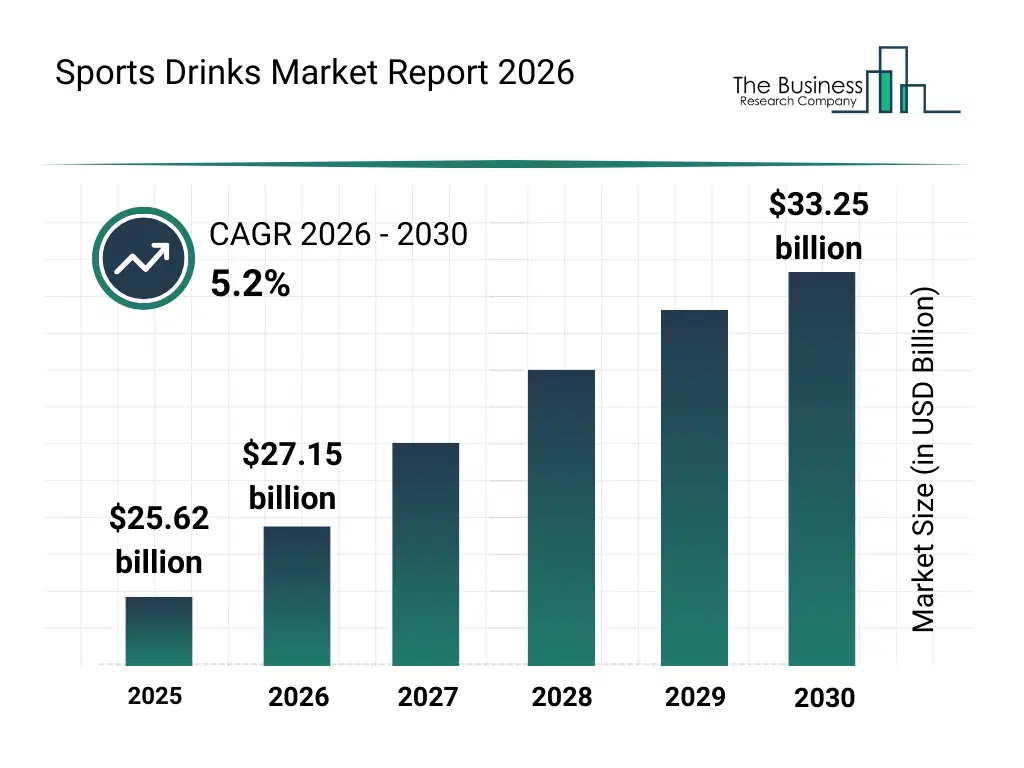
What Is The Sports Drinks Market Size and Share 2026?
The sports drinks market size has grown strongly in recent years. It will grow from $25.62 billion in 2025 to $27.15 billion in 2026 at a compound annual growth rate (CAGR) of 6.0%. The growth in the historic period can be attributed to rising participation in sports and fitness activities, increased awareness of hydration benefits, expansion of organized sports events, growth of gym and fitness culture, established global beverage distribution networks.What Is The Sports Drinks Market Growth Forecast?
The sports drinks market size is expected to see strong growth in the next few years. It will grow to $33.25 billion in 2030 at a compound annual growth rate (CAGR) of 5.2%. The growth in the forecast period can be attributed to growing demand for functional beverages, rising health-conscious consumer behavior, expansion of endurance and lifestyle sports participation, increasing innovation in sports nutrition ingredients, growing penetration of online beverage sales. Major trends in the forecast period include increasing demand for low-sugar sports drinks, rising adoption of functional and protein-based formulations, expansion of electrolyte-enhanced hydration products, growing popularity of clean-label ingredients, enhanced focus on performance-oriented nutrition.
Global Sports Drinks Market Segmentation
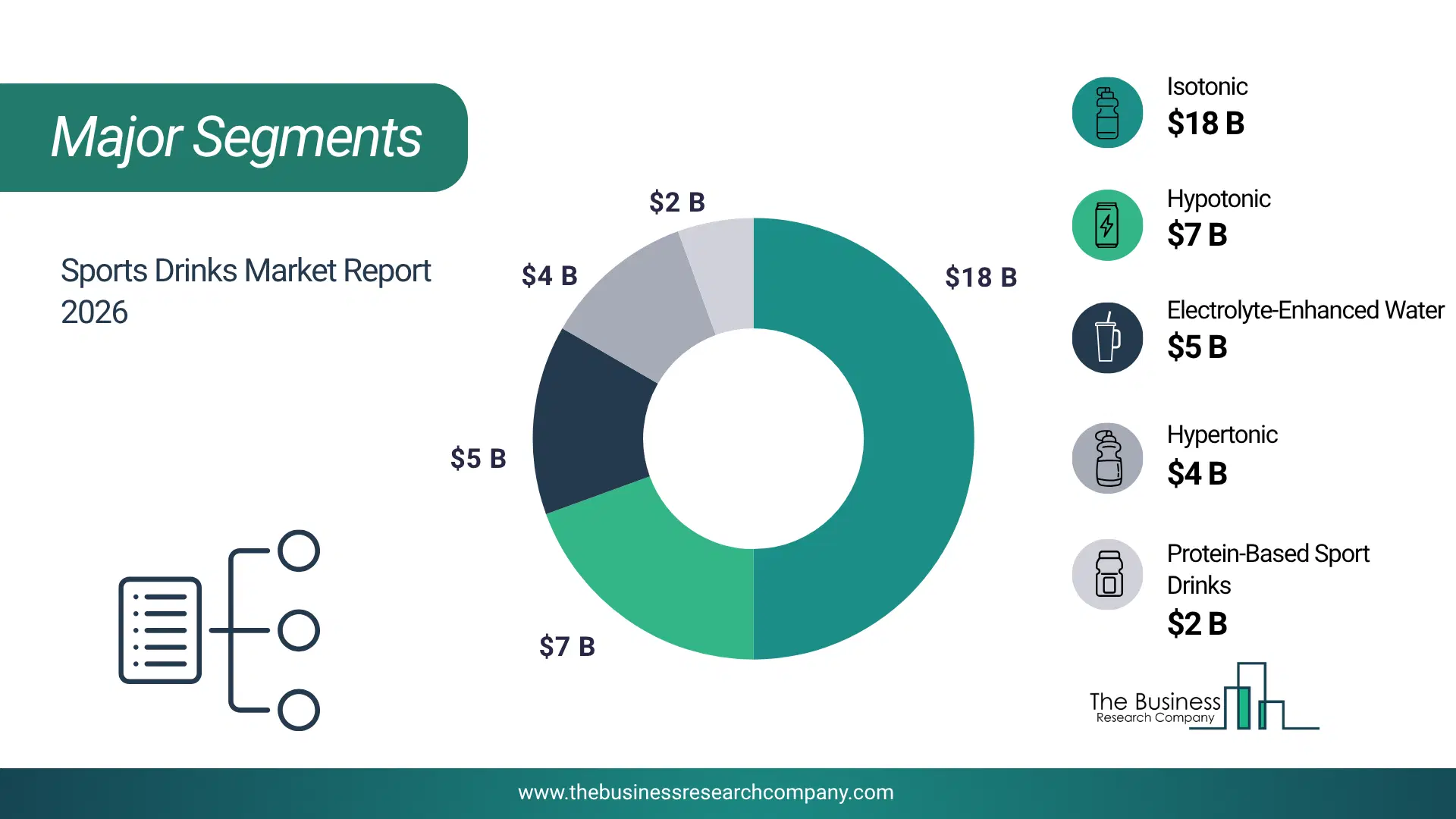
1) By Soft Drink Type: Electrolyte-Enhanced Water, Hypertonic, Hypotonic, Isotonic, Protein-Based Sport Drinks 2) By Ingredient: Citric Acid, Flavors And Preservatives, Salts And Electrolytes, Carbohydrates, Vitamins, Other Ingredients 3) By Packaging Type: Aseptic Packages, Metal Can, Polyethylene Terephthalate (PET) Bottles 4) By Sub Distribution Channel: Convenience Stores, Online Retail, Specialty Stores, Supermarket Or Hypermarket, Other Sub Distribution Channels 5) By End User: Athletes, Casual Consumers, Lifestyle User Subsegments: 1) By Electrolyte-Enhanced Water: Mineral-Enriched Water, Coconut Water-Based Sports Drinks, Vitamin-Infused Electrolyte Water 2) By Hypertonic: High-Carbohydrate Sports Drinks, Energy-Boosting Hypertonic Drinks 3) By Hypotonic: Low-Carbohydrate Sports Drinks, Low-Calorie Hypotonic Drinks 4) By Isotonic: Standard Isotonic Sports Drinks, Isotonic Drinks For Endurance Athletes 5) By Protein-Based Sports Drinks: Whey Protein Sports Drinks, Plant-Based Protein Sports Drinks, Post-Workout Protein Shakes The top segments in the information technology infrastructure utility service market will be: • Services will reach $50.98 Billion by 2030. • Hardware will reach $30.67 Billion by 2030. • Software will reach $21.15 Billion by 2030. The top segments in the sports drinks market will be: • Isotonic will reach $17.52 Billion by 2030. • Hypotonic will reach $6.66 Billion by 2030. • Electrolyte-Enhanced Water will reach $5.27 Billion by 2030. • Hypertonic will reach $4 Billion by 2030. • Protein-Based Sport Drinks will reach $2.33 Billion by 2030.What Is The Driver Of The Sports Drinks Market?
Growth in sports and athletics is expected to propel the growth of the sports drinks market going forward. Sports and athletics encompass a wide range of physical activities and competitive games that involve skill, strategy, and physical exertion. Increased interest and participation in sports and athletics are driven by various factors, including health awareness, accessibility to facilities, and societal emphasis on fitness. Sports drinks in sports and athletics primarily replenish fluids, electrolytes, and carbohydrates lost during intense physical activity. These drinks are formulated to replace fluids lost through sweating during exercise. For instance, in April 2023, according to the Active Lives Adult Survey conducted by Sport England, a UK-based non-departmental public body, more than 60% of adults, totaling 29.1 million individuals, managed to engage in 150 or more minutes of physical activity per week, marking a year-on-year increase of 1.7%. Therefore, growth in sports and athletics is driving the growth of the sports drinks industry.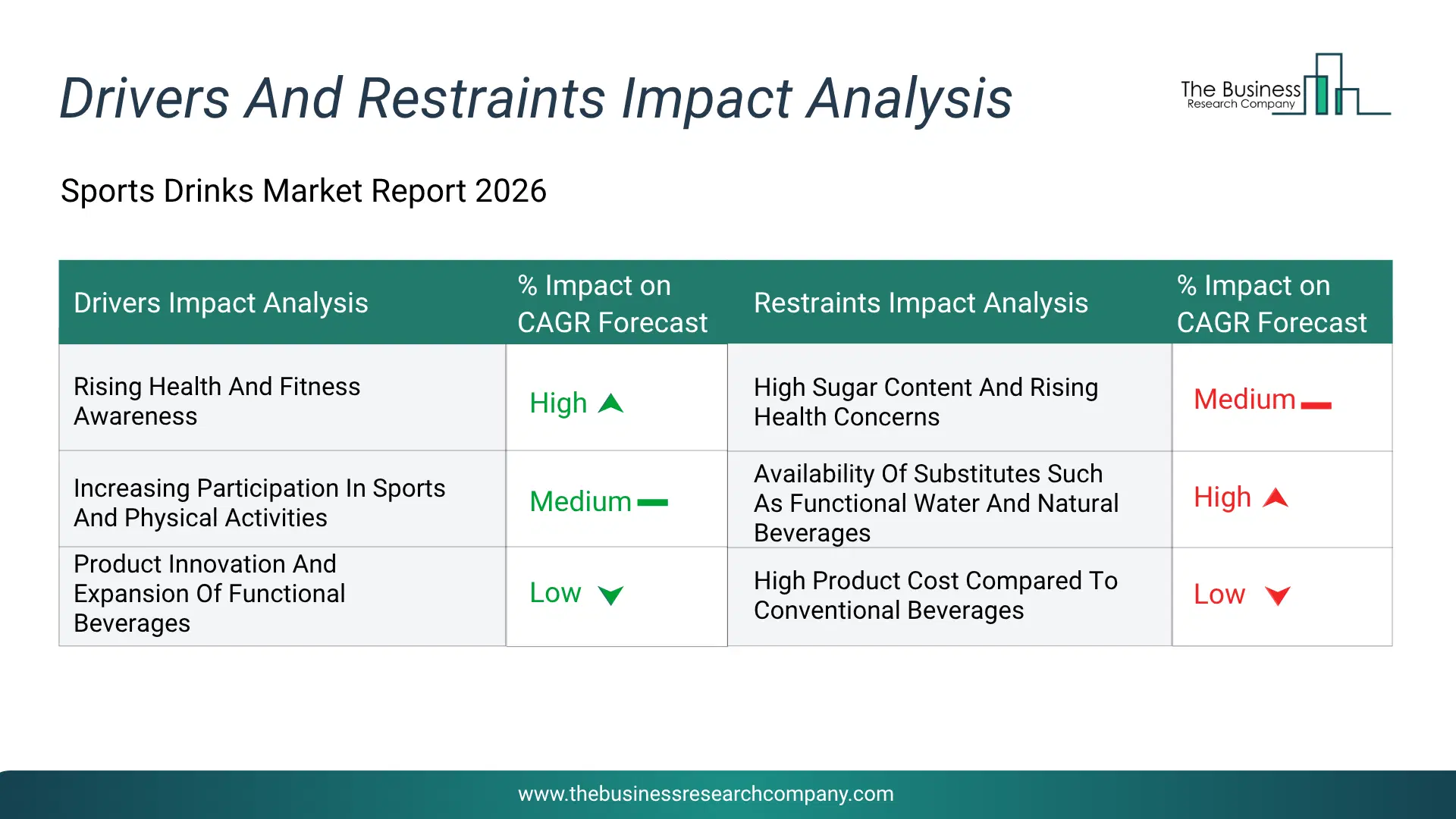
Infographic Chart Showing Key Market Drivers Analysis And Restraints For Sports Drinks Market
The chart presents an impact analysis of key drivers and restraints, quantifying their relative influence on the market's growth rate and helping assess the balance between growth enablers and limiting factors. This chart offers a high-level perspective; the full report contains more detailed insights.
How Will The Drivers Impact Growth In The Global Sports Drinks Market?
• Rising Health And Fitness Awareness (High) – During the forecast period, the rising health and fitness awareness is expected to become a key growth driver for the sports drinks market by 2030. Consumers are increasingly engaging in physical activities such as gym workouts, running, and sports to maintain a healthy lifestyle. This shift creates a strong demand for beverages that support hydration, endurance, and recovery during and after exercise. Sports drinks, enriched with electrolytes and carbohydrates, are perceived as functional products that enhance athletic performance. Additionally, the growing influence of fitness trends and social media encourages consumers to adopt performance-oriented nutrition. • Increasing Participation In Sports And Physical Activities (Medium) – During the forecast period, the increasing participation in sports and physical activities is expected to emerge as a major factor driving the expansion of the sports drinks market by 2030. Increasing participation in sports and physical activities acts as a major driver for the sports drinks market because more individuals across different age groups are actively involved in professional, amateur, and recreational sports. This growing participation drives the need for convenient hydration and energy solutions that can be consumed before, during, and after exercise. Sports drinks provide quick replenishment of fluids and electrolytes, making them a preferred choice among athletes and active individuals. Moreover, government initiatives and sports events further promote active lifestyles, boosting product consumption. This continuous rise in sports engagement significantly contributes to sustained market growth. • Product Innovation And Expansion Of Functional Beverages (Low) – During the forecast period, the product innovation and expansion of functional beverages is expected to act as a key growth catalyst for the sports drinks market by 2030. Product innovation and expansion of functional beverages act as a major driver for the sports drinks market because companies are continuously introducing new formulations such as low-sugar, organic, plant-based, and performance-enhancing drinks. These innovations cater to evolving consumer preferences for healthier and more natural ingredients while maintaining functionality. Enhanced flavors, added vitamins, and specialized formulations for endurance or recovery attract a wider consumer base beyond athletes. Furthermore, strategic marketing and branding strengthen product visibility and consumer trust. This ongoing innovation cycle increases product adoption and drives overall market development.How Will The Restraints Impact Growth In The Global Sports Drinks Market?
• High Sugar Content And Rising Health Concerns (High) – During the forecast period, the high sugar content and rising health concerns act as a significant restraint for the sports drinks market by discouraging regular consumption among health-conscious consumers. Many sports drinks contain high levels of added sugars and artificial ingredients, which are increasingly linked to obesity, diabetes, and other lifestyle-related conditions. This has led to growing consumer preference for low-calorie, sugar-free, or natural hydration alternatives. Regulatory bodies and public health campaigns further amplify awareness, reducing demand for traditional formulations. As a result, manufacturers face pressure to reformulate products, impacting sales growth and brand perception. • Availability Of Substitutes Such As Functional Water And Natural Beverages (Medium) – During the forecast period, the availability of substitutes such as functional water and natural beverages restrains the sports drinks market by offering consumers a wide range of healthier and more affordable hydration options. Products like coconut water, infused water, and plant-based beverages are perceived as more natural and free from artificial additives. These alternatives often provide similar hydration benefits without high sugar or synthetic ingredients. Increasing innovation and marketing in the broader beverage industry further intensify competition. Consequently, sports drinks struggle to maintain market share as consumers shift toward cleaner-label and multifunctional beverages. • High Product Cost Compared To Conventional Beverages (Low) – During the forecast period, the high product cost compared to conventional beverages acts as a restraint by limiting widespread adoption, particularly in price-sensitive markets. Sports drinks are often priced higher due to added electrolytes, branding, and specialized formulations. This pricing gap makes them less accessible to everyday consumers who may opt for cheaper hydration options like water or traditional drinks. In emerging economies, affordability becomes a key barrier to market penetration. As a result, the premium positioning of sports drinks can restrict volume growth and slow expansion across broader consumer segments.Key Players In The Global Sports Drinks Market
Major companies operating in the sports drinks market are Nestle SA, PepsiCo Inc, Abbott Laboratories, The Coca-Cola Company, GlaxoSmithKline plc, The Kraft Heinz Company, Suntory Holdings Limited, Keurig Dr Pepper Inc, Otsuka Holdings Co Ltd, Decathlon Sports India Pvt Ltd, The Swire Group, Red Bull GmbH, Amway, Thai Beverages PCL, Monster Beverage Corporation, Nongfu Spring Co. Ltd., AriZona Beverages USA, GNC Holdings LLC, Taisho Pharmaceutical Co Ltd, Britvic PLC, BA SPORTS NUTRITION LLC, Olvi Plc, Carabao Tawandang Co. Ltd., The Jel Sert Company, GU Energy Labs, CytoSport Inc, BioSteel Sports Nutrition Inc., ROAR Beverage Company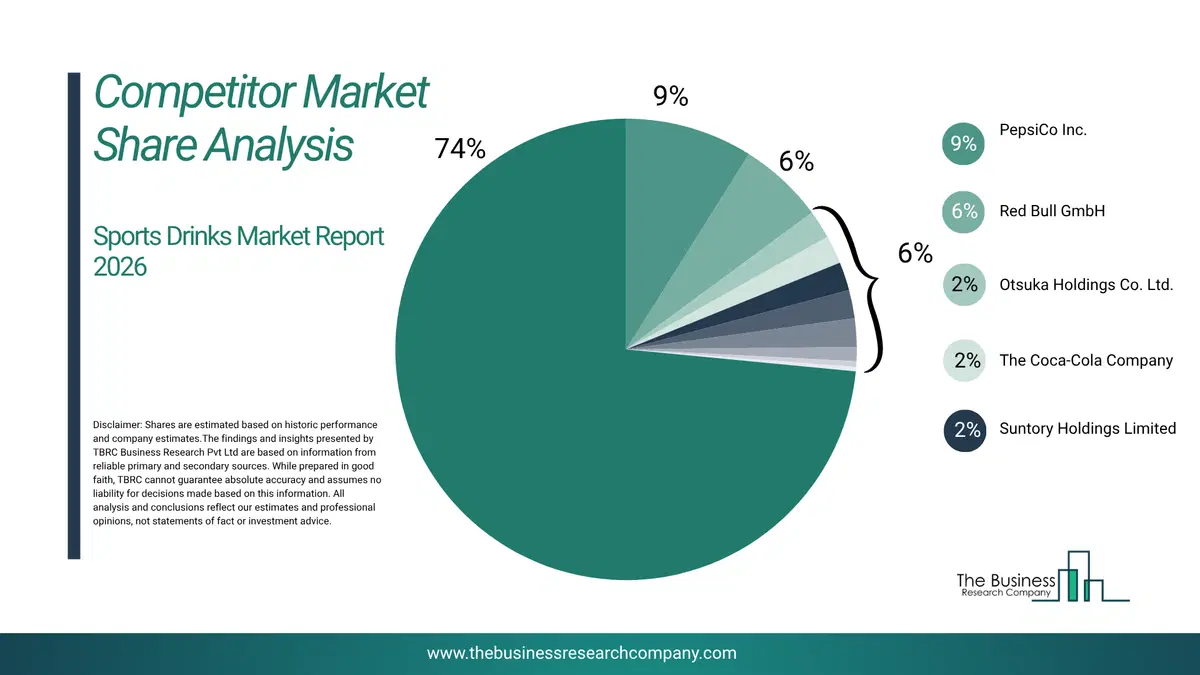
This chart is for illustrative purposes; the full report includes a detailed competitor analysis and comprehensive overview of the top 10 companies in the market.
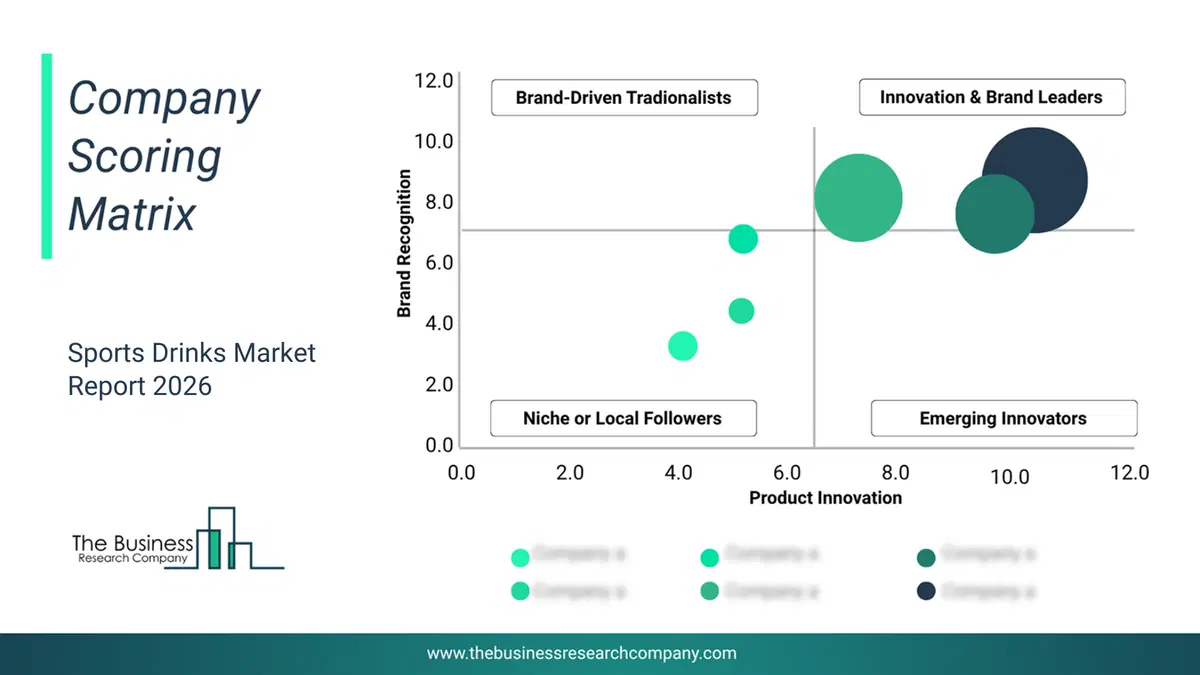
This chart maps companies by product innovation and brand strength, with bubble size indicating relative revenue, helping identify market leaders, challengers, and niche players. This is an illustrative chart; the full report provides a complete and accurate competitive analysis.
Global Sports Drinks Market Trends and Insights
Major companies operating in the sports drinks market are focused on developing advanced products formulated with innovative technologies such as ION4 technology, to enhance hydration, replenish electrolytes, and improve performance for athletes and fitness enthusiasts. ION4 technology in sports typically refers to an advanced hydration system designed to replenish electrolytes lost during physical activity, helping athletes maintain optimal performance and prevent dehydration. For instance, in September 2023, the Coca-Cola Company, a US-based drinks manufacturing company, launched the Limca Sportz ION4 sports drink in India. This new sports drink is scientifically formulated with innovative ION4 technology, which is designed to cater to the hydration and energy needs of athletes and fitness enthusiasts. It contains essential minerals for rapid fluid intake and has refreshing real lemon juice to add to the taste and palatability.What Are Latest Mergers And Acquisitions In The Sports Drinks Market?
In July 2023, Monster Beverage Corporation, a US-based beverage company that manufactures energy drinks, acquired all assets of Vital Pharmaceuticals Inc. for approximately $362 million. The acquired assets include Bang Energy beverages and a beverage production facility in Phoenix, Arizona. By acquiring Bang Energy assets, Monster Beverage aims to broaden its range of energy drink brands and solidify its presence in the energy drink market. Vital Pharmaceuticals Inc. is a US-based company that manufactures performance beverages and sports drinks.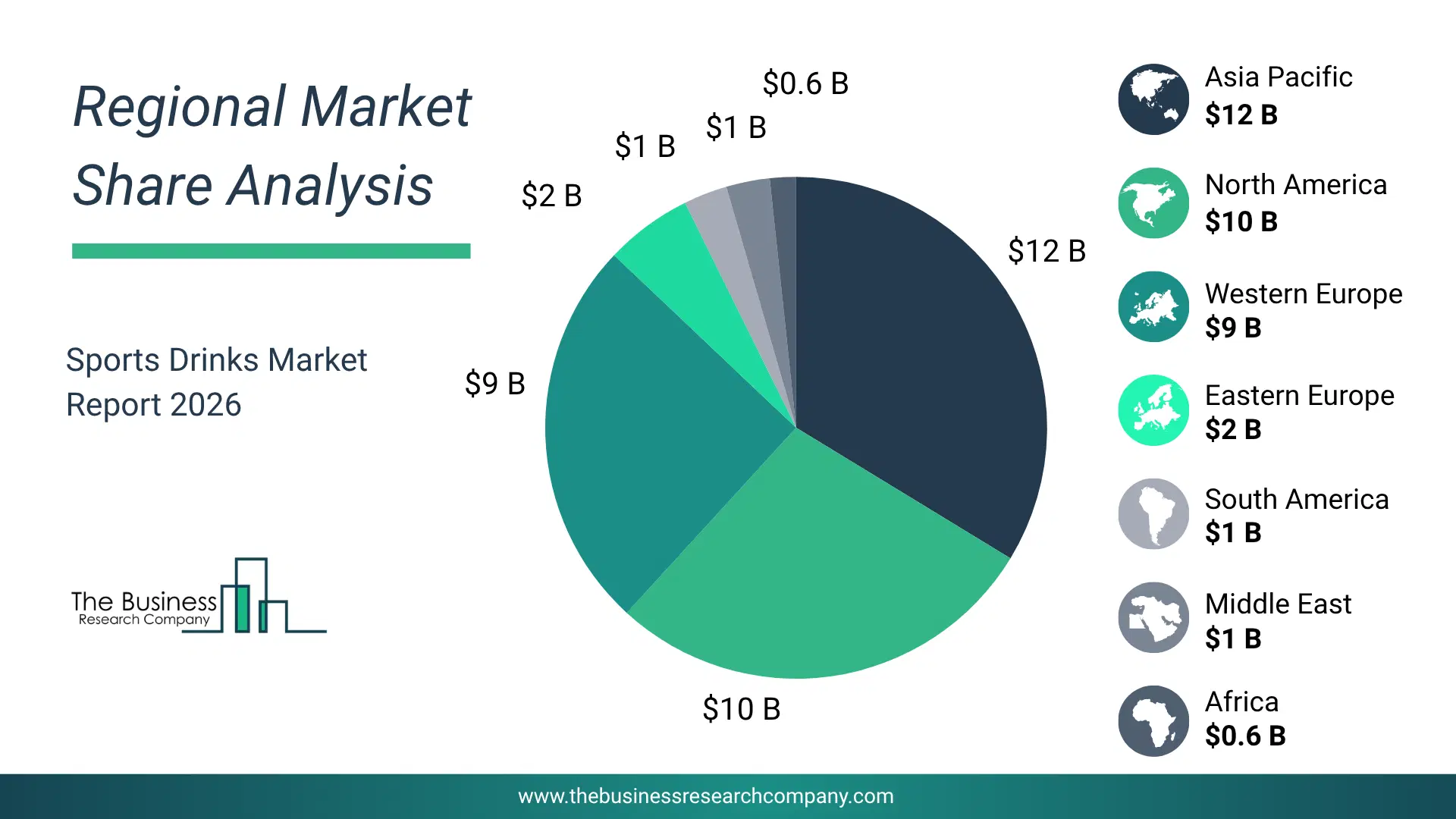
Regional Outlook
North America was the largest region in the sports drinks market in 2025. Asia-Pacific is expected to be the fastest-growing region in the forecast period. The regions covered in this market report are Asia-Pacific, South East Asia, Western Europe, Eastern Europe, North America, South America, Middle East and Africa. The countries covered in this market report are Australia, Brazil, China, France, Germany, India, Indonesia, Japan, Taiwan, Russia, South Korea, UK, USA, Italy, Spain, CanadaWhat Defines the Sports Drinks Market?
The sports drinks market consists of sales of energy drinks, recovery drinks, specialized hydration formulas, and natural or organic sports drinks. Values in this market are ‘factory gate’ values, that is the value of goods sold by the manufacturers or creators of the goods, whether to other entities (including downstream manufacturers, wholesalers, distributors and retailers) or directly to end customers. The value of goods in this market includes related services sold by the creators of the goods.How is Market Value Defined and Measured?
The market value is defined as the revenues that enterprises gain from the sale of goods and/or services within the specified market and geography through sales, grants, or donations in terms of the currency (in USD unless otherwise specified). The revenues for a specified geography are consumption values that are revenues generated by organizations in the specified geography within the market, irrespective of where they are produced. It does not include revenues from resales along the supply chain, either further along the supply chain or as part of other products.
This chart presents market attractiveness based on a quantitative evaluation of growth, competition, strategic alignment, and risk, offering a clear view of opportunity areas for decision-making. This chart is for illustrative purposes; the full report contains the complete analysis.

This chart highlights the Total Addressable Market (TAM) by estimating the maximum revenue opportunity using an assumption-driven approach, supporting strategic planning and opportunity sizing across markets. The chart is illustrative; the full report provides a more comprehensive analysis.
What Key Data and Analysis Are Included in the Sports Drinks Market Report 2026?
The sports drinks market research report is one of a series of new reports from The Business Research Company that provides market statistics, including industry global market size, regional shares, competitors with the market share, detailed market segments, market trends and opportunities, and any further data you may need to thrive in the sports drinks industry. The market research report delivers a complete perspective of everything you need, with an in-depth analysis of the current and future state of the industry.Sports Drinks Market Report Forecast Analysis
| Report Attribute | Details |
|---|---|
| Market Size Value In 2026 | $27.15 billion |
| Revenue Forecast In 2030 | $33.25 billion |
| Growth Rate | CAGR of 6.0% from 2026 to 2030 |
| Base Year For Estimation | 2025 |
| Actual Estimates/Historical Data | 2020-2025 |
| Forecast Period | 2026 - 2030 |
| Market Representation | Revenue in USD Billion and CAGR from 2026 to 2030 |
| Segments Covered | Soft Drink Type, Ingredient, Packaging Type, Sub Distribution Channel, End User |
| Regional Scope | Asia-Pacific, Western Europe, Eastern Europe, North America, South America, Middle East, Africa |
| Country Scope | The countries covered in the report are Australia, Brazil, China, France, Germany, India, Indonesia, Japan, Taiwan, Russia, South Korea, UK, USA, Canada, Italy, Spain. |
| Key Companies Profiled | Nestle SA, PepsiCo Inc, Abbott Laboratories, The Coca-Cola Company, GlaxoSmithKline plc, The Kraft Heinz Company, Suntory Holdings Limited, Keurig Dr Pepper Inc, Otsuka Holdings Co Ltd, Decathlon Sports India Pvt Ltd, The Swire Group, Red Bull GmbH, Amway, Thai Beverages PCL, Monster Beverage Corporation, Nongfu Spring Co. Ltd., AriZona Beverages USA, GNC Holdings LLC, Taisho Pharmaceutical Co Ltd, Britvic PLC, BA SPORTS NUTRITION LLC, Olvi Plc, Carabao Tawandang Co. Ltd., The Jel Sert Company, GU Energy Labs, CytoSport Inc, BioSteel Sports Nutrition Inc., ROAR Beverage Company |
| Customization Scope | Request for Customization |
| Pricing And Purchase Options | Explore Purchase Options |