

Staple Food Market Report 2026
Global Outlook – By Product (Cereals, Sugar, Roots And Tuber, Fruit, Vegetables, Oil, Other Products), By Nature (Organic, Conventional), By Distribution Channel (Wholesale Distributors, Online Retailers, Other Distribution Channels, Direct-to-Consumer (D2C), Retail Stores) – Market Size, Trends, Strategies, and Forecast to 2030
Staple Food Market Overview
• Staple Food market size has reached to $1838.96 billion in 2025 • Expected to grow to $2485.28 billion in 2030 at a compound annual growth rate (CAGR) of 6.1% • Growth Driver: Plant-Based Diets Drive Growth In Staple Food Market • Market Trend: Advancements In Multigrain And Functional Breakfast Cereals For Convenience & Wellness • Asia-Pacific was the largest region in 2025.What Is Covered Under Staple Food Market?
Staple food refers to essential dietary items that form the foundation of a region or culture's diet, typically providing a significant portion of daily calorie intake. These foods are often abundant, affordable, and widely accessible, serving as reliable sources of nutrition and energy for populations. The main product types of staple foods are cereals, sugar, roots and tuber, fruit, vegetables, oil, and others. Vegetables are staple food products that include a wide variety of vegetables, such as leafy greens, broccoli, and carrots. These are available in an organic, conventional nature and are distributed through wholesale distributors, online retailers, other distribution channels, direct-to-consumer (D2C), and retail stores.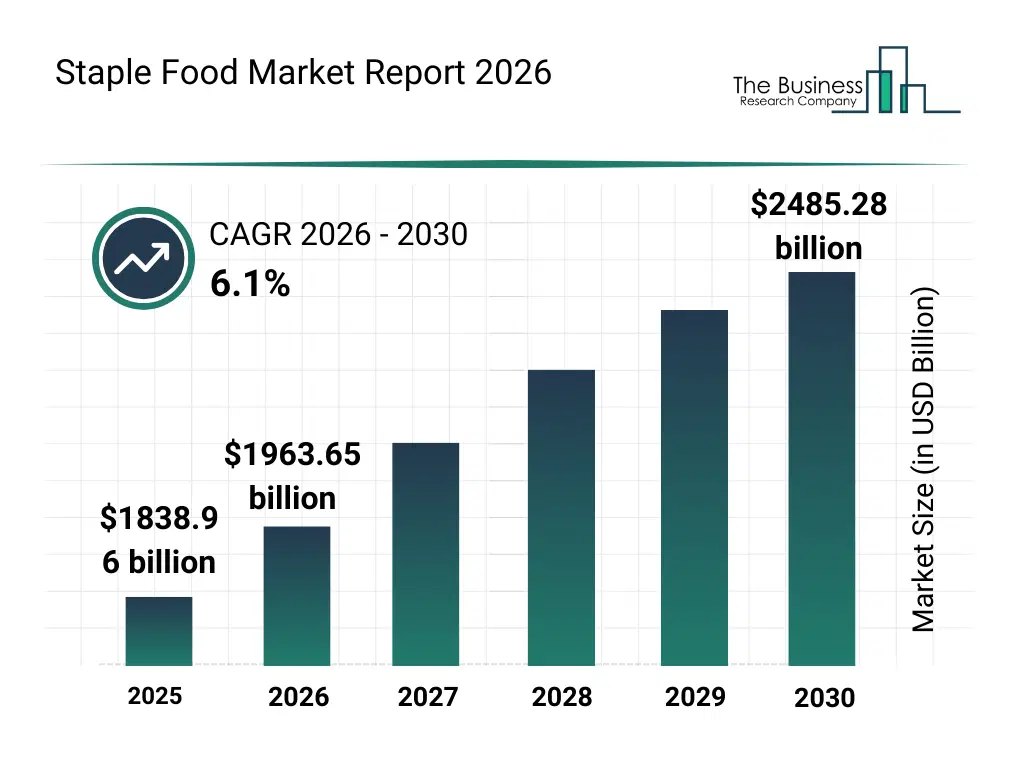
What Is The Staple Food Market Size and Share 2026?
The staple food market size has grown strongly in recent years. It will grow from $1838.96 billion in 2025 to $1963.65 billion in 2026 at a compound annual growth rate (CAGR) of 6.8%. The growth in the historic period can be attributed to population growth driving staple consumption, expansion of agricultural production, development of wholesale food distribution networks, affordability of staple food products, widespread retail availability.What Is The Staple Food Market Growth Forecast?
The staple food market size is expected to see strong growth in the next few years. It will grow to $2485.28 billion in 2030 at a compound annual growth rate (CAGR) of 6.1%. The growth in the forecast period can be attributed to increasing focus on sustainable agriculture, growing demand for organic and clean-label foods, expansion of digital food retail platforms, rising investments in food storage infrastructure, strengthening food security initiatives. Major trends in the forecast period include expansion of packaged staple foods, growing demand for organic staples, increased focus on supply chain efficiency, rising adoption of direct-to-consumer channels, enhanced emphasis on food security.
Global Staple Food Market Segmentation
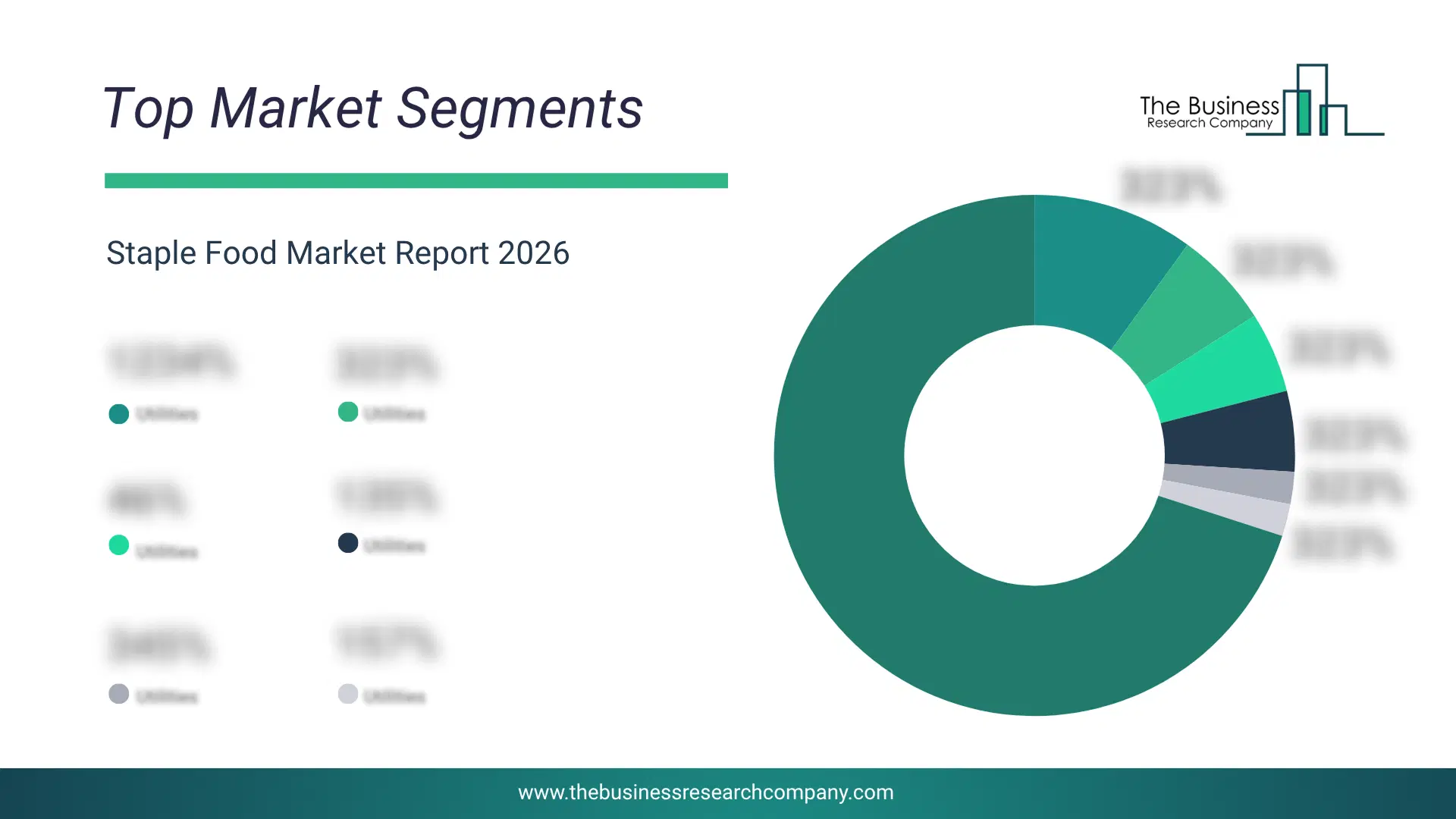
1) By Product : Cereals, Sugar, Roots And Tuber, Fruit, Vegetables, Oil, Other Products 2) By Nature: Organic, Conventional 3) By Distribution Channel: Wholesale Distributors, Online Retailers, Other Distribution Channels, Direct-to-Consumer (D2C), Retail Stores Subsegments: 1) By Cereals: Rice, Wheat, Maize, Barley, Oats 2) By Sugar: Refined Sugar, Raw Sugar, Brown Sugar, Molasses 3) By Roots and Tuber: Potatoes, Cassava, Sweet Potatoes, Yams 4) By Fruit: Bananas, Apples, Citrus Fruits, Mangoes 5) By Vegetables: Leafy Greens, Tomatoes, Onions, Carrots 6) By Oil: Vegetable Oils, Palm Oil, Olive Oil, Coconut Oil 7) By Other Products: Legumes, Pulses, Nuts And SeedsWhat Is The Driver Of The Staple Food Market?
The increasing popularity of plant-based diets is expected to propel the growth of the staple food market going forward. Plant-based diets emphasize the consumption of foods derived from plants, including vegetables, fruits, nuts, seeds, oils, whole grains, legumes, and beans. The popularity of plant-based diets is on the rise due to increasing awareness of health benefits, environmental concerns, and ethical considerations regarding animal welfare. Staple foods such as grains, legumes, and vegetables gain prominence with plant-based diets, boosting nutritional intake and supporting sustainable agriculture, reducing dependency on resource-intensive animal farming, and promoting environmental sustainability. For instance, in May 2023, according to the International Food Information Council, a US based health nonprofit organization, the share of U.S. adults who reported increasing their consumption of “protein from whole plant sources” over the past 12 months rose to 9% much more + 13% somewhat more = 22%, compared with lower net increases reported in 2022. Therefore, the increasing popularity of plant-based diets drives the staple food industry.Key Players In The Global Staple Food Market
Major companies operating in the staple food market are Cargill Incorporated, Nestlé S.A., Archer-Daniels-Midland Company, Bunge Limited, Olam Group, Unilever PLC, Wilmar International, Louis Dreyfus Company, CHS Inc., Tereos Group, Danone S.A., Kraft Heinz Company, General Agriculture Products Co., The Kellogg Company, ITC Limited, Adani Wilmar Ltd., General Mills Inc., AGT Foods and Ingredients Inc., Saskcan Pulse Trading, Bharat Cereals Ltd., GrainCorp Limited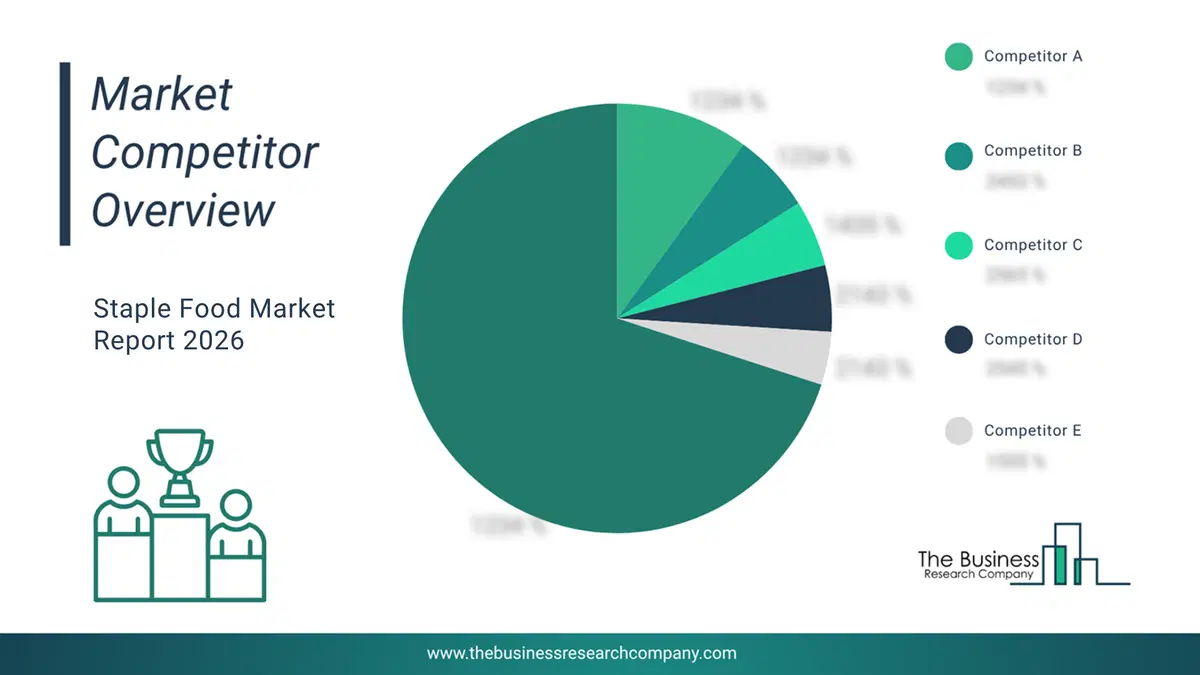
This chart is for illustrative purposes; the full report includes a detailed competitor analysis and comprehensive overview of the top 10 companies in the market.
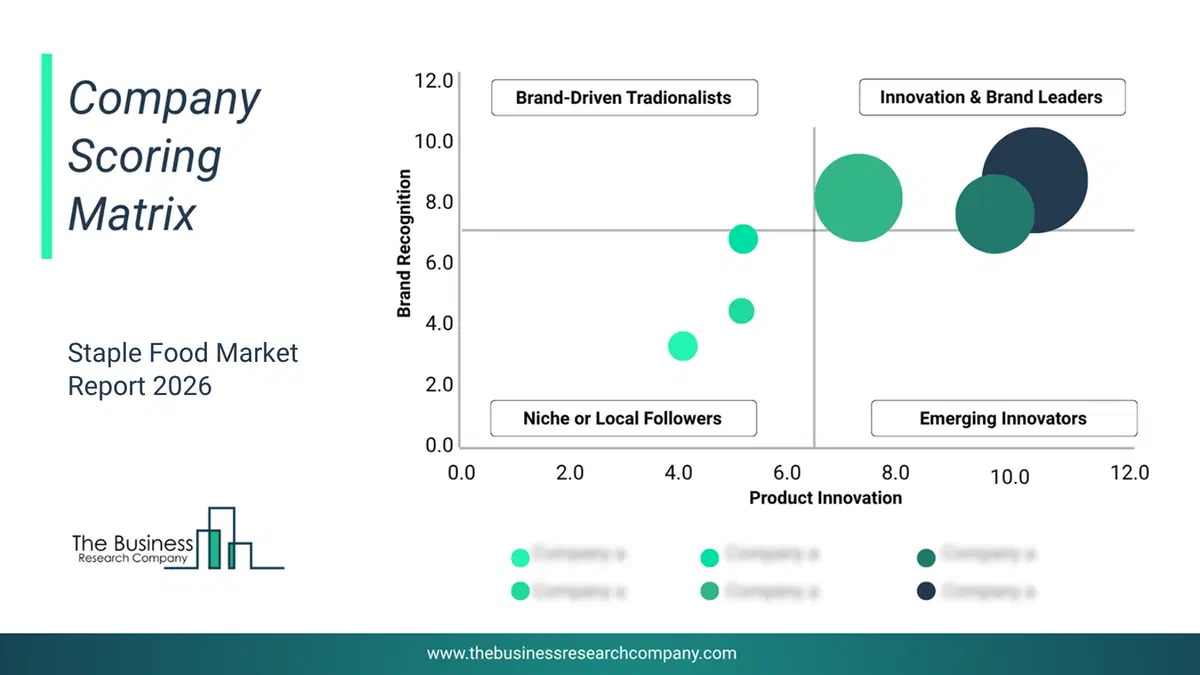
This chart maps companies by product innovation and brand strength, with bubble size indicating relative revenue, helping identify market leaders, challengers, and niche players. This is an illustrative chart; the full report provides a complete and accurate competitive analysis.
Global Staple Food Market Trends and Insights
Major companies operating in the staple food market are focusing on developing advanced innovations, such as multigrain functional cereals, to gain a competitive advantage. These cereals combine whole grains with vitamins, minerals, and added nutritional benefits to meet changing consumer demands for convenience plus wellness. For instance, in April 2025, Life (owned by Quaker Oats Company/PepsiCo), a US based food company, launched Mighty Life, a multigrain cereal available in “Strawberry Blueberry Bliss” (with vitamins C, D, and zinc for immune support) and “Very Vanilla” (with vitamin D and calcium for bone health). The cereal contains 34 g of whole grains per serving and avoids artificial flavors and colors. This launch reflects the broader shift toward nutritionally enriched, ready to eat staples that support health without sacrificing convenience.What Are Latest Mergers And Acquisitions In The Staple Food Market?
In December 2023, Weetabix, a UK-based food processing company, acquired Deeside Cereals for an undisclosed amount. The acquisition will expand Weetabix's product portfolio and manufacturing capabilities in the UK and strengthen its position in the market. Deeside Cereals is a UK-based company that manufactures staple foods.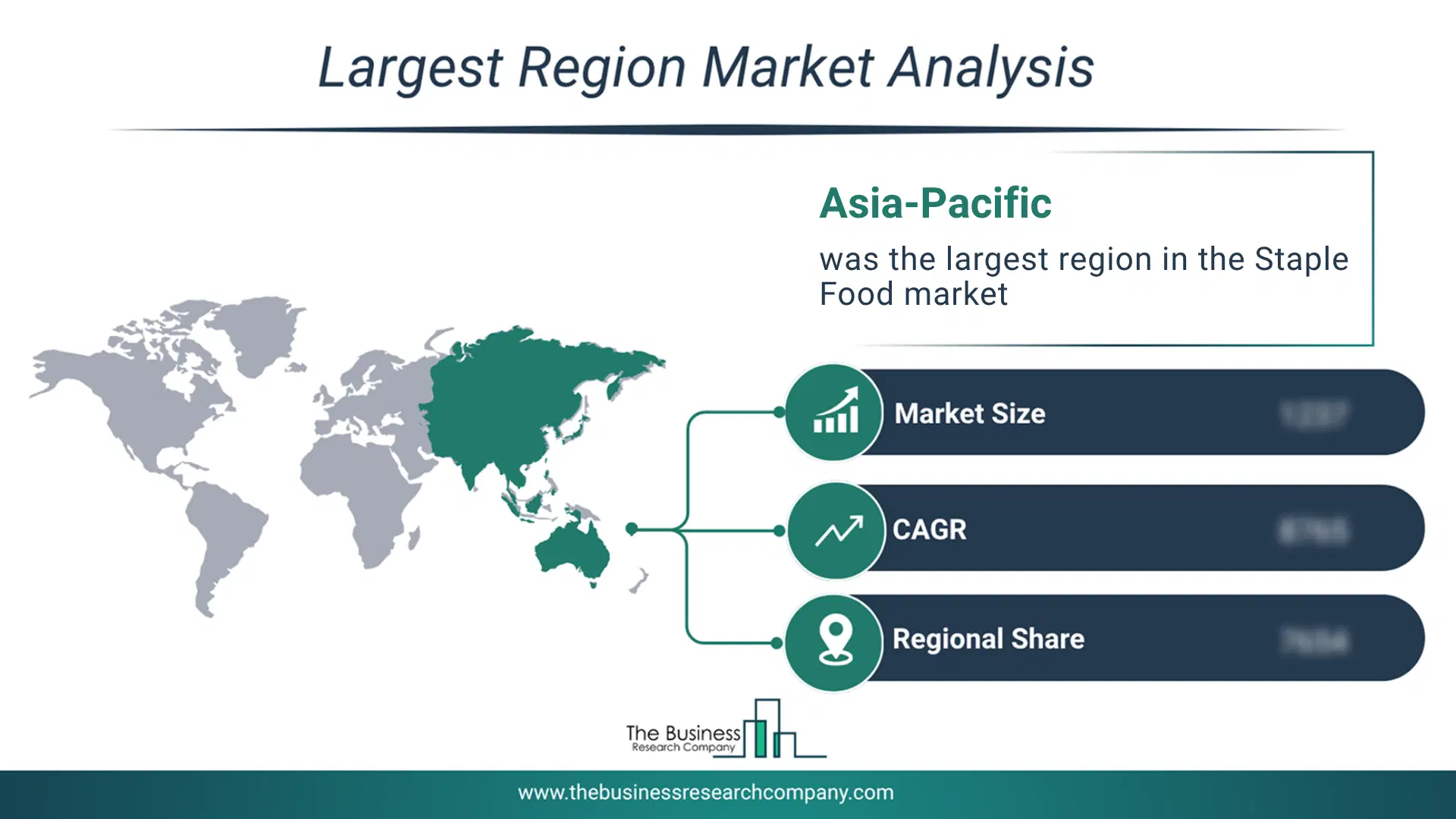
Regional Outlook
Asia-Pacific was the largest region in the staple food market in 2025. The regions covered in this market report are Asia-Pacific, South East Asia, Western Europe, Eastern Europe, North America, South America, Middle East and Africa. The countries covered in this market report are Australia, Brazil, China, France, Germany, India, Indonesia, Japan, Taiwan, Russia, South Korea, UK, USA, Italy, Spain, CanadaWhat Defines the Staple Food Market?
The staple food market consists of sales of essential food items such as grains, pulses, spices, value-added products, and pantry staples. Values in this market are ‘factory gate’ values, that is the value of goods sold by the manufacturers or creators of the goods, whether to other entities (including downstream manufacturers, wholesalers, distributors, and retailers) or directly to end customers. The value of goods in this market includes related services sold by the creators of the goods.How is Market Value Defined and Measured?
The market value is defined as the revenues that enterprises gain from the sale of goods and/or services within the specified market and geography through sales, grants, or donations in terms of the currency (in USD unless otherwise specified). The revenues for a specified geography are consumption values that are revenues generated by organizations in the specified geography within the market, irrespective of where they are produced. It does not include revenues from resales along the supply chain, either further along the supply chain or as part of other products.
This chart presents market attractiveness based on a quantitative evaluation of growth, competition, strategic alignment, and risk, offering a clear view of opportunity areas for decision-making. This chart is for illustrative purposes; the full report contains the complete analysis.

This chart highlights the Total Addressable Market (TAM) by estimating the maximum revenue opportunity using an assumption-driven approach, supporting strategic planning and opportunity sizing across markets. The chart is illustrative; the full report provides a more comprehensive analysis.
What Key Data and Analysis Are Included in the Staple Food Market Report 2026?
The staple food market research report is one of a series of new reports from The Business Research Company that provides market statistics, including industry global market size, regional shares, competitors with the market share, detailed market segments, market trends and opportunities, and any further data you may need to thrive in the staple food industry. The market research report delivers a complete perspective of everything you need, with an in-depth analysis of the current and future state of the industry.Staple Food Market Report Forecast Analysis
| Report Attribute | Details |
|---|---|
| Market Size Value In 2026 | $1963.65 billion |
| Revenue Forecast In 2030 | $2485.28 billion |
| Growth Rate | CAGR of 6.8% from 2026 to 2030 |
| Base Year For Estimation | 2025 |
| Actual Estimates/Historical Data | 2020-2025 |
| Forecast Period | 2026 - 2030 |
| Market Representation | Revenue in USD Billion and CAGR from 2026 to 2030 |
| Segments Covered | Product, Nature, Distribution Channel |
| Regional Scope | Asia-Pacific, Western Europe, Eastern Europe, North America, South America, Middle East, Africa |
| Country Scope | The countries covered in the report are Australia, Brazil, China, France, Germany, India, Indonesia, Japan, Taiwan, Russia, South Korea, UK, USA, Canada, Italy, Spain. |
| Key Companies Profiled | Cargill Incorporated, Nestlé S.A., Archer-Daniels-Midland Company, Bunge Limited, Olam Group, Unilever PLC, Wilmar International, Louis Dreyfus Company, CHS Inc., Tereos Group, Danone S.A., Kraft Heinz Company, General Agriculture Products Co., The Kellogg Company, ITC Limited, Adani Wilmar Ltd., General Mills Inc., AGT Foods and Ingredients Inc., Saskcan Pulse Trading, Bharat Cereals Ltd., GrainCorp Limited |
| Customization Scope | Request for Customization |
| Pricing And Purchase Options | Explore Purchase Options |