
Starch-Based Bioplastic Market Report 2026
Global Outlook – By Product Type (Thermoplastic Starch, Starch Blends, Other Product Types), By Raw Material Source (Corn Starch, Potato Starch, Wheat Starch, Rice Starch), By Grade (Food Grade, Pharmaceutical Grade, Industrial Grade, Technical Grade), By Application (Packaging, Agriculture, Consumer Goods, Automotive, Textiles, Other Applications) – Market Size, Trends, Strategies, and Forecast to 2030
Starch-Based Bioplastic Market Overview
• Starch-Based Bioplastic market size has reached to $2.74 billion in 2025 • Expected to grow to $4.09 billion in 2030 at a compound annual growth rate (CAGR) of 8.3% • Growth Driver: The Growing Demand For Sustainable Packaging Driving The Growth Of The Market Due To Increasing Environmental Concerns • Market Trend: Fermentation-Derived Bio-Based Material Enables Rapid Biodegradation With High-Performance Packaging Applications • North America was the largest region in 2025 and Asia-Pacific is the fastest growing region.What Is Covered Under Starch-Based Bioplastic Market?
Starch-based bioplastic refers to a biodegradable and bio-based plastic material produced using starch as its primary raw material and processed into polymer formulations that can be molded into various products. It serves as a sustainable alternative to conventional petroleum-based plastics by utilizing renewable resources and offering improved biodegradability and reduced environmental impact. The main product types of starch-based bioplastic include thermoplastic starch, starch blends, and other product types. Thermoplastic starch refers to biodegradable plastic materials produced by modifying starch polymers to achieve thermoplastic properties, enabling processing through conventional plastic manufacturing techniques. These bioplastics are derived from raw material sources such as corn starch, potato starch, wheat starch, and rice starch. They are available in grades including food grade, pharmaceutical grade, industrial grade, and technical grade and they find application in packaging, agriculture, consumer goods, automotive, textiles, and others.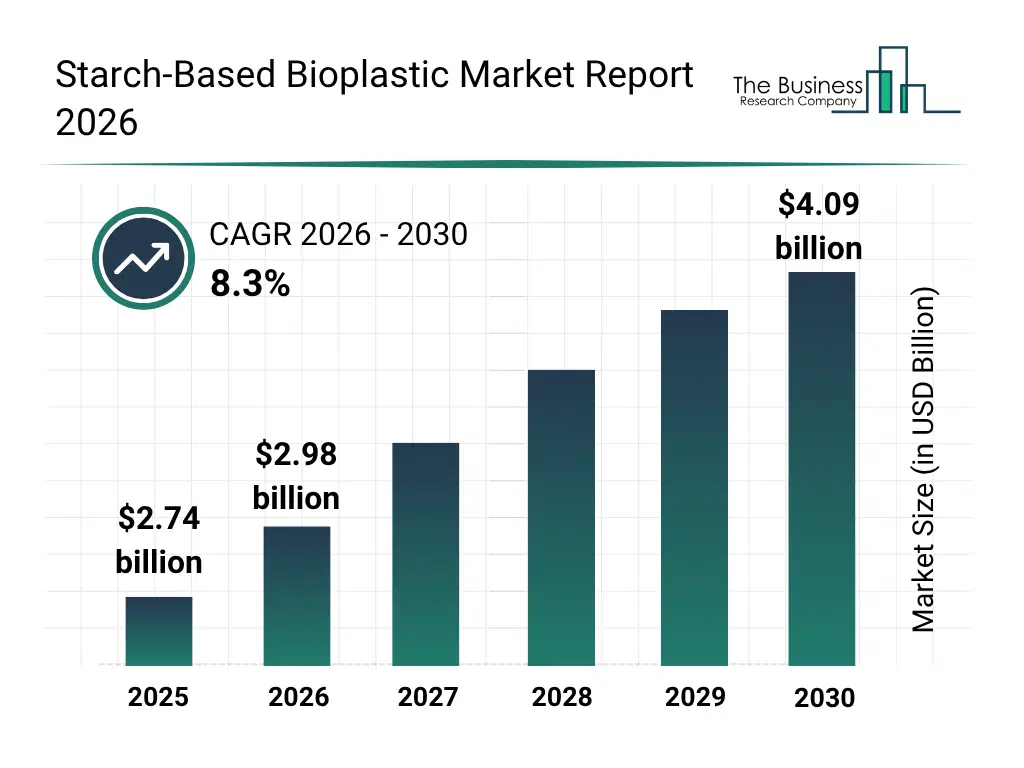
What Is The Starch-Based Bioplastic Market Size and Share 2026?
The starch-based bioplastic market size has grown strongly in recent years. It will grow from $2.74 billion in 2025 to $2.98 billion in 2026 at a compound annual growth rate (CAGR) of 8.7%. The growth in the historic period can be attributed to increasing environmental concerns regarding conventional plastic waste, rising government initiatives promoting biodegradable materials, growing demand for sustainable packaging solutions, increasing consumer preference for eco friendly products, expanding adoption of bio based polymers across various industries.What Is The Starch-Based Bioplastic Market Growth Forecast?
The starch-based bioplastic market size is expected to see strong growth in the next few years. It will grow to $4.09 billion in 2030 at a compound annual growth rate (CAGR) of 8.3%. The growth in the forecast period can be attributed to growing demand for compostable packaging materials, increasing investments in bio based polymer production capacity, rising adoption of sustainable materials in consumer goods and automotive applications, increasing development of advanced starch blend formulations, expanding regulatory support for plastic waste reduction initiatives. Major trends in the forecast period include increasing adoption of renewable starch based plastic alternatives, growing demand for compostable and biodegradable packaging materials, rising development of high performance starch polymer formulations, increasing use of starch based materials in sustainable product applications, growing focus on reducing petroleum based plastic dependency.
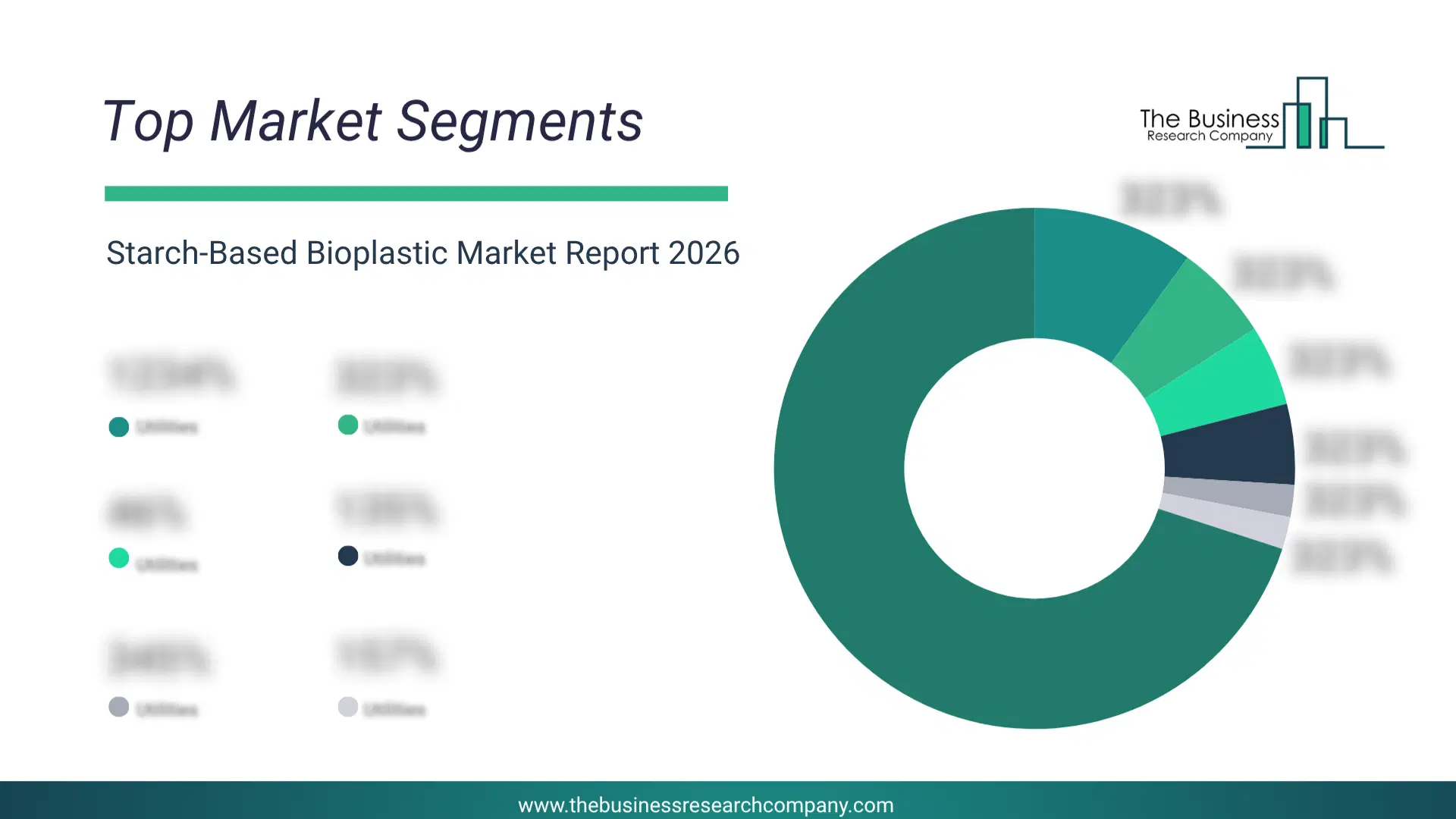
Global Starch-Based Bioplastic Market Segmentation
2) By Raw Material Source: Corn Starch, Potato Starch, Wheat Starch, Rice Starch 3) By Grade: Food Grade, Pharmaceutical Grade, Industrial Grade, Technical Grade 4) By Application: Packaging, Agriculture, Consumer Goods, Automotive, Textiles, Other Applications Subsegments: 1) By Thermoplastic Starch: Injection Molding Grade, Film Extrusion Grade, Foam Expansion Grade, Extrusion Processing Grade, Thermoforming Grade 2) By Starch Blends: Polylactic Acid Blends, Polybutylene Adipate Terephthalate Blends, Polyhydroxyalkanoate Blends, Polyethylene Based Blends, Polyvinyl Alcohol Blends 3) By Other Product Types: Modified Starch Biopolymers, Starch Based Composites, Coated Starch Materials, Cross Linked Starch Materials, Biodegradable Starch ResinsWhat Is The Driver Of The Starch-Based Bioplastic Market?
The growing demand for sustainable packaging is expected to propel the growth of the starch-based bioplastic market going forward. Sustainable packaging refers to the design and use of packaging materials and systems that minimize environmental impact by reducing resource consumption, lowering carbon emissions, and enabling reuse, recycling, or biodegradability throughout their lifecycle. The growing demand for sustainable packaging is due to increasing environmental concerns, which are driving the need to reduce plastic waste and environmental pollution. Starch-based bioplastics contribute to sustainable packaging by offering a biodegradable and renewable alternative to conventional plastics, thereby reducing plastic waste and environmental impact. For instance, in April 2023, according to the 2023 Buying Green Report by Trivium Packaging, a Netherlands-based sustainable packaging company, 82% of consumers expressed willingness to pay more for sustainable packaging, reflecting a four-percentage-point increase from 2022. Therefore, the growing demand for sustainable packaging is driving the growth of the starch-based bioplastic industry.Key Players In The Global Starch-Based Bioplastic Market
Major companies operating in the starch-based bioplastic market are Cargill Incorporated, BASF SE, Mitsubishi Chemical Corporation, Roquette Frères S.A, AGRANA Beteiligungs-AG, SPHERE S.A, Limagrain Ingredients, FKuR Kunststoff GmbH, Kuraray Co. Ltd., Wuhan Huali Environmental Technology Co. Ltd., Sukano AG, SECOS Group Limited, Biome Bioplastics Limited, Green Dot Bioplastics Inc., Rodenburg Biopolymers B.V., Bioplast S.p.A., Jiangsu Torise Biomaterials Co. Ltd., Guangdong Xinhuai New Materials Technology Co. Ltd., Shanghai Tongjieli New Material Co. Ltd., Shenzhen Ecomann Biotechnology Co. Ltd., Suzhou Hanfeng New Material Co. Ltd.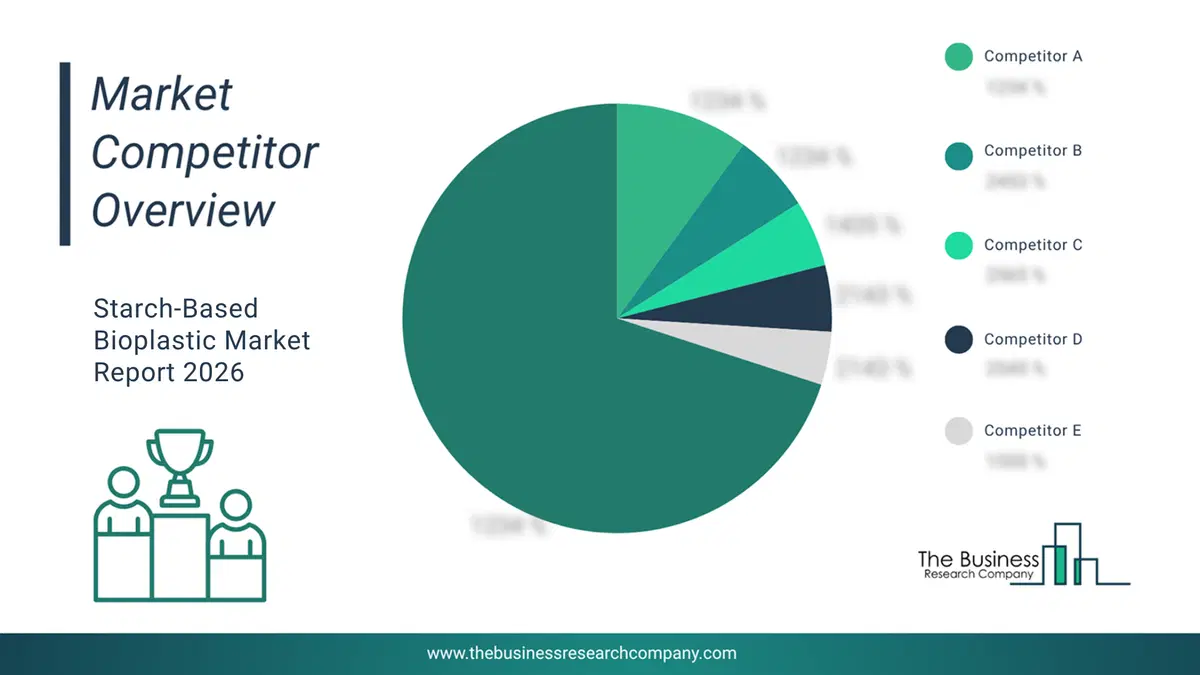
This chart is for illustrative purposes; the full report includes a detailed competitor analysis and comprehensive overview of the top 10 companies in the market.
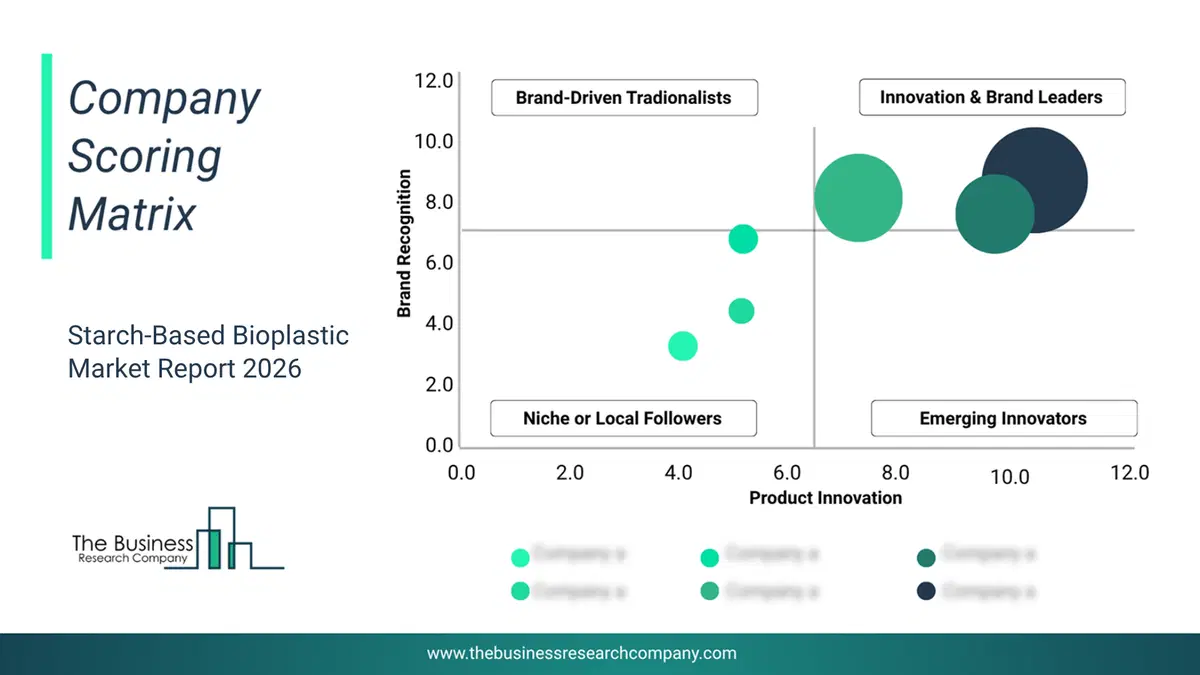
This chart maps companies by product innovation and brand strength, with bubble size indicating relative revenue, helping identify market leaders, challengers, and niche players. This is an illustrative chart; the full report provides a complete and accurate competitive analysis.
Global Starch-Based Bioplastic Market Trends and Insights
Major companies operating in the starch-based bioplastic market are focusing on developing innovative solutions, such as advanced fermentation-derived starch biopolymers, to enhance biodegradability, reduce dependence on fossil-fuel plastics, and improve performance characteristics for packaging and consumer applications. Advanced fermentation-derived starch biopolymers are bio-based materials produced by converting starch into polymer chains through microbial fermentation and biochemical processing, resulting in biodegradable plastics with improved strength, flexibility, and performance compared to conventional starch-based plastics. For instance, in January 2025, Corn Next Inc., a US-based materials science and biotechnology company, launched CornNext-17, a bio-based material developed from renewable corn starch using a patented fermentation process designed to address global plastic pollution. The material is engineered to retain its natural polysaccharide structure while achieving full biodegradation in natural environments within approximately 30 days, significantly faster than many existing biodegradable plastics. It is designed to maintain strong mechanical properties suitable for diverse applications such as packaging and disposable products, while the company’s accompanying white paper highlights its scalability and potential to replace conventional plastic materials across multiple industries.What Are Latest Mergers And Acquisitions In The Starch-Based Bioplastic Market?
In October 2023, Versalis S.p.A., an Italy-based chemical company, acquired Novamont for an undisclosed amount. With this acquisition, Versalis aims to strengthen its position in the renewable chemistry and bioplastics value chain by integrating Novamont’s leadership in biodegradable and bio-based materials to accelerate its transition toward a more sustainable and circular product portfolio. Novamont S.p.A. is an Italy-based provider of bio-based chemicals and biodegradable bioplastics, specializing in the development and production of starch-based bioplastics such as Mater-Bi compostable biopolymer solutions.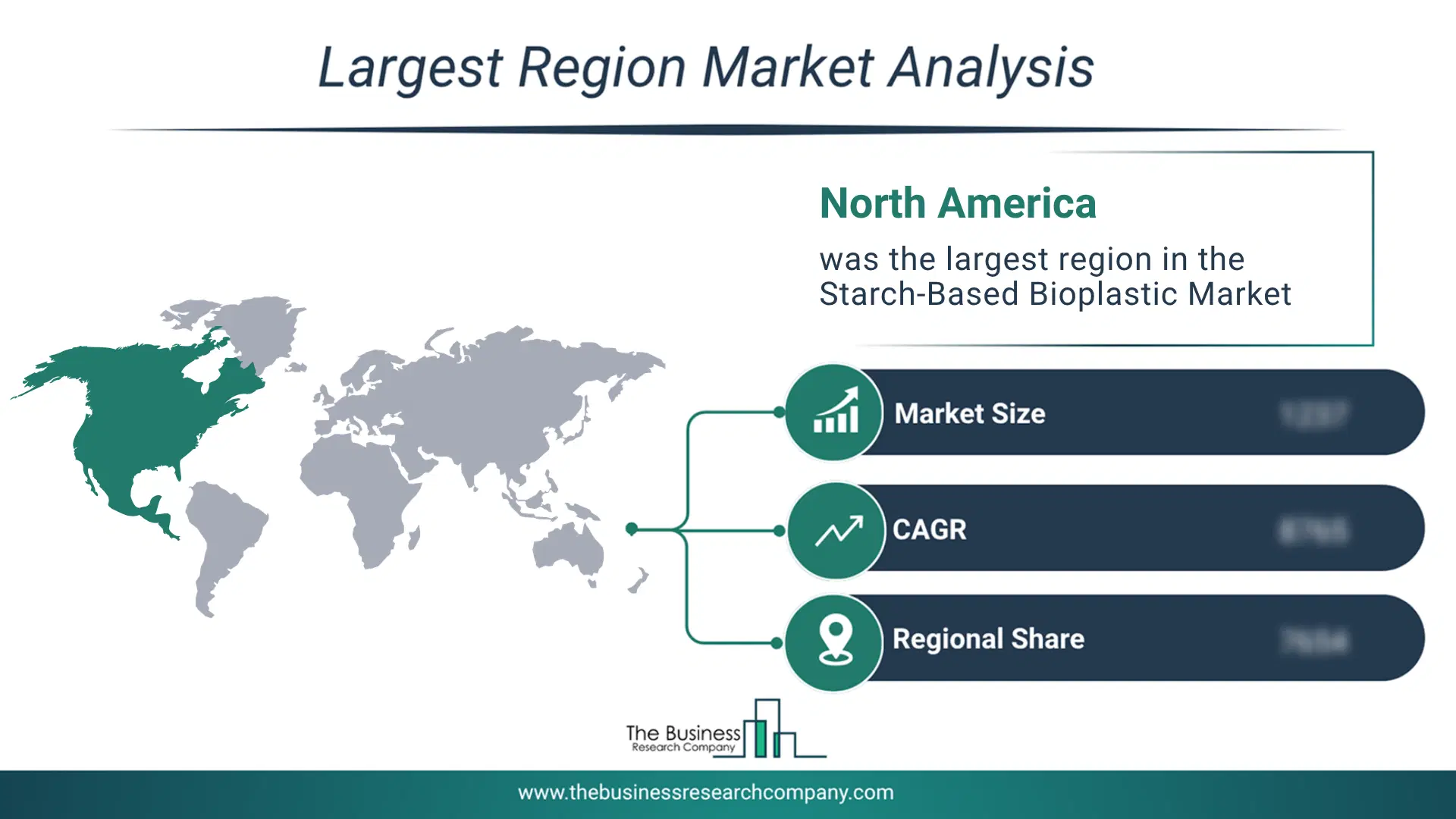
Regional Outlook/Insights
North America was the largest region in the starch-based bioplastic market in 2025. Asia-Pacific is expected to be the fastest-growing region in the forecast period. The regions covered in this market report are Asia-Pacific, South East Asia, Western Europe, Eastern Europe, North America, South America, Middle East, Africa. The countries covered in this market report are Australia, Brazil, China, France, Germany, India, Indonesia, Japan, Taiwan, Russia, South Korea, UK, USA, Canada, Italy, Spain.What Defines the Starch-Based Bioplastic Market?
The starch-based bioplastic market consists of sales of biodegradable packaging films, compostable shopping bags, disposable cutlery and tableware, agricultural mulch films, and food packaging containers and trays. Values in this market are ‘factory gate’ values, that is, the value of goods sold by the manufacturers or creators of the goods, whether to other entities (including downstream manufacturers, wholesalers, distributors, and retailers) or directly to end customers. The value of goods in this market includes related services sold by the creators of the goods.How is Market Value Defined and Measured?
The market value is defined as the revenues that enterprises gain from the sale of goods and/or services within the specified market and geography through sales, grants, or donations in terms of the currency (in USD unless otherwise specified). The revenues for a specified geography are consumption values that are revenues generated by organizations in the specified geography within the market, irrespective of where they are produced. It does not include revenues from resales along the supply chain, either further along the supply chain or as part of other products.
This chart presents market attractiveness based on a quantitative evaluation of growth, competition, strategic alignment, and risk, offering a clear view of opportunity areas for decision-making. This chart is for illustrative purposes; the full report contains the complete analysis.

This chart highlights the Total Addressable Market (TAM) by estimating the maximum revenue opportunity using an assumption-driven approach, supporting strategic planning and opportunity sizing across markets. The chart is illustrative; the full report provides a more comprehensive analysis.
What Key Data and Analysis Are Included in the Starch-Based Bioplastic Market Report 2026?
The starch-based bioplastic market research report is one of a series of new reports from The Business Research Company that provides starch-based bioplastic market statistics, including starch-based bioplastic industry global market size, regional shares, competitors with a starch-based bioplastic market share, detailed starch-based bioplastic market segments, market trends and opportunities, and any further data you may need to thrive in the starch-based bioplastic industry. This starch-based bioplastic market research report delivers a complete perspective of everything you need, with an in-depth analysis of the current and future scenario of the industry.Starch-Based Bioplastic Market Report Forecast Analysis
| Report Attribute | Details |
|---|---|
| Market Size Value In 2026 | $2.98 billion |
| Revenue Forecast In 2030 | $4.09 billion |
| Growth Rate | CAGR of 8.3% from 2026 to 2030 |
| Base Year For Estimation | 2025 |
| Actual Estimates/Historical Data | 2020-2025 |
| Forecast Period | 2026 - 2030 |
| Market Representation | Revenue in USD Billion and CAGR from 2026 to 2030 |
| Segments Covered | Product Type, Raw Material Source, Grade, Application |
| Regional Scope | Asia-Pacific, Western Europe, Eastern Europe, North America, South America, Middle East, Africa |
| Country Scope | The countries covered in the report are Australia, Brazil, China, France, Germany, India, Indonesia, Japan, Taiwan, Russia, South Korea, UK, USA, Canada, Italy, Spain. |
| Key Companies Profiled | Cargill Incorporated, BASF SE, Mitsubishi Chemical Corporation, Roquette Frères S.A, AGRANA Beteiligungs-AG, SPHERE S.A, Limagrain Ingredients, FKuR Kunststoff GmbH, Kuraray Co. Ltd., Wuhan Huali Environmental Technology Co. Ltd., Sukano AG, SECOS Group Limited, Biome Bioplastics Limited, Green Dot Bioplastics Inc., Rodenburg Biopolymers B.V., Bioplast S.p.A., Jiangsu Torise Biomaterials Co. Ltd., Guangdong Xinhuai New Materials Technology Co. Ltd., Shanghai Tongjieli New Material Co. Ltd., Shenzhen Ecomann Biotechnology Co. Ltd., Suzhou Hanfeng New Material Co. Ltd. |
| Customization Scope | Request for Customization |
| Pricing And Purchase Options | Explore Purchase Options |