
Stationary Lead-Acid Battery Market Report 2026
Global Outlook – By Type ( Ordinary Battery, Dry Charged Lead-Acid Battery, Maintenance-Free Battery), By Technology ( Flooded, Valve Regulated Lead Acid), By Voltage ( 6 Voltage, 12 Voltage, 24 Voltage, 48 Voltage, Above 48 Voltage), By Capacity ( Less Than 100 Ampere-Hours, 100-500 Ampere-Hours, 500-1000 Ampere-Hours, Above 1000 Ampere-Hours), By Application ( Telecommunication Applications, Uninterruptible Power System, Utility Or Switchgear, Emergency Lighting, Security System, Cable Television Or Broadcasting, Oil And Gas, Renewable Energy, Railway Backup) – Market Size, Trends, Strategies, and Forecast to 2030
Stationary Lead-Acid Battery Market Overview
• Stationary Lead-Acid Battery market size has reached to $10.89 billion in 2025 • Expected to grow to $15.81 billion in 2030 at a compound annual growth rate (CAGR) of 7.7% • Growth Driver: Increasing Investment In Renewable Energy Driving The Growth Of The Market Due To Rising Energy Demand And Need For Efficient Storage Solutions • Market Trend: Innovative Absorbent Glass Mat Batteries Boost Power, Efficiency, And Longevity For Critical Data Center Uninterruptible Power Supply Systems • North America was the largest region in 2025 and Asia-Pacific is the fastest growing region.Market Gains By 2030 – Top Opportunities By Segment
Market Gain identifies the most promising market opportunities by highlighting the segments or products expected to generate the highest incremental revenue growth over the next five years.
What Is Covered Under Stationary Lead-Acid Battery Market?
A stationary lead-acid battery is a type of lead-acid battery designed for fixed, non-mobile applications where reliable, long-term power backup is required. These batteries remain installed in a single location and are used to supply emergency power, support uninterruptible power systems (UPS), stabilize electrical grids, or provide energy storage for renewable systems. They are built for durability and long service life, often operating in float mode to maintain a full charge or in cycle mode for regular discharge and recharge. The main types of stationary lead-acid battery are ordinary batteries, dry-charged lead-acid batteries, and maintenance-free batteries. An ordinary battery refers to a conventional lead-acid battery that requires regular maintenance, such as checking and refilling electrolyte levels, and is commonly used for stationary or automotive applications. Its technologies include flooded and valve-regulated lead acid. They are available in voltages of 6 voltage, 12 voltage, 24 voltage, 48 voltage, and above 48 voltages, and in capacities of less than 100 ampere-hours, 100-500 ampere-hours, 500-1000 ampere-hours, and above 1000 ampere-hours. These are used in various applications such as telecommunication applications, uninterruptible power systems, utility or switchgear, emergency lighting, security systems, cable television or broadcasting, oil and gas, renewable energy, and railway backup.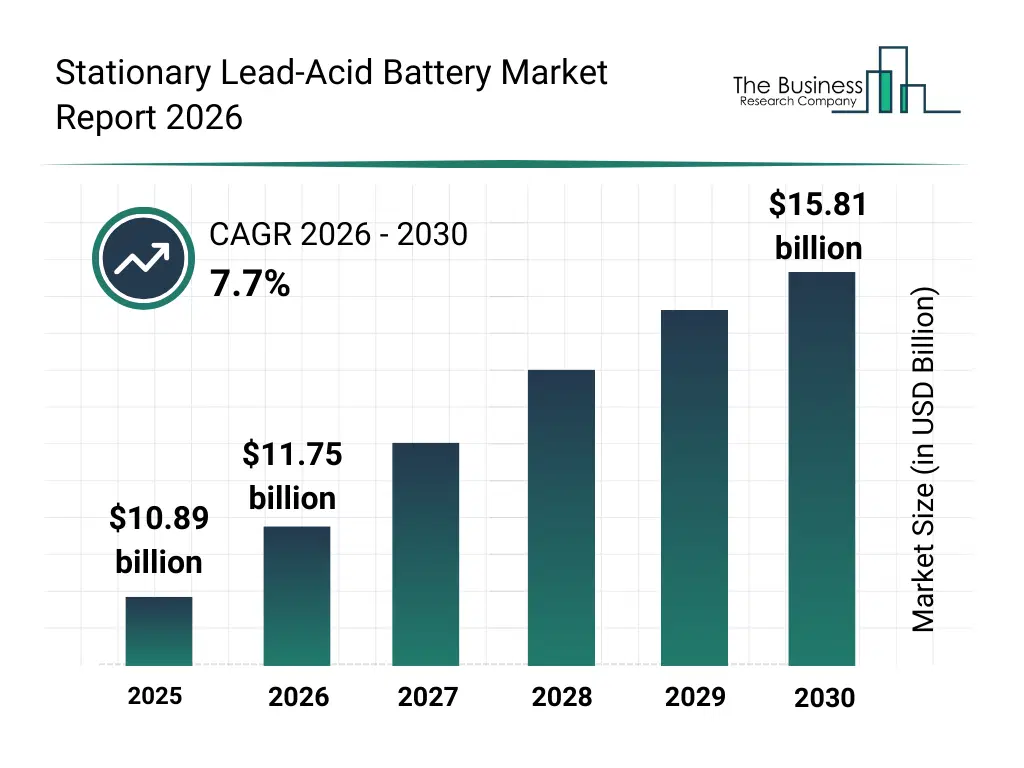
What Is The Stationary Lead-Acid Battery Market Size 2026 And Growth Rate?
The stationary lead-acid battery market size has grown strongly in recent years. It will grow from $10.89 billion in 2025 to $11.75 billion in 2026 at a compound annual growth rate (CAGR) of 8.0%. The growth in the historic period can be attributed to growing demand for uninterrupted power supply, expansion of telecommunication networks, increasing industrial automation, adoption of ups systems in enterprises, regulatory incentives for energy storage.What Is The Stationary Lead-Acid Battery Market Growth Forecast?
The stationary lead-acid battery market size is expected to see strong growth in the next few years. It will grow to $15.81 billion in 2030 at a compound annual growth rate (CAGR) of 7.7%. The growth in the forecast period can be attributed to rise in renewable energy installations, smart grid implementation, demand for energy-efficient storage solutions, growth in electric mobility infrastructure, advancements in Battery Technology. Major trends in the forecast period include high energy density & long-life batteries, grid-scale energy storage adoption, modular & scalable battery systems, enhanced safety & maintenance technologies, renewable energy integration solutions.
Global Stationary Lead-Acid Battery Market Segmentation
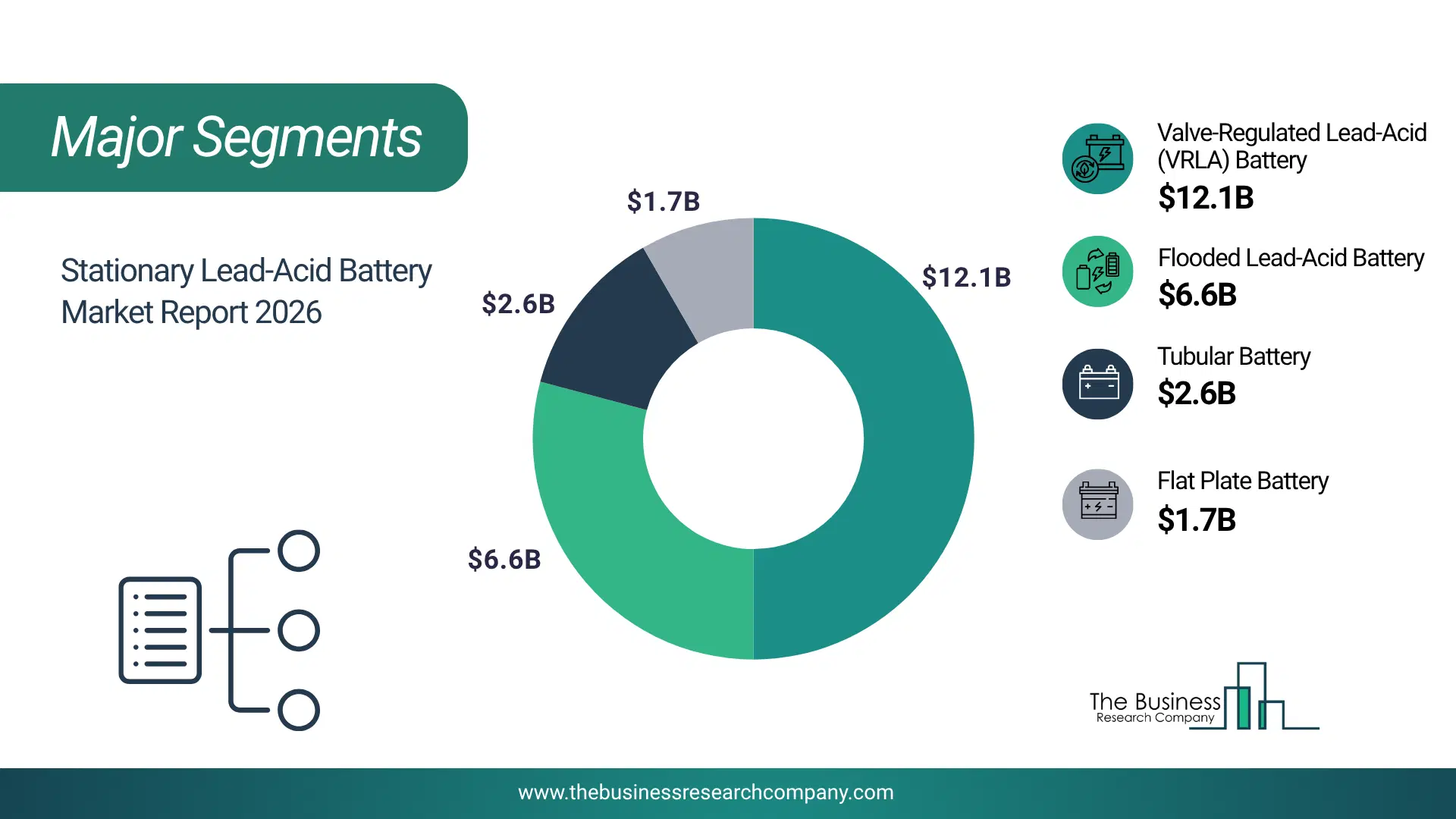
1) By Type: Ordinary Battery, Dry Charged Lead-Acid Battery, Maintenance-Free Battery 2) By Technology: Flooded, Valve Regulated Lead Acid 3) By Voltage: 6 Voltage, 12 Voltage, 24 Voltage, 48 Voltage, Above 48 Voltage 4) By Capacity: Less Than 100 Ampere-Hours, 100-500 Ampere-Hours, 500-1000 Ampere-Hours, Above 1000 Ampere-Hours 5) By Application: Telecommunication Applications, Uninterruptible Power System, Utility Or Switchgear, Emergency Lighting, Security System, Cable Television Or Broadcasting, Oil And Gas, Renewable Energy, Railway Backup Subsegments: 1) By Ordinary Battery: Flooded Lead-Acid Battery, Tubular Plate Battery, Flat Plate Battery 2) By Dry Charged Lead-Acid Battery: Low Maintenance Dry Charged Battery, High Capacity Dry Charged Battery 3) By Maintenance-Free Battery: Sealed Lead-Acid Battery, Gel Electrolyte Battery, Absorbent Glass Mat Battery The top segments in the stationary lead-acid battery market will be: • Valve-Regulated Lead-Acid (VRLA) Battery will reach $12.09 billion by 2030. • Flooded Lead-Acid Battery will reach $6.58 billion by 2030. • Tubular Battery will reach $2.53 billion by 2030. • Flat Plate Battery will reach $1.64 billion by 2030.What Is The Driver Of The Stationary Lead-Acid Battery Market?
The increasing investment in renewable energy projects is expected to propel the growth of the stationary lead-acid battery market going forward. Renewable energy investments are driven by rising energy demand and the need for cleaner, sustainable, and long-term power solutions. This trend increases the demand for reliable energy storage systems, enhancing the role of stationary lead-acid batteries. For instance, in August 2025, according to BloombergNEF, a UK-based strategic research provider covering global commodity markets and the disruptive technologies shaping the future of the energy transition, the first half of 2025 saw global renewable energy investment reach $386 billion, a 10% increase from the same period in 2024. Therefore, the increasing investment in renewable energy projects is driving the growth of the stationary lead-acid battery industry.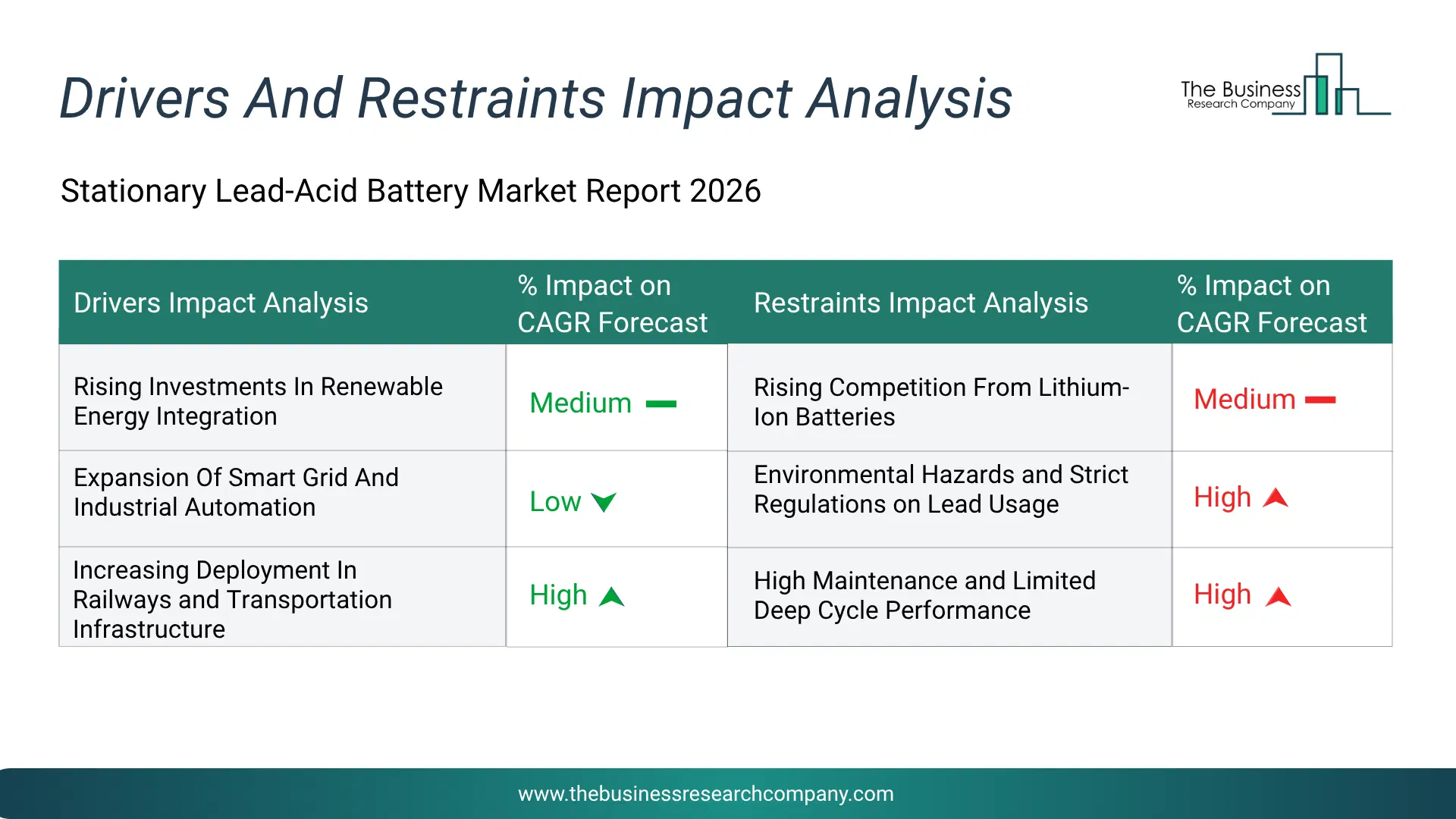
Infographic Chart Showing Key Market Drivers Analysis And Restraints For Stationary Lead-Acid Battery Market
The chart presents an impact analysis of key drivers and restraints, quantifying their relative influence on the market's growth rate and helping assess the balance between growth enablers and limiting factors. This chart offers a high-level perspective; the full report contains more detailed insights.
How Will The Drivers Impact Growth In The Global Stationary Lead-Acid Battery Market?
• Rising Investments In Renewable Energy Integration (Medium) – During the forecast period, the rising investments in renewable energy integration is expected to become a key growth driver for the stationary lead-acid battery market by 2030. Rising investments in renewable energy integration act as a major driver for the stationary lead-acid battery market by increasing the need for reliable energy storage systems. As solar and wind power generation expands, the intermittent nature of these sources requires efficient backup solutions to ensure grid stability. Stationary lead-acid batteries offer a cost-effective and proven option for storing excess renewable energy. Their durability and ability to provide consistent power during low-generation periods make them ideal for renewable integration projects. Consequently, growing renewable energy investments directly boost the demand for stationary lead-acid batteries across utilities and industrial sectors. • Expansion Of Smart Grid And Industrial Automation (Low) – During the forecast period, the expansion of smart grid and industrial automation is expected to emerge as a major factor driving the expansion of the stationary lead-acid battery market by 2030. The expansion of smart grids and industrial automation is driving the demand for stationary lead-acid batteries by enhancing the need for reliable and uninterrupted power supply systems. Smart grids rely on energy storage solutions to balance load fluctuations and ensure grid stability, where lead-acid batteries serve as cost-effective backup options. Similarly, automated industrial operations require continuous power to maintain efficiency and prevent downtime. Stationary lead-acid batteries offer proven reliability and quick response in such critical applications. As industries modernize and energy systems become more intelligent, the adoption of these batteries continues to accelerate. • Increasing Deployment In Railways and Transportation Infrastructure (High) – During the forecast period, the increasing deployment in railways and transportation infrastructure is expected to act as a key growth catalyst for the stationary lead-acid battery market by 2030. The increasing deployment of stationary lead-acid batteries in railways and transportation infrastructure acts as a major market driver due to their reliability, cost-effectiveness, and ability to provide uninterrupted backup power. These batteries support critical operations such as signaling systems, emergency lighting, and communication networks, ensuring safety and continuity. Growing investments in railway electrification and modernization projects further boost demand for dependable energy storage. Their long service life and low maintenance needs make them ideal for large-scale transportation applications. As global transportation infrastructure expands, the requirement for stable and efficient backup power continues to strengthen the stationary lead-acid battery market.How Will The Restraints Impact Growth In The Global Stationary Lead-Acid Battery Market?
• Rising Competition From Lithium-Ion Batteries (Medium) – During the forecast period, the rising competition from lithium-ion batteries acts as a major restraint for the stationary lead-acid battery market, as lithium-ion technology offers higher energy density, longer lifespan, and faster charging capabilities. These advantages make lithium-ion batteries more suitable for modern energy storage and renewable applications. Additionally, their rapidly declining prices and growing adoption across industries further reduce the demand for lead-acid alternatives. Consumers and businesses are increasingly shifting toward lithium-based systems for greater efficiency and space savings. Consequently, lead-acid battery manufacturers face pressure to innovate and cut costs to remain competitive. • Environmental Hazards and Strict Regulations on Lead Usage (High) – During the forecast period, the environmental hazards and strict regulations on lead usage act as a major restraint for the stationary lead-acid battery market. Lead, being a toxic heavy metal, poses serious risks to human health and the environment during manufacturing, usage, and disposal. Governments worldwide have imposed stringent environmental regulations and recycling mandates to limit lead contamination. These rules increase compliance costs and operational complexities for manufacturers. Consequently, many industries are shifting towards alternative battery technologies with lower environmental impact. • High Maintenance and Limited Deep Cycle Performance (High) – During the forecast period, the high maintenance requirements and limited deep cycle performance act as key restraints for stationary lead-acid batteries. These batteries need regular maintenance, including electrolyte checks and terminal cleaning, which increases operational costs and downtime. Their limited ability to handle deep discharge cycles reduces lifespan and efficiency in demanding applications such as renewable energy storage. Frequent replacements further add to total ownership costs. As a result, industries increasingly shift toward low-maintenance alternatives like lithium-ion batteries.Key Players In The Global Stationary Lead-Acid Battery Market
Major companies operating in the stationary lead-acid battery market are Panasonic Corporation, Tianneng Group Co. Ltd., Clarios LLC, Chaowei Power Holdings Limited, GS Yuasa Corporation, EnerSys, East Penn Manufacturing Co., Exide Industries Limited, Leoch International Technology Limited, Zhejiang Narada Power Source Co. Ltd., Luminous Power Technologies Pvt. Ltd., Banner GmbH, Hoppecke Batterien GmbH & Co. KG, Okaya Power Pvt. Ltd., C&D Technologies Inc., Shandong Sacred Sun Power Sources Co. Ltd., Crown Battery Manufacturing Company, HBL Power Systems Ltd., Microtek International Pvt. Ltd., PT Century Batteries Indonesia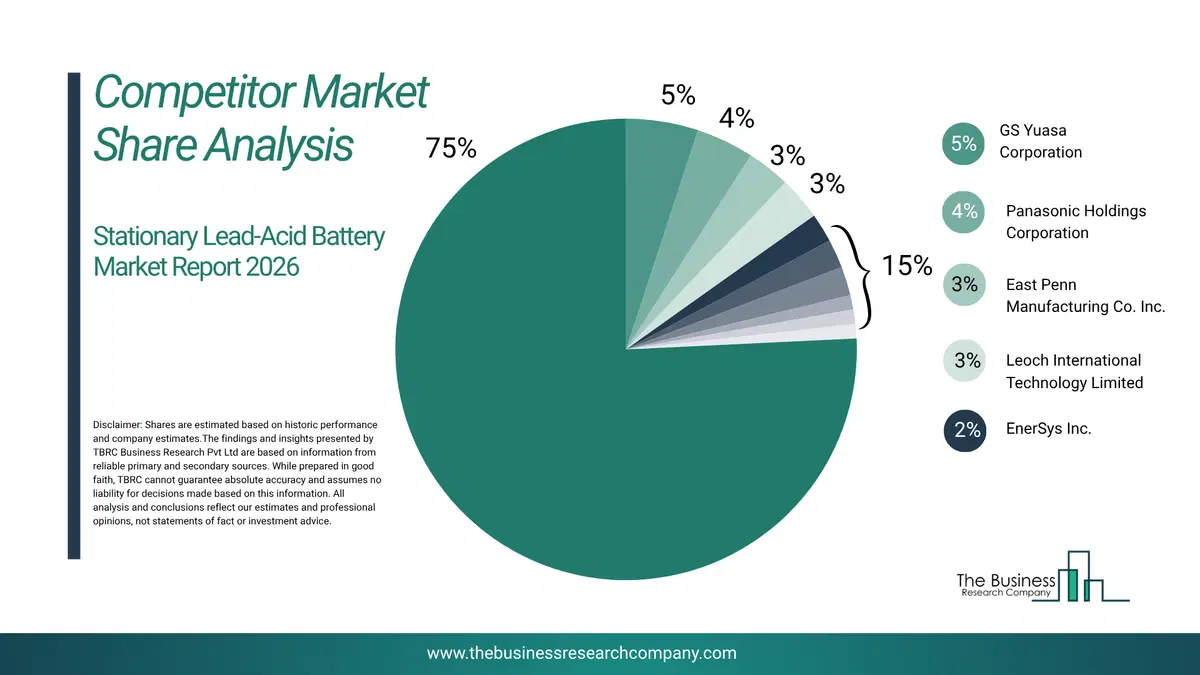
This chart is for illustrative purposes; the full report includes a detailed competitor analysis and comprehensive overview of the top 10 companies in the market.
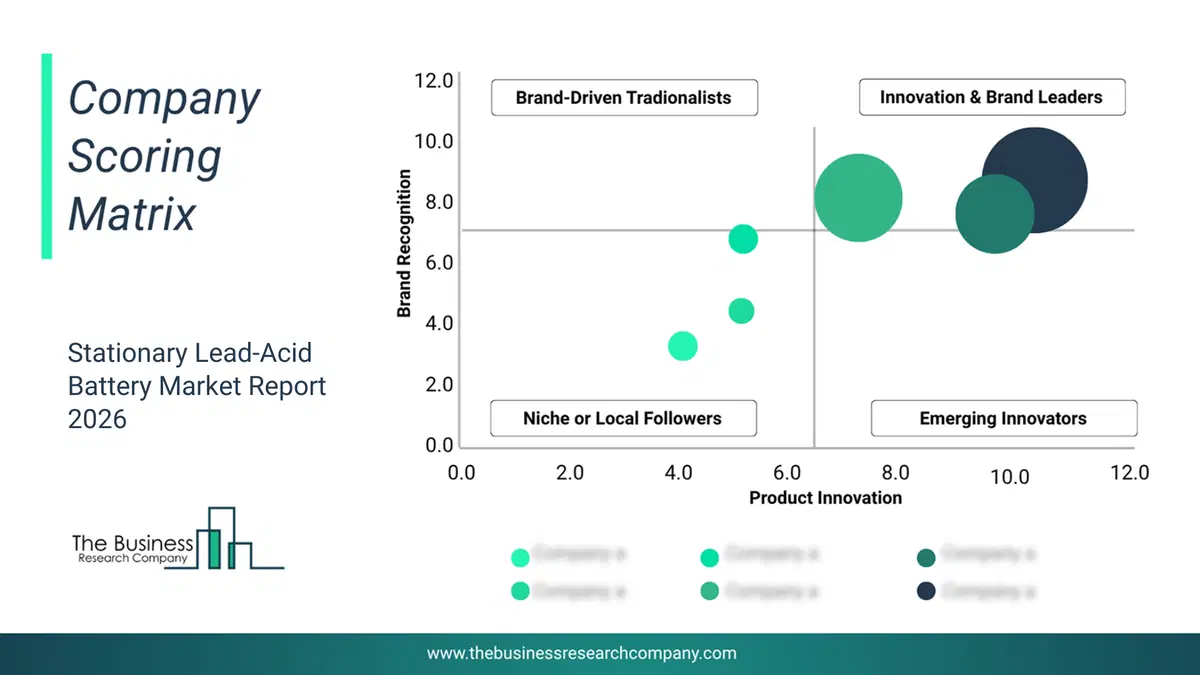
This chart maps companies by product innovation and brand strength, with bubble size indicating relative revenue, helping identify market leaders, challengers, and niche players. This is an illustrative chart; the full report provides a complete and accurate competitive analysis.
Global Stationary Lead-Acid Battery Market Trends and Insights
Major companies operating in the stationary lead-acid battery market are focusing on developing innovative solutions, such as advanced absorbent glass mat batteries, to enhance performance, reliability, and efficiency for critical power applications. Absorbent Glass Mat (AGM) batteries are a type of lead-acid battery in which the electrolyte is absorbed in a fiberglass mat, making them spill-proof, maintenance-free, and capable of delivering high power and faster recharge. For instance, in January 2024, Exide Industries Limited, an India-based battery manufacturing company, launched the Sprinter Pure Power battery range, tailored specifically for data center UPS systems. This range incorporates advanced Thin Plate Pure Lead (TPPL) AGM technology, delivering superior power output, enhanced corrosion resistance, and reliable high-temperature performance, resulting in notable energy and cooling cost savings. With a design life exceeding 12 years, these batteries offer 20% more power during high-rate discharge and 15–20% space savings, lowering the total cost of ownership for data centers while ensuring maximum reliability and durability.What Are Latest Mergers And Acquisitions In The Stationary Lead-Acid Battery Market?
In February 2023, The Sunlight Group, a US-based technology company, acquired 51% controlling stake in Israeli Industrial Batteries Energy Storage Systems for an undisclosed amount. With this acquisition, Sunlight Group aims to strengthen its presence in the energy storage sector and expand its technological capabilities. Israeli Industrial Batteries Energy Storage Systems Ltd is an Israeli-based company that manufactures and provides stationary lead-acid batteries.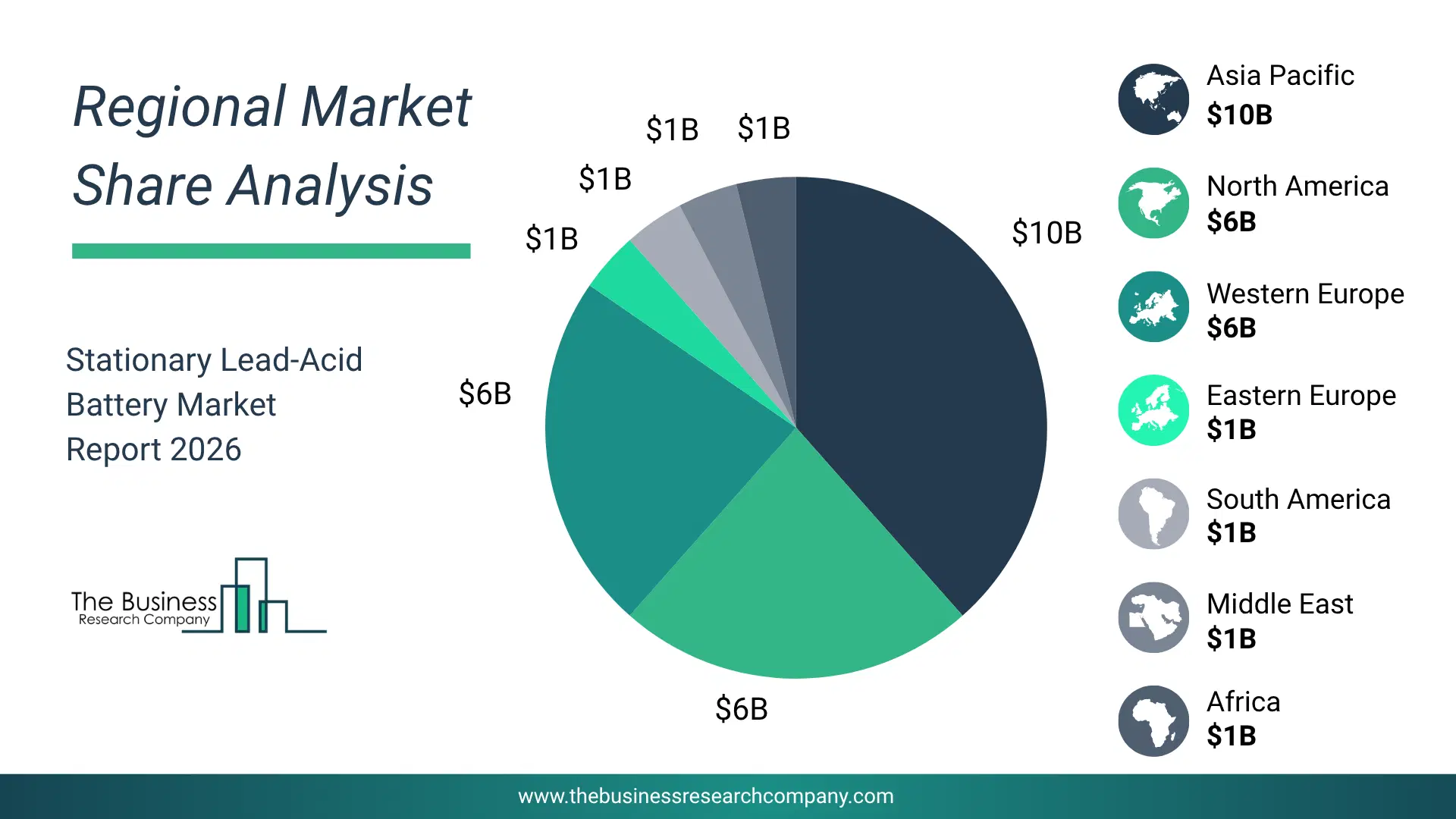
Regional Outlook
North America was the largest region in the stationary lead-acid battery market in 2025. Asia-Pacific is expected to be the fastest-growing region in the forecast period. The regions covered in this market report are Asia-Pacific, South East Asia, Western Europe, Eastern Europe, North America, South America, Middle East, Africa. The countries covered in this market report are Australia, Brazil, China, France, Germany, India, Indonesia, Japan, Taiwan, Russia, South Korea, UK, USA, Canada, Italy, Spain.What Defines the Stationary Lead-Acid Battery Market?
The stationary lead-acid battery market consists of sales of flooded lead-acid batteries, sealed lead-acid batteries, tubular plate batteries, stationary industrial batteries, and battery accessories and components. Values in this market are ‘factory gate’ values; that is, the value of goods sold by the manufacturers or creators of the goods, whether to other entities (including downstream manufacturers, wholesalers, distributors, and retailers) or directly to end customers. The value of goods in this market includes related services sold by the creators of the goods.How is Market Value Defined and Measured?
The market value is defined as the revenues that enterprises gain from the sale of goods and/or services within the specified market and geography through sales, grants, or donations in terms of the currency (in USD unless otherwise specified). The revenues for a specified geography are consumption values that are revenues generated by organizations in the specified geography within the market, irrespective of where they are produced. It does not include revenues from resales along the supply chain, either further along the supply chain or as part of other products.
This chart presents market attractiveness based on a quantitative evaluation of growth, competition, strategic alignment, and risk, offering a clear view of opportunity areas for decision-making. This chart is for illustrative purposes; the full report contains the complete analysis.

This chart highlights the Total Addressable Market (TAM) by estimating the maximum revenue opportunity using an assumption-driven approach, supporting strategic planning and opportunity sizing across markets. The chart is illustrative; the full report provides a more comprehensive analysis.
What Key Data and Analysis Are Included in the Stationary Lead-Acid Battery Market Report 2026?
The stationary lead-acid battery market research report is one of a series of new reports from The Business Research Company that provides market statistics, including industry global market size, regional shares, competitors with the market share, detailed market segments, market trends and opportunities, and any further data you may need to thrive in the stationary lead-acid battery industry. The market research report delivers a complete perspective of everything you need, with an in-depth analysis of the current and future state of the industry.Stationary Lead-Acid Battery Market Report 2026 Market Report Forecast Analysis
| Report Attribute | Details |
|---|---|
| Market Size Value In 2026 | $11.75 billion |
| Revenue Forecast In 2030 | $15.81 billion |
| Growth Rate | CAGR of 7.7% from 2026 to 2030 |
| Base Year For Estimation | 2025 |
| Actual Estimates/Historical Data | 2020-2025 |
| Forecast Period | 2026 - 2030 |
| Market Representation | Revenue in USD Billion and CAGR from 2026 to 2030 |
| Segments Covered | Type, Technology, Voltage, Capacity, Application |
| Regional Scope | Asia-Pacific, Western Europe, Eastern Europe, North America, South America, Middle East, Africa |
| Country Scope | The countries covered in the report are Australia, Brazil, China, France, Germany, India, ... |
| Key Companies Profiled | Panasonic Corporation, Tianneng Group Co. Ltd., Clarios LLC, Chaowei Power Holdings Limited, GS Yuasa Corporation, EnerSys, East Penn Manufacturing Co., Exide Industries Limited, Leoch International Technology Limited, Zhejiang Narada Power Source Co. Ltd., Luminous Power Technologies Pvt. Ltd., Banner GmbH, Hoppecke Batterien GmbH & Co. KG, Okaya Power Pvt. Ltd., C&D Technologies Inc., Shandong Sacred Sun Power Sources Co. Ltd., Crown Battery Manufacturing Company, HBL Power Systems Ltd., Microtek International Pvt. Ltd., PT Century Batteries Indonesia |
| Customization Scope | Request for Customization |
| Pricing And Purchase Options | Explore Purchase Options |