
Stem Cell Beauty Product Market Report 2026
Global Outlook – By Product Type (Serums, Creams And Moisturizers, Face Masks, Injectables And Fillers, Oils And Essences), By Consumer Demographics (Age Groups, Gender, Income Levels), By Ingredient Source (Allogenic Stem Cells, Autologous Stem Cells, Placental Stem Cells, Umbilical Cord-Derived Stem Cells, Induced Pluripotent Stem Cells (iPSCs) ), By Target Skin Concerns (Aging Skin, Hyperpigmentation, Acne And Scarring, Dryness And Dehydration, Sensitivity And Redness), By Distribution Channels (Online Retail, Offline Retail, Direct Sales) – Market Size, Trends, Strategies, and Forecast to 2030
Stem Cell Beauty Product Market Overview
• Stem Cell Beauty Product market size has reached to $3.01 billion in 2025 • Expected to grow to $5.26 billion in 2030 at a compound annual growth rate (CAGR) of 11.7% • Growth Driver: Increasing Consumer Focus On Personal-Care Routines Fueling The Growth Of The Market Due To Rising Emphasis On Skin Rejuvenation And Preventive Beauty • Market Trend: Advanced Human Stem Cell Technology Enhances Firmness And Elasticity • North America was the largest region in 2025 and Asia-Pacific is the fastest growing region.What Is Covered Under Stem Cell Beauty Product Market?
Stem cell beauty product market refers to cosmetic and skincare products that incorporate stem cell extracts or stem cell–derived ingredients to promote skin regeneration, anti-aging effects, and enhanced cellular repair. Its primary goal is to improve skin texture, hydration, elasticity, and overall appearance through biologically active compounds. It also leverages advanced biotechnology to support skin rejuvenation, protect against environmental damage, and stimulate natural cell renewal. The main product types of stem cell beauty product include serums, creams and moisturizers, face masks, injectables and fillers, oils and essences. Serums refer to concentrated skincare formulations enriched with stem-cell-derived bioactive compounds that target specific skin concerns such as regeneration, hydration, and repair by promoting cellular renewal and enhancing skin vitality. There are consumer demographics such as age groups, gender, and income levels. The ingredient sources include allogenic stem cells, autologous stem cells, placental stem cells, umbilical cord-derived stem cells, and induced pluripotent stem cells (iPSCs). The target skin concerns include aging skin, hyperpigmentation, acne and scarring, dryness and dehydration, sensitivity and redness, and they are used by several distribution channels include online retail, offline retail, and direct sales.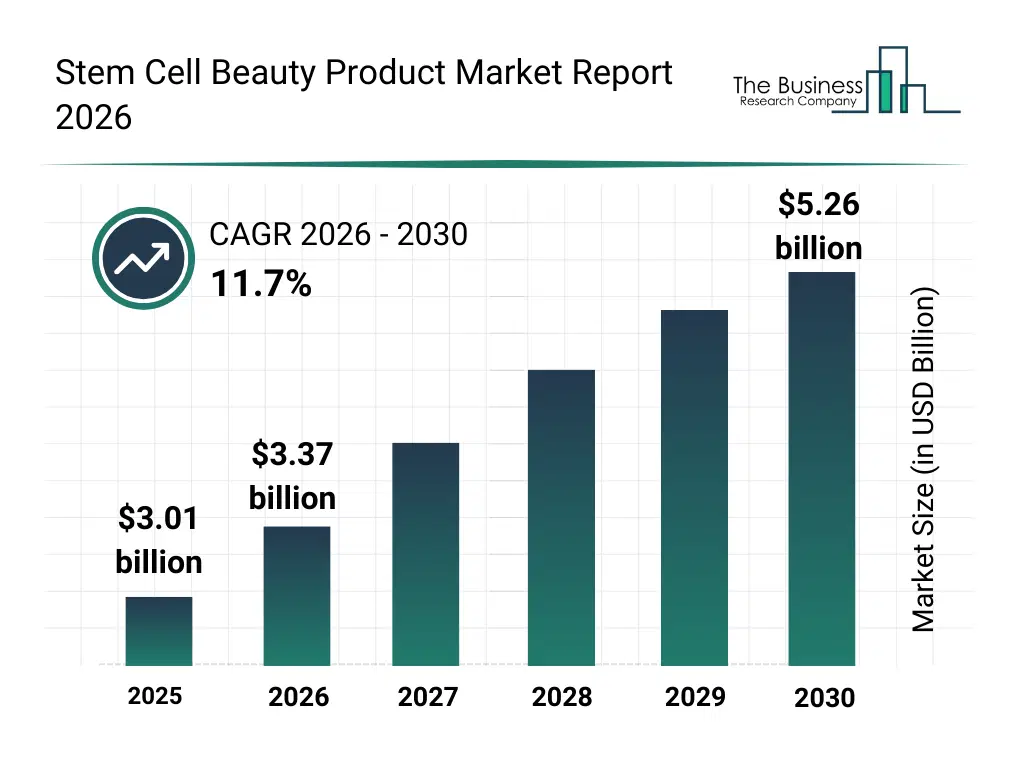
What Is The Stem Cell Beauty Product Market Size and Share 2026?
The stem cell beauty product market size has grown rapidly in recent years. It will grow from $3.01 billion in 2025 to $3.37 billion in 2026 at a compound annual growth rate (CAGR) of 12.0%. The growth in the historic period can be attributed to growing consumer interest in anti-aging solutions, increasing awareness of regenerative skincare, rising preference for premium beauty products, expanding availability through specialty retailers, and growing influence of celebrity-led skincare trends.What Is The Stem Cell Beauty Product Market Growth Forecast?
The stem cell beauty product market size is expected to see rapid growth in the next few years. It will grow to $5.26 billion in 2030 at a compound annual growth rate (CAGR) of 11.7%. The growth in the forecast period can be attributed to increasing demand for clinically proven beauty solutions, rising adoption of bioactive and regenerative ingredients, expanding investment in advanced cosmetic biotechnology, growing consumer shift toward personalized skincare, and increasing focus on natural yet high-performance formulations. Major trends in the forecast period include technology-driven formulation innovations, advancements in plant and human stem cell extraction methods, developments in lab-grown active ingredients, rising research and development in skin rejuvenation biology, and innovation in delivery systems for deeper skin penetration.
Global Stem Cell Beauty Product Market Segmentation
1) By Product Type: Serums, Creams And Moisturizers, Face Masks, Injectables And Fillers, Oils And Essences 2) By Consumer Demographics: Age Groups, Gender, Income Levels 3) By Ingredient Source: Allogenic Stem Cells, Autologous Stem Cells, Placental Stem Cells, Umbilical Cord-Derived Stem Cells, Induced Pluripotent Stem Cells (iPSCs) 4) By Target Skin Concerns: Aging Skin, Hyperpigmentation, Acne And Scarring, Dryness And Dehydration, Sensitivity And Redness 5) By Distribution Channels: Online Retail, Offline Retail, Direct Sales Subsegments: 1) By Serums: Anti Aging Stem Cell Serums, Skin Brightening Stem Cell Serums, Hydration Boost Stem Cell Serums 2) By Creams And Moisturizers: Regenerative Stem Cell Creams, Deep Moisture Stem Cell Creams, Rejuvenating Stem Cell Night Creams 3) By Face Masks: Hydrating Stem Cell Sheet Masks, Regenerating Stem Cell Gel Masks, Brightening Stem Cell Clay Masks 4) By Injectables And Fillers: Stem Cell Infused Dermal Fillers, Regenerative Stem Cell Injectable Solutions, Anti Aging Stem Cell Facial Injectables 5) By Oils And Essences: Nourishing Stem Cell Facial Oils, Rejuvenating Stem Cell Essences, Hydrating Stem Cell Beauty OilsWhat Is The Driver Of The Stem Cell Beauty Product Market?
The increasing consumer focus on personal-care routines is expected to propel the growth of the stem cell beauty product market going forward. Personal-care routines refer to regular practices individuals adopt to maintain or improve their physical, emotional, and aesthetic well-being through skincare, wellness rituals, and preventive beauty measures. The rise in consumer focus on personal-care routines is due to growing awareness of preventive health and mental well-being, as individuals seek to maintain their appearance and overall wellness proactively. Stem cell beauty products help meet these evolving personal-care needs by supporting skin regeneration, enhancing elasticity, reducing visible signs of aging, and promoting overall skin vitality through advanced cell-repair mechanisms. For instance, in December 2024, according to the United States Bureau of Labor Statistics, a US-based federal statistical agency, average annual expenditures on personal care products and services increased from $866,000 in 2022 to $950,000 in 2023, marking a 9.7% growth. Therefore, the increasing consumer focus on personal-care routines is driving the growth of the stem cell beauty product industry.Key Players In The Global Stem Cell Beauty Product Market
Major companies operating in the stem cell beauty product market are Christian Dior SE, Unilever plc, L’Oréal S.A., Oriflame Holding AG, Juice Beauty Inc., Eminence Organic Skin Care, Chantecaille Beauté Inc., SkinMedica Inc., Andalou Naturals, Mibelle Biochemistry, Stempeutics Research Pvt. Ltd., Mychelle Dermaceuticals LLC, Intelligent Nutrients LLC, Cellular Health MD, U.S Stem Cell Inc., Celprogen Inc., Vytrus Biotech S.A., AnteAGE, Stemology, Aveda Corporation, BioRestorative Therapies Inc.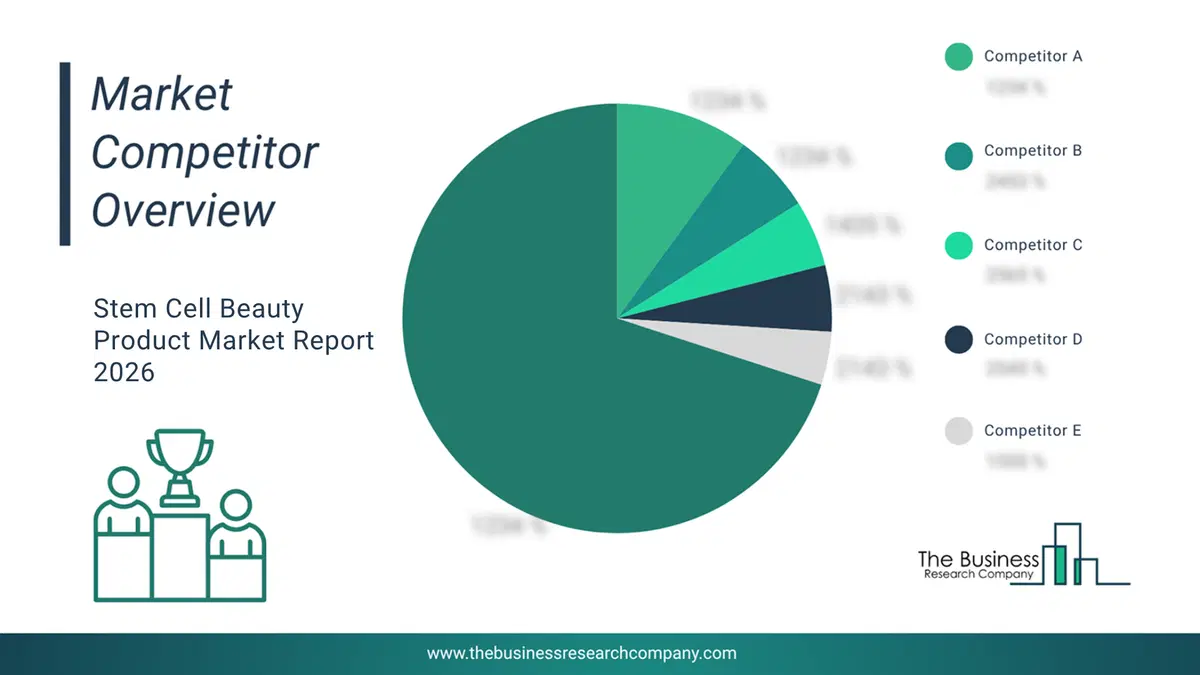
This chart is for illustrative purposes; the full report includes a detailed competitor analysis and comprehensive overview of the top 10 companies in the market.
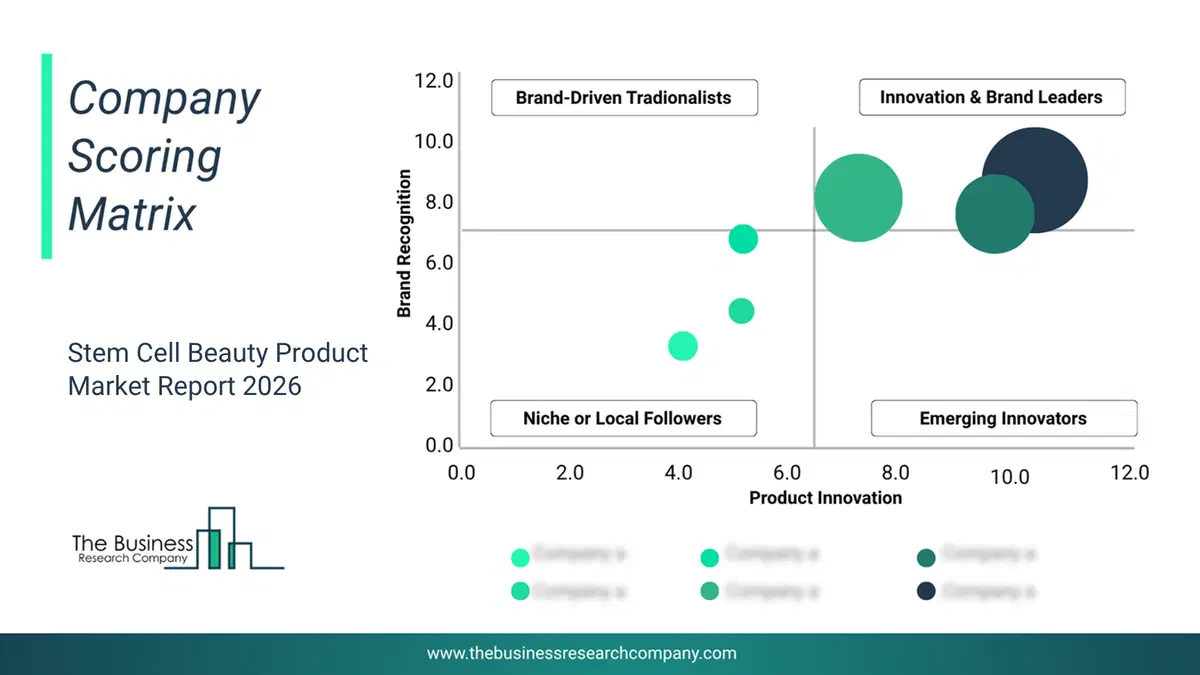
This chart maps companies by product innovation and brand strength, with bubble size indicating relative revenue, helping identify market leaders, challengers, and niche players. This is an illustrative chart; the full report provides a complete and accurate competitive analysis.
Global Stem Cell Beauty Product Market Trends and Insights
Major companies operating in the stem cell beauty product market are focusing on developing advanced products, such as patented human stem cell technology, to boost efficacy, enhance skin health, and reduce visible signs of aging. Patented human stem cell technology refers to advanced formulations that utilize key biological components derived from human stem cells to support the skin's natural repair and regeneration processes. For instance, in September 2024, Angela Caglia Skincare, a United States‑based luxury skin care brand, launched the Cell Forté Serum. It is a premium, concentrated serum featuring a patented plant-based bioreactor technology for human stem cell-derived ingredients, ensuring ethical sourcing and high potency. It includes a proprietary blend of growth factors, exosomes, and signaling molecules, enabling targeted communication with skin cells to improve firmness, elasticity, and overall complexion without irritation. It also incorporates antioxidant-rich adaptogens and a sustainable, refillable packaging system, enhancing product longevity and reducing environmental impact for conscious consumers.What Are Latest Mergers And Acquisitions In The Stem Cell Beauty Product Market?
In July 2024, Seaweed Bath Co., a US-based natural-beauty company, acquired Andalou Naturals for an undisclosed amount. Through this acquisition, Seaweed Bath Co. aims to broaden its product offerings beyond ocean-inspired body, hair, and sun care by integrating Andalou’s natural skin-care and fruit stem-cell science formulations, thereby enhancing its capability to deliver a full suite of natural beauty products. Andalou Naturals is a US-based skincare company specializing in stem cell beauty products.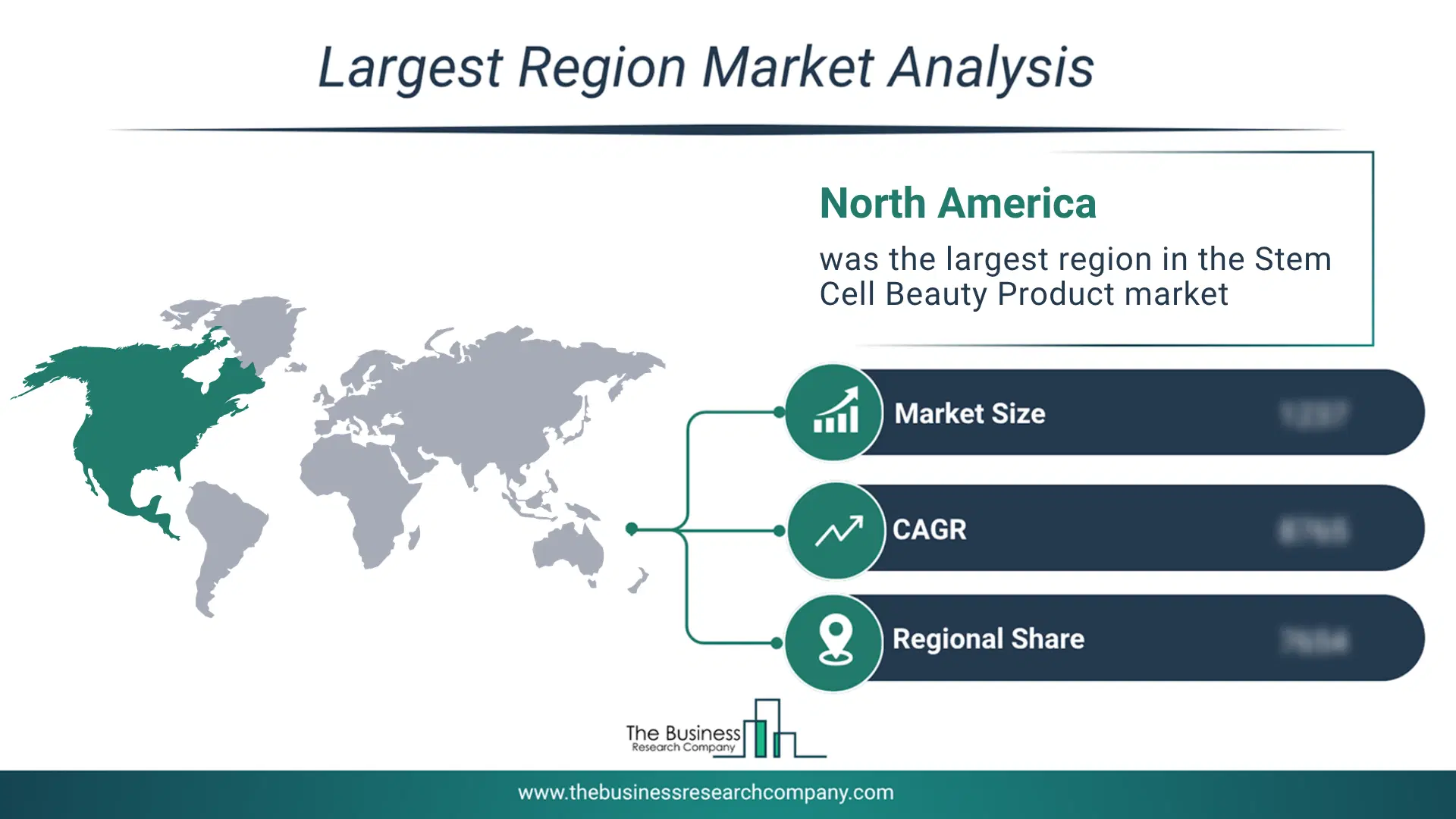
Regional Insights
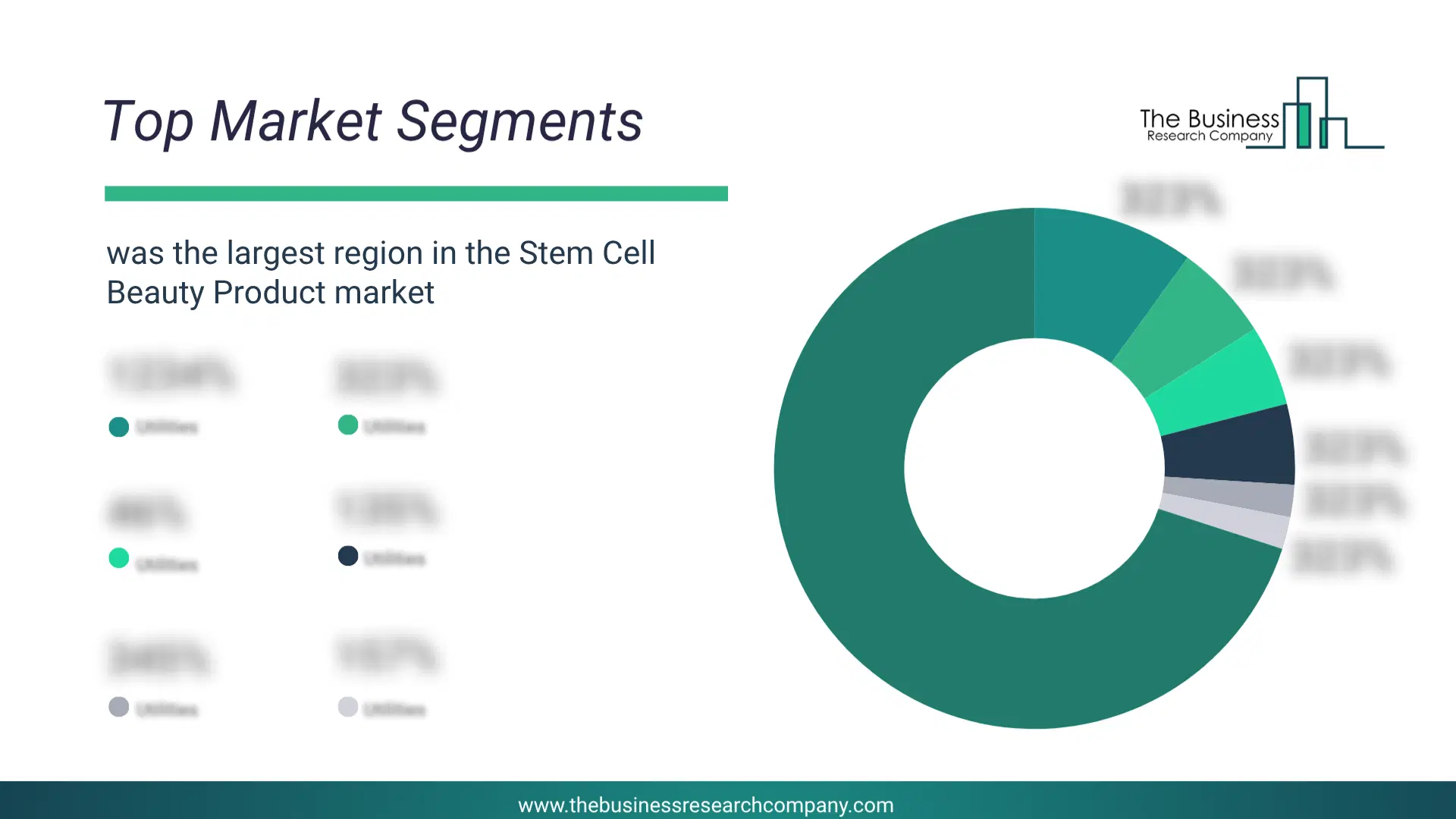
North America was the largest region in the stem cell beauty product market in 2025.Asia - Pacific is expected to be the fastest-growing region in the forecast period. The regions covered in this market report are Asia-Pacific, South East Asia, Western Europe, Eastern Europe, North America, South America, Middle East, Africa. The countries covered in this market report are Australia, Brazil, China, France, Germany, India, Indonesia, Japan, Taiwan, Russia, South Korea, UK, USA, Canada, Italy, Spain.What Defines the Stem Cell Beauty Product Market?
The stem cell beauty product market consists of sales of plant stem cell creams, human stem cell–derived serums, stem cell facial masks, stem cell ampoules, and stem cell-infused lotions. Values in this market are ‘factory gate’ values, that is, the value of goods sold by the manufacturers or creators of the goods, whether to other entities (including downstream manufacturers, wholesalers, distributors, and retailers) or directly to end customers. The value of goods in this market includes related services sold by the creators of the goods.How is Market Value Defined and Measured?
The market value is defined as the revenues that enterprises gain from the sale of goods and/or services within the specified market and geography through sales, grants, or donations in terms of the currency (in USD unless otherwise specified). The revenues for a specified geography are consumption values that are revenues generated by organizations in the specified geography within the market, irrespective of where they are produced. It does not include revenues from resales along the supply chain, either further along the supply chain or as part of other products.
This chart presents market attractiveness based on a quantitative evaluation of growth, competition, strategic alignment, and risk, offering a clear view of opportunity areas for decision-making. This chart is for illustrative purposes; the full report contains the complete analysis.

This chart highlights the Total Addressable Market (TAM) by estimating the maximum revenue opportunity using an assumption-driven approach, supporting strategic planning and opportunity sizing across markets. The chart is illustrative; the full report provides a more comprehensive analysis.
What Key Data and Analysis Are Included in the Stem Cell Beauty Product Market Report 2026?
The stem cell beauty product market research report is one of a series of new reports from The Business Research Company that provides market statistics, including industry global market size, regional shares, competitors with the market share, detailed market segments, market trends and opportunities, and any further data you may need to thrive in the stem cell beauty product industry. The market research report delivers a complete perspective of everything you need, with an in-depth analysis of the current and future state of the industry.Stem Cell Beauty Product Market Report Forecast Analysis
| Report Attribute | Details |
|---|---|
| Market Size Value In 2026 | $3.37 billion |
| Revenue Forecast In 2030 | $5.26 billion |
| Growth Rate | CAGR of 12.0% from 2026 to 2030 |
| Base Year For Estimation | 2025 |
| Actual Estimates/Historical Data | 2020-2025 |
| Forecast Period | 2026 - 2030 |
| Market Representation | Revenue in USD Billion and CAGR from 2026 to 2030 |
| Segments Covered | Product Type, Consumer Demographics, Ingredient Source, Target Skin Concerns, Distribution Channels |
| Regional Scope | Asia-Pacific, Western Europe, Eastern Europe, North America, South America, Middle East, Africa |
| Country Scope | The countries covered in this market report are Australia, Brazil, China, France, Germany, India, Indonesia, Japan, Taiwan, Russia, South Korea, UK, USA, Canada, Italy, Spain |
| Key Companies Profiled | Christian Dior SE, Unilever plc, L’Oréal S.A., Oriflame Holding AG, Juice Beauty Inc., Eminence Organic Skin Care, Chantecaille Beauté Inc., SkinMedica Inc., Andalou Naturals, Mibelle Biochemistry, Stempeutics Research Pvt. Ltd., Mychelle Dermaceuticals LLC, Intelligent Nutrients LLC, Cellular Health MD, U.S Stem Cell Inc., Celprogen Inc., Vytrus Biotech S.A., AnteAGE, Stemology, Aveda Corporation, BioRestorative Therapies Inc. |
| Customization Scope | Request for Customization |
| Pricing And Purchase Options | Explore Purchase Options |