

Stem Cell Expansion Hollow-Fiber Bioreactors Market Report 2026
Global Outlook – By Product Type (Single-Use Hollow-Fiber Bioreactors, Reusable Hollow-Fiber Bioreactors), By Technology (Hollow-Fiber Technology, Microfluidic Bioprocessing Technology, Single-Use Bioreactor Technology, Automated Expansion Platforms, High-Precision Monitoring Technology), By Distribution Channel (Hospital Pharmacy, Online Pharmacy, Retail Pharmacy), By Application (Clinical Research, Cell Therapy, Tissue Engineering, Drug Development, Other Applications), By End-User (Biotechnology Companies, Pharmaceutical Companies, Academic And Research Institutes, Other End Users) – Market Size, Trends, Strategies, and Forecast to 2030
Stem Cell Expansion Hollow-Fiber Bioreactors Market Overview
• Stem Cell Expansion Hollow-Fiber Bioreactors market size has reached to $1.42 billion in 2025 • Expected to grow to $3.11 billion in 2030 at a compound annual growth rate (CAGR) of 16.9% • Growth Driver: Growing Demand For Gene Therapies Fueling The Growth Of The Market Due To The Need For Scalable, Standardized, And High-Quality Production Processes • Market Trend: Innovative Single?Use Hollow?Fiber Bioreactor Platform Improves Scalable Stem Cell Expansion • North America was the largest region in 2025 and Asia-Pacific is the fastest growing region.What Is Covered Under Stem Cell Expansion Hollow-Fiber Bioreactors Market?
A stem cell expansion hollow-fiber bioreactor is a specialized bioprocessing system that uses hollow fibers to provide a controlled environment for the proliferation of stem cells. It allows efficient nutrient and gas exchange while maintaining optimal conditions for cell growth. These systems are widely applied in regenerative medicine and research to produce high-density stem cell cultures with high viability and functionality. The main product types of stem cell expansion hollow-fiber bioreactors are single-use hollow-fiber bioreactors and reusable hollow-fiber bioreactors. Single-use hollow-fiber bioreactors are disposable bioprocessing systems designed to support sterile, scalable, and controlled expansion of stem cells for clinical and research applications. These bioreactors utilize technologies such as hollow-fiber technology, microfluidic bioprocessing technology, single-use bioreactor technology, automated expansion platforms, and high-precision monitoring technology, distributed through hospital pharmacies, online pharmacies, and retail pharmacies, used in applications including clinical research, cell therapy, tissue engineering, drug development, and others, among end users including biotechnology companies, pharmaceutical companies, academic and research institutes, and others.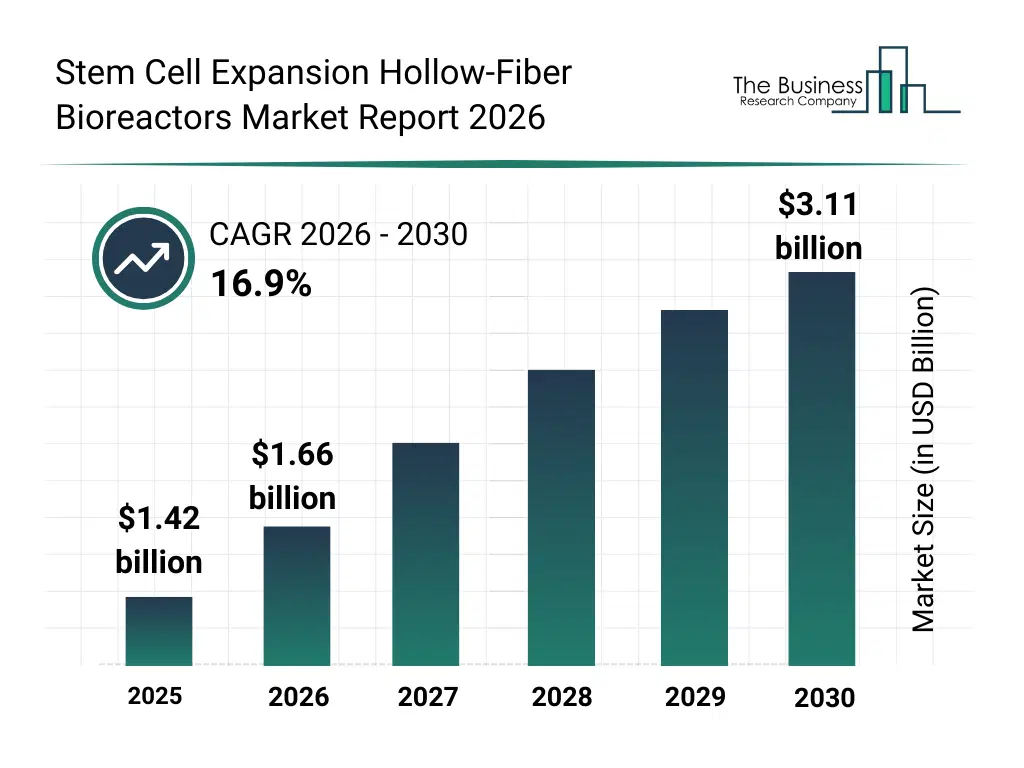
What Is The Stem Cell Expansion Hollow-Fiber Bioreactors Market Size and Share 2026?
The stem cell expansion hollow-fiber bioreactors market size has grown rapidly in recent years. It will grow from $1.42 billion in 2025 to $1.66 billion in 2026 at a compound annual growth rate (CAGR) of 17.2%. The growth in the historic period can be attributed to increasing adoption of hollow-fiber bioreactors, growing demand for high-density stem cell cultures, rising investment in regenerative medicine research, expansion of automated cell expansion technologies, and increasing utilization of single-use bioreactor systems.What Is The Stem Cell Expansion Hollow-Fiber Bioreactors Market Growth Forecast?
The stem cell expansion hollow-fiber bioreactors market size is expected to see rapid growth in the next few years. It will grow to $3.11 billion in 2030 at a compound annual growth rate (CAGR) of 16.9%. The growth in the forecast period can be attributed to rising focus on scalable stem cell production, growing investment in advanced hollow-fiber bioprocessing, increasing demand for clinical-grade stem cell expansion, expansion of biotechnology and pharmaceutical research and development (R&D), and strongly increasing adoption of automated and high-precision platforms. Major trends in the forecast period include technology advancements in micro-hollow-fiber systems, innovations in automated cell expansion platforms, developments in high-density stem cell culture techniques, research and developments in single-use hollow-fiber bioreactors, and advancements in real-time monitoring and process control.
Global Stem Cell Expansion Hollow-Fiber Bioreactors Market Segmentation
1) By Product Type: Single-Use Hollow-Fiber Bioreactors, Reusable Hollow-Fiber Bioreactors 2) By Technology: Hollow-Fiber Technology, Microfluidic Bioprocessing Technology, Single-Use Bioreactor Technology, Automated Expansion Platforms, High-Precision Monitoring Technology 3) By Distribution Channel: Hospital Pharmacy, Online Pharmacy, Retail Pharmacy 4) By Application: Clinical Research, Cell Therapy, Tissue Engineering, Drug Development, Other Applications 5) By End-User: Biotechnology Companies, Pharmaceutical Companies, Academic And Research Institutes, Other End Users Subsegments: 1) By Single-Use Hollow-Fiber Bioreactors: Disposable Cartridge Systems, Pre-Sterilized Fiber Modules, Plug-And-Play Bioreactor Units, Disposable Media Flow Chambers, Single-Cycle Cultivation Modules 2) By Reusable Hollow-Fiber Bioreactors: Cleanable Fiber Cartridge Systems, Autoclavable Fiber Modules, Long-Term Operation Bioreactor Units, Reprocessable Media Flow Chambers, Multi-Cycle Cultivation ModulesWhat Is The Driver Of The Stem Cell Expansion Hollow-Fiber Bioreactors Market?
The growing demand for gene therapies is expected to propel the growth of the stem cell expansion hollow fiber bioreactors market going forward. Gene therapy refers to a medical technique that involves modifying or replacing defective genes to treat or prevent diseases. The increasing demand for gene therapy is due to advancements in genetic sequencing and diagnostics, which enable precise identification of disease-causing genes for targeted treatment. Stem cell expansion hollow fiber bioreactors support gene therapy by enabling large-scale, high-quality expansion of stem cells under controlled conditions. They improve therapeutic outcomes by providing a reliable source of genetically modified cells for precise and effective gene-based treatments. For instance, in December 2024, according to the American Society of Gene & Cell Therapy (ASGCT), a US-based non-profit medical and scientific organization, the Food and Drug Administration (FDA) approved six gene therapy products in 2023, up from five approvals in 2022. Therefore, the growing demand for gene therapies is driving the growth of the stem cell expansion hollow fiber bioreactors market.Key Players In The Global Stem Cell Expansion Hollow-Fiber Bioreactors Market
Major companies operating in the stem cell expansion hollow-fiber bioreactors market are Veolia Environnement S.A., Thermo Fisher Scientific Inc., General Electric Company, Mitsubishi Chemical Corporation, Merck KGaA, Kubota Corporation, DuPont de Nemours Inc., Alfa Laval AB, Terumo BCT Inc., Cytiva Sweden AB, MANN+HUMMEL GmbH, Sartorius AG, Eppendorf SE, Repligen Corporation, Pall Corporation, PBS Biotech Inc., Bioengineering AG, Cell Culture Company LLC, FiberCell Systems Inc., FibraCast Inc.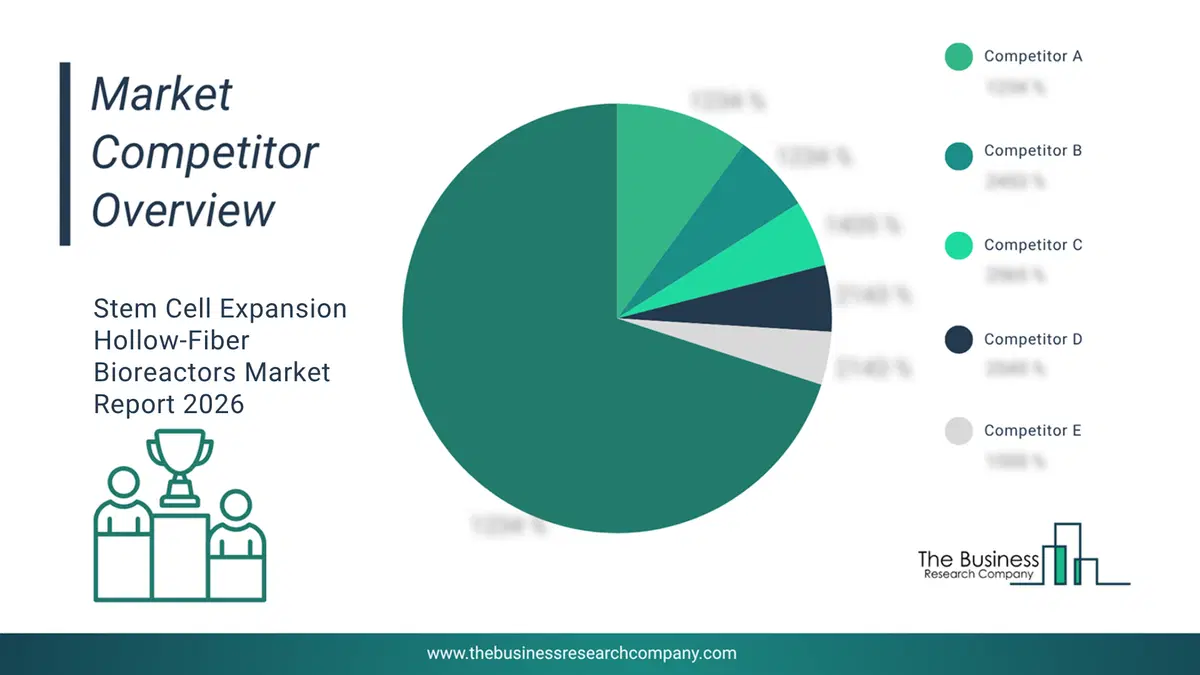
This chart is for illustrative purposes; the full report includes a detailed competitor analysis and comprehensive overview of the top 10 companies in the market.
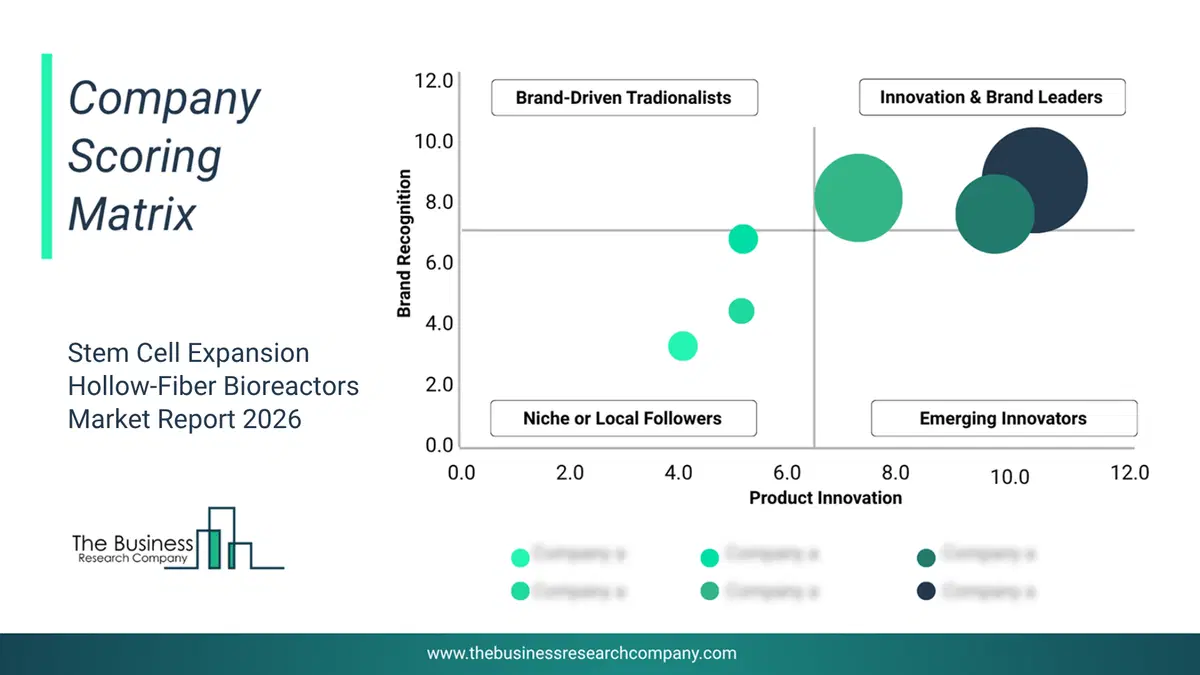
This chart maps companies by product innovation and brand strength, with bubble size indicating relative revenue, helping identify market leaders, challengers, and niche players. This is an illustrative chart; the full report provides a complete and accurate competitive analysis.
Global Stem Cell Expansion Hollow-Fiber Bioreactors Market Trends and Insights
Major companies operating in the stem cell expansion hollow fiber bioreactors market are focusing on developing advanced products, such as single-use bioreactors with unique mixing and nutrient delivery systems, to improve process control, ensure cell viability, and facilitate scale-up. Single-use bioreactor technology for advanced therapies refers to a novel class of bioreactors, designed to overcome the limitations of conventional stirred-tank systems for producing sensitive living cell therapies, using closed, automated platforms to minimize contamination risk and enhance performance. For instance, in March 2025, ABEC, a US‑based biotech manufacturing company, launched the Advanced Therapy Bioreactor (ATB). It is a revolutionary single-use bioreactor platform featuring a patented design that mimics the human circulatory system, utilizing proprietary hollow fiber membrane networks to enable localized nutrient delivery and waste removal. It includes an oscillation-based mixing mechanism and diffusion-based gas transfer, maintaining an optimal growth environment for sensitive cell lines like primary T-cells and CD34+ stem cells without relying on bubbles or mechanical agitation. It also incorporates seamless scalability from 0.2L to 10L by maintaining a constant ratio between hollow fiber surface area and bioreactor volume, ensuring consistent conditions from early development to commercial manufacturing for partners in the advanced therapy field.What Are Latest Mergers And Acquisitions In The Stem Cell Expansion Hollow-Fiber Bioreactors Market?
In December 2024, Getinge AB, a Sweden‑based medical technology and bioprocess equipment provider, partnered with 908 Devices Inc. to enhance hollow‑fiber bioreactor systems for stem cell expansion and bioprocess monitoring. Through this collaboration, Getinge AB and 908 Devices Inc. aim to integrate advanced real‑time analytical capabilities into Getinge’s bioreactor platforms to improve process control, cell growth monitoring, and product consistency in stem cell manufacturing workflows. 908 Devices Inc. is a US‑based analytical and bioprocess solutions company.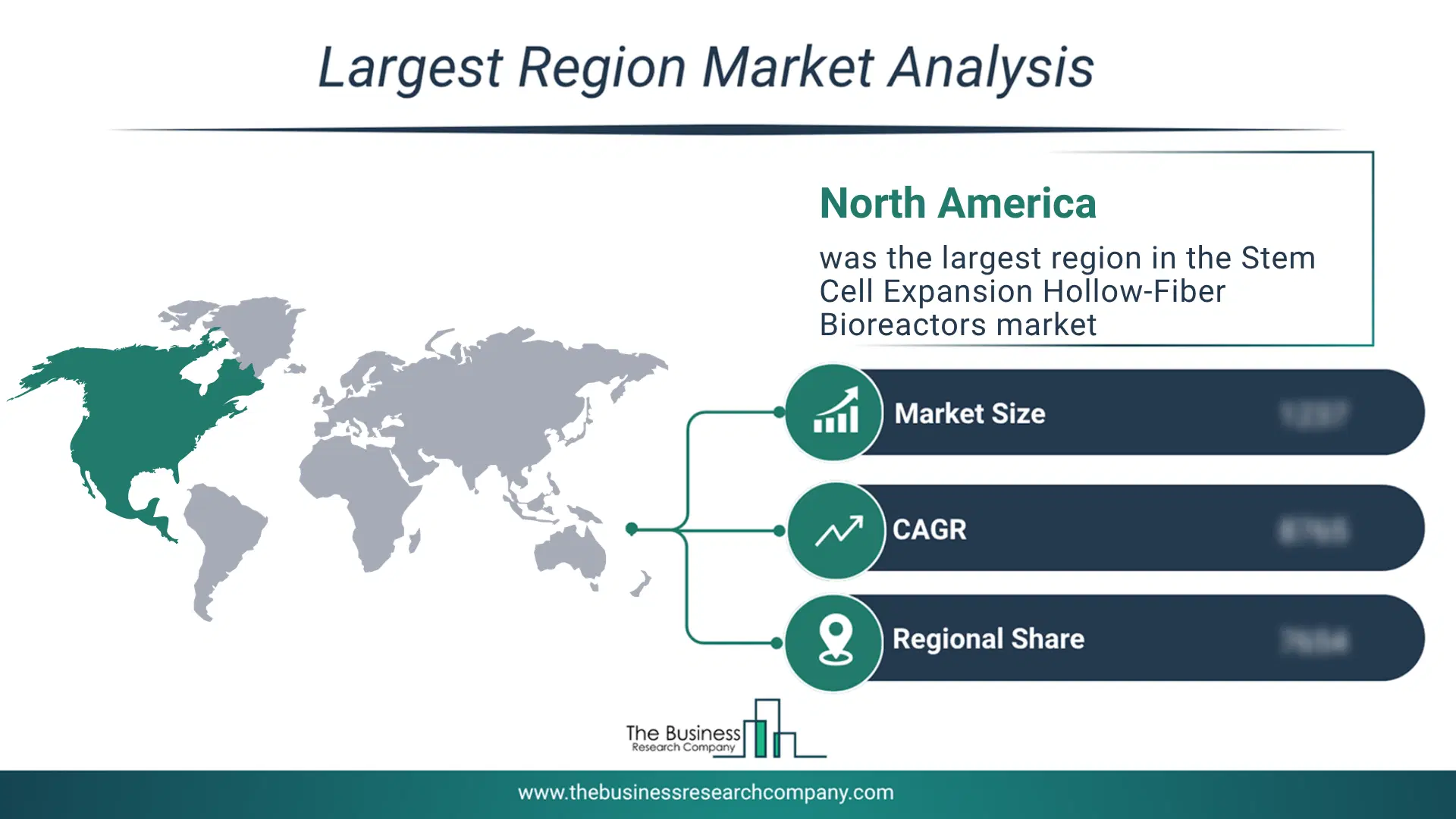
Regional Insights
North America was the largest region in the stem cell expansion hollow-fiber bioreactors market in 2025. Asia-Pacific is expected to be the fastest-growing region in the forecast period. The regions covered in this market report are Asia-Pacific, South East Asia, Western Europe, Eastern Europe, North America, South America, Middle East, Africa. The countries covered in this market report are Australia, Brazil, China, France, Germany, India, Indonesia, Japan, Taiwan, Russia, South Korea, UK, USA, Canada, Italy, Spain.What Defines the Stem Cell Expansion Hollow-Fiber Bioreactors Market?
The stem cell expansion hollow-fiber bioreactors market consists of revenues earned by entities by providing services such as bioreactor system installation, process optimization support, cell culture protocol development, validation and qualification services, and technical maintenance and training. The market value includes the value of related goods sold by the service provider or included within the service offering. The stem cell expansion hollow-fiber bioreactors market also includes sales of hollow-fiber bioreactor systems, disposable cartridges, perfusion and control units, integrated monitoring sensors, and associated consumables. Values in this market are ‘factory gate’ values, that is, the value of goods sold by the manufacturers or creators of the goods, whether to other entities (including downstream manufacturers, wholesalers, distributors, and retailers) or directly to end customers. The value of goods in this market includes related services sold by the creators of the goods.How is Market Value Defined and Measured?
The market value is defined as the revenues that enterprises gain from the sale of goods and/or services within the specified market and geography through sales, grants, or donations in terms of the currency (in USD unless otherwise specified). The revenues for a specified geography are consumption values that are revenues generated by organizations in the specified geography within the market, irrespective of where they are produced. It does not include revenues from resales along the supply chain, either further along the supply chain or as part of other products.
This chart presents market attractiveness based on a quantitative evaluation of growth, competition, strategic alignment, and risk, offering a clear view of opportunity areas for decision-making. This chart is for illustrative purposes; the full report contains the complete analysis.

This chart highlights the Total Addressable Market (TAM) by estimating the maximum revenue opportunity using an assumption-driven approach, supporting strategic planning and opportunity sizing across markets. The chart is illustrative; the full report provides a more comprehensive analysis.
What Key Data and Analysis Are Included in the Stem Cell Expansion Hollow-Fiber Bioreactors Market Report 2026?
The stem cell expansion hollow-fiber bioreactors market research report is one of a series of new reports from The Business Research Company that provides market statistics, including industry global market size, regional shares, competitors with the market share, detailed market segments, market trends and opportunities, and any further data you may need to thrive in the stem cell expansion hollow-fiber bioreactors industry. The market research report delivers a complete perspective of everything you need, with an in-depth analysis of the current and future state of the industry.Stem Cell Expansion Hollow-Fiber Bioreactors Market Report Forecast Analysis
| Report Attribute | Details |
|---|---|
| Market Size Value In 2026 | $1.66 billion |
| Revenue Forecast In 2030 | $3.11 billion |
| Growth Rate | CAGR of 16.9% from 2026 to 2030 |
| Base Year For Estimation | 2025 |
| Actual Estimates/Historical Data | 2020-2025 |
| Forecast Period | 2026 - 2030 |
| Market Representation | Revenue in USD Billion and CAGR from 2026 to 2030 |
| Segments Covered | Product Type, Technology, Distribution Channel, Application, End-User |
| Regional Scope | Asia-Pacific, Western Europe, Eastern Europe, North America, South America, Middle East, Africa |
| Country Scope | The countries covered in the report are Australia, Brazil, China, France, Germany, India, Indonesia, Japan, Taiwan, Russia, South Korea, UK, USA, Canada, Italy, Spain. |
| Key Companies Profiled | Veolia Environnement S.A., Thermo Fisher Scientific Inc., General Electric Company, Mitsubishi Chemical Corporation, Merck KGaA, Kubota Corporation, DuPont de Nemours Inc., Alfa Laval AB, Terumo BCT Inc., Cytiva Sweden AB, MANN+HUMMEL GmbH, Sartorius AG, Eppendorf SE, Repligen Corporation, Pall Corporation, PBS Biotech Inc., Bioengineering AG, Cell Culture Company LLC, FiberCell Systems Inc., FibraCast Inc. |
| Customization Scope | Request for Customization |
| Pricing And Purchase Options | Explore Purchase Options |