
Storyboarding Software Market Report 2026
Global Outlook – By Type (Interactive Storyboards, Active Storyboards, Passive Storyboards), By Features (Collaboration Tools, Animation Capabilities, Templates And Assets Library, Third-Party Integrations, Export Options, User Interface Customization), By Deployment Type (Cloud-Based, On-Premise, Hybrid), By Application Type (Film And Animation, Advertising, Video Production, Gaming, Education, Marketing), By User Type (Professional Users, Amateur Users, Educational Institutions, Corporations) – Market Size, Trends, Strategies, and Forecast to 2030
Storyboarding Software Market Overview
• Storyboarding Software market size has reached to $2.14 billion in 2025 • Expected to grow to $3.21 billion in 2030 at a compound annual growth rate (CAGR) of 8.4% • Growth Driver: The Rising Adoption Of E-Learning Platforms Fueling The Growth Of The Market Due To Increasing Demand For Visual Content Planning And Online Course Development • Market Trend: Advancements In Visual Storytelling Platforms Enhance Media Content Development • North America was the largest region in 2025 and Asia-Pacific is the fastest growing region.What Is Covered Under Storyboarding Software Market?
Storyboarding software is a digital tool used to plan and visualize a film, animation, advertising, or video production project. It allows creators to map out scenes, sequences, and key visual elements through illustrations, images, or frames. Storyboarding software enhances collaboration and ensures a clear, structured visual representation of the project's progression. The main types of storyboarding software are interactive storyboards, active storyboards, and passive storyboards. Interactive storyboards are engaging visual tools that use clickable features and animations to mimic user interactions and digital workflows. The features include collaboration tools, animation capabilities, templates, and assets library, third-party integrations, export options, and user interface customization, with different deployment types including cloud-based, on-premise, and hybrid. It is applicable in various application types such as film and animation, advertising, video production, gaming, education, and marketing, and is used by several user types including professional users, amateur users, educational institutions, and corporations.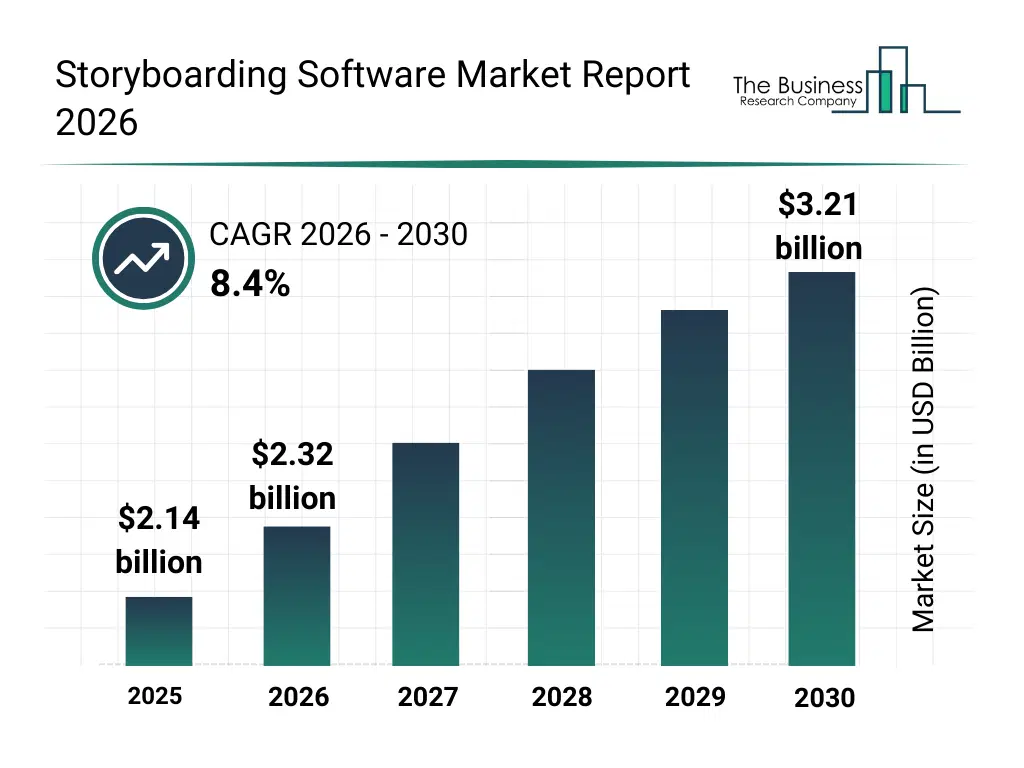
What Is The Storyboarding Software Market Size and Share 2026?
The storyboarding software market size has grown strongly in recent years. It will grow from $2.14 billion in 2025 to $2.32 billion in 2026 at a compound annual growth rate (CAGR) of 8.7%. The growth in the historic period can be attributed to growth of digital media production, early animation software adoption, increasing demand for visual planning tools, expansion of film and advertising industries, shift from manual to digital workflows.What Is The Storyboarding Software Market Growth Forecast?
The storyboarding software market size is expected to see strong growth in the next few years. It will grow to $3.21 billion in 2030 at a compound annual growth rate (CAGR) of 8.4%. The growth in the forecast period can be attributed to AI assisted visual ideation tools, growth of video content creation, rise of remote creative teams, expansion of gaming and animation sectors, increasing demand for faster production cycles. Major trends in the forecast period include cloud based collaborative storyboarding, visual pre production automation, real time team collaboration tools, template driven creative workflows, cross platform content export capabilities.
Global Storyboarding Software Market Segmentation
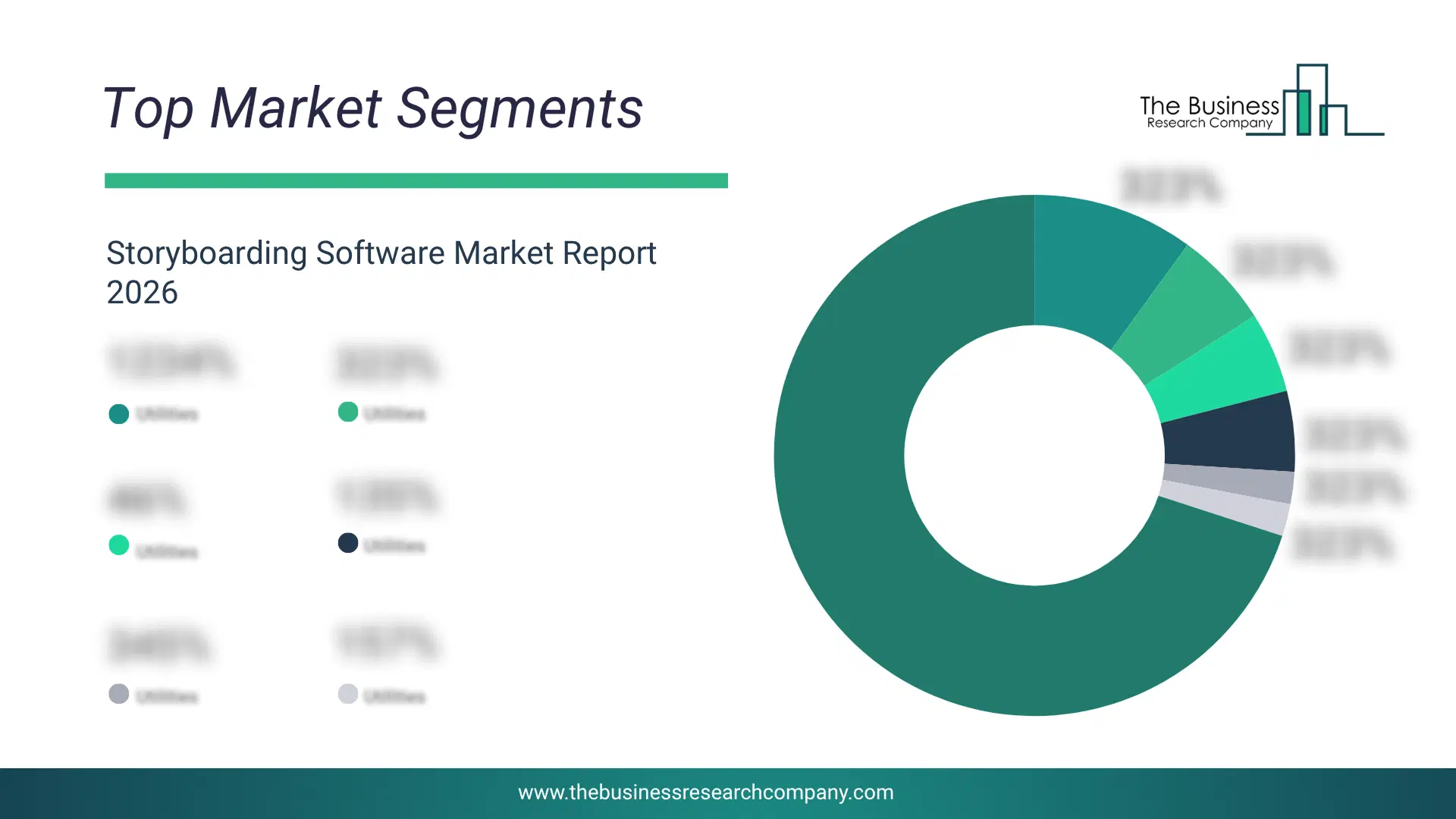
1) By Type: Interactive Storyboards, Active Storyboards, Passive Storyboards 2) By Features: Collaboration Tools, Animation Capabilities, Templates And Assets Library, Third-Party Integrations, Export Options, User Interface Customization 3) By Deployment Type: Cloud-Based, On-Premise, Hybrid 4) By Application Type: Film And Animation, Advertising, Video Production, Gaming, Education, Marketing 5) By User Type: Professional Users, Amateur Users, Educational Institutions, Corporations Subsegments: 1) By Interactive Storyboards: Drag-And-Drop Interface Tools, Real-Time Collaboration Features, Clickable Navigation Elements, Integrated Feedback Or Commenting Systems 2) By Active Storyboards: Animation-Supported Boards, Audio-Visual Playback Integration, Script-Synced Visual Timelines, Scene Transition Simulation 3) By Passive Storyboards: Static Image Sequences, Print-Friendly Formats, Basic Slide-Based Layouts, PDF And Image Export OptionsWhat Is The Driver Of The Storyboarding Software Market?
The rising adoption of e-learning platforms is expected to propel the growth of the storyboarding software market going forward. E-learning platforms are digital tools or websites that deliver educational content and courses online, allowing users to learn anytime, anywhere. The rise of e-learning platforms is driven by greater internet access, enabling flexible, on-demand education for a wider audience. Storyboarding software enhances e-learning platforms by helping instructional designers plan and visualize the course structure and content flow before development begins. It allows for the clear organization of lessons, interactive elements, and assessments, ensuring the learning experience is coherent and engaging. For instance, in January 2024, according to Eurostat, a Luxembourg-based governing body, in 2023, 30 % of European Union internet users (aged 16–74) used online learning tools, up from 28 % in 2022. Therefore, the rising adoption of e-learning platforms is driving the growth of the storyboarding software industry.Key Players In The Global Storyboarding Software Market
Major companies operating in the storyboarding software market are Canva Pty Ltd., Miro, The Third Floor Inc., Toon Boom Animation Inc., Artefact, Crank Software, PowerProduction Software Inc., FrameForge Studio, Krock, Milanote Pty Ltd., Storyboard That, StudioBinder Inc., Wonder Unit Inc., Boords Ltd., Ghostwheel, MakeStoryboard, ShotPro, StoryTribe, Six Mile Creek Systems, Foundry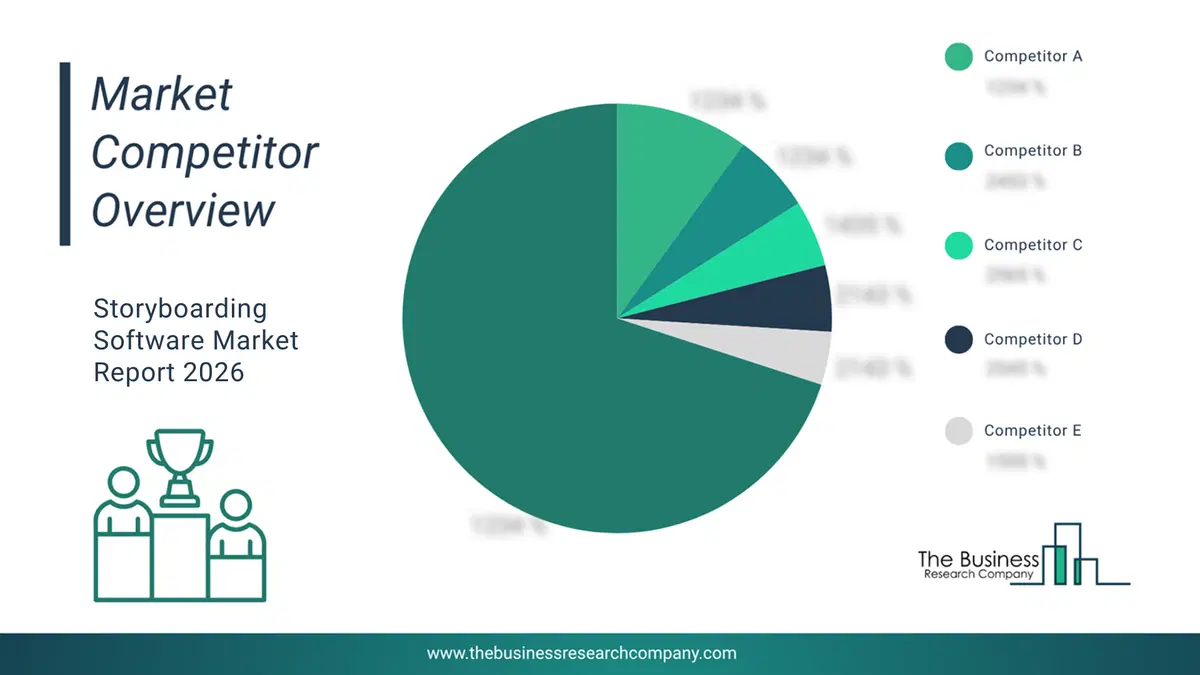
This chart is for illustrative purposes; the full report includes a detailed competitor analysis and comprehensive overview of the top 10 companies in the market.
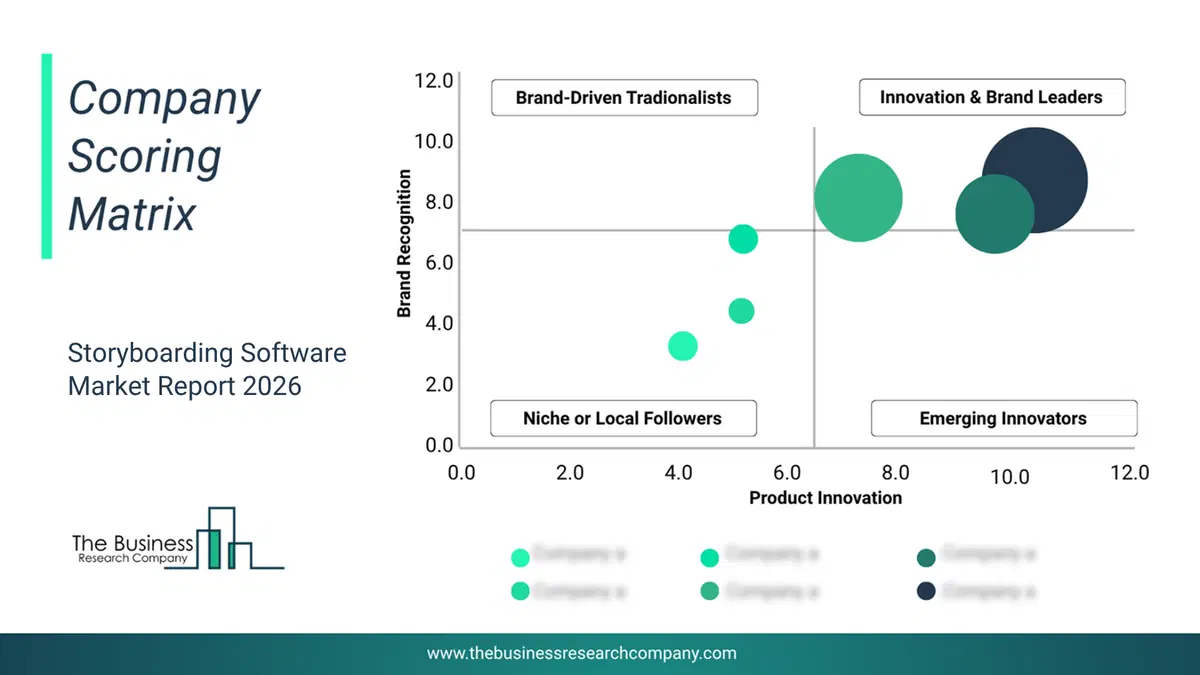
This chart maps companies by product innovation and brand strength, with bubble size indicating relative revenue, helping identify market leaders, challengers, and niche players. This is an illustrative chart; the full report provides a complete and accurate competitive analysis.
Global Storyboarding Software Market Trends and Insights
Major companies operating in the storyboarding software market are focused on developing advanced technology, such as visual storytelling platforms, to improve content development efficiency across media industries. A visual storytelling platform is a digital tool that helps users craft and share stories using visuals like images and animations. It enhances storytelling by improving idea organization, collaboration, and presentation. For instance, in June 2024, Toon Boom, a Canada-based animation and storyboarding software development company, launched Storyboard Pro 24, a versatile pre-production suite marking a significant advancement in 2D/3D animation production. These tools enhance traditional, cutout, and hybrid workflows with features like improved 3D integration, deformation rig posing, and the ability to attach drawings to 3D models.What Are Latest Mergers And Acquisitions In The Storyboarding Software Market?
In March 2024, Canva, an Australia-based provider of online graphic design, visual collaboration, and content-creation software, acquired Serif Europe Ltd. (the team behind Affinity) for an undisclosed amount. With this acquisition, Canva sought to expand its product portfolio to include professional-grade creative software and tap into Affinity’s established base of power users, thereby strengthening its competitiveness in the high-end design software market. Serif Europe Ltd. is a UK-based provider of professional creative applications, including Affinity Designer, Affinity Photo, and Affinity Publisher.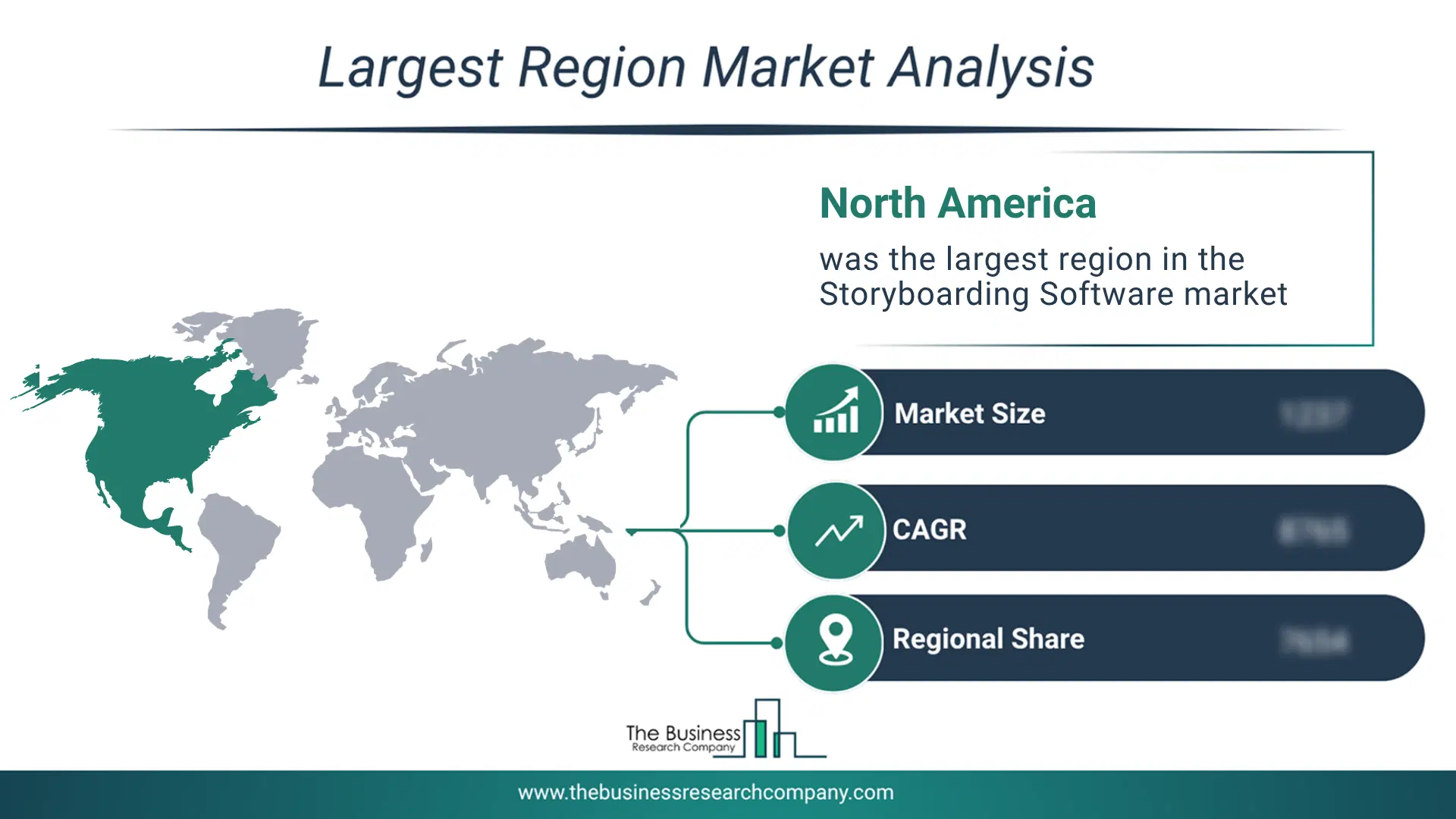
Regional Insights
North America was the largest region in the storyboarding software market in 2025. Asia-Pacific is expected to be the fastest-growing region in the forecast period. The regions covered in this market report are Asia-Pacific, South East Asia, Western Europe, Eastern Europe, North America, South America, Middle East, Africa. The countries covered in this market report are Australia, Brazil, China, France, Germany, India, Indonesia, Japan, Taiwan, Russia, South Korea, UK, USA, Canada, Italy, Spain.What Defines the Storyboarding Software Market?
The storyboarding software market consists of revenues earned by entities by providing services such as digital storyboarding and visualization, animation and motion previews, collaboration and cloud-based workflows. The market value includes the value of related goods sold by the service provider or included within the service offering. The storyboarding software market includes sales of digital drawing displays, dual monitor and touchscreen devices. Values in this market are ‘factory gate’ values, that is the value of goods sold by the manufacturers or creators of the goods, whether to other entities (including downstream manufacturers, wholesalers, distributors and retailers) or directly to end customers. The value of goods in this market includes related services sold by the creators of the goods.How is Market Value Defined and Measured?
The market value is defined as the revenues that enterprises gain from the sale of goods and/or services within the specified market and geography through sales, grants, or donations in terms of the currency (in USD unless otherwise specified). The revenues for a specified geography are consumption values that are revenues generated by organizations in the specified geography within the market, irrespective of where they are produced. It does not include revenues from resales along the supply chain, either further along the supply chain or as part of other products.
This chart presents market attractiveness based on a quantitative evaluation of growth, competition, strategic alignment, and risk, offering a clear view of opportunity areas for decision-making. This chart is for illustrative purposes; the full report contains the complete analysis.

This chart highlights the Total Addressable Market (TAM) by estimating the maximum revenue opportunity using an assumption-driven approach, supporting strategic planning and opportunity sizing across markets. The chart is illustrative; the full report provides a more comprehensive analysis.
What Key Data and Analysis Are Included in the Storyboarding Software Market Report 2026?
The storyboarding software market research report is one of a series of new reports from The Business Research Company that provides market statistics, including industry global market size, regional shares, competitors with the market share, detailed market segments, market trends and opportunities, and any further data you may need to thrive in the storyboarding software industry. The market research report delivers a complete perspective of everything you need, with an in-depth analysis of the current and future state of the industry.Storyboarding Software Market Report Forecast Analysis
| Report Attribute | Details |
|---|---|
| Market Size Value In 2026 | $2.32 billion |
| Revenue Forecast In 2030 | $3.21 billion |
| Growth Rate | CAGR of 8.4% from 2026 to 2030 |
| Base Year For Estimation | 2025 |
| Actual Estimates/Historical Data | 2020-2025 |
| Forecast Period | 2026 - 2030 |
| Market Representation | Revenue in USD Billion and CAGR from 2026 to 2030 |
| Segments Covered | Type, Features, Deployment Type, Application Type, User Type |
| Regional Scope | Asia-Pacific, Western Europe, Eastern Europe, North America, South America, Middle East, Africa |
| Country Scope | The Countries Covered In This Market Report Are Australia, Brazil, China, France, Germany, India, Indonesia, Japan, Taiwan, Russia, South Korea, Uk, Usa, Canada, Italy, Spain. |
| Key Companies Profiled | Canva Pty Ltd., Miro, The Third Floor Inc., Toon Boom Animation Inc., Artefact, Crank Software, PowerProduction Software Inc., FrameForge Studio, Krock, Milanote Pty Ltd., Storyboard That, StudioBinder Inc., Wonder Unit Inc., Boords Ltd., Ghostwheel, MakeStoryboard, ShotPro, StoryTribe, Six Mile Creek Systems, Foundry |
| Customization Scope | Request for Customization |
| Pricing And Purchase Options | Explore Purchase Options |