
Superconducting Magnetic Energy Storage Market Report 2026
Global Outlook – By Type ( Low-Temperature Superconducting Magnetic Energy Storage, High-Temperature Superconducting Magnetic Energy Storage), By Component ( Superconducting Coils, Cryogenic Cooling System, Power Conditioning System, Other Components), By Application ( Power Systems, Industrial Use, Research Institutions, Other Applications) – Market Size, Trends, Strategies, and Forecast to 2030
Superconducting Magnetic Energy Storage Market Overview
• Superconducting Magnetic Energy Storage market size has reached to $59.47 billion in 2025 • Expected to grow to $85.97 billion in 2030 at a compound annual growth rate (CAGR) of 7.5% • Growth Driver: Rising Energy Consumption Enhance Superconducting Magnetic Energy Storage (SMES) Market • North America was the largest region in 2025 and Asia-Pacific is the fastest growing region.What Is Covered Under Superconducting Magnetic Energy Storage Market?
Superconducting Magnetic Energy Storage (SMES) refers to a technology that stores energy in the magnetic field created by the flow of direct current (DC) through a superconducting coil. Because the coil operates at very low temperatures, it experiences zero electrical resistance, allowing for highly efficient energy storage and rapid discharge. SMES systems are known for their quick response times and are used for applications requiring short bursts of power, such as stabilizing power grids and supporting renewable energy sources. The main types of superconducting magnetic energy storage are low-temperature superconducting magnetic energy storage and high-temperature superconducting magnetic energy storage. Low-temperature superconducting magnetic energy storage (LTS SMES) refers to the use of superconductors cooled to cryogenic temperatures to store energy in magnetic fields with minimal energy loss. The components include superconducting coils, cryogenic cooling system, power conditioning system, and others for applications such as power systems, industrial use, research institutes, and others.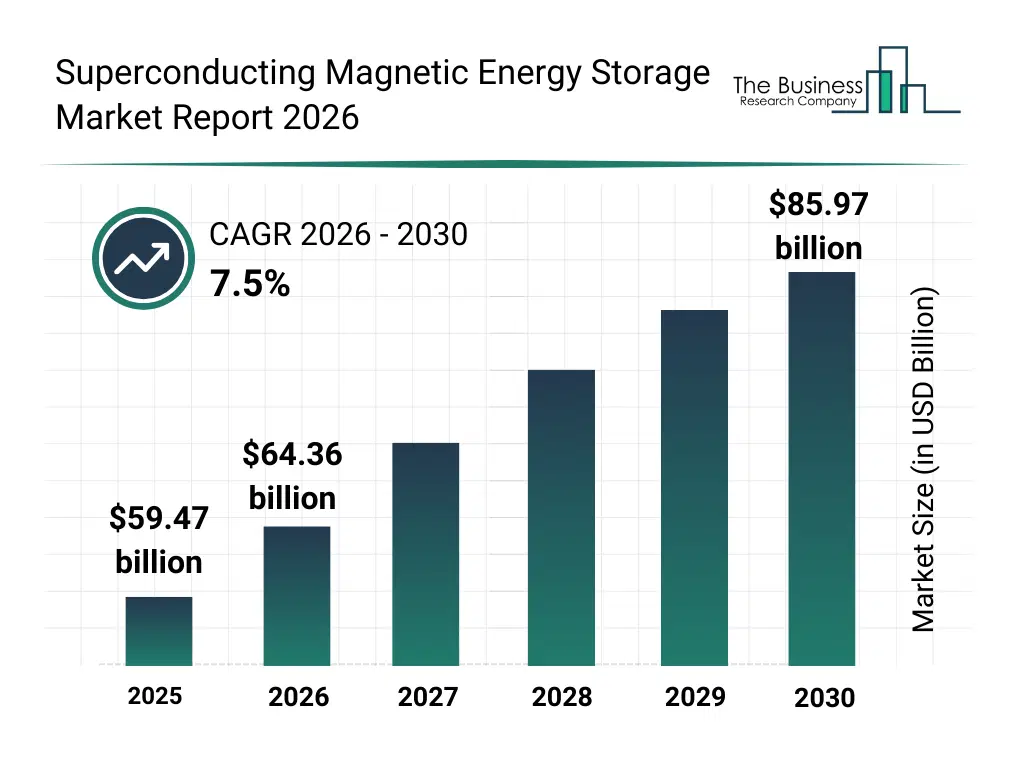
What Is The Superconducting Magnetic Energy Storage Market Size 2026 And Growth Rate?
The superconducting magnetic energy storage market size has grown strongly in recent years. It will grow from $59.47 billion in 2025 to $64.36 billion in 2026 at a compound annual growth rate (CAGR) of 8.2%. The growth in the historic period can be attributed to need for rapid response energy storage, early adoption in power grid stabilization, investments in superconducting research, demand for power quality improvement, growth of industrial automation.What Is The Superconducting Magnetic Energy Storage Market Growth Forecast?
The superconducting magnetic energy storage market size is expected to see strong growth in the next few years. It will grow to $85.97 billion in 2030 at a compound annual growth rate (CAGR) of 7.5%. The growth in the forecast period can be attributed to expansion of renewable energy capacity, increasing smart grid deployments, demand for ultra-fast energy storage solutions, advancements in high temperature superconductors, rising investments in grid modernization. Major trends in the forecast period include increasing deployment of smes for grid stability applications, rising adoption of smes in renewable energy integration, growing use of smes for power quality and voltage regulation, advancements in superconducting materials and cryogenic systems, expansion of smes in industrial and research power backup systems.
Global Superconducting Magnetic Energy Storage Market Segmentation
1) By Type: Low-Temperature Superconducting Magnetic Energy Storage, High-Temperature Superconducting Magnetic Energy Storage 2) By Component: Superconducting Coils, Cryogenic Cooling System, Power Conditioning System, Other Components 3) By Application: Power Systems, Industrial Use, Research Institutions, Other Applications Subsegments: 1) By Low-Temperature Superconducting Magnetic Energy Storage: Niobium-Titanium (NbTi) Based Systems, Other Low-Temperature Superconducting Systems 2) By High-Temperature Superconducting Magnetic Energy Storage: Yttrium Barium Copper Oxide (YBCO) Based Systems, Other High-Temperature Superconducting SystemsWhat Is The Driver Of The Superconducting Magnetic Energy Storage Market?
The rise in energy consumption is expected to propel the growth of the superconducting magnetic energy storage market. Energy consumption refers to the total amount of energy used by individuals, organizations, or nations for various purposes, such as heating, cooling, lighting, transportation, manufacturing, and other activities. The demand for superconducting magnetic energy storage arises from the need for efficient, high-capacity energy storage solutions to address grid stability, manage fluctuating renewable energy sources, and meet growing demands for electricity supply systems. Superconducting magnetic energy storage (SMES) systems enhance energy consumption efficiency by providing rapid, high-capacity energy storage and discharge with minimal energy loss. For instance, in October 2023, according to the International Energy Outlook 2023 report by the US Energy Information Administration (EIA), a US-based government agency, global electricity generation will increase by 30% to 76% in 2050 from 2022. Therefore, the rise in energy consumption is driving the growth of the superconducting magnetic energy storage industry.What Is The Driver Of The Superconducting Magnetic Energy Storage Market?
The rising focus on electrification of the transportation sector is expected to propel the growth of the superconducting magnetic energy storage market. The transportation sector's electrification refers to the transition from traditional internal combustion engine vehicles to electric vehicles. The demand for superconducting magnetic energy storage (SMES) arises because of its ability to provide rapid, highly efficient energy storage and discharge. The transportation sector's electrification uses superconducting magnetic energy storage (SMES) to provide efficient, rapid-response energy storage and distribution, enhancing grid stability and supporting the increased demand for electricity from electric vehicles by minimizing energy losses and improving overall system efficiency. For instance, in September 2023, as per GOV.UK, a government information service website, the UK government pushed the ban back by five years, setting a target of 80% of new cars and 70% of new vans to have zero emissions by 2030, increasing to 100% by 2035. Therefore, the rising focus on the electrification of transportation is driving the growth of the superconducting magnetic energy storage industry.What Is The Driver Of The Superconducting Magnetic Energy Storage Market?
The growing industrialization is expected to propel the growth of the superconducting magnetic energy storage market going forward. Industrialization is the process by which an economy transforms from primarily agricultural to one based on the manufacturing of goods, characterized by increased production capacity and technological advancement. The rising level of industrialization is driven by rapid economic development in emerging markets, as expanding industrial sectors require greater manufacturing output and infrastructure investment to meet growing consumer demands. Industrialization directly increases demand for reliable energy storage solutions to support manufacturing facilities and industrial operations that require an uninterrupted power supply. For instance, in July 2025, according to Eurostat, a Luxembourg-based statistical office of the European Union, in May 2025, industrial production rose by 3.7% in the euro area and by 3.4% across the European Union (EU) compared with May 2024. Therefore, growing industrialization is driving the growth of the superconducting magnetic energy storage industry.Key Players In The Global Superconducting Magnetic Energy Storage Market
Major companies operating in the superconducting magnetic energy storage market are Hitachi Ltd., Siemens AG, Mitsubishi Electric Corporation, Sumitomo Electric Industries Ltd., ABB Ltd., Toshiba Corporation, Bruker Energy & Supercon Technologies, Luvata Oy, American Superconductor Corporation, Babcock Noell GmbH, SuperPower Inc., ASG Superconductors SpA, Hyper Tech Research Inc., Superconductor Technologies Inc., SuNam Co. Ltd., Columbus Superconductors SpA, General Cable Superconductors Ltd., Fujikura Ltd., Nexans S.A., Southwire Company
This chart is for illustrative purposes; the full report includes a detailed competitor analysis and comprehensive overview of the top 10 companies in the market.
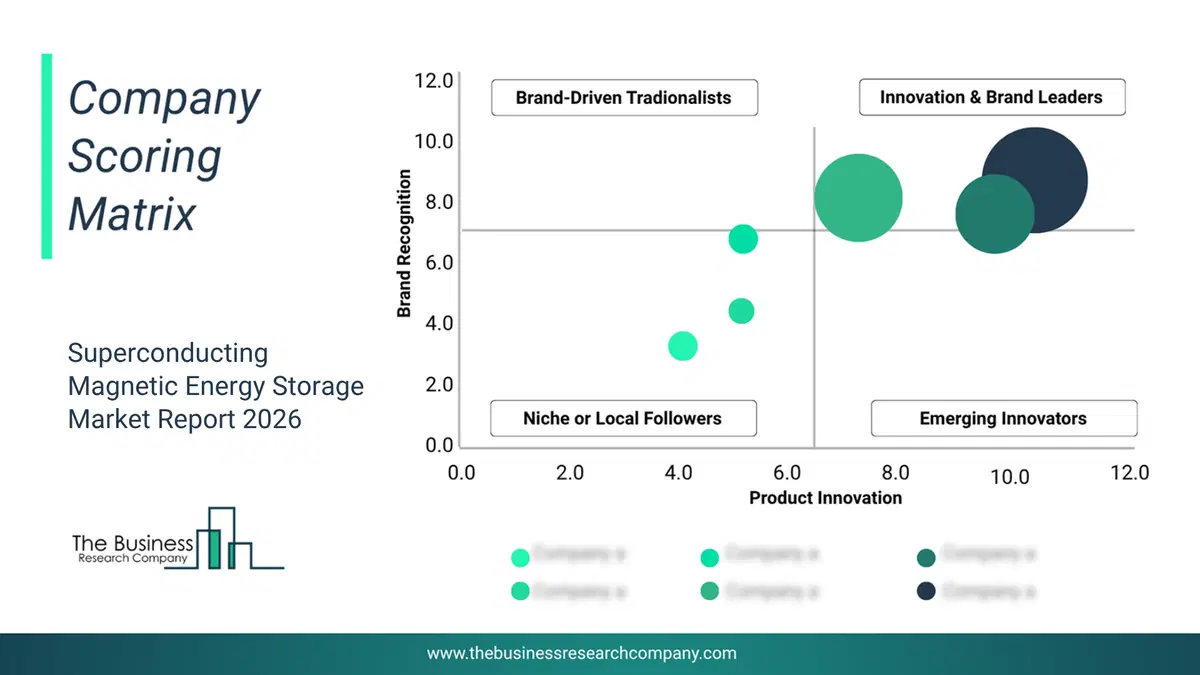
This chart maps companies by product innovation and brand strength, with bubble size indicating relative revenue, helping identify market leaders, challengers, and niche players. This is an illustrative chart; the full report provides a complete and accurate competitive analysis.
Regional Outlook
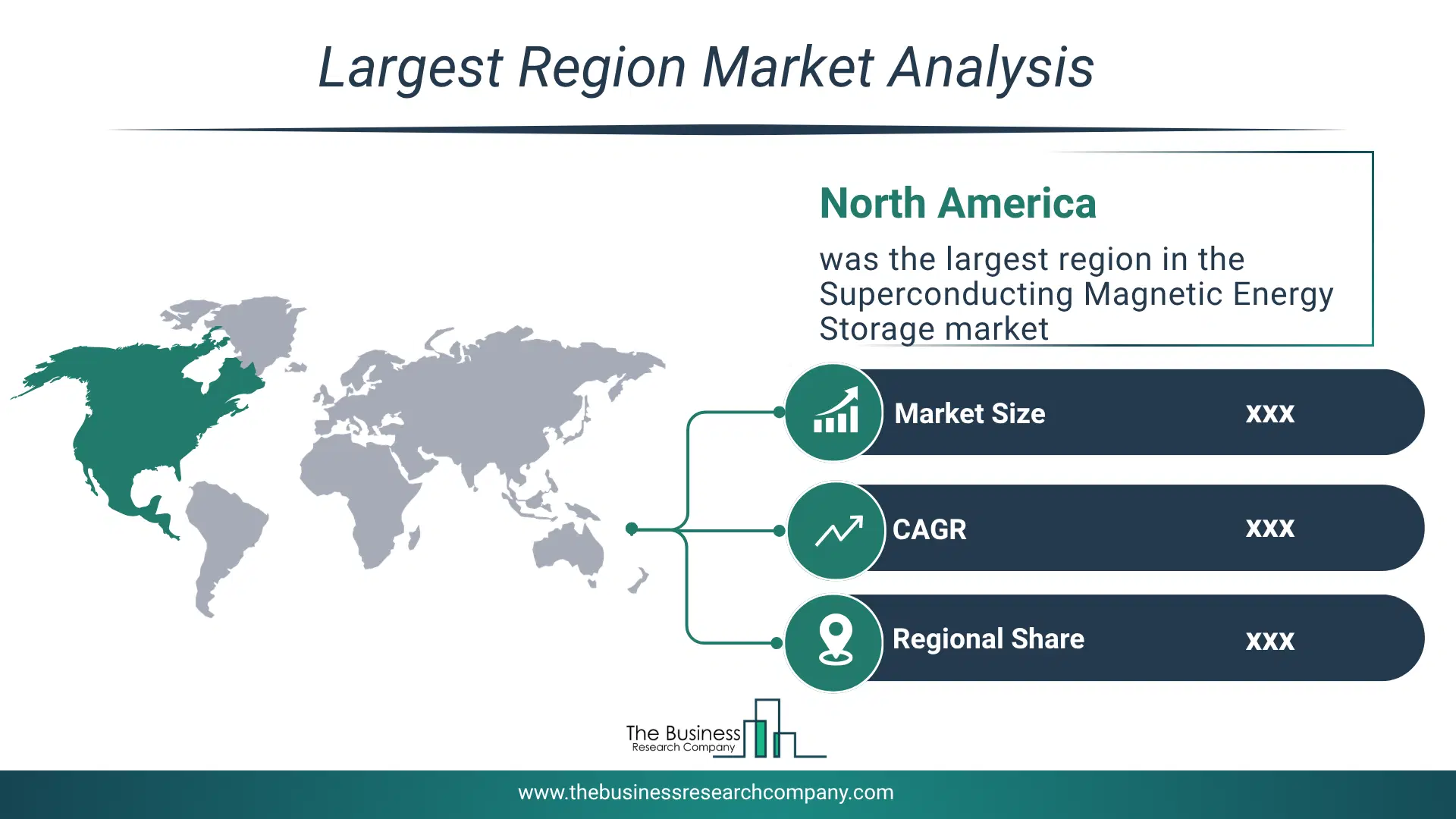
North America was the largest region in the superconducting magnetic energy storage market in 2025. Asia-Pacific is expected to be the fastest growing region in the market. The regions covered in this market report are Asia-Pacific, South East Asia, Western Europe, Eastern Europe, North America, South America, Middle East, Africa. The countries covered in this market report are Australia, Brazil, China, France, Germany, India, Indonesia, Japan, Taiwan, Russia, South Korea, UK, USA, Canada, Italy, Spain.What Defines the Superconducting Magnetic Energy Storage Market?
The superconducting magnetic energy storage market consists of sales of control and monitoring systems, auxiliary power supplies, energy management software, and safety and containment systems. Values in this market are ‘factory gate’ values, that is the value of goods sold by the manufacturers or creators of the goods, whether to other entities (including downstream manufacturers, wholesalers, distributors and retailers) or directly to end customers. The value of goods in this market includes related services sold by the creators of the goods.How is Market Value Defined and Measured?
The market value is defined as the revenues that enterprises gain from the sale of goods and/or services within the specified market and geography through sales, grants, or donations in terms of the currency (in USD unless otherwise specified). The revenues for a specified geography are consumption values that are revenues generated by organizations in the specified geography within the market, irrespective of where they are produced. It does not include revenues from resales along the supply chain, either further along the supply chain or as part of other products.
This chart presents market attractiveness based on a quantitative evaluation of growth, competition, strategic alignment, and risk, offering a clear view of opportunity areas for decision-making. This chart is for illustrative purposes; the full report contains the complete analysis.

This chart highlights the Total Addressable Market (TAM) by estimating the maximum revenue opportunity using an assumption-driven approach, supporting strategic planning and opportunity sizing across markets. The chart is illustrative; the full report provides a more comprehensive analysis.
What Key Data and Analysis Are Included in the Superconducting Magnetic Energy Storage Market Report 2026?
The superconducting magnetic energy storage market research report is one of a series of new reports from The Business Research Company that provides market statistics, including industry global market size, regional shares, competitors with the market share, detailed market segments, market trends and opportunities, and any further data you may need to thrive in the superconducting magnetic energy storage industry. The market research report delivers a complete perspective of everything you need, with an in-depth analysis of the current and future state of the industry.Superconducting Magnetic Energy Storage Market Report Forecast Analysis
| Report Attribute | Details |
|---|---|
| Market Size Value In 2026 | $64.36 billion |
| Revenue Forecast In 2030 | $85.97 billion |
| Growth Rate | CAGR of 7.5% from 2026 to 2030 |
| Base Year For Estimation | 2025 |
| Actual Estimates/Historical Data | 2020-2025 |
| Forecast Period | 2026 - 2030 |
| Market Representation | Revenue in USD Billion and CAGR from 2026 to 2030 |
| Segments Covered | Type, Component, Application |
| Regional Scope | Asia-Pacific, Western Europe, Eastern Europe, North America, South America, Middle East, Africa |
| Country Scope | The countries covered in the report are Australia, Brazil, China, France, Germany, India, Indonesia, Japan, Taiwan, Russia, South Korea, UK, USA, Canada, Italy, Spain. |
| Key Companies Profiled | Hitachi Ltd., Siemens AG, Mitsubishi Electric Corporation, Sumitomo Electric Industries Ltd., ABB Ltd., Toshiba Corporation, Bruker Energy & Supercon Technologies, Luvata Oy, American Superconductor Corporation, Babcock Noell GmbH, SuperPower Inc., ASG Superconductors SpA, Hyper Tech Research Inc., Superconductor Technologies Inc., SuNam Co. Ltd., Columbus Superconductors SpA, General Cable Superconductors Ltd., Fujikura Ltd., Nexans S.A., Southwire Company |
| Customization Scope | Request for Customization |
| Pricing And Purchase Options | Explore Purchase Options |