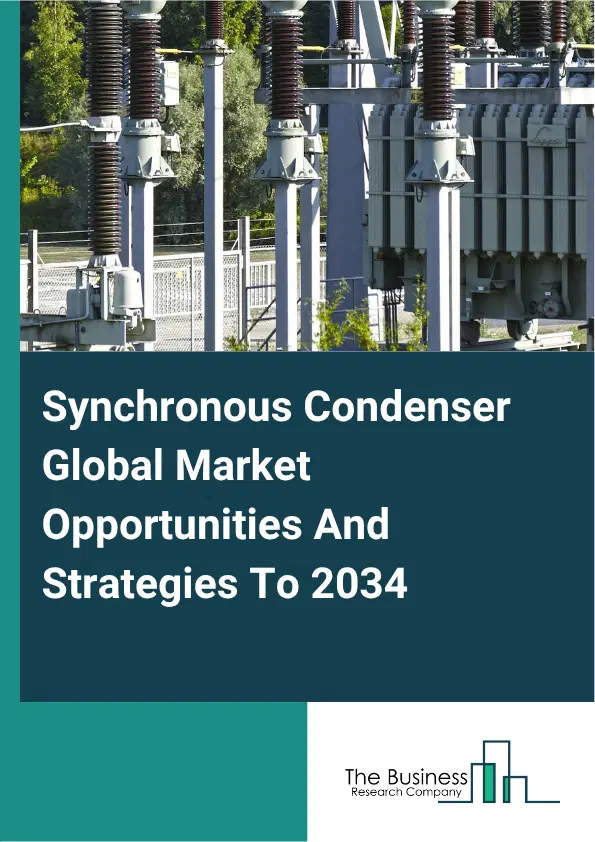
Synchronous Condenser Market Definition
A synchronous condenser is a synchronous machine that operates without a mechanical load and is used to generate or absorb reactive power in an electrical grid. The primary purpose of a synchronous condenser is to provide reactive power compensation, stabilize voltage fluctuations and support grid strength, especially in power systems with high renewable energy penetration. It helps maintain power quality, ensures efficient energy transmission and increases the resilience of modern electrical networks. The synchronous condenser market consists of sales by entities (organizations, sole traders and partnerships) of synchronous condenser that are deployed whenever grid voltage control, stabilization, or reactive power conditioning is needed, commonly during grid disturbances, integration of large-scale renewable sources, or in systems with weak grids. It complements or substitutes capacitor banks, static VAR compensators (SVCs) and STATCOMs (static synchronous compensator) by offering a rotating-mass-based solution that inherently provides inertia, supporting both voltage and dynamic stability.